I finally had a chance to ride the new NextGen Acela and I have to admit, I was wrong: This really is Amtrak’s train of the future.
But here are a few tips for making your next ride frictionless. These tips are mostly about riding Acela, but many hold true for slower Northeast Corridor trains.
WHAT’S A NEXTGEN ACELA? These are the new trains built by Alstom, previously known as Avelia Liberty. They hold 25% more passengers than the existing Acela trains and can, at least for 32 miles with fast, straight track in New Jersey, travel up to 160 mph compared to the old Acela’s 150 mph.
Just a few of the new trains are running so far but 26 are more on the way, replacing the older Acelas, which will be retired.
BOOK EARLY: We booked our Acela tickets about two weeks in advance and scored senior fares (10% discount) of “only” $204 one way from Stamford to Washington DC. Waiting at the station to board I heard the ticket agent startle a younger passenger seeking a ticket to DC by quoting her the same-day walk-up fare of $402 one way. A minute later the helpful agent said she could make the same trip a half-hour later (on the slower train) for half as much.
RESERVED SEATS: Seats on all Acelas are now reserved. But don’t trust the seating chart you’ll see online. When we boarded the train we found our seats faced backwards (not in the direction of travel) and had no window. But a helpful conductor found us better seats right on his phone. Consult a third-party seating chart to make sure you get the seats you want.
If you want the Quiet Car, be aware there’s only one car with 59 seats. Otherwise you’ll be enjoying the “finance bro” across the aisle making deals enroute by phone.
BOARDING ADVICE: The cars on the NextGen Acela are much shorter than the regular trains, so position yourself carefully on the platform to minimize walking once the train arrives. I noticed Amtrak staff at each station helping minimize “dwell time” for the train by getting passengers off and on as quickly as possible.
USE THE RED CAPS: If your train originates at your station, like our return from DC, get priority pre-boarding with the help of the Red Caps. Avoiding the throngs queueing to board is worth a tip, even with reserved seats.
HOW’S THE RIDE?: In a word, spectacular. All the Acelas run no faster than Metro-North in Connecticut, but south of NYC it’s a whole different railroad. True to its promise our train hit 159 mph on the straightaways in New Jersey and the ride overall was very smooth, unlike the 25-year-old Amfleet cars or the 50-year-old Amfleet cars on the slower trains.
SERVICE: Enroute the cabin cleaning staff came around to collect trash and Café Car items were available (credit cards only) from a cart moving between the cars. The Café Car itself looked great with self-serve windows displaying the food items. But there are no tables to sit down, just some counters where you can perch and munch.
The food offerings were “premium” and priced accordingly.
The on-board Wi-Fi was spectacular… truly 5G.
ON-TIME?: Like many Amtrak trains, even the super-Acela tends to run a few minutes late in Connecticut because of Metro-North traffic. We departed about ten minutes late from Stamford but, because the schedule is padded, were on time out of Penn Station NY and arrived early in Washington DC.
IS IT WORTH TRYING?: Yes, at least once. Amtrak has a lot riding on these new trainsets, so try one soon and you’ll see what the future will be like.
Editor’s Notes: i) Jim Cameron is the founder of the Commuter Action Group and advocates for Connecticut rail riders. He writes a weekly column called ‘Talking Transportation,’ which is published by a number of publications in the state. ii) ”Talking Transportation” recently won first place in the general column/commentary category in the Connecticut Society of Professional Journalists Excellence in Journalism Contest.
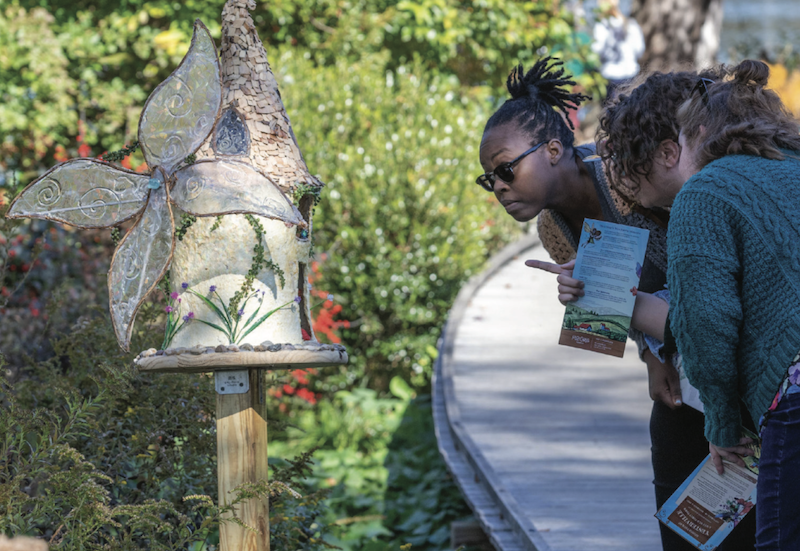
The Wee Faerie Village opens Saturday at the Florence Griswold Museum. This year’s theme is “Gardener’s Grove: a Growing Community.” Photo courtesy of the Florence Griswold Museum.
OLD LYME — The perennially popular Wee Faerie Village and a new exhibition titled, ‘Fall Into Impressionism‘ open today at the Florence Griswold Museum In Old Lyme.
The theme of the Wee Faerie Village this year is Gardener’s Grove: a Growing Community! and it celebrates the growing world with a wee community that is inspired by plants. Each site will be place for a faerie to live, work, play, or shop that is based on a single flora or plant type…flower, vegetable, bush, or tree.
The event will feature at least two dozen faerie installations as well as a roster of special events to compliment the theme.
Since 2009 over 190,000 visitors have immersed themselves in the spirit of imagination and whimsy that comes from visiting at least two dozen pint-sized installations across the Museum’s campus on a perfect autumn day.
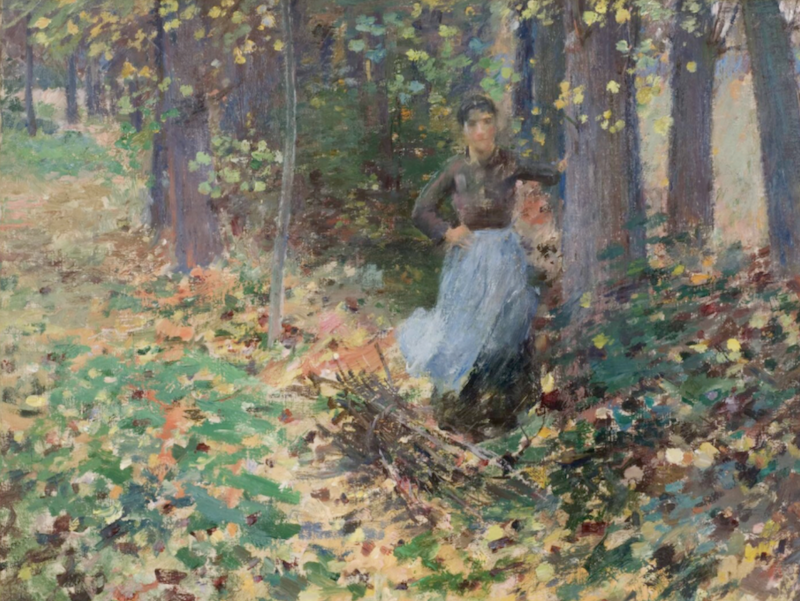
Autumn Sunlight (1888) by.Theodore Robinson (1852–1896) is a signature painting of the ‘Fall Into Impressionism’ exhibition opening Saturday at the Florence Griswold Museum..OThe painting is oil on canvas and a gift of the Hartford Steam Boiler Inspection and Insurance Company. Photo courtesy of the Florence Griswold Museum.
‘Fall Into Impressionism’ features selected artworks from the Museum’s permanent collection, which celebrate the appeal of fall to the Impressionists, whose flecks of paint capture the textures and colors of autumn.
For artists including Fidelia Bridges, Charles Ebert, Frank Vincent DuMond, Breta Longacre, Willard Metcalf, and Theodore Robinson, fall presented the opportunity to contemplate nature in transition. They appreciated both the season’s vibrance and its gradual movement toward much more muted colors.
Many of these painters spent August in cooler climes like Maine, but come Septeber, they flocked back to Connecticut as the weather cooled to paint outside in the drier air, particularly in locales like Old Lyme.
During the fall, leaves dazzled with reds, golds, and a multitude of other colors before falling to the ground. The artists would concentrate on the play of light and shadow in these autumnal months before the weather turned cold and maybe the first snow fell. At that point, they headed back to their studios in the city for the winter.
The Museum is open Tuesday through Sunday from 10am-5pm. Special event pricing is in effect at this time as follows: $23 Adults, $22 Seniors (62+), $21 Students (13+). Entry is free to Children 12 and under, and members.
“Life starts all over again when it gets crisp in the fall.” – F. Scott Fitzgerald, The Great Gatsby
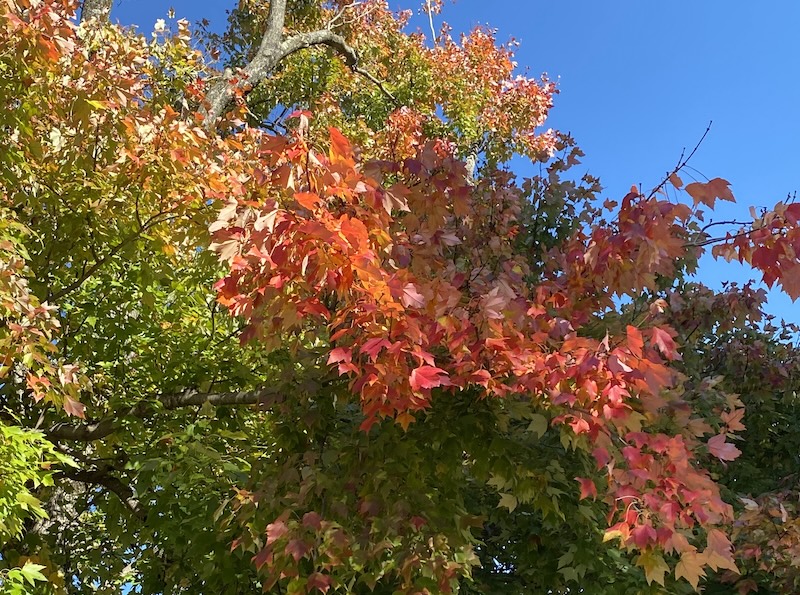
The colors of fall will soon be all around us. LymeLine photo.
Rain through August has been rather sparse. That said, our gardens need rain.
In the meantime, if you are planting evergreens this month; September is the best time to plant evergreens in our zone. Evergreens planted now can begin to establish strong roots before winter and it is important to give the new evergreens a good amount of water. I suggest you make a hole in the soil with an iron stake or other piercing instrument, then feed the hose into the hole and allow water to reach the roots slowly for at least a half hour and continue with this method a few times a week until the ground freezes in November.
Cover the earth around the plants with a light layer of composted manure and mulch. Do not apply mulch right up to the trunks of the plants as this encourages rodents to gnaw on the bark of the plants.
Hydrangeas
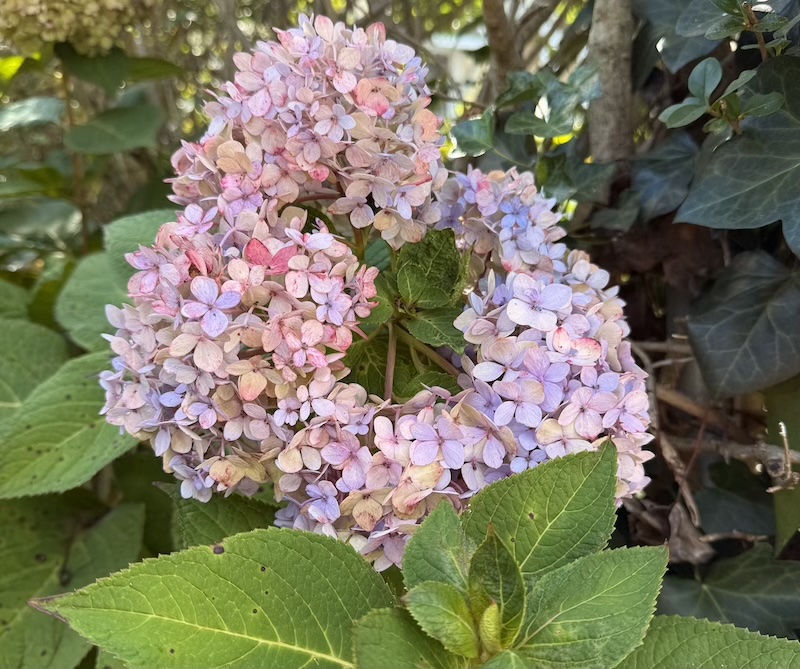
Hydrangeas do not appreciate being transplanted. LymeLine photo.
I am often asked questions regarding the pruning of hydrangeas, with fellow gardeners asking, “Maureen, why did my Hydrangeas not bloom this year”? The reason that hydrangeas do not bloom is that gardeners prune them at the wrong time. If you feel that your Hydrangea macrophylla has become too large and require pruning, prune them by mid-September.
The reason is that hydrangeas set their buds for next season by late September; pruning any later will cut off those buds, which will negate any chance of bloom for next season or even the following season.
How to accomplish pruning successfully: This month, prune any old woody stems that have not bloomed well and any weak new shoots. After pruning, apply a few inches of composted manure, and some peat, followed by a top dressing of natural brown bark mulch. Peat aids acidity in the soil, which is necessary as Hydrangeas may become chlorotic if the soil is too alkaline. Chlorotic means abnormal reduction or loss of normal green coloration of the leaves of the plants.
Another important note on this plant is that hydrangeas do not like to be transplanted; transplanting them can result in little to no bloom for many seasons. For that reason, I suggest when planting new hydrangeas, make sure they are at least five feet apart, so they have room to grow, receive adequate ventilation and will therefore never need to be transplanted.
Take a Break to Contemplate
This fall, as you contemplate your landscape, think about the past season and what worked for you in your garden and what you will never try again.
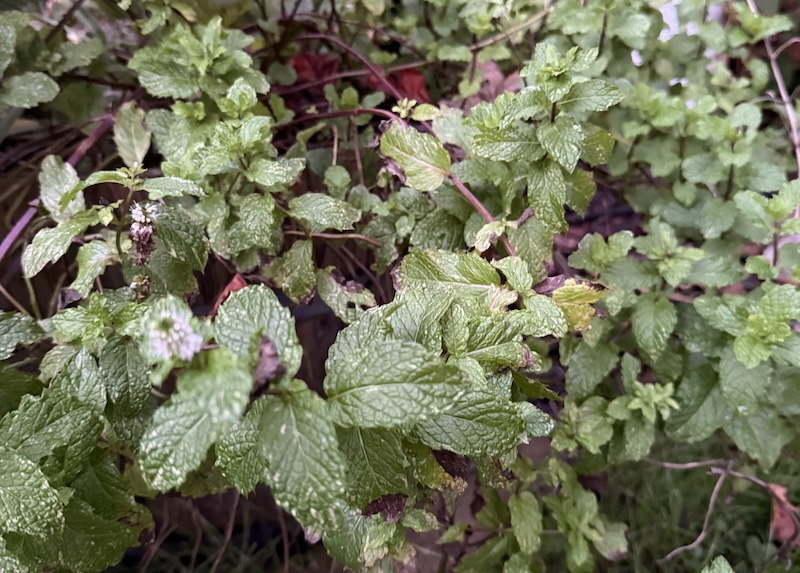
One thing I will never forget is that mint took over the border beneath my Franklinia tree. Many years ago, my friend Roz, was kindly lending a hand in the garden and planted mint in the garden instead of a large container that I placed for that very purpose.
Mint grows vigorously wherever it is planted. It is always best to control its growth by planting it in a container. LymeLine photo.
I was busy with other garden chores, so by the time I noticed the error six months later, the mint was running rampant among the blue myrtle edging the borders. So, folks please take note that mint is extremely invasive and should only be planted in containers where its wayward habits can be controlled.
‘It is said that ‘a gardener’s work is never done’, but now with the season’s hard labor behind you, take a break. Sit outside and inhale the late garden fragrances and allow Mother Nature to anchor and relax you.
In the early morning, I enjoy sitting on my patio near the herb garden, inhaling the fragrance of the sage, which I will snip later to take indoors for drying and use in my recipes. I will also gather extra sage and lavender, which I will tie with string into small bunches to hang in my closets, which is a natural moth repellent. Some of the Lavender bunches I tuck into my drawers to keep moths from devouring my woolen garments, this works well as insects do not like fragrance.
In the less hectic pace of fall, early autumn is the time to re-think your gardens. The garden’s pre-winter grooming will wait for a few weeks. You may feel that you would like to have professional design as you have noticed that your borders are not up to your expectations.
If that is so, then contact someone that you trust to create a plan in the fall and winter, which can be phased in beginning next spring. Engage someone who will listen to your thoughts and stay within your budget. That being said, I respectfully offer a suggestion for a plantsman, whose company and website is LandscapesByIan.com. In the interests of full transparency, he is my son and I am confident you would enjoy speaking with him.
In your vegetable garden, sow spinach for spring harvest and sow a cover crop like winter rye, which can be dug in next spring together with composted manure as green manure. Green manure produces a rich growing environment for next year’s vegetables.
Now is the time to get your fall compost pile cooking with the last of the grass clippings, spent perennials, leaves and small woody twigs.
Perennials
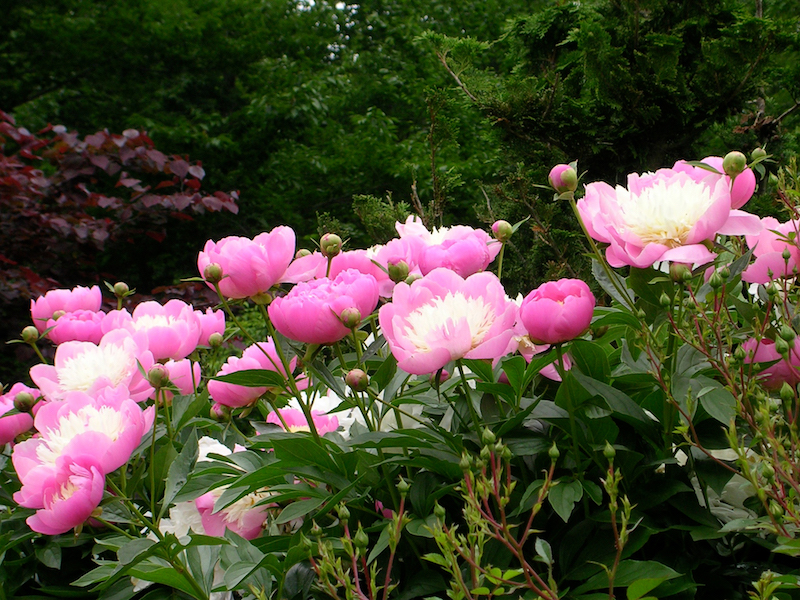
Peonies need careful attention to create a stunning display like this. September is the month to plant and transplant them.
Also in September, dig up, divide and replant overgrown perennials. Follow this method every three to four years to ensure vibrant bloom from these plants. Never plant or transplant any division or transplant any deeper in the soil than it is now or any deeper than the plant sits in the pot.
September is the month to plant and transplant peonies. Do not plant them deeply or they will not bloom, that means having just enough soil to hold them erect with the ‘pink eyes’ on the roots barely covered. Plant them with a light application of composted manure around the plant. Then in November, following the first hard frost cut down the peony foliage to about four inches from the ground.
Fall’s brilliant autumn finery is the last hurrah, before winter sets in. LymeLine photo.
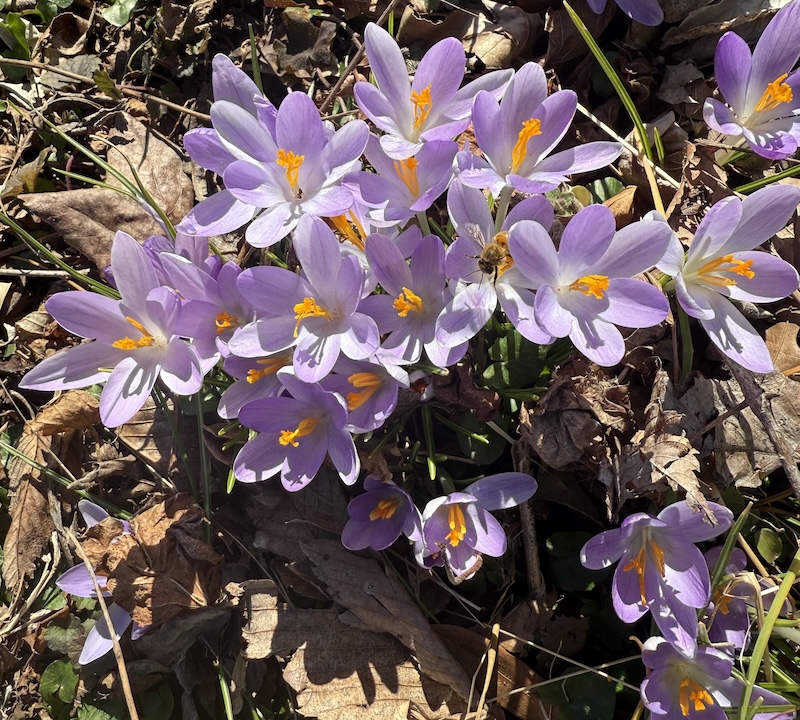
In a few weeks, the bright vibrancy of autumn color will appear on the maples. Fall’s brilliant autumn finery is the last hurrah, before winter sets in. Climbing up the red milk shed near the barn, the buds on the autumn clematis are beginning to unfurl and in the herb garden, autumn crocus, asters and sedum will take their curtain calls.
For your soil to remain healthy, add a light layer of composted manure to all the borders now or in early October, together with a two-inch layer of fine bark mulch around to all newly planted and transplanted perennials and shrubs. With the application of the manure and mulch you are continuing to build the humus component, which will ensure a rich growing environment for spring and protect the plants from winter’s harsh conditions.
I do not cut down my spent perennials but leave them up for the birds; the ripened seed heads are a delicious treat for them to peck at. Following the vibrancy of summer bloom, I enjoy the softer subtle colors of gray, brown and yellow of spent perennials and ornamental grasses blending naturally with the muted winter landscape, which to me offers a resting of the senses.
Early to mid October is a great time to be planting. The benefits of fall planting for trees, shrubs and perennials gives them a head start with root development over those planted in the spring. This is especially so when we experience late spring when planting cannot begin until late April. In New England’s fall, the cooler temperatures and still warm soil encourage the plants to direct their energy into producing strong roots.
The following trees are not good candidates for fall planting: birches, larches, gingko, oaks, magnolia, and all flowering fruit and flowering trees as well as the Eastern red cedar. These trees have fleshy roots, and their feeder roots are not large when young and take time to establish and are susceptible to frost heave.
Some perennials that do not like to be planted in fall are Artemisia, Lambs Ears, Foxglove, Penstemon, Anemone, Campanula, Kniphofia, Lupines, Scabiosa, ferns and grasses.
Plant garlic this month for harvest next June. Garlic is the antibiotic of the garden. Plant it under fruit trees to avoid scab and root disease, near to ponds or standing water to control mosquito larvae or pour garlic water into ponds, bird baths and fountains to deter adult mosquitoes.
End-of-Season Bargains
This is a good time to pick up end of season plant bargains. Most nurseries and garden centers have lowered their prices, so they do not have to winter plants over in the nursery. If you do purchase a few plants, keep your eyes open for the following problems:
Potbound pots
Check the bottom of the pot to see if the roots are growing through the holes. If not, gently tap the plant out of the container to see if it has a network of overlapping roots that wrap around the root ball. It is possible to salvage a root-bound plant, which is suffering from water and nutrient deficiencies over the summer, but it will be slow to root.
Before you plant this one in your garden, cut the encircling roots – the roots will now be shorter but will take root easier.
Diseased Plants
Plants that have been in containers all summer and have been fed high nitrogen fertilizers are easy targets for pests and diseases. Check for spots on the foliage, wilted or curling leaves and discolored roots. As well as visible signs of pest damage and infestation such as webbing or sticky residue on foliage. Not only would these plants do poorly in the garden but could infect your other plants and the soil. Soil-borne diseases are the most difficult to deal with.
Badly shaped plants
Badly shaped plants are the Charlie Brown Christmas trees of the plant world, the unwanted orphans that have been passed over year after year; these are the runts of the litter! Do not set yourself up for disappointment looking at an ugly tree or shrub just to save a few dollars.
Mislabeled plants
At the end of the season many plant tags have been lost or mixed up, which means you are likely to get a perennial with flowers that are not the color you expected. Or you may buy a deciduous tree or shrub when you are looking for an evergreen variety. Stick to the plants that are part of large displays of identically labeled plants or with labels so firmly attached that look like they have been there for a while.
With all the above-mentioned plants – always add composted manure around the plant and do not plant any deeper than it is in its pot or burlap wrapping. Always wear gloves when working with manure; there is bacteria in the manure – great for the soil but not healthy for you.
Please note that the bargain you get is often not worth the discount price.
New Lawn or Patch Seeding
September is an excellent time to plant new grass so the young grass plants will have the advantage over weeds. Do not buy cheap seed, you reap what you sow!
Gently de-thatch the areas that you wish to overseed or patch. Do not use the large thatching machines, which can damage existing grass. Add some composted manure to the area, broadcast the seed and cover the newly seeded grass area with salt hay (free from weed seed). Do not allow the soil surface to dry out; keep it moist. Water gently, and do not saturate the area or the seed will wash away.
When the grass appears, stay off it. Do not mow and leave the salt hay to rot. Next spring, a healthy lawn will emerge and if there are a few bare patches in April, you can fill in the bare spots.
In terms of bulb planning, The English Lady recommends, “Go for masses of a single color for the greatest impact.”
I hope your spring bulb orders are in by now. Be adventurous this year and go for masses of a single color for the greatest impact. No matter how small your planting area, it is the intensity that counts, with two or three dozen red tulips or a hundred daffodils planted on your woodland edge.
Buying daffodils in large numbers is less expensive. The bulbs are usually smaller, but this is not a problem as daffodil bulbs grow larger each year. Even though many say the spacing between these larger bulbs should be six inches, there is no reason they cannot touch.
Put some composted manure or bulb food on the soil where the bulbs are planted. Make sure you plant the daffodils eight inches below the frost line, with the pointed end up. Wear gloves when you plant bulbs as they have a skin irritant, which may cause a rash.
If you cannot plant your bulbs when you receive them, store them in a cool, dry place in paper bags. The best time to plant spring bulbs in the Northeast is the end of October to the middle of November.
Lily of the Valley can be transplanted this month but wear gloves because there is toxicity in this plant.
Dig up your gladioli corms, calla bulbs, elephant ear bulbs and dahlia tubers when the foliage turns yellow. Lay them in the sun to “cure” and store them in a cool, dry dark place. When you dig the dahlia tubers, do not pull them, as pulling can break the tubers.
In September after their summer sojourn outdoors, take your houseplants indoors and wash the foliage gently and repot with new potting soil into a clean container. Repot those plants that have outgrown their pots to a clean container that is only one size larger.
Fall and early winter is a great time to do stonework – dry laid paths, walls and patios. As well as repairing fences, arbors and pergolas and building decks. Paint wooden outdoor furniture with eco conscious paint before putting them undercover for winter.
September is a gardener’s paradise; the air is cooler, the soil easy to work and you will not overheat with the effort. Stay awhile in your garden; enjoy the comforting fragrance of fall.
About the author: Maureen Haseley-Jones is a member of a family of renowned horticultural artisans, whose landscaping heritage dates back to the 17th century. She is one of the founders, together with her son Ian, of The English Lady Landscape and Home Company. Maureen and Ian are landscape designers and garden experts who believe that everyone deserves to live in an eco-conscious environment and enjoy the pleasure that it brings. Maureen learned her design skills from both her mother and grandmother, and honed her horticultural and construction skills while working in the family nursery and landscape business in the U.K. Her formal horticultural training was undertaken at the Royal Botanic Gardens at Kew in Surrey.
OLD LYME–Library Lane has become a meeting ground for public interests as the need for burial access at the Duck River Cemetery intersects with neighbors’ calls for traffic safety on the narrow road.
The nonprofit Old Lyme Cemetery Association, which oversees the cemetery and its historic bridge over the Duck River, has proposed the construction of a temporary road accessible via Library Lane that would allow burials to continue during a partial bridge replacement slated for the fall of 2027.
The application was approved in April by the Old Lyme Inland Wetlands and Watercourses Commission (IWWC). But it wasn’t until last week that some neighbors found out about it, according to Wetlands Enforcement Officer Eric Knapp.
Cemetery Association President Ed Pinn in a Wednesday phone interview said the replacement project will cut off a portion of the cemetery from the existing entrance on McCurdy Road for about three months.
“Without that temporary road, people’s loved ones won’t be able to be buried in sections that are beyond the bridge,” he said.
He said bridge designs are not yet complete and bids have not yet been solicited for the project set to start roughly two years from now.
“Our goal is to not begin the temporary road until just before we’re about to undertake the bridge project so that there’s minimal impact on the community and the road won’t appear active until it’s absolutely necessary,” he said.
The inland wetlands application specifies about 0.14 acres of wetlands will have to be filled in to make way for the 12- to 14-foot-wide passageway. The project was approved by the commission in a 7-0 vote.
Project documents show the plan relies on an easement allowing the association to use the driveway at 31 Library Lane.
No Public Hearing
At an IWWC meeting Tuesday, several neighbors raised concerns about the potential effect of increased traffic on the lane where people walk, bike and play.
William Folland, who lives on Dunns Lane—a cul-de-sac that joins Library Lane—said the wetlands application did not indicate if any alternatives to crossing the wetlands had been considered. He also worried there were not enough conditions in place to ensure the temporary road did not become permanent.
Folland said there should be a public hearing on the issue.
“I believe that this is a privately funded project but with significant public interest; that is, the safety of the residents on Library Lane,” he said.
But Old Lyme Land Use Coordinator and Wetlands Enforcement Officer Eric Knapp said the commission, after visiting the site, determined there would not be any significant impacts to the wetlands – and therefore no need for a public hearing. Other evidence weighed by the commission included engineering and erosion control plans as well as testimony from Nathan L. Jacobson and Associates, the cemetery association’s consultant.
“The permit remains in place,” Knapp said at the commission meeting. “And at this point, it’s valid going forward.”
Knapp emphasized the commission’s jurisdiction is limited to environmental concerns in the wetlands.
“The wetlands commission is ill-equipped to deal with traffic issues; it’s really not within your parameters,” he said.
The temporary nature of the project means it’s not in the purview of the Zoning Commission, either, according to Knapp.
A joint letter from Knapp and First Selectwoman Martha Shoemaker addressed Monday to Library Lane residents recognized the neighbors’ frustration but said the town’s involvement in the process ended with the inland wetlands commission’s sign off.
“No town approvals were necessary or required for this arrangement,” they wrote. “Additionally, no approval from the Zoning Commission was required, as there is nothing in the Zoning Regulation that would address a temporary use of this nature.”
They said burials there average four a month.
Holding the Key
The owner of 31 Library Lane told the commission he doesn’t see how the plan can proceed until more information is provided to residents.
“I think I hold the key to this happening, since it’s on my property,” he said.
Gary Dayharsh said he may allow access through his driveway for the temporary road, but needs important questions answered before giving full approval.
“I have yet to see a plan on what’s proposed,” he said. “I want to cooperate. I understand why it’s necessary. But I certainly want all my concerns addressed before I’ll even agree.”
He said he’s waiting for assurances that his driveway culvert won’t be harmed, general cemetery traffic won’t be coming up his driveway, liability insurance is covered and his property will be restored afterward.
Pinn, the cemetery association president, said he will bring in engineers to look at Dayharsh’s culvert and will address all of his concerns.
He said the temporary road will be returned to its original condition within six months or less, weather depending.
The remediation plan is included in the engineering plans submitted to the commission.
The association hasn’t decided how visitors will access the affected cemetery section outside of burial times, according to Pinn.
He described Dayharsh and the other property owners along the shared driveway as gracious for working with the association to make the project possible.
“We’re acting in the interest of the community by repairing the bridge, and we appreciate the cooperation of the neighbors, who’ve helped facilitate it,” he said.
The association president noted the bridge’s condition came to light after the association brought in an engineer to determine the load carrying capacity of the 100-year-old structure amid plans to develop the cemetery’s Ledges section. Members ultimately agreed it was their responsibility to follow the engineer’s recommendation to replace the bridge.
Pinn said he would keep affected residents informed of the project in writing going forward.
OLD LYME —Playing at home on Monday, Sept. 22, the Lyme-Old Lyme High School boys soccer team fell 3-1 to Valley Regional High School.
Ian Maeby scored for Lyme-Old Lyme off an assist from Colman Curtiss-Reardon.
Valley Regional’s Keegan Coloquhoun scored two goals and Patrick Finnegan scored one. Varrick Recchia made two assists.
Lyme-Old Lyme goalkeeper Sam Edmed made five saves for Old Lyme, while Valley Regional’s Paul Malaguti was credited with 10 stops.
The Wildcats are now 3-4-0 overall and 2-3-0 in the Shoreline Conference.
Playing away on Wednesday, Sept. 24, the Lyme-Old Lyme’s girls soccer team lost 6–0 to Valley Regional.
Lyme-Old Lyme goalkeeper Grace Osborne made 11 saves.
Valley Regional saw two goals each from Madelyn Riebold and Makaylah Spencer, in addition to goals by Anne Keck and Payton McIntyre. Goalkeeper Emma Reilly made two saves.
The girls team is now 3-4-2 overall and 3-4-0 in the Shoreline Conference.