Health, Happiness and the Benefits of Volunteering; Join the ‘Common Good Gardens’ to Discover Them!

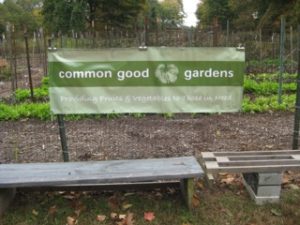
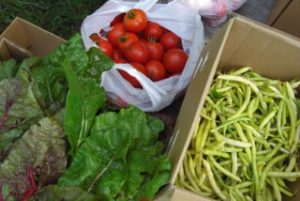
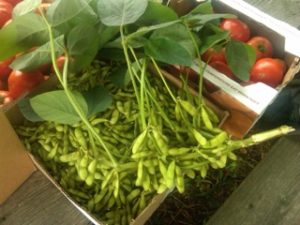
Each year, the Common Good Gardens in Old Saybrook raise nearly four tons of fresh vegetables and fruit, and then then donates them to the Shoreline Soup Kitchens and Pantries  And they do it entirely with volunteers – volunteers who have kept it going and improved it for 15 years.

You’re probably thinking, “How unselfish … doing all that work to benefit other people,” and they are for sure.  But, according to new research, volunteers are also on the receiving end of some amazing benefits; and most likely, they don’t even know it.  They just know that they feel better when they leave the garden.
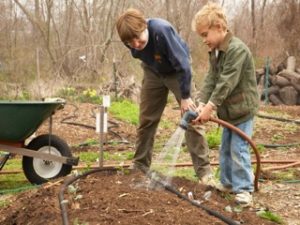
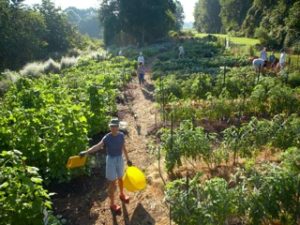
Never too young … all ages can volunteer at the Common Good Garden.

Solid data on the benefits of volunteering has appeared in a variety of current publications, ranging from the Mayo Clinic and Harvard Health Letters, to a review from the Corporation for National & Community Service, which states,

On average, volunteering 40 to 100 hours per year increases personal satisfaction and happiness, decreases depression, improves functional capacity; and results in fewer illnesses and a longer life span.

Similar articles from the Huffington Post, Atlantic Monthly as well as research released by Johns Hopkins, The London School of Economics and University of Exeter Medical School have all told a similar story.

Greatest Gains for Seniors
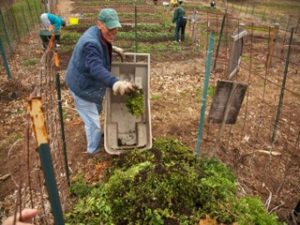
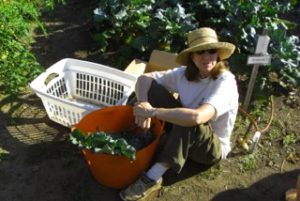
Volunteering has health benefits — especially for seniors!

While there are potential gains to be had for high-schoolers and middle-aged persons, the greatest gains related to volunteering are for those 65 and older.  Some researchers suggest this greater gain for seniors may be because they start out lower before volunteering. Their health may not be as good as that of younger people or they may have lower self-esteem and more social isolation due to retirement.  Even if that proves true, starting to volunteer at an earlier adult stage seems to correlate with fewer health issues later in life.

Regarding functional capacity, the Hopkins study showed improved brain function associated with activities that get you moving and thinking at the same time.  As for happiness, though some of the happiness data is based on self-reporting alone, other data show hormone levels and brain scan activity consistent with physiologic changes associated with happiness.

Studies in UK

In addition to the improvements shown above, a large review of nearly 25,000 articles in the UK notes increased coping ability, better parenting skills and richer personal relationships.
Impact on Chronic Illness and Longevity

Several studies examined in particular the impact for those with chronic illness. They found that these volunteers reported decreased pain and depression. People with a prior heart attack also had lower incidences of depression after volunteering.

A United Health Group survey showed these striking figures:

  • 25% reported volunteering helped them live better with chronic illness
  • 76% reported feeling healthier
  • 78% reported lowered stress levels
  • 94% reported improved mood
  • 96% reported an enriched sense of purpose

Finally U.S. census data confirms that those states with high volunteer rates show greater longevity and lower rates of heart disease.

Come Join the Common Good Gardens
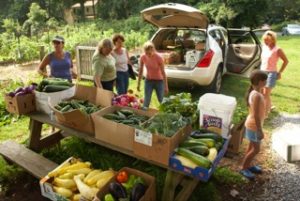
There’s always room for an extra pair of hands …

Come join us at the Common Good Gardens.  Whatever your age, level of health, or skill set, there’s a way for you to contribute while benefiting from volunteering.

Yes, gardeners are needed to plant, weed and harvest, and beginners are always welcome. But also needed are people with computer skills, carpentry skills, writing and speaking skills;   people who can drive a car to deliver produce; leaders to organize small groups and work with public schools; people who love nature or are excited about nutrition, and folk who want to help experiment with natural ways to deter pests or make soil richer.

Common Good Gardens by the numbers
  • 14: Number of years garden has been in existence (2002-2016)
  • July 7, 2011: Date the garden incorporated and received non-profit 501(c)3  status
  • 10: Number of Board members
  • 220,000: Total pounds of produce grown, collected and delivered 2004-2016 through garden volunteer efforts
  • 50: Number of core active volunteers (gardeners, drivers, other)
  • 3,000: Number of volunteer hours donated annually
  • 1/2 acre: Size of garden located at rear of Grace Episcopal Church, 336 Main Street, Old Saybrook
  • 22: Number of different varieties of fruits and vegetablesgrown at the garden during 2016
  • 6,900: Pounds of produce grown at the garden in 2016 season
  • $17,200: Dollar value of produce grown at the garden in 2016 season
  • 7: Number of farm stands that donate excess produce to garden for distribution to pantries in 2013.
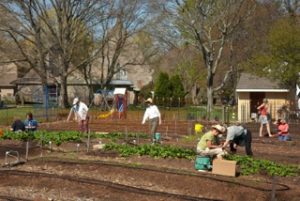
Many hands make light work at the Common Good Gardens.

Current volunteers at the Common Good Gardens encourage you to get involved so that together, a healthy future for the garden, ourselves, and our shoreline community can be created.

If interested, contact Common Good Gardens at PO Box 1224, Old Saybrook, CT 06475 or call Barbara Standke at 860-575-8645 with questions, or to sign up for the annual new volunteer orientation on March 11.

Editor’s Note: The authors of this piece, Kate Wessling and Barbara Standke, are respectively Common Good Gardens President and Common Good Gardens Volunteer Coordinator.

Community Music School Hosts Open House

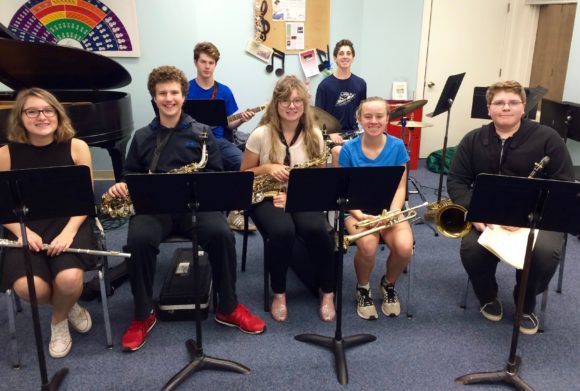
The Community Music School’s Jazz Ensemble gives regular concerts throughout the local area.

Community Music School (CMS), located in the Spencer’s Corner professional complex at 90 Main St. in Centerbrook, welcomes the general public to visit during Open House Week Jan. 30 to Feb. 3. Children and adults can tour the School’s studios, meet teachers and staff, enjoy a free preview lesson, and learn about a vast array of programs for all ages including private and group lessons, guitar, jazz and string ensembles, music therapy services, Kindermusik, and more.

Community Music School is open from 9 a.m. to 7 p.m., Monday to Thursday, and 9 a.m. to 5 p.m. on Fridays. Those interested in a 15-minute preview lesson are requested to call 860-767-0026 for scheduling.

Community Music School offers innovative music programming for infants through adults, building on a 30-year-tradition of providing quality music instruction to residents of shoreline communities. The School’s programs cultivate musical ability and creativity, and provide students with a thorough understanding of music so that they can enjoy playing and listening for their entire lives.

For additional information, visit www.community-music-school.org or call 860-767-0026.

Emergency Vigil in Deep River This Afternoon in Response to Refugee, Immigration Ban

The Valley Stands Up will host an emergency vigil outside Deep River Town Hall at 4:30 pm today (1/29/17) to show solidarity with protests across the nation in response to the refugee and immigration ban.

At 3 p.m., the group will hold a public meeting at the Deep River Public Library to discuss further actions. “You are welcome here” yard signs will be available for purchase.

The Valley Stands Up is an independent civic group created to unite our diverse communities in the Lower Connecticut River Valley area through outreach, organizing, and advocacy to support the dignity and human rights of all.

Contact:
thevalleystandsup@gmail.com
https://www.facebook.com/groups/valleystandsup/

Two New Exhibitions on View at Lyme Art Association

‘Sentinels’ is one of the signature paintings of the 25th Annual Associated Artist Show on view at the Lyme Art Association.

The 25th Annual Associate Artist Show and Sale of landscape, portrait, and still life paintings, as well as sculpture by Associate Artist members is currently on view in the Association’s front galleries, and runs through March 10.  Pulled and Pressed, which showcases hand-pulled prints by LAA members of all levels and members of Stonington Printmakers Society as invited guests, is on display in the Goodman gallery, and also runs through March 10.

“The Annual Associate Artist Show and Sale highlights the range, creativity, and excellence of our Associate Artist members. This exhibition includes a variety of subjects, media, and styles: paintings or sculptures that capture the range of human emotion, the beauty and grandeur of the Connecticut landscape, or the personal objects and surroundings of everyday life,” states Jocelyn Zallinger, LAA’s Gallery Manager.

The juror of selection and prizes is Patricia Shippee of Old Lyme. Shippee is an accredited senior member of the American Society of Appraisers.  Her expertise has been acquired through her corporate business experience, her studies in art history, and as a collector, gallery owner, curator.

“The Pulled and Pressed show in the Goodman Gallery celebrates the beauty of original contemporary representational hand-made prints.” Juror Helen Cantrell, an Old Lyme resident, is a painter and printmaker, an artist member of Boston Printmakers, the Center for Contemporary Printmaking in Norwalk, and the Silvermine Guild of Artists in New Canaan.

The LAA was founded in 1914 by the American Impressionists and continues the tradition of exhibiting and selling representational artwork by its members and invited artists, as well as offering art instruction and lectures to the community.

The LAA is located at 90 Lyme Street, Old Lyme, CT, in a building designed by Charles Adams Platt and located within an historic district. Admission is free with contributions appreciated. Gallery hours are Wednesday through Sunday, 10am to 5pm, or by appointment.

For more information on exhibitions, purchase of art, art classes, or becoming a member, call860-434-7802 or visit www.lymeartassociation.org.

Reading Uncertainly? ‘Divergent Paths – The Academy and the Judiciary’ by Richard A. Posner

Judge and Professor Posner explores the apparent diverging paths of our judiciary, especially the Federal, from the academies that teach our would-be lawyers, some of them advancing to become judges. This is a sobering view. Forgive me for an extensive quote, but it summarizes in one page the 400 pages of his thesis:

“ . . . at this writing the United States exhibits an unprecedented array of failed social systems. The political system is in disarray – Congress is a mess, the executive branch poorly managed. The Supreme Court bears some of the responsibility for congressional malfunction because of its refusal to allow reasonable limitations on campaign expenditures and its refusal to outlaw, as a denial of equal protection of the laws, political gerrymandering.

Likewise in disarray is the medical industry (as in matters of cost and coverage, preventive medicine, and the care of the elderly and the poor); also education (other than in the elite private and public high schools and the elite colleges and universities), public pensions, immigration, federal taxation, and the nation’s transportation infrastructure.

Our prison systems and our criminal laws (especially sentencing) are an international disgrace, and the judges, including federal judges, are complicit. A number of state and local governments are seriously underfinanced. Our foreign and national security policies are pervaded by a degree of indecision unseen since the 1930s. Although admired by most Americans, our armed forces are plagued by serious cost, competence, and leadership problems.

Economic inequality has reached a dangerous level. There are too many guns in private hands. Conflict between religious and secular views on issues of public policy such as abortion, contraception, same-sex marriage, and the teaching of evolution is increasingly bitter. The government cannot get a handle on global warming or environmental regulation generally.

There are sectional tensions, racial and ethnic tensions along with sexual and religious ones, regulatory failures everywhere, bureaucratic incompetence, widespread corruption and fraud both public and private, and a weakening of family structure as reflected in the greatly increased prevalence of single-parent households. One can hardly expect the federal judiciary to be completely immune from so pervasive a national malaise, and it isn’t.

And this analysis was written before the death of Justice Scalia and the election of the loud-mouthed, newly elected president.

Is there any hope for us?

But there is!

From what he calls this gallimaufry (a confused jumble of things), Judge Posner extracts, first, notable deficiencies in our judicial system, followed later by his numerous suggestions for change. He is not an “originalist,” one who puts his faith entirely in earlier mandates such as our Constitution. “As society changes, so must the law,” is his thesis. He also acknowledges his own missteps: “Very wrong was I!” and “I don’t have a solution to this problem.”

At the end of Chapter 6, he summarizes his 55 “problems” and 48 reasonable and doable “solutions.” Best yet is his quote from Oliver Wendell Holmes: “certitude is not the test of certainty. We have been cocksure of many things that were not so  …  And this again means skepticism.” With this admonition in mind, Posner gives us a note of optimism.

Posner attributes much of our judicial problem to the “adversarial” nature of our system, in which lawyers tee off against one another in the courtroom, with judges as observers. He prefers the European “inquisitorial” approach, not in the sense of the Spanish Inquisition, but rather in the sense of judges acting as questioners and researchers, a third voice in the hearings.

He optimistically sees “the law” as a fluid, evolving instrument that “does not have a solid foundation. It is ultimately a collection of rules and procedures, highly malleable, often antiquated, often contestable, often internally conflicted, for managing social conflict – a set of aging, blunt tools.” Both we and the law can and should evolve. That is why we have judges, to help in interpretation.

But I do have a minor qualm with his writing. About halfway through his argument, he suggests a “good judicial opinion requires:

  1. No jargon.
  2. No footnotes.
  3. Forget citation form.
  4. Delete every superfluous word.
  5. Use adverbs and adjectives sparingly.
  6. Avoid section headings.
  7. Be grammatical.
  8. Brevity.
  9. Be candid as well as truthful.”

These are excellent admonitions, straight from Strunk and White’s Elements of Style. But Posner often fails to follow his own advice! Take footnotes, for example. In the 403 pages of his exegesis, he gives us 453 (!) footnotes, one of which is more than a page long. They are useful, perhaps, to legal minds, but to the uninitiated?

He frequently utilizes the word “utilization” instead of the simpler “use.” And he is the archbishop of parenthetical phrases, often inserting two or three within a single sentence (I confess to doing this myself – this one being an example.) His very last and very first sentences include those diverting asides. Am I being too pedantic? No. I fully agree with Posner’s recommendations.

Despite my minor reservations, Judge Posner’s analysis of our aging judicial system should be required reading.

Editor’s Note: ‘Divergent Paths’ by Richard A. Posner, is published by Harvard U. Press, Cambridge 2016.

Felix Kloman

About the Author: Felix Kloman is a sailor, rower, husband, father, grandfather, retired management consultant and, above all, a curious reader and writer. He’s explored how we as human beings and organizations respond to ever-present uncertainty in two books, ‘Mumpsimus Revisited’ (2005) and ‘The Fantods of Risk’ (2008). A 20-year-resident of Lyme, he now writes book reviews, mostly of non-fiction that explores our minds, our behavior, our politics and our history. But he does throw in a novel here and there. For more than 50 years, he’s put together the 17 syllables that comprise haiku, the traditional Japanese poetry, and now serves as the self-appointed “poet laureate” of Ashlawn Farms Coffee. His wife, Ann, is also a writer, but of mystery novels, all of which begin in a bubbling village in midcoast Maine, strangely reminiscent of the town she and her husband visit every summer.