Join the fun at Old Lyme Land Trust’s Nov. 15 work party.
OLD LYME–The Old Lyme Land Trust has put out an “all hands on deck” call for workers to help build a boardwalk at Boggy Hole Preserve.
On Saturday, Nov. 15, at 9 a.m. at 7 Boggy Hill Rd., the group will host a work party to replace a bridge and build a boardwalk along the green trail. Help is needed to carry in planks and build a span. Workers are advised to wear work gloves and sturdy boots.
Johnston Preserve in Lyme is one of the areas affected by weekday closures during Deer Firearm Hunting Season. File photo.
LYME–The town’s Open Space Coordinator Wendolyn Hill has announced the closure of 10 preserves on weekdays from Wednesday, Nov. 19 to Tuesday, Dec. 23, for the deer firearm hunting season.
The preserves will be closed Monday through Friday to all users except deer firearm hunters with a permit.
No hunting is allowed in these preserves on Saturdays or Sundays at which time the preserves are open to other users.
The following preserves, owned by the Lyme Land Trust or the Town of Lyme, are affected:
Beebe Preserve
Chestnut Hill Preserve
Eno Preserve
Hilles Preserve
Jewett Preserve
Johnston Preserve
Mount Archer Woods
Pickwick’s Preserve
Plimpton Preserve
Slawson Preserve
Permits for hunting on these preserves are granted by the Open Space Coordinator each year to a limited number of licensed hunters. The hunting program for this year is fully subscribed.
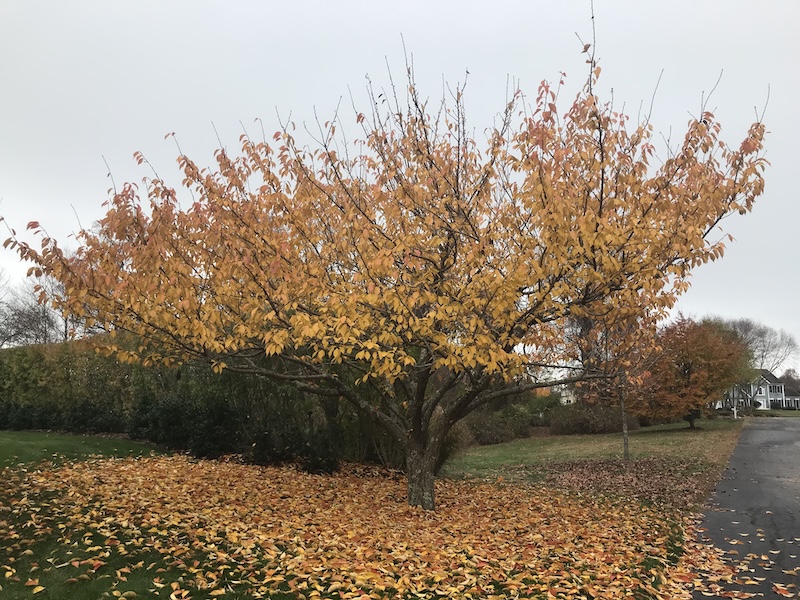
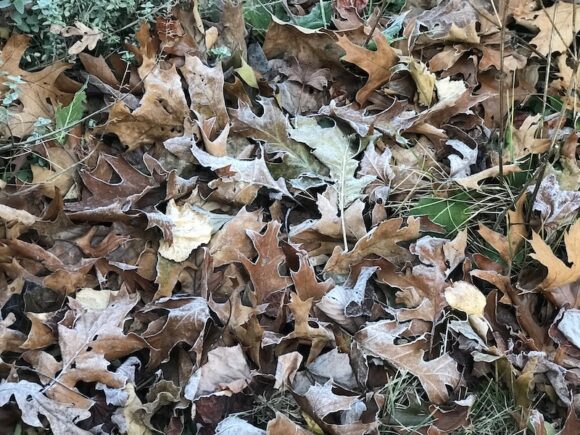
Leaves falling off of a copper beech tree. These leaves can be gently raked to the side in a leaf pile or run the mower over dried leaves on your lawn to break them up as organic lawn mulch. All photos by Suzanne Thompson.
Ah, the sights, sounds and smells of fall … unfortunately, they often involve the racket and fuel fumes of motorized leaf blowers and visions of yard crews scalping lawns as part of our traditional New England fall yard cleanup.
But did you know that we should be doing less to our yards this time of year, letting nature do her thing and saving some money in the process?
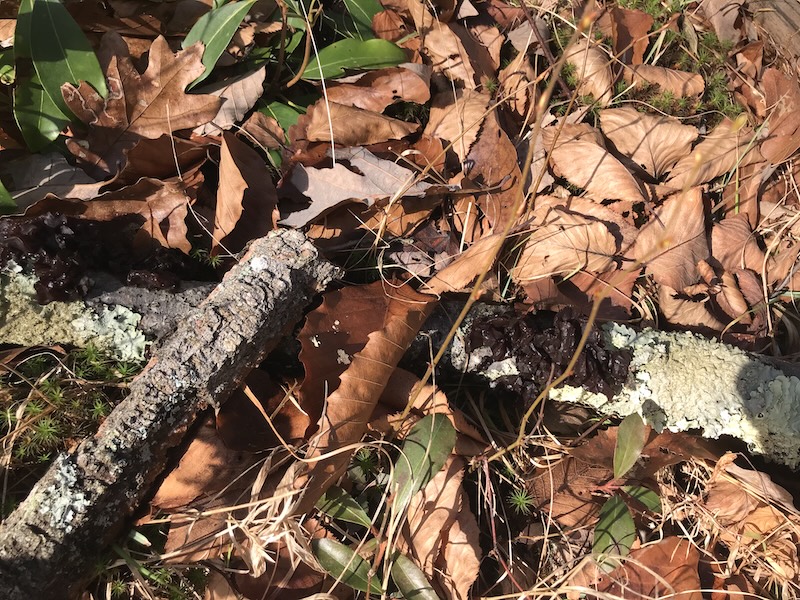
You see, dead leaves have a purpose in nature, more than just looking pretty for us two-legged leaf-peepers for a few weeks every fall. They are food and shelter for many beneficial insects (by definition, invertebrates) and other little critters (including frogs, salamanders and box turtles) that make up the outdoor ecosystem around us. And with the help of insects and wildlife, the leaves are broken down into nutrients and organic matter for our lawns, flowerbeds and landscapes. That is, if we leave them in place to do their good.
The Nature Conservancy points out that at least seven species depend on the leaves, as well as on the seed heads and stems of many of our favorite flowerbed plants. If we would only not strip these away in some fall frenzy to clear off our yards before colder weather hits. What we see as unnecessary brown stuff is actually natural insulation and nutrients.
If left untouched where they fall, leaves will soon be covered by early frosts that will help them decompose.
So, this fall, instead of contributing to the incessant drone and damage of motorized leaf blowers, try taking a kinder and gentler approach to fall cleanup. Xerces Society recommends raking leaves into garden beds and under trees where they serve as natural mulch. Or, if you have an area in the yard that can accommodate a leaf pile over the winter, push the leaves over there. In the spring, you will have valuable leaf mold. Rewilding Magazine, a Canada-based publication, tells you how to make your own leaf mold.
Fallen leaves and wood decompose to provide not only a natural mulch but also food and shelter for many beneficial insects.
Create small brush piles with the branches and twigs that you don’t want to leave in the middle of your yard; these also become home for insects and small wildlife. Put them at the far end of your property if you are worried about critters.
If you need to justify your actions to yourself, your spouse or neighbors (the ones with the scalped lawns), see National Wildlife Federation’s Six Excuses to Avoid Yard Work this Fall.
And, if you installed perennials, trees and shrubs this fall or earlier this year, don’t forget to give them a good watering. After a summer of enough rain, we are experiencing a dry fall.
For more good gardening advice, listen to garden writer Tom Christopher’s weekly Growing Greener podcasts and spend some time researching Pollinator Pathways. There are now Pollinator Pathway community programs in 19 states and Ontario, Canada.
Markham Starr’s lectures always draw a large audience. This photo is from a previous talk by Starr. Photo courtesy of OLHS.
OLD LYME–Starting at noon on Saturday, Nov. 22, documentary photographer Markham Starr will lead a lecture at the Old Lyme Historical Society, 55 Lyme St., before setting out on a walk through the Champlain North Open Space on Wyckford Lane.
The event is presented by the Old Lyme Land Trust and the Old Lyme Historical Society.
Starr is a Connecticut resident and author of “Ceremonial Stonework: The Enduring Native American Presence on the Land.”
The Land Trust in a press release said Native Americans built nearly two dozen distinct types of structures in the area, ranging from cairns to stone serpent effigies, that remain standing in long-abandoned woods. While Native American stonework is widely recognized out west and to the south, New England’s stonework remains obscure, having blended back into the woods.
Champlain North is located off Rte. 1 near the Old Lyme Inn. The Land Trust advised hikers to wear thick boots and consider a hiking stick.
OLD LYME — The Old Lyme Conservation and Open Space Commissions are sponsoring an informative talk about beavers at the Phoebe Griffin Noyes Library on Thursday, Nov. 20, at 6:30 p.m. Admission is free.
Connecticut Department of Energy and Environmental Protection (DEEP) Master Wildlife Conservationist Ginny Apple will illustrate how eager beavers re-shape our landscapes and create wildlife-rich ecosystems that protect aquifers and combat erosion.
After being hunted and trapped to near local extinction, beavers are returning to favorable locales in Old Lyme and across Connecticut. Their activity can unfortunately cause serious flooding problems, but conflict-resolving options exist.
Apple presents over 100 talks a year on Connecticut’s wildlife and has enjoyed a long career in communication. She is the current chair of Barkhamsted’s Conservation Commission, and serves on various environmental boards, including the Farmington River Watershed Association, the Litchfield Hills Audubon Society and the Northwoods Land Conservancy.