Lyme Land Trust Announces Appointment of Kristina White as New Executive Director

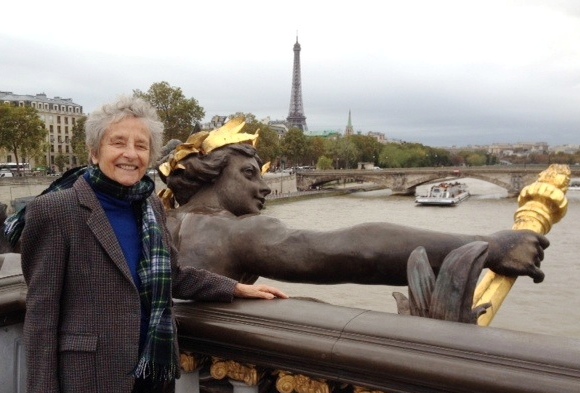
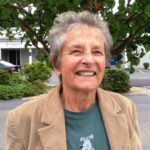
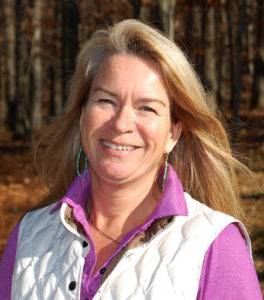
Kristina White has been named the new executive Director of the Lyme Land Trust. Photo by George Moore

The Lyme Land Conservation Trust has announced that the board has appointed Kristina White as its new executive director to replace George Moore, who has retired.

The Land Trust is very pleased that Moore will be succeeded by long-time Lyme resident, Kristina White. She has been an actively contributing member of the Land Trust’s Board since 2014 and takes over the executive director position after serving for the last 10 years as the Musical Masterworks Administrative Director. White has also been active in community affairs and currently serves as the treasurer of the Lyme Fire Company.

The Land Trust is deeply grateful for George Moore’s service as executive director and his dedication over the last 14 years. He was elected to the Land Trust Board as a director in 2003. In 2007, he was elected board president, and in 2013 the board appointed him as its first executive director. Through his vision and effective management, Moore has helped transform the Land Trust into one of the most active and successful in the state.

Land Trust President, John Pritchard, stated that, “In recognition of his outstanding contributions to the Land Trust, the board has elected George as its first Director Emeritus, a position newly created to honor his service. We hope that George will remain a member of the Land Trust family.”

Letter From Paris: André Derain: Major Artist, “Fauvism” Champion Featured in Parisian Retrospective

Nicole Prévost Logan

André Derain usually evokes cheerful scenes of sailboats bobbing up and down in the bright colors of a Mediterranean fishing port.

Actually, Derain (1880-1954) is a complex artist, who had a strong influence on the evolving avant-garde movements at the start of the 20th century.  The Pompidou Center is currently holding a retrospective titled, “Derain – 1904-1914. The radical decade.”

The curator of the Pompidou exhibit, Cecile Debray, comments, “Derain is the founder with Matisse of Fauvism and an actor of Cezanne’s Cubism with Picasso.” Never before had the artist been attributed such a crucial role. Derain was not only the link between the masters — Gauguin and Van Gogh — and the next generation of artists, but also an explorer of new sources of inspiration, including primitive Italians, along with African and Oceanic art. 

To quote Gertrude Stein (the writer and art collector famous on the cultural Parisian scene in the 1920s and 1930s), “Derain was the Christopher Columbus of modern art, but it is the others who took advantage of the new continents”

Not interested in the career of engineer planned for him by his father, the young Derain preferred to spend all his time at The Louvre, copying  the classics. He shared a studio with his friend Vlaminck on the Chatou island northwest of Paris where he was born. His first paintings had as subjects the Seine river, its banks and bridges, and the activities of workers. He displayed a distinctive technique of fast brush touches, (slightly different from “pointillism“), innovative plunging views and cropping, which give  his works the spontaneity of photographic snapshots.

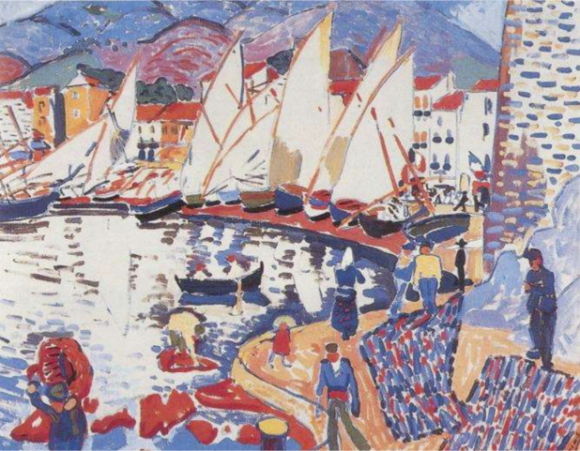
“Collioure, the drying of the sails'” by André Derain.

In the summer of 1905, he spent the summer in Collioure with Matisse and was dazzled by the Mediterranean light. Derain defined light as the negation of shadow.  He writes, “Colors become cartridges of dynamite casting off light.”  The room VII of the 1905 Salon d’Automne, called “la cage aux fauves,” caused a scandal, (fauves mean wild animals.)  In 1907, the Russian art collector Ivan Morozov acquired Derain’s paintings from the merchant Ambroise Vollard for the sum of 600 francs.

The following summer,  Derain continued to work with Matisse at l’Estaque, near Marseille. His compositions became more structured, with strong lines, volumes, perspectives and plans.  He still used arbitrary colors.   

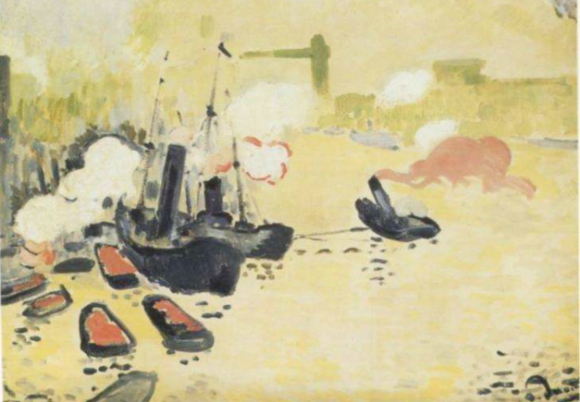
‘London’ by Andre Derain.

During two visits to London, he became fascinated by the bustling traffic of barges and tugboats on the Thames. He used the puffs of smoke mixed with the mist to decline all shades of whites. He found a new inspiration in the representation of water and sky. The apotheosis is an almost abstract sunset with the sun breaking through the dark clouds as if putting the sky on fire.

In 1910, Derain is part of the Cubist movement as shown in his representation of the village of Cagnes – an assemblage of cubes with red roofs scattered on a hilly landscape made of geometric lines and volumes of dense vegetation.

The versatility of Derain seems to be boundless. He played the piano, was  a professional photographer, and enjoyed fast cars (he owned 11 Bugattis.)  Using his virtuosity as a draughtsman, he created illustrations for humor publications along with stage and costume designs (for Diaghilev and the Russian ballets.)

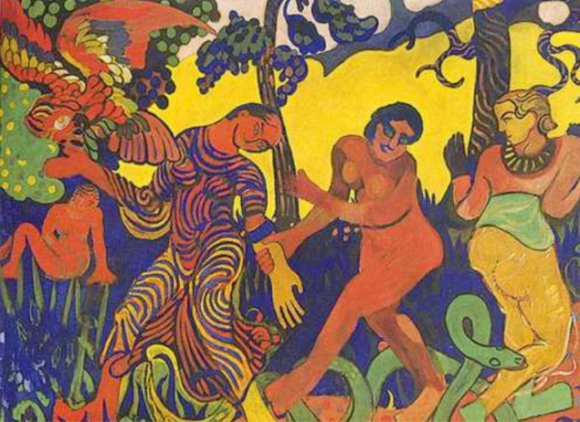
The dance” by André Derain.

Before leaving the exhibit, the visitor will be stunned by The Dance, 1906 – a large (185 x 228 cm) decorative composition of three women undulating in a luxuriant forest.  The work is rarely seen, since it belongs to a private collection.  Derain was inspired by a poem by Apollinaire and called it L’Enchanteur pourrissant (the rotting magician) about three fairies looking for Merlin’s tomb. The gestures of the dancers are reminiscent of Egyptian and Indian art, and could have inspired Nijinsky’s choreography. The mysterious vegetation and the hidden meaning of a snake and a multicolored parrot infuse the ritual scene with symbolism.

Editor’s Note: This is the opinion of Nicole Prévost Logan.

Nicole Prévost Logan

About the author: Nicole Prévost Logan divides her time between Essex and Paris, spending summers in the former and winters in the latter. She writes a regular column for us from her Paris home where her topics will include politics, economy, social unrest — mostly in France — but also in other European countries. She also covers a variety of art exhibits and the performing arts in Europe. Logan is the author of ‘Forever on the Road: A Franco-American Family’s Thirty Years in the Foreign Service,’ an autobiography of her life as the wife of an overseas diplomat, who lived in 10 foreign countries on three continents. Her experiences during her foreign service life included being in Lebanon when civil war erupted, excavating a medieval city in Moscow and spending a week under house arrest in Guinea.

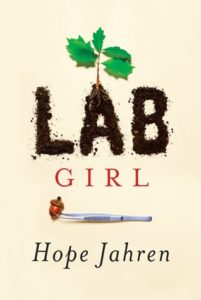
Reading Uncertainly? ‘Lab Girl’ by Hope Jahren

This month, let’s try an intensely introspective autobiography of a botanical scientist, wrapped in a biography of trees, flowers, and plants.

Hope Jahren, a professor at the University of Hawaii at Manoa in Honolulu, writes the clear, coherent, and engaging story of her upbringing in Minnesota, her education, travel and work in California, Georgia, Maryland, and Hawaii, intermixed with her study and analysis of the history and lives of plants and trees. And she apparently has a photographic memory as she recalls detailed conversations with her teachers, students, science mates and husband.

But, early on in my reading, I had a nagging question: does this intense self-analysis and self-reflection indicate something else?

Jahren finally acknowledges being a “manic-depressive woman” four-fifths of the way through her writing. She is consumed with her love of and study of plants: it dominates her life.

Fellow human beings? She acknowledges an early debt to her science-minded father, but never mentions him again after her first pages. Her scientific partner, Bill, is never granted a last name, nor is her husband, Clint. And none of those three is mentioned in her credits. She devotes one of the longest chapters to the birth of her son, but he remains nameless (mentioned only as “my toddler” and “my son.” Note he is not “our” son.)

But her often lyrical phrases continue to delight you as a reader, “a leaf is a platter of pigment strung with vascular lace,” and “vines are hopelessly ambitious,” and “being able to derive happiness from discovery is a recipe for a beautiful life.” Hers is a two-part, parallel story of intense curiosity – her science and her life.

Her self-analysis close to the end reads as follows:

“I’m good at science because I’m not good at listening. I have been told that I’m intelligent, and I have been told that I am simple-minded. I have been told that I am trying to do to much, and I have been told that what I have done amounts to very little. I have been told that I can’t do what I want to do because I am a woman, and I have been told that I have only been allowed to do what I have done because I am a woman. I have been told that I can have eternal life, and I have been told that I will burn myself out into an early death. I have been admonished for being too feminine and I have been distrusted for being too masculine. I have been warned that I am far too sensitive and I have been accused of being heartlessly callous.

But I was told all these things by people who can’t understand the present or see the future any better than I can. Such recurrent pronouncements have forced me to accept that because I am a female scientist, nobody knows what the hell I am, and it has given me the delicious freedom to make it up as I go along. I don’t take advice from my colleagues, and I try not to give it. When I am pressed, I resort to these two sentences: You shouldn’t take this job too seriously. Except for when you should.”

If that doesn’t arouse your curiosity to read this book, I don’t know what will!

Jahren’s conclusion, “Our world is falling apart quietly.” And her more optimistic recommendation: go plant a tree once a year! Which is exactly what my wife and I have done in our 24 years in Lyme, Conn. We’ve planted 13 Evergreens, four Red Maples, three Acacia, two Apples, one Japanese Maple, and one Witch Hazel. Yes, we’ve cut down an apple savaged by a hurricane, plus two small apples, but the latter were promptly replaced with two pears!

Do read Hope Jahren … and plant a tree.

Editor’s Note: ‘Lab Girl’ by Hope Jahren is published by Alfred A. Knopf, New York 2016
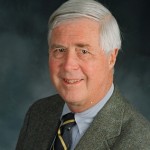
Felix Kloman

About the Author: Felix Kloman is a sailor, rower, husband, father, grandfather, retired management consultant and, above all, a curious reader and writer. He’s explored how we as human beings and organizations respond to ever-present uncertainty in two books, ‘Mumpsimus Revisited’ (2005) and ‘The Fantods of Risk’ (2008). A 20-year resident of Lyme, he now writes book reviews, mostly of non-fiction that explores our minds, our behavior, our politics and our history. But he does throw in a novel here and there. For more than 50 years, he’s put together the 17 syllables that comprise haiku, the traditional Japanese poetry, and now serves as the self-appointed “poet laureate” of Ashlawn Farms Coffee, where he may be seen on Friday mornings. His wife, Ann, is also a writer, but of mystery novels, all of which begin in a bubbling village in midcoast Maine, strangely reminiscent of the town she and her husband visit every summer.
Final Day to Enjoy Hadlyme Hall’s Artisans Show


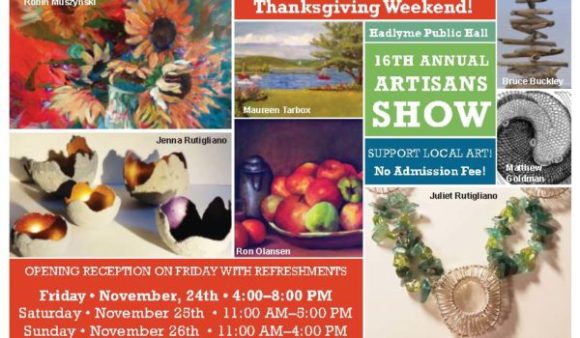
The 16th Annual Artisan Show at Hadlyme Public Hall will be held over Thanksgiving weekend from Friday through Sunday.

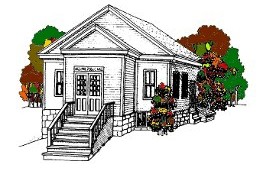
Hadlyme Public Hall

Kick off your holiday shopping by coming to support local artists, community spirit, and tradition. This annual venue of local artists and artisans will include oil and watercolor fine art, handmade jewelry, cement décor, pottery, and many other mediums as well as new exhibitors.

Buy Raffle Tickets at the show for ‘one of a kind’ raffle prizes.

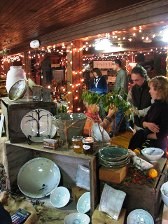
at_the_showThe show opens with a reception on Friday from 4 to 8 p.m.  The show is then open from 11 a.m. to 5 p.m. on Saturday and 11 a.m. to 4 p.m.  on Sunday.

Admission is free on all three days.

For further information, click here.