Lyme Land Trust Celebrates 50 Glorious Years of Conserving Land


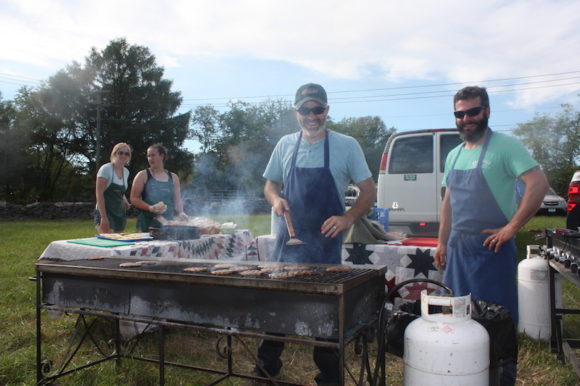
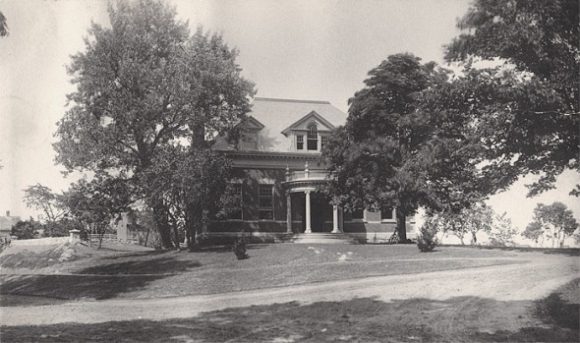
The Lyme Land Conservation Trust celebrated its 50th anniversary last Saturday with a barbecue picnic on the field next to the iconic Grassy Hill Church that the Land Trust saved several years from being turned into a housing development.


In keeping with the Land Trust’s tradition of focusing its energies on environmental preservation rather than social galas, the picnic was low-key and informal.


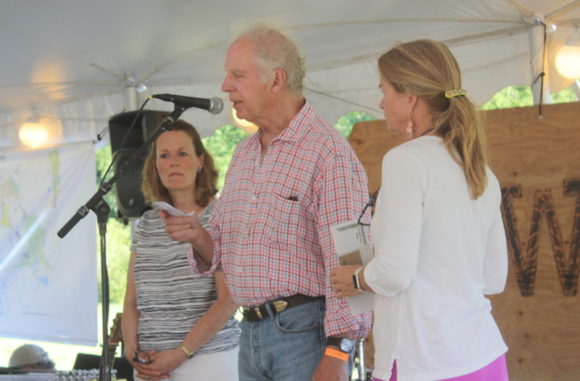
President John Pritchard’s remarks were brief, noting the Land Trust’s astounding success in helping to protect the rural character of Lyme, thanking the picnic volunteers, and reminding the picnickers that they are responsible for the Land Trust’s achievements.


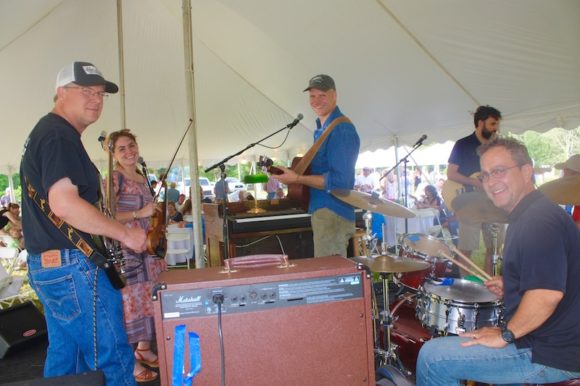
He then turned the microphone back the Plywood Cowboy band, which provided lively music for the event.

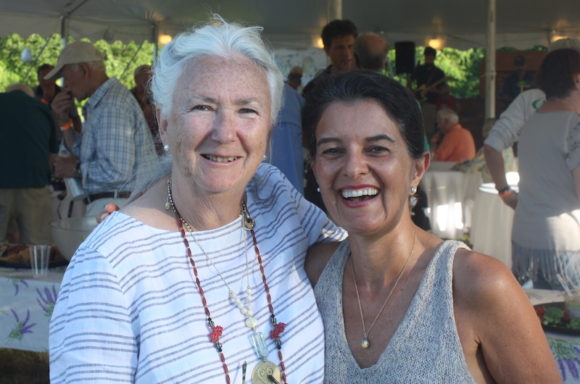
And clearly a good time was had by all!

Lyme DTC Recommends Jeannine Lewis as 33rd District Candidate for Probate Judge

Attorney Jeannine Lewis

The Lyme Democratic Town Committee (DTC) has announced that it would be recommending Jeannine Lewis – an attorney at Hudson and Kilby – as the preferred Democratic candidate for the soon-to-be-vacant position of District 33 probate court judge.  (The official Democratic candidate will be determined later this summer at a nomination convention attended by representatives from all the DTCs in District 33.)

Lewis, along with three other Democratic candidates, recently addressed the June meeting of the Lyme DTC, where each presented their qualifications for the position and responded to questions from the committee.  Lyme DTC Chairman John Kiker said, “In our opinion, Lewis demonstrated she had extensive experience in probate law, a thorough understanding of the issues and responsibilities, and a personal commitment to helping protect some of the most vulnerable members of our community.”

In addition to running a law practice focused on probate matters, estate planning and elder law, Lewis serves on the Continuing Legal Education Committee of the Connecticut Bar Association’s (CBA’s) Elder Law Section, and on the Integrity of the Practice/Pro Bono Committee of the CBA’s Estates and Probate Section.  She is a board member of the Shoreline Soup Kitchens and Pantries and provides pro bono legal counsel to Sister Cities Essex Haiti, a local charity that helps residents of the town of Deschapelles, Haiti.

Probate judges typically handle estates, trusts, adoptions, name changes, and the termination of parental rights and conservatorships, among other important matters. All candidates for the position must be members of the Connecticut bar. The probate court for our District is located in Old Saybrook and serves the towns of Chester, Clinton, Deep River, Essex, Haddam, Killingworth, Lyme, Old Saybrook and Westbrook.  Terrance Lomme, the current probate judge for our District, is retiring on July 18, 2017. 

The candidate selected at the nominating convention later this summer will go on to face Republican and other challengers in the Tuesday, Nov. 7, special election. Whoever wins the election will serve the remainder of Judge Lomme’s term, which ends Jan. 9, 2019.

The Lyme DTC’s mission is to support and strengthen the Democratic Party in the Town of Lyme and the State of Connecticut.  The committee meets on the third Thursday of every month at 7:30 p.m. in the Lyme Town Hall. These meetings are open to the public and all registered Democrats are encouraged to attend.

CT Trust Warns $1.1 Billion Susquehanna Bridge Project Might Set Unacceptably Low Bar for Environmental Protection in CT

Rendering of Susquehanna Bridge Project. Source: David Anderson, “Deadline approaches for comments on Susquehanna rail bridge replacement”, April 6, 2017, Baltimore Sun.

A June 26 announcement by the Federal Railroad Administration (FRA) that the $1.1 billion Susquehanna Bridge Project on the Northeast Corridor in Maryland poses “no significant impact,” drew sharp comment from Daniel Mackay, Executive Director of the Connecticut Trust for Historic Preservation, who warned that such a decision could set an unacceptably low bar for mitigating historic, cultural and environmental resource impacts from future high speed rail projects in Connecticut.

The proposed rail bridge replacement project bisects the National-Register-listed Havre de Grace Historic District in Maryland, comprised of approximately 1000 historic structures, many from the 18th century, on the banks of the Susquehanna River, and was reported in the Baltimore Sun on June 26, 2017.

“FRA determined that the most comprehensive level of environmental review was not needed for this $1.1 billion dollar rail project in the midst of a historic coastal community in Maryland,” noted Daniel Mackay, Executive Director of the Connecticut Trust. “Connecticut and Rhode Island communities caught in the cross-hairs of FRA’s bypass proposals should be concerned for the signal sent by this Maryland project – the process ahead may not yield the protections that communities want for themselves.”

Since the FRA released draft plans on November 15, 2015 to expand new high-speed railroad corridors across coastal Connecticut and Rhode Island, under a federal planning process called “NEC Future,” the Connecticut Trust, and its grassroots partner SECoast, have led a campaign to counter FRA’s insensitive approach to transportation planning for the Northeast Corridor routes through Connecticut.

“FRA’s plan represents a once-in-a-generation decision that will fundamentally shape the communities, economies and ecology of coastal southern New England,” explained Gregory Stroud, Director of Special Projects at the Connecticut Trust, and co-founder of SECoast. “The only sure way to protect our communities from these types of impacts is to fully remove these projects from the Record of Decision.”

The FRA is expected to announce a long-delayed Record of Decision for NEC Future this summer, finalizing a blueprint for the Northeast Corridor which will shape infrastructure decisions and investment through 2040, or later. The current blueprint has been in place since a similar process completed in 1978. The Northeast Corridor, which connects cities between Washington, D.C. and Boston, is the nation’s busiest rail corridor.

Old Lyme Library Celebrates its Founders Day Tonight, All Welcome

Historic photo of the Old Lyme Phoebe Griffin Noyes Library.

Join the Old Lyme-Phoebe Griffin Noyes Library for an evening reception on Wednesday, June 28, at 7 p.m., celebrating the Library’s history and art.  The library was founded in June 1898.

The event features guest speaker Michaelle Pearson and honored guest Townsend Ludington.

All are welcome, but the favor of an RSVP at this link is requested.

State Budget Discussion at OL Church Draws Large Crowd With Wide Range of Concerns, Questions

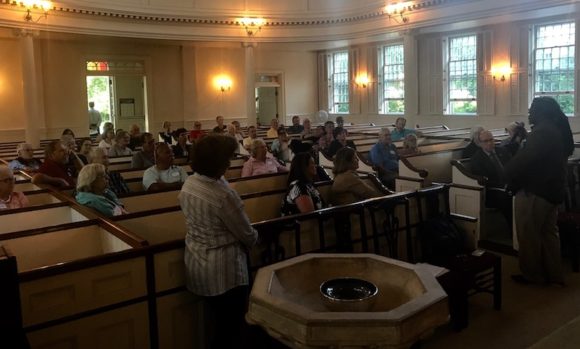
Attendees at Monday night’s state budget discussion listen attentively to a speaker.  Photo by Jacob Ballachino.

About 60 community leaders and citizens, including members of the clergy from both New London and Middlesex Counties,  attended a “Conversation on the State Budget,” Monday evening at the First Congregational Church of Old Lyme (FCCOL)

Only two state-elected representatives attended out of a total of the 55 senators and representatives invited. State Rep. Devin Carney, (R-23rd), whose district includes Lyme, Old Lyme, Old Saybrook and the southern segment of Westbrook, and State Rep. Melissa Ziobron (R- 34th), whose district includes East Haddam, East Hampton and Colchester, attended.

Carney and Ziobron answered questions from the audience carefully and thoughtfully, shedding light on how the budget process is proceeding. They also listened attentively to concerns raised by many of those who attended.

Chief among those concerns was expressing the importance of maintaining appropriate and adequate state funding for programs that are critical to those most in need throughout the state. In light of pending federal cuts to health care programs, maintaining the State of Connecticut’s support of medical care for the low-income and elderly was a constant theme of the evening.

Many of those who attended made it clear that, if the priorities and commitment to support the neediest among us were clearly articulated, paying higher taxes would seem both an appropriate and honorable response. Cutting taxes was not considered a priority. Several speakers commented how it is a privilege to live in this area and, as a consequence, there should be an expectation to pay a fair share to compensate for those who shoulder unreasonable burdens in Connecticut’s cities.

There was a lively discussion about the state pension-funding crisis during which former State Senator Melodie Peters reminded the audience that state employees had paid into those funds over many years.  She expressed her firm opinion that it is critical now to honor the state’s commitments to those people.

There was almost universal consensus that the state is in a challenging place in terms of the budget and compromise on all sides in the legislature is imperative. Frequently, questions were raised about why the two parties seem so crippled by partisanship.

A wide-ranging discussion about increasing state revenues ensued. Questions were raised regarding the possibility of re-implementing tolls and taxing sugary drinks. Another audience member asked, “Could we add a small fee onto our car registrations to fund our state parks and their employees?”  A third speaker questioned whether the state could consider raising taxes on those in upper income brackets.

The subject of the questions then moved to business with one audience member asking, “Can we incentivize businesses to come to this state?” while another questioned, “Is it possible to raise the minimum wage so that people in the state have more ability to participate in our economy?”

The Rev. John Selders of Amistad Congregational Church in Hartford, Conn., who serves as coordinator of the Moral Monday, Conn., program, and Moral Monday Board Member Pamela Selders helped to lead the discussions, along with FCCOL Senior Associate Minister Carleen Gerber