Are You Eligible for Earned Income Tax Credit? Find Out With Free Tax Help From VITA

HARTFORD/ LYME-OLD LYME — Workers may get a larger tax refund this year because of the Earned Income Tax Credit (EITC). But to get it, you must file a tax return and claim it.

This year, IRS is promoting EITC and providing information on other refundable tax credits for which you may be eligible. This includes the Child Tax Credit (CTC), the Additional Child Tax Credit (ACTC), the Credit for Other Dependents (ODC) and the American Opportunity Tax Credit (AOTC).

If your 2019 income is up to $56,000, the Volunteer Income Tax Assistance (VITA) program in Connecticut provides free tax preparation services, including filing for the EITC and other credits for individuals and families with 2019 incomes up to $56,000, persons with disabilities and limited-English-speaking taxpayers. Appointments at VITA locations across the state are now open.

The Village for Families & ChildrenUnited Way of Central and Northeastern ConnecticutHuman Resources Agency of New Britain and the Connecticut Association for Human Services have opened tax filing sites in Litchfield, Hartford, Tolland, Windham, Fairfield, New Haven, Middlesex and New London Counties.

To schedule an appointment at a VITA location, visit 211CT.org and click on “Tax Help” or dial 2-1-1 and press 3 then 6.

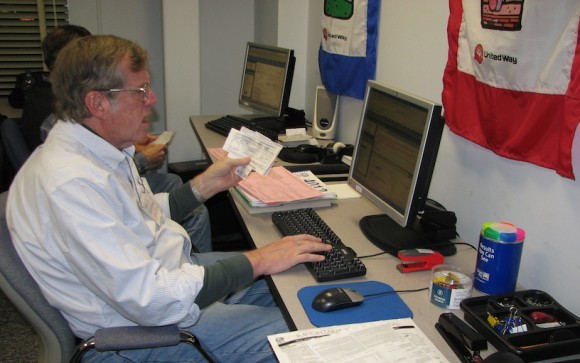
Experienced VITA volunteers are ready to help you with tax preparation in numerous locations across Connecticut. File photo.

VITA volunteers – trained by the Internal Revenue Service – ask you the needed questions to find out if you qualify for EITC and other refundable tax credits. They also prepare and e-file (electronically file) your tax return at no cost to you.

“Our community volunteers help you get EITC and the maximum refund you’re due. Our goal is to help you get it and get it right. This is money you can save or use to pay off bills, buy that car to get to work or make a down payment on a home. Let us help make your life a little easier,“ said Laura O’Keefe, director of family financial stability at The Village for Families and Children.

EITC can mean up to a $6,431 refund when you file a return if you have qualifying children. Workers without a qualifying child could be eligible for a smaller credit up to $519. According to the Internal Revenue Service, the average amount credited for 2019 was $2,476.

In 2019, 25 million workers received more than $63 billion in EITC refunds. In Connecticut, 216,000 workers received $485 million in Earned Income Tax Credits, averaging $2,243 per person.

The IRS estimates four of five eligible taxpayers claim and get the EITC. EITC and other income tax credits lifted an estimated 9 million people out of poverty last year, including 5 million or more than half of them children. (Source: Center on Budget and Policy Priorities, Policy Basics: The Earned Income Tax Credit, June 21, 2019)

Bring the following to make sure VITA volunteers get you the right amount of credit you deserve:

  • A valid driver’s license or other photo id card
  • Social security cards, a social security number verification letter for all persons listed on the return
  • Birth dates for all persons listed on return
  • All income statements: Forms W-2 and 1099, Social Security, unemployment, and other statements, such as pensions, stocks, interest and any documents showing taxes withheld
  • All records of expenses, such as tuition, mortgage interest, or real estate taxes
  • Copies of last year’s state and federal tax returns, if you have
  • Bank routing numbers and account numbers to direct deposit any refund
  • Dependent child care information: name and address of who you paid and either the caretaker’s SSN or other tax identification number
  • If you purchased coverage through the Health Insurance MarketplaceForm 1095-A, Health Insurance Marketplace Statement
  • Both spouses to sign forms to e-file a joint tax return

In addition to face-to-face tax assistance, free online self-preparation and tax help is available for people who make up to $66,000 at www.myfreetaxes.com.

For more than a decade, VITA coalitions have been helping working families become financially secure. Free tax preparation is one way for hard-working families to keep more money in their wallets by obtaining the tax refunds and credits they have earned.

Last year, volunteers at 175 VITA locations across Connecticut brought $73,222.366.00 in total refunds and credits to filers.

The 2019-2020 VITA and MyFreeTaxes program partners are: CT Association for Human Services; Human Resources Agency of New Britain; Internal Revenue Service; The Village for Families & Children; and Connecticut United Ways.

Editor’s Note: This article is taken from a Press Release. For further information, contact one of the following:
Laura O’Keefe, Director of Family Financial Stability, The Village for Families & Childrenlokeefe@thevillage.org, 860-236-4511 ext. 3836
Maura Cook, Director of Community Engagement and Marketing, United Way of Central and Northeastern CTmcook@unitedwayinc.org; 860-493-1131
Juan Berrios, Community and Financial Services Program Manager, HRA of New Britainjberrios@hranbct.org; 860-225-8601
Takima Robinson, VITA/Asset Building Program Manager, CT Association for Human Servicestrobinson@cahs.org, 860-951-2212 x229

There’s Not Just One ‘2019 Old Lyme Citizen of the Year’, But All Five Members of OLHS’s ‘Tuesday Morning Work Crew’!

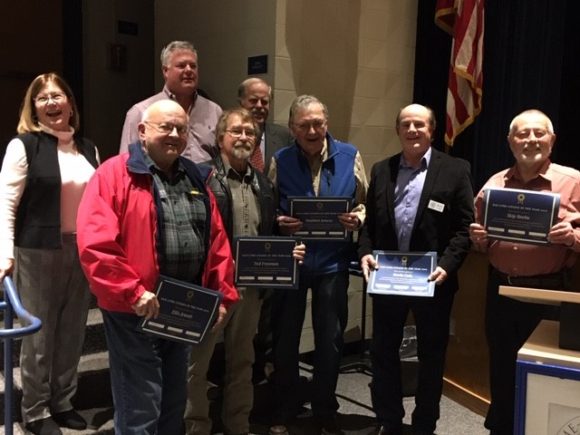
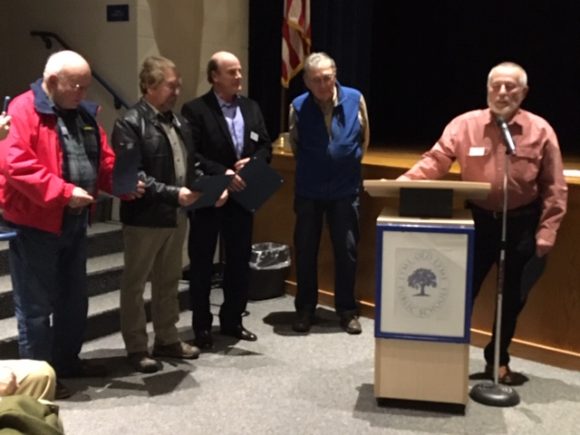
The 2019 Old Lyme Citizens of the Year stand in the front row in this photo: from left to right: C. Ellis Jewett, Ted Freeman, Stephen Joncus, Kevin Cole, and Skip Beebe. Celebrating with them and standing in the back row are the Old Lyme Board of Selectmen; from left to right, Selectwoman Mary Jo Nosal, Selectman Chris Kerr, and First Selectman Tim Griswold. Photo by Michele Dickey.

OLD LYME — The Annual Town Meeting held Monday evening in Lyme-Old Lyme Middle School concluded with the eagerly anticpated announcement of the 2019 Town of Old Lyme Citizen of the Year.

In an unexpected twist, First Selectman Tim Griswold opened the speech in which he would reveal the closely-guarded secret of the awardee chosen by the board of selectmen by saying, “This year we decided to award not just one citizen, but five citizens whose continued volunteerism and generosity has made an immeasurable impact on our community.”

He went on to name five men — Skip Beebe, Kevin Cole, Ted Freeman, Ellis Jewett and Stephen Joncus — who are affectionately known as the Old Lyme Historical Society’s (OLHS) “Tuesday Morning Work Crew.” Griswold noted that nitially the members consisted of Chairman Ellis, Beebe and Cole but they were soon joined by Freeman and finally by Joncus.

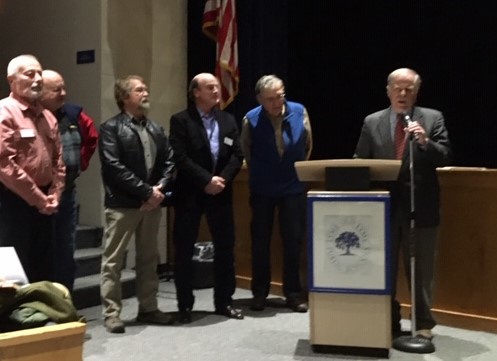
Old Lyme First Selectman Tim Griswold explains why the ‘Tuesday Morning Work Crew’ are collectively Old Lyme’s Citizen of the Year for 2019.

Explaining the history of the building that sparked the creation of the ‘Crew’, Griswold noted that the OLHS had purchased the former Grange  building at 55 Lyme St. in February 2014 and almost immediately the work had begun. He went on to detail the long list of often extensive projects that the ‘Crew’ have completed over the years noting first that their first assignment was to “remove the awkward entrance lobby” and turn it into an office featuring a desk and counter, new exterior doors, new windows and a realigned set of interior doors.

The ‘Tuesday Morning Work Crew’ then “removed the hung ceiling in the auditorium to expose the bead-board” and added period light fixtures. Along the way, Ted Freeman fabricated two display cases for two donated antique doll houses.

Griswold continued his list noting that these veteran volunteers went on to build “an archive room inside the lower level,” complete with a Mitsubishi air handling system to maintain proper humidity and temperature levels.” They also created a reading room, replaced the furnace and added air conditioning for the building. Architect Steve Joncus designed the space layout and advised on the engineering aspects of the work.

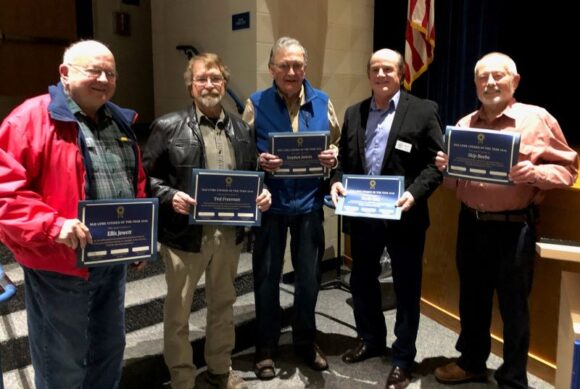
The ‘Tuesday Morning Work Crew’ is all smiles after receiving their awards. Photo by Doris Coleman.

The remarkable list of accomplishments continued with a reworking of the northeast portion of the building in order to rebuild the old staircase, and creating a handicapped-accessible rear door entry, the latter of which Griswold said with a chuckle had been “demanded” by then OLHS Board Chair Alison Mitchell. They even installed a chair-lift elevator that services three different levels.

The Crew is presently working on refurbishing the lower level break room and mini-kitchen area and Griswold joked that “they may be thinking they are reaching the end of their “to do” list but I have a feeling Alison Mitchell believes that may not be the case!”

Griswold noted that the Crew handled every aspect of each project, including getting the proper building permits, purchasing building materials and lining up subcontractors, as needed. Saying, “They did all of this out of the goodness of their hearts and never asked for anything in return, Griswold emphasized, “The hundreds of hours they have donated have saved the Society well over $75,000.” He added that in addition, being local craftsmen, the Crew, “Inspired other local tradesmen and suppliers to discount their usual charges.”

Commenting that “One of the most beautiful parts of this story is the friendships that were expanded or developed,: Griswold explained that “These five guys began having breakfast before their putting in their volunteer hours or grabbed lunch afterwards. They are there for each other in times of need, and they make each other laugh. Griswold added with another of his familiar grins, “Well, mostly Kevin does!” Griswold added that you can always see their trucks parked in the parking lot behind the Society on Tuesdays and that, “Sometimes they don’t even take holidays off!”

Griswold concluded, “Often, you hear people say that the volunteer spirit has been decreasing over the last decade of two. However, when you look at the shining example set by the Crew, we can say the volunteer spirit in Old Lyme is alive and well … and even better, the inspirational contributions of the Crew will help preserve the history of our great town for generations to come. Congratulations Skip, Kevin, Ted, Ellis and Steve. You are most deserving of this recognition.”

Skip Beebe expresses his appreciation on behalf of the whole “Crew” for the Ctizen of the Year award.

After accepting their awards and expressing their sincere thanks to the board of selectmen, Beebe spoke first saying, “We are as close as five guys can be.” He credited Jewett for having caused him to be a member of the Crew and noted it was Ellis who originally invited him to join the OLHS.

Cole addressed the audience next noting, “It is humbling to receive this [award] …” and then adding in his characteristic jocular manner, “… but rather embarrassing because we decided way back that we would keep track of all the hours we do and then bill them at the end!”

A View from My Porch: Lyme Native Ezra Lee was World’s First Commander of an Attack Submarine in Battle

There was a time before our time,
It will not come again,
When the best ships still were wooden ships
But the men were iron men …

Sgt. Ezra Lee, 1749 – 1821, is buried   in the Duck River Cemetery in Old Lyme. Image from Wikipedia Public Domain: painter and engraver unknown, from The Story of the Submarine by Farnham Bishop.

I believe this eloquent verse from Rosemary and Stephen Vincent Benet’s ode to New England’s “Clipper Ships and Captains” can also be used to describe Ezra Lee, the first man to command an attack submarine in battle.

In this essay, I will describe the heroism of this native of Lyme, Conn., and present some key elements of this remarkable period in Connecticut’s history. However, I think that one must have some understanding of his primitive submarine in order to fully appreciate Ezra Lee’s courage.

Bushnell’s Genius

This first submarine, named the Turtle, was designed and built by David Bushnell in what is now Westbrook, Conn.

Bushnell was a farmer, but left the family farm in the care of his brother, Ezra, in 1771 to pursue his education at Yale College. He graduated in 1775. His last year at Yale coincided with the Battles of Lexington and Concord, i.e., the beginning of the American War of Independence.

By that time, several other important events leading to the war with the British had already occurred. They included the Boston Massacre (1770), the Boston Tea Party (1773); and enactment of the Boston Port Act, which was one of five “Intolerable Acts”, implemented in 1774 to punish the colonists after the Tea Party. The law, was enforced by a British naval blockade of Boston harbor, which effectively shut down all commerce and travel in and out of Boston and the Massachusetts colony.

Bushnell was a fervent patriot and felt strongly that defeating the mighty British Navy would require unconventional tactics. He began a collaboration with another member of the Yale community, Phineas Pratt. One of their first projects was the development of an underwater bomb with a mechanical time-delayed detonator – a distant forerunner of contemporary naval mines. It is noteworthy that part of his Yale tenure overlapped with Nathan Hale’s, who graduated in 1773.

Bushnell felt that he could use this underwater explosive against the British if he could develop the means to deliver it to a targeted warship and place it below the waterline.

So, having returned to Westbrook after graduation, Bushnell’s small team, which now included his brother Ezra, turned its attention to developing a vessel that could transport and attach these explosive devices to enemy warships … and the idea of a “sub-marine” was conceived. Bushnell recognized that, to be effective and avoid detection, the vessel would have to be completely submerged for some period of time during the mission; be able to move through the water; and, when ready, return safely to the surface.

Colonial Era Engineering Limitations

With little real successful precedent on which to build, Bushnell’s submarine would be a “true” invention. Clearly, there were many significant engineering and design problems that the team had to resolve. They included building a watertight, pressure-proof, and vertically stable vessel; propulsion – both vertical and horizontal; steering, and vision; and the actual weapons-delivery system.

A key issue was that of developing the means to vary the vessel’s ballast in order to enable submersion and re-surfacing. Bushnell eventually solved these problems and introduced some innovations. For example, he equipped his vessel with an early snorkel-type breathing device and a two-bladed propeller for propulsion.

The Turtle

‘Turtle’ model on dsplay at the Royal Navy Submarine Museum in Gosport, England. The image is published under this license.

I realize that I am over-simplifying here, but I’m trying to avoid getting stuck in the sea-weeds of the Turtle’s design and construction.

The Turtle resembled two tortoise shells, bound together. It was constructed of oak timbers, which were shaped, joined, and caulked at the joints. The vessel was bound with iron bands and covered with tar to ensure water tightness.

It was about 7 ft. long, 4 ft. wide, and 8 ft. from its keel to the top of its brass “conning tower,” which protruded about eight inches out of the water. It had no periscope, but the conning tower contained six glass ports.

The submarine was capable of only carrying one person, who sat upright on a seat roughly resembling a bicycle seat (see photo at left.) Moreover, Turtle was equipped with a depth gauge to measure distance from the surface. a compass for navigating, and a crude ventilator to supply the vessel with fresh air at the surface.

Controls included hand-cranks and pedals for operation of the propellers; a rudder, located behind the operator, controlled by foot; and; an “immersion chamber,” for flooding when additional ballast was required. Turtle submerged and surfaced via brass pumps that took in or expelled seawater as ballast, and 700 pounds of lead weights, which could be let out or retracted as needed.

The Turtle had no real ballast tanks; and the incoming seawater simply flooded the floor of the cabin – leaving the operator knee-deep in water until it was eliminated with the pumps when it was time to surface.

Two tubes, which passed through the conning tower hatch provided fresh air when near the surface. The air supply would last only about 30 minutes, and would soon become foul when the submarine was submerged. The exterior was equipped with a large screw that could be twisted into the planks of a ship’s hull. The screw was tethered by a rope to one of Bushnell’s timed explosive devices.

It is interesting that Bushnell had actually consulted fellow revolutionary, Ben Franklin, to solve the problem of illuminating the Turtle’s interior – who suggested using phosphorescent “foxfire.”

Sea Trials

Turtle was tested after completion of construction in 1775 in the relative safety of the Connecticut River. Ben Franklin observed the initial tests from the shore and was favorably impressed and understood its potential in naval warfare. The Turtle was also recommended to George Washington by Connecticut Governor Jonathan Trumbull. Ezra Bushnell had been trained in operating the Turtle and had assumed that role during testing, and presumably, would also pilot the vessel in battle.

As noted, the Turtle held only a single person, and that person was wholly responsible for bringing the craft to the target and attaching and arming the explosives. That person required substantial physical strength and stamina, incredible focus, and the utter absence of claustrophobia.

There are replicas of the Turtle in Groton’s Submarine Force Museum and the CT River Museum in Essex; which has a cut-away display in which one may experience Turtle’s cabin.

The Bushnell Farm house is located at 1445 Boston Post Rd., Old Saybrook, CT.

The First Mission

The Turtle was ready for deployment by the spring of 1776 – and may have originally been planned for use against the British warships blockading Boston Harbor. However, by that time, the British had ended their blockade and moved their ships north to Halifax, Nova Scotia.

Ezra Lee’s Mission

In July, 1776, a British naval force began to move into New York Harbor, carrying supplies and soldiers. General William Howe and Admiral Richard Howe had essentially shut down western Long Island and New York to the colonists.

The Turtle was transported overland through Connecticut to New York Harbor, which was still in American hands. After arriving in New York, Ezra Bushnell developed a terrible fever, possibly Typhoid, and was unable to carry out any mission.

Brigadier General Samuel Holden Parsons, also from Lyme, then recommended three men to train to pilot the submarine. One of those men was his brother-in-law, Ezra Lee. So, to avoid discovery by the British, David Bushnell returned to Connecticut with the Turtle, and began intensive training of the three recruits. After a month of training, Lee was chosen to make the first attack on a British warship.

General Washington gave permission for Turtle’s first mission on Sept. 6 – an attack on the HMS Eagle, Admiral Howe’s flagship, which was anchored in New York Harbor, south of Manhattan. Near midnight on the 6th, Turtle was towed by a pulling boat from the Battery towards the Eagle. Halfway, Ezra Lee entered the Turtle and secured the hatch over his head. – and a submarine was engaged in battle for the first time against an enemy ship. Later, Lee wrote several letters describing this mission.

It took Lee nearly two hours of pedaling to reach the Eagle. Once there, he took on some ballast, and submerged completely. When he thought he was under his target, he pumped out a small quantity of water from the ballast tank, until a bump indicated he was beneath Eagle, with the auger screw against the ship’s bottom.

Unfortunately, Lee’s attempt to attach the explosive with the auger screw failed, possibly because a metal plate covered the area where he was trying to drill. He was forced to re-surface to replenish his air supply. He submerged again and attempted to drill into another spot in the hull. On that second dive he was unable to stay beneath the ship, and eventually abandoned the attempt.

It is possible that the tide turned during the second attack and Lee was unable to compensate. Lee’s mission was near the southern tip of Manhattan, where the Hudson River and the East River merge. The currents tend to be strong and complex there. So, Turtle would only be able to attack a ship moored in that area during a short period of time when the incoming tide balanced the river currents.

Lee was exhausted, and the outgoing tide threatened to take Turtleout to sea. He ejected all the ballast water and began pedaling with his remaining strength. With the ballast water pumped out, one third of Turtle’s hull stuck out of the water, making it clearly visible in daylight. As the day grew lighter, the British spotted the Turtle, and set out in small boats to confront it.

To divert the patrol and to lighten his craft, Lee released the explosive device that he had tried to attach to Eagle. It drifted towards the East River and soon exploded. In Lee’s words, it, “went off with a tremendous explosion, throwing up large bodies of water to an immense height.” Lee returned safely after several hours on the water and received Washington’s congratulations in person.

Lee did make a second unsuccessful attempt against the British frigate HMS Cereberus, but was discovered and forced to retreat.

An Ignominious Victory

Although Turtle’s missions were unsuccessful in that no damage was inflicted on any British vessel, some historians feel that the venture was, by no means, a failure. They suggest that the explosion led to Admiral Howe ordering the British warships to be repositioned further off the harbor, from which they could no longer maintain their blockade of New York.

Perhaps an intangible psychological victory might also be claimed simply through her use as another unconventional weapon of war employed by the colonists. These also included the guerilla tactics employed by the self-trained and highly mobile militia, which was organized to assemble rapidly and deploy where needed, and aptly named the “Minutemen.”

Note that the National Archives possess a letter that George Washington wrote to Thomas Jefferson in September,1785 about the Turtle, saying, “I then thought, and still think, that it was an effort of genius.”

David Bushnell – After the Attack on Eagle

Bushnell loaded Turtle aboard a fast sloop, hoping that the sloop could slip unnoticed past the British into Long Island Sound and back to Connecticut. A British frigate discovered the sloop, however, and, according to the British, sank her and her cargo. Note that there are many versions of the Turtle’s final days.

In 1778, General Washington proposed the formation of a new military unit to be known as the “Corps of Sappers and Miners” (i.e., combat engineers.) It was organized in the summer of the next year. Bushnell was given command of the Corps with the rank of captain-lieutenant in August, 1779.

Ezra Lee – After the Attack on Eagle

Lee was moved by Washington into the secret service/special forces. He later participated in the Battles of Trenton, Brandywine and Monmouth.

Lee died in 1821. His obituary in the “Commercial Advisor” (November 1821) stated: “Died, at Lyme, on the 29th October Captain Ezra Lee, aged 72, a revolutionary officer. He died without an enemy. It is not a little remarkable, that this officer is the only man, of which it can be said, that he fought the enemy upon land–upon water–and under the water…”

Lee is buried in the Duck River Cemetery in Old Lyme. The inscription on his original grave marker was: “EZRA LEE. / DIED / Aged 72 Years. / He was a Revolutionary / Officer, / and esteemed by / Washington.” Unfortunately, during the colonial era, gravestones were often made from softer types of stone, such as sandstone and slate, which were easier to cut and carve. However, they deteriorated. Lee’s original marker has been replaced with a granite obelisk, but without the full original inscription.

Some Observations by the Author

I am not a native of southeast Connecticut. Rather. I am an émigré from West Simsbury in Connecticut’s northwest hills. I knew almost nothing about David Bushnell and Ezra Lee before visiting the Connecticut River Museum, but I was encouraged to learn more.

Stewart Holbrook, author of “Lost Men of American History,” has claimed that “… had a Longfellow fastened upon him, Ezra Lee would be as well known today as Paul Revere, and it is a pity that he isn’t.”

“Bushnell’s Infernal Machine” sung by New England balladeer Larry Kaplan

This song provides a view of Turtle from the inside. Kaplan is known for his songs of New England and its seas. Visit this link to see the song performed.

Editor’s Note: The author is going a few miles north on the Connecticut River for his next essay to visit William Gillette and review his impact on the cinematic portrayal of Sherlock Holmes.
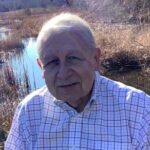
Tom Gotowka

About the author: Tom Gotowka’s entire adult career has been in healthcare. He’ will sit on the Navy side at the Army/Navy football game. He always sit on the crimson side at any Harvard/Yale contest. He enjoys reading historic speeches and considers himself a scholar of the period from FDR through JFK.

A child of AM Radio, he probably knows the lyrics of every rock and roll or folk song published since 1960. He hopes these experiences give readers a sense of what he believes “qualify” him to write this column.


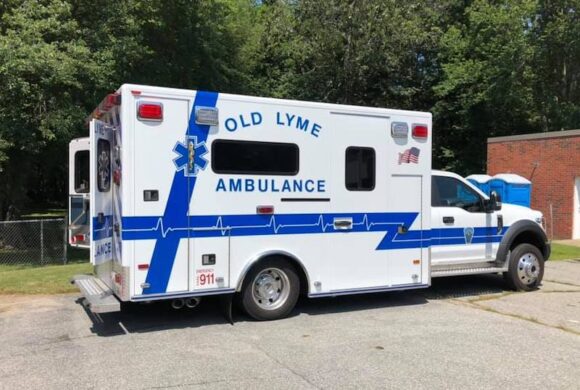
Facts & Figures from Old Lyme EMS; Falls Dominate List of Reasons for Ambulance Call-Outs

You’ve seen their ambulances around town but do you know how many calls they respond to in a month?

OLD LYME — The Old Lyme EMS Ambulance Service responded to 74 calls in November 2019 and 70 in December 2019.

[table id=2 /]

Following Up On Falls — Why They Happen, How to Avoid Them, What to Do If they Happen

Falls came in as the number one reason for ambulance call-outs in December and number two in November.

Falls can be caused by a myriad of reasons including falling out of a bed, off of a ladder, or down stairs; or slipping on a wet floor, snow/ice, or toys; or a medical reasonsuch as a changed or new medication resulting in a loss of balance.

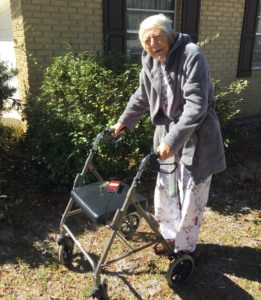
If you have a walking frame, always use it to avoid falls.

Many falls are preventable if people would simply take a second to ask themselves if they should take the risk of going up the ladder, or call someone to help instead. Similarly, taking a few steps without a walker or cane when you normally use one, or making a snap decision to run out and get the mail in the snow without putting on the proper boots to avoid a slip can have disastrous consequences.

The amount of time it takes to think about a quick action like those mentioned is much shorter than the time it will taketo recover from an injury. Ask yourself if the risk is worth it or would it better to wait?

Although falls happen at any age, records show that 32,000 seniors fall each year causing detrimental injuries to themselves. With aging bodies, these injuries can be both life-altering and extremely costly to treat.

Whatever the injury, when you call 911, you can be assured that Old Lyme EMT’s (Emergency Medical Technician) and EMR’s (Emergency Medical Responders) are trained to the National Education Standards. Moreover, every EMT or EMR in the United States is trained to the exact same level by means of monthly mandatory and elective training sessions. (Our training will be the subject of another article.)

After a fall, if you are in a safe place, it is best not to move. Emergency Medical Service providers will evaluate the mechanism of injury, including

  • CMS (Circulatory, Motor and Sensory)-evaluation
  • obtaining vital signs to rule out any possible medical reasons for the fall
  • asking the patient or witness(es) full details of the fall/injury, recent pertinent medical issues and medication list.

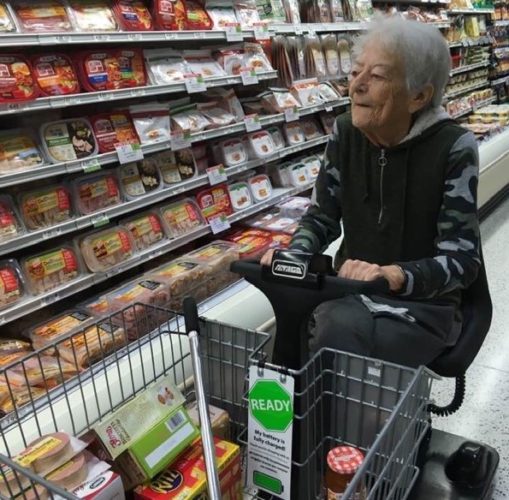
Another way to avoid falls is to use the facilities provided by stores andbusinesses to assist you.

Once on the scene, it should take about 10 minutes in total to evaluate the reason for fall, take vitals, and stabilize any injuries for transport.

There may be times when a patient has hit his/her head and experienced a severe injury or bleed. This is when the 911 dispatcher will also send a paramedic to the scene — typically a paramedic from the Middlesex Health Medical Center in Westbrook.

Emergency Medical Technicians and EMR’s make up the body of a volunteer ambulance organization for BLS (Basic Life Support) whereas Paramedics provide ALS (Advanced Life Support.)

The paramedic will perform an advanced evaluation. Paramedics are ‘advanced’ EMT’s, who are able to run an EKG, intubate the airway, start an IV, administer medications, and more.

If paramedics find it necessary to stay with the patient for advanced care and transport with the EMT/EMR’s, they take over the care of the patient supported by BLS assistance frm the EMT/EMR’s.

An Important Reminder About ‘Lift Assists’

There may be a time when a patient has fallen and — whether elderly or not — is unable to get up. Under those circumstances, you can call 911 and request a ‘Lift Assist.’ An ambulance crew will respond to the scene, evaluate the patient’s vitals and ensure the patient is stable other than needing to be assisted and helped to their requested place, e.g. bed, chair, wheelchair.

There is no charge for this assistance — it is a community service. In the event additional manpower is required, 911 dispatchers will put out a call requesting additional EMS crew and/or volunteer firemen.

After evaluating a patient, if it is felt that the patient requires more than just a ‘Lift Assist,’ transportation will be provided.

If you have an interest in joining OLEMS to receive training as an EMR or EMT, call 860-434-0089 or stop by the Cross Lane Fire/EMS building Monday through Friday from 6 a.m.to 5 p.m. for more information. (The office will be manned unless the day crew is out on a call.)

Talking Transportation: A Conversation With CT DOT Commissioner Giulietti, Part 2

Jim Cameron

Editor’s Note:  This is the second of two articles written by Jim Cameron reporting on his conversation with CDOT Commissioner Joseph Giulietti. Read the first article at this link.

Connecticut’s Department of Transportation (CDOT) Commissioner Joseph Giulietti is about to finish his first year on the job and his plate is more than full.  It’s overflowing with controversy.

In my last column, in part one of an exclusive, no-holds barred interview he spoke of his challenges in speeding up Metro-North, coping with the over-budget, behind-schedule Walk Bridge replacement and ordering new rail cars.

This week, in part two of our conversation he speaks of the biggest issue of all … getting the legislature to pass truck tolls to raise money to replenish the Special Transportation Fund, which pays for transportation in our state.

I asked the Commissioner if Governor Lamont had “bungled” this initiative by his constant flip-flopping on what to toll and where.

Choosing his words very carefully, he said, “The Governor has admitted that there were some things he wished had been done differently.  If it was bungled, it was because he was trying to come up with bipartisan support for a solution everyone could buy into.”

Giulietti said nobody expected how pervasive and organized the opposition forces would be against tolling.

As for Mr. Sasser, leader of the #NoTollsCT movement, “I’ve never met him. This is never a personal issue.” But when the initial tolling plan was unveiled, he said the #NoTollsCT forces “ran with the paranoia.”  But if not tolls: “How do you want to pay for it [transportation]? Connecticut drivers have been subsidizing out of state drivers for years. Tolls are the closest thing we have to a user fee.”

As for the claim that truck tolls will lead to car tolls and the money will be misspent, “The Federal government determines that and that those funds must be spent on the roads [where the tolls would be.]”  Trucks don’t buy gas in Connecticut, so they’re getting a free ride.

On the claim that the CDOT wastes money: “We used to have 5000 people at the CDOT.  Now we have 2700.” Even snow plowing is done with one driver, guided by a computer on where to deploy brine and how to best clear the snow.  One truck can now even handle three lanes of pavement.”

“We’ve always looked how we can be more efficient. That’s the type of department CDOT has become. We always want to be good stewards of the public’s money.”

“I don’t know of a better way [to pay for transportation] than tolls.  The Governor has always said, ‘If you have a better idea, come to me with it,’ so if we’re not going to do tolling, what’s the alternative … gas tax, income tax, sales tax?  But there don’t seem to be any alternate ideas on how to get this thing [funding] through.”

Giulietti says he has a good working relationship with Governor Lamont. “I’m not a politician, I don’t run for office,” he said. “But I know of very honorable people who do the right thing [like voting in favor of tolls] despite the threats of being voted out of their jobs.”

“I’ve worked now for six or seven governors. Lamont is one of the most honest and decent people I’ve worked with … a genuine good guy who truly wants bipartisan support to try and get this thing through.  It makes it easy [for me] to face the criticism because I know he’s trying to do the right thing.”

To which I can only add … Amen!

Posted with permission of Hearst CT Media.

About the author: Jim Cameron is founder of The Commuter Action Group, and a member of the Darien RTM.  The opinions expressed in this column are only his own. You can reach him at CommuterActionGroup@gmail.com  For a full collection of  “Talking Transportation” columns, visit www.talkingtransportation.blogspot.com