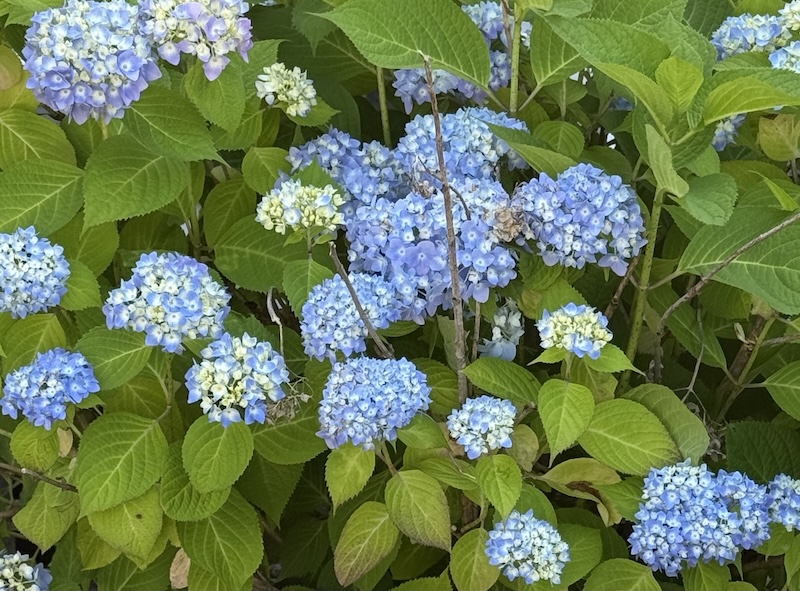
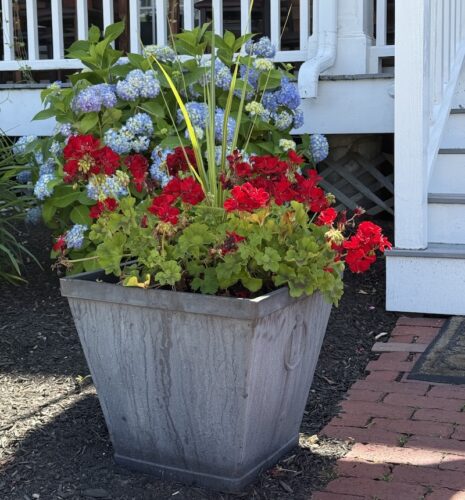
Mark Comstock will receive the Federated Garden Clubs of Connecticut’s Certificate of Individual Achievement on Oct. 22.
OLD LYME–A local bonsai enthusiast and hydrangea purveyor has been recognized with a Certificate of Individual Achievement from the Federated Garden Clubs of Connecticut.
The Duck River Garden Club in a press release lauded Mark Comstock, owner of Hydrangea Galore in Old Lyme, for the recognition. It will be presented at the Federated Garden Clubs of Connecticut’s 96th Annual Awards Meeting and Luncheon on Oct. 22.
The honor is awarded for outstanding contributions to an individual, a garden club or a group of garden clubs.
The Duck River Garden Club described Comstock as a conservationist and an expert in hydrangeas as well as the art of bonsai. They cited various classes he has presented to multiple garden clubs, the Lymes’ Senior Center and the general public – including one on the intersection of bonsai and conservation that included a demonstration on a local pitch pine tree.
In addition to donating his plants for Duck River Garden Club sites throughout town and to the club’s garden sale each May, he recently solved a water issue by bringing in his 500 gallon water tank for the duration of the sale.
“Mark is professional, enthusiastic and generous with his vast horticulture knowledge,” the club said.
Comstock in a phone interview Monday said he was honored to be recognized.
“But I think the real honor should go to the entire Duck River Garden Club for everything that all the members do together,” he said. “We are an incredibly, incredibly active and beneficial garden club for the town of Old Lyme. And there is no other group that I would rather be serving the town with during my horticultural endeavors.”
For Comstock, membership in the club goes “deeper than horticulture.” It’s about meeting other people and learning about the town by becoming actively involved in it.
“They’re so tightly in step with what’s going on in town, and they care so much about making the town beautiful,” he said. “And those are the people I want to be around.”
“Life starts all over again when it gets crisp in the fall.” – F. Scott Fitzgerald, The Great Gatsby
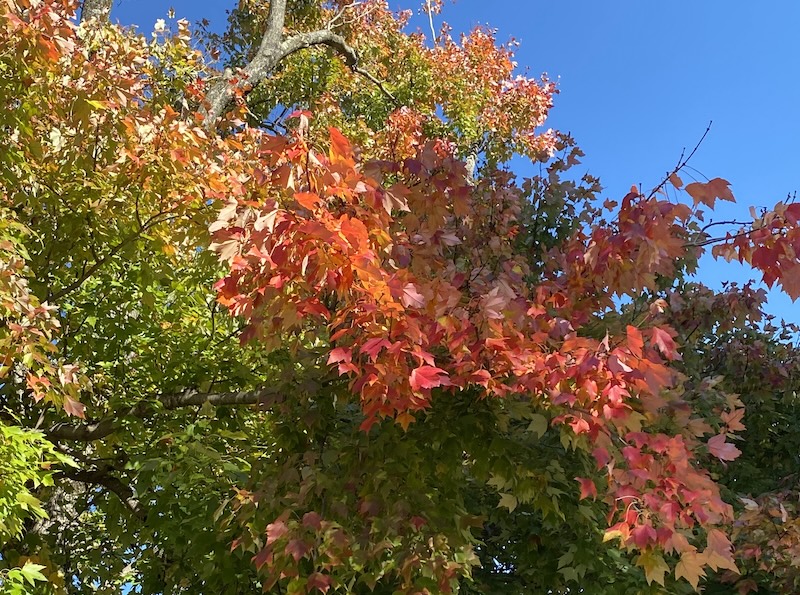
The colors of fall will soon be all around us. LymeLine photo.
Rain through August has been rather sparse. That said, our gardens need rain.
In the meantime, if you are planting evergreens this month; September is the best time to plant evergreens in our zone. Evergreens planted now can begin to establish strong roots before winter and it is important to give the new evergreens a good amount of water. I suggest you make a hole in the soil with an iron stake or other piercing instrument, then feed the hose into the hole and allow water to reach the roots slowly for at least a half hour and continue with this method a few times a week until the ground freezes in November.
Cover the earth around the plants with a light layer of composted manure and mulch. Do not apply mulch right up to the trunks of the plants as this encourages rodents to gnaw on the bark of the plants.
Hydrangeas
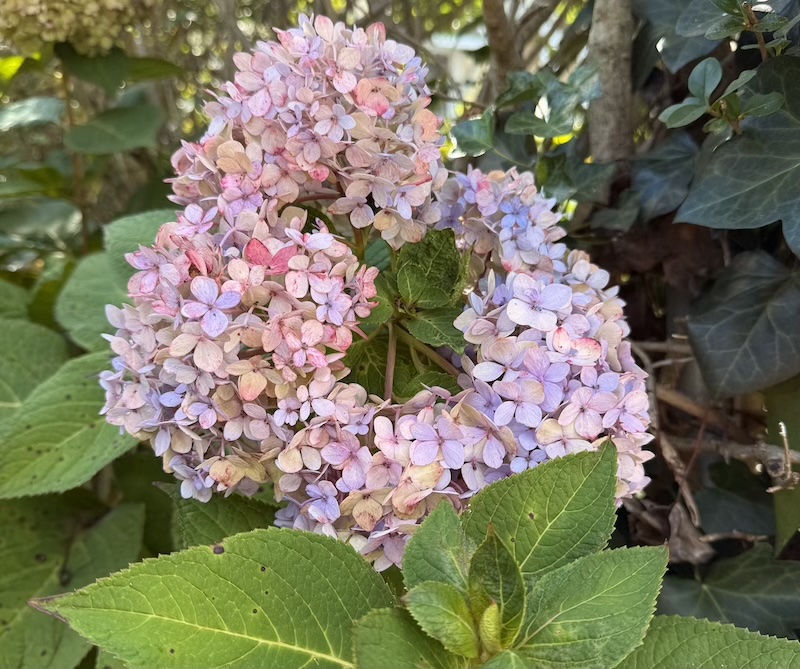
Hydrangeas do not appreciate being transplanted. LymeLine photo.
I am often asked questions regarding the pruning of hydrangeas, with fellow gardeners asking, “Maureen, why did my Hydrangeas not bloom this year”? The reason that hydrangeas do not bloom is that gardeners prune them at the wrong time. If you feel that your Hydrangea macrophylla has become too large and require pruning, prune them by mid-September.
The reason is that hydrangeas set their buds for next season by late September; pruning any later will cut off those buds, which will negate any chance of bloom for next season or even the following season.
How to accomplish pruning successfully: This month, prune any old woody stems that have not bloomed well and any weak new shoots. After pruning, apply a few inches of composted manure, and some peat, followed by a top dressing of natural brown bark mulch. Peat aids acidity in the soil, which is necessary as Hydrangeas may become chlorotic if the soil is too alkaline. Chlorotic means abnormal reduction or loss of normal green coloration of the leaves of the plants.
Another important note on this plant is that hydrangeas do not like to be transplanted; transplanting them can result in little to no bloom for many seasons. For that reason, I suggest when planting new hydrangeas, make sure they are at least five feet apart, so they have room to grow, receive adequate ventilation and will therefore never need to be transplanted.
Take a Break to Contemplate
This fall, as you contemplate your landscape, think about the past season and what worked for you in your garden and what you will never try again.
One thing I will never forget is that mint took over the border beneath my Franklinia tree. Many years ago, my friend Roz, was kindly lending a hand in the garden and planted mint in the garden instead of a large container that I placed for that very purpose.
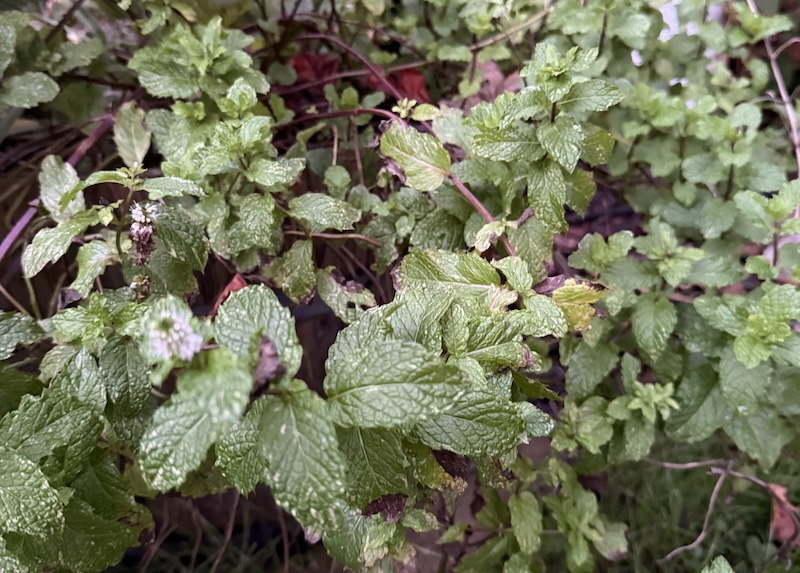
Mint grows vigorously wherever it is planted. It is always best to control its growth by planting it in a container. LymeLine photo.
I was busy with other garden chores, so by the time I noticed the error six months later, the mint was running rampant among the blue myrtle edging the borders. So, folks please take note that mint is extremely invasive and should only be planted in containers where its wayward habits can be controlled.
‘It is said that ‘a gardener’s work is never done’, but now with the season’s hard labor behind you, take a break. Sit outside and inhale the late garden fragrances and allow Mother Nature to anchor and relax you.
In the early morning, I enjoy sitting on my patio near the herb garden, inhaling the fragrance of the sage, which I will snip later to take indoors for drying and use in my recipes. I will also gather extra sage and lavender, which I will tie with string into small bunches to hang in my closets, which is a natural moth repellent. Some of the Lavender bunches I tuck into my drawers to keep moths from devouring my woolen garments, this works well as insects do not like fragrance.
In the less hectic pace of fall, early autumn is the time to re-think your gardens. The garden’s pre-winter grooming will wait for a few weeks. You may feel that you would like to have professional design as you have noticed that your borders are not up to your expectations.
If that is so, then contact someone that you trust to create a plan in the fall and winter, which can be phased in beginning next spring. Engage someone who will listen to your thoughts and stay within your budget. That being said, I respectfully offer a suggestion for a plantsman, whose company and website is LandscapesByIan.com. In the interests of full transparency, he is my son and I am confident you would enjoy speaking with him.
In your vegetable garden, sow spinach for spring harvest and sow a cover crop like winter rye, which can be dug in next spring together with composted manure as green manure. Green manure produces a rich growing environment for next year’s vegetables.
Now is the time to get your fall compost pile cooking with the last of the grass clippings, spent perennials, leaves and small woody twigs.
Perennials
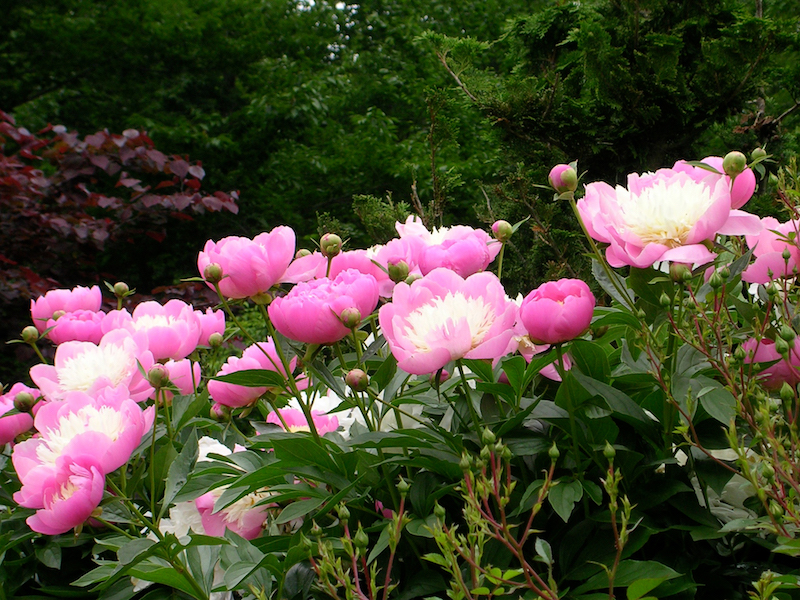
Peonies need careful attention to create a stunning display like this. September is the month to plant and transplant them.
Also in September, dig up, divide and replant overgrown perennials. Follow this method every three to four years to ensure vibrant bloom from these plants. Never plant or transplant any division or transplant any deeper in the soil than it is now or any deeper than the plant sits in the pot.
September is the month to plant and transplant peonies. Do not plant them deeply or they will not bloom, that means having just enough soil to hold them erect with the ‘pink eyes’ on the roots barely covered. Plant them with a light application of composted manure around the plant. Then in November, following the first hard frost cut down the peony foliage to about four inches from the ground.
Fall’s brilliant autumn finery is the last hurrah, before winter sets in. LymeLine photo.
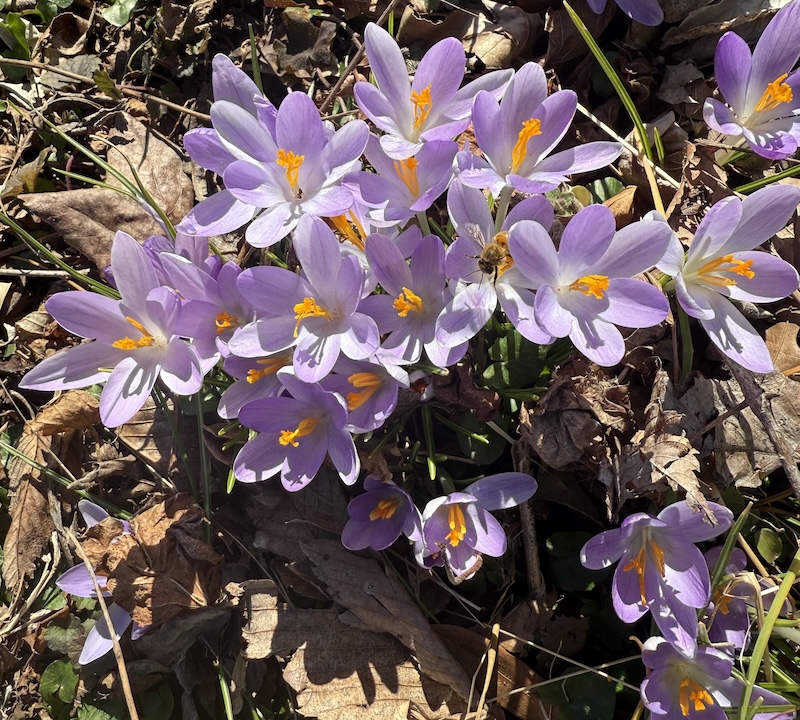
In a few weeks, the bright vibrancy of autumn color will appear on the maples. Fall’s brilliant autumn finery is the last hurrah, before winter sets in. Climbing up the red milk shed near the barn, the buds on the autumn clematis are beginning to unfurl and in the herb garden, autumn crocus, asters and sedum will take their curtain calls.
For your soil to remain healthy, add a light layer of composted manure to all the borders now or in early October, together with a two-inch layer of fine bark mulch around to all newly planted and transplanted perennials and shrubs. With the application of the manure and mulch you are continuing to build the humus component, which will ensure a rich growing environment for spring and protect the plants from winter’s harsh conditions.
I do not cut down my spent perennials but leave them up for the birds; the ripened seed heads are a delicious treat for them to peck at. Following the vibrancy of summer bloom, I enjoy the softer subtle colors of gray, brown and yellow of spent perennials and ornamental grasses blending naturally with the muted winter landscape, which to me offers a resting of the senses.
Early to mid October is a great time to be planting. The benefits of fall planting for trees, shrubs and perennials gives them a head start with root development over those planted in the spring. This is especially so when we experience late spring when planting cannot begin until late April. In New England’s fall, the cooler temperatures and still warm soil encourage the plants to direct their energy into producing strong roots.
The following trees are not good candidates for fall planting: birches, larches, gingko, oaks, magnolia, and all flowering fruit and flowering trees as well as the Eastern red cedar. These trees have fleshy roots, and their feeder roots are not large when young and take time to establish and are susceptible to frost heave.
Some perennials that do not like to be planted in fall are Artemisia, Lambs Ears, Foxglove, Penstemon, Anemone, Campanula, Kniphofia, Lupines, Scabiosa, ferns and grasses.
Plant garlic this month for harvest next June. Garlic is the antibiotic of the garden. Plant it under fruit trees to avoid scab and root disease, near to ponds or standing water to control mosquito larvae or pour garlic water into ponds, bird baths and fountains to deter adult mosquitoes.
End-of-Season Bargains
This is a good time to pick up end of season plant bargains. Most nurseries and garden centers have lowered their prices, so they do not have to winter plants over in the nursery. If you do purchase a few plants, keep your eyes open for the following problems:
Potbound pots
Check the bottom of the pot to see if the roots are growing through the holes. If not, gently tap the plant out of the container to see if it has a network of overlapping roots that wrap around the root ball. It is possible to salvage a root-bound plant, which is suffering from water and nutrient deficiencies over the summer, but it will be slow to root.
Before you plant this one in your garden, cut the encircling roots – the roots will now be shorter but will take root easier.
Diseased Plants
Plants that have been in containers all summer and have been fed high nitrogen fertilizers are easy targets for pests and diseases. Check for spots on the foliage, wilted or curling leaves and discolored roots. As well as visible signs of pest damage and infestation such as webbing or sticky residue on foliage. Not only would these plants do poorly in the garden but could infect your other plants and the soil. Soil-borne diseases are the most difficult to deal with.
Badly shaped plants
Badly shaped plants are the Charlie Brown Christmas trees of the plant world, the unwanted orphans that have been passed over year after year; these are the runts of the litter! Do not set yourself up for disappointment looking at an ugly tree or shrub just to save a few dollars.
Mislabeled plants
At the end of the season many plant tags have been lost or mixed up, which means you are likely to get a perennial with flowers that are not the color you expected. Or you may buy a deciduous tree or shrub when you are looking for an evergreen variety. Stick to the plants that are part of large displays of identically labeled plants or with labels so firmly attached that look like they have been there for a while.
With all the above-mentioned plants – always add composted manure around the plant and do not plant any deeper than it is in its pot or burlap wrapping. Always wear gloves when working with manure; there is bacteria in the manure – great for the soil but not healthy for you.
Please note that the bargain you get is often not worth the discount price.
New Lawn or Patch Seeding
September is an excellent time to plant new grass so the young grass plants will have the advantage over weeds. Do not buy cheap seed, you reap what you sow!
Gently de-thatch the areas that you wish to overseed or patch. Do not use the large thatching machines, which can damage existing grass. Add some composted manure to the area, broadcast the seed and cover the newly seeded grass area with salt hay (free from weed seed). Do not allow the soil surface to dry out; keep it moist. Water gently, and do not saturate the area or the seed will wash away.
When the grass appears, stay off it. Do not mow and leave the salt hay to rot. Next spring, a healthy lawn will emerge and if there are a few bare patches in April, you can fill in the bare spots.
In terms of bulb planning, The English Lady recommends, “Go for masses of a single color for the greatest impact.”
I hope your spring bulb orders are in by now. Be adventurous this year and go for masses of a single color for the greatest impact. No matter how small your planting area, it is the intensity that counts, with two or three dozen red tulips or a hundred daffodils planted on your woodland edge.
Buying daffodils in large numbers is less expensive. The bulbs are usually smaller, but this is not a problem as daffodil bulbs grow larger each year. Even though many say the spacing between these larger bulbs should be six inches, there is no reason they cannot touch.
Put some composted manure or bulb food on the soil where the bulbs are planted. Make sure you plant the daffodils eight inches below the frost line, with the pointed end up. Wear gloves when you plant bulbs as they have a skin irritant, which may cause a rash.
If you cannot plant your bulbs when you receive them, store them in a cool, dry place in paper bags. The best time to plant spring bulbs in the Northeast is the end of October to the middle of November.
Lily of the Valley can be transplanted this month but wear gloves because there is toxicity in this plant.
Dig up your gladioli corms, calla bulbs, elephant ear bulbs and dahlia tubers when the foliage turns yellow. Lay them in the sun to “cure” and store them in a cool, dry dark place. When you dig the dahlia tubers, do not pull them, as pulling can break the tubers.
In September after their summer sojourn outdoors, take your houseplants indoors and wash the foliage gently and repot with new potting soil into a clean container. Repot those plants that have outgrown their pots to a clean container that is only one size larger.
Fall and early winter is a great time to do stonework – dry laid paths, walls and patios. As well as repairing fences, arbors and pergolas and building decks. Paint wooden outdoor furniture with eco conscious paint before putting them undercover for winter.
September is a gardener’s paradise; the air is cooler, the soil easy to work and you will not overheat with the effort. Stay awhile in your garden; enjoy the comforting fragrance of fall.
About the author: Maureen Haseley-Jones is a member of a family of renowned horticultural artisans, whose landscaping heritage dates back to the 17th century. She is one of the founders, together with her son Ian, of The English Lady Landscape and Home Company. Maureen and Ian are landscape designers and garden experts who believe that everyone deserves to live in an eco-conscious environment and enjoy the pleasure that it brings. Maureen learned her design skills from both her mother and grandmother, and honed her horticultural and construction skills while working in the family nursery and landscape business in the U.K. Her formal horticultural training was undertaken at the Royal Botanic Gardens at Kew in Surrey.
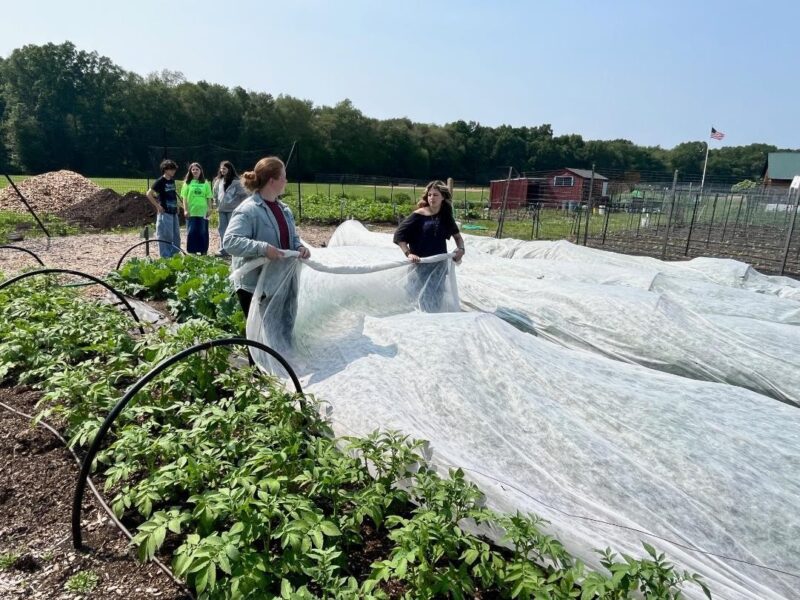
Volunteers of all ages have helped the Lyme-Old Lyme Food Share Garden grow. Earlier this year, Eco Warriors from Lyme-Old Lyme Middle School uncovered cabbage in the garden at Town Woods Park.
OLD LYME–On Saturday, Sept. 13 at 10:30 a.m., the Lyme-Old Lyme Food Share Garden (LOLFSG) will celebrate its volunteers in an end-of-season gathering at Town Woods Park.
All are welcome to the free event, which includes sandwiches and drinks. Salads and desserts are welcome but not essential.
LOLFSG in a press release said the nonprofit group this year donated more than 3,700 pounds of produce to the United Way and the Shoreline Soup Kitchens & Pantries. The bounty adds up to more than 12,000 pounds delivered since 2022.
“Garden volunteers come in many varieties,” the group said. “On-site gardeners show up on cold and damp March days, hot and humid July days and on glorious weather days in any month. They plant, weed, harvest, manage pests, fertilize, innovate, problem-solve and so much more.”
Other volunteers publicize the work of the garden, foster community relationships, fundraise, donate money, inspire new volunteers and perform many other tasks, according to the group.
“As a fully volunteer nonprofit organization, it all matters and it is all appreciated,” organizers said. “Please help us celebrate!”
The Lyme Old Lyme Food Share Garden is located at 26 Town Woods Rd behind the field house and playground.
Volunteers of all ages have helped the Lyme-Old Lyme Food Share Garden grow. Earlier this year, Eco Warriors from Lyme-Old Lyme Middle School uncovered cabbage in the garden at Town Woods Park.
OLD LYME–On Saturday, Sept. 13 at 10:30 a.m., the Lyme-Old Lyme Food Share Garden (LOLFSG) will celebrate its volunteers in an end-of-season gathering at Town Woods Park.
All are welcome to the free event, which includes sandwiches and drinks. Salads and desserts are welcome but not essential.
LOLFSG in a press release said the nonprofit group this year donated more than 3,700 pounds of produce to the United Way and the Shoreline Soup Kitchens & Pantries. The bounty adds up to more than 12,000 pounds delivered since 2022.
“Garden volunteers come in many varieties,” the group said. “On-site gardeners show up on cold and damp March days, hot and humid July days and on glorious weather days in any month. They plant, weed, harvest, manage pests, fertilize, innovate, problem-solve and so much more.”
Other volunteers publicize the work of the garden, foster community relationships, fundraise, donate money, inspire new volunteers and perform many other tasks, according to the group.
“As a fully volunteer nonprofit organization, it all matters and it is all appreciated,” organizers said. “Please help us celebrate!”
The Lyme Old Lyme Food Share Garden is located at 26 Town Woods Rd behind the field house and playground.
Peonies need careful attention at this time of year to create a stunning display like this. File photo.
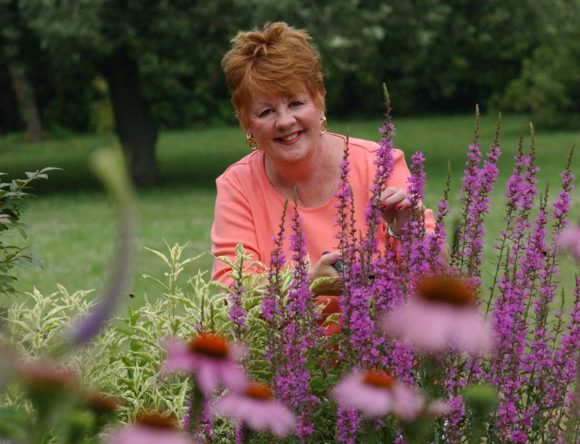
Maureen Haseley-Jones is “The English Lady.”
We have had a few cool nights recently which are just wonderful, sleeping with the windows open. I cannot remember the last time we had a real spring like we experienced this year, with plenty of gentle rain. This beneficial rain is wonderful for all the spring plant growth and such a pleasure freshening the air for us all.
I am so in awe of the miracle of Mother Nature and the symbiotic relationship between plants and all of God’s creatures. When I looked out of my window from my old home in Old Lyme, a few years ago, I could see the buds opening on my long border of peonies which had been planted by the original homeowner in the early nineteen hundreds. As I looked, I recalled the symbiotic relationship between ants and peonies.
A question often asked of me is “Maureen, should I worry about ants on my peonies?” My answer, “That’s not a problem, lots of ants on the peonies just illustrate that you have healthy plants with big buds that are producing bountiful nectar which attracts the ants.” Ants are very useful creatures; their presence indicates that there are aphids and whiteflies in that area of your garden and the ants feed on these troublesome insects.
Make sure that your peonies get plenty of water, also check the PH of the soil which should register between 6.5 and 7.0. In early June, I pinched off the side buds of the Peonies, as by doing this, you will produce big terminal blooms on the plant. When the bloom has passed, apply a light application of composted manure to encourage the soil animals and the manure bacteria to keep your soil healthy.
A word of caution: Do not cut the peonies to about six inches from the ground, until after the first frost in November. Before then, in September, plant or transplant Peonies to barely cover the pink eyes on the roots with soil, just enough so the plant does not fall over.
Now, in late spring, many insect pests are appearing in large numbers in your garden. I just looked out of my patio door and noticed that it is past time for me to tend my perennial border there where my Nepeta, Salvia, daylilies and other perennials are getting inundated with weeds and insects of every denomination. I am the answer to the weeds, but a useful creature against the pests is the lowly toad.
I suggest putting some toad houses in and around your borders. You can purchase toad houses from the garden center, or you can use an old clay pot that is cracked and make sure that the crack is two to four inches wide to act as a door so the toad can enter. In addition, put a small saucer as a floor under the pot with some rocks, and keep the rocks damp, so that your friendly toad enjoying their toad abode will settle in comfortably and snack on all the pesky bugs.
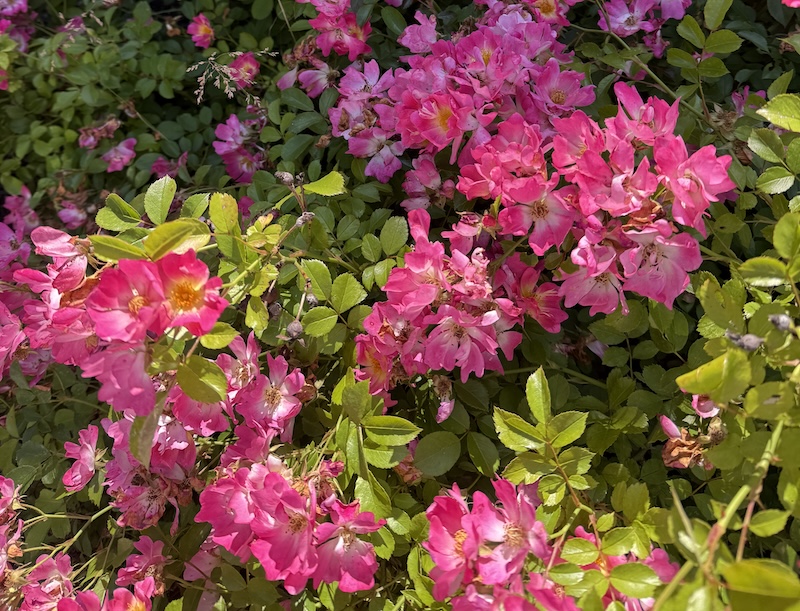
June is always the month for roses.
June is the month when roses begin to bloom. I have always used David Austin roses in my garden and in my landscape designs. I find David Austin roses are the most trouble-free roses and offer great rewards; among those rewards are that they are repeat bloomers with wonderful fragrances and colors.
Some of my favorite David Austin roses are:
‘A Shropshire Lad,’ a soft peachy pink.
‘Abraham Darby’ with petals that are a blend of apricot and yellow.
‘Fair Bianca,’ a pure white.
‘Heritage,’ which opens as a soft clear pink.
My favorite is ‘Evelyn’. Evelyn has a large apricot saucer shaped bloom with a fragrance that is second to none offering a luscious fruity tone, of fresh peaches and apricots.
Feed your roses with composted manure, keeping the manure and mulch about six inches away from the base of the rose and add a few more inches of manure once a month until mid-August. At that time stop feeding so the roses can gently move into a much-needed slow dormancy. No other rose food is required except the manure and the mulch which attracts carbon from the atmosphere which in turn produces the humus component.
Unfortunately, Japanese beetles are attracted to roses, so I suggest acquiring Japanese beetle traps which should be placed far away from your borders on the perimeter of the property. If you find some Japanese beetles have escaped the traps and landed on the rose, then in the early morning, quietly take a white sheet and place it under the rose and gently shake the bush. You will find the beetles do not awaken and will fall onto the sheet, which can be gathered up and the beetles dumped into your closed trash bin.
A tip for keeping cut roses fresh is to cut the roses in the early morning, just above a five-leaf cluster, and place stems in a container of lukewarm water. Then, when indoors, recut the stems at a one and half inch angular cut, under warm running water, and place cut roses in a vase filled with warm water. Do not remove the thorns from cut roses, removing the thorns reduces their indoor life by as much as three days.
Add peat moss to blue hydrangeas to increase the intensity of their color.
HYDRANGEAS: These need plenty of water, as before they were introduced to our gardens they flourished in wetland areas. Apply aged manure around the hydrangeas, which should be planted in full sun and spaced at least four feet apart for good ventilation to prevent mildew from occurring. If you have blue hydrangea macrophylla and want a more vibrant shade of blue, add some peat moss on top of the manure. The acidity in the peat will produce a lovely deep shade of blue.
WISTERIA: Regular pruning through spring and summer is the main factor to help this arrogant vine to flower. Prune several times during the growing season, which means pruning every two weeks by at least six inches on each stem.
CLEMATIS WILT: If you have this problem with the clematis, you will notice it early because the shoots wilt and die. This disease is impossible to cure, as it is soil born. Soil born means that it is not possible to plant another clematis of that variety in that area of the garden. However, you can plant the viticella variety; Clematis viticella are vigorous, free flowering blooms and are not susceptible to wilt. Some good choices of this variety are Blue Belle, Etoile Violette, both are purple and Huldine, which is white.
MULCHING: Mulch your gardens this month when the soil has warmed up to 55 degrees. As you perform that task, be careful around trees. Apply the mulch at least six inches from the base of the trunk; any closer can cause rot and disease to occur in the bark and roots of the tree.
Also, trees that are mulched too close to the trunk invite mice and other rodents to inhabit the tree and gnaw on the trunk. Your garden can be mulched to a depth of between two and three inches with a natural fine dark brown hardwood mulch. Please do not use dyed RED MULCH, which is poisonous. Keep your garden natural, without any poisonous herbicides and pesticides.
CONTAINER GARDENS: If you have room for one pot you have room for a number placed close together with different shapes and sizes creates your own miniature garden. Apart from regular pots, the most unexpected objects make interesting containers.
A friend who cut down trees this past winter left the stumps and hollowed them out to make containers. One large and two smaller stumps together made an interesting combo.
Also check in your basement, shed or barn to see if you have an old wheelbarrow, even if the wheelbarrow has a missing wheel like mine, which I painted blue with eco-conscious paint. Then I placed it near the kitchen door filled with bright colored vines, miniature grasses and small perennials.
Or you may unearth a large ceramic jar like the one I came across in one of the original cattle stalls of the stone and soil floored barn. This antique three-foot-tall ceramic vinegar container, replete with a hole where the vinegar tap was inserted, is ideal for drainage. I planted the jar with multi-colored perennials, which looked great on my newly painted blue bench alongside my red milk shed.
LAWN CARE: Do not forget to add organic grub control through July, so that you help to keep down the mole infestation; remember no grubs means less food for the moles.
POWDERY MILDEW: Keep an eye open for powdery mildew, especially after rain when humidity returns. My recipe for powdery mildew is as follows: In a sprayer, mix two tablespoons of baking soda, one tablespoon of vegetable or horticultural oil in a gallon of water and spray the mildew.
Hydrangeas and Summer phlox are particularly prone to develop this problem. To help counteract the mildew problem, I recommend using phlox Miss Lingard or phlox David, which are the white phlox and are the most mildew resistant.
Monarda, commonly known as bee balm, are also affected by mildew, and the one I have found to be the most resistant is “Cambridge Scarlet.”
I hope these tips are useful to you during this busy time of year in the garden. Remember to stretch, hydrate and enjoy the burgeoning promise of your garden and I’ll see you next month. If you would like some more gardening advice, contact my son Ian at LlandscapesbyIan.com. I am sure you would enjoy speaking with him as he is full of knowledge and, as the saying goes, “The apple does not fall far from the tree.”
About the author: Maureen Haseley-Jones is a member of a family of renowned horticultural artisans, whose landscaping heritage dates back to the 17th century. She is one of the founders, together with her son Ian, of The English Lady Landscape and Home Company. Maureen and Ian are landscape designers and garden experts who believe that everyone deserves to live in an eco-conscious environment and enjoy the pleasure that it brings. Maureen learned her design skills from both her mother and grandmother, and honed her horticultural and construction skills while working in the family nursery and landscape business in the U.K. Her formal horticultural training was undertaken at the Royal Botanic Gardens at Kew in Surrey.