TOP STORY: Witness Stones Old Lyme Installs 12 More Plaques Honoring Enslaved People as Five-Year Project Sunsets, Brings Total to 60

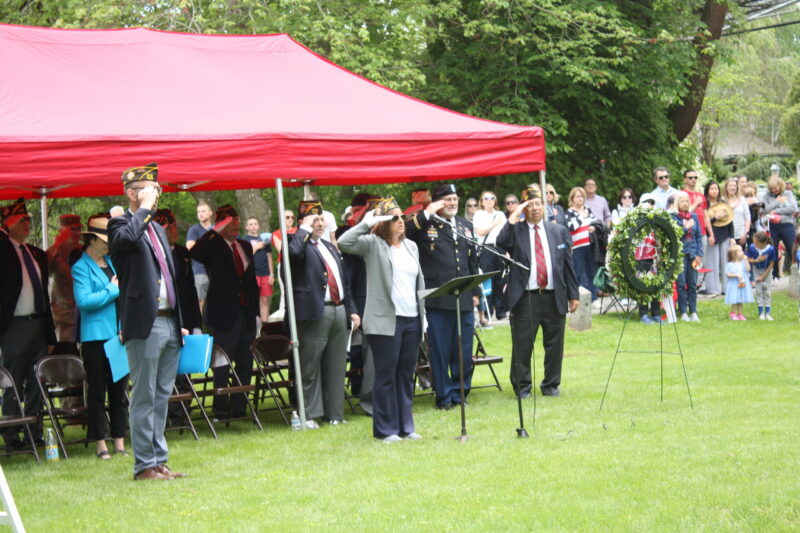
Soprano Lisa Williamson moved attendees with her performance of the American spiritual “Steal Away” and gospel hymn “His Eye is on the Sparrow.” All photos by LymeLine.

OLD LYME–Ten small brass plaques installed Friday morning on the Sill Lane Green are there to fill holes left by untold stories.

Cesar was about 15-years-old when he was purchased for 80 pounds by Reynold Marvin Jr. in 1730. Zacheus Still, born enslaved to Richard Lord Jr. in 1726, served in the French and Indian War and the American Revolution. A 26-year-old known to history only as ‘Negro Woman’ was recorded as being healthy and “capable at housework” when she was sold in 1802 by Enoch Lord Jr. 

The information was culled from scant references in land records, emancipation certificates, and other primary sources, according to the Witness Stones Old Lyme organization that for five years has been working to unearth the town’s history of enslavement. 

The group on Friday held its fifth installation ceremony on the grounds of the Old Lyme Phoebe Griffin Noyes Library. The Sill Lane Witness Stones join 50 others laid in Lyme and Old Lyme since the organization began in 2020 as an offshoot of the wider Connecticut-based Witness Stones initiative. 

The local group marks sites of enslavement and engages students in telling the stories behind the stones.
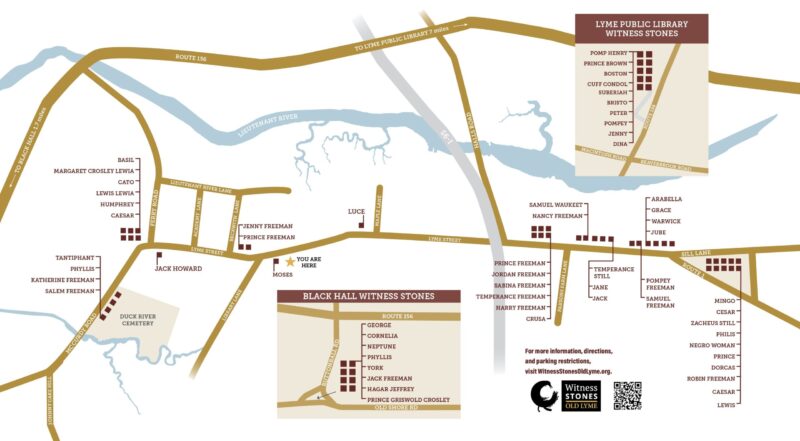
Witness Stones Old Lyme over the past five years has installed 60 plaques in locations shown here.

Witness Stones Old Lyme Chairwoman Carolyn Wakeman said the ceremony would be the last of its kind as the sun sets on the five-year-project.

“Together, we have restored missing history,” she said. 

Wakeman described the map of Witness Stones as a wide circle extending from Lyme Street, past the Lower Town Green to McCurdy Road, south to the Black Hall section of town, north to Lyme and the East Lyme border, and back to Lyme Street’s northern end at the Sill Lane Green. 

The 12 most recent installations were located on Sill Lane and at the Florence Griswold Museum.

“Even though we could easily place another 60 plaques to commemorate additional enslaved persons, the Witness Stones website will continue to provide new information about local enslavement, and middle school students will continue in the years ahead to engage with the Witness Stones curriculum and to focus on primary documents in the history of our town,” she said. 

Poet Kate Rushin reads “Fishing for Shad” at the fifth and final Old Lyme Witness Stones installation ceremony.

Kate Rushin, a poet and Connecticut College professor, read her poem “Fishing for Shad” as one of four artists selected to remember in verse people enslaved on Lyme Street. 

Rushin, along with Antoinette Brim-Bell, Marilyn Nelson and Rhonda Ward, are the Witness Stones Old Lyme poets. The group received a Health Improvement Collaborative of Southeastern Connecticut (HIC) Partnership Grant for Racial Equity. 

Rushin wrote the poem from the perspective of Jack Howard. He was born enslaved to Samuel Mather Jr. in 1795 and willed to Mather’s son James in 1809. 

She said she used Wakeman’s research, her own understanding of others, and her experiences to imagine how she might feel if she were the enslaved child. 

“I don’t know where I belong/but I know I don’t belong here,” she wrote in the poem’s opening lines. 
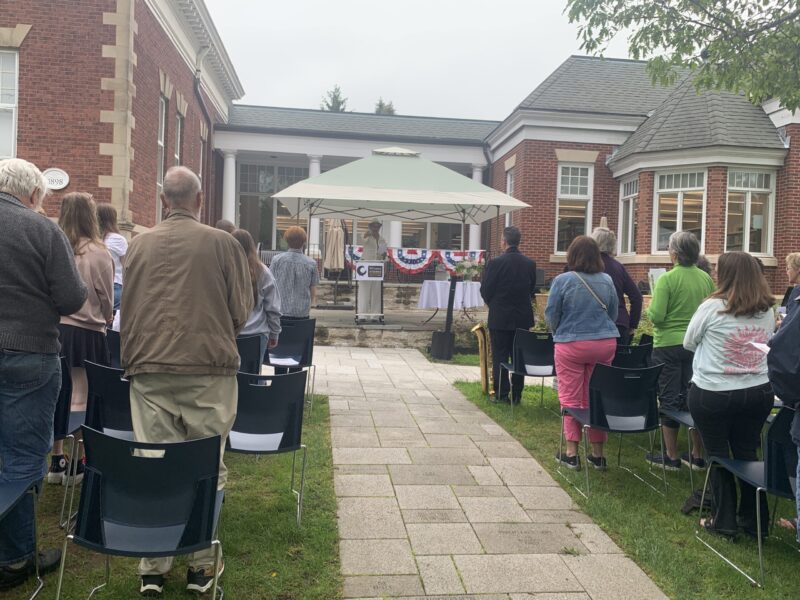
Led by Kate Rushin, the audience repeats the name of each enslaved person honored in the final installation ceremony. 

Rushin is also the author of Meditations on Generations, written for Jane. Born enslaved to Joseph Peck Jr. in 1726, Jane was sold for 25 pounds at the age of 3. No more information about her has been discovered. 

“I’ll remember you, Jane,” she wrote in the poem’s final lines. “You were here./I will honor you, respect you;/hold you in my words.” 

The poet, who identified herself as the great-granddaughter of an enslaved woman and the free man who released her from bondage, grew up in the first incorporated African-American town in New Jersey. 

“This project is very personal to me, as it is to the other Witness Stones poets,” she said. 
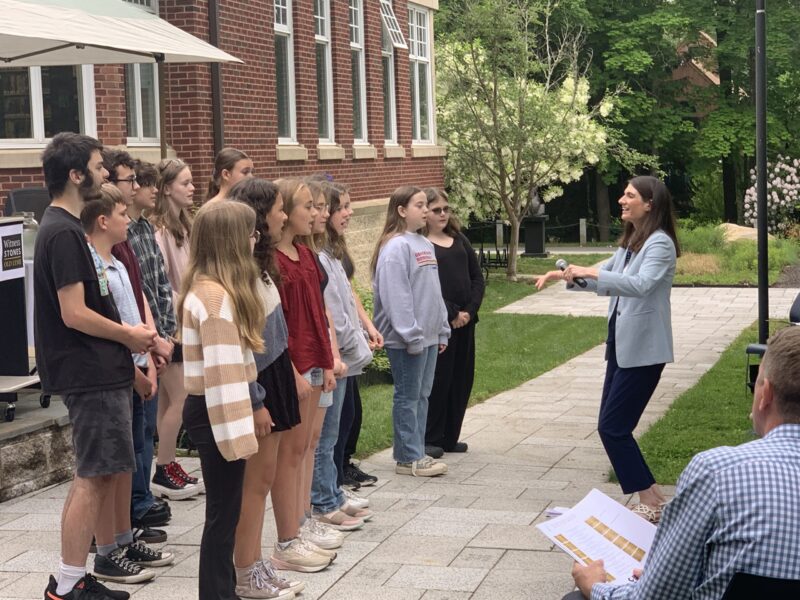
The Lyme-Old Lyme Middle School Chamber Choir, under the direction of Laura Ventres, sing a medley of American spiritual songs.

Eight Lyme-Old Lyme Middle School students followed Rushin with their own poems honoring those whose plaques were laid Friday.

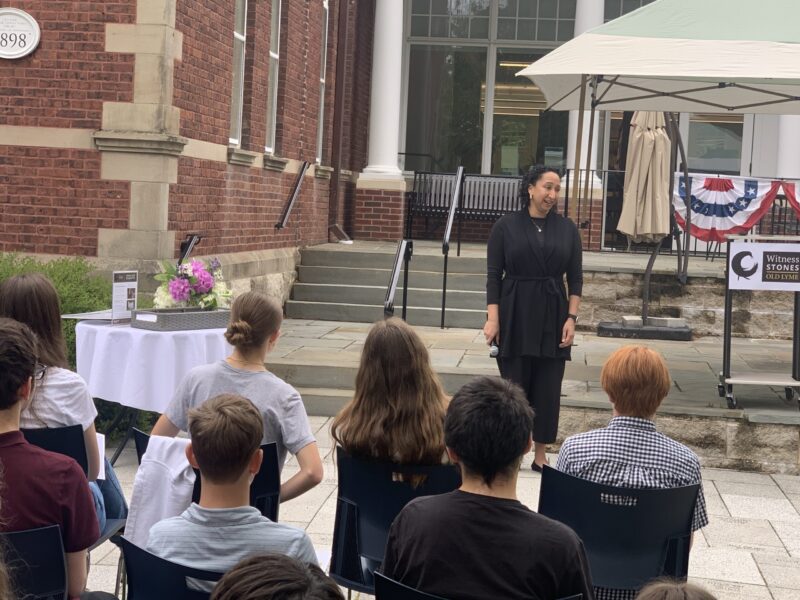
Michelle Dean, curriculum director for the Lyme-Old Lyme Schools, described the five-year collaboration between Witness Stones Old Lyme and the schools as a shared commitment to telling the stories of “those whose voices for far too long have gone unheard.” 

She said historical documents allowed students to confront complex truths and explore diverse perspectives that shaped the history of Lyme and Old Lyme. 
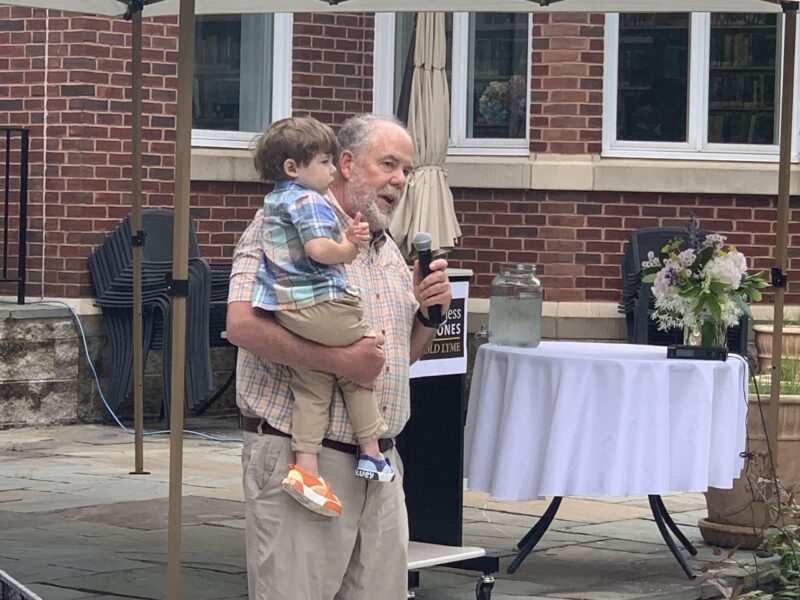
Witness Stones Project founder Dennis Culliton, with grandson Joey Tomanelli, lauded the Old Lyme group as a model for other cities and towns. He is retiring from the Witness Stones Project next month after eight years.

“If our past is indeed our greatest teacher, then let it teach us this: We each have the capacity to honor others with dignity and respect,” she said. “Let us honor the past and our future by choosing humanity every day.”

Editor’s Note: This article was updated with the most recent Witness Stones Old Lyme map and to correct Wakeman’s name in one reference.

TOP STORY: Old Lyme Town Budget Passes Easily, Meeting Serves as Lesson in Small-Town Democracy

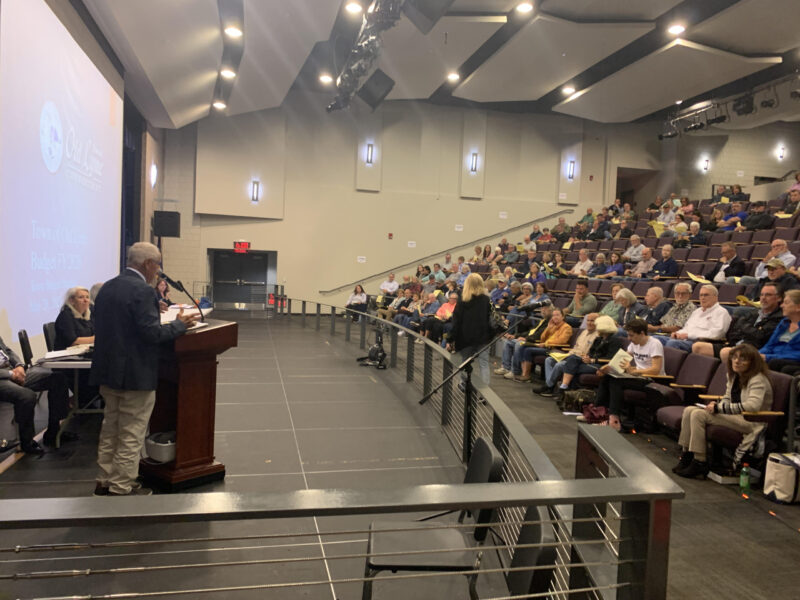
Old Lyme-based Attorney Fran Sablone served as moderator at Wednesday’s Town Budget Meeting.

OLD LYME–Two young men sitting with their parents in the auditorium of the Lyme-Old Lyme High School Wednesday night were recognized at the end of the 2.5-hour Town Budget Meeting for making it through a crash course in the New England town meeting form of government 

First Selectwoman Martha Shoemaker acknowledged the boys after a record-setting crowd of more than 200 residents and taxpayers approved the $45.39 million 2025-56 budget and five new or amended ordinances.

No meeting in the last seven years had drawn more than 60 people, according to Shoemaker.

“You have received the best education in what a town meeting can be like,” she told Joseph Jewett, 11, and Joshua Jewett, 9.  

The budget passed 167 votes to 40 in a year when a property revaluation left a majority of homeowners in town facing a tax hike in excess of 4.7%. Those whose property values rose more than average are looking at relatively higher tax increases.

The town meeting is a form of direct democracy that allows all eligible voters 18 years old and up to discuss and decide important matters rather than letting elected officials do it for them. 

While October 2024 data from the state Office of Policy and Management shows that 103 towns in the state have a town meeting form of government, many of them leave the ultimate budget decision up to a machine vote at a day-long referendum as a way to encourage more participation. 

Shoemaker applauded the Jewett family for showing the boys that their “voices matter.”

“Even though (the votes) may not go the way you want, your voices are heard,” Shoemaker said. 

Fire Marshal Dave Roberge said he counted 222 people in the auditorium Wednesday night. With 207 people voting on the budget, that leaves about 15 people like the Jewett children who were there to watch and learn.  

Procedural questions about how to vote dominated the early part of the meeting, with an early motion to use a paper ballot on all seven questions failing by a vote of 87 to 110. 

Voters decided to use a hand vote for the budget, which proved the most contentious issue on the call to meeting. They raised fluorescent green chits in the air to signify their voting status as Democratic Deputy Registrar of Voters Katherine Thuma and Republican Deputy Registrar of Voters John Mesham counted the chits row by row. 

When the results of the vote to approve the budget were counted, Town Meeting Moderator Fran Sablone put it this way: “The motion carries.” 

Voting down the budget would have required the town to bill taxpayers based on the current budget until a new spending plan was approved, according to town officials. That means the town would be locked into paying its share of the Region 18 education budget, which voters passed in a referendum earlier this month, even though the expense wouldn’t be reflected in tax bills. 

Board of Finance Chairman Bennett J. Bernblum, who during the meeting used the word “stupid” to describe such a scenario, was asked to clarify what he meant. 

“It would be stupid because it would put us into disarray,” he said. 

The meeting, originally scheduled for May 19, was postponed due to overcapacity at the Town Hall. Fire code there allows only 124 people in the meeting room and lobby.

Tax Impact

The finance board immediately after the Town Meeting convened to set the tax rate for the coming year at 16.23 mills. 

The current tax rate is 24.4 mills. After taking the property revaluation into account – and if spending did not increase at all in the coming budget – the tax rate would have been 15.5 mills. 

A mill represents $1 in tax per $1,000 of assessed property value.  

Bernblum in his presentation said a house appraised at $400,000 with a valuation mirroring the average 57.4% increase to the grand list is now worth $629,600. The tax bill for that homeowner based on the 2025-26 budget will be $7,153 – an increase of $321, or 4.7%, over the current tax bill. 

Assessor Melinda Kronfeld has said 3,312 properties in town will see their tax bills go up more than 4.7%, while 2,331 properties will be looking at an increase less than that, or even a tax decrease.

The finance board last month voted to use $800,000 from the town’s predicted $14.2 million ‘Rainy Day Fund’ to help mitigate the impact to taxpayers. The vote was a compromise between Republicans, who wanted to use less, and Democrats, who wanted to use more. 

Bernblum said the town’s healthy savings helped secure a AAA bond rating from S&P Global Ratings, which translates to the most favorable interest rates when the town goes out to bond. He said he was advised that the finance board’s decision to dip into the Rainy Day Fund should not adversely affect the town’s rating. 

Bernblum said the $800,000 allocation, combined with $171, 350 in cuts identified by Shoemaker and town hall department heads at the request of the finance board, reduced the original budget proposal’s impact on taxpayers by almost a million dollars. 

New and Amended Ordinances

The remaining issues on the meeting call were determined by voice votes. The most controversial was an ordinance codifying golf cart use in the Sound View and Hawk’s Nest beach areas. 

The golf carts must be outfitted with numerous safety features to qualify as the kind of “low speed vehicle” authorized last year by the state to operate on any public roads with speed limits of 25 mph or less. 

Previously, state statutes left it up to cities and towns to decide if they wanted to allow golf carts on local roads. Now, it’s up to those municipalities to specify if they don’t want them – or to limit where they can travel. 

Shoemaker said the ordinance adds several streets in Hawk’s Nest Beach to a program established by the Sound View Commission a few years ago in cooperation with the previous administration of the Board of Selectmen. 

Golf carts registered with the town will be allowed to travel on town-owned roads in the beach areas from sunrise to sunset. 

There will be an initial fine of $90 for those caught driving an unregistered golf cart, driving outside the allowed areas and hours, or missing necessary equipment. The second offense comes with a $180 fine, while the third offense will result in the golf cart being impounded. 

Golf carts must be registered annually and can only be operated with a valid driver’s license. 

Sound View Commission Chairman Frank Pappalardo said the program has “worked out very, very well safety-wise” without being a hardship on residents. He cited 25 golf carts registered currently, with more joining each year. 

Shoemaker described the ordinance as a way to keep communities safe in a town with only six full-time police officers to patrol the streets. She said voting the proposal down would result in the Board of Selectmen, which serves as the local traffic authority, outlawing golf carts completely.  

“A ‘no’ vote will mean that we will prohibit golf carts in the Soundview and Hawks Nest area,” she said. “Because we cannot have people riding around in golf carts without some rules.”

Resident Steven Ross objected to the take-it-or-leave-it approach on what he described as an overly restrictive ordinance. 

“That’s a threat. It’s heavy-handed. It’s inappropriate,” he said. “I think this ordinance should be reviewed and redrafted and brought to another town meeting.”

Shoemaker said the town can consider expanding the ordinance to include the Rogers Lake area in the future if enforcement goes smoothly this summer. 

Other changes outlined on the call to meeting and approved without controversy included updating the volunteer fire and ambulance tax abatement ordinance to increase the maximum amount of the abatement from $1000 to $2000 and to extend it to retirees; revising requirements regarding publication of notices of special and regular Town Meetings in newspapers read by seasonal residents; revising the Old Lyme Harbor Management ordinance to slow down boats and jet skis and increase fines for violations; and revising language affecting parking areas on private property in the Sound View Beach area to, among other things, provide for on-site attendants. 

A Learning Process 

Joseph Jewett after the meeting said he ended up at the meeting with his brother because their parents, Dave and Daphanie Jewett, didn’t give them a choice. 
While 9-year-old Josh Jewett said he really didn’t think they learned anything, Dave Jewett said the kids got a lesson about the importance of voting and having a say in where tax dollars go – even if they didn’t realize it. 

Dave Jewett said he voted in support of the budget. 

“I’ve been in the town my whole life,” he said. “Now I’ve got my kids growing up in this town.”

Editor’s Notes: i) Bennett Bernblum is a financial supporter of LymeLine.com, but has no input to the editorial process, which remains completely independent.

TOP STORY: More than 200 Hands Raised at Old Lyme Town Meeting, $45.39 Million Budget Approved at 7.8% Over Current Year

Old Lyme-based Attorney Fran Sablone served as moderator at Wednesday’s Town Budget Meeting.

OLD LYME–Record attendance Wednesday night at the rescheduled Town Budget Meeting resulted in the passage of a $45.39 million 2025-26 budget and several new or amended ordinances.

Residents and taxpayers in the Lyme-Old Lyme High School auditorium raised fluorescent green chits in the air to signify their voting status as they approved the budget in a 167 to 40 vote. It represents an increase of $3.28 million, or 7.8% , over the current year.
The vote came amid large-scale renovation projects to the Lymes’ Senior Center and the Region 18 school district drove up the budget, while the recent revaluation drove up property values – and the resulting tax bills – for a majority of homes in town. The Board of Finance was expected after the meeting to set the tax rate at 16.2 mills.

A previous motion to use a paper ballot on all seven questions failed with 87 yea votes and 110 nays.

The five ordinances and a procedural vote to set the billing schedule for property taxes each passed in decisive voice votes.

First Selectwoman Martha Shoemaker said no meeting in the last seven years had drawn more than 60 people.

The originally scheduled meeting on May 19 was postponed due to overcapacity at the Town Hall, where fire code allows only 124 people in the meeting room and lobby.

Fire Marshal Dave Roberge on Wednesday said he counted 222 people in the high school auditorium—its capacity is 550 people.

Editor’s Note: Watch for the full story on Thursday.

TOP STORY: Memorial Day in Old Lyme is, in Turn, Both Solemn and Hopeful

A Connecticut Air National Guard C-130 airplane flies over the 2025 Old Lyme Memorial Day Parade as a tribute to fallen service members.

OLD LYME—5/27: UPDATED with additional photos. Some marched, some danced and some rode as the Memorial Day Parade wound its way down Lyme Street Monday morning.

The community trek took marchers and parade-goers alike to Old Lyme’s Duck River Cemetery for a solemn ceremony in remembrance of the nation’s fallen service members. A plaintive rifle salute and two trumpets sounding Taps replaced truck horns, sirens and marching bands.

Lyme First Selectman David Lahm, a retired U.S. Army colonel and member of Veterans of Foreign Wars Post 1467, acknowledged the uneasy peace between festivity and solemnity when he asked the crowd to consider the words of one soldier to his parents regarding the holiday.

“Let people have their barbecues and fun,'” he recounted the man saying. “‘That’s why we fight.”

The soldier later died in Afghanistan, according to Lahm.

“Please join us in keeping the memories of our fallen servicemen and women, and Gold Star family members, alive,” Lahm said. “They are not forgotten.”

The Day in Pictures

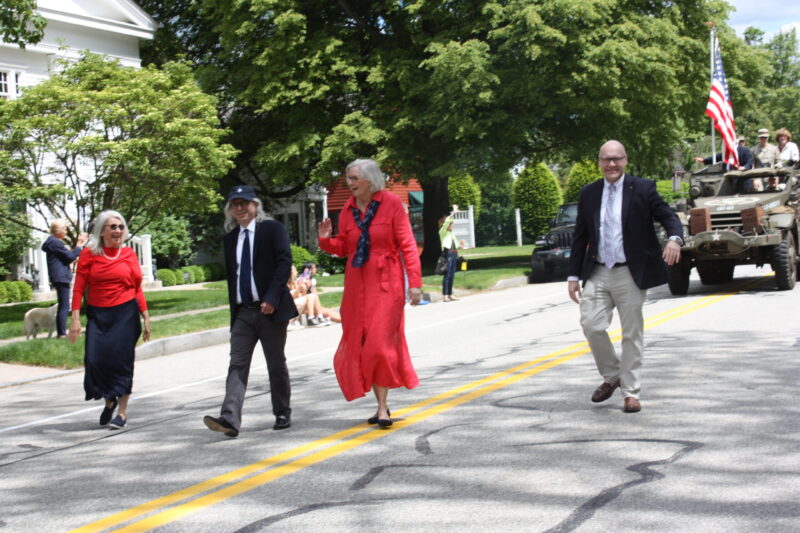
A smiling Lahm (second in line behind the flag-bearer) marched with members of Veterans of Foreign Wars Post (VFW) 1467 to lead off the parade under a sunny sky with just enough cloud cover to keep temperatures comfortable.

Old Lyme Board of Selectmen members Jude Read (left) and Jim Lampos (second from left) march with First Selectwoman Martha Shoemaker and State Rep. Devin Carney, R-Old Lyme.

The US Army half-track vehicle belonging to Bruce Noyes (driving) remains a parade mainstay and a fitting escort for veterans and service members. His wife Tammy stands atop the vehicle to the right.

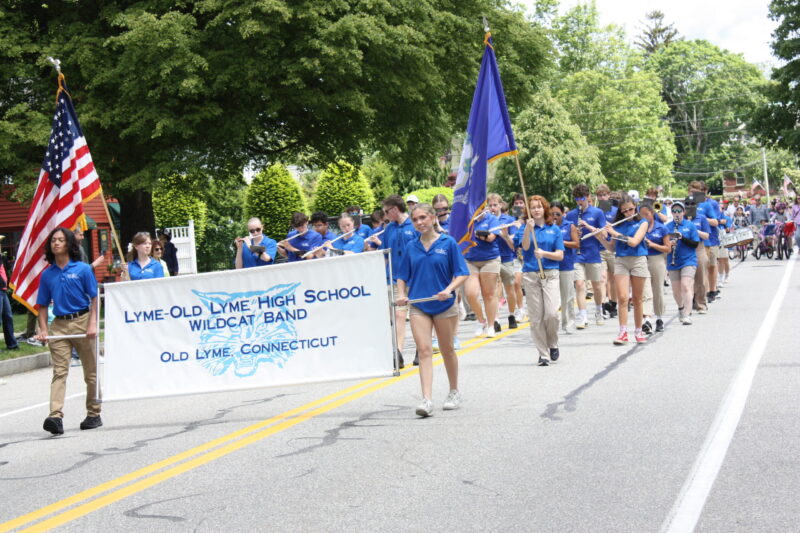
The sound of the Lyme-Old Lyme High School Band is one of the first indications that the parade is on its way.

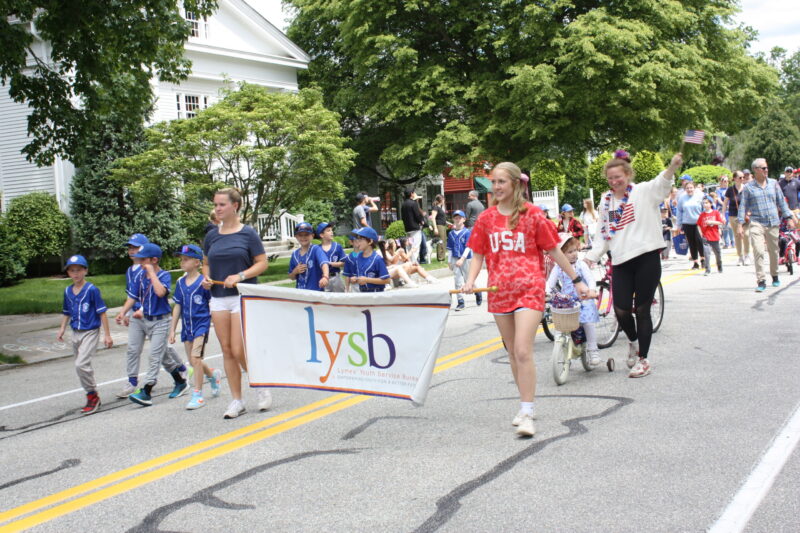
Lymes’ Youth Service Bureau gives everyone a place to shine amid red, white and blue-festooned bikes, scooters, wagons and strollers.

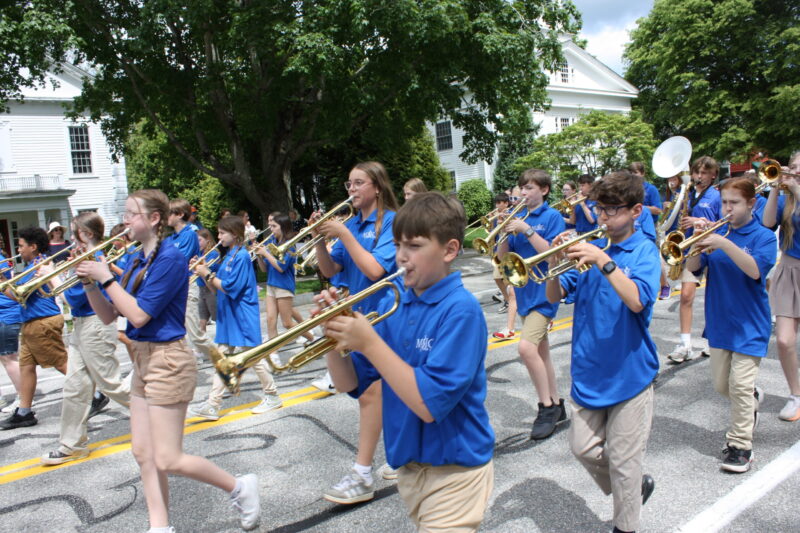
The Lyme-Old Lyme Middle School band keeps the music playing.

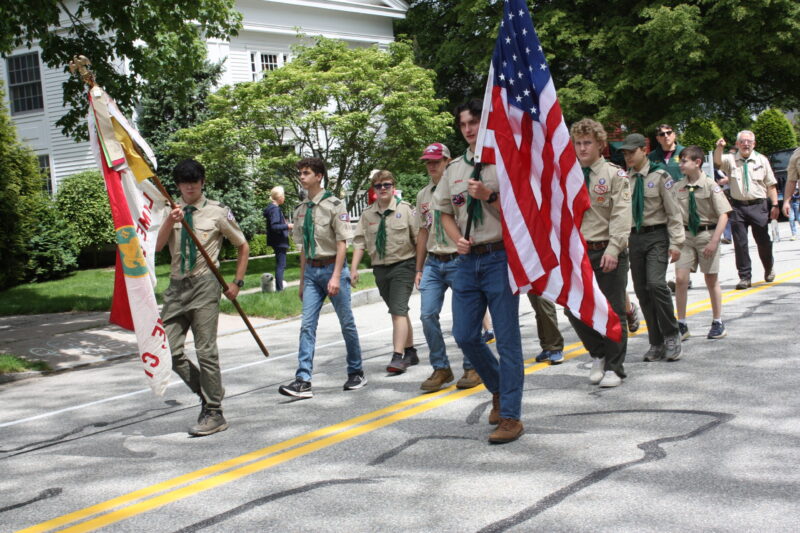
Boy Scouts are well represented in the parade and at the ceremony.

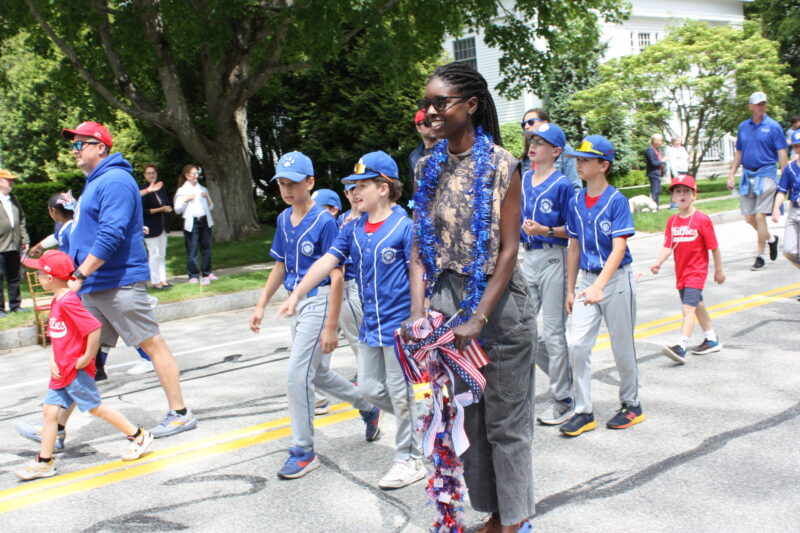
Young lacrosse players briefly trade in their Ticks sticks for a banner.

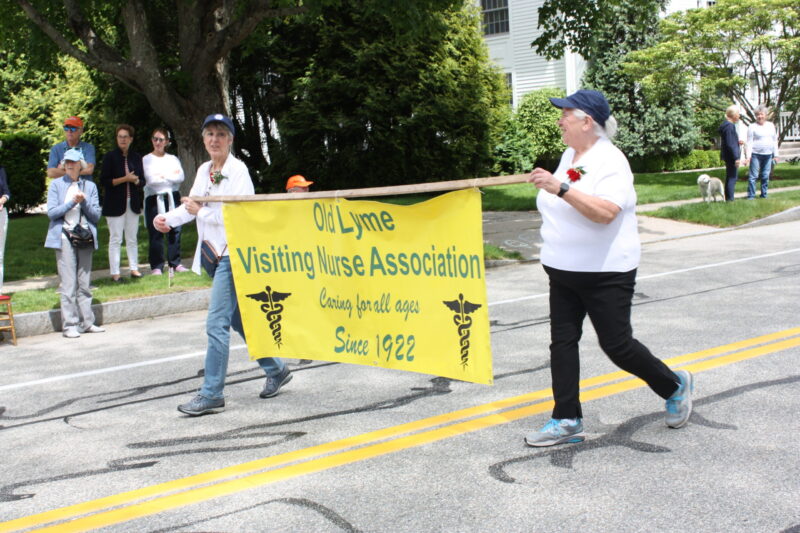
The Old Lyme Visiting Nurse Association carries on their community commitment with a spot in the parade.

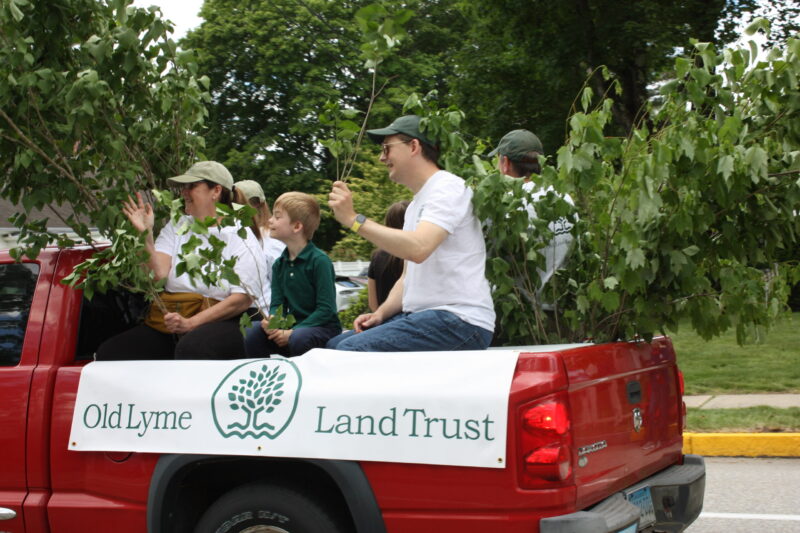
The Old Lyme Land Trust blends into the Lyme Street greenery.

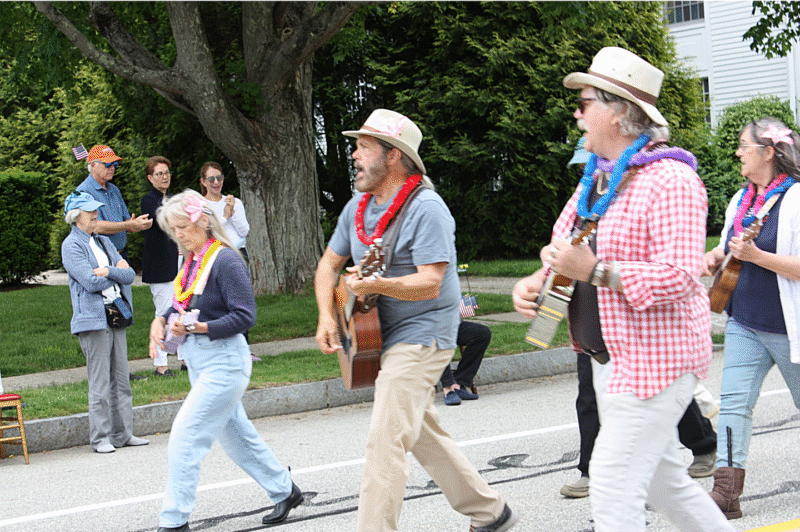
Dan Stevens (right) leads the Nightingale’s Precision Marching Ukulele Band, which lends an air of homespun harmony to the event.

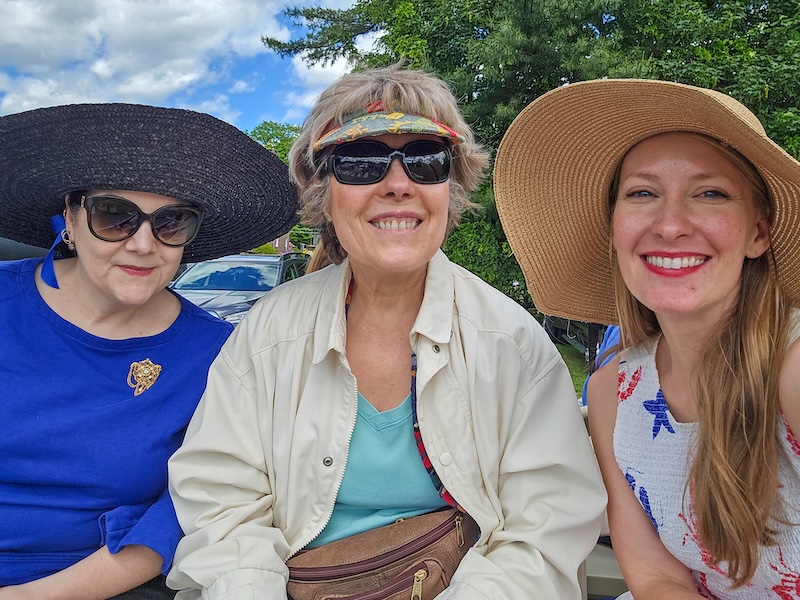
These three Old Lyme Historical Society Trustees, from left to right, Michaelle Pearson, Nancy Mol, and Jaymie Nickerson-Buckmaster ,rode atop the Old Lyme Historical Society’s truck along with …

… these folk, and they all had front row seats …

… for the show-stopping Techno-Tick representing the robotics team from Lyme-Old Lyme and East Lyme High Schools.

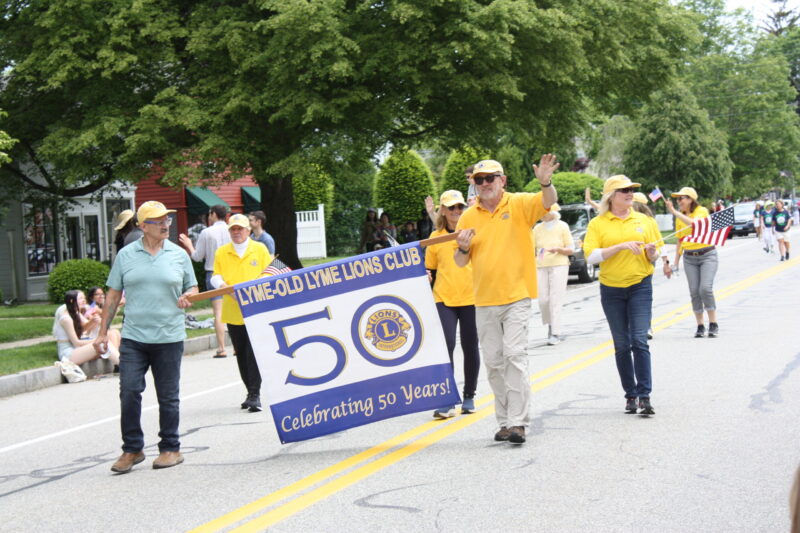
It’s a banner year for the Lyme-Old Lyme Lions Club.

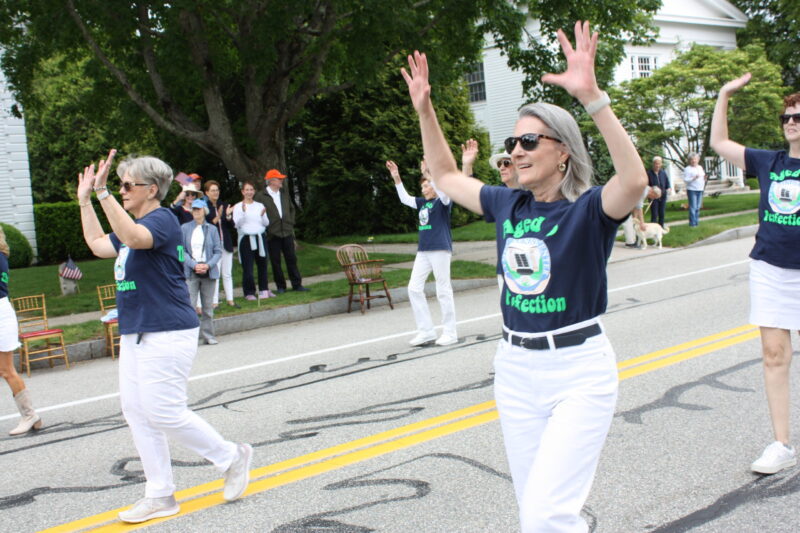
The Lymes’ Senior Center dancers consider themselves “aged to perfection” starting at 55 years old.

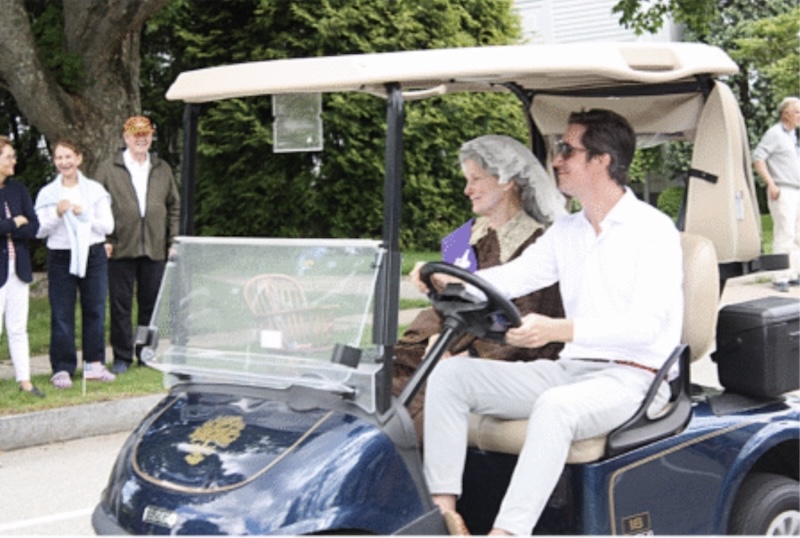
The modern day reincarnation of Phoebe Griffin Noyes, otherwise known as Mary Dangremond, travels in style as part of the Old Lyme-PGN Library contingent.

Antique cars bring smiles for passengers and paradegoers alike.

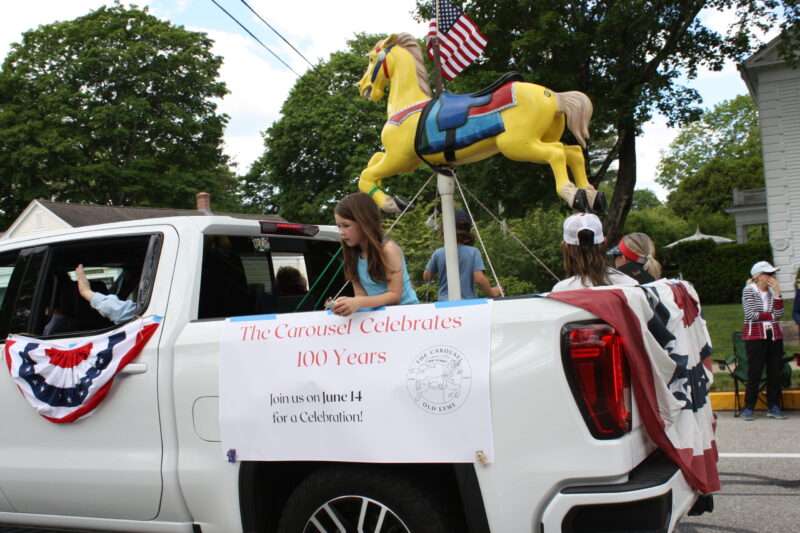
The Carousel Shop on Hartford Avenue in the Sound View Beach area looks forward to the 100th birthday of its namesake amusement ride this year.

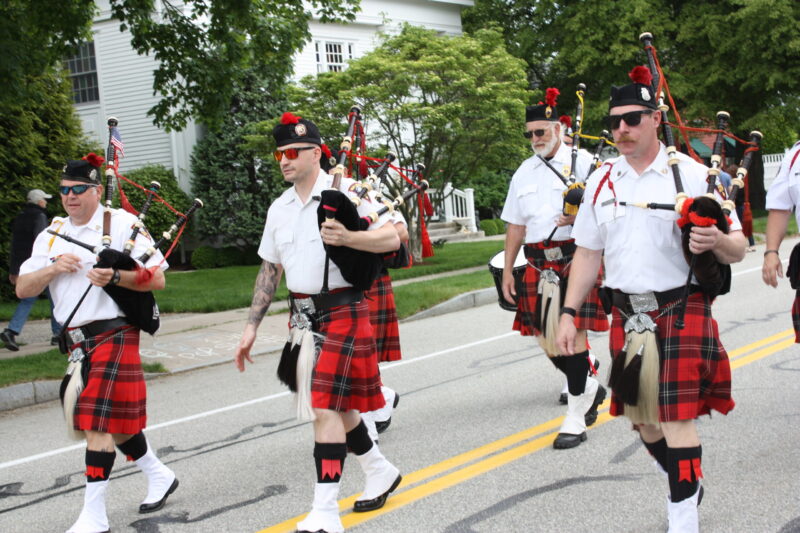
The New London Firefighters Pipes & Drums Corps show some leg on Lyme Street.

The Old Lyme Fire Department arrays itself behind the flags and fire axes.

Fire Department officers march with bouquets from Old Lyme Landscape in their ceremonial trumpets.

Volunteerism in Lyme and Old Lyme spans generations.

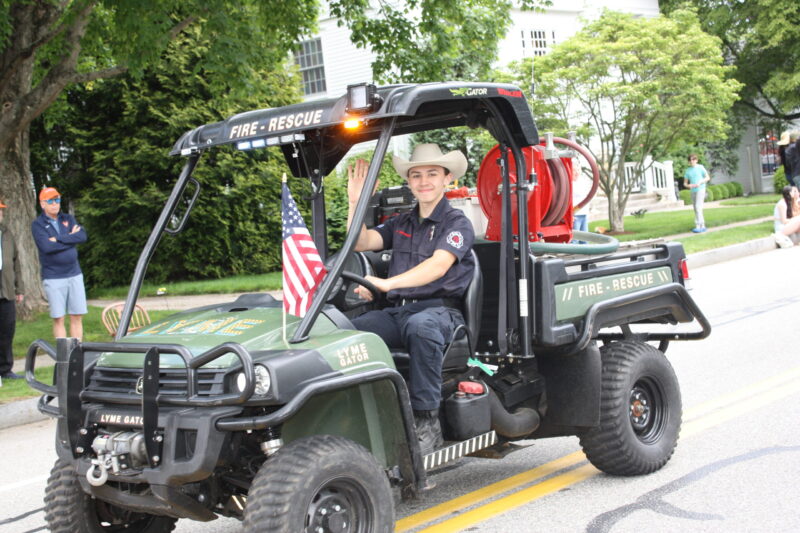
Gators like this one from the Lyme Fire Department have been put through the paces in numerous brush fires across the region and state over the past year.

Lyme Fire Department turns out as polished and shiny as ever.

Members of VFW Post 1467 lead the ceremony in honor of Memorial Day.

David Griswold, at left, and a fellow Veteran lay a wreath at the Duck River Cemetery war memorial.

VFW member and former Old Lyme First Selectman Tim Griswold rings a bell for each military veteran from Lyme and Old Lyme, who died in the past year.

The flag is duly raised from half staff at the conclusion of the solemn ceremony.

TOP STORY: Lyme’s ‘Long Table Farm’ Turns Community Food Scraps into Rich Compost, Looks to Expand Program to Include Old Lyme

Compost Benefits Farm, Lyme Residents, Town’s Bottom Lineand Doesn’t Stink!

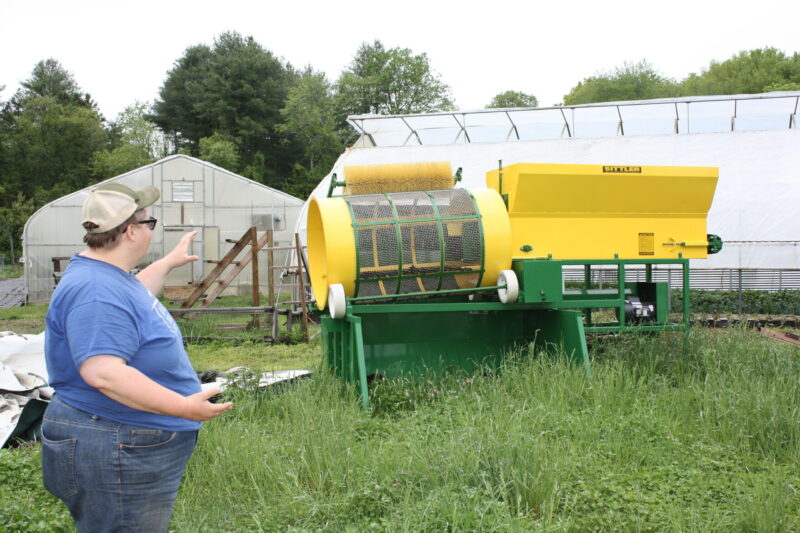
Long Table Farm’s Baylee Drown points out the importance of the trommel screener in sifting through compost to ensure the purest product. All photos by E. Regan.

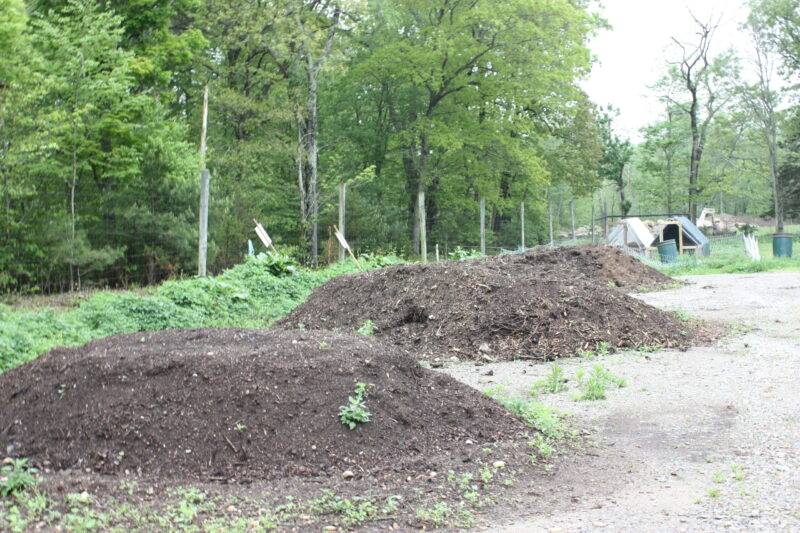
LYME, CT—Long Table Farm owner Baylee Drown last week stood alongside several carefully-tended compost piles adjacent to the vegetable fields as food scraps carried in from all over town cooked down in a natural process that she hopes will bring the community-supported agriculture operation into a new era of sustainability. 

Common fears about the stench of rotting food and the rodents it attracts were unfounded on that damp Thursday morning as Drown and Lyme Selectwoman Kristina White looked out from the crushed stone pad separating the compost piles from the earth below. Drown said wood chips spread over the piles is a simple and effective way to manage odors.  

“My farm does not stink,” she said. “And I don’t want it to stink. I live here. I have a vested interest in it not stinking.” 

Drown, who speaks passionately about carbon sequestration and has been known to refer to farm animals as “manure production,” said it’s her goal to be able to turn one million pounds of food scraps and other organic material into 2,000 cubic yards of compost annually. 

She currently produces 200 cubic yards per year of compost, which returns to the farm as fertilizer for a wide array of vegetables that have become more abundant because of it. 

Drown and her partner, Ryan Quinn, established Long Table Farm 11 years ago. They initially leased the site before purchasing it in 2018. She credited an agricultural conservation easement, which permanently prohibits the land from being developed and thus reduces the appraised value, with keeping the farm affordable to small business owners like them. 

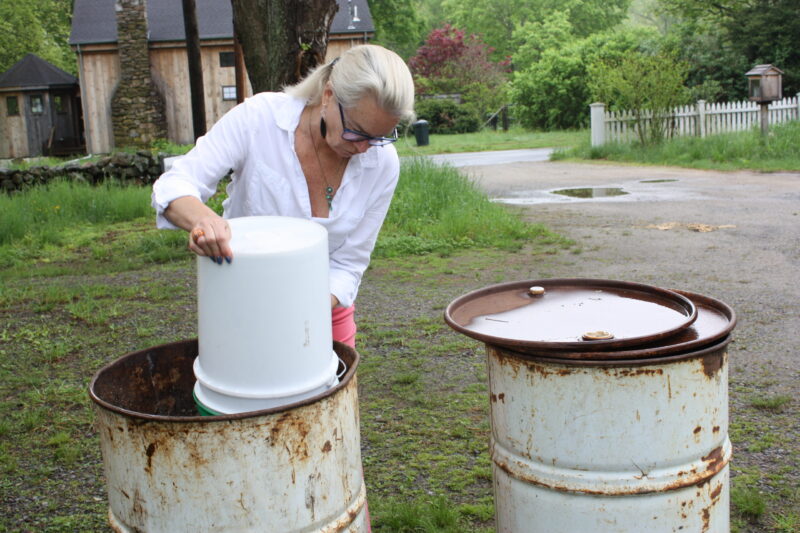
Drown said staff members from Lyme Consolidated School have been dropping off two five-gallon buckets of food scraps per day since 2022. The Town of Lyme last year began selling green-lidded, brightly labeled buckets at cost to residents interested in hauling their organic refuse to the farm.  

White said the program benefits the farm, the residents of Lyme, and the town’s bottom line. 

She noted 20-25% of the weight of solid waste comes from food.

“So if we can reduce the amount of food waste in the solid waste stream, then our costs for the town go down. And it’s probably going to be mandated eventually by the state,” she said.

She counted 40 of the specially-produced buckets that have been sold so far by the town. Drown added that about 140 people drop off scraps in their own buckets. 

White said bringing food scraps to the farm is a good option even for those who do their own composting at home. That’s because items like bones, fats, oils and other organics that don’t break down as well in a backyard compost pile are welcome at the farm. 

Selectwoman Kristina White dumps a bucket of food scraps from her home into a barrel at Long Table Farm to be turned into compost.

“What we’re trying to say is, ‘Yeah, please compost. Continue to compost in your backyard. But all that other stuff that you’re throwing in the garbage, put it in this bucket,’” she said.  

Drown hopes to expand the program through a grant from the state Department of Energy and Environmental Protection as she looks to include Old Lyme in the mix. She said some new farm equipment and expansion of the crushed stone pad would allow the farm to meet the organic recycling needs of both towns, assuming 50% of residents brought in their food scraps. 

She also hopes to install collection barrels at places like the transfer station and recycling center. 

Drown is asking for $350,000 to $375,000 in funding from the state, combined with in-kind help from the two towns in marketing the composting program and providing educational opportunities.  

She told the Lyme Board of Selectpeople at a meeting this week that the grant application has to come from a municipality or the regional Council of Governments since private entities alone are not authorized to apply. 

First Selectman David Lahm encouraged Drown to explore a partnership that includes both Lyme and Old Lyme. 

“The state government is pushing regionalization,” he said. “So if you can show it’s more than one town, it’s easier to get money.”

Drown said she will be meeting with Lyme-Old Lyme Schools Superintendent Ian Neviaser next week and is lining up a meeting with Old Lyme First Selectwoman Martha Shoemaker.

An Expanded ‘Beta Test’

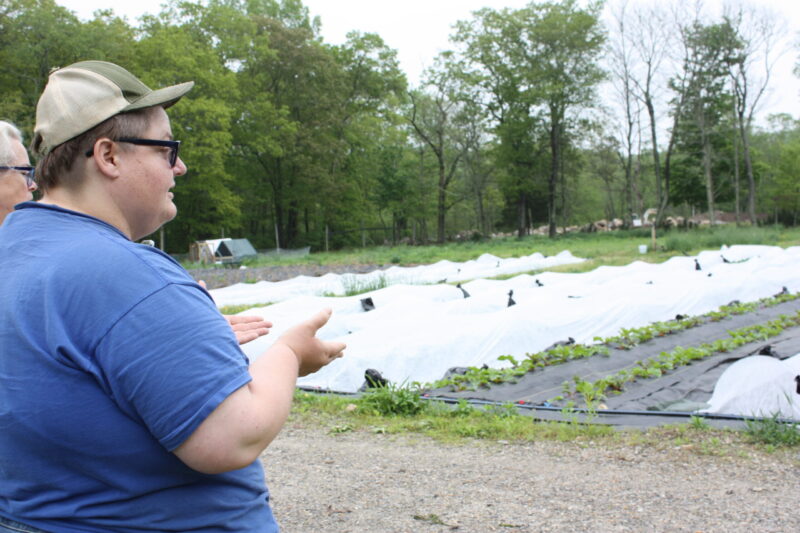
Long Table Farm owner Baylee Drown points to abundant Swiss chard that grows with the help of compost produced at the farm.

Back at the farm, Drown described the program as a “beta test” as the farmers work to scale up production to meet demands coming down the pike now that the state is mandating more businesses and organizations recycle their food scraps. 

“I think it’s a good system to have a starter program that’s optional. And then get people kind of used to the idea before the mandate comes out,” Drown said. 

It’s also a beta test for the public. 

Anyone in the area is invited to drop off their scraps Wednesday through Sunday from dawn to dusk in two barrels at the farm entrance. 

In addition to the scraps, compost at Long Table Farm comprises leaves, wood chips, animal bedding and manure. Drown and Quinn use their blue farm tractor to haul the collection barrels from the parking area to the piles arranged atop the stone pad. 

She said she’s hopeful grant money can cover a grabbing mechanism to tip the barrels from the tractor into the pile so the farmers don’t have to do it by hand. 

“Right now, it’s messy and gross,” she said. “But we’re tough.” 

Drown said the composting happens as the large piles “cook,” with bacteria and fungi breaking down the material so that heat is released as a byproduct. 

The magic number is 131 degrees, according to Drown. That’s the temperature at which pathogens are killed and weed seeds become sterile. 

After a trip through the farm’s rotating screener, properly cooked compost emerges as a clean, high quality fertilizer that she said her friends in the farming community are “champing at the bit” to purchase. 

She said Connecticut and Rhode Island don’t have a reliable supplier of high-grade compost and potting soil to supply small scale vegetable farmers in the region. 

“I’ve made two batches that were totally weed seed free, but not all my batches are that way yet,” she said. “I’m making good compost, but it’s not perfect yet for vegetable farms.”

Drown was optimistic that will change. 

“And that’s another part of why this beta testing process is really helpful,” she said. “Because I’m learning by doing.”

She also sees the pilot program as a way to work toward a sustainable model that will eventually include tipping fees like those the town currently pays the Materials Innovation and Recycling Authority to haul solid waste out of town. 

Piles of compost “cook” at Long Table Farm.

In the meantime, Drown said she’s happy to donate the labor and materials she estimated at $3,000 per year to handle food scraps for the town. Her grant application to the state commits to another $50,000 in labor to develop the infrastructure to grow the program. 

“And I’m learning how to be a good composter. I took a certificate course so I can operate a compost facility legally that’s recognized in multiple states,” she said. “At some point, the money that’s being given to waste companies needs to be given to farmers.”

White, who also serves as Executive Director of the Lyme Land Trust, was confident the town would start looking into reimbursing farmers for their work when recycling organic material becomes the law. 

“Because we’re going to have to pay someone to do it,” she said. 

She described the initiative as one that fits into Lyme’s unique, deeply-rooted and pervasive commitment to open space. 

“Part of our mission is supporting local farmers and keeping farmland, versus that farmland turning into more development,” she said. “In Lyme, everything is intertwined.”