‘Witness Stones Project’ Merges with Massachusetts-based Preservation Group

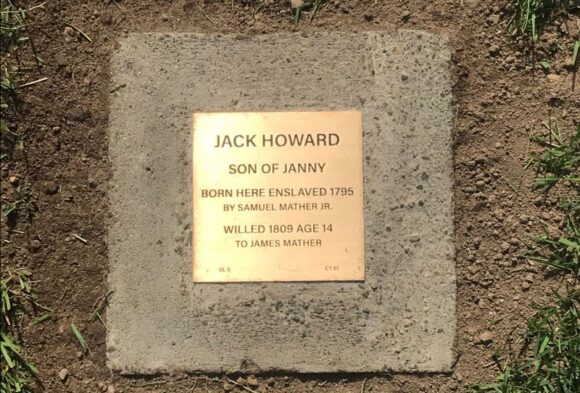
This Witness Stones plaque commemorating the life of the enslaved Jack Howard is located at 5 Lyme Street, the parsonage of the First Congregational Church of Old Lyme.

HAVERHILL, MA–Two organizations committed to recovering hidden histories, commemorating enslaved individuals and fostering a deeper understanding of the country’s complex past have joined forces. 

The Connecticut-based Witness Stones Project, which includes an active presence in Lyme and Old Lyme, has been absorbed by Historic New England, a preservation organization out of Massachusetts that goes back to 1910. 

The merger was announced Thursday in a press release from Historic New England. It brings the Witness Stones Project under the banner of Historic New England’s Stopping Stones initiative, which honors enslaved Americans through the installation of permanent markers and community ceremonies. 

Both the Witness Stones Project and Stopping Stones use small plaques in the ground to mark sites of enslavement – including 300 Witness Stones in seven states and more than 90 Stopping Stones from Vermont to Texas – but only the Witness Stones program incorporates a robust educational component. 

The Witness Stones Project in a website announcement said former Witness Stones Director of Operations Liz Lightfoot, of Lyme, will take on the role of Stopping Stones school and youth program manager. She will continue to use Witness Stone’s trademarked curriculum to help students explore historical records and to tell the stories of forgotten individuals, the group said. 

The Witness Stones announcement said schools, churches, and community organizations involved locally can rest assured their work is being preserved and will serve as a foundational part of the expanded effort. 

“And for the communities where we are currently working and will work in the future, the important research, education, and installations will proceed with the full backing of Historic New England’s resources,” the group said.

The Witness Stones Project was founded in 2017 by Dennis Culliton of Guilford. Stopping Stones, which is part of Historic New England’s Engagement Arts Fund, began in 2020 under the leadership of Paul Growald. 

Growald said joining with the Witness Stones Project enables his group to add a “powerful educational dimension” to the physical markers. 

“I have long envisioned curriculum components that accompany our memorials, inviting participants of all ages into this work,” he said. “This partnership fulfills that vision, aligning remembrance with education and community dialogue in a way that can truly transform how America reckons with its history.”

The expanded Stopping Stones team is led by director Pat Wilson Pheanious, a ninth-generation descendant of enslaved individuals in Guilford whose family history was among the first researched by the Witness Stones Project eight years ago. She is the founding chairman and a former executive director of the Witness Stones Project. 

“Embracing the past is vital to shaping America’s future,” Pheanious said in the Historic New England release. “This collaboration ensures that the work of these programs will remain strong, protected, and accessible to communities everywhere.” 

Historic New England CEO Vin Cipolla said the new collaboration will allow both groups to expand their reach nationwide by pairing memorial installations with classroom learning and community dialogue. 

“By uniting the Witness Stones curriculum with the national reach of the Stopping Stones program, we can ensure that the lives and legacies of enslaved people are recognized, remembered, and taught to future generations,” he said. 

Both initiatives are inspired by Germany’s Stolpersteine Project, which commemorates Holocaust victims with “micro-monuments” placed in public spaces. 

The merged groups will operate as part of Historic New England’s Recovering New England Voices (RNEV) initiative. RNEV supports research, storytelling, and public engagement to elevate underrepresented histories, including those of Indigenous people, women, immigrants, LGBTQ communities, and enslaved individuals. 

The public is invited to join the conversation at the Historic New England Summit, Nov.13–14. 

More information on the transition is available on the Witness Stones and Stopping Stones websites.
TOP STORY: Witness Stones Old Lyme Installs 12 More Plaques Honoring Enslaved People as Five-Year Project Sunsets, Brings Total to 60

Soprano Lisa Williamson moved attendees with her performance of the American spiritual “Steal Away” and gospel hymn “His Eye is on the Sparrow.” All photos by LymeLine.

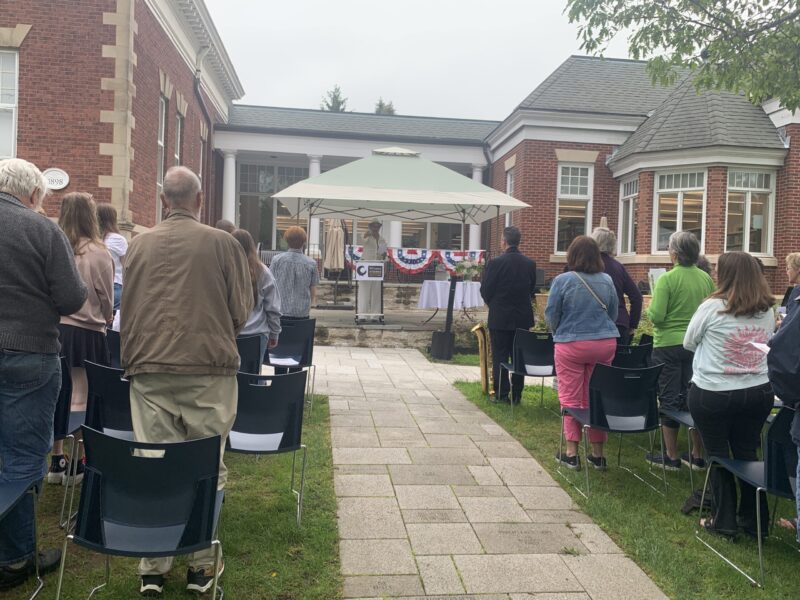
OLD LYME–Ten small brass plaques installed Friday morning on the Sill Lane Green are there to fill holes left by untold stories.

Cesar was about 15-years-old when he was purchased for 80 pounds by Reynold Marvin Jr. in 1730. Zacheus Still, born enslaved to Richard Lord Jr. in 1726, served in the French and Indian War and the American Revolution. A 26-year-old known to history only as ‘Negro Woman’ was recorded as being healthy and “capable at housework” when she was sold in 1802 by Enoch Lord Jr. 

The information was culled from scant references in land records, emancipation certificates, and other primary sources, according to the Witness Stones Old Lyme organization that for five years has been working to unearth the town’s history of enslavement. 

The group on Friday held its fifth installation ceremony on the grounds of the Old Lyme Phoebe Griffin Noyes Library. The Sill Lane Witness Stones join 50 others laid in Lyme and Old Lyme since the organization began in 2020 as an offshoot of the wider Connecticut-based Witness Stones initiative. 

The local group marks sites of enslavement and engages students in telling the stories behind the stones.

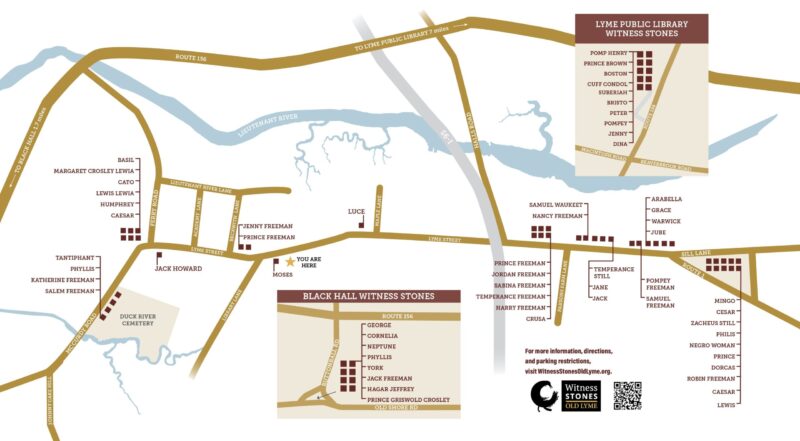
Witness Stones Old Lyme over the past five years has installed 60 plaques in locations shown here.

Witness Stones Old Lyme Chairwoman Carolyn Wakeman said the ceremony would be the last of its kind as the sun sets on the five-year-project.

“Together, we have restored missing history,” she said. 

Wakeman described the map of Witness Stones as a wide circle extending from Lyme Street, past the Lower Town Green to McCurdy Road, south to the Black Hall section of town, north to Lyme and the East Lyme border, and back to Lyme Street’s northern end at the Sill Lane Green. 

The 12 most recent installations were located on Sill Lane and at the Florence Griswold Museum.

“Even though we could easily place another 60 plaques to commemorate additional enslaved persons, the Witness Stones website will continue to provide new information about local enslavement, and middle school students will continue in the years ahead to engage with the Witness Stones curriculum and to focus on primary documents in the history of our town,” she said. 

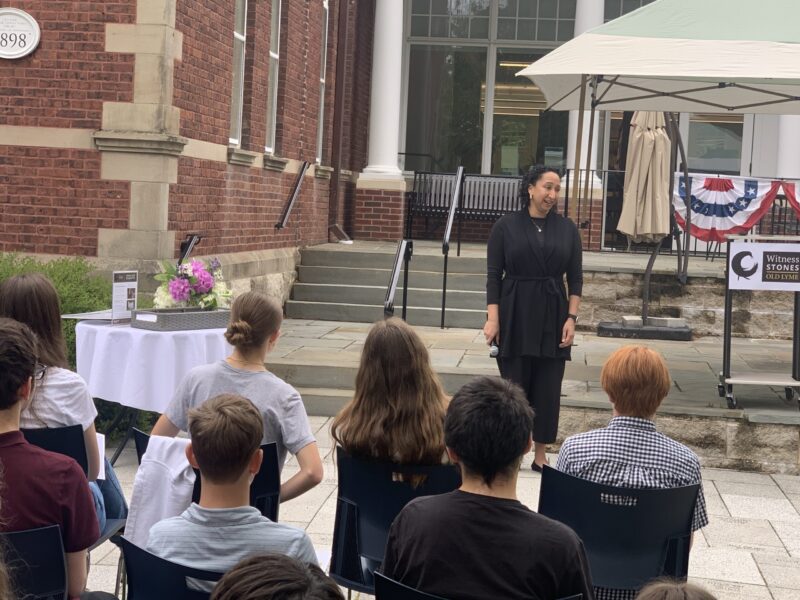
Poet Kate Rushin reads “Fishing for Shad” at the fifth and final Old Lyme Witness Stones installation ceremony.

Kate Rushin, a poet and Connecticut College professor, read her poem “Fishing for Shad” as one of four artists selected to remember in verse people enslaved on Lyme Street. 

Rushin, along with Antoinette Brim-Bell, Marilyn Nelson and Rhonda Ward, are the Witness Stones Old Lyme poets. The group received a Health Improvement Collaborative of Southeastern Connecticut (HIC) Partnership Grant for Racial Equity. 

Rushin wrote the poem from the perspective of Jack Howard. He was born enslaved to Samuel Mather Jr. in 1795 and willed to Mather’s son James in 1809. 

She said she used Wakeman’s research, her own understanding of others, and her experiences to imagine how she might feel if she were the enslaved child. 

“I don’t know where I belong/but I know I don’t belong here,” she wrote in the poem’s opening lines. 

Led by Kate Rushin, the audience repeats the name of each enslaved person honored in the final installation ceremony. 

Rushin is also the author of Meditations on Generations, written for Jane. Born enslaved to Joseph Peck Jr. in 1726, Jane was sold for 25 pounds at the age of 3. No more information about her has been discovered. 

“I’ll remember you, Jane,” she wrote in the poem’s final lines. “You were here./I will honor you, respect you;/hold you in my words.” 

The poet, who identified herself as the great-granddaughter of an enslaved woman and the free man who released her from bondage, grew up in the first incorporated African-American town in New Jersey. 

“This project is very personal to me, as it is to the other Witness Stones poets,” she said. 

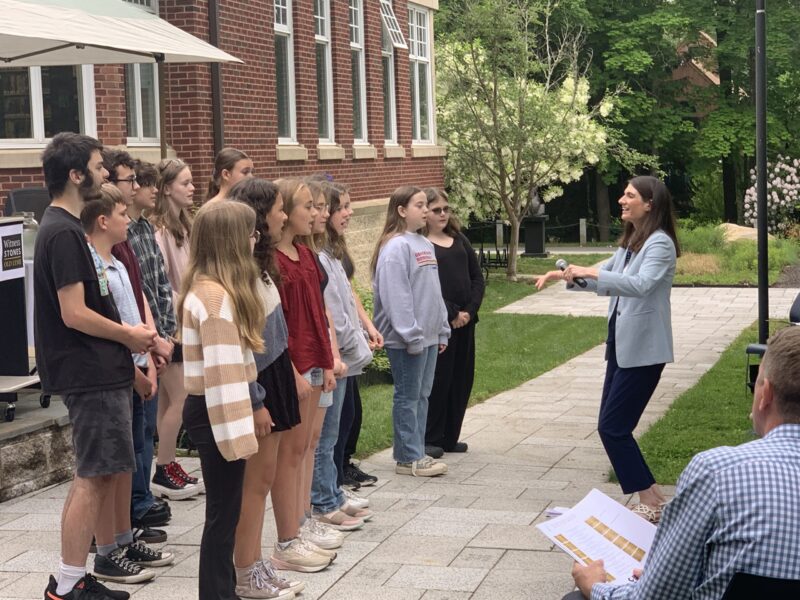
The Lyme-Old Lyme Middle School Chamber Choir, under the direction of Laura Ventres, sing a medley of American spiritual songs.

Eight Lyme-Old Lyme Middle School students followed Rushin with their own poems honoring those whose plaques were laid Friday.

Michelle Dean, curriculum director for the Lyme-Old Lyme Schools, described the five-year collaboration between Witness Stones Old Lyme and the schools as a shared commitment to telling the stories of “those whose voices for far too long have gone unheard.” 

She said historical documents allowed students to confront complex truths and explore diverse perspectives that shaped the history of Lyme and Old Lyme. 

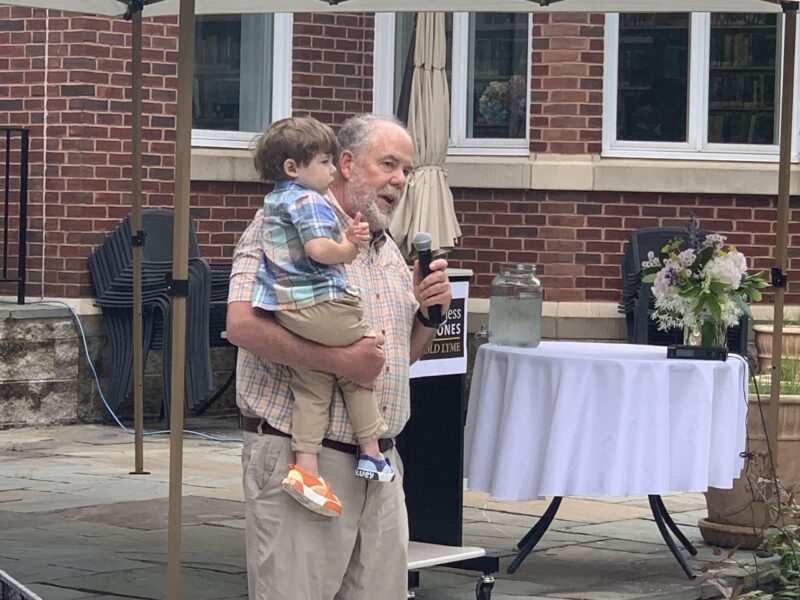
Witness Stones Project founder Dennis Culliton, with grandson Joey Tomanelli, lauded the Old Lyme group as a model for other cities and towns. He is retiring from the Witness Stones Project next month after eight years.

“If our past is indeed our greatest teacher, then let it teach us this: We each have the capacity to honor others with dignity and respect,” she said. “Let us honor the past and our future by choosing humanity every day.”

Editor’s Note: This article was updated with the most recent Witness Stones Old Lyme map and to correct Wakeman’s name in one reference.