HAVERHILL, MA–Two organizations committed to recovering hidden histories, commemorating enslaved individuals and fostering a deeper understanding of the country’s complex past have joined forces.
The Connecticut-based Witness Stones Project, which includes an active presence in Lyme and Old Lyme, has been absorbed by Historic New England, a preservation organization out of Massachusetts that goes back to 1910.
The merger was announced Thursday in a press release from Historic New England. It brings the Witness Stones Project under the banner of Historic New England’s Stopping Stones initiative, which honors enslaved Americans through the installation of permanent markers and community ceremonies.
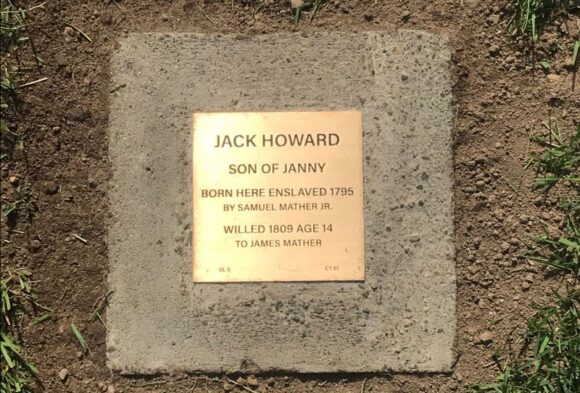
Both the Witness Stones Project and Stopping Stones use small plaques in the ground to mark sites of enslavement – including 300 Witness Stones in seven states and more than 90 Stopping Stones from Vermont to Texas – but only the Witness Stones program incorporates a robust educational component.
The Witness Stones Project in a website announcement said former Witness Stones Director of Operations Liz Lightfoot, of Lyme, will take on the role of Stopping Stones school and youth program manager. She will continue to use Witness Stone’s trademarked curriculum to help students explore historical records and to tell the stories of forgotten individuals, the group said.
The Witness Stones announcement said schools, churches, and community organizations involved locally can rest assured their work is being preserved and will serve as a foundational part of the expanded effort.
“And for the communities where we are currently working and will work in the future, the important research, education, and installations will proceed with the full backing of Historic New England’s resources,” the group said.
The Witness Stones Project was founded in 2017 by Dennis Culliton of Guilford. Stopping Stones, which is part of Historic New England’s Engagement Arts Fund, began in 2020 under the leadership of Paul Growald.
Growald said joining with the Witness Stones Project enables his group to add a “powerful educational dimension” to the physical markers.
“I have long envisioned curriculum components that accompany our memorials, inviting participants of all ages into this work,” he said. “This partnership fulfills that vision, aligning remembrance with education and community dialogue in a way that can truly transform how America reckons with its history.”
The expanded Stopping Stones team is led by director Pat Wilson Pheanious, a ninth-generation descendant of enslaved individuals in Guilford whose family history was among the first researched by the Witness Stones Project eight years ago. She is the founding chairman and a former executive director of the Witness Stones Project.
“Embracing the past is vital to shaping America’s future,” Pheanious said in the Historic New England release. “This collaboration ensures that the work of these programs will remain strong, protected, and accessible to communities everywhere.”
Historic New England CEO Vin Cipolla said the new collaboration will allow both groups to expand their reach nationwide by pairing memorial installations with classroom learning and community dialogue.
“By uniting the Witness Stones curriculum with the national reach of the Stopping Stones program, we can ensure that the lives and legacies of enslaved people are recognized, remembered, and taught to future generations,” he said.
Both initiatives are inspired by Germany’s Stolpersteine Project, which commemorates Holocaust victims with “micro-monuments” placed in public spaces.
The merged groups will operate as part of Historic New England’s Recovering New England Voices (RNEV) initiative. RNEV supports research, storytelling, and public engagement to elevate underrepresented histories, including those of Indigenous people, women, immigrants, LGBTQ communities, and enslaved individuals.
The public is invited to join the conversation at the Historic New England Summit, Nov.13–14.
More information on the transition is available on the Witness Stones and Stopping Stones websites.