TOP STORY: Longtime ‘Behind-the-Scenes’ Organizers Give Glimpse of Extensive Preparations for Old Lyme’s Beloved Memorial Day Parade

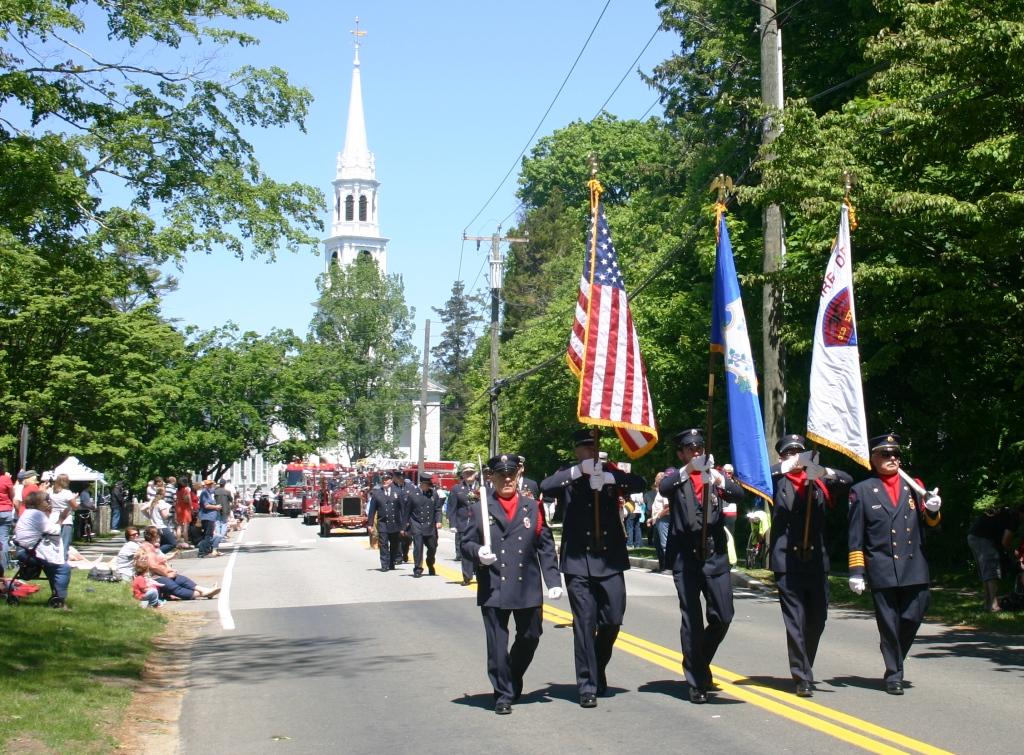
The well-organized parade heads down McCurdy towards the cemetery. LymeLine file photo.

OLD LYME–Old Lyme’s Memorial Day Parade is brought to you by two behind-the-scenes guys named Tony. 

The annual tradition, marked by the rumble of a military C-130 airplane overhead and hundreds of marchers pounding the Lyme Street pavement, has been mustered for years by Old Lyme Fire Department members Tony Hendriks and Tony Vallombroso. 

On this coming Monday, May 26, at 11 a.m., the parade route will fill with participants from more than 30 local organizations on their trek from the Old Lyme Fire Department headquarters to the Duck River Cemetery for a ceremony hosted by Veterans of Foreign Wars Post 1467. 

The Memorial Day Parade for many years has included the US Army half-track vehicle belonging to Bruce Noyes, which he drove in 2024 with wife Tammy and veterans atop. LymeLine file photo.

In separate phone interviews this week, Hendriks said he has been leading the organizational aspects of the parade for roughly three decades while Vallombroso recounted coming on board in 2012. 

Positions in the parade and at the ceremony are carefully mapped by Hendriks, a land surveyor by profession.

The duo’s work entails “a lot of things that people really don’t see,” according to Vallombroso. Tasks range from filing paperwork for the military flyover, to mailing out invitations, to ordering flowers from Old Lyme Landscape in the form of bouquets placed in firefighters’ ceremonial trumpets and a wreath laid at the ceremony.  
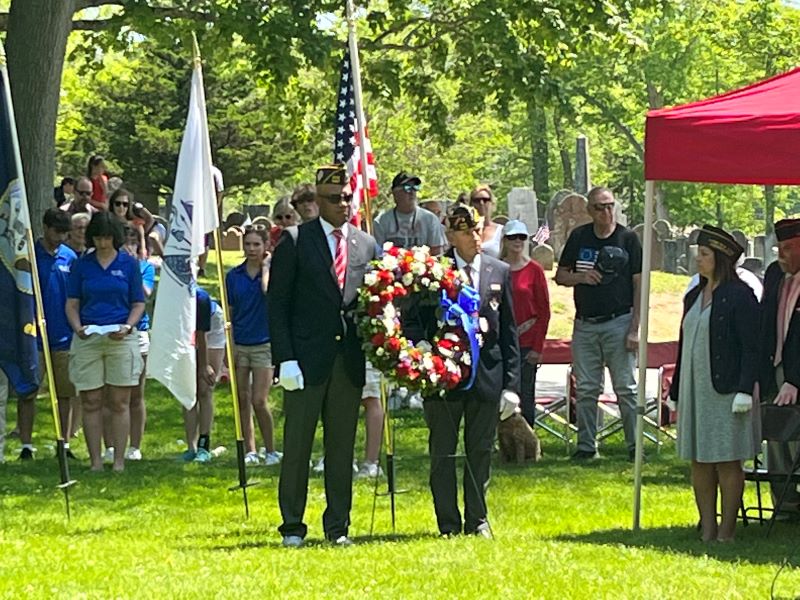
When all the parade participants have assembled in the Duck River Cemetery, a wreath is laid at the memorial to honor all our fallen heroes. LymeLine file photo.

Vallombroso described the parade as relatively short. It takes about a half hour from its start at the Lyme Street fire station to the cemetery finish.

“It takes a lot longer to plan it than it does to execute it,” he said. “But that’s okay.” 

The work starts in January with one of the most labor-intensive aspects of the parade: securing the military flyover. 

Vallombroso said the request must go through the U.S. Air Force and the Federal Aviation Administration to be approved as a mission. From there, paperwork gets picked up by the Connecticut Air National Guard. 

Vallombroso’s own military service included 38 years in the National Guard before he retired in 2003. As one of the town’s Veterans Representatives, he acts as a liaison to help connect those who have served in the military with available resources at the state and federal level.

The flyover by the Air National Guard is complemented on the ground by vehicles from the Army National Guard under the coordination of Major General Francis J. Evon Jr., according to Vallombroso.    

The Deep River Fife & Drum Corps play lively tunes as they march down Lyme Street in the parade. Photo by Michele Dickey.

The parade coincides with the installation of 48 United States flags on Lyme Street, where they will remain until after Veterans Day. That’s when they’ll be cleaned, reassembled on the poles, and put away in preparation for the following year. 

Vallombroso said he helped launch the flag program after the idea was broached several years ago by senior fire department member John “Mick” McCarthy. He credited the likes of then-First Selectwoman Bonnie Reemsnyder, Eversource Energy and the Old Lyme Historical Society for working together to make it happen. 

“And McCarthy’s dream of flags down Lyme Street was able to be done,” he said. 

Hendriks described the day of the event as a hectic one. 

“There’s always something at the last minute,” he said. 

He said he is actively searching for “new blood” to help organize the parade. 

“I’m trying to retire,” he said. “But every time I leave the room, I get renominated.” 
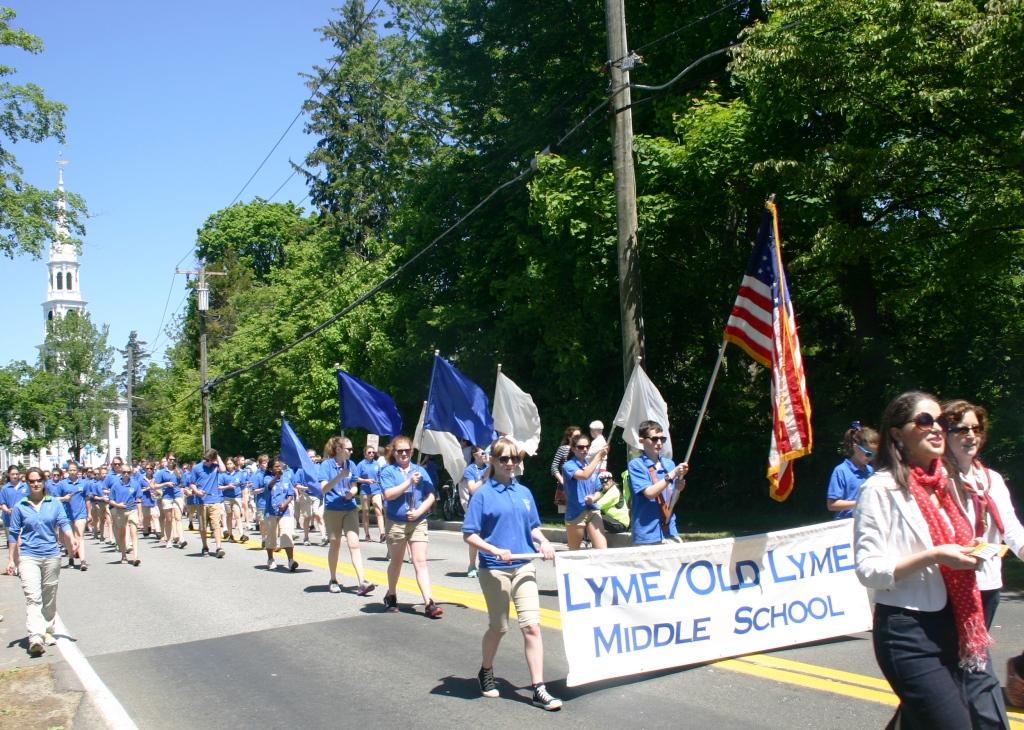
The Lyme-Old Lyme Middle and High School bands always form a popular part of the parade. LymeLine file photo.

First Selectwoman Martha Shoemaker this week said the two Tonys will be difficult to replace. 

“I am not sure if the residents of this town know how lucky we are to have Tony Hendriks and Tony Vallombroso,” she said. “Their dedication to this parade goes above and beyond our expectations.”

She likened the parade to a scene from a Norman Rockwell painting of idyllic, small town American life.

“It’s a good feeling day for this town,” she said.

She expressed hope that someone will step up to train for the volunteer role before Hendriks and Vallombroso choose to retire. 

The men, for their part, ascribed their quiet service to hometown pride and patriotism. 

Hendriks put it this way: “I’m just a humble servant of the town. Just helping out.”

Talking Transportation: Transit-Oriented Recreation

Jim Cameron

The recent cool and weather aside, it’s officially summer!  Time to get out and enjoy our state’s wonderful parks and beaches and take advantage of TOR.

You know what TOD is, right?  Transit Oriented Development … building homes and offices near mass transit facilities.  Well, I’m going to suggest you think about TOR… Transit Oriented Recreation.

Did you know you can travel to many state parks and beaches by train and a connecting bus shuttle?  Details on this year’s program are still to come, but CDOT and DEEP have partnered since 2021 to offer ParkConneCT from Memorial Day through Labor Day.

In years past, beach and park shuttles meeting in-coming trains have been free on weekends and holidays, taking you to places like Sleeping Giant State Park in Hamden or Hammonasset Beach State Park in Madison.

While many state parks close their gates on weekends when their parking lots are full of cars, the shuttle buses can still deliver you to Mother Nature without the hassles.

The state’s modest marketing efforts to attract tourists seem to be working as the number of visitors was up 2% last year.  Officials say tourism brings Connecticut $18.5 billion each year … more than what’s seen in Maine, which bills itself as “Vacationland”.

And it’s clearly our beaches that are a main draw.  Who needs to endure I-95 when you can take the train to visit …

Sherwood Island State Park in Westport:  Just take Metro-North to Westport Station and grab the Sherwood Island Shuttle from the station to the park to enjoy swimming, picnicking and great views of LI Sound.

Silver Sands State Park in Milford:  Metro-North gets you to Milford Station where a walk or bike ride to the beach presents newly refurbished boardwalks, pristine beaches and bird-watching spots.

Bluff Point State Park in Groton:  Take Shore Line East or Amtrak to New London Station, then grab the SEAT (Southeast Area Transit) Rte. 11 bus to the beach where you can enjoy walks along the coast, biking and fishing.

Beyond TOR, how about TOE … Transit Oriented Entertainment?

You wouldn’t think of driving to NYC to see a Knicks or Rangers game.  You’d take the train, right?  Well, you can take Metro-North directly to Yankee Stadium too.  Or to Bridgeport to see Ringo Starr at the Hartford HealthCare Amphitheater … also walking distance from Amtrak and the Port Jeff Ferry.

Going to see a play at The Shubert in New Haven or Andrea Bocelli at the XL Center in Hartford?  Ditch the car and try mass transit.

And if you’re a railfan, visit the Essex Steam Train & Riverboat by training to Old Saybrook and hopping into a cab for the quick ride back into history.

If you’re city-bound, check out Metro-North’s “MTA Away” packages—train and event tickets, often at a discount—for venues both in NYC and the ‘burbs.  You can go star gazing or catch an outdoor concert in Forest Hills without a car.

Whatever your destination for summer fun, think twice before enduring the traffic and maybe consider taking mass transit.

Editor’s Notes: i) Jim Cameron is the founder of the Commuter Action Group and advocates for Connecticut rail riders. He writes a weekly column called ‘Talking Transportation,’ which is published by a number of publications in the state.
ii) ”Talking Transportation” recently won first place in the general column/commentary category in the Connecticut Society of Professional Journalists Excellence in Journalism Contest.

TOP STORY: Lyme Voters Approve $11.37 Million Budget; Finance Board Keeps Tax Rate Flat

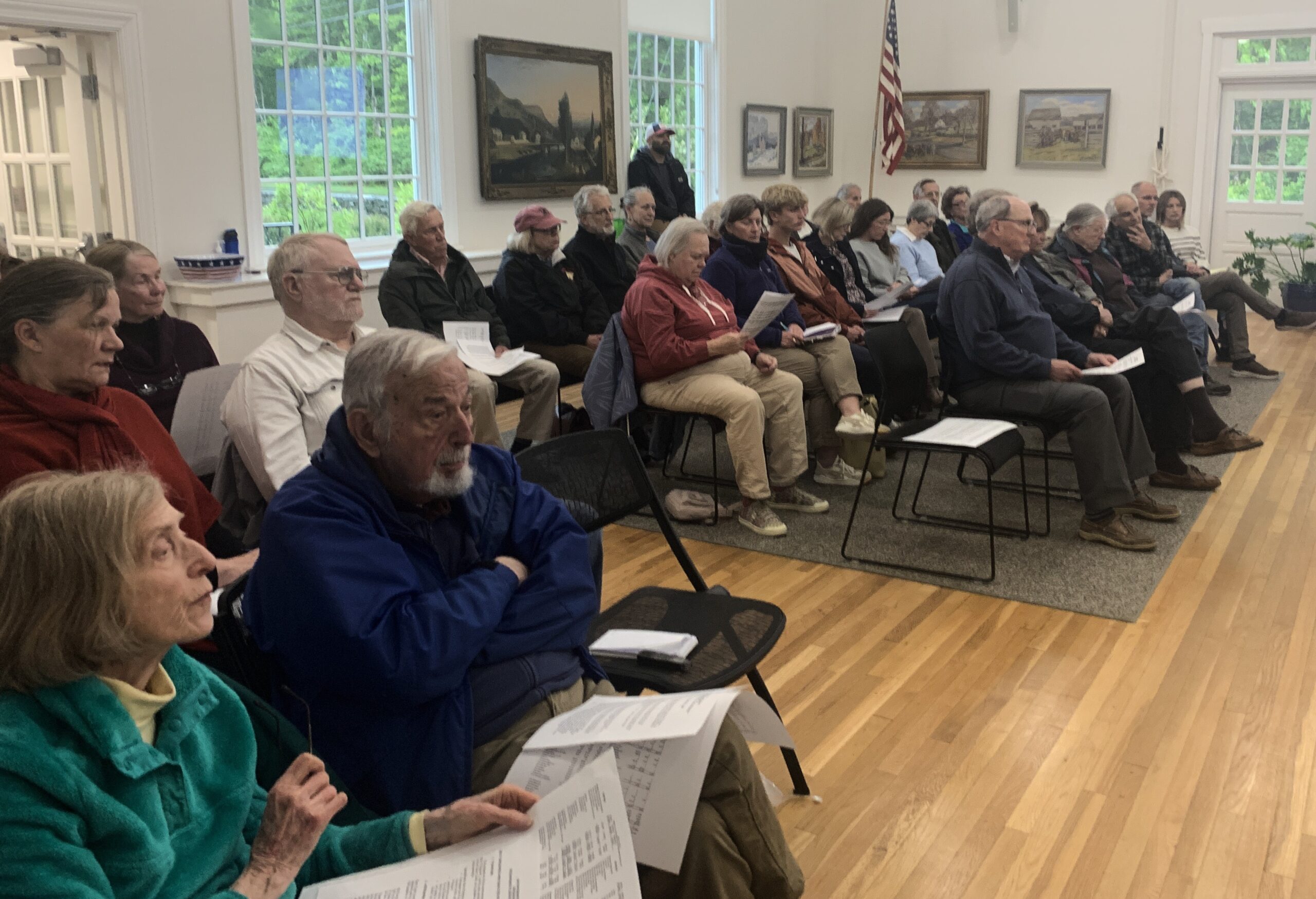
On Thursday evening, Lyme residents gathered to vote on Lyme’s 2025-26 budget. The most recent US Census put the town’s population at 2,352 residents.

LYME–About 55 people came out Thursday evening to approve the $11.37 million 2025-26 budget and raise the cap on a tax break for elderly and disabled residents. 

Members of the Board of Finance gathered immediately following the 25-minute Town Meeting to set the tax rate at 14.5 mills. The move left the rate unchanged from the current year. 

The newly-approved spending plan includes $10.84 million in town operations expenses, up $513,372 over the current budget, and $530,400 in capital costs, down $1.53 million from the current budget. 

Finance board Chairman Alan Sheiness said during the town meeting that the proposed budget anticipates ending the current year with a $200,000 surplus. 

“So what you see here in summary is that we should finish this year ahead of budget,” he said. “That we should have next year a flat mill rate for property taxes, 5% growth in operating expenses, and a large decrease in capital.” 

Included in the town operations budget is $6.96 million in education funding for the town’s estimated 231 students. That’s up $299,504, or 4.5%, from the town’s current payment to the Region 18 school district shared with Old Lyme. The increase is driven by debt payments on a multi-building renovation project approved by voters at a cost to the district of $57.5 million. 

The only opposition to the proposed budget came from Affordable Housing Commission Co-Chairwoman Carleen Gerber when she called out the $1,000 budget allotted to her commission. 

She said the commission is currently working on several plans to make it more possible for people to find an affordable place to live in town. 

“To have no foresight for affordable housing in a town where service workers and teachers cannot afford a home may be pennywise – but it’s pound foolish,” she said. w

The commission for several years has been exploring the construction of multi-family options such as duplexes or quadplexes that young people and downsizing retirees can afford. They’ve also looked into rehabilitating houses with a focus on making space available for volunteers in the local emergency services.  

But First Selectman David Lahm after the meeting said the $1,000 allocated to the commission in the town’s land use budget in the is for basic operational expenses. 

“The real money for affordable housing is in our specific fund,” he said, referring to the reserve account started with private donations to promote housing for those who live and work in town. It currently totals $200,000. 

Multiple approvals and time-intensive public notice requirements are required before the commission can access the reserve fund. Members have said the process impedes their ability to close on a property quickly when it becomes available in a hot real estate market.

Tax Break for Elderly Residents

A vote to amend income eligibility criteria in the Lyme Elderly Tax Relief Ordinance was approved unanimously. 

Lahm said the new ordinance leaves it to the state Office of Policy and Management to set annual eligibility requirements for the tax relief program. Previous income limits of $40,000 for single residents and $47,500 for married residents were unchanged since 2007. 

Lahm said the revised ordinance, pending official state numbers, will likely raise the income cap for single residents to $45,200 and married residents to $55,100. 

The finance board after the Town Meeting voted to cap the program at $65,000 per year based on criteria outlined in state statute. The cap will stay in place for the next five years.

Sheiness said the total value of the tax break for all qualifying residents in town has not exceeded $20,000 in the past. That means everyone who qualifies should receive the full tax abatement.

“We don’t anticipate coming near that $65,000 cap,” he said.

Lyme Town Meeting to Include Votes on Budget, Elderly Tax Break

LYME—The $11.37 million proposed 2025-26 budget will be among the items up for a vote at the Town Meeting on Thursday, May 22, at 6:30 p.m., in the Lyme Town Hall, 480 Hamburg Rd.

If the proposed budget is approved, members of the Board of Finance have said the tax rate will remain unchanged. They plan to set the tax rate at the current 14.5 mills at their meeting immediately following the vote.

The budget proposal is down $1.02 million, or 8.2%, from the current budget. 

The spending plan includes town operating and capital expenses, as well as Lyme’s share of the Region 18 education budget. 

Education costs in Lyme’s proposed budget come out to $6.96 million for the town’s estimated 231 students. That’s up $299,504, or 4.5%, from the town’s current share. The increase is driven by debt payments on a multi-building renovation project approved by voters at a cost of $57.5 million. 

Lyme’s $10.84 million town operations budget proposal is up $513,372, or 5.0%, over the current budget. Proposed capital spending comes in at $530,400, a decrease of $1.53 million, or 74.3%, from the current budget. 

First Selectman David Lahm has attributed the decrease in capital spending to the completion of bridge projects on Birch Mill Road and Macintosh Road that drove up the budget in previous years. 

Residents will also decide whether or not to amend the Lyme Elderly Tax Relief Ordinance to modify the income eligibility criteria.

Lahm this week said the proposed ordinance for the first time reflects income limits set by the state Office of Policy and Management each year as part of the program allowing cities and towns to offer a tax relief program for elderly and totally disabled homeowners.

He said the previous ordinance set the income cap at $40,000 per year to qualify for the tax break, and had not changed in years.

Some households receiving Social Security payments who previously qualified for the program would become ineligible when annual federal Cost of Living Adjustments (COLA) put them over the $40,000 threshold, according to Lahm.

“That wasn’t the intent,” he said. “The intent is if you’re on Social Security that you should be in this program and not get bumped out by COLAs.”

He said the change brings the definition in line with state income limits “”so that when the state program does cost of living increases, our limits will also rise with that.”

The town’s annual report for the 2023-24 fiscal year will also be officially accepted at the meeting.

A summary of the proposed budget can be viewed at this link.

Editor’s Note: This article was updated with information on the proposed ordinance and annual report.