
‘When it Gets Crisp in the Fall’: Gardening Tips for September from ‘The English Lady’

“Life starts all over again when it gets crisp in the fall.” – F. Scott Fitzgerald, The Great Gatsby
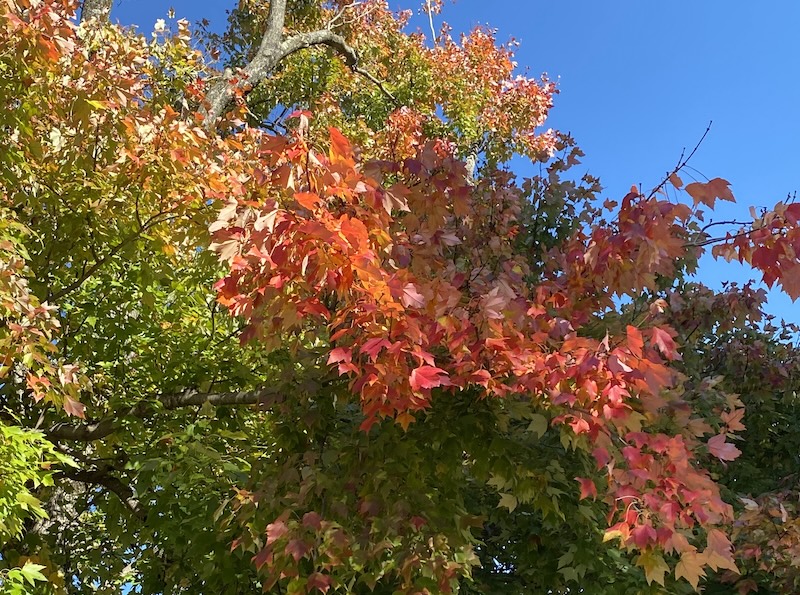
The colors of fall will soon be all around us. LymeLine photo.

Rain through August has been rather sparse. That said, our gardens need rain.  

In the meantime, if you are planting evergreens this month; September is the best time to plant evergreens in our zone. Evergreens planted now can begin to establish strong roots before winter and it is important to give the new evergreens a good amount of water. I suggest you make a hole in the soil with an iron stake or other piercing instrument, then feed the hose into the hole and allow water to reach the roots slowly for at least a half hour and continue with this method a few times a week until the ground freezes in November. 

Cover the earth around the plants with a light layer of composted manure and mulch. Do not apply mulch right up to the trunks of the plants as this encourages rodents to  gnaw on the bark of the plants.

Hydrangeas
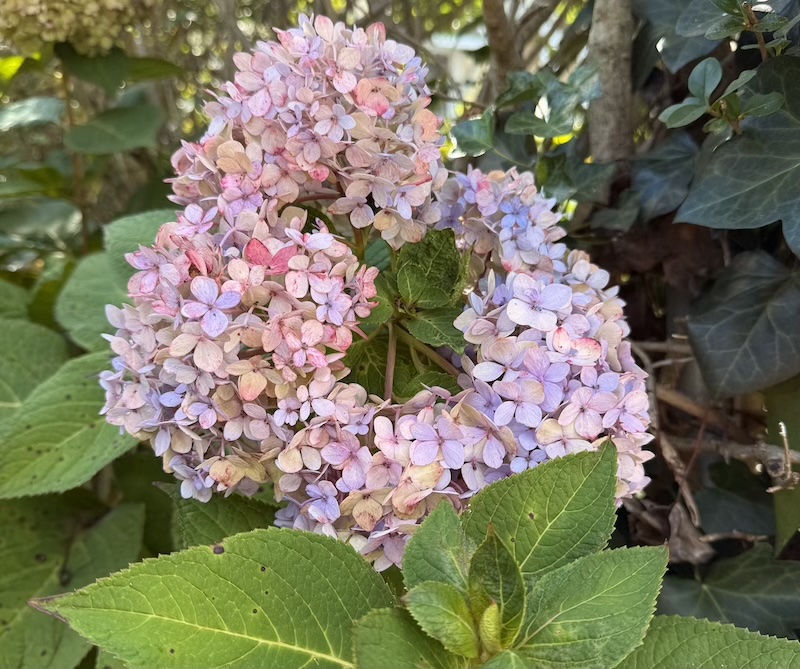
Hydrangeas do not appreciate being transplanted. LymeLine photo.

I am often asked questions regarding the pruning of hydrangeas, with fellow gardeners asking, “Maureen, why did my Hydrangeas not bloom this year”? The reason that hydrangeas do not bloom is that gardeners prune them at the wrong time. If you feel that your Hydrangea macrophylla has become too large and require pruning, prune them by mid-September.

The reason is that hydrangeas set their buds for next season by late September; pruning any later will cut off those buds, which will negate any chance of bloom for next season or even the following season. 

How to accomplish pruning successfully:
This month, prune any old woody stems that have not bloomed well and any weak new shoots. After pruning, apply a few inches of composted manure, and some peat, followed by a top dressing of natural brown bark mulch. Peat aids acidity in the soil, which is necessary as Hydrangeas may become chlorotic if the soil is too alkaline. Chlorotic means abnormal reduction or loss of normal green coloration of the leaves of the plants.

Another important note on this plant is that hydrangeas do not like to be transplanted; transplanting them can result in little to no bloom for many seasons. For that reason, I suggest when planting new hydrangeas, make sure they are at least five feet apart, so they have room to grow, receive adequate ventilation and will therefore never need to be transplanted. 

Take a Break to Contemplate

This fall, as you contemplate your landscape, think about  the past season and what worked for you in your garden and what you will never try again. 

One thing I will never forget is that mint took over the border beneath my Franklinia tree. Many years ago, my friend Roz, was kindly lending a hand in the garden and planted mint in the garden instead of a large container that I placed for that very purpose.
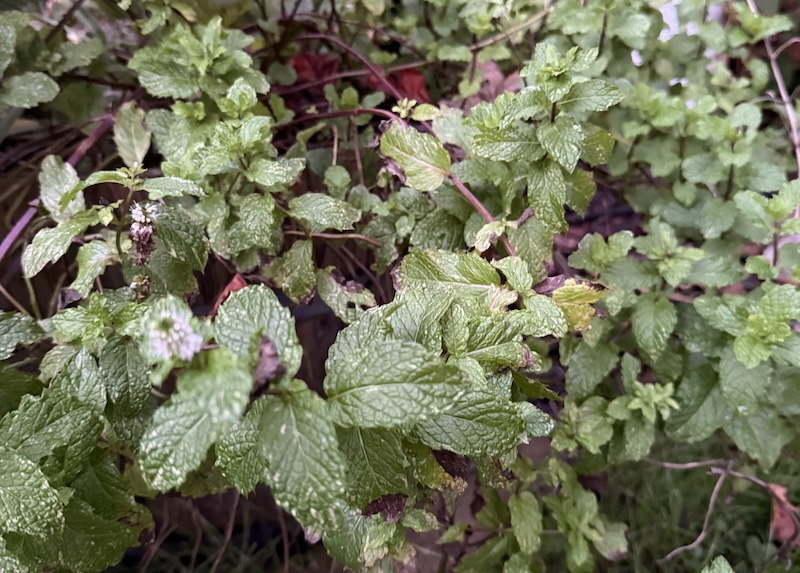
Mint grows vigorously wherever it is planted. It is always best to control its growth by planting it in a container. LymeLine photo.

I was busy with other garden chores, so by the time I noticed the error six months later, the mint was running rampant among the blue myrtle edging the borders. So, folks please take note that mint is extremely invasive and should only be planted in containers where its wayward habits can be controlled.

‘It is said that ‘a gardener’s work is never done’, but now with the season’s hard labor behind you, take a break. Sit outside and inhale the late garden fragrances and allow Mother Nature to anchor and relax you. 

In the early morning, I enjoy sitting on my patio near the herb garden, inhaling the fragrance of the sage, which I will  snip later to take indoors for drying and use in my recipes. I will also gather extra sage and lavender, which I will tie with string into small bunches to hang in my closets, which is a natural moth repellent. Some of the Lavender bunches I tuck into my drawers to keep moths from devouring my woolen garments, this works well as insects do not like fragrance. 

In the less hectic pace of fall, early autumn is the time to re-think your gardens. The garden’s pre-winter grooming will wait for a few weeks. You may feel that you would like to have professional design as you have noticed that your borders are not up to your expectations. 

If that is so, then contact someone that you trust to create a plan in the fall and winter, which can be phased in beginning next spring. Engage someone who will listen to your thoughts and stay within your budget. That being said, I respectfully offer a suggestion for a plantsman, whose company and website is LandscapesByIan.com. In the interests of full transparency, he is my son and I am confident you would enjoy speaking with him.

In your vegetable garden, sow spinach for spring harvest and sow a cover crop like winter rye, which can be dug in next spring together with composted manure as green manure. Green manure produces a rich growing environment for next year’s vegetables. 

Now is the time to get your fall compost pile cooking with the last of the grass clippings, spent perennials, leaves and small woody twigs. 

Perennials
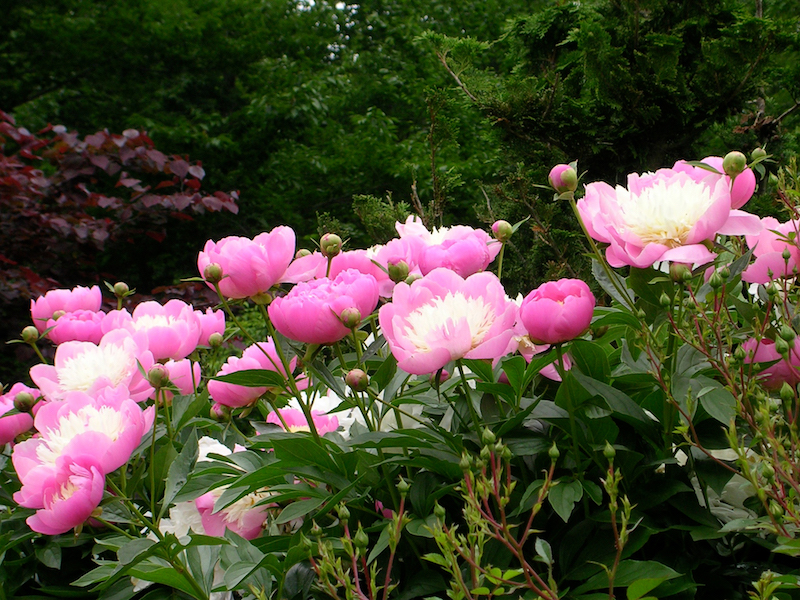
Peonies need careful attention to create a stunning display like this. September is the month to plant and transplant them.

Also in September, dig up, divide and replant overgrown perennials. Follow this method every three to four years to ensure vibrant bloom from these plants. Never plant or transplant any division or transplant any deeper in the soil than it is now or any deeper than the plant sits in the pot.

September is the month to plant and transplant peonies. Do not plant them deeply or they will not bloom, that means having just enough soil to hold them erect with the ‘pink eyes’ on the roots barely covered. Plant them with a light application of composted manure around the plant. Then in November, following the first hard frost cut down the peony foliage to about four inches from the ground. 

Fall’s brilliant autumn finery is the last hurrah, before winter sets in. LymeLine photo.

In a few weeks, the bright vibrancy of autumn color will appear on the maples. Fall’s brilliant autumn finery is the last hurrah, before winter sets in. Climbing up the red milk shed near the barn, the buds on the autumn clematis are beginning to unfurl and in the herb garden, autumn crocus, asters and sedum will take their curtain calls. 

For your soil to remain healthy, add a light layer of composted manure to all the borders now or in early October, together with a two-inch layer of fine bark mulch around to all newly planted and transplanted perennials and shrubs. With the application of the manure and mulch you are continuing to build the humus component, which will ensure a rich growing environment for spring and protect the plants from winter’s harsh conditions. 

I do not cut down my spent perennials but leave them up for the birds; the ripened seed heads are a delicious treat for them to peck at. Following the vibrancy of summer bloom, I enjoy the softer subtle colors of gray, brown and yellow of spent perennials and ornamental grasses blending naturally with the muted winter landscape, which to me offers a resting of the senses. 

Early to mid October is a great time to be planting. The benefits of fall planting for trees, shrubs and perennials gives them a head start with root development over those planted in the spring. This is especially so when we experience late spring when planting cannot begin until late April. In New England’s fall, the cooler temperatures and still warm soil encourage the plants to direct their energy into producing strong roots.  

The following trees are not good candidates for fall planting: birches, larches, gingko, oaks, magnolia, and all flowering fruit and flowering trees as well as the Eastern red cedar. These trees have fleshy roots, and their feeder roots are not large when young and take time to establish and are susceptible to frost heave.

Some perennials that do not like to be planted in fall are Artemisia, Lambs Ears, Foxglove, Penstemon, Anemone, Campanula, Kniphofia, Lupines, Scabiosa, ferns and grasses. 

Plant garlic this month for harvest next June. Garlic is the antibiotic of the garden. Plant it under fruit trees to avoid scab and root disease, near to ponds or standing water to control mosquito larvae or pour garlic water into ponds, bird baths and fountains to deter adult mosquitoes. 

End-of-Season Bargains

This is a good time to pick up end of season plant bargains. Most nurseries and garden centers have lowered their prices, so they do not have to winter plants over in the nursery. If you do purchase a few plants, keep your eyes open for the following problems:

Potbound pots

Check the bottom of the pot to see if the roots are growing through the holes. If not, gently tap the plant out of the container to see if it has a network of overlapping roots that wrap around the root ball. It is possible to salvage a root-bound plant, which is suffering from water and nutrient deficiencies over the summer, but it will be slow to root.

Before you plant this one in your garden, cut the encircling roots – the roots will now be shorter but will take root easier. 

Diseased Plants

Plants that have been in containers all summer and have been fed high nitrogen fertilizers are easy targets for pests and diseases. Check for spots on the foliage, wilted or curling leaves and discolored roots. As well as visible signs of pest damage and infestation such as webbing or sticky residue on foliage. Not only would these plants do poorly in the garden but could infect your other plants and the soil. Soil-borne diseases are the most difficult to deal with.

Badly shaped plants

Badly shaped plants are the Charlie Brown Christmas trees of the plant world, the unwanted orphans that have been passed over year after year; these are the runts of the litter! Do not set yourself up for disappointment looking at an ugly tree or shrub just to save a few dollars.

Mislabeled plants

At the end of the season many plant tags have been lost or mixed up, which means you are likely to get a perennial with flowers that are not the color you expected. Or you may buy a deciduous tree or shrub when you are looking for an evergreen variety. Stick to the plants that are part of large displays of identically labeled plants or with labels so firmly attached that look like they have been there for a while.

With all the above-mentioned plants – always add composted manure around the plant and do not plant any deeper than it is in its pot or burlap wrapping. Always wear gloves when working with manure; there is bacteria in the manure – great for the soil but not healthy for you. 

Please note that the bargain you get is often not worth the discount price. 

New Lawn or Patch Seeding

September is an excellent time to plant new grass so the young grass plants will have the advantage over weeds. Do not buy cheap seed, you reap what you sow! 

Gently de-thatch the areas that you wish to overseed or patch. Do not use the large thatching machines, which can damage existing grass. Add some composted manure to the area, broadcast the seed and cover the newly seeded grass area with salt hay (free from weed seed). Do not allow the soil surface to dry out; keep it moist. Water gently, and do not saturate the area or the seed will wash away. 

When the grass appears, stay off it. Do not mow and leave the salt hay to rot. Next spring, a healthy lawn will emerge and if there are a few bare patches in April, you can fill in the bare spots. 
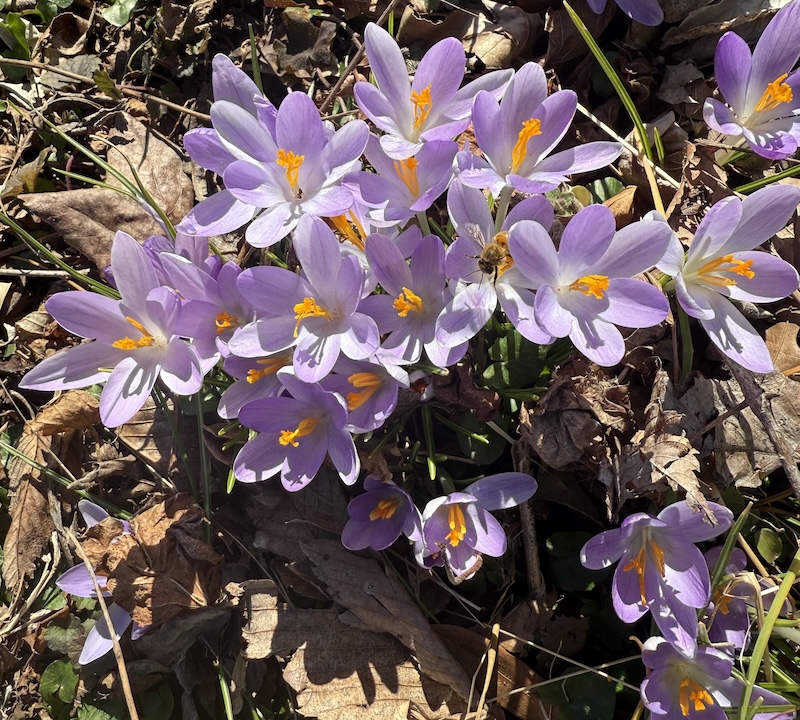
In terms of bulb planning, The English Lady recommends, “Go for masses of a single color for the greatest impact.”

I hope your spring bulb orders are in by now. Be adventurous this year and go for masses of a single color for the greatest impact. No matter how small your planting area, it is the intensity that counts, with two or three dozen red tulips or a hundred daffodils planted on your woodland edge. 

Buying daffodils in large numbers is less expensive. The bulbs are usually smaller, but this is not a problem as daffodil bulbs grow larger each year. Even though many say the spacing between these larger bulbs should be six inches, there is no reason they cannot touch. 

Put some composted manure or bulb food on the soil where the bulbs are planted. Make sure you plant the daffodils eight inches below the frost line, with the pointed end up. Wear gloves when you plant bulbs as they have a skin irritant, which may cause a rash.

If you cannot plant your bulbs when you receive them, store them in a cool, dry place in paper bags. The best time to plant spring bulbs in the Northeast is the end of October to the middle of November.

Lily of the Valley can be transplanted this month but wear gloves because there is toxicity in this plant. 

Dig up your gladioli corms, calla bulbs, elephant ear bulbs and dahlia tubers when the foliage turns yellow. Lay them in the sun to “cure” and store them in a cool, dry dark place. When you dig the dahlia tubers, do not pull them, as pulling can break the tubers. 

In September after their summer sojourn outdoors, take your houseplants indoors and wash the foliage gently and repot with new potting soil into a clean container. Repot those plants that have outgrown their pots to a clean container that is only one size larger. 

Fall and early winter is a great time to do stonework – dry laid paths, walls and patios. As well as repairing fences, arbors and pergolas and building decks. Paint wooden outdoor furniture with eco conscious paint before putting them undercover for winter.   

September is a gardener’s paradise; the air is cooler, the soil easy to work and you will not overheat with the effort. Stay awhile in your garden; enjoy the comforting fragrance of fall.      

I’ll see you in your garden next time.

Email me with gardening questions at MaureenHaseleyJones@gmail.com.
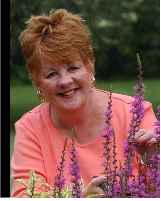
Maureen Haseley-Jones

About the author: Maureen Haseley-Jones is a member of a family of renowned horticultural artisans, whose landscaping heritage dates back to the 17th century. She is one of the founders, together with her son Ian, of The English Lady Landscape and Home Company. Maureen and Ian are landscape designers and garden experts who believe that everyone deserves to live in an eco-conscious environment and enjoy the pleasure that it brings. Maureen learned her design skills from both her mother and grandmother, and honed her horticultural and construction skills while working in the family nursery and landscape business in the U.K. Her formal horticultural training was undertaken at the Royal Botanic Gardens at Kew in Surrey.
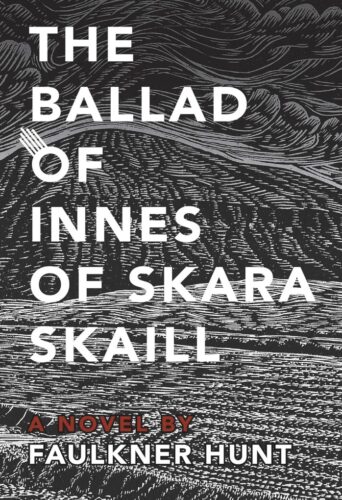
Literature in the Lymes: A Review of ‘The Ballad of Innes of Skara Skaill’ by Faulkner Hunt

He has created a land and characters that instantly feel familiar.

Like Faulkner, I was raised at the knee of a storyteller and read everything in every conceivable accent to my children. Some of us were more often amused (me) than others (them) but, I wouldn’t hesitate to do it again.

Nothing. Absolutely nothing beats a story. A tale. A yarn. A ballad … so I  was, naturally, very excited about this one.

Any storyteller knows a tale about an island is a boon. The islands of northern Great Britain especially are remote and historically, literarily magical; a perfect step into The Ballad of Innes of Skara Skaill.

Skara Skaill is an island, fictional, off the coast of Scotland. It should feel barren and cold and unwelcoming.

It doesn’t.

This is Hunt’s talent, I think. He has created a land and characters that instantly feel familiar. Likable, as maybe vestiges of classic literature or amalgamations of people we relate to; his characters are tangible.

Obviously his work as a screenwriter comes into play (puns away) but not uncomfortably so. It’s more an auditory or visual hint that stands quietly off to the side. It stands just so as a lovely book and we aren’t just flipping through a script waiting for Colin Farrell to step in on screen. 

The setting and the characters are so organic it just flows. The smoke and fog and moss; It’s so quintessentially Scottish island moor yet not brow-beatenly gratuitous. It feels fresh, which is a feat.

It’s also fun.

The four main characters—Hamish, Innes, Rory and Tito—find each other in a plot to unearth and profit from the treasure mentioned in the legend of Skara Skaill. No ordinary ballad this. King Harald mentions a hoard and a hoard there be. It isn’t an ethically ambiguous plot. Each of the four is a good person with well-intentioned desires.

The bad guys are the opposite.

Like any ballad worth its salt; there are solid moral boundaries. 

With a mix of Robert Louis Stevenson meets a tamer Trainspotting (in a good way), the truth outs and I was hooked. The cast of minor characters is also excellent. Hermits, barmaids, conniving mules—Hunt paints a brilliant portrait.

Hunt has taken many familiar parts of literature and made something new. I was so comfortable to be on Skara Skaill. I was so happy to be with these people. It felt so natural and unrestrained that I mention it only because I’m suddenly aware of how rarely, as a reader, I do feel that way. I’d simply never noticed. 

This does not feel like a first novel.

If I had to guess, Faulkner has been writing it in his head for years.

Lucky us that he put pen to paper.

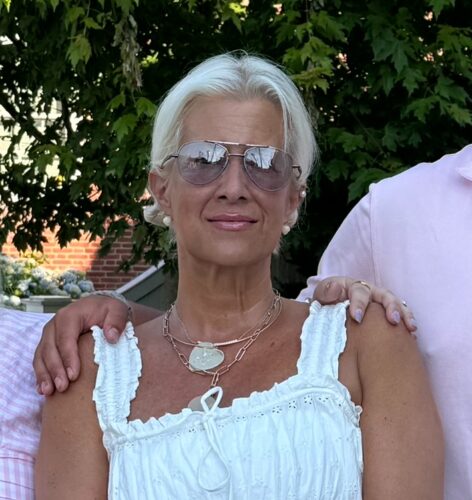
Jennifer Petty Hilger

About the author: Jen Petty Hilger grew up in New York and London, England, but finds herself happily quiet living by the water in Old Lyme.

She and her husband have six children between them and a myriad of rescued animals.

Soccer Roundup: Lyme-Old Lyme Teams Struggle Against Valley Regional

OLD LYME —Playing at home on Monday, Sept. 22, the Lyme-Old Lyme High School boys soccer team fell 3-1 to Valley Regional High School. 

Ian Maeby scored for Lyme-Old Lyme off an assist from Colman Curtiss-Reardon. 

Valley Regional’s Keegan Coloquhoun scored two goals and Patrick Finnegan scored one. Varrick Recchia made two assists.

Lyme-Old Lyme goalkeeper Sam Edmed made five saves for Old Lyme, while Valley Regional’s Paul Malaguti was credited with 10 stops.

The Wildcats are now 3-4-0 overall and 2-3-0 in the Shoreline Conference. 

Playing away on Wednesday, Sept. 24, the Lyme-Old Lyme’s girls soccer team lost 6–0 to Valley Regional.

Lyme-Old Lyme goalkeeper Grace Osborne made 11 saves. 

Valley Regional saw two goals each from Madelyn Riebold and Makaylah Spencer, in addition to goals by Anne Keck and Payton McIntyre. Goalkeeper Emma Reilly made two saves. 

The girls team is now 3-4-2 overall and 3-4-0 in the Shoreline Conference. 

TOP STORY: Old Lyme Animal Control Officer Describes Necessary Toll of Seizing 27 Pets in Alleged Hoarding Situation

OLD LYME—Animal Control Officer Lynn Philemon told the Board of Selectmen at their regular meeting on Monday that the weeks following the July seizure of 20 dogs, five birds and two chinchillas have been exhausting but important.

“I have no sleep at all, no vacation … and I’m glad I did it because I’ve been trying to get those poor animals away from those people for two years,” she said. 

Her job over the past few months has included writing a search warrant, seizing the animals from the small home on Miami Avenue where they were allegedly hoarded, taking them for extensive and frequent medical appointments, and lining up foster homes where they can recuperate before finding their permanent families. 

It’s a job she takes home with her. 

Among the animals living with Philemon currently are a dam (the female parent of litter of puppies) and a couple of older dogs seized from the property. The latter all require medical attention and the mom is “going to pop any minute” with an expected litter of four puppies, she said. 

The 27 animals were seized after concerns were brought to Philemon in late June about an animal hoarding situation in Cheshire with ties to the Old Lyme house, according to civil court documents. Repeated welfare checks conducted at the beach area bungalow went unanswered before resident Nancy Guest allowed Philemon and a local police officer to come inside. 

The documents described officers finding up to 20 dogs covered in urine and feces amid “deplorable” conditions.

After the search and seizure warrant was executed on July 28, court documents show the Ledge Light Health District deemed the residence unfit for habitation. 

No arrests have been made yet in connection with the Old Lyme case. In Cheshire, the state’s judicial website shows Guest and two others were arrested and charged Sept. 10 with 19 counts of  animal cruelty. 

When Shoemaker described Philemon’s new skills compiling search warrant and arrest warrant as a resumé builder, the animal control officer agreed.

“That was the first time I’ve ever had to do that in my 21 years, believe it or not,” she said.

Five of the dogs initially signed over to the town have been adopted, according to Philemon. The remainder of the dogs are in foster homes because of severe medical needs that need to be addressed before they can be adopted.  

There are also three five-week old puppies and two three-week old puppies from two dams. 

“A lot of them are not housebroken. They were let out twice a day. There was 20 of them in a small house,” she said. 

Though she recounted hundreds of calls coming in to the animal control facility from would-be adopters, she told selectmen many of the animals aren’t ready yet. 

“They need time to decompress and everything,” she said. “I’m not going to put them in a bad situation.” 

Two of the birds have been placed in new homes, while one remains hospitalized. The two chinchillas on Monday went to stay with a veterinarian for exotic animals who she said is in the process of adopting them. 

First Selectwoman Martha Shoemaker said medical bills amounted to roughly $11,000 to $14,000 before Guest surrendered the dogs to the town. The town will look to recoup the costs through the legal process. 

“If we have to do a lien, we’ll do a lien,” she said. 

Now, Philemon is coordinating donations from concerned individuals and organizations and is planning an Oct. 4 fundraiser to cover ongoing medical expenses. She cited heart issues, mammary tumors, hernia removal and extensive dental treatments as some examples. 

“Every single one of those poor dogs had black teeth. Even the young ones,” Philemon said. “It’s bad. I’ve never seen anything like it.”

She said coverage during the shelter’s most crowded period following the seizure required three shifts of two people each, including the assistant animal control officer and temporary help hired by the town.  

Then there were the day-to-day situations, such as roaming dogs found in the streets, that tested the already strapped operation as staff members looked for space in the hallways and back room surrounding the kennels. 

“It was nuts,” she said. “Just nuts.” 

The Oct. 4 PAWtoberfest fundraiser from 10 a.m. to 3 p.m. at the Machnik Drive animal shelter includes a live band, Lyme-Old Lyme Lions Club food tent, local vendors and raffles. Application forms to adopt some of the dogs will be available at the event.

Dogs are invited to attend the event, which will also benefit the Presents for Paws nonprofit organization distributing pet food and supplies to animal shelters across the state.

Editor’s Note: This article has been corrected to reflect information received from Lynn Philemon regarding where some of the dogs are currently housed.

TOP STORY: A Tale for All Ages: Lyme’s Faulkner Hunt Revives the Classic Spirit of Adventure in Debut Novel Published Sept. 23

Author Faulkner Hunt sits down at Ashlawn Farm Coffee in Old Saybrook on Sept. 11, 2025, in the leadup to the Sept. 23 publication of his first book.

LYME–Frustrated screenwriter-turned-author Faulkner Hunt’s first novel is a hardcover story for the ages in an era consumed with 30-second reels and 80-character posts on social media.

Hunt, a Texas transplant whose career spans the media and technology industries, has emerged with a back-to-basics approach that eschews the trappings of the digital world for pure storytelling.

“A book, at its worst, is a beautiful distraction,” he said. “At its best, it’s among the highest forms of art.”

The Ballad of Innes of Skara Skaill is set for release this month as an adventure story modeled after classics like Robert Louis Stevenson’s Treasure Island, Mark Twain’s Adventures of Huckleberry Finn and Rudyard Kipling’s The Jungle Book. Those are the bedtime tales he read to two boys and two girls, now grown, whose childhoods spanned decades. 

“I had kids in my house for 28 years,” he said of the 18th century farmhouse shared with wife Ann Lightfoot. “It felt like I was reading nonstop.” 

The couple, who met as students at Wallingford’s Choate Rosemary Hall boarding school, moved to Lightfoot’s hometown in Lyme in 2001. That was several jobs and two children after Hunt packed up his University of Texas degree and moved to New York just to be near Lightfoot again, “even though she may not have known it.” 

Their identical twin girls were born in Lyme. 

He described his own youth and time spent reading to their children as “classic training” in storytelling structure. But fast changing realities forced him to adjust his narrative view. 

“Look, if the world’s attention span is shorter, then you have to adapt to that,” he said. “And so this book is very much designed to be a page-turner. It’s written kind of like a screenplay is written, where there’s no wasted time, space, and you’re not meandering around listening to an author show off. It’s just very straightforward that way. It travels quick.”

Hunt’s years studying English and history at college, where he roomed with the now movie star Owen Wilson and traveled in the same circles as filmmaker Wes Anderson, helped forge an early affinity for screenwriting inspired by the burgeoning cinematic powerhouses. 

But when he couldn’t land a deal on any of several screenplays – including one project with Wilson’s backing about a scofflaw dad assigned by a judge to the Marine Corps – his plans changed. 

“I started thinking, well, maybe just write a book,” he said. After three years of writing, revising and pitching, he had it: 314 hardbound pages with cover art that revealed a Welsh woodcarving of the imaginary North Atlantic island of Skara Skaill. 

“It comes out September 23rd,” he said. “There it is; it’s the shape of a book.” 

The Ballad of Innes of Skara Skaill, published by Regalo Press, tells the story of a bereaved son, who takes up with two young brothers living on the village streets and moors of Skara Heath as they search for fortune and truth in the island’s buried past. 

Describing “a tale for all ages,” Faulkner said he sees the book as a story to be passed through the generations by word of mouth rather than marketed in a social media blitz. 

He admitted to a counter-revolutionary approach that comes at a time when authors, whether they land a traditional publisher or go the self-published route, must sell themselves aggressively online. 

“I have no social media presence, and I won’t,” he said. 

That doesn’t mean he won’t go on podcasts and talk with BookTok influencers. But he emphasized none of that outreach will point back to his own pages on the likes of X, Instagram and Facebook. 

His X account, going back to 2009, remains empty except for a profile picture of a father and child. 

“When I see a line of kids all together and they’re all staring at their phones, it literally just breaks my heart,” he said. “I think, ‘what are you missing?’ Everything! You’re missing it all.”

The Ballad of Innes of Skara Skaill goes on sale Sept. 23. Visit faulknerhunt.com for more information.

Editor’s Note: Visit this link to order a copy of the book.