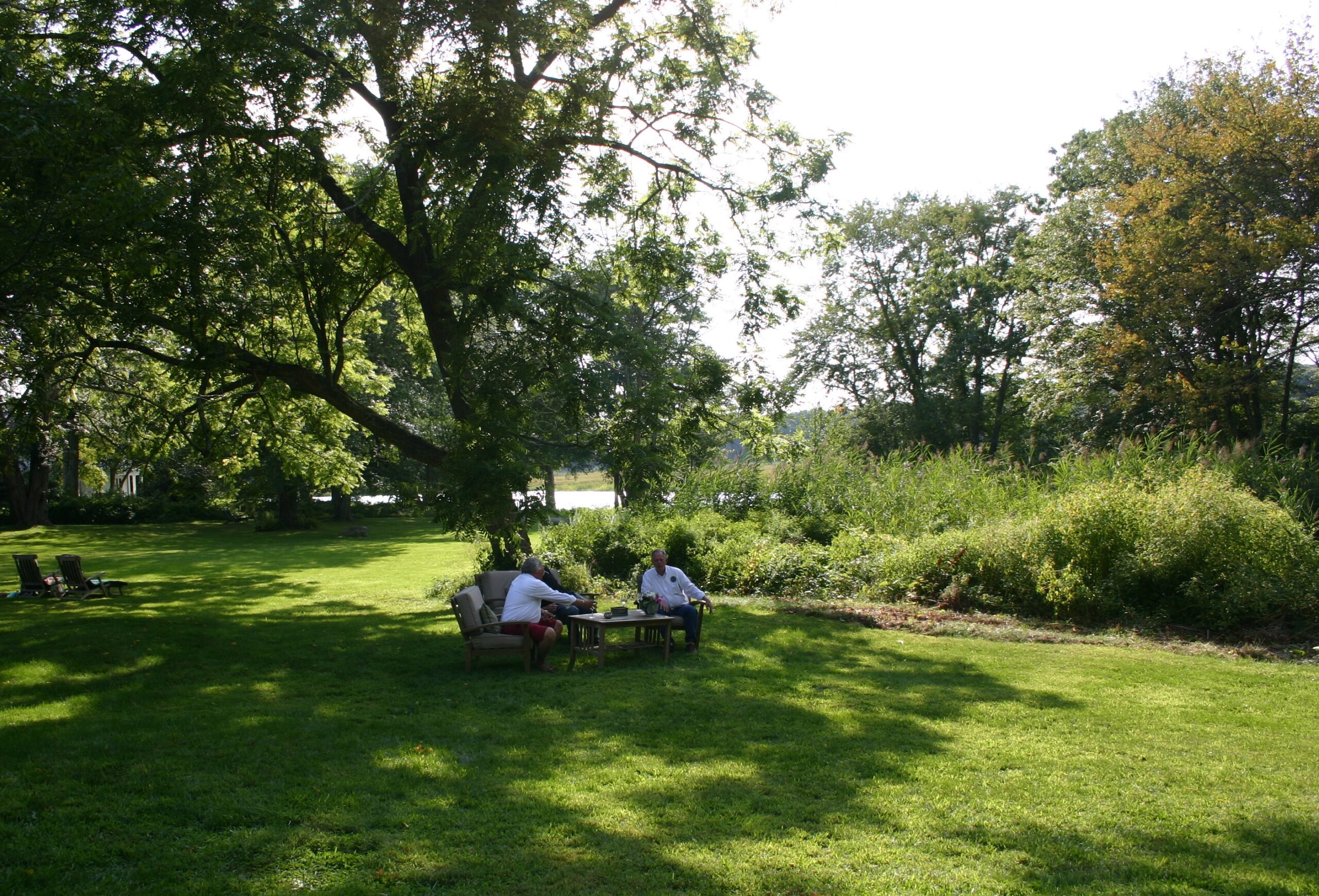
Old Lyme Land Trust Hosts 11th Annual Kayak Regatta, Sept. 14; All Ages Welcome

The Old Lyme Land Trust hosts the 9th Annual Kayak Regatta, Sept. 14.

OLD LYME—The Old Lyme Land Trust (OLLT) Regatta will be held on Sunday, Sept. 14, starting at 1 p.m. Kayaks will be put in from Rte. 156 at the Lieutenant River Boat Launch. A guided trip down the Lieutenant River towards Duck River and Watch Rock will follow.

Kayakers of all skill levels are invited to join. The tour will return to the boat launch at approximately 3 p.m., where light refreshments will be served.

A US Coast Guard-approved life jacket or vest is required. Bring your own kayak (or canoe or stand-up paddleboard).

There is limited parking, so if you wish to join the event, REGISTER HERE.

Contact OLLandTrust@gmail.com for further information. More details will be provided upon confirmation.

The event is free.

Donations to support OLLT’s work are appreciated and can be made via the OLLT website or by mail to the OLLT at P.O. Box 163, Old Lyme, CT  06371.

Duck River Garden Club Hosts Mum Sale in Old Lyme, East Lyme, Sept. 13

OLD LYME/EAST LYME—On Saturday, Sept. 13, from 11 a.m. to 3 p.m., the Duck River Garden Club (DRGC) of Old Lyme and East Lyme will hold a Mum Sale at two locations — the Old Lyme Shopping Center at 19 Halls Rd., Old Lyme and the East Lyme Library at 39 Society Rd., Niantic.

Beautiful 9-inch mums in red, yellow, purple, orange, white and pink will be on sale for $10 apiece. Payment will be accepted by by cash or check only.

All proceeds will benefit DRGC beautification, educational programs and scholarships.

TOP STORY: Old Lyme Selectmen Vote to Postpone Setting Referendum on Sound View Sewers Until Key Questions Answered

OLD LYME–The Old Lyme Board of Selectmen on Tuesday, citing a lack of answers to questions they have been asking for months, again decided to hold off on setting a referendum affecting Sound View Beach that could get a stalled sewer project moving again. 

Selectmen at a roughly one hour special meeting voted unanimously to move discussion on the referendum to a future meeting, after their questions have been answered and a cost-sharing agreement has been finalized among the four participating beach communities. 

Selectmen also voted to hire an independent firm to look at annual operating and maintenance costs that would give Sound View residents a better idea how much they can be expected to pay going forward. Numbers provided by the Old Lyme Water Pollution Control Authority (WPCA) and the Connecticut Department of Energy and Environmental Protection (CT DEEP) have been criticized by some residents as artificially low. 

First Selectwoman Martha Shoemaker during the meeting said selectmen have heard cost concerns from Sound View residents “loud and clear.”

She said she will not vote to move forward until she can give residents a clearer idea what those costs will be. 

Meanwhile, the CT DEEP is pressuring the town to act fast on a project years in the making.

“I’m not trying to kick this project down the road, because it’s been kicked down the road for some time,” Shoemaker said. “But I can pretty much assure you that our governor, [or] any other town executive, would not go forward with a project if they didn’t have all the numbers. Solid numbers.” 

Estimates of the long-term cost for a typical resident during a question-and-answer session last week ranged from $40,000 to more than $60,000 over 20 years, depending on who was doing the calculations. 

Construction costs amount to $70 million for the project, which would require residents of Sound View to foot the bill along with homeowners in three private beach associations: Miami Beach, Old Lyme Shores and Old Colony. 

Members of each private beach associations authorized their share of the project in separate referendums. In the case of Sound View, which is a public beach community, it is up to all Old Lyme voters to decide whether residents there should pay for sewers. 

The cost for Sound View comes to approximately $17.1 million. State and federal funding brings the cost down to $8.5 million. 

The CT DEEP last month warned Shoemaker that state and federal funding amounting to roughly half of the project cost is in jeopardy if the town doesn’t act fast to hold a public vote and award construction contracts. 

Failing to complete “one or more of those milestones” by mid-October “will significantly impact” the town’s ability to pursue a Clean Water Fund grant for 25% of the total project cost and a forgivable loan for another 25%, according to CT DEEP Deputy Commissioner of Environmental Quality Emma Cimino. 

Shoemaker in a phone interview after Tuesday’s meeting said selectmen are focused on making sure voters have access to accurate and thorough information when they vote on the sewer question at referendum. 

She was hopeful that a meeting among project officials from the four beach communities on Sunday will yield the  final cost-sharing agreement selectmen have been seeking. She also expressed optimism she could find a third party accountant to evaluate the annual operation and maintenance costs for a more definitive estimate next week. 

She acknowledged the state funding could be in question if the town doesn’t act. 

“If they take away the money, it’s totally unaffordable,” she said. “So we will work with them and explain to them we have been asking for these things to happen over the last year and a half, and we certainly are not dragging our feet.” 

Lampos: ‘Project Stinks’

Selectman Jim Lampos, a resident of the Sound View Beach area, said he vowed when he became a selectman that he would demand fair treatment for the beach residents who would bear the cost of the town project. That means fully understanding how much Sound View residents will owe for operating and maintenance costs every year, while also ensuring all costs are allocated equitably. 

He laid out a timeline going back more than a year to show selectmen have actively been seeking answers and compromises rather than trying to obstruct the process. 

“I think the project stinks, and I always have, for 15 years,” he said. “But I also am a realist.”

He acknowledged about $4 million was spent on project planning across the four beach communities; a referendum was held in 2019; and an agreement was signed with the municipalities through which the sewer lines would run and be treated – all before the current selectmen’s administration. 

“I know the state is banging us over the head to get this done,” he said. “It’s very difficult to stop this moving train. It’s at full speed.” 

But he said cost estimates from the Old Lyme WPCA remain too low to be believed and language that would codify the fair distribution of costs has not been finalized. 

He railed against the state for pressuring the town to install sewers without giving consideration to modern septic alternatives that he said towns west of the Connecticut River have successfully implemented. 

He also pointed to the CT DEEP’s “rule of thumb,” as articulated last year at a public meeting by agency project engineer Carlos Esguerra, that says the cost is affordable to residents if it does not exceed 2% of the town’s median household income (MHI). Esguerra at the time identified Old Ltme’s MHI as $122,000, which equated to $2,440 a year.

The cost to construct the system is slated at $1,939 annually over 20 years for a typical user, not including fees that would likely exceed $500 per year based on state estimates. 

“So, I’m here to say tonight that as we see these numbers, this project is unaffordable,” Lampos said. “And [if] DEEP wants it, instead of threatening us and saying, ‘Oh, we’re going to take your money away’ – as if they’re doing us a favor, as if it’s charity and we should be grateful – DEEP needs to pony up and make up that difference.” 

CT DEEP Spokesman James Fowler last month said that if a project’s costs were estimated to exceed 2% MHI, it would be up to the town or sewer authority to explore additional options, like splitting a project into phases, deferring work not associated with pollution, pursuing additional funding, and requesting a longer project schedule. 

Fowler emphasized that exceeding the 2% threshold “does not mean that communities don’t have to address identified pollution.”

Working Together

Selectwoman Jude Read, the lone Republican on the Democrat-led board, agreed with putting off a vote. She emphasized the sewer project originated with a past town administration and the state, not with current board and commission volunteers. 

She said frustration should be directed at the state rather than local people, who have tried to help. 

“This project’s been going on for well over 10 years. Technology has changed. Population has changed. Science has changed. Climate has changed. What (the state) asked for 10, 12 years ago is not necessarily applicable now,” she said. “But we have to work together to come up with a solution to move forward because I think eventually we are going to have to deal with sewers. We are going to have to deal with groundwater levels rising.”

She said the solution requires channeling local frustrations into a productive conversation with state officials.

“We are willing to work,” she said. “And I think we have a track record of showing that we have been dealing in good faith for 10, 11, 12 years. And we will continue to do so.” 

The CT DEEP going back to the early 1980s has pushed for an end to pollution emanating from local beach communities, leading to a 2018 consent order with the three private beach associations. Sound View was added to the project in 2019 after voters in the first townwide referendum agreed to spend $9.5 million. 

The town, which is participating voluntarily in the sewer plan at this point, is doing so under the threat of a consent order from the state like the one forcing the private beach associations to act. 

The referendum now under consideration would authorize an additional $7.6 million for Sound View’s portion of the project after rampant inflation drove up the cost, though the promise of reimbursement from the state and federal government means Sound View ratepayers will actually be paying less than the amount authorized in the first townwide vote. 

Selectmen also postponed a vote on a draft sewer ordinance that will go to voters along with the spending authorization. The document had been revised with Lampos’ encouragement to ensure residents of the beach communities are not responsible for the cost of installing sewers in any other areas of town going forward. 

The document specifies any future sewer projects must be covered by users in that area. 

Read cautioned selectmen to make sure the provision doesn’t end up exempting residents within the current project boundaries from paying for public improvements like road paving that could end up being covered by the town.

Old Lyme Board of Finance (BOF) Chairman BJ Bernblum confirmed to LymeLine Wednesday morning that the BOF meeting scheduled for Wednesday evening has now been canceled. This meeting would have discussed details of the referendum if the board of selectmen had voted to move the proposal in that direction.

Editor’s Note: This article has been updated with information about Wednesday evening’s Old Lyme Board if Finance meeting.


West Nile Virus Positive Mosquitoes Identified in 34 CT Towns, Including Old Lyme

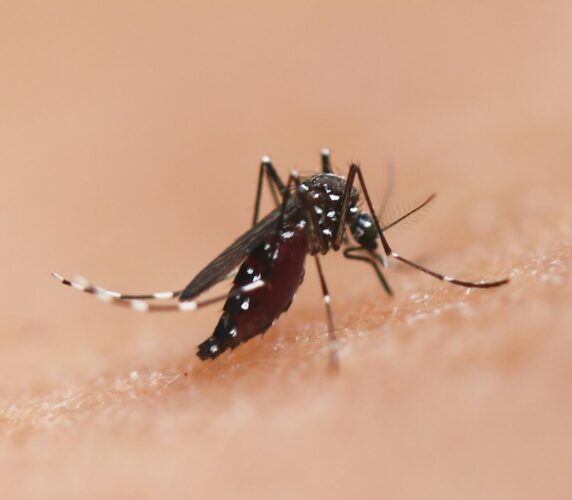
A mosquito prepares to bite. Image courtesy of the National Institute of Allergy and Infectious Diseases for Unsplash.

NEW HAVEN, CT – The State Mosquito Management Program is warning Connecticut residents about the risk of infection by West Nile virus (WNV) this season.

On Wednesday, Aug. 27, the Connecticut Agricultural Experiment Station (CAES) issued a press release stating that it has detected WNV-infected mosquitoes in 34 towns this season including Old Lyme.

The other 33 towns where WNV-infected mosquitoes have been found are Bethel, Bridgeport, Cheshire, Danbury, Darien, East Haven, Easton, Fairfield, Glastonbury, Greenwich, Groton, Guilford, Hamden, Hartford, Hebron, Manchester, Meriden, Milford, New Britain, New Haven, Newington, North Branford, North Stonington, Norwalk, Southington, Stafford, Stamford, Stratford, Wallingford, West Hartford, West Haven, Westport, and Wethersfield.

The CAES notes that no human cases of WNV have been reported so far this season but now is often the time of year when the first cases are reported to public health.

“We continue to detect West Nile virus in mosquitoes throughout Connecticut, with the highest levels of activity in Fairfield and New Haven counties and in the metropolitan Hartford area,” said John Shepard, Medical Entomologist at CAES. “This includes infection of mammalian-biting mosquitoes, which increases risk of human infection.”

“West Nile virus transmission is expected to continue until mosquito activity ceases in October,” said Dr. Philip Armstrong, Chief Scientist at CAES. “We encourage everyone to take simple measures to prevent mosquito bites.

This includes applying insect repellent and covering bare skin, especially in wooded areas and during dusk and dawn when biting mosquitoes are most active.”

To reduce the risk of being bitten by mosquitoes, residents should:

Minimize time spent outdoors between dusk and dawn when mosquitoes are most active.

When it is necessary to be outdoors, use mosquito repellents containing an EPA-registered active ingredient, including DEET, Picaridin, IR3535, oil of lemon eucalyptus, para-menthane-diol (PMD), or 2-undecanone. EPA registration of skin-applied repellent products indicates that they have been evaluated and approved for human safety and effectiveness when applied according to instructions on the label.

Wear shoes, socks, long pants, and a long-sleeved shirt when outdoors for long periods of time, or when mosquitoes are more active. Clothing should be light-colored and loose-fitting and made of tightly woven materials that keep mosquitoes away from the skin.

Wear clothing and gear treated with permethrin. Permethrin is an insecticide that kills or repels mosquitoes and ticks.

Be sure door and window screens are tight-fitting and in good repair.

When sleeping outdoors, use tents or mosquito netting in an unscreened structure. Treat camping gear with permethrin when possible.

Cover strollers and baby carriers with mosquito nets when outside.

West Nile virus is the most common mosquito-borne viral disease in the United States and occurs every summer in Connecticut. Most people infected with WNV do not experience any symptoms. However, about one in five develop West Nile fever, which includes symptoms such as fever, body aches, joint pain, headache, and rash. In rare cases—approximately one in 150—WNV can cause a severe illness that affects the central nervous system.

Of those severe cases, about one in 10 are fatal.

Adults over the age of 60 are at the highest risk of serious illness.

The response to mosquito-transmitted diseases in Connecticut is a collaborative inter-agency effort involving the Department of Energy and Environmental Protection (DEEP), the Connecticut Agricultural Experiment Station (CAES), the Department of Public Health (DPH), the Department of Agriculture, and the Connecticut Veterinary Medical Diagnostic Laboratory (CVMDL) at the University of Connecticut (UCONN). These agencies are responsible for monitoring mosquito populations and the potential public health threat of mosquito-borne diseases.

The CAES maintains a network of 108 mosquito-trapping stations in 88 municipalities throughout the state. Mosquito traps are set Monday – Thursday nights at each site every 10 days on a rotating basis and then at least once a week after detection of virus. Mosquitoes are grouped (pooled) for testing according to species, collection site, and date.

Positive findings are reported to local health departments and on the CAES website at
https://portal.ct.gov/CAES/Mosquito-Testing/Introductory/State-of-Connecticut-Mosquito-Trapping-andArbovirus-Testing-Program.

For information on WNV and eastern equine encephalitis (EEE) virus, how to prevent getting bitten by mosquitoes, and the latest mosquito test results, visit the Connecticut Mosquito Management Program website at https://portal.ct.gov/mosquito.

For more information on human infections and prevention, visit https://www.cdc.gov/west-nile-virus/about/index.html

Pétanque, Anyone? 17 Years Ago, a ‘Boules Bash’ Took Place at the ‘Bee and Thistle’

Editor’s Note: Linda Ahnert wrote this article for LymeLine back in 2008. As summer draws to close, we decided to republish it today to celebrate the anniversary of a very memorable event at which both Linda and I were present. Much has changed since that day—the Inn is no longer an Inn, several of the people mentioned in Linda’s story have sadly passed away (read Linda’s epilogue at the end of the article for more on that), but the game of boules—or pétanque depending on which part of France you come from—goes on and is still enthusiastically played in many locales in Connecticut. If you are not familiar with the game, Linda explains all.

The former Bee and Thistle was still in business as an Inn back in August 2008 when the boules extravaganza described in this article took place.

On Sunday, August 24, the 2008 Summer Olympic Games in Beijing ended.

On that same day, another sports competition took place in Old Lyme.  Like the closing ceremonies in China, the event here went on for hours and there was much celebrating.  But unlike the Olympian feats, the local contest had nothing to do with speed or strength.  Or even with athletic prowess.

The opposing teams gathered, courtside, behind the Bee and Thistle Inn, to play a challenge match of boules. (For the correct pronunciation, think of the Yale fight song “Boola, boola”—just drop the “a” and—voilà—you have “bool.”)  This outdoor sport is popular throughout France where it is played in city parks or in village squares.  In the south of France, it is called pétanque (pronounced “pay-TONK.”)  

It is similar to Italian bocce, although bocce is more of a bowling game and pétanque involves more tossing, like horseshoes.  On this late summer afternoon, players from the Bee (l’Abeille in French) were competing against the Boules des dimanches (Sunday boules) team.  

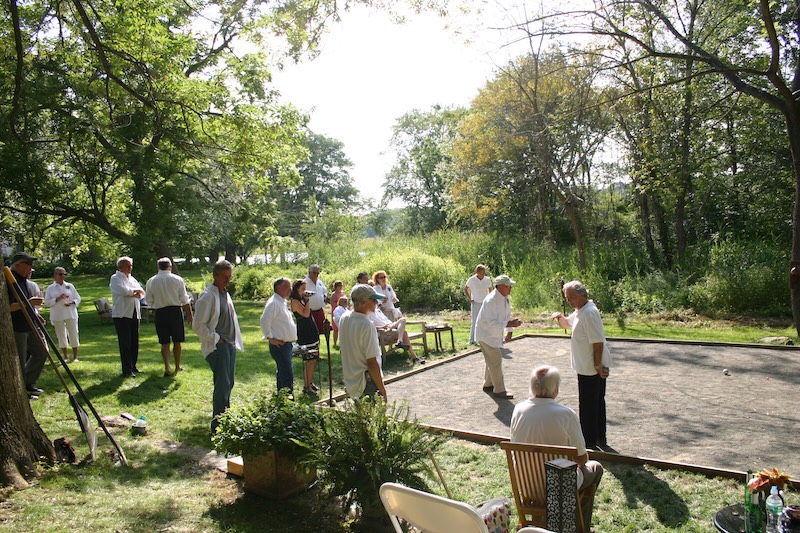
Jacques Pépin (center facing camera, in white shirt) discusses a vital game decision with other team members.

By issuing the challenge, the “Bees” were playing in the big leagues because their opponents were no mere Sunday players.  In fact, the visiting team included some Frenchmen who grew up playing pétanque.  One of them is Jacques Pépin, who lives just down the shoreline in Madison.  The superstar chef and cookbook author is also a pétanque player par excellence.  

Another member on Pépin’s team was food writer Lee White, an Old Lyme resident (and LymeLine contributor.)  She and her husband Doug first played boules at Pépin’s house and became members of the group, which gets together on Sundays throughout the summer.  Lee said there are about 30 players in the league and that “it’s a lot of fun playing and getting to know each other.”   

The team’s roster also includes other gastronomic all-stars.  There’s Priscilla Martel and Charles van Over, formerly of the Restaurant du Village in Chester, and the restaurant’s current owner/chefs,  Cynthia and Michel Keller; Jean Pierre Vuillermet, owner/chef of the Union League Café in New Haven and its general manager, Jean Michel Gammariello; and Claude Martin, former owner/chef of Métro Bis in Simsbury. 

The Bee and Thistle’s lawn slopes away from the boules court and gently down to the Lieutenant River.

In addition to the professional chefs, Lee White noted that there are other “amazing cooks” who are on the team.  And CBS correspondent Morley Safer, a huge fan of the game and who has a pétanque court at his home in Chester, also plays with the group when he is in Connecticut.   

Lee White explained that last year she and Doug invited Linnea and David Rufo, owners of the Bee and Thistle Inn, to their house for a meal.  Afterwards, Lee suggested a game of boules to her guests.  “They fell in love with it,” Lee said and, within a month, the Rufos had installed a pétanque court at the inn.  And they began hosting “Boules at the Bee” on Thursday nights.

This summer Linnea literally threw down the gauntlet to the veteran players on Pépin’s team.  And she did it with panache—she sent a white leather glove on a satin pillow to Pépin, challenging him to a match at the Bee and Thistle.  

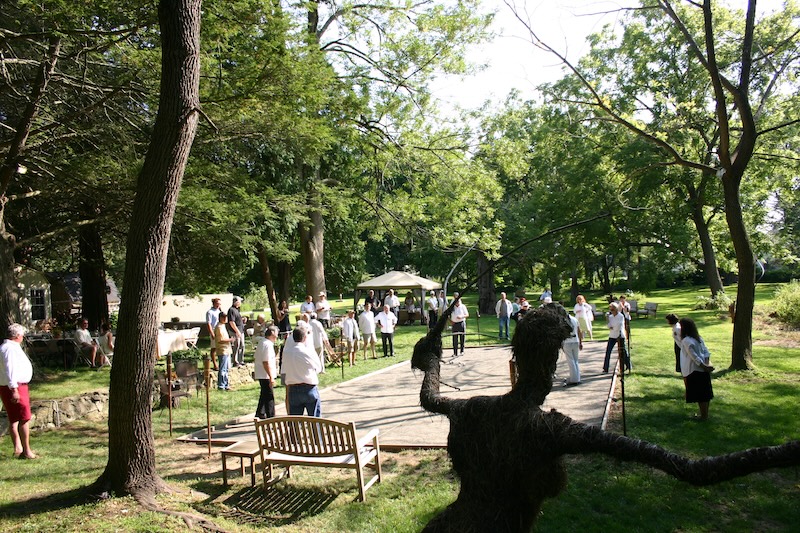
One of the sculptures on the grounds (foreground) looks over the boules court at the Bee and Thistle Inn.

The weather was spectacular the day of the showdown and the players began arriving at 3 p.m.  The setting actually looked more like an English garden party—the green lawns sloping down to the Lieutenant River, the sculpture on the grounds, and the tables set for an al fresco feast.

But once the games began, you could easily have imagined yourself to be in the French countryside.  There was the clacking sound of the boules (which are made of steel), the whoops of exuberance when someone made a particularly good shot, and the good-natured bantering among the players.

The winning boule in any game is the one nearest to the (in this case, red) cochonnet after the final throw in the game has been played.

The basic rules of the game are deceptively simple. There’s a small wooden ball called a cochonnet (which means piglet.)  The goal for the teams is to toss their boules as close as possible to the cochonnet.  But the game can change on a dime when an opponent knocks one of your boules out of the way or if the cochonnet itself is hit.  

Or, as one of Pépin’s compatriots, Claude Martin, summed it all up, “You see, this is totally screwed up because it’s French.”  

Even if you’ve never been to France, you may have read about pétanque in Peter Mayle’s bestselling books.  An Englishman who moves to Provence, Mayle becomes smitten with the game and quickly masters its unwritten rules.  Number one is “Anyone playing without a drink is disqualified.”  

The traditional pétanque-playing drink in the south of France is pastis, a licorice-flavored liqueur.  But here in southern Connecticut, the beverage of choice is wine. Underneath a canopy on the lawn, large garden urns served as chillers for bottles of wine.  

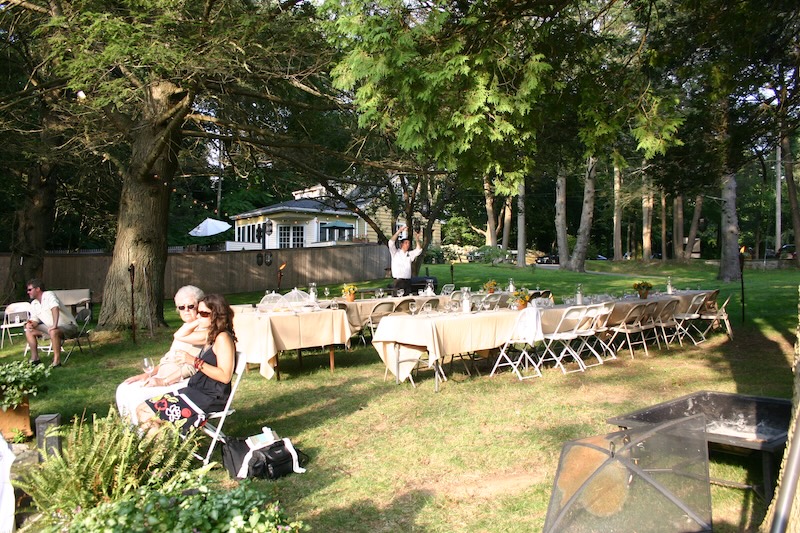
The tables were set for the upcoming feast.

And what is good wine without good food?—especially with so many gastronomes on the playing field.  Across from that outdoor wine bar, there was an oyster bar where a professional shucked oysters throughout the afternoon.  Not to mention the gravlax, the cheese platter, and the lamb sausage in lettuce wraps … During a break in the play, Pépin himself was grilling the lamb.

Lee White said that whoever is hosting the event on any given Sunday is responsible for providing the food but, with so many chefs on the team, there is plenty of expert help in the kitchen.  She also marveled that the French “eat and drink a lot, but they don’t get fat.”  

After about three hours of playing as well as eating and drinking, Linnea invited everyone to sit down to dinner. And she had prepared quite a spread—roasted pork with a spice rub, grilled vegetables, tomato bread pudding, and salads.  Members of Pépin’s team supplied some of the to-die-for desserts.  

Sometimes the players needed to take a break from the action.

Pépin’s Boules des dimanches team defeated the rookies from the Bee.  Afterwards, Lee White confessed that “we were nervous and were very excited to win.” And when the ceremonial plaque was presented, the ever gallant Pépin requested that the award remain at the Bee and Thistle for a rematch next summer.

But the day was far from over.  As twilight descended, lights illuminated the court and play resumed.  And it would go on for hours, as it always does with pétanque enthusiasts.

Editor’s note:  LymeLine heard through the grapevine that the party at the Bee and Thistle lasted until 1 a.m.  And, as the French say—c’est normal!

Epilogue and Author Comments: 

Seventeen years have passed since I wrote about the “Boules Bash” in Old Lyme.

It was so much fun remembering that day, but there was some bittersweetness, too.  Lee and Doug White as well as David Rufo and Morley Safer have passed away. Two beloved restaurants—the Bee & Thistle Inn and the Restaurant du Village in Chester have closed.  And Peter Mayle, whose best-selling books about life in Provence introduced readers to the wonderful world of boules, died in 2018. 

Since I am a Francophile and also love to cook, it was a thrill to meet Jacques Pépin.  After drinking a few glasses of wine, I even summoned up the courage to start our conversation en français! I was already a fan—over the years I had watched his cooking shows and read his books. 

During the pandemic, Pépin began posting short daily videos on Facebook, which I still follow. 

A few weeks ago, there was a wonderful spread of photos—a group of players on a pétanque court; mouth-watering close-ups of a roast chicken, parslied potatoes . . .  and a picture of Pépin and his daughter Claudine at the table.  Pépin’s comment: “We had a great weekend of friends, food, and boules.”