TOP STORY-UPDATED: Miami Beach Sewer Bids Are Unexpectedly High, Implications Not Yet Fully Understood

This Time Around, Miami Beach is Flush with Sewer Bids … But Costs Aren’t Going Down

Editor’s Note: This article was updated with information from the CT DEEP spokesman.

OLD LYME–Costs continue to climb as bids on Tuesday came back unexpectedly high for the Miami Beach portion of a $70 million project to bring sewers to the shoreline. 

Miami Beach Water Pollution Control Authority (WPCA) Chairman Scott Boulanger in a Wednesday phone interview with LymeLine said bids from four general contracting firms need to be vetted and distilled by project engineers with the Fuss & O’Neill firm before he can fully understand the implications for the already backed-up project. 

A failed bid process earlier this year yielded no responses, according to Boulanger.  

This time around, the bids to oversee the project ranged from the Ludlow, Mass.-based Baltazar Contractors $13.62 million to $21.97 million from C.J. Fucci Construction, Inc. of New Haven. Engineers from Fuss & O’Neill in cost estimates earlier this month predicted the project would amount to about $8.4 million. 

The second lowest bid was from Colonna Concrete and Asphalt Paving of Woodbridge for $17.69 million, followed by Tolland-based Genovesi Construction at $19.9 million. 

“The numbers came in a lot higher than anticipated,” Boulanger said. 

He said officials thought the cost would actually go down from the engineers’ estimates because of a redesign incorporated before the project went out to bid in June. The change involves using a single pipe rather than the more expensive double walled pipe, a move that town documents show was endorsed by the state Department of Health and the Connecticut Department of Energy and Environmental Protection (CT DEEP.)

The project is intended to connect Miami Beach residents to a sewer system spanning multiple beach communities. The association’s internal construction expenses are on top of its $5.03 million portion of a shared pump station and force main serving Old Colony Beach Association, Old Lyme Shores Beach Association and the town-owned Sound View Beach. 

Engineering and legal fees brought the total cost for the Miami Beach project to $21.9 million, based on the early August estimates. Federal and state funding reduced the impact on residents to $12.5 million. 

All four entities are under pressure from the CT DEEP to resolve the pollution issues that state officials say are emanating from local shores. 

The three private beach associations are under a formal consent order from the CT DEEP requiring them to fix the pollution issue, while the town is participating voluntarily under the threat of a similar mandate. 

It is unclear what will happen to the overall project if any of the participating communities drop out because they can’t afford to proceed. That leaves attention now on Miami Beach as officials try to gauge the viability of a project that will cost residents of the affected areas thousands of dollars per year over two decades. 

Members of the Old Lyme Board of Selectmen and Board of Finance are expected later this month to decide if another bonding request for the Sound View portion of the project should go to voters at a public referendum in September. The Old Lyme WPCA is seeking a total of $17.1 million, though federal and state grants cut by half the amount that Sound View users will have to finance to cover the project.

An informational session on the Sound View project is scheduled for 6:30 p.m. on Aug. 26 at Lyme-Old Lyme High School. 

Selectmen have held off on a vote amid concerns about the affordability of the project for the Sound View ratepayers. Residents there have long asked for more specific information about how much they will have to shell out as the municipal bond is repaid over 20 years and have questioned the data underlying the state’s contention that sewers are necessary to resolve the potential for pollution in the area.

Affordability

Over at Miami Beach, the typical resident was already looking at total annual payments of $3,154 before the bids came back higher than expected, according to engineers’ estimates.

Connecticut DEEP Project Engineer Carlos Esguerra last year said the agency sets the amount that residents can reasonably be expected to spend at 2% of the town’s median household income (MHI), which he identified at the time as $122,000. That equated to $2,440 a year.

Cinami has said the state does not consider annual operations and maintenance fees as part of its affordability calculation when it comes to installing a municipal system. 

CT DEEP Spokesman James Fowler on Thursday said there is no federal or state definition of affordability when it comes to preserving and protecting water quality. 

“Similarly, there is no definition of unaffordability that allows a community to maintain a source or potential source of pollution,” he said.  

Fowler attributed the 2% median household income “guidepost” to historic U.S. Environmental Protection Agency guidance, which he said municipalities and water pollution control authorities have used to ensure public sewer infrastructure projects are financially manageable for rate payers.  

“If a project’s costs were estimated to exceed 2% MHI, a town or sewer authority would explore additional options to reduce financial impact like splitting a project into phases, deferring work not associated with pollution, the pursuit of additional funding, and/or requesting a longer project schedule to achieve compliance, based on an enforceable schedule of compliance steps,” he said. 

He emphasized that exceeding the 2% threshold “does not mean that communities don’t have to address identified pollution.”

Viable Solution?

Boulanger said he told members of the Miami Beach Association Board of Governors at a regularly scheduled Tuesday evening meeting that it’s critical to have a full understanding of the bid responses before making any decisions. He said he hopes to speak with the project engineers and obtain a spreadsheet with a breakdown of the results by Labor Day. 

“And then it becomes, you know, whether or not it’s continually a viable solution for the area,” he said. 

Asked if he has a sense which way the board members are leaning when it comes to the viability of the project, he said they’re still relying on him to collect the information that will tell them how much the project will cost all the homeowners in the beach association. 

“They’re listening to me on what I feel,” he said. “And I don’t have a feeling.” 

Ultimately, he said it will come down to the engineering firm’s interpretation of the results and how members of the Miami Beach Association choose to proceed. 

He said the association will also be discussing “viability and options” with state DEEP officials as well.

Boulanger, who has led the Miami Beach WPCA throughout the years-long effort to bring sewers to the area, said he has strived through multiple referenda and presentations to provide members with as much information as he can so they can make an educated decision.

“It doesn’t matter what I want to do personally,” he said. “It’s what does the community want to do?”

Old Lyme Shores has not yet gone out to bid for its portion of the project. Cinami has said the association was ordered by the CT DEEP to award a contract by Oct. 10. 

Part of the Old Lyme WPCA’s urgency to hold a referendum next month stems from contractor quotes for the Sound View project that will expire in October, which could lead to more price increases if officials have to go back out to bid.

Wastewater planning documents that first laid the groundwork for the project go back to at least 2012. The consent order from the state requiring the private beach associations to resolve their pollution issues was issued in 2018.


August is No-Kill Shelter Month in Connecticut

Gov. Ned Lamont is calling on communities across Connecticut to work together in the effort to make sure every animal that goes through a shelter finds a home. Photos courtesy of Best Friends Animal Society.

National Animal Advocates Say State is 200 Adoptions Away from No-Kill Status

HARTFORD–A national pet advocacy organization is applauding Governor Ned Lamont for proclaiming August No-Kill Shelter Month, a move meant to bolster the group’s efforts to achieve “no-kill” status in Connecticut before the end of this year. 

The proclamation underlines a commitment to end the unnecessary killing of dogs and cats throughout the state’s shelters, according to a press release from the national pet advocacy organization Best Friends Animal Society. 

Julie Castle, Best Friends Animal Society CEO, states, “With less than 200 pets needing to be saved for Connecticut to become no-kill, we’re calling on Connecticut residents to choose to adopt pets from shelters and rescue groups instead of purchasing from breeders or stores.”

The group cited data showing 83 of the state’s 94 animal shelters last year maintained or achieved no-kill status. Nationally, nearly two out of three U.S. shelters are considered no-kill.

Statistics from the organization identify the Old Lyme Animal Control department as a no-kill shelter. Dogs currently up for adoption can be found at this link.

The 11 remaining shelters in the state yet to earn the no-kill designation need to save about 200 more pets combined, according to the organization. 

Best Friends Animal Society CEO Julie Castle in the release said the state is poised to join the nation’s current no-kill states: Delaware, New Hampshire, Rhode Island, and Vermont. 

“With less than 200 pets needing to be saved for Connecticut to become no-kill, we’re calling on Connecticut residents to choose to adopt pets from shelters and rescue groups instead of purchasing from breeders or stores,” Castle said.

Connecticut will join Delaware, New Hampshire, Rhode Island, and Vermont by the end of the year if homes are found for the 200 pets still seeking homes.

The “no-kill” designation applies to states in which 90% of animals entering a shelter can be saved. The figure accounts for the estimated 10% of pets with irreparable medical or behavioral issues that compromise their quality of life and prevent them from being rehomed, the release said.

The governor’s proclamation encourages Connecticut residents to work together to make a positive difference in the lives of the state’s pets by adopting, fostering, volunteering, educating, and generating awareness for these pets in need throughout their communities. 

The no-kill movement is not without critics in the animal advocacy community. People for the Ethical Treatment of Animals (PETA) argues that focusing on no-kill policies can lead shelters to “warehouse” animals for prolonged periods, place animals in unsafe homes, and turn away animals. It also does not address the root problem, the group said on its website.

“Finding a home for one dog may save one life, but sterilizing one dog will save hundreds, if not thousands, of dogs’ lives by preventing generations of potentially homeless puppies from being born. Getting a spay/neuter law passed saves even more lives. Stopping the problem at its source is where our time, energy, and funds are needed most. That is how we can drastically reduce—and hopefully end—the homeless-animal crisis and the need for euthanasia.”

LETTER TO THE EDITOR: Writer Distressed Old Lyme Church Flies Israeli Flag, Asks What Others Think

To the Editor:

I am deeply offended by Shoreline Church on Shore Rd. in Old Lyme flying a huge Israeli flag. 

Netanyahu and his government are committing genocide and other war crimes, including starvation in Palestine—even some Israeli citizens are calling it genocide.

At least 85% of Palestinians are Muslim.

At least one of the church’s neighbor convenience stores is owned by a Muslim.

I find this flag-flying unacceptable and wonder what others think?

Sincerely,

Betsy Groth,
Old Lyme.

Editor’s Note: Here is a reminder of our Policy on Letters to the Editor and our Policy on Comments.

Wood Island Life Saving Station in Maine Launches Essay Contest to Win Overnight Stay at Location, See the ‘Mervin F. Roberts’ Boat at Work

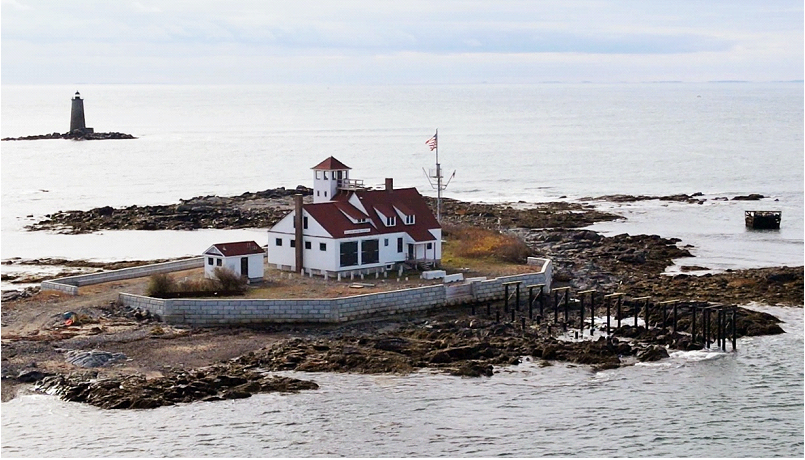
A photo of Wood Island Life Saving Station in Kittery, Maine from 2021. The ‘Mervin F. Roberts’ boat now lives inside the building and travels down the now completed marine railway into the sea.

OLD LYME—Readers may recall the wonderful story we covered about the acquisition from this area of an old coast guard rescue boat named the Mervin F. Roberts by the non-profit Wood Island Life Saving Station Association (WILSSA) of Kittery, Maine. The original connection between the WILSSA and the boat was made through an article published by LymeLine about our beloved late resident Mervin Roberts.

Former First Selectman Timothy Griswold spearheaded a successful effort to raise funds to transport the boat from Essex, Conn. to Kittery, Maine.

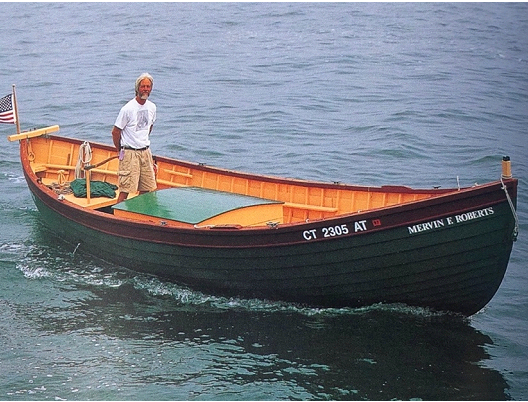
Ben Clarkson at the helm of the ‘Mervin E. Roberts’ in 1997.

After major renovations, the boat was re-launched at Kittery Point amid quite a fanfare and a group from Old Lyme, including Griswold, attended the event.

Former local resident Catherine Frank visited the Wood Island Life Saving Station recently. She discovered the organization is running an essay contest and the winner will earn the opportunity to spend a night on Wood Island (which in her words, “looked quite cozy; has amazing history and views and a chance to visit with Merv’s boat!”) She kindly shared the information with us and, again in her words, thinks, “Someone from Old Lyme needs to enter and win this contest.”

And we agree!

Full details of the contest are at this link. The word limit for the essay is 500 words and the entry deadline has been extended to September 1.

The Wood Island Life Saving Station, a beacon of hope and heroism since the 1900s, has witnessed countless rescues and maritime events.

We’re offering a unique opportunity to win an overnight stay at this historic landmark.

To enter, share with us why you are drawn to Wood Island and what staying in this historic life saving station would mean to you.

Submission Deadline: originally July 1, 2025, now extended to September 1, 2025

Stay Dates: To be scheduled between July and September 2026.

So all you writers out there, start your essays right away—time is of the essence—and maybe win this unique prize!

Old Lyme Historical Society Hosts Vintage Postcard Presentation by Jim Lampos, Aug. 18; All Welcome

Historic postcards like these will be featured in Jim Lampos’s talk on Monday at the Old Lyme Historical Society.

OLD LYME — UPDATED 8/17 with details of where to see a preview of the postcards: On Monday, Aug. 18, at 7 p.m., the Old Lyme Historical Society Incorporated (OLHSI) hosts an historic postcard presentation by Jim Lampos titled, “Having a Swell Time.”

The presentation will be followed by a Vintage Postcard Sale when a selection of ‘extras’ from a recently-purchased collection will be available for sale. The postcards variously offer views of Old Lyme streets, landmarks, and beaches circa 1902-1970.

Visit Old Lyme Memorial Town Hall to enjoy a preview of much of the postcard collection. A selection of the postcards is on display in the front foyer and behind first floor staircase.

The event will take place at the Society’s building at 55 Lyme St. in Old Lyme. All are welcome and admission is free.

This is another in a series of speaker events sponsored by the OLHSI.

There is no charge for admission but donations are welcome to the Carol Noyes Winters Scholarship Fund.