Epigraph: “But little Mouse, you are not alone in proving foresight may be vain. The best laid schemes of mice and men go often askew; and leave us nothing but grief and pain for promised joy.” — N.B., translated from the original Scots dialect.
(Robert Burns: “To A Mouse on turning her up in her nest with the Plough.” November, 1785)
Burns’ “best laid schemes of mice and men” serves as a reminder that, regardless of our preparation, unexpected events can disrupt our best intentions.
Coincidentally, another 18th century dignitary—Anglo-Irish statesman and philosopher—Edmund Burke, said, “Those who don’t know history are destined to repeat it.” Or to put it another way, by acknowledging and learning from the mistakes and successes of our predecessors, we can avoid making the same mistakes and errors.
I examined the predisposing events and actions that triggered the violence against unarmed students at Kent State University by the Ohio National Guard after a weekend of student anti-war protests in my last “View.”
As then noted, Christina and I had attended a program at the Phoebe Griffin Noyes Library on April 29: “Oral History: Kent State, 1970;” presented by Mike Alewitz, who as a student anti-Vietnam War organizer at Kent State University and the University’s chairman of the Student Mobilization Committee Against the War, witnessed the bloodshed that occurred there 55 years ago.
Alewitz is Professor Emeritus of mural painting and street art at CCSU. In 1999, he was named a Millennium Artist by the White House Millennium Council, the National Endowment for the Arts, and the Mid-Atlantic Arts Foundation. He is a now a resident of New London, CT.
His presentation was very moving and inspired me to re-examine that other very dark period in American history and expand on his observations to assure historic accuracy.
Recognizing our history is especially important now as the President attempts to rewrite or erase important segments of our past.
In January, Trump ordered the Attorney General to shut down the database documenting the criminal charges and convictions of the January 6 rioters in the Department of Justice’s website—which detailed the largest criminal investigation in modern history.
The website enabled access to a searchable repository of all January 6, 2021 cases prosecuted by the U.S. Attorney’s Office for the District of Columbia.
Removal coincided with Trump’s decision to pardon all convicted January 6 defendants and the early release of 14 members of far-right extremist groups, including 10 convicted of seditious conspiracy.
He instructed the federal courts in Washington to dismiss the more than 300 cases that had not yet been resolved. Trump absurdly said, “These are the hostages.”
Of course, January 6, 2021 is the day the Capitol was attacked by a violent mob of Trump supporters attempting to overturn his loss to Joe Biden in the 2020 election.
Amazingly, Trump has also called for the appointment of a special prosecutor to investigate the 2020 election, repeating his phony claims that the election was tainted with widespread fraud—in his own words, “stolen from him.”
Attorney General, Pam Bondi, has made no public comment on either action.
Trump has also issued several unusual executive orders, which seem to similarly have the goal of re-writing or erasing our history. I will cover executive orders and pardons in an upcoming “View:” ‘A Lesson in Civics,’ Part 2.”
I consider in this “View” the factors and incidents that led to America’s entry and increased involvement in Vietnam, and the War’s dire outcomes.
I have organized this essay in what I consider important subject areas—so, if you are only scanning, each section is factual and can stand alone.
You should bear in mind the recent bombings of Iran’s three nuclear facilities by six USAF B2 stealth bombers as you review the comments regarding President Johnson and the Gulf of Tonkin Resolution (below). Trump’s order was evidently made without consultation with the Senate.
I pray that we not enter another Trump vanity war. His administration has already lost America’s allies and jeopardized our economy through his tariff war.
The issues of Presidential overreach and who, in our system of separation of powers and checks and balances, holds the power to wage war will also be included in “A Lesson in Civics, Part 2.”
I. The Vietnam War— The Key Facts:
This brutal and undeclared war began in 1959 as a military campaign launched by North Vietnam against South Vietnam—in essence, a civil war.
- The United States entered the War in earnest with “boots on the ground” and “B-52s “in the sky” in 1964—in reaction to North Vietnam’s August 2, 1964 attack on the American destroyer, USS Maddox, which was stationed in in the Gulf of Tonkin in international waters, 28 miles off the coast of North Vietnam.
- The U.S. supported the South, while China and Russia supported the North.
- The Gulf of Tonkin Resolution, passed by Congress on August 7, 1964, authorized President Lyndon B. Johnson to escalate U.S. military involvement in Vietnam without a formal declaration of war; indicating a transition from advisory support to active military engagement.
- 58,220 American soldiers were killed in the war; and 153,303 more were wounded. About 1,700 others were missing in action or prisoners of war.
- Extraordinarily, North Vietnam lost 1.1 million soldiers, while 250,000 South Vietnamese soldiers died. Both sides lost more than 2 million civilians.
- The United States led a coalition of countries and five other nations committed troops, materiel, and bases; including Clark Air Force Base and the Naval Base at Subic Bay; both in the Philippines.
- South Korea, Australia, New Zealand, Thailand, and the Philippines, altogether, sent nearly 400,000 troops and lost more than 5,000 in combat.
- Vietnam was the most heavily bombed “theater of operations” in history. Between 1965 and 1975, the United States and its allies dropped more than 7.5 million tons of bombs on North Vietnam, Laos, and Cambodia—twice the amount dropped on Europe and Asia during World War II (WW2) in a sustained aerial bombardment campaign known as “Operation Rolling Thunder.”
- Moreover, U.S. warplanes dumped 20 million gallons of herbicide defoliants (e.g., Agent Orange and others), decimating 5 million acres of forest and 500,000 acres of farmland.
- Since the ceasefire on January 27, 1973; unexploded bombs and explosive remnants of the war have killed more than 40,000 people in North Vietnam and injured about 60,000 more—many of them children or those simply farming the land. Across the wider region, the death and injury toll exceed 100,000.
- The Vietnam War is the only American conflict remembered as much for the opposition it sparked at home as for its battlefield victories and losses.
- Regrettably, American soldiers returning home from the “never-ending” War often faced scorn. There were no parades or singing: “When Johnny comes marching home again, Hurrah! Hurrah! We’ll give him a hearty welcome then …”
II. Falling Dominoes and Five Administrations:
The “Domino Theory” was espoused in U.S. foreign policy after WW2 when the Soviet Union brought most of the nations of eastern Europe and central Europe into its sphere of influence; and accordingly, the “fall” of a non-communist state to communism would precipitate the fall of noncommunist governments in neighboring states, each falling like a row of dominos.
- President Truman sent military advisors to Vietnam in 1950 to assist France in the First Indochina War between France and North Vietnam, which declared its independence from French colonial rule in 1945, announcing the formation of the Democratic Republic of Vietnam.
- The French finally withdrew from the region in 1954 after an unsuccessful colonialization effort that originated from decisions made in 1857 by Napolean III.
- President Eisenhower referenced the “Domino Theory” during a news conference on April 7, 1954, while discussing the threat of communist insurgency in Southeast Asia and to justify our support for a brutal non-communist dictator, Ngo Dinh Diem.
- He ordered covert CIA operations in South Vietnam to counter opposition to the regime and increased the budget for South Vietnam from $5 million in 1950 to over $200 million in 1955 (equivalent to $2.5 Billion in 2025); and deployed 900 military advisors to assist in training and tactics.
- President Kennedy authorized sending additional special forces troops and military advisors in May, 1961; and by the end of 1962, there were about 11,000 American troops in South Vietnam—increasing to 16,000 by the end of 1963.
- President Johnson further escalated our involvement after passage of the Gulf of Tonkin Resolution; and increased the number of American combat troops to 100,000 in 1965—further expanding to more than a half million in 1968; with swelling opposition and protests at home.
- Afterwards, anti-war protestors began assembling day and night outside the White House and marched along the fence, carrying signs and chanting: “Hey, hey, LBJ, how many kids did you kill today?”
- The Gulf of Tonkin Resolution was repealed by the Senate on June 24, 1970 in response to growing opposition to the War and concerns over the expansion of presidential war powers.
- On March 31, 1968, Johnson delivered a televised address to the Nation: “Steps to Limit the War in Vietnam”—closing with the announcement that “I shall not seek, and I will not accept, the nomination of my party for another term as your President.”
- The Johnson administration quietly opened peace talks with North Vietnam in Paris on May 12, 1968; hoping to build on his earlier public statements expressing a willingness to negotiate with Hanoi.
- However, in 1966, the leader of North Vietnam, Ho Chi Minh, referring to what he felt was the “Second Indochina War,” declared that he was willing to “make war for 20 years;” but added that “if the Americans want to make peace, we shall make peace and invite them to afternoon tea.”
- The only issue the two sides would agree on during Johnson’s tenure was the shape of the conference table.
- Richard M. Nixon took office in January, 1969 after defeating Johnson’s VP, Hubert Humphrey; campaigning on a platform of achieving “peace with honor” in Vietnam; and positioning himself as the “law and order” candidate.
- Nixon beat Humphrey by less than a percent. George Wallace was also on the ballot as a third-party candidate, nominated by the pro-segregation American Independent Party, which was founded in 1967.
- Wallace received 13.5 percent of the popular vote and 46 electoral college votes from five southern states.
- The election came very close to an outcome where neither Nixon nor Humphrey had gained a majority of the electoral votes—therefore throwing the election to the House of Representatives, where each state delegation would have one vote.
- As noted in my last “View,” although pledging to withdraw 150,000 troops, Nixon significantly escalated the War by intensifying bombing campaigns in North Vietnam and sending American troops into Laos and Cambodia. His secret expansion of the War drew immediate condemnation around the world and fierce protests from antiwar activists in the United States, especially on college campuses.
III. Boots on the Ground:
The Vietnam War made the draft system front page news.
- I am paraphrasing, but Professor Alewitz said that If you were white and had some means at all, you could beat the draft. If you were poor or black, you were in Saigon. Those of privilege were able to find another way out.
- John Fogerty corroborated Alewitz’s thoughts in his protest song, “Fortunate Son”: “Some folks are born, silver spoon in hand; Lord, don’t they help themselves. It ain’t me, it ain’t me, I ain’t no senator’s son; It ain’t me, it ain’t me; I ain’t no fortunate one.”
- Ironically, the song was performed by The “U.S. Army Band – ‘Downrange’” during Trump’s vanity military parade on June 14, 2025. Trump has never served in the military, and on February 17, 1972, was classified 4-F (unqualified for military service) because of bone spurs.
- Fogerty had sent Trump a cease-and-desist notice for using the song during his 2020 presidential campaign.
- Project 100,000 was introduced in 1966 by Robert McNamara, Secretary of Defense under Presidents Kennedy and Johnson—targeting those who would have otherwise been below military medical or cognitive standards—i.e., those with the least ability to avoid the draft via student deferments. “Project” pulled hundreds of thousands of poor men into the War—40 percent of them African American. By the following year, Black soldiers made up 16.3 percent of draftees and 23 percent of Vietnam combat troops, although accounting for only about 11 percent of the civilian population.
- The National Guard: Professor Alewitz believed that members of the Ohio National Guard had joined the Guard to avoid the draft, i.e., You could serve without going to Vietnam. That changed in September 1965 when the Johnson administration established the Select Reserve Force (SRF), which identified units in the Guard and Army Reserves required to maintain necessary levels in the United States, but released other active-duty units for service overseas.
In January, 1968, the North significantly escalated actions against South Vietnam in one of their largest military campaigns (“The Tet Offensive.”)
Consequently, on May 13, 1968, 12,234 Army National Guardsmen in 20 units from 17 states were mobilized in preparation for service in the War. Eight units were deployed immediately to Vietnam, and over 7,000 Army Guardsmen served in the war zone.
- In later wars, National Guard and Reserve units made up 45 percent of the total force sent to Iraq and Afghanistan, and comprised nearly 19 percent of the casualties.
- The Selective Service announced an end to the military draft on Jan. 27, 1973, coinciding with the signing of the Paris Peace Accords.
- Television: This was the first televised war. Nightly coverage of the action through the early 1960s relied on information provided by government agencies, press conferences, and official news releases—but then, as the fighting escalated, journalists were given direct and uncensored access to the troops, and news agencies began to rely almost exclusively on journalists with cameramen reporting and filming directly in the field (aka “in country”).
- Unlike WW2, there was no federal Committee on Public Information managing the overall portrayal of events, and Network News became a major factor in Americans’ opinion of the war; and coverage included both successes and failures.
- A particularly stunning report by then 33-year-old CBS News correspondent Morley Safer was broadcast on August 5,1965 on the CBS Evening News with Walter Cronkite. The film showed U.S. Marines torching thatched huts in Cam Ne, using flamethrowers, Zippo lighters, and matches, as shocked villagers stumbled from their homes. The operation burned 150 dwellings, wounded three women, killed one baby, and wounded one Marine.
- Few Americans had ever seen U.S. troops act with such brazen cruelty. The coverage “hit like an explosion,” according to Peter Herford, who was then Saigon bureau chief for CBS.
- Such intense and graphic news reporting resulted in dramatic shifts of public opinion regarding the War, and there is controversy over what effect journalism had on support or opposition to the War, and the decisions that policymakers made.
- During the Vietnam War, journalists’ film was flown from the war zone to Tokyo for developing and editing, and then flown to the United States. Satellite transmission from Tokyo was only used for important news stories.
Author’s Comments: I remember Vietnam War like it was yesterday The War touched the families of close friends—with sons disabled or killed in action.
I was lucky. I received eight consecutive student deferments, but signed with the Navy during the last 4 years—in exchange for an officer commission and a scholarship with financial support. In exchange, I had active duty and reserves’ service commitments. However, I was never deployed to Vietnam. I served my active duty in a Naval Hospital treating pilots and other flight personnel, who had either returned or were scheduled for future deployment to Vietnam.
My current plan, if Madam Editor agrees, is to complete my “Lest we Americans ever forget” series in my next “View,” The “Nixon chronicles”—an examination of that earlier bizarre President’s tenure, and the events that led to his resignation on August 9, 1974.
I will discuss Nixon’s role in the aftermath of the Vietnam War; his “dirty tricks” and “plumbers” teams, interference in Johnson’s peace initiatives, his “Madman Strategy,” the Watergate Scandal, and the “Paris Peace Accords” negotiated by Henry Kissinger.
Editor’s Note: This is the opinion of Thomas D. Gotowka.
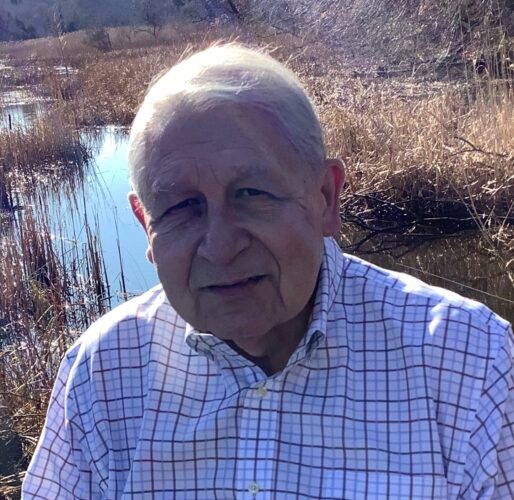
About the Author: Tom Gotowka is a resident of Old Lyme, whose entire adult career has been in healthcare. He will sit on the Navy side at the Army/Navy football game. He always sit on the crimson side at any Harvard/Yale contest. He enjoys reading historic speeches and considers himself a scholar of the period from FDR through JFK. A child of AM Radio, he probably knows the lyrics of every rock and roll or folk song published since 1960. He hopes these experiences give readers a sense of what he believes “qualify” him to write this column.
Sources: “Tin Soldiers”—Part 2:
Amadeo, K. “Vietnam War Facts, Costs, and Timeline. The Balance.” 09/20/2024.
Ciampaglia, D. “Why Were Vietnam War Vets Treated Poorly When They Returned?” History. 11/08/ 2018
Cohen, M. et al. “Trump commutes sentences of Proud Boys and Oath Keepers leaders as he pardons over 1,000 January 6 US Capitol rioters.” CNN. 01/21/2025.
Editors. “Henry Kissinger begins secret negotiations with the North Vietnamese.” History. 11/16/2009.
Editors. “National Guard: Service in the War on Terror.” Military.com. 12/12/2015.
Fogerty, J. (1969). “Fortunate Son.” [Lyrics] On Creedence Clearwater Revival, “Willy and the Poor Boys” LP. Berkeley, CA: Fantasy Studios.
Goodwin, G. “Black and White in Vietnam.” NYT. 07/18/2017.
Gotowka, T. “A View from My Porch: “Tin Soldiers and Nixon Coming.” Part 1 — The Shootings at Kent State University.” LymeLine. 03/29/2025.
Gotowka, T. “A View from My Porch: Epic Poems of Folk and Rock Part 3 — The Rock and Roll War.” LymeLine. 06/01/2021.
Guttman, J. “These 5 Nations Joined Forces with the U.S. in Vietnam.” History Net. 05/07/2019.
Hackel, J. “Morley Safer’s coverage of the Vietnam War changed everything.” WGBH The World. 05/20/2016.
Kimball, J. “Nixon’s Nuclear Specter – The Secret Alert of 1969, Madman Diplomacy, and the Vietnam War.” The Wilson Center. 10/08/2015.
Kramer, M. (2009) “Stalin, Soviet Policy, and the Consolidation of a Communist Bloc in Eastern Europe.” CEU Press.
Mitchell, R. “Project 100,000: ‘The Awful US “Meat Grinder’ in Vietnam.” History; Historic Mysteries. 03/18/202.
Norton, T. “Fact Check: Trump Claims 82% of People Believe in ‘Rigged Election’.” Newsweek. 03/04/2024.
O’Sullivan, D. & Polantz, K. “Trump pardoned the January 6 convicts. Now his DOJ is wiping evidence of rioters’ crimes from the internet.” CNN. 01/26/2025.
Walsh, S. “International Guard: How the Vietnam War Changed Guard Service.” NPR Weekend Edition. 04/25/2015.
Walsh, S. “International Guard: How the Vietnam War Changed Guard Service.” NPR Weekend Edition. 04/25/2015.