TOP STORY: Ashlawn Farm Caps 12 Years as ‘Launching and Landing Pad’ for ‘Tour de Lyme’

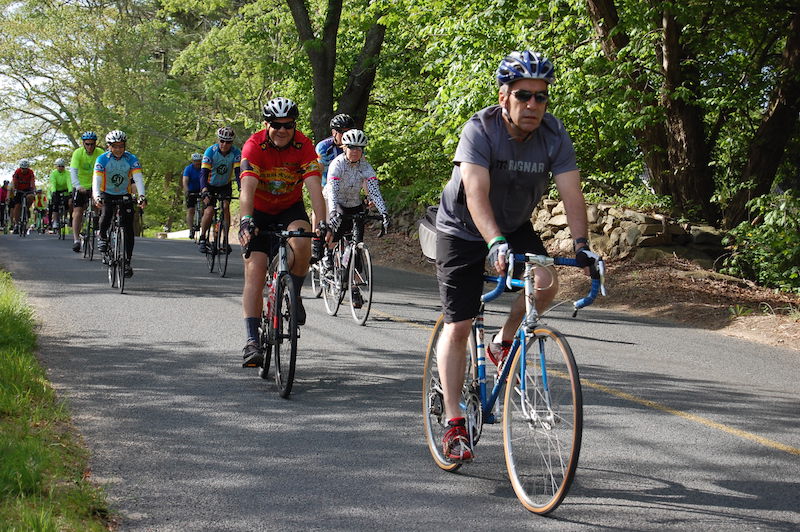
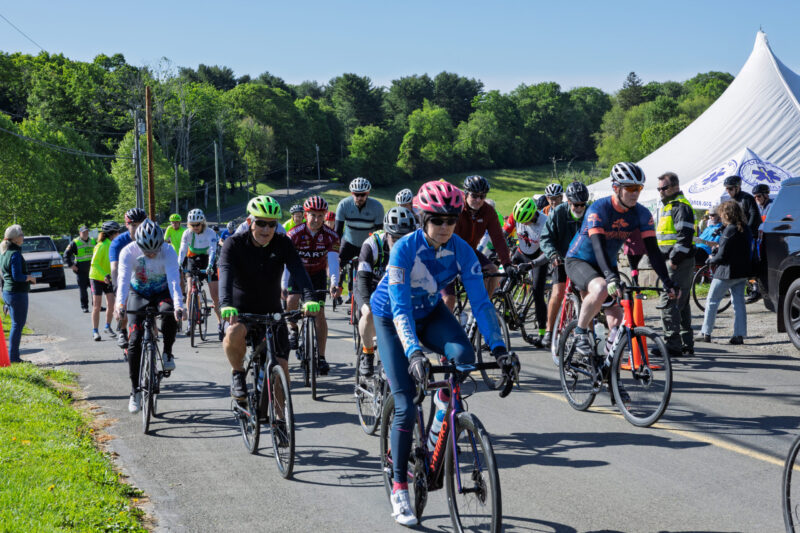
About 580 riders came out for the ‘Tour de Lyme’ on Sunday, June 1. Photo by Warner Swain.

LYME—Roughly 600 riders per year, bringing in about $65,000 annually for the Lyme Land Trust, have started out from Ashlawn Farm on Bill Hill Road for more than a decade as part of the perennially bucolic Tour de Lyme

Now, the family farm is bringing its popular coffee roasting operations back home as the land trust seeks out a change of scenery for the bike riding tradition. 

Those at the 13th Tour de Lyme, held last weekend, were the last to cycle and celebrate on the farm. 

Land Trust Executive Director Kristina White in a phone interview this week said the farm has donated the space to the Tour de Lyme at no charge for a dozen years. 

White described the arrangement as a large undertaking for the landowners, who coordinated mowing and haying operations to make room for hundreds of cars in preparation for the event that would take over their property for a full weekend. 

“The land trust really appreciates what they’ve done for us, because the Tour de Lyme would not have been what it was if Ashlawn Farm wasn’t there,” she said. 

Carol Adams, co-owner of the farm with husband Bill Donovan, said in an email that the family will continue to enjoy their hobby animals and gardens while allowing another farm to use some of the fields and outbuildings. Meanwhile, they are turning the barn where Ashlawn Farm Coffee was born and brewed in 2002 into an updated roastery. 

The coffee business since 2013 has operated out of a cafe near the Old Saybrook train station. That’s also where they roast beans sourced from farms all over the world. 

As the small business outgrew the space, Adams said it was natural to look back to their own rural roots. “We are so lucky to have the space, and we have reached the point where we need to use it,” she said. 

The cafe will continue to operate in Old Saybrook. 

Adams credited Lyme officials with their support throughout the approval process to renovate the roastery space. “And then we can spread out, scale up our supply purchases, enjoy a brewing/tasting/cupping lab, soak in the farm vibes and hopefully invite the public to our facility on occasion,” she said. 

A video posted on the business’s Facebook page shows the couple’s progress in adding septic capacity, running water, a coffee lab, storage and office space, and improved flow for shipping and receiving.
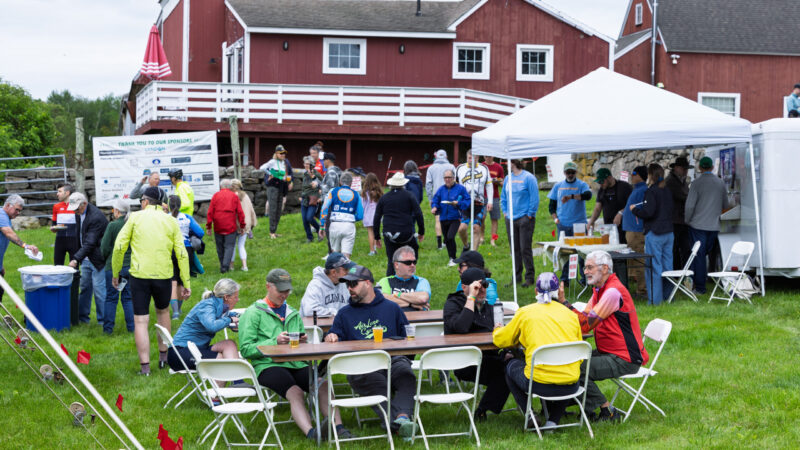
Participants gather on the grounds of Ashlawn Farm for a picnic following the Tour de Lyme on June 1, 2025. Photo by Warner Swain.

White, the land trust director, said she’s “not even close” to ironing out all the details or announcing a new site – but she has a plan. 

“We will stay in Lyme, obviously,” she said. 

With a new base will come altered routes for road offerings ranging from a challenging 59 miles to a family-friendly 8 miles.

“We’ve been in the same place for 12 years, so having a new location just means it will be exciting for the riders to come to a new place,” she said. “Some of the rides will be different, so we might be able to attract some of the riders who probably didn’t come because they had done it so many years in a row.”

Two mountain bike routes take riders on a trek through Hartman Park, Walbridge Woodlands and Young preserves as well as the Nehantic State Forest. 

White described cycling as a natural outlet to help support the land trust, which has been around since 1966. 

The event serves as the group’s only fundraiser. Proceeds go toward stewardship, preservation and operating costs, according to White. 

She recalled a rider who told her it was remarkable he’d passed through eight preserves on his ride. The land trust and its partners are responsible for preserving over 12,000 acres in a town where more than half its land mass is protected from development. 

White said riders wind past forests, farms and stone walls on roads with relatively little traffic. “When you’re on a bicycle, because you’re going so much slower than a car, you can see what we’re doing in a very clear way,” she said of the organization’s mission. 

Adams noted the event draws riders “from seemingly everywhere” to the small town that Ashlawn Farm is proud to support.

“We were thrilled to be able to offer up the farm as a launching and landing pad for all those years,” she said.
TOP STORY: Lyme’s ‘Long Table Farm’ Turns Community Food Scraps into Rich Compost, Looks to Expand Program to Include Old Lyme

Compost Benefits Farm, Lyme Residents, Town’s Bottom Lineand Doesn’t Stink!

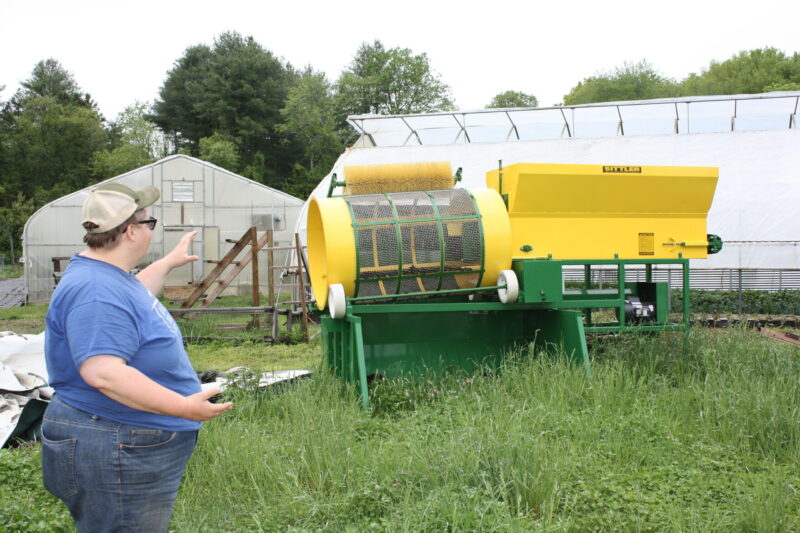
Long Table Farm’s Baylee Drown points out the importance of the trommel screener in sifting through compost to ensure the purest product. All photos by E. Regan.

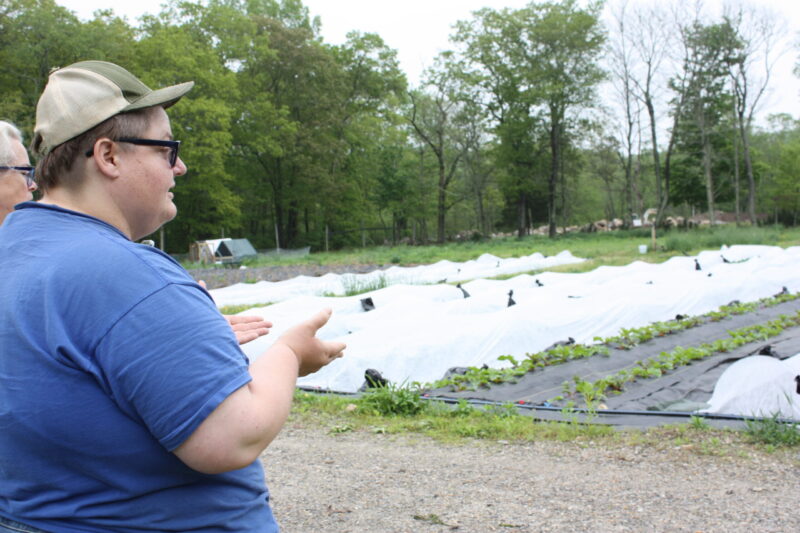
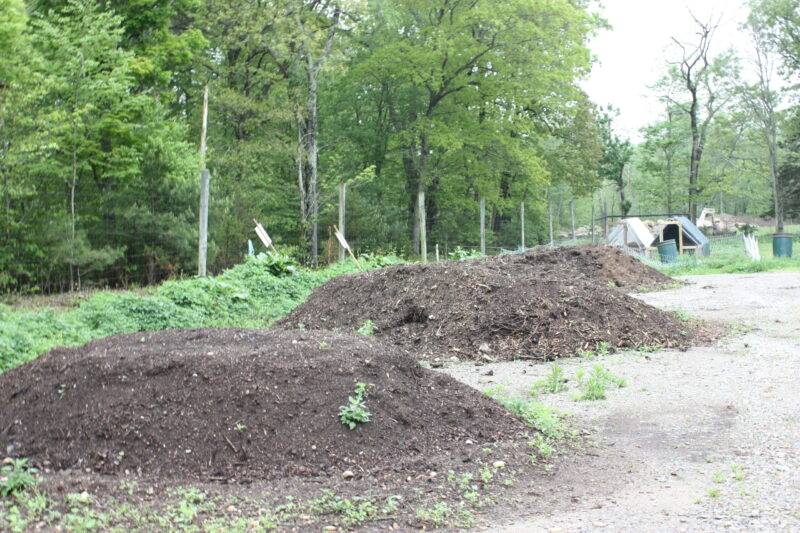
LYME, CT—Long Table Farm owner Baylee Drown last week stood alongside several carefully-tended compost piles adjacent to the vegetable fields as food scraps carried in from all over town cooked down in a natural process that she hopes will bring the community-supported agriculture operation into a new era of sustainability. 

Common fears about the stench of rotting food and the rodents it attracts were unfounded on that damp Thursday morning as Drown and Lyme Selectwoman Kristina White looked out from the crushed stone pad separating the compost piles from the earth below. Drown said wood chips spread over the piles is a simple and effective way to manage odors.  

“My farm does not stink,” she said. “And I don’t want it to stink. I live here. I have a vested interest in it not stinking.” 

Drown, who speaks passionately about carbon sequestration and has been known to refer to farm animals as “manure production,” said it’s her goal to be able to turn one million pounds of food scraps and other organic material into 2,000 cubic yards of compost annually. 

She currently produces 200 cubic yards per year of compost, which returns to the farm as fertilizer for a wide array of vegetables that have become more abundant because of it. 

Drown and her partner, Ryan Quinn, established Long Table Farm 11 years ago. They initially leased the site before purchasing it in 2018. She credited an agricultural conservation easement, which permanently prohibits the land from being developed and thus reduces the appraised value, with keeping the farm affordable to small business owners like them. 

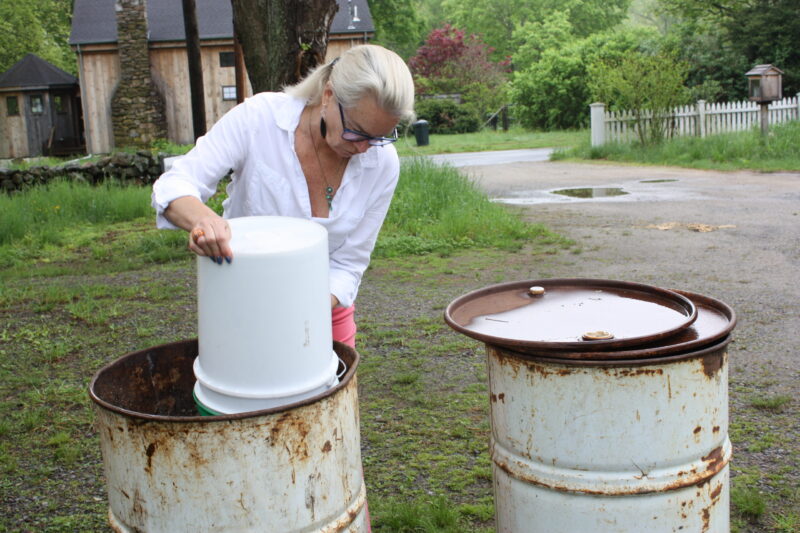
Drown said staff members from Lyme Consolidated School have been dropping off two five-gallon buckets of food scraps per day since 2022. The Town of Lyme last year began selling green-lidded, brightly labeled buckets at cost to residents interested in hauling their organic refuse to the farm.  

White said the program benefits the farm, the residents of Lyme, and the town’s bottom line. 

She noted 20-25% of the weight of solid waste comes from food.

“So if we can reduce the amount of food waste in the solid waste stream, then our costs for the town go down. And it’s probably going to be mandated eventually by the state,” she said.

She counted 40 of the specially-produced buckets that have been sold so far by the town. Drown added that about 140 people drop off scraps in their own buckets. 

White said bringing food scraps to the farm is a good option even for those who do their own composting at home. That’s because items like bones, fats, oils and other organics that don’t break down as well in a backyard compost pile are welcome at the farm. 

Selectwoman Kristina White dumps a bucket of food scraps from her home into a barrel at Long Table Farm to be turned into compost.

“What we’re trying to say is, ‘Yeah, please compost. Continue to compost in your backyard. But all that other stuff that you’re throwing in the garbage, put it in this bucket,’” she said.  

Drown hopes to expand the program through a grant from the state Department of Energy and Environmental Protection as she looks to include Old Lyme in the mix. She said some new farm equipment and expansion of the crushed stone pad would allow the farm to meet the organic recycling needs of both towns, assuming 50% of residents brought in their food scraps. 

She also hopes to install collection barrels at places like the transfer station and recycling center. 

Drown is asking for $350,000 to $375,000 in funding from the state, combined with in-kind help from the two towns in marketing the composting program and providing educational opportunities.  

She told the Lyme Board of Selectpeople at a meeting this week that the grant application has to come from a municipality or the regional Council of Governments since private entities alone are not authorized to apply. 

First Selectman David Lahm encouraged Drown to explore a partnership that includes both Lyme and Old Lyme. 

“The state government is pushing regionalization,” he said. “So if you can show it’s more than one town, it’s easier to get money.”

Drown said she will be meeting with Lyme-Old Lyme Schools Superintendent Ian Neviaser next week and is lining up a meeting with Old Lyme First Selectwoman Martha Shoemaker.

An Expanded ‘Beta Test’

Long Table Farm owner Baylee Drown points to abundant Swiss chard that grows with the help of compost produced at the farm.

Back at the farm, Drown described the program as a “beta test” as the farmers work to scale up production to meet demands coming down the pike now that the state is mandating more businesses and organizations recycle their food scraps. 

“I think it’s a good system to have a starter program that’s optional. And then get people kind of used to the idea before the mandate comes out,” Drown said. 

It’s also a beta test for the public. 

Anyone in the area is invited to drop off their scraps Wednesday through Sunday from dawn to dusk in two barrels at the farm entrance. 

In addition to the scraps, compost at Long Table Farm comprises leaves, wood chips, animal bedding and manure. Drown and Quinn use their blue farm tractor to haul the collection barrels from the parking area to the piles arranged atop the stone pad. 

She said she’s hopeful grant money can cover a grabbing mechanism to tip the barrels from the tractor into the pile so the farmers don’t have to do it by hand. 

“Right now, it’s messy and gross,” she said. “But we’re tough.” 

Drown said the composting happens as the large piles “cook,” with bacteria and fungi breaking down the material so that heat is released as a byproduct. 

The magic number is 131 degrees, according to Drown. That’s the temperature at which pathogens are killed and weed seeds become sterile. 

After a trip through the farm’s rotating screener, properly cooked compost emerges as a clean, high quality fertilizer that she said her friends in the farming community are “champing at the bit” to purchase. 

She said Connecticut and Rhode Island don’t have a reliable supplier of high-grade compost and potting soil to supply small scale vegetable farmers in the region. 

“I’ve made two batches that were totally weed seed free, but not all my batches are that way yet,” she said. “I’m making good compost, but it’s not perfect yet for vegetable farms.”

Drown was optimistic that will change. 

“And that’s another part of why this beta testing process is really helpful,” she said. “Because I’m learning by doing.”

She also sees the pilot program as a way to work toward a sustainable model that will eventually include tipping fees like those the town currently pays the Materials Innovation and Recycling Authority to haul solid waste out of town. 

Piles of compost “cook” at Long Table Farm.

In the meantime, Drown said she’s happy to donate the labor and materials she estimated at $3,000 per year to handle food scraps for the town. Her grant application to the state commits to another $50,000 in labor to develop the infrastructure to grow the program. 

“And I’m learning how to be a good composter. I took a certificate course so I can operate a compost facility legally that’s recognized in multiple states,” she said. “At some point, the money that’s being given to waste companies needs to be given to farmers.”

White, who also serves as Executive Director of the Lyme Land Trust, was confident the town would start looking into reimbursing farmers for their work when recycling organic material becomes the law. 

“Because we’re going to have to pay someone to do it,” she said. 

She described the initiative as one that fits into Lyme’s unique, deeply-rooted and pervasive commitment to open space. 

“Part of our mission is supporting local farmers and keeping farmland, versus that farmland turning into more development,” she said. “In Lyme, everything is intertwined.”

2025 ‘Tour de Lyme’ Benefiting Lyme Land Trust Takes Place June 1

 And away they go …. the 2025 ‘Tour de Lyme’ will be held Sunday, June 1.

In-Person Registration Open Onsite on June 1

LYME, CT — The 12th annual Tour de Lyme is happening on Sunday, June 1.

For competitive riders, this is a chance to warm up for the cycling season ahead. For others, it provides a wonderful occasion to pedal through Lyme and enjoy the surrounding countryside.  If you are a mountain biker, this is an opportunity to ride through private lands open only for this event.

Everyone – riders, sponsorsand volunteers – will enjoy a post-ride picnic at Ashlawn Farm in Lyme with popular food trucks, beer and live music. There will also be Tour de Lyme shirts for sale.

For complete information and online registration, visit www.tourdelyme.org.

Online registration is open through midnight EST on Friday, May 30.

 Ready to ride!

It is not a race but a carefully planned series of rides designed to suit every level of skill and endurance. There are four road rides of varying length and degree of difficulty:

  • The CHALLENGE, the name says it all, is 59 miles – a real workout;
  • The CLASSIC, shorter at 26 miles, but still a challenge;
  • The VALLEY Rides ‒ pleasant easier rides with fewer hills, 26 miles or 35 miles
  • The FAMILY ‒ at just 8 miles designed for riding with children.

There are also two mountain bike options;

  • the RIDER’S TEST, a 19.5 mile ride for serious enthusiasts
  • the INTERMEDIATE, a shorter, 9.5 mile less challenging option.

The Tour de Lyme is hosted by The Lyme Land Conservation Trust.  Since 1966, the Lyme Land Trust has been conserving the unique and historic landscapes of Lyme, Connecticut. During those years, the Lyme rural community has shown that a small population can have a big impact and protect more than 3000 acres of woodlands, working farm fields, and bird-filled marshes. The result is an outdoor paradise – open to all.

Money raised from the Tour de Lyme will create added opportunities for public enjoyment of the Land Trust preserves while protecting and maintaining what has already been conserved for generations to come.

The Lyme Land Trust is a 501(c)(3) non-profit organization – registration and donations are tax deductible.