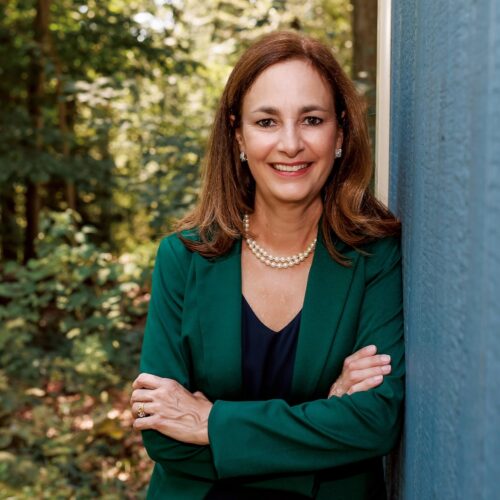
After a long career in corporate marketing, Jane became a conservator and fiduciary serving adults who face healthcare and financial hardships. For the last 15 years, she has been working specifically in elder care services. A committed public servant, Jane is a Parks and Recreation Commissioner, a member of the Old Saybrook Board of Education, and Vice Chair of the Old Saybrook Democratic Town Committee. She also serves on the board of directors of the Valley Shore YMCA. Jane’s candidacy comes with several endorsements, including from Planned Parenthood of Connecticut, CT Against Gun Violence, and American Federation of Teachers Connecticut.
What is the most serious problem currently facing the state of Connecticut? What proposal(s) would you make to alleviate the problem?
I believe the most serious problem facing the residents of Connecticut is the high cost of living, especially the high cost of housing. The lack of affordable housing has reached a crisis. Many seniors can’t afford to remain in the communities they built. Young people can’t start their families here and businesses can’t attract the workers they need. We must address this crisis, but for shoreline communities like those I seek to represent, we must do so in a way that respects the small town feel we are committed to maintaining.
As a state representative, I would support setting achievable goals for affordable housing across the state and would fund programs like HB 5390—the so-called “work, live, ride” bill which provides access to discretionary funds for qualifying communities—a much needed “carrot” approach. I’d support programs that actively re-develop existing vacant properties and brownfields to put back into productive use as housing. Also, converting vacant commercial space into housing addresses multiple issues—it avoids developing open space, keeping the character of our towns. It also makes unproductive assets more valuable on municipal tax rolls and adds much needed housing stock. In my own community of Old Saybrook, we are using ARPA money to fund a Housing Task Force that will develop a plan for building many more affordable units that fit our small town feel. We are also using surplus money to secure the necessary grants at the State level to attract developers to make these plans a reality. This is the kind of public-private partnership at the state and local level that could serve as a model statewide.
‘Book-banning’ has been a significant issue in the community—where do you stand on the matter?
As a mom of two college students, I recognize the importance books play in developing critical thinking. I support every parent’s right to decide what is appropriate for their children to read, but I equally oppose every attempt to ban and limit access to age-appropriate books in our libraries. As a member of the Board of Education, I meet regularly with educators. I understand how their expertise shapes their thinking and ensures they make terrific decisions for our children. I do not believe that I, or most members of a Board of Education, have the expertise to make these important decisions. I have also been extremely displeased to learn that many book banning efforts are not the work of well-intentioned but misguided parents. They are often well organized efforts across the country funded by right-wing extremist groups who don’t have children in our schools.
I was also disappointed to learn from the Connecticut Education Association that my opponent was opposed to a bill introduced in the legislature this term (but not passed) to limit the authority of local boards to ban books. While “local control” has its place, it’s often nothing more than a set of political buzzwords designed to divide us – to pit people against the state and stir up fear. This has no place in controlling what books our children have in their libraries.
Why are you running for this position?
I am running for State Representative because I love this community and have made it my home for 25 years. It is where I raised my two sons and where I intend to retire. I believe it is critical to preserve its natural beauty and make it a more vibrant and equitable place to live.
Even as I built my corporate marketing career, I worked countless hours volunteering for school and charity events and more recently, serving as an elected member of the Old Saybrook Parks and Recreation Commission as well as the Board of Education. Like many women, I struggled to conceive but, through IVF, I was able to start my family. And through my work with the Agency on Aging and as a conservator, I have learned about the hardships many older adults and people with mental illness face and the role that the government can play in easing their burdens. These experiences have helped me recognize what’s important for our community.
Unlike my opponent, I believe you should be represented by someone who will vote your values. I will vote to protect women’s reproductive rights; to preserve our coastline from the ravages of climate change; to make life more affordable for seniors and working families; to enhance our schools, prohibit book bans and protect our children from gun violence. I think it is time for a change and for a strong voice for our district in Hartford, not to continue with someone who claims to be a moderate but votes quite the opposite.
Once elected, I will work with any colleague, no matter their party, to deliver measurable results for Lyme, Old Lyme, Old Saybrook, and Westbrook. I will fight for the unique needs of these small towns. I will work with the leadership of the State Assembly to assure our voices are heard and bring funding back to our projects. You can count on me to always represent our values.
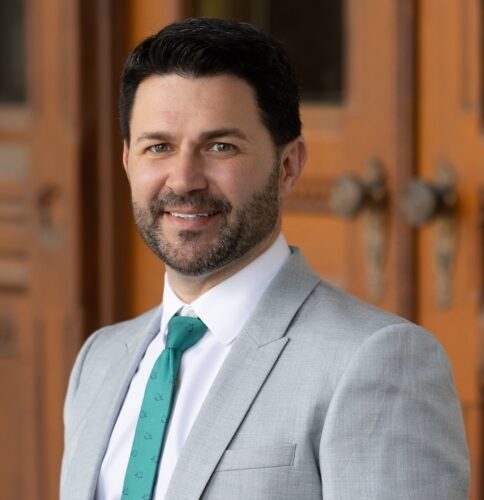
I’m Shaun Mastroianni, and I’m honored to run for the 20th District in the Connecticut State Senate. I live in Old Lyme with my husband Antonio, our spirited daughter Sophia, and our energetic dog Bruno. As a father, healthcare professional, and small business owner, I understand the challenges faced by hardworking families, seniors, and taxpayers. With extensive experience operating senior care facilities, I’ve gained insights into the needs of healthcare providers and patients. My mission is to eliminate bureaucratic hurdles and fight for the extraordinary results our communities deserve, standing against the broken politics that have long plagued Hartford.
What is the most serious problem currently facing the state of Connecticut? What proposal(s) would you make to alleviate the problem?
The most serious problem currently facing Connecticut is the crushing cost of living that hardworking residents are grappling with daily. Whether it’s housing, groceries, healthcare, or energy bills, these rising costs are overwhelming families and individuals across our state. We must promote policies that drive down expenses and embrace financial discipline.
To address the energy crisis, I propose capping power purchase agreements with utility companies to prevent overcharging ratepayers. It’s crucial to end the practice of shifting Hartford taxes and fees onto ratepayers by moving the costs of public policy changes into the state’s general budget. We need to hold state regulators accountable for overseeing energy utilities and reduce the cost of our clean, homegrown nuclear and hydropower by eliminating unnecessary classifications that inflate costs.
In terms of pensions, Connecticut has contributed over $7 billion to state employee and teachers’ retirement systems since 2020, with a significant portion allocated to addressing past underfunding. There’s no need to cut retirement benefits; instead, we must prioritize consistent pension contributions in future budgets. Enhanced fiscal management is essential, so I advocate for independent auditors or an independent board to oversee pension fund management, ensuring transparency and accountability.
Ultimately, we need comprehensive healthcare reform that lowers costs while improving care. I will propose policies that increase transparency in medical billing, expand access to preventive care, and support our dedicated healthcare workers. Together, these measures will help alleviate the burdens faced by Connecticut residents and create a more sustainable future. 267
‘Book-banning’ has been a significant issue in the community—where do you stand on the matter?
I firmly believe that while books should remain age-appropriate, book banning has no place in Connecticut. It’s crucial to foster an environment where children can learn and explore diverse ideas. As a party that champions parental choice, we cannot simultaneously dictate what children can or cannot read.
History has shown us that banning books is a slippery slope that undermines freedom and open dialogue. Instead of restricting access to literature, we should encourage discussions around the content, promoting critical thinking and understanding. Our schools should be safe spaces where children can engage with a variety of perspectives, fostering growth and empathy.
As your senator, I will advocate for policies that promote literary diversity and empower parents to guide their children’s reading choices without imposing restrictions that limit access to important narratives. Let’s create a community where learning thrives, and every child has the opportunity to explore the world through the written word.
Why are you running for this position?
I am running for state Senate to give a voice to everyday people who are struggling to make ends meet. It’s disheartening to see our current senator only engaging with the community when seeking votes, rather than actively listening to the concerns of constituents. I want to change that narrative.
As a father of a young daughter, my motivation is deeply personal. I want to ensure that Connecticut is a place where she can stay, learn, grow, and ultimately raise a family of her own. I envision a prosperous future for our state, one where families can thrive and enjoy a high quality of life.
I care deeply about our community and the challenges we face. I believe in bringing people together to create meaningful change, focusing on policies that prioritize affordability, healthcare, and education. I am committed to working across the aisle, recognizing that true progress comes from collaboration rather than partisanship. My goal is to listen to the needs of our district and make decisions that reflect those needs, rather than simply voting along party lines.
By fostering open communication and building relationships with colleagues from both parties, I aim to create solutions that benefit all residents of Connecticut. I want to lead with integrity and compassion, ensuring that every voice is heard and every concern is addressed. Together, we can build a Connecticut that supports families, promotes economic growth, and enhances the quality of life for everyone.
I believe that when we prioritize the interests of our community over political affiliations, we can truly make a difference.
Norm Needleman has served in the State Senate since 2019 and is now in his third term. He serves as Senate Chair of the Energy and Technology Committee. In addition to the State Senate, Norm is also First Selectman of Essex and the owner of Tower Laboratories, a manufacturer of effervescent products headquartered in Centerbrook. In his free time, he loves spending time with his family and spoiling his many grandkids.
What is the most serious problem currently facing the state of Connecticut? What proposal(s) would you make to alleviate the problem?
The biggest issue impacting Connecticut today is housing affordability, especially for the lifeblood of our economy, young workers and middle income families. The rising cost of housing combined with shortages in our communities are impacting our workforce, making hiring more challenging for some companies, and could cause ripple effects that negatively impact our economy over time. We need to find solutions, but as no two towns are the same, we can’t apply an overarching strategy statewide. I believe that pushes for workforce housing and middle income housing are key. Having housing built to support our businesses, companies and industries will have a directly positive impact and alleviate much of this pressure, and designing future housing around key transportation hubs – bus lines, train lines, and highways, among others – can provide direct in-roads for access to jobs and support communities in the process. We need to make sure new housing and redevelopment in our communities supports our overall needs, and this overarching effort would be transformative in a positive way for our state.
‘Book-banning’ has been a significant issue in the community—where do you stand on the matter?
Book bans are an ineffective and overly controlling effort often made to restrict people from accessing information others don’t want them to read. I oppose book bans barring specific circumstances where materials can be determined to be truly harmful to the public. Many publicized book bans in recent years have targeted books focused on topics including the LGBTQ+ community, racism and discrimination, sexual assault and other topics. It often seems these bans are being made to limit access to books on these topics for purposeful reasons, and they often lead to overstepping that limits educational and representational reading. A book isn’t “dangerous” on its own, and the consequences of a book ban are often are worse than the materials being limited in the process. Add in that many analyses have shown that the majority of book ban suggestions come from a very limited number of people and the purposeful banning of books on important topics is often done with political purpose. A vast majority of parents – 70% – oppose book bans. I join them in my opposition.
Why are you running for this position?
After serving my community as the First Selectman of Essex, as well as other local community service and aiding local communities as a business owner, I’ve continued to feel a desire to give back to our community that goes beyond what I’ve accomplished in these roles. Working as State Senator has given me the ability to give our community a say in Hartford in every major bill discussed, proposed and enacted. Using my experiences as a business owner and local leader, I know no two communities are the same, and I’ve been able to voice that concern throughout my work in the Senate. I want to serve for another term to build on the good work we’ve accomplished to move Connecticut forward, including cuts to the state’s income tax, policies supporting families such as paid family and medical leave, new regulatory control over state utilities to reduce costs and support ratepayers and protecting the rights of everyone. I want to give back to my community and cannot fathom a better way than continuing to serve.
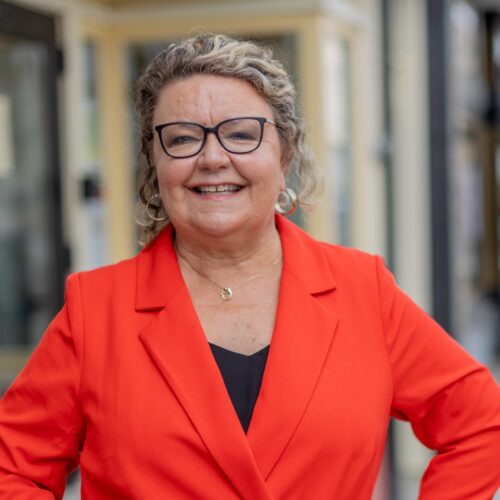
Martha Marx has been a trusted leader for decades, a visiting nurse for over 30 years, a State Senator, a two-term City Councilor, a union president for over a decade and a mother raising her family in New London. She knows how to advocate for patients, neighbors and the community. While growing up in Waterford in a family of eight children, she learned early how to listen, collaborate and negotiate – learned how to speak up when she needed to and has never stopped. We need this kind of passion, grit and advocacy continuing to represent us in the State Senate.
What is the most serious problem currently facing the state of Connecticut? What proposal(s) would you make to alleviate the problem?
The most serious problem facing the state of Connecticut is housing. This is a multifaceted issue and has different solutions in each community. I do not believe the eight towns in my district would benefit from a state mandated one-size-fits-all zoning approach. I would like to see the state incentivise communities to solve the housing crisis in ways that fit each town. We need to allow for all types of housing, not just apartment buildings. Providing support for accessory dwelling units and small, starter home neighborhoods with smaller ranch- and cape-style housing on smaller lots will allow young families who work in their towns to live in their towns and allow retirees to downsize. This will not only help solve a fiscal crisis for many families, but also bolster the fiscal health of our municipalities. We also need to stop predatory landlords from evicting tenants or boosting rents by hundreds of dollars, forcing long-term tenants to leave. Housing problems are public health problems. We need to seriously look at creative ways to protect current residents while also increasing housing options. Housing needs to be a priority, but also needs to be enticing for municipalities to make these projects become reality. I am very proud to be a community member in the 20th District and I want to ensure that all residents in this district have a safe and affordable place to live. 232 words
Book-banning’ has been a significant issue in the community—where do you stand on the matter?
Access to books should not be limited. I believe librarians are highly educated and are fully capable of determining which books should be in their library collections. People of all different backgrounds and walks of life use public libraries and librarians are tasked with making sure their collections are meaningful to as many people as possible. Sometimes that means some people won’t like certain books, and that is okay. We all need to find tolerance for differences in our communities and work together to realize that public library spaces are meant to be places to explore and learn about things that might be outside of our normal days, and that we will be better community members for having that knowledge.
Why are you running for this position?
As a visiting nurse I have seen policies that have worked and don’t work in all of our homes, around many kitchen tables. As a nurse I have been a constant advocate for my patients. After seeing decades of policies that needed to be changed, I decided that if I wanted change, I needed to be a part of making it happen, and ran for office. I love being in Hartford and being an advocate for so many people. I love being a part of changing the policies that do not work well in our communities.
Life can be really hard for all of us, and improving policies to make lives easier brings me joy. I want to work on and pass legislation that makes lives better. Being that I continue to work as a visiting nurse, I am ever-present in our communities, in homes of people of all races and incomes across the district. This gives me a perspective that most legislators do not have – I am having conversations, with regular people everyday, about what would make their lives and our communities better. I hear what our residents would like to see from their government. I take those conversations straight to the Senate chambers and work on policies that make sense and are a direct result of listening to my constituents. Helping people has been my life’s work, it is my passion.
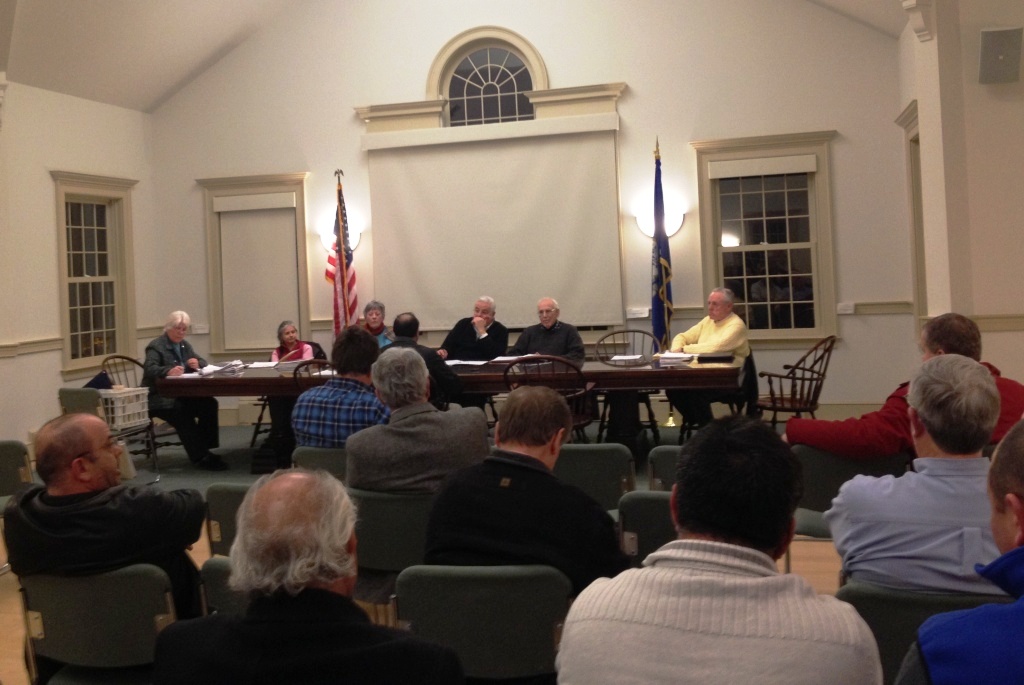
What is the future of zoning? File photo above shows a historical photo of a former Old Lyme Zoning Commission during a meeting.
Editor’s Notes: i) This op-ed was submitted by Eric Knapp, who is employed as the Town of Old Lyme’s Land Use Coordinator. He is writing here as a private citizen. ii) This is the opinion of Eric Knapp.
Zoning in Connecticut is 100-years-old this year. West Hartford was the first town in the State to adopt zoning regulations in 1924. The practice did not make its way to this part of the shoreline until the post-war (World War II) period, when the federal government undertook a concerted effort to promote home ownership for white families. For most of the towns in this area, the adoption of zoning came well after the development of the immediate shoreline areas. How this was addressed—or not addressed—is something I will explore later in the essay.
It seems apparent, at least to me, that the concept of zoning is starting to show its age, and increasingly, it is a poor fit to address issues such as the Americans with Disabilities Act or flood zone requirements. What is not so clear is where to go from here.
From the very beginning, zoning was always a suburban conceit. The idea that residences should be separated from businesses, and both should be separated from industrial uses stems from the very idea that suburban residents want quiet, well-tended neighborhoods, and less desirable uses should be concentrated elsewhere.
This never really made sense in rural areas, where people lived on properties, which doubled as their place of work, and frequently where they sold their products. The fact that the work was odiferous and made noises at early hours hardly bothered the neighbors. Since they were probably engaged in the same activities and were sufficiently far away, it hardly mattered.
In urban areas, there was a long tradition of living over storefronts. Many of Connecticut’s cities developed as “company towns”, where workers lived close enough to arrive on foot and shopped at the company store. Trying to separate out uses made little sense. To get a sense of what this looks like in practice, look at the New Haven Zoning Map, where there are individual “planned development districts” by the dozen, in sizes that would be considered “spot zoning”, if that were a real thing these days.
In the suburbs, though, people still want to limit their neighbors’ activities. [Zoning is always about what your neighbor can do. You should be able to do whatever you want, of course. (Please note, that this is meant tongue in cheek — zoning applies to everyone equally. I am not suggesting that anyone should be able to act with impunity.)]
The relatively late arrival of zoning meant that other tools served that purpose for decades. There are a profusion of associations, some granted powers by special act of the General Assembly. Each one comes with its own rules and rights, all of which must be enforced, but not by the local zoning enforcement officer, much to the confusion and dismay of some residents. (See “hammer laws” for details.) There are boroughs, and fire districts, a “city” and historic districts.
The diffusion of responsibilities and roles gives lie to the idea that we have only 169 municipalities.
A problem that has existed since the adoption of zoning locally is that the shoreline areas were divided into very small lots. The smallest “standard” zoning lot size for most towns in the area is 10,000 sq. ft., just under a quarter acre. But a casual glance, the shore area is made up of plenty of 50’ x 100’ lots, and some even as small as 3,600 sq. ft.
I have argued with local commissions for years that if every lot in a zone is nonconforming, that probably means that there is an inherent defect in the regulations. No local commission wants to take this issue head on.
Instead, the reality is that land use decisions in these areas are largely made by zoning boards of appeals. By statute, of course, these boards are supposed to grant variances only in cases of “exceptional difficulty or unusual hardship”. When every lot is nonconforming, though, the hardships are hardly “unusual”. “My house/lot predates zoning.” “I need to go higher in the setbacks to meet FEMA requirements.” “My septic system takes up my backyard.” “The house is riddled with code violations.” All of these statements can be true, but they are hardly “unusual”.
The truth is, though, that zoning boards of appeals do grant variances. And according to Joe Capossela, who taught the Zoning Board of Appeals (ZBA) piece of the Bar Association’s Land Use Law and Practice for many years, that is exactly what they are supposed to do. They are, in Joe’s words, the “lollipop board”.
If you are liked by your neighbors and do not get greedy, the ZBA will give you a lollipop. But this is exactly the opposite of the “uniformity of zone” that is promised by Connecticut General Statutes Section 8-2. And it delegates the power statutorily given to zoning commissions to zoning boards of appeals.
There are ZBAs that impose gates on variance applications, but these are frequently arbitrary and unfair. One method I have seen, and do not recommend, is to require every variance application to have a complete A-2 survey, architectural plans and not-infrequently, a lawyer’s discussion of the claimed hardship.
This poses as a strict test of the worthiness of an application, but what it really amounts to is a means test. If you can afford to pay to produce an application, your application will almost certainly be granted. If you do not have the resources to provide these materials, at a cost easily exceeding $10,000, then you are not worthy of the ZBA’s time.
As land use law is theoretically tied to the inherent location and characteristics of the property, not its owners, this debases the value of zoning itself.
This is not the only tension between “land-based rules” and “owner-based rules”. The Americans with Disabilities Act requires that governmental bodies provide “reasonable accommodations” for people with disabilities. In zoning terms, this may require handicapped ramps in setback areas or elevators that may exceed height or coverage allowances.
There are workarounds.
Many cities and some towns have systems in place that allow zoning regulations to be “temporarily” modified to allow these improvements to be placed, on the theory that once they are no longer needed, for instance when the individual with those needs moves away, the improvements will be removed. In practice, the improvements never go away, if for no other reason than the administrative headache of trying to police such things is beyond the resources of most land use offices.
Flood zones present a different challenge. The zone lines drawn by FEMA do not respect the zone lines drawn by the zoning commission. The rules of uniformity within a zone do not align well with the requirements that houses be elevated out of the flood zone. Some houses get to have basements. Others cannot. And people really like their basements.
For most towns, additional vertical expansion, if done too close to property lines, is considered an improper expansion of a nonconformity. As most houses on their tiny lots along the shore violate one or more setback, trying to elevate a house will violate this principle. A variance will be required, and many zoning boards of appeals are sympathetic to the need to meet FEMA requirements. Zoning bends to address this, but these goals should be more compatible.
So far, I have spent this article addressing the failings of standard “Euclidean” zoning, but the title suggests that there must be a future for zoning out there. I suspect that there is.
The suburban desire to have bad things over there, not over here is a powerful one and will likely continue to drive the need for zoning. There have been trends, or fads, in the past few decades. Form-based zoning does not really help most suburban areas. Transit-oriented development has its uses, but there is a big gap between Old Saybrook and New London with no service and very limited bus or other transit options.
The State of Connecticut has been increasing its pressure on affordable housing, but without solutions that involve remedying the septic situation, no mandate can force the densities needed. I fully expect that zoning limits of “one house per lot” and/or “single-family zoning” will be curtailed or eliminated. I have no expectation that will make things better.
This cannot just be a paper about pessimism. What can be done? For starters, let’s meet people where they are. If you want to limit new lots to 10,000 sq. ft., okay. But let’s just admit that most lots along the shore do not meet that. Zoning regulations should say that any valid lot in existence today is conforming. All the other limits, setback, coverage, floor area ratio, can still effectively control density.
Having hundreds of nonconforming lots is a useless relic and should be addressed.
In flood zones, maximum height should be measured from the point above flood elevation needed to meet the local freeboard requirement. Again, for most of these small lots, there are other tools to address bulk issues. But we want houses to be elevated out of the flood zone.
Requiring variances to elevate when that is the only issue is a waste of resources and counterproductive.
We need to be more creative on what a “mixed use” looks like. The idea of “store downstairs, apartment upstairs” is less useful now, in the age of Amazon and Zoom. The use of space is more fluid and less defined than it was. People are running businesses from their phones, which is not “land use” at all. Kitchen tables might double as crafting tables. Ovens can cook dinner or make cookies for sale. A garage might hold tools, but some of those tools might be “dual purpose”.
Zoning does not address this well. We have “home occupations”, but not everything neatly qualifies for that designation. Some better definitions and understandings on this are probably required.
The technology is not quite where it needs to be for seamless hybrid meetings. Sure, people can watch from anywhere. And they can even speak. But trying to have exhibits available to everyone watching, and then to allow people watching to submit exhibits in real time that every other participant can see—both in the room and on a device—requires an expertise that is just beyond what most small towns have available.
We will get there, but perhaps not quite yet.
Legal notices are a relic as well. The idea of a “newspaper of general circulation” is not especially meaningful when no one gets a physical “newspaper” anymore. Sure, getting notices up on a town webpage is a good step, but, again, this relies on expertise that varies from town to town.
I would propose having the Connecticut Secretary of the State handle every legal notice. There would be one page at the State’s website that would be a clearinghouse for legal notices. The State could charge for the privilege. It would still be cheaper than what the local papers charge. And everyone, no matter where they are, would know where to look. No guessing which paper. No searching for some tiny print on page 38.
I know that there is a hesitancy to create new state bureaucracy, but in this case, a central monopoly would actually make sense.
I would love to see towns be much more proactive in getting their land use information into an electronic format visible to everyone, anywhere, at any time. In a 21st century world, you should be able to click on a parcel on the GIS map and be able to access its history before municipal land use boards; its outstanding and historical permits; and its zoning, building and health department files.
This is all public information. It should be widely available to the public.
I would love to see a “flood zone improvement calculator” tool. Owners of dwellings in a flood zone should be able to calculate how much work they can do before needing to elevate their house. This would need to include the value of permits within the “lookback period” and be keyed to the assessor’s valuation of the structure.
As I noted in my last piece published Aug. 30, 2024 on LymeLine.com, I have no monopoly of wisdom here. I cannot claim that I, alone, have answers. But we should be searching for these answers, and right now, I just do not see a lot of that happening.