Middlesex Land Trust & CT River Gateway Commission Announce New Open Space Acquisition in Haddam Neck

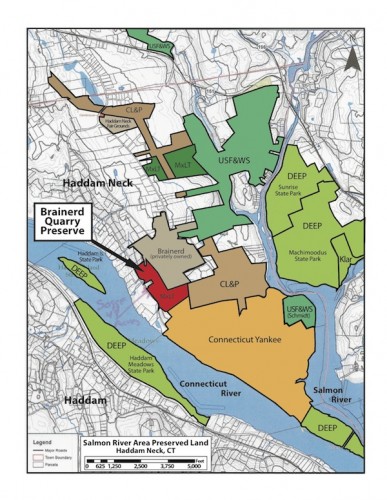
haddamNeckMapRaulBrownFINAL031815_v2In February of this year the Middlesex Land Trust, in partnership with the Connecticut River Gateway Commission, purchased 50 acres of open space for permanent protection in Haddam Neck. This new preserve offers breathtaking views across the Connecticut River to Haddam Meadows State Park from a rough path that runs along the base of dramatic cliffs created from the property’s historic use as a quarry.

The Middlesex Land Trust now owns the preserve and is planning to develop a trail system for the public to enjoy for hiking, passive recreation and education. The tract lies along Injun Hollow Road just north of the 585 acres Connecticut Yankee property.

The land has been named the Brainerd Quarry Preserve to reflect the historic importance of the Brainerd Family in Haddam. Daniel Brainerd was one of the 28 founding settlers of Haddam in 1662, and a century later, in 1762, Deacon Esra Brainerd opened a quarry on the now preserved site. The quarry operated for more than 150 years, shipping stone down river to New York and as far south as Maryland, Virginia and New Orleans.

A 2011 study of the history and archeology of the area describes the Brainerds as “a family of entrepreneurs in the forefront of early industry and commerce in the Connecticut River Valley” and recommends the quarry site as “an ideal candidate for use as an outdoor classroom for studies in local history, geology, mining, early American industry, the Industrial Revolution in Connecticut and other related topics for grammar school, high school and college students.”

This significant property along the Connecticut River is now owned and managed by the Middlesex Land Trust, a regional not-for-profit volunteer land conservation organization that, since 1987, has been dedicated to the preservation of open space in northern Middlesex County.

The purchase was initiated by, and made possible through grant funding from the Connecticut River Gateway Commission, a state-local compact that protects the Lower Connecticut River Valley, one of the “most important ecological landscapes in the United States” according to the Secretary of the U.S. Department of the Interior.

A dedication ceremony for the new Brainerd Quarry Preserve and the opening of the preserve to the public is anticipated for the summer of 2015.
Old Lyme Land Trust Presents McCulloch Family with Land Saver Award

At its 49th Annual Meeting on March 22, the Old Lyme Land Trust (OLTT) presented its Land Saver Award to the McCulloch Family in recognition of the family’s extraordinary vision and generosity.

Inspired by their mother, “Rook” Metzger McCulloch, who instilled in them the principle of stewardship, and by their love of the land, David and Jean McCulloch, Catherine Taffy Holland and Mary Jean McCulloch Vasiloff donated a conservation easement on 434 acres known as the McCulloch Farm in 2000. The easement, held by The Nature Conservancy, restricts the use and prevents further development of the property.

Lying in the Black Hall River Watershed, the land has extraordinary conservation value. With this portion of the watershed protected, the Great Island tidal marsh complex with its rich and diverse wildlife is protected as well.

Christina Clayton, President of OLLT, noted that Old Lyme residents receive benefits from the donation in addition to the conservation ones. The McCulloch Farm lies along Whippoorwill Road in the center of town and contributes significantly to the rural character of Old Lyme. And the taxpayers remain unburdened by the cost of services that residential development of this large tract would have imposed.

Dr. Robert A. Askins, Katherine Blunt Professor of Biology at Connecticut College, was the guest speaker at the annual meeting. Dr. Askins is a renowned ornithologist and expert on ecology and conservation biology, who recently published a book entitled, “Conservation of Deciduous Forests in New England, Japan and Europe.”

Dr. Askins spoke about the need for a blended approach to the conservation of New England’s forests, in order to protect the greatest number of both plant and animal species. Large tracts of unfragmented forest are necessary for a number of threatened and endangered species, but others, such as the endangered New England cottontail and several species of songbirds, require early successional habitats, such a thickets and grassy openings in the forest canopy.

The OLLT plans to incorporate Dr. Askins’s recommendations into the management plans for its preserves.

CT River Museum Offers Canoe, Kayak Paddle Program This Summer, Partly Funded by Cabela’s

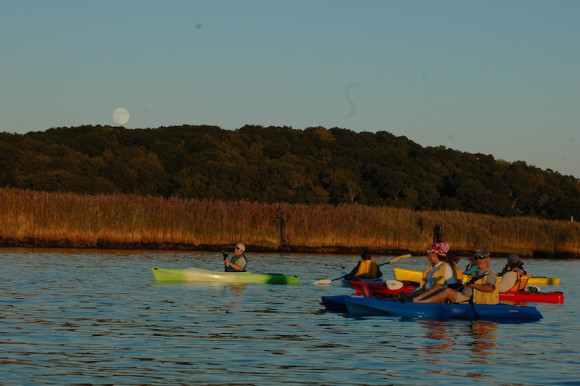
Connecticut River Museum Expands On-water Experiences with the Development of a Canoe and Kayak Paddle Program. Photo credit: Joan Meek.

Connecticut River Museum Expands On-water Experiences with the Development of a Canoe and Kayak Paddle Program. Photo credit: Joan Meek.

The Connecticut River Museum (CRM) will launch a canoe and kayak paddle program on the museum campus in Essex this summer as a major expansion of its environmental outreach. The Cabela’s Outdoor Fund, a nonprofit organization dedicated to the promotion, conservation and improvement of wildlife and wildlife habitat, hunting, fishing, camping and other outdoor sporting and recreational activities, has made a generous contribution to CRM that will fund the purchase of 10 boats as well as assorted equipment that will make this important educational program possible.

According to the museum’s director, Chris Dobbs, “The Connecticut River Paddle Explorations Program is an exciting expansion of our ongoing environmental education activities and will allow more members and visitors to get out on the water. We are thankful to the Cabela’s Outdoor Fund for making this possible.”

“Cabela’s Outdoor Fund is proud to support the Connecticut River Museum and its efforts in educating and exposing the community to the great outdoors,” said Jeremy Wonch, vice president of Cabela’s Outdoor Fund. “The Connecticut River Paddle Explorations Program will be great for both the community and the conservation efforts on the Connecticut River.”

Between June and September, CRM will offer canoes and kayaks at a nominal fee as a member benefit and to the public. The program will allow visitors to explore the local marshes and tributaries around CRM, a great way for adults and families to access the River.

Dobbs commented, “Through the generosity of the Cabela’s Outdoor Fund, the museum will be able to use these boats for a variety of education programs.” He said that this would include “guided paddles, exploration of nature preserves along the River, and places further afield.” As part of the expanded vision for the museum, Dobbs would like the paddle program to partner with land trusts, historical societies, and other organizations up and down the River as a way to build appreciation for this “magnificent cultural and environmental resource.”

For more information about this program, to volunteer with the paddle program or to provide additional support, contact the Connecticut River Museum at 860.767.8269 or via email at crm@ctrivermuseum.org.

The Connecticut River Museum is located at 67 Main Street, Essex and is open daily from 10 AM – 5 PM and closed on Mondays until Memorial Day. Admission is $8 for adults, $7 for seniors, $5 for children age 6-12, free for children under 6.

For more information, call 860-767-8269 or go to www.ctrivermuseum.org.

Become Part of FrogWatch USA! Learn How at Lyme Library Presentation, March 25

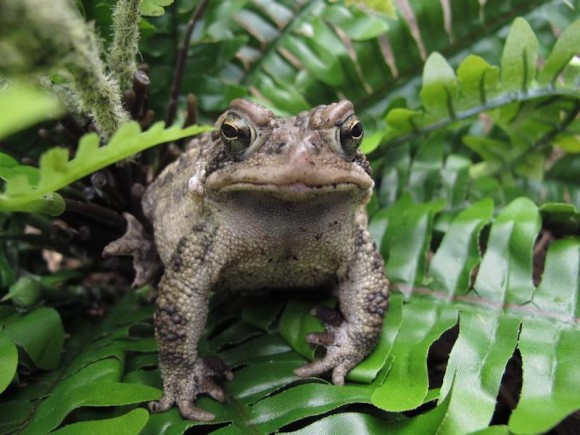
Learn how to identify the American toad (pictured above) at the upcoming Lyme Library presentation. Photo by Jill Sharp for Frogwatch USA

Learn how to identify the American toad (pictured above) at the upcoming Lyme Library presentation. Photo by Jill Sharp for Frogwatch USA

Come learn how to be an amphibian scientist!

On Wednesday, March 25, from 7 to 9 p.m. at the Lyme Public Library, The Nature Conservancy will be hosting Jim Sirch, the Education Coordinator of the Yale Peabody Museum.  He will guide participants on becoming FrogWatch USA volunteers.

FrogWatch USA is a program created by the Association of Zoos and Aquariums to help engage the public in monitoring local frog and toad populations.  Frogs and toads serve as important clues to environmental health because they are highly  sensitive to changing environmental conditions.  They also help keep insect populations low, preventing the spread of disease.

Sadly, however, frogs and toads are on the decline.  Thirty eight species of the 280 native amphibian species in the United States are currently listed under the Endangered Species Act.

At this training, Sirch will teach you how to identify different amphibian calls, where and how often to monitor your local wetlands and how to submit your data to the larger FrogWatch USA effort, so you can help contribute meaningful information about the frogs and toads in your neighborhood.

Space is limited.  Contact Liz Robinson of The Nature Conservancy at (203) 568-6270 x 6409 to register.

Presentation of Nehantic State Forest 10-Year Forestry Plan This Afternoon in Old Lyme

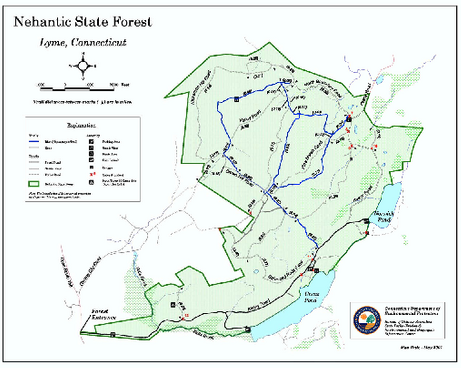
Nehantic-State-Forest-map.mediumthumb.pdf
A presentation of the proposed 10-year Forestry Plan for Nehantic State Forest will be given from 3 to 5 p.m. Wednesday in the auditorium of Old Lyme’s Memorial Town Hall.  The Old Lyme Open Space Commission and the Old Lyme Land Trust are hosting the event.  All are welcome to attend.

Emery Gluck from the Division of Forestry, Bureau of Natural Resources, Department of Energy and Environmental Protection, will open by discussing, “Management Goals and Proposed Bio-Indicators for Nehantic State Forest Management Plan”

The next speaker will be Margo Burns, Environmental Planner for the Lower Connecticut River Council of Governments, who will present, “The Lower Connecticut River  and Coastal Region Natural Resource Base Strategic Conservation Plan: A GIS Overlay Analysis”

Tom Worthley, UConn Extension Forester, will discuss, “Background and Rationale for Managing Forests,” and Lisa Wahle from the DEEP Wildlife Division’s will present, “Connecticut’s New England Cottontail Program.”

Other speakers will include Dick Raymond, a DEEP Forestry, Municipal and Private Lands Forester for New London, Tolland and Windham Counties and Elizabeth Robinson, Land Steward for The Nature Conservancy Eight Mile River Watershed.

All are welcome to attend the program. An open discussion will follow the presentations.

The goals of the Nehantic State Forest Resource Management Plan are:

1) To promote biological diversity (viable populations of all forest species of plants and animals native to the area) by promoting upland ecosystems and populations that are not adequately sustaining themselves under current conditions.

2) Maintain or improve aquatic system integrity

3) To promote healthy and sustainable forests

Indicators will be used to measure and monitor progress toward the management goals. Proposed indicators use a “Bio-diversity Scorecard” format developed by the Manomet Center for Conservation Sciences as a guide. It can be found at A Forest Biodiversity Scorecard

A landscape wide approach has been incorporated into the plan so management strategies in Nehantic take into account the condition and trends of the surrounding forest.

The plan will follow a “natural disturbance model of management” to promote biodiversity.

The model uses nature as a guide for management. A combination of active and passive management will be used to promote an array of all the different forest types and structures that have historically sustained all native plant and animal populations.

Active management generally involves trees harvests. Background information can be found at DEEP: Why We Harvest Trees in Connecticut State Forests and DEEP: Young Forest and Shrubland Initiative