Malloy to Attend Opening Ceremony for ‘The Preserve’ Today; Post-Ceremony Hike Planned

Governor Dannel Malloy

Governor Dannel Malloy

State Representative Phil Miller

State Representative Phil Miller

State Representative Philip Miller (D-Chester/Deep River/Essex/Haddam) will participate in an event celebrating the permanent protection of “The Preserve,” the 1,000 acre coastal woodland.

Miller will be joining Connecticut Governor Dannel P. Malloy and other state and local officials at a reception and ribbon-cutting ceremony on Thursday, Aug. 13, from 4 to 7 p.m. at Great Cedars (West) Conservation Area, 155 Ingham Hill Rd., Old Saybrook.

Miller is inviting attendees to join him in a hike he will be leading at “The Preserve” following the opening ceremony.

Miller notes,“This is going to be a wonderful ceremonial event to celebrate the protection of this coastal land that will remain a treasured open space for everyone to enjoy,” adding, “Looking forward to welcoming as many people as possible who can attend.”

Nature Conservancy and East Haddam Conserve 133 Acres of Priority Lower Connecticut River Lands

Logo

EAST HADDAM — A project providing a key addition to a 10-mile conservation corridor has been successfully completed by The Nature Conservancy. Protection of more than 130 acres of forest will connect two popular conservation and outdoor recreation areas, while safeguarding three-quarters of a mile of streams and wetlands that feed into one of New England’s most important natural resources: the Connecticut River.

“Protecting the forests and wetlands that border Connecticut River tributaries benefits the health of the entire lower Connecticut River, as well as everything—and everyone—that relies on it,” said Sarah Pellegrino, land protection and strategies manager for The Nature Conservancy in Connecticut.

“In this case, the newly protected land will help preserve water quality for brook trout, migratory fish and mussels; provide habitat for migratory birds and other animals and secure beautiful outdoor spots where current and future generations can hike, birdwatch and simply get out in the woods,” Pellegrino said.

Located within the basin of the Eightmile River, a Connecticut River tributary, the acreage includes two separate acquisitions on which the town of East Haddam and The Nature Conservancy in Connecticut collaborated. Both acquisitions were awarded Open Space and Watershed Land Acquisition grants from the Connecticut Department of Energy and Environmental Protection (DEEP). Both areas will be open to the public for passive recreation.

The acquisitions are adjacent to the Conservancy’s Burnham Brook Preserve, which was the first land protected by the Conservancy in the entire Connecticut River watershed, starting in 1960.

Conservation of one of these properties—the 113-acre Lefebvre property—accomplished a long-standing Conservancy goal of connecting Devil’s Hopyard State Park and Burnham Brook Preserve. It adds to a roughly 10-mile conservation corridor that extends to the confluence of the Eightmile and Connecticut rivers.

This project was awarded a DEEP open space grant of $263,700 towards the total purchase price. The property will be jointly owned and managed between the Conservancy and the town.

The second acquisition—the 20-acre Zeleznicky property—is a 20-acre parcel that supports mixed hardwoods and contains over 1,000 feet of Burnham Brook. To protect this land, the Conservancy and East Haddam jointly applied for a DEEP open space grant and were awarded $78,000 towards the purchase price. The town will own and manage the property.

“These acquisitions were possible only because of the patience and commitment of willing land owners and of the conservation partners who played a role,” Pellegrino said “We’re extremely pleased both of these properties will remain as natural areas.”

Editor’s Note: The Nature Conservancy is the leading conservation organization working around the world to protect ecologically important lands and waters for nature and people. To date, the Conservancy and its more than one million members have been responsible for the protection of more than 18 million acres in the United States and have helped preserve more than 117 million acres in Latin America, the Caribbean, Asia and the Pacific. Visit The Nature Conservancy on the Web at www.nature.org/connecticut.

Audubon Society’s CT River Lecture Series Starts This Afternoon

painting
The Connecticut River Estuary Lecture Series hosted by the Connecticut Audubon Society begins this afternoon with a presentation on conservation education at Essex Meadows starting at 4 p.m.

Michelle Eckman, director of education at Connecticut Audubon Society, will discuss her efforts to advance science-based inquiry through Science in Nature, Connecticut Audubon’s award-winning environmental education program. She will be joined by a science teacher from Essex Elementary School, which is participating in Science in Nature, as well as Dr. Paul Spitzer, nationally known Osprey researcher, who will discuss the Osprey’s return from near-extinction.

Admission to the lecture is free but RSVP’s are required. To RSVP, contact Allison Bryant at the Connecticut Audubon Society at abryant@ctaudubon.org or 203 259-0416 x106.  A reception follows each lecture.

The second lecture focuses on the ecology of the estuary (May 24) presented by Dr. Wayne (Rocky) Geyer, senior scientist at the Woods Hole Oceanographic Institute, and Dr. Gail Kineke, associate professor at Boston College and a Woods Hole scientist.

The final lecture will look at the role of the estuary in painting and writing (June 4) and be presented by Jeffrey Cooley, founder and owner of The Cooley Gallery in Old Lyme.

Each lecture starts at 4 p.m. at Essex Meadows.

For more information on the lecture series, visit www.ctaudubon.org/2015/04/connecticut-river-estuary-lecture-series/.

These lectures are one of the initial projects  of a new regional board formed by the Connecticut Audubon Society to focus on the lower Connecticut River valley and southeastern Connecticut.

The new board will work in conjunction with Connecticut Audubon Society staff and state Board of Directors to provide direction and support to the organization’s conservation and education work in Old Lyme, Lyme, Essex, Old Saybrook, and other communities in southeastern Connecticut.

The board’s other seminal projects include the introduction of Connecticut Audubon’s award-winning Science in Nature outdoor education program at Essex Elementary School and an effort to expand Osprey Nation, Connecticut Audubon’s citizen science Osprey monitoring program.

For decades Connecticut Audubon Society has maintained nature sanctuaries in Montville, Haddam, East Haddam, Stonington and Middletown. In addition to being a key component of the region’s native habitat, the sanctuaries serve as portals of opportunity into nature for children and families in the region.

The chair of the new Regional Board is Herman Blanke of Old Lyme. Other members are Patsy McCook (secretary) of Old Lyme; Emily Bjornberg of Lyme; Elsie Childs of Old Lyme; Jim Denham of Essex; Margarita Emerson of Niantic; Eleanor Robinson of Old Lyme; Dr. Ted Vanitallie of Old Lyme; and Claudia Weicker of Old Lyme.

Herman Blanke and Jim Denham are also members of Connecticut Audubon Society’s Board of Directors.

In addition, Old Lyme resident John Forbis and Old Lyme First Selectwoman Bonnie Reemsnyder have provided essential support to this effort.

“Having had the fortune to live in Essex for 15 years, I have always appreciated the values of the Connecticut River; its incredible aesthetic beauty, its ecological contributions, and its great historical legacy to the people of this nation., said Alexander Brash, president of Connecticut Audubon Society.

He continued, “In keeping with the great tradition of conservationists of the area, we are looking to work with its citizens and school children in order to highlight and protect the area’s birds, unique biodiversity and habitats, and leverage such interactions for greater awareness of conservation issues across the state.”

“There is a great conservation tradition to uphold in this region,” said Herman Blanke. “Roger Tory Peterson of Old Lyme helped make birding the popular pastime that it is and also drew the connection between birds and conservation. A century ago, the painters of Old Lyme turned this beautiful landscape into art. We view it as our goal and our responsibility to carry on that tradition of conservation and appreciation for the beauty of the natural world.”

Jim Denham said, “From its inception, Connecticut Audubon Society has made conservation education the foundation of its work. Each generation is responsible for helping the next generation understand how the natural world works and why conservation is important, and for making sure the wonders of nature don’t get lost amid all the distractions of the modern world. That’s what we are trying to accomplish at Essex Elementary School, and we intend for it to be a stepping stone to collaborations with other schools as well.”

Science in Nature, which provides curriculum-based outdoor science education to students in elementary and high schools, recently completed its first session at Essex Elementary, with a field trip to Chatfield Hollow State Park in Killingworth. The second session is set for May 28 at Hammonasset Beach State Park in Madison.

Science in Nature teaches the principles of conservation science in local outdoor settings, focusing on climate and weather, rocks and soils, ecological adaptations, and wetland ecology. The goal is to increase environmental literacy among elementary, middle and high school students so they will understand basic environmental science principles and be more likely to participate in finding solutions to environmental issues within their communities.

In October it was named the best outdoor conservation program in the region by the New England Environmental Education Alliance. Schools from almost 50 communities in Connecticut have participated in Science in Nature, although Essex Elementary is the first in southeastern Connecticut to take part.

Osprey Nation uses volunteer citizen scientists, working under the direction of Connecticut Audubon’s conservation staff, to find and monitor nests of the state’s resurgent Osprey population.

More than 400 Osprey nests have been identified and plotted on a map. The greatest concentration in the state is on Great Island in Old Lyme. Connecticut Audubon is hoping that increased awareness of the project will propt more local residents to volunteer to as Osprey stewards in Old Lyme and elsewhere throughout the southeastern part of the state.

Founded in 1898, Connecticut Audubon Society is the state’s original and still independent Audubon Society. The Society manages four nature centers, two museums, and 19 sanctuaries across the state. It uses the charismatic nature of birds to inspire the next generation of conservationists, and to work with the current generation to protect and improve the state’s natural habitats for the betterment of state residents, birds and other wildlife.

Connecticut Audubon Society’s headquarters are at Birdcraft Sanctuary in Fairfield. It has regional centers and associated boards in Fairfield, Pomfret, Glastonbury and Milford.


With Protection of The Preserve, Partners Secure Historic Conservation Gain

Conservation acquisition of almost 1,000-acre coastal forest in Old Saybrook, Essex and Westbrook expands Connecticut’s conservation legacy and is the culmination many years of work.

OLD SAYBROOK, CT—A coalition led by The Trust for Public Land and including The Nature Conservancy today announced protection of The Preserve, a huge swath of undeveloped forest located primarily in Old Saybrook.

To support this project, The Nature Conservancy will hold a conservation easement over almost 900 acres of The Preserve.

Over the years, the Conservancy was involved in many efforts with partners to protect the land. In the end, the Trust for Public Land (TPL) took the lead and, in 2013, negotiated The Preserve’s acquisition from River Sound Development LLC. TPL secured $10 million for project costs with financial commitments from the state, Old Saybrook, Essex and many public and private donors. The state and Old Saybrook are sharing ownership, with the Essex Land Trust owning 70 acres in Essex. The state will hold an easement over the acreage in Essex.

“Helping protect a place of this magnitude is an opportunity that simply does not come around often. When it does, you take it,” said Frogard Ryan, state director for The Nature Conservancy in Connecticut. “It’s gratifying for the Conservancy to be able to play a crucial role in this milestone—a success that adds substantially to Connecticut’s remarkable legacy of conservation.”

The Preserve is an extraordinary expanse of forest, wetlands and vernal pools. It includes the headwaters of the Oyster River. It is a stopover spot for migratory birds and provides habitat for dozens of animal and plant species.

“The Preserve was the last remaining opportunity in Southern New England to protect a block of coastal forest this large,” Ryan said. “We’re inspired—and galvanized for the future—by the leadership and vision of the many partners who made this achievement possible.”

In 2014, to provide extra protection for public lands, the Connecticut General Assembly gave the Department of Energy and Environmental Protection authority to grant protective easements over state park and forest land to nonprofit organizations. Lawmakers also granted authority for an easement over The Preserve. Because of the Conservancy’s experience, the state, TPL and Old Saybrook asked the Conservancy to hold that easement.

The Conservancy is thrilled to be able to accept the easement and is grateful for financial support for long-term costs from TPL and philanthropist Joan Livingston Tweedy, her family and their Tortuga Foundation.

“This is an iconic conservation success story, and we’re honored to play a part in it,” said Sarah Pellegrino, land protection and strategies manager for The Nature Conservancy in Connecticut. “The Trust for Public Land, the Tortuga Foundation, the state of Connecticut, the towns of Old Saybrook and Essex, Connecticut Fund for the Environment: The list goes on. So many people have played a part in making this dream a reality.”

David Sutherland, government relations director for The Nature Conservancy in Connecticut said: “Connecticut’s conservation community long has been working to preserve this property. Through years of hopes and setbacks, the impact of raging real estate markets and the weight of global financial forces, The Preserve and the wildlife that lives on it has endured. This acquisition will enable them to continue to thrive for decades to come.”

Lyme, Old Lyme Presents Rogers Lake Weed Study Findings

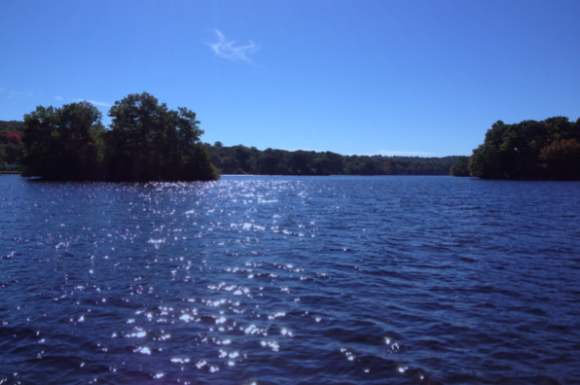
A view across Rogers Lake in Old Lyme.

A view across Rogers Lake in Old Lyme.

The Towns of Lyme and Old Lyme have scheduled a public presentation on the recommendations of the Rogers Lake Weeds Study, completed by New England Environmental (NEE),  for Monday, April 27, at 7:30 p.m. at the Lyme-Old Lyme Middle School auditorium.

The recommendations are to use the herbicide flumioxazone to target certain areas of the invasive weeds that are a nuisance and safety concern, and to employ hydroraking in areas that contain nuisance pond lilies.

The Rogers Lake Weeds Study Committee voted 4 to 1 to approve the recommendation for the treatment and to proceed to a public information presentation. Representatives from NEE will be on hand to present their findings and answer questions on the options that were considered and the recommendations.

The Water Quality Report, Well Impact Report and the Final Report are all available on the town website at www.oldlyme-ct.gov, under Current Projects.