
Watershed Council Appoints New Steward to Protect Lower Connecticut River

Alicea Charamut

Alicea Charamut

The Connecticut River Watershed Council (CRWC) has announced the appointment of Alicea Charamut as the new Lower River Steward for the Connecticut region. She works from CRWC’s office in the deKoven House in Middletown, CT. However, she is responsible for protecting the Connecticut River basin from the Massachusetts border all the way to Long Island Sound.

“Water is one of our planet’s most critical resources,” notes Alicea. “Unfortunately, our rivers and streams are taken for granted. It is up to organizations like CRWC with its passionate members, staff, and volunteers to protect and restore our watersheds for future generations. I consider myself fortunate to join the staff and begin work on behalf of the Connecticut River watershed.”

Charamut is already working on a number of important projects, including: Combined Sewer Overflows (CSOs), upcoming water quality standard revisions, Long Island Sound clean-up plan revisions, extension of the Connecticut River Paddlers’ Trail into MA & CT, Connecticut Yankee barrier, Extended Producer Responsibility (EPR) for tires, state-wide Water Planning, and is co-lead on CRWC’s Source to Sea River Cleanup.

An advocate for Connecticut’s rivers and streams for nearly a decade, Charamut has a strong background in biology and water resource issues. She currently serves as the President of the Farmington Valley Chapter and on the Executive Committee of the State Council of Trout Unlimited. Her work as a volunteer leader has given her many useful skills and knowledge of water issues, which she is eager to put to work for our rivers.

Charamut can be reached at 860-704-0057 or acharamut@ctriver.org.

The Connecticut River Watershed Council works to protect the watershed from source to sea. As stewards of this heritage, we celebrate our four-state treasure and collaborate, educate, organize, restore and intervene to preserve its health for generations to come. Our work informs our vision of economic and ecological abundance. To learn more about CRWC, or to make a contribution to help protect our rivers, visit www.ctriver.org or call 413-772-2020, ext. 201

OS Land Trust Hosts ‘A Place Called Hope’ at Annual Meeting, March 22

Zen, A Barred Owl, rehabbed by A Place Called Hope. Photo by Spirit Hawk Photography

Zen, A Barred Owl, rehabbed by A Place Called Hope. Photo by Spirit Hawk Photography

Join the Old Saybrook Land Trust (OSLT) for a program featuring A Place Called Hope and First Selectman, Carl Fortuna Jr., Sunday, March 22, from 3 to 5 p.m., at Grace Episcopal Church, 336 Main St., Old Saybrook.

Fortuna will offer a brief update on The Preserve purchase and plans for public access, then ‘A Place Called Hope’ will offer a live bird demonstration with some examples of birds that inhabit the 1,000 acre forest.
The brief OSLT Annual Business Meeting follows the program.
A Place Called Hope often draws a big crowd, so seating may be limited. Reservations are requested but not required. To reserve a seat, RSVP to oldsaybrooklandtrust@oslt.org, or call 860-575-4831, walk-ins are welcome up to room capacity. This is a free event with light refreshments served.
For more information about OSLT, visit oslt.org.

(Ice) Dammed If You Don’t …

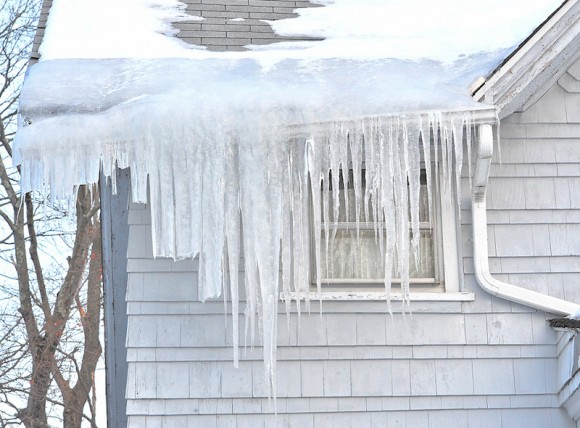
An example of a roof ice dam in Willimantic, Conn.

An example of a roof ice dam in Willimantic, Conn.

Ice dams form when water from melting snow refreezes at the eaves or gutters. Water can then pond above the ice dam and even leak into the building. This is almost always a sign that (1) the attic is not properly insulated, (2) the roof is not properly ventilated, and (3) if there is leakage, the membrane beneath the shingles is not working.

In an ideal situation, proper insulation does its work to keep heat inside the house, and the roof is merely a means to keep rain or snow out. If your attic is not a living space, lots of insulation between the ceiling below and the attic space ensures that very little heat gets up there. Proper ventilation of the attic space then ensures that the roof never gets warm enough to melt snow on top of it.

Even if the room directly beneath the roof is a living space, the same principles apply. In this case, it is much harder to install enough insulation, but there should be a space between the insulation and the roof’s inside sheathing so that cold air can flow from eave vents up through that space to carry away any heat that gets through the insulation.

Modern materials such as “snow and ice membrane” provide a very good seal beneath the shingles. If your roof is old, it may have tarpaper, which degrades and becomes brittle. If so, it may be time (this summer) to have your roof stripped down to the sheathing and to have lots of membrane and good flashing installed. It may be possible to have soffit vents and adequate roof ventilation installed at the same time.

But in the meantime, if you have ice dams, it is important to drain the pond above the dam. Unfortunately it is almost impossible to do this with heat or an ice pick. Here’s a suggestion of a good temporary fix: make “sausages” by filling a stocking or similar porous tube with either rock salt or calcium chloride crystals and lay this across the ice dam so that it melts a channel through the dam to drain the pond.

Good Luck!

Rick Holloway is a longtime member of the Chester Energy Team. Look up the E-Team on the www.chesterct.org town site or Facebook.com/ChesterCTEnergyTeam

While Living Through Linus, Enjoy a Post-Juno Video of Lyme Street!

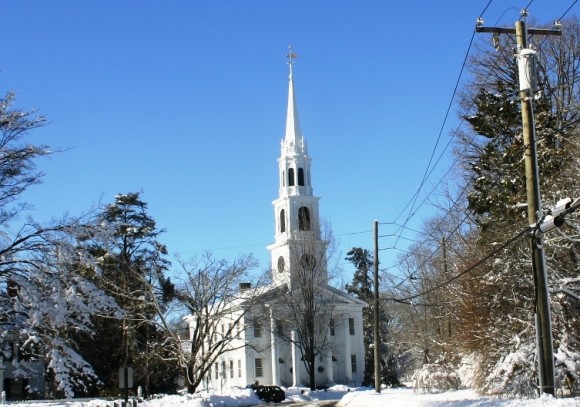
Lyme Street's iconic First Congregational Church

Lyme Street’s iconic First Congregational Church

We were thrilled to open our mailbox over the weekend and find that the incredible musician and Old Lyme resident (and LymeLine reader!) Dan Stevens had sent us a link to a wonderful video he made the day after Winter Storm Juno had hit.  It depicts a walk down Lyme Street before most residents had begun digging themselves out from the two feet of snow, which had fallen overnight.

As we currently live through Winter Storm Linus, we thought many of our readers might also enjoy Dan’s video, which is accompanied by an excellent — and, oh, so appropriate — soundtrack by the Old Crow Medicine Show.

Here’s the link to Dan’s video: https://www.facebook.com/video.php?v=926065094092702&pnref=story

With many thanks to Dan .. enjoy!

Winter Storm Linus to Impact Lyme, Old Lyme All Day; Schools Closed

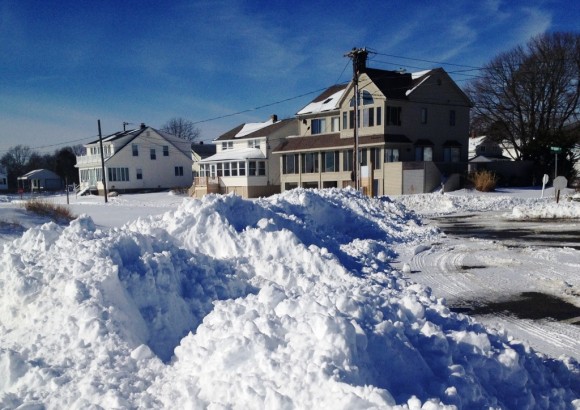
Snow is already piled up at White Sand Beach in Old Lyme.  Soon there will be more to add ...

Snow is already piled up at White Sand Beach in Old Lyme. Soon there will be more to add …

Winter Storm Linus  is now affecting Lyme and Old Lyme, and will impact our area through Tuesday with a combination of snow, wind and freezing temperatures. Region 18 schools and the Lymes’ Senior Center are closed today, but trash and recycling pick-up will happen as scheduled.

A parking ban has been announced throughout Old Lyme starting at 11 p.m. Sunday and will be in force until further notice. The parking ban means all vehicles should be kept off the roads so that the roads can remain open for emergency vehicles and be safely cleared when the storm ends.

The Old Lyme Town Hall is tentatively set to open at 11 a.m.  That time could be adjusted later if conditions worsen. The ‘Solarize Old Lyme’ meeting scheduled for this evening has been cancelled.

To report a power outage, call 800-286-2000, or text the word “outage,” followed by a space and your zip code, to 24612.