Over 100 people attended the OL Zoning Commission hearing on Monday evening. They frequently applauded the many speakers who disapproved of the proposed 11,000 square foot house proposed beside the Smith Neck Boat launch. Speakers described site violations of regulations, excessive water use and un-permitted clearcutting. The CT River Gateway Commission has recommended denial of the zoning application. Over many decades, Old Lyme residents have developed and agreed on our zoning regulations to protect the quality of our environment and the character of our towns.
The Applicant’s architect asserted many surprising defenses as to why they should be allowed to build a house that does not comply with the zoning regulations. One main point was that the other houses in the neighborhood didn’t comply with the regulations but she forgot to add that the other houses were built in the 30’s before the regulations existed.
Perhaps the Applicants most bizarre claim was that the requirement to locate the house behind the crest of the hill doesn’t apply. They actually asserted that the property is not really on a hill, so there isn’t really a crest of the hill, because there can’t be a crest if there isn’t a hill. Anyone with two feet knows that there is a hill and a crest at the boat launch and this house must be located behind the crest according to the regulations.
The hearing reinforced the need for town residents to support the CT River Gateway Commission denial and let the volunteers on the Zoning Commission know that we support them in enforcing our regulations. The hearing process for this Application is closed but Old Lyme’s need for regulatory clarity and compliance is not. The Zoning Commission rules apply to everyone and failure to enforce them puts us all at risk of living in a community with unchecked development, with no hills.
On Monday, January 13, 2025 at 6:30 pm in Memorial Town Hall, the Halls Road Improvements Committee of the Town of Old Lyme will present the Halls Road Overlay District (HROD) proposal in a public meeting of the Old Lyme Zoning Commission. Attorney William Sweeney will describe the details of this optional Overlay District and answer questions.
The Planning Commission has unanimously agreed that the HROD proposal is consistent with the goals and standards set out for the Town in its latest Plan of Conservation and Development (2020). Now it is up to Zoning to approve, reject, or modify the proposal.
The HROD is the centerpiece of the Halls Road Master Plan. Current commercial-only zoning does not allow the changes envisioned there. HROD creates the options needed to allow investors to help change the focus of Halls Road toward the needs of Old Lyme and not through travelers.
This is an important public meeting, and a chance to show your support for a better future for Old Lyme. I urge you to come and be counted; bring your written thoughts to read and submit, make a statement for the record. We need your support to carry this important matter forward.
Approval of this added flexibility in our zoning is a vital step in supporting the future prosperity and livability of Old Lyme.
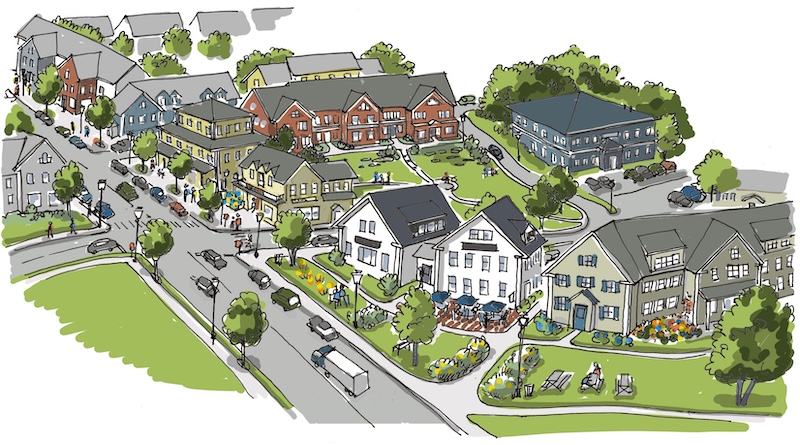
The image above shows a rendering of what the northwest segment of Halls Rd. might look like after the implementation of the proposed HROD. Image credit: Edie Twining.
Key Features of HROD are that it:
• Is totally optional; allows but does not require change to any property.
• Keeps our shopping area vital and focused on Old Lyme, not the highway.
• Creates options for much needed apartment/town-house-type housing.
• Balances our housing stock without using up our remaining open land.
• Promotes creation of a safe, walkable, bikeable, mixed-use town center.
• Follows Design Review process guides development to be “like Old Lyme.”
• Promotes significant new town revenues, reducing resident taxes.
Thank you in advance for your help with this important issue. I look forward to seeing you there!
Author Says Proposed 11K Sq. Ft. Smiths Neck Home ‘Threatens’ Old Lyme’s ‘Environmental Heritage … Rural Character’
To the Editor:
Old Lyme residents need to be aware of a concerning development proposal at 43 Smiths Neck Road that threatens our town’s environmental heritage and rural character. The proposed 11,000 square-foot residence would dramatically alter our cherished riverfront landscape and sets a troubling precedent for future development along the Connecticut River.
The developer has already clear-cut native vegetation down to the waterline, destroying critical wildlife habitat and causing visible erosion. The massive proposed structure features 35-foot white walls that would be visible across the river, with over 90 outdoor lights that would significantly impact our dark skies and wildlife. Even more concerning, the water usage from such a large residence (8 bedrooms, 7 baths, pool, and extensive gardens) could strain the limited aquifer that all Smiths Neck residents depend upon.
The Connecticut River Gateway Commission has recommended denying this application, citing multiple violations of Old Lyme’s zoning regulations designed to protect our scenic and environmentally fragile river corridor.
I urge concerned citizens to write letters and attend the crucial Zoning Commission meeting on January 13, 2025, at 6:30 pm at Old Lyme Town Hall. Your presence and voice matter in preserving Old Lyme’s natural beauty and environmental resources for future generations.
The time to protect our riverfront access and ensure compliance with our Zoning regulations is now. Please join your neighbors in attending this important meeting.
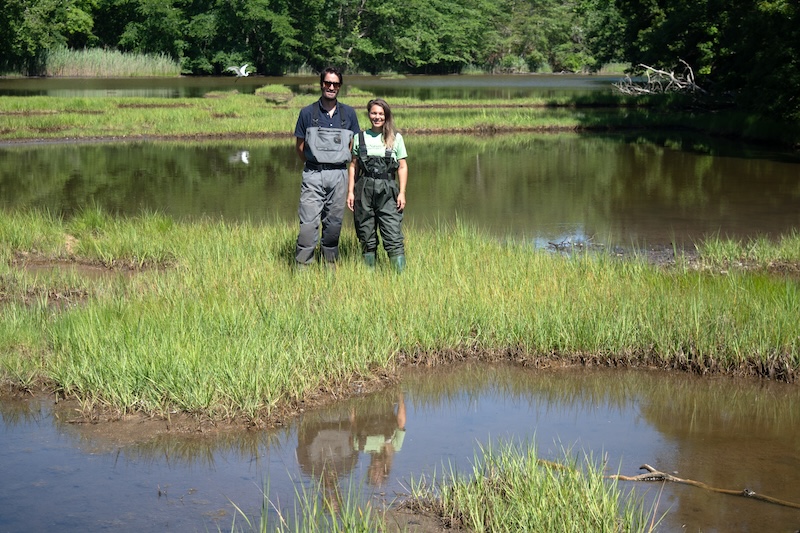
Employees of The Nature Conservancy in Connecticut stand on the Bride Brook Estuary marshland at Rocky Neck State Park. The area has just been awarded a $4 million grant to undertake transformative work to restore the estuary and coastal marsh. Photo courtesy of The Nature Conservancy in Connecticut.
NEW HAVEN/EAST LYME—A $4 million grant secured by The Nature Conservancy in Connecticut (TNC in CT) will set in motion a planning process for transformative work to restore the Bride Brook estuary and coast marsh at Rocky Neck State Park.
Funding has been awarded by the National Oceanic and Atmospheric Administration’s (NOAA) Transformational Habitat Restoration and Coastal Resilience Grant Program.
The Nature Conservancy in Connecticut will manage the “Bride Brook Estuary Transformation Project” in collaboration with the Connecticut Department of Energy and Environmental Protection (DEEP), which manages Rocky Neck State Park. The project will be in partnership with NOAA, the Connecticut National Estuarine Research Reserve, Ducks Unlimited, Save the Sound, and Restore America’s Estuaries. The initiative will build upon previously completed projects at Rocky Neck State Park to ensure a healthy marsh, as well as ecosystem restoration and resilience, and improved visitor access to the park’s natural resources.
“We are incredibly excited to have secured these federal funds to restore an important ecosystem in Connecticut, and for the benefits that will extend to everyone who loves and lives near Rocky Neck State Park,” says Jessica Cañizares, director of coastal ecosystem projects for TNC in CT. “The funding needed for comprehensive, transformational restoration of the entire system has only become available recently under the Bipartisan Infrastructure Law and Inflation Reduction Act, and this was an ideal time to come together with the state and local partners.”
“The Connecticut Department of Energy and Environmental Protection is thrilled to be working with The Nature Conservancy in Connecticut and other partners on this important effort to improve marsh health and coastal access at Rocky Neck State Park,” says Katie Dykes, DEEP Commissioner for Environmental Conservation.
She continues, “DEEP has been working to enhance coastal marsh habitat for species such as alewife, saltmarsh sparrow, and a variety of waterfowl. With increased sea level rise and frequency and duration of storm events, there remains a need to look at the marsh ecosystem as a whole—beyond the boundaries of the State Park—and we are excited to collaborate with partners on expanding this essential process.
Dykes concludes, “DEEP is committed to providing high quality coastal access opportunities for the residents of our state and ensuring coastal habitats will be resilient to the effects of climate change, and this project addresses both priorities.”
Rocky Neck State Park is home to the Bride Brook tidal creek which flows into Long Island Sound, a tidal marsh, the largest alewife population in the state, a popular beach and boardwalk, a campground, wooded trails, a pavilion, and an extremely popular fishing site. It is also known for its position alongside an Amtrak route, to the delight of many children who enjoy seeing trains pass during beach visits. The railway bridge was constructed in 1851, and Rocky Neck was established as a state park in 1931.
But the 82 acres of marsh at Rocky Neck have long faced challenges and are, in a sense, drowning, says Cañizares. The marsh is a critical component of the ecosystem, as it hosts unique biodiversity and provides protective benefits to coastal and inland communities.
“The marsh might seem healthy if you aren’t sure what to look for—it’s green, there are osprey feeding, there are ducklings, we see fish, and there are crabs. But this isn’t a healthy marsh. We see a lot of expanding open pools of water and mud, and there is a loss of vegetation. What we should see is the main creek channel of Bride Brook, bordered by a solid marsh platform, looking like a grassy meadow,” Cañizares explained.
The restoration of the Bride Brook estuary and the marsh at Rocky Neck has consistently been among the highest priorities in the state, attracting the involvement of numerous groups for decades, says Tim Clark, southeastern Connecticut project director for TNC in CT. “Their work has resulted in important conservation successes, specifically the culvert upgrade in 2009 that significantly improved fish passage for alewife, and beach enhancements.”
“However, bridges and other infrastructure along Bride Brook are likely contributing to a lack of full connectivity between the marsh and Long Island Sound. It’s believed these modifications altered the natural flow of water and disrupted how sediment moves through the system, leading to marsh degradation. This project will further study the issue, as well as determine and design solutions,” Clark explained.
Improving marsh conditions and restoring connections between Bride Brook and Long Island Sound would allow for large-scale, climate-resilient marsh restoration, strengthen the ecosystem, and support fish passage. This work will benefit local communities as well. A restored marsh will act as a natural shield for the coastline, buffer effects of climate change, manage floodwaters, store “blue carbon,” and reduce ambient air and water temperatures. Alterations to existing infrastructure could also improve public access to and from the beach, while enhancing recreational and educational opportunities.
“We look forward to engaging with multiple communities in Connecticut to learn about how this project might improve the visitor experience at Rocky Neck, especially for all people of all abilities,” Clark added.
There are also economic impacts to consider: Re-establishing tidal connectivity at Bride Brook and restoring the marsh will enhance flood resilience at Rocky Neck and for surrounding communities by absorbing and dissipating floodwaters during storms. The Federal Emergency Management Agency (FEMA) estimates that tidal marsh habitats provide nearly $10,510 per acre per year in “ecosystem services,” including protective benefits. A fully functioning system at the state park would provide around $860,000 per year in benefits to wildlife, visitors and neighboring communities.
“Connecticut’s shoreline is enjoyed by countless people year-round and is a critical habitat for many species. We must continue to preserve and protect it. I am proud to see Bipartisan Infrastructure Law and Inflation Reduction Act dollars supporting this work in Connecticut, and I will continue to fight for these federal investments for our natural treasures,” says Senator Richard Blumenthal.
As co-chair of the bipartisan congressional Long Island Sound Caucus, Representative Joe Courtney said he was thrilled about the funding award and its role toward maintaining the area’s “vibrant natural heritage.”
“The grant awarded to the Conservancy will support restoration of Rocky Neck State Park’s ecosystem, a habitat off of the Long Island Sound, and preserve the biodiversity of a unique coastal gem for years to come. This award is yet another example of the good work coming out of the federal Infrastructure Law and Inflation Reduction Act, which I helped enact. Congratulations to the coalition of conservationists throughout the state and district for obtaining this critical funding source,” Courtney added.
“NOAA is excited to be supporting The Nature Conservancy in Connecticut and partners as they work toward restoring healthy marsh habitat for the many species and communities that rely on this important coastal ecosystem,” said Carrie Selberg Robinson, director of the NOAA Fisheries Office of Habitat Conservation.
Early work through the grant will focus on design, engagement with the local community, and regulatory permits, setting the stage for restoration within and surrounding the marsh and Bride Brook. TNC in CT will coordinate with DEEP to plan to conduct a robust public outreach effort to gather input from Connecticut residents and Rocky Neck visitors on desired outcomes from this restoration project.
This project will also have lasting impacts beyond this state park. The Nature Conservancy in Connecticut hopes to use this project as a vehicle to develop a roadmap for similar sites across Connecticut and New England, particularly sites facing concerns with tidal restrictions caused by transportation infrastructure, and with a need for resilient and equitable access to a public resource.
Editor’s Notes: i) This article is based on a press release issued Dec. 4, 2024 by The Nature Conservancy in Connecticut.
ii) The Nature Conservancy is a global conservation organization dedicated to conserving the lands and waters on which all life depends. Guided by science, TNC creates innovative, on-the-ground solutions to our world’s toughest challenges so that nature and people can thrive together. Working in more than 70 countries and territories, TNC uses a collaborative approach that engages local communities, governments, the private sector, and other partners. The Connecticut chapter has protected more than 53,000 acres of land and is engaging with communities throughout the state to help build and conserve a more resilient, livable world. To learn more, visit: www.nature.org/CT
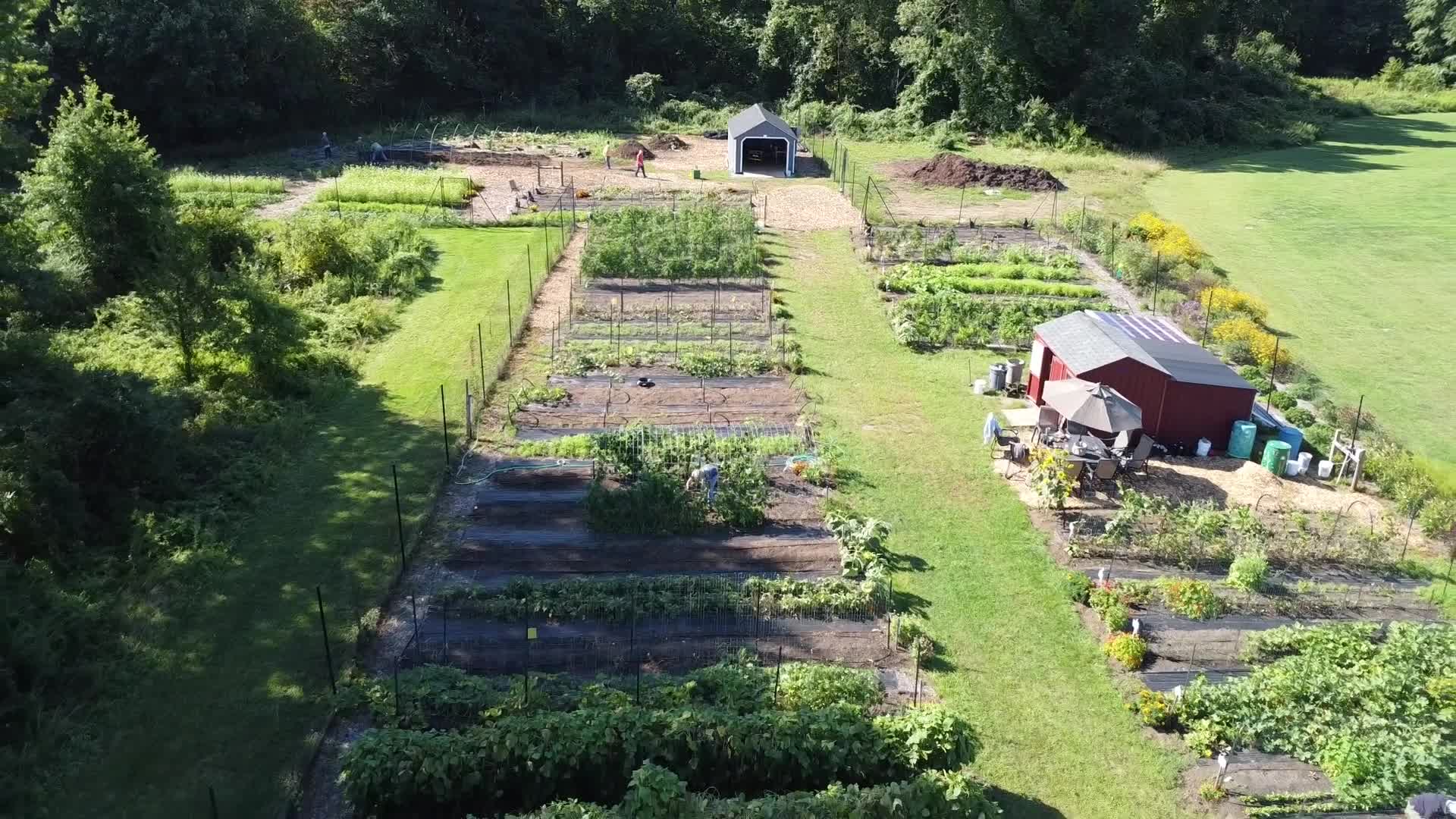
Aerial view of the Lyme-Old Lyme Food Share Garden, which launched its second annual Sponsor a Row campaign on Oct. 1.
OLD LYME—The annual Lyme-Old Lyme Food Share Garden (LOLFSG) Sponsor a Row campaign kicked off on Oct. 1, 2024. The LOLFSG is immensely grateful to individuals, families, organizations, and businesses who sponsored the garden this season.
This year volunteers donated more than 1100 hours, gave more than 4700 pounds of food to local food pantries, installed a hoop house, and composted more than 1000 pounds of donated food waste.
The garden is also working with the Region 18 school district to renovate the middle school greenhouse. An official Ribbon Cutting Ceremony will be announced soon.
The annual cost to maintain a garden bed from seed through delivery is approximately $250. All money will go directly towards the operating expenses of the garden, including seeds/transplants, fertilizer, weed barrier fabric, irrigation tape, electricity, and tools. In appreciation, each $250 donation from Oct. 1, 2024 – March 31, 2025 will be recognized with a sign at the garden and on the LOLFSG website.
Donations in any amount are also welcome. Donations can be made at lolfoodsharegarden.org or mailed to LOL Food Share Garden Inc., PO Box 395, South Lyme, CT 06376.