Sugarbush—currently leased toFat Stone Farm—managedin ways that help declining forest birds
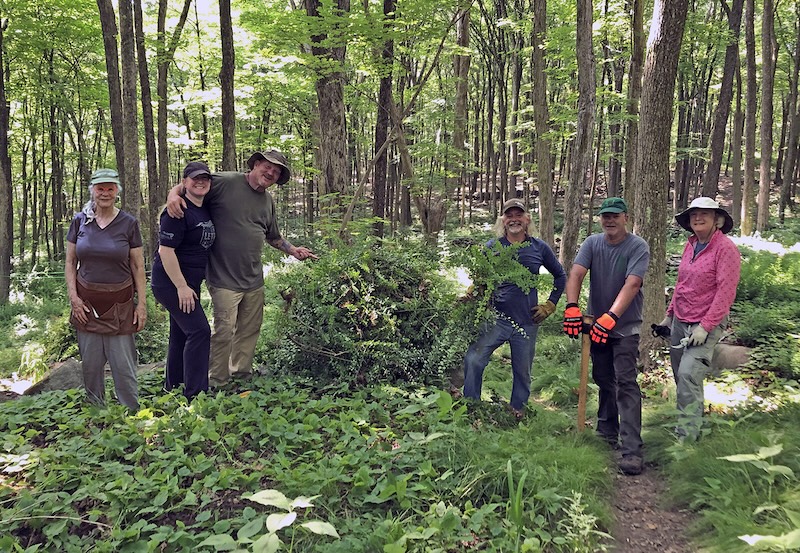
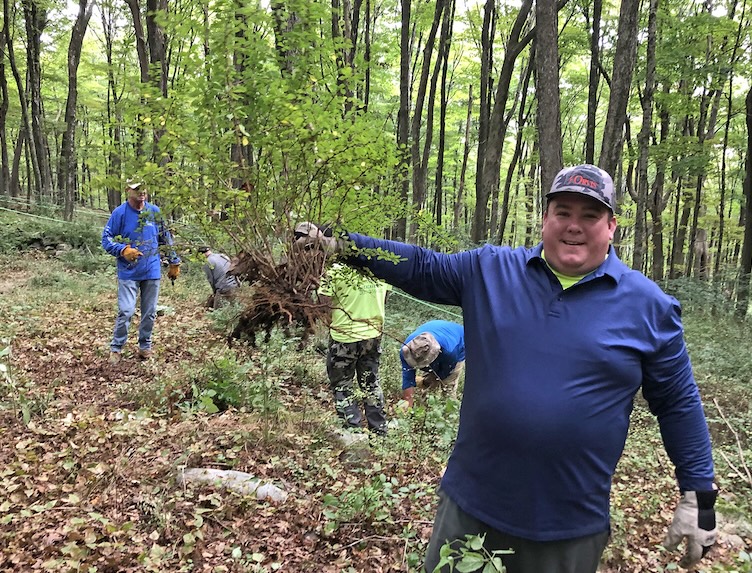
Mount Archer Woods volunteers helped remove invasive Barberry this past year, opening the floor of the sugarbush to more light and space, which allowed new maple saplings to thrive. All photos by Wendolyn Hill except where indicated.
LYME, Conn. – Mount Archer Woods, a Town-owned preserve in Lyme, has been recognized by Audubon’s Bird-Friendly Mapleprogram for its management of a sugarbush that is leased for tapping to Fat Stone Farm.
Through the Bird-Friendly Maple project (a collaborative effort between Audubon, Cornell, the New York State Maple Producers Association, and the Maple Syrup Producers Association of Connecticut), the Mount Archer Woods sugarbush—the forest area where maple syrup is produced—is managed in ways that provide more resilient bird habitat.
At 35 acres, the Mount Archer Woods sugarbush is currently the largest enrolled in Bird-Friendly Maple in Connecticut.
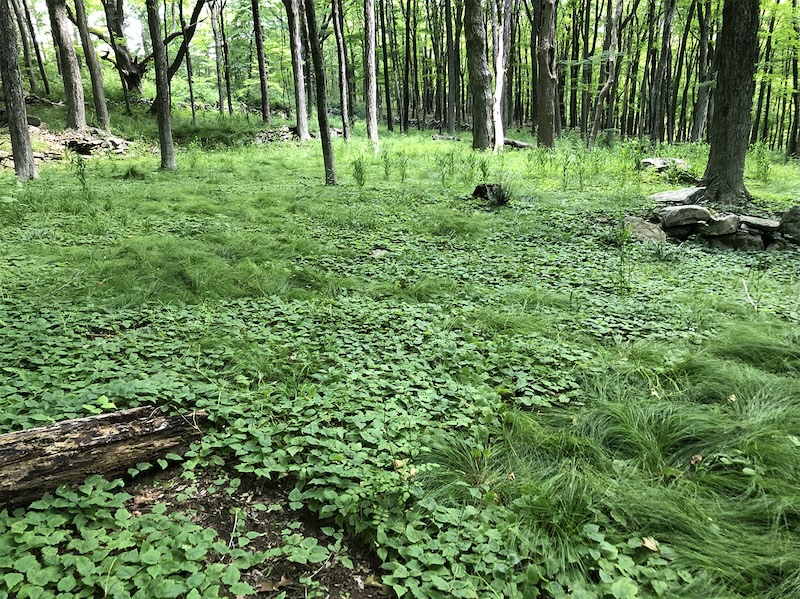
Maple seedlings thrive in Mount Archer Woods after removal of Barberry.
“Sugarbushes don’t just make for great maple syrup: As the production season winds down, they become nesting and foraging habitat for declining songbirds like the Scarlet Tanager and Wood Thrush,” said Suzanne Treyger, Senior Forest Program Manager for Audubon Connecticut and New York.
She notes, “On a wider scale, healthy forested landscapes provide benefits like carbon sequestration and storage, and watershed protection. By creating a more structurally and biologically diverse sugarbush, maple producers can play a vital role in conservation that benefits birds and people,”
As a recognized sugarbush, this area of the preserve is managed in ways that help these birds raise the next generation of their species.
What makes a bird-friendly sugarbush?
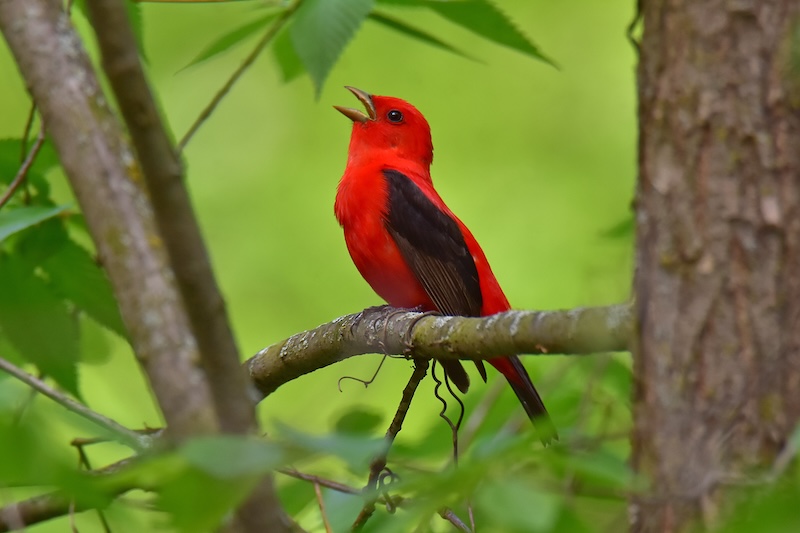
The Scarlet Tanager is one of the birds found in sugarbush. Photo: Travis-Bonovsky, Audubon/Woodland Trails Regional Park, Minnesota
Young trees and shrubs provide cover, food, and nesting sites for Black-throated Blue Warbler and Wood Thrush.
Snags (dead trees) are left standing to provide nesting sites for woodpeckers and White-breasted Nuthatch, and insects for Scarlet Tanager.
Downed trees and other woody material are left on the forest floor for birds like the Ovenbird and Ruffed Grouse to take cover, nest, and forage.
“We take great pride in the recognition by Audubon’s Bird-Friendly Maple program of the sugarbush area at Mt Archer Woods,” said Lyme Open Space Coordinator Wendolyn Hill.
She continued, “It is wonderful that in addition to supporting the traditional practice of maple sap collection, this forest can provide essential habitat for some of our most threatened songbirds.”
Hill explained, “The recommendations of the Audubon bird habitat assessment will be an invaluable guide for us in our efforts to protect and enhance the habitat there, as well as the land surrounding it.”
A volunteer holds up Barberry at Mount Archer Woods sugarbush.
“Earning Audubon’s Bird-Friendly Maple designation goes hand-in-glove with our organic certification, which also requires a commitment to biodiversity and a healthy ecosystem,” said Bill Farrell, Founder of Fat Stone Farm.
He added, “Lots of people in Lyme take healthy ecology seriously, and the presence of a variety of birds is one key indicator of environmental health. Earning Bird-Friendly Maple recognition shows how the work of many individuals is paying off.”
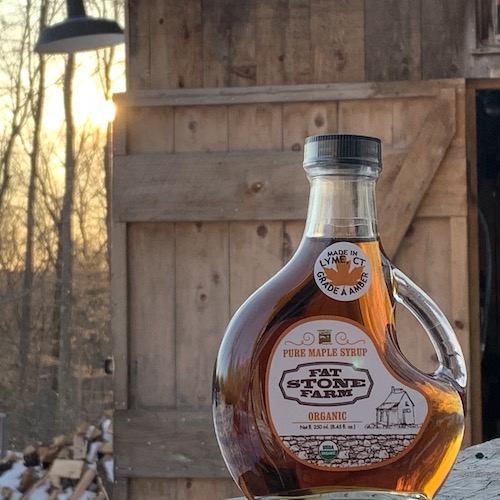
Farrell also commented that this year’s syrup is currently being bottled at the Farm.
The National Audubon Society is a leading nonprofit conservation organization with 120 years of science-based, community-driven impact, dedicated to protecting birds and the places they need, today and tomorrow. Birds are powerful indicators of our planet’s health, acting as sentinels that warn us of environmental change and inspire action.
Audubon works across the Western Hemisphere, driven by the understanding that what is good for birds is good for the planet. Through a collaborative, bipartisan approach across habitats, borders, and the political spectrum, Audubon drives meaningful and lasting conservation outcomes.
With 800 staff and over 1.9 million supporters, Audubon is a dynamic and ever-growing force committed to ensuring a better planet for both birds and people for generations to come.
OLD LYME — The Old Lyme Zoning Commission meeting, originally scheduled for Thursday, Feb. 27, in the Lyme-Old Lyme Middle School (LOLMS) Auditorium, has been rescheduled to Wednesday, April 9, at 6:30 p.m. in the Lyme-Old Lyme High School (LOLHS) Auditorium. The Zoning
The capacity of the LOLHS auditorium is 550 in contrast to that of the LOLMS auditorium at 225.
The agenda for the Feb. 27 meeting included an item under both the Continued Public Hearing and Old Business as follows: Petition to Amend the Old Lyme Zoning Regulations, Section 5.15-creating a Halls Road Overlay District [HROD} allowing, among other items, mixed zoning use along Halls Road and the entire C-30S Zoning District, with associated architectural design guidelines.
The applicant in both cases was the Halls Road Improvement Committee.
It is assumed the same item will be on the April 9 agenda.
Old Lyme First Selectwoman Martha Shoemaker explained the reason for the postponement in her weekly newsletter sent Friday, Feb. 28, to residents as follows, “One reason for this request was to provide more time to review the additional exhibits that were recently submitted. While it was not included in the letter that was posted on social media, an additional reason for the request to postpone directly relates to potential occupancy. I am aware of the strong interest in the topic of the Halls Road Overlay District proposal.”
She continued, “After consulting with other town officials, there was a concern that the Lyme-Old Lyme Middle School auditorium (with a capacity of 225 people) could be too small for this meeting to take place. Given the importance of having adequate time and space for every citizen of Old Lyme who wishes to attend and/or be heard, we felt it appropriate to make a change. I asked Land Use Coordinator, Eric Knapp to plan for the Lyme-Old Lyme High School Auditorium (with a capacity of 550) for a future date.”
In her original letter dated Feb. 25, in which Shoemaker had requested postponement of the Feb. 25 meeting, she had stated, “The Halls Road Improvement Committee and I acknowledge that the Zoning Commission has received many additional exhibits and request additional time to review them. We would like to request to postpone the meeting of February 27, 2025, until late March 2025. This will provide the committee with additional time to review the exhibits.”
That letter was addressed to Paul Orzel, Chairman of the OL Zoning Commission, and copied to Eric Knapp, Old Lyme Land Use Coordinator; Edie Twining, Chair of the Halls Road Improvement Committee, and William R. Sweeney, Attorney for the Halls Road project,
The late Jim Ward, founder of the Lyme-Old Lyme Food Share Garden
“The garden goes on and Jim’s legacy of growing and providing healthy food for our community and neighbors will thrive” (LOLFSG Board)
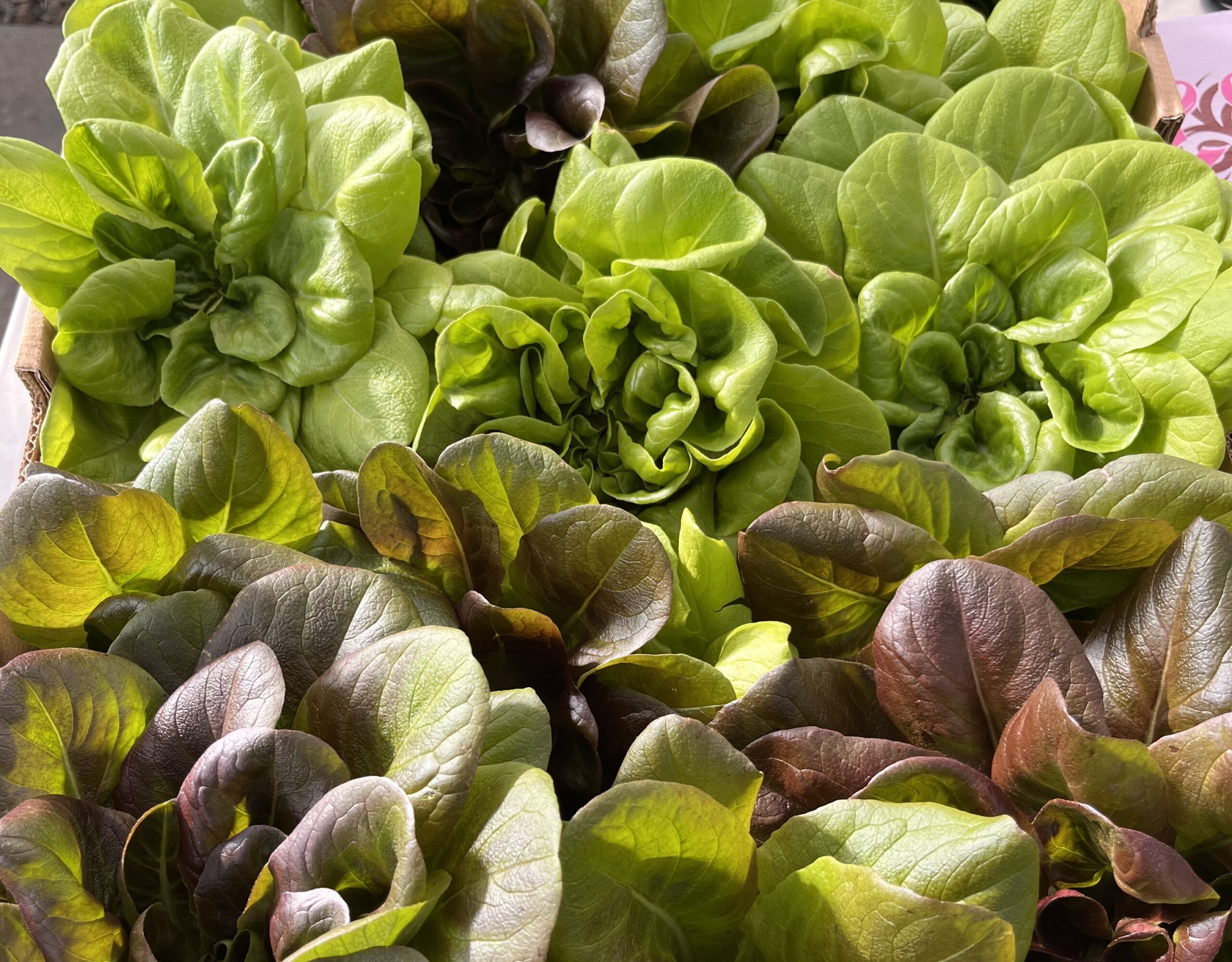
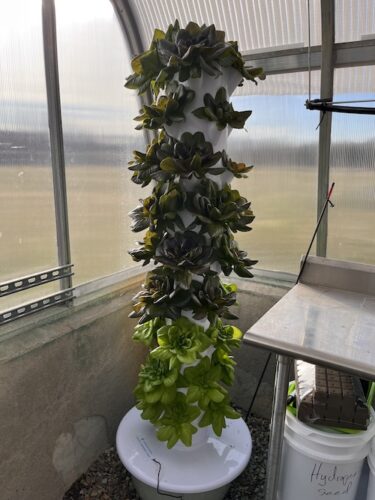
The garden lives on—a substantial crop of hydroponic lettuces has been harvested from the new greenhouse at Lyme-Old Lyme Middle School.
LYME/OLD LYME—The Lyme Old Lyme Food Share Garden (LOLFSG) Board has asked us to publish this statement to the community on its behalf:
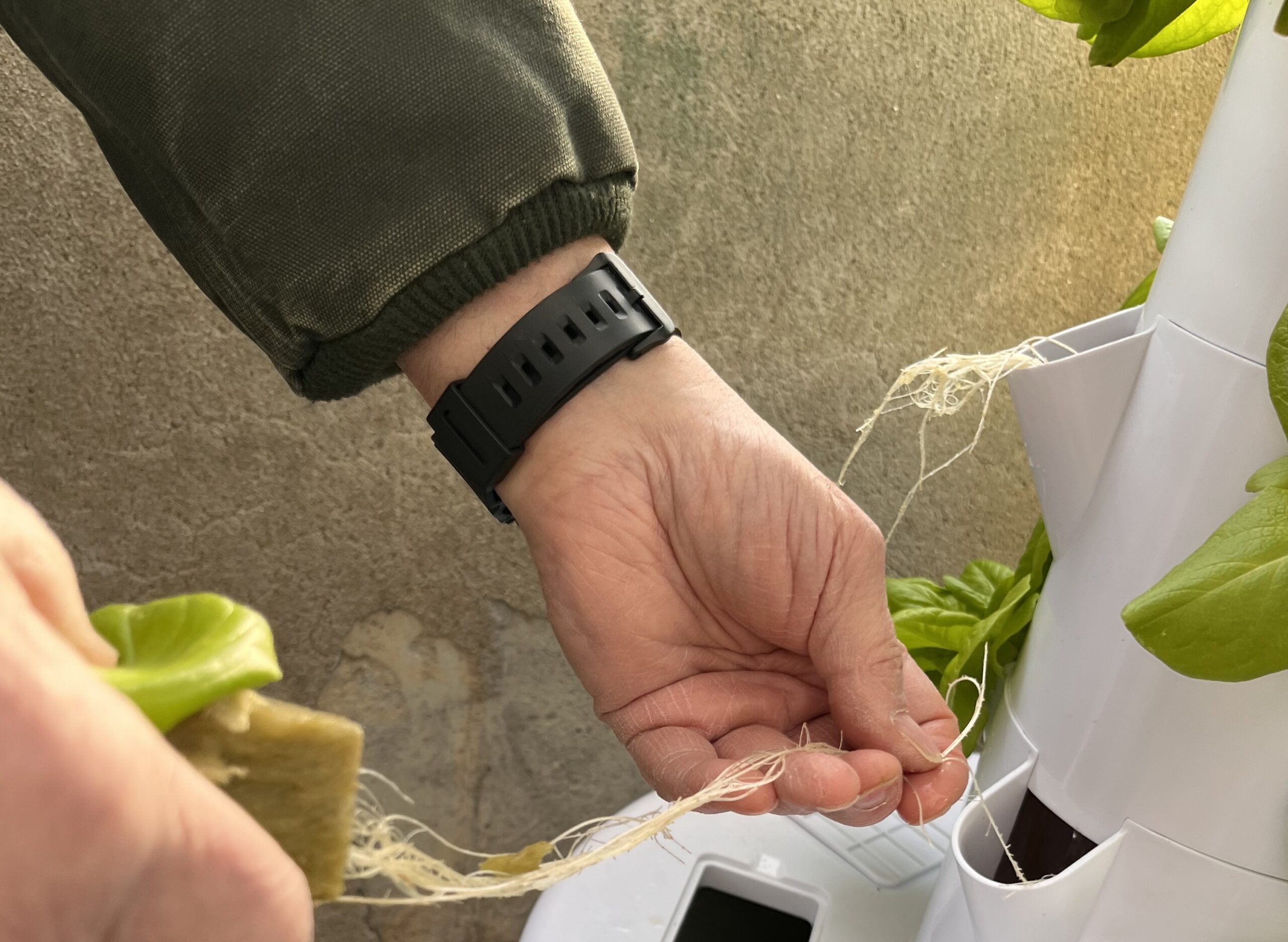
A volunteer checks the roots of the hydroponic lettuces.
“The Lyme Old Lyme Food Share Garden (LOLFSG) board members would like to acknowledge and thank the community for their support as we mourn the loss of our founder, Jim Ward. The generosity of your donations in his memory as well as your thoughtful notes are so very much appreciated.
Hydroponic lettuces grow in a vertical mode in the LOLMS greenhouse.
The board continues to work diligently through this difficult transition.
A crop of hydroponic lettuce from the new greenhouse at the Lyme-Old Lyme Middle School (LOLMS) was harvested this winter and donated to the First Congregational Church of Old Lyme’s Food Pantry. A second wave of lettuce, spinach and peas is in the works.
Preparations for our fourth growing season at the garden are well underway with the first work party being organized for mid-March.
The garden goes on and Jim’s legacy of growing and providing healthy food for our community and neighbors will thrive.
Visit the LOLFSG website to learn more about opportunities for you at the Garden in the coming season.
Summary Given of All Related Communications Received by LymeLine
OLD LYME—On Thursday, Feb. 27, the Old Lyme Zoning Commission will hold Public Hearings and a Special Meeting starting at 6:30 p.m. in the Lyme-Old Lyme Middle School Auditorium.
Zoning Commission Chairman Paul Orzel notes that the Middle School has a hard “close” time of 9 p.m., which the Commission intends to honor.
The agenda notes an item under both the Continued Public Hearing and Old Business as follows: Petition to Amend the Old Lyme Zoning Regulations, Section 5.15-creating a Halls Road Overlay District [HROD} allowing, among other items, mixed zoning use along Halls Road and the entire C-30S Zoning District, with associated architectural design guidelines.
The applicant in both cases is the Halls Road Improvement Committee.
Members of the public, who would like to submit written comments on either case, are encouraged to email a copy of their comments to Old Lyme Land Use Technician, Craig Bonatti, at least one day prior to the Public Hearing at cbonatti@oldlyme-ct.gov.
The HROD proposal has aroused significant controversy throughout the town and on social media. A large number of residents is expected to attend the meeting.
To assist our readers in understanding the various and conflicting opinions on the Halls Road Overlay District (HROD) proposal, we provide links below to all the correspondence/op-ed’s/opinion pieces that we have received regarding the matter. Be sure to read all the Comments, which have been posted, too.
Feb. 16, 2025—Prologue: I read a fluorescent green flyer Sunday morning that was seeking signatures on an online petition; which I ignored.
The flyer disparaged the Halls Road Overlay District (HROD) and, of course, had no author or organization. It was anonymous; and began “BEWARE!” and then went on saying something about “A WOLF IN SHEEP’s CLOTHING!!” that may have been on the “tip of an iceberg.”
Then, Anonymous speciously claimed that the proposal included “dense housing” — i.e., “eighty bedrooms per acre;” which was false; but has unfortunately also appeared in other similar attacks.
Anonymous continued with a recommended list of websites to visit and “scroll through for pertinent information;” and that may have been “the straw that broke the camel’s back.” Further, the Halls Road Improvements Committee (HRIC) noted last week in LymeLine that “there have been a wave of posts on social media and elsewhere making claims that misrepresent the actual content of the HROD proposal and distort its possible impact on our community. The true facts will not support these assertions, nor the emotional appeals based on horrifying and totally false claims.”
Nonetheless, that flyer and a few Letters to the Editor, comments, and essays in LymeLine inspired me to devote this “View” to the proposed HROD.
I present the project’s key milestones in roughly chronological order in this “View — and rather than a detailed play-by-play on the activities of the HRIC team since its inception (see HRIC section below); I consider their vision, which is detailed in “The Master Plan.”
Note that this essay reflects my observations, opinions, and interpretation of available HRIC documents and materials.
Halls Rd. is a unique thoroughfare within the “friendly confines” of Old Lyme. Located amongst four Interstate 95 entrances and exits and zoned commercial-only, it is Old Lyme’s principal retail and commercial district and has a 1950s and 60s strip mall look, with deep set-backs and large parking lots lining the roadway.
Within the past few decades, Halls Rd. assumed the appearance and function of an interstate service area. Traffic is dense and moves at a very fast pace from traffic light to traffic light on this “Halls Road Raceway.” There are no sidewalks or safe crosswalks. Bicycling is dangerous.
The Halls Road Improvements Committee (HRIC):
In 2015, Old Lyme’s Board of Selectmen (BOS) appointed a committee to address some developing community concerns regarding Halls Rd. The BOS’ charge became complex and has required interaction with several Connecticut agencies and cooperation with many Town commissions and departments.
HRIC Milestones:
In collaboration with the Yale Urban Design Workshop, the HRIC conducted an objective evaluation of the existing conditions on Halls Rd. Several public meetings were held at which the community was encouraged to voice their concerns and wishes; and it was determined that residents wanted the Town’s commercial area to look more like Old Lyme — and specifically, have the “look and feel” of Lyme Street.
Working with the New England-based BSC Group for their expertise in civil and environmental engineering and strategic planning for communities like Old Lyme, the HRIC initiated development of a long-range plan for Halls Rd.
“A formal ‘Master Plan’ is an important tool in seeking grants for work on Halls Rd., for encouraging investment, and for setting budgets” and “broad goals designed to insure the future of Old Lyme’s main shopping district.”
AI Engineers of Middletown, CT developed design and engineering materials for the new “Bow Bridge.” Designs were presented at workshops and residents voted their preference.
Advance CT conducted an economic development study via surveys and workshops in 2020 on behalf of Old Lyme’s Economic Development Commission, and found that, “Over 80 percent of respondents supported additional development in the Halls Rd. area.”
Developed Halls Rd. Overlay District (HROD) Design Guidelines for new construction or updates to current properties. (also see below)
On June 17, 2024, provided a status update to the Old Lyme Board of Selectmen.
On January 10, 2025, the Planning Commission voted unanimously that the proposed zoning overlay was consistent with Old Lyme’s Plan of Conservation and Development, which was adopted in February, 2021
Approvals:
Any work along a state motorway requires a DOT “encroachment permit.” In practice, such permits are usually sought in connection with applications for relevant grants administered by DOT.
Septic and groundwater approvals are regulated by Ledge Light Health District.
The ‘Halls Road Master Plan’ Vision:
Create a walkable, bike-able, mixed-use town center along Halls Rd. — one that is an attractive place to live, work, browse, meet, and do business. The envisioned changes include:
Roadway and sidewalk improvements, including pedestrian lighting, to create safe pedestrian and bike routes along Halls Rd. from Lyme Street to Rte. 156 and the Baldwin Bridge — connecting Halls Rd. to the Arts, Historic and municipal center(s) on Lyme St.
Improvements to existing public green space that could include trails, a riverside park, and new town green.
A new “Bow Bridge” — reminiscent of Childe Hassam’s 1908 impressionist landscape, “Bridge at Old Lyme,” which features the original bridge, spanning the Lieutenant River at the old bridge abutment, connecting to trails through the green space. Note that this pedestrian- and biker-friendly bridge was consistently the single, most popular element suggested in town-wide surveys conducted at the beginning of the planning process.
Further, CT DEEP owns a triangle of property on the east bank of the Lieutenant River and is prepared to deed this property to the Town; but has requested that a fishing pier and 8 parking spots be included in the project. Note that Project design work for the bridge and trails was fully-funded with grants that covered concept design, surveys, permitting, and construction documents.
The Harbor Management Commission has requested that a floating dock be added to the pier.
Residential alternatives for seniors considering a “downsize,” who might otherwise have limited options for remaining in Old Lyme — and/or young people looking to move into the community.
These include small apartments above businesses with first floor retail; but could possibly include town houses. — but that is not a “given.”
New commercial buildings in the HROD must include mixed use with retail/offices on the first floor and residential on the second.
Current property owners can choose to stay put without modification; but if they want to take advantage of the HROD, must include mixed use.
The Jargon:
A mixed-use neighborhood includes both housing and commercial/retail spaces; and often provides housing options and services accessible to all income levels.
It is not uncommon to find pharmacies, restaurants and cafes, delis, dry cleaners, and grocery and hardware stores within walking distance.
Waxing poetic, mixed use neighborhoods offer a lifestyle option for those who do not have a desire to live in the suburbs or in places that are dedicated to residential uses only.
The vibrant nature of mixed use neighborhoods derives from the fact that these areas are more active for more hours of the day, rather than just a few hours in the morning and a few in the evening.
Design Guidelines:
Newguidelines and supportive “Village District” zoning are designed to attract retail and residential investment that will serve the needs of Old Lyme and create a ‘look and feel’ on Halls Rd. that is in keeping with the rest of the town; but stillrequire conformance with current zoning and established architectural standards.
The HROD includes a Design Review Committee as a first step for developers to ensure that the scale and design of any proposed construction is consistent with the aesthetics and character of Old Lyme prior to going before the Zoning Commission for project approval.
Author’s Thoughts:
I was impressed with the depth and detail included in project documents supporting this thoughtful and well-planned initiative.
This is a worthy project and the end result will be important. Nevertheless, I discovered in my research that the discourse on HROD was surprisingly mean-spirited; and I wondered where that attitude was coming from.
I used “the friendly confines,” phrase above to describe Old Lyme; Chicago Cubs fans will recognize that it was coined by Hall of Fame shortstop Ernie Banks as the nickname for Wrigley Field—”Win or lose, it’s always a good afternoon at the Friendly Confines.”
Editor’s Note:This is the opinion of Thomas D. Gotowka.
About the Author: Tom Gotowka is a resident of Old Lyme, whose entire adult career has been in healthcare. He will sit on the Navy side at the Army/Navy football game. He always sit on the crimson side at any Harvard/Yale contest. He enjoys reading historic speeches and considers himself a scholar of the period from FDR through JFK. A child of AM Radio, he probably knows the lyrics of every rock and roll or folk song published since 1960. He hopes these experiences give readers a sense of what he believes “qualify” him to write this column.