Juneteenth Celebration Brings Jazz, Poetry, Reflection to Old Lyme

Witness Stones Old Lyme poets at the Juneteenth celebration. From left to right: Rhonda Ward, Antoinette Brim-Bell, Kate Rushin and Marilyn Nelson. All photos courtesy of Witness Stones Old Lyme.

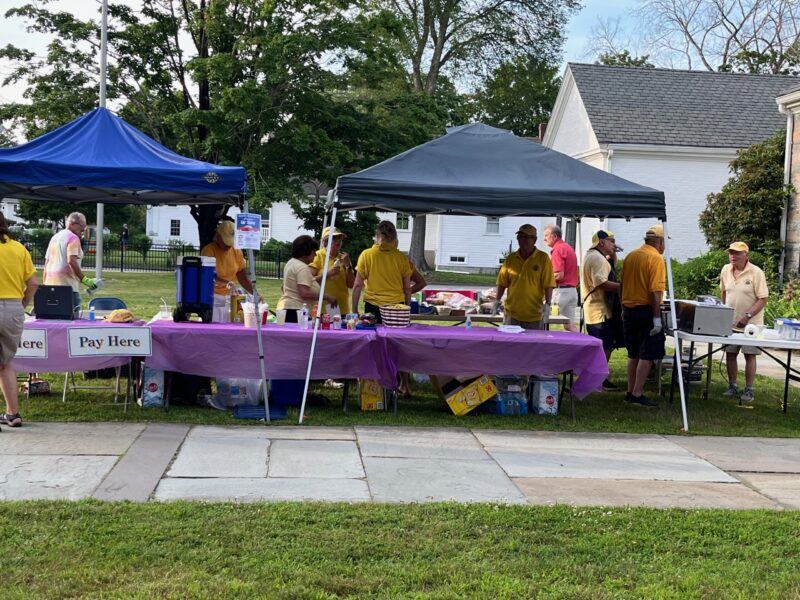
OLD LYME—The north lawn of the Florence Griswold Museum earlier this month filled with music and poetry as the community gathered for a Juneteenth celebration honoring those who once lived enslaved in the historic town of Lyme.
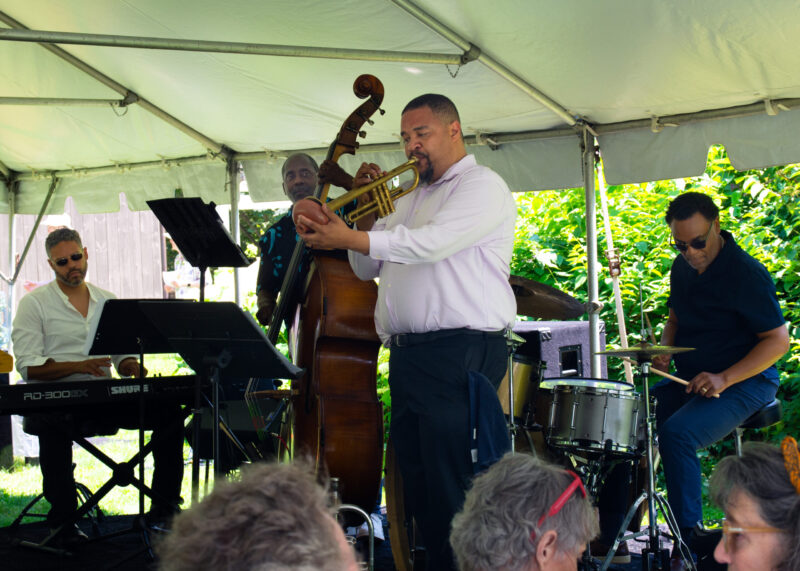
The Avery Sharpe Quartet performing at the Juneteenth event.

The June 22 event in partnership with the Witness Stones Old Lyme organization featured a powerful performance by renowned bassist and composer Avery Sharpe and his Quartet—Zaccai Curtis on piano, Haneef Nelson on trumpet, and Yoron Israel on drums—whose dynamic jazz rhythms set the tone for an afternoon of remembrance and hope.
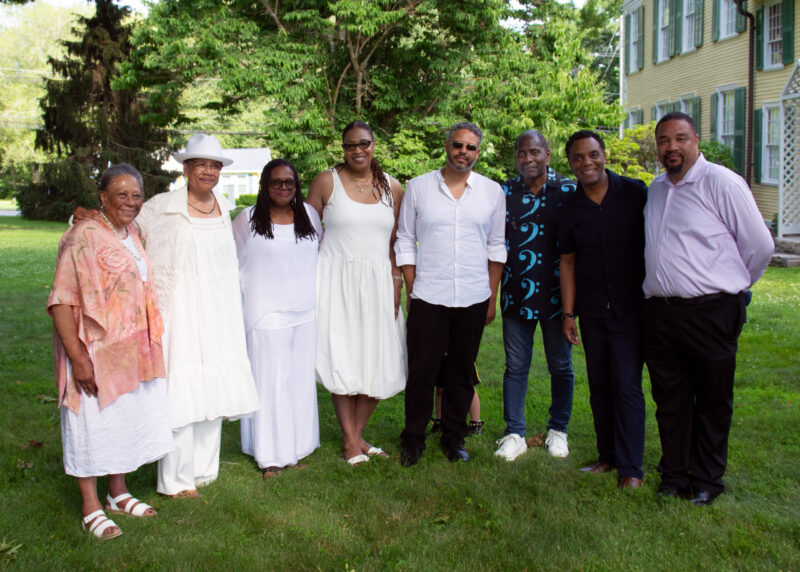
Artists gather at the Juneteenth Jazz & Poetry event on Sunday, June 22. Left to right: Poets Marilyn Nelson, Kate Rushin, Rhonda Ward and Antoinette Brim-Bell with musicians Zaccai Curtis, Avery Sharpe, Yoron Israel, and Haneef Nelson

Interwoven with the music were readings by four of Connecticut’s most distinguished poets: Marilyn Nelson, Kate Rushin, Rhonda Ward, and Antoinette Brim-Bell. Their verses, inspired by the lives of those commemorated through the Old Lyme Witness Stones Project, gave voice to the past and called listeners to deeper understanding and reflection. 
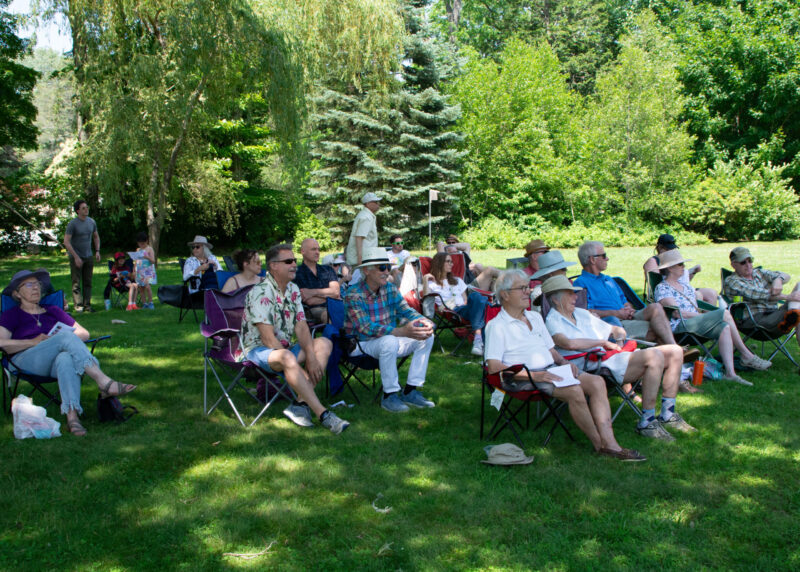
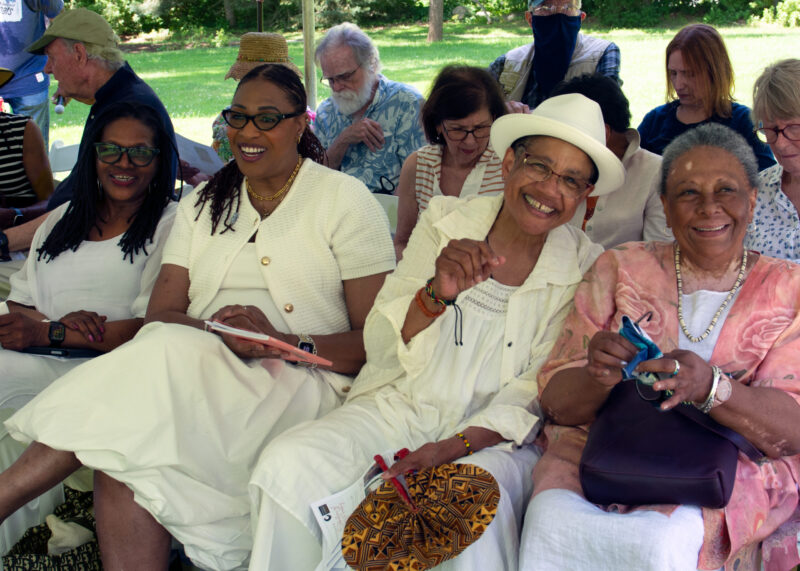
Audience members enjoy the sounds of live jazz and poetry on the lawn of the Florence Griswold Museum.

The poets, who began their partnership with the Witness Stones Project in 2021, created a cycle of poems that was later published in Poetry magazine. Their verse continues to serve as a poignant tribute to the lives, labor, and humanity of those long forgotten by history.
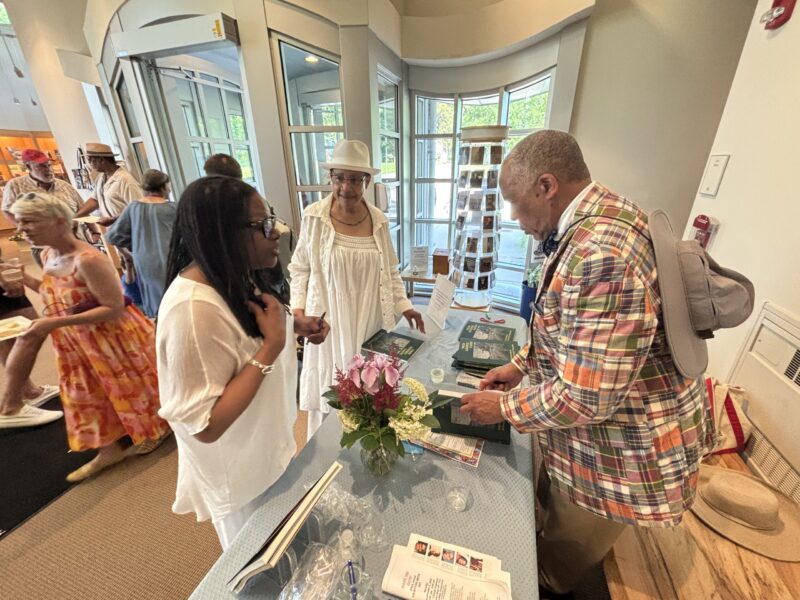
Photographer William Earle Williams signs copies of the exhibition catalogue for poets Rhonda Ward, left, and Kate Rushin.
Photographer William Earle Williams signs copies of the exhibition catalogue for poets Rhonda Ward (left) and Kate Rushin.

Following the program, the Florence Griswold Museum welcomed guests to view Their Kindred Earth: Photographs by William Earle Williams on its closing day. Drawn by his interest in the Witness Stones Project, Williams became the museum’s third artist-in-residence and made stunning photographs that reveal historic sites of enslavement in Old Lyme and elsewhere in Connecticut.

Witness Stones Old Lyme

Between 1670 and 1826 at least 300 enslaved and indentured African Americans and Native Americans labored in the historic town of Lyme.

Today, Witness Stones honor the humanity and the contributions of vital members of our community. The bronze plaques that mark sites of enslavement on Lyme Street restore forgotten history and serve as memorials to those once held here in bondage. 

Each of the 60 Witness Stone placed on Lyme Street, McCurdy Road, Old Shore Road, the Sill Lane Green and at the Lyme Public Library includes the name of an enslaved individual, along with details about their lives and circumstances derived from land records, emancipation certificates, and other available historical documents.

An interpretive sign installed on the lawn of the Old Lyme Phoebe Griffin Noyes Library provides a map showing the locations of the small brass plaques that are installed flush with the ground on Lyme Street and elsewhere in the community.

For more information about the Witness Stones Project in Old Lyme, visit the Witness Stones Old Lyme website: https://www.witnessstonesoldlyme.org/

Editor’s Note: Liz Frankel is a member of the Witness Stones Old Lyme Committee.
TOP STORY: Old Lyme Author Tells the Story Behind ‘The Crazies’ at PGN Library, July 9

Old Lyme resident Amy Gamerman on Wednesday will discuss her first book, “The Crazies: The Cattleman, the Wind Prospector, and a War Out West” at the Old Lyme’s Phoebe Griffin Noyes Library.

Amy Gamerman to Give Book Talk at Old Lyme Library

OLD LYME–Journalist Amy Gamerman’s first book has its origin story in the Crazy Mountains, a freestanding range of windy Montana peaks where one billionaire purchased 44,000 unspoiled acres and tilted at windmills to keep them that way.

Gamerman, a decades-long resident of Old Lyme and established Wall Street Journal contributor, traced the book’s genesis to a tour of oil and gas tycoon Russell Gordy’s Montana in 2017. That’s when Gordy told Gamerman, who was there to write a profile on the prolific landowner, about a neighboring rancher with plans for a wind farm that could sully the paradise stretching from the Yellowstone River to the spiky crests of The Crazies. 

But the smallholding rancher to the south declined Gordy’s offer to buy him out.

The seemingly tangential anecdote stayed with Gamerman “like an itch” long after Gordy’s profile was published in the Journal’s luxury real estate section, she said. The urge to scratch wouldn’t quit. 

Who was this rancher, she recalled wondering. What was it like to say “no” to Gordy, a man with so much money and influence? And whatever happened with the wind farm? 

“There was something that happened out in the shadow of those Crazy Mountains when I was walking around with Russell Gordy, and he told me the story of his neighbor,” she said. 

That “something” is The Crazies: The Cattleman, the Wind Prospector, and a War Out West, published in January after years of exhaustive research into what publisher Simon & Schuster labeled as a “ruggedly beautiful western for a warming plant.” 

It’s the account of several billionaires and the fifth-generation rancher struggling to make a living off the land. It’s also the legend of those who got there first, and an allegory about what comes next in an isolated landscape that cannot hide from rising temperatures and powerful storms. 

Gamerman will discuss the book at 6:30 p.m. on Wednesday in Old Lyme’s Phoebe Griffin Noyes Library. All proceeds from copies sold that evening will go to the local library. 

Stranger than Fiction

Gamerman, a fiction lover at heart, said wide ranging interviews with colorful personalities and drama-laden courtroom transcripts helped turn her journalism into a tale that reads like a novel. 

She characterized it as liberating to get out of her own head by mining the stories of others. 

“Here’s the thing,” she said. “I don’t feel like I have a great imagination. And this story had so many outrageous twists and turns I wouldn’t have had the balls to invent.” 

She credited a significant amount of the book’s success to painstaking research into the history of Montana and the people drawn there. Some of that work was done while the deepest throes of the pandemic rendered the world remote. 

The months-long quarantine was an “extraordinary gift in disguise” that gave her the time and space to focus on backstory, she said. With research came an understanding of the external forces, some of them as old as the land itself, that drove the characters’ personal decisions. 

“You couldn’t really understand the present-day conflict without understanding the past,” she said.  

She also came to know, for the first time, the immediate dangers of climate emergency.

Gamerman described the billionaire trophy ranchers depicted in the book as consumed by the notion of the unspoiled landscape, even as their resistance to change threatens the region’s continued existence – and the livelihood of the working ranchers who depend on it. 

She cited an epic drought and wildfires that played out “in real time” as she wrote the book. 

“There were moments where I felt like these guys were admiring the view from the deck of the Titanic,” she said. 

Late Bloomer

Gamerman, educated at Yale University in New Haven and Cambridge University in England, worked at a news wire service in Washington D.C. and then as arts and culture reporter for the Wall Street Journal before stepping back to raise her children in Old Lyme. She joined the newspaper’s emerging Mansion section as a contributor more than a decade ago. 

Gamerman’s four children with bestselling author and acclaimed journalist Kevin Conley range from 25 to 18 years old. 

The author, 61, called herself a late bloomer. 

She recalled lamenting her delayed arrival to book publishing in a conversation with writer and audio host Anna Sale, known for the Death, Sex and Money podcast. Sale also narrates the audio version of the book. 

Gamerman credited Sale with reminding her that she was able to write the book because of the lifetime of personal and professional experiences that led to it. 

“And it’s true,” she said. “I had to draw on everything I had.”

Photographer Beth Green’s ‘Impressions of Connecticut’ on View at Saint Ann’s Through Labor Day

Beth Green

OLD LYME –Photographer Beth Green’s Impressions of Connecticut exhibit will run at Saint Ann’s Episcopal Church through Labor Day. 

The exhibit, located in the church’s Griswold Room, is open Monday through Friday from 9 a.m. to 3 p.m. and on Sundays from 8 a.m. to noon. 

The church in a press release said the show focuses on scenes of shoreline Connecticut and the Connecticut River Valley, from a bend in the Lieutenant River, to a red barn in snow, to sunlight on the Long Island Sound. 

It also includes several of her iconic sports photographs from the 1970s, when Green became known as the first female photographer allowed in a professional sports locker room. 

A printed guide to the show includes a QR code for each photograph leading to audio narration by Green. All the photographs are available for sale.

Green’s career includes work as a photographer for international wire services and then as a photo editor for Newsweek magazine. After a decade with the magazine, she switched to architectural and corporate photography with a continued focus on using her photography skills to tell stories from a female perspective. 

Green describes herself as a “a very traditional photographer” from the world of film and large format photography. 

“With the advent of digital photography, the use of digital manipulations in my work is minimal,” she said. “I believe in the play of light on the subject to create my images. I crop entirely in my camera and turn my camera on the world around me as it exists. Light is my paintbrush and is the tool for my artistic license. My main interest is the image as it is in the world at that moment. There is nothing new in the world, it is how you arrange it in your viewfinder and capture the image forever at that moment.”

Green has served as a guest professor at Rutgers University and Fordham University, and has taught for the New York Institute of Photography.

A portion of the proceeds will be donated to the church.

TOP STORY: On ‘Make Music Day,’ Artists Converge in Old Lyme’s Continuing Ode to Free Music for All

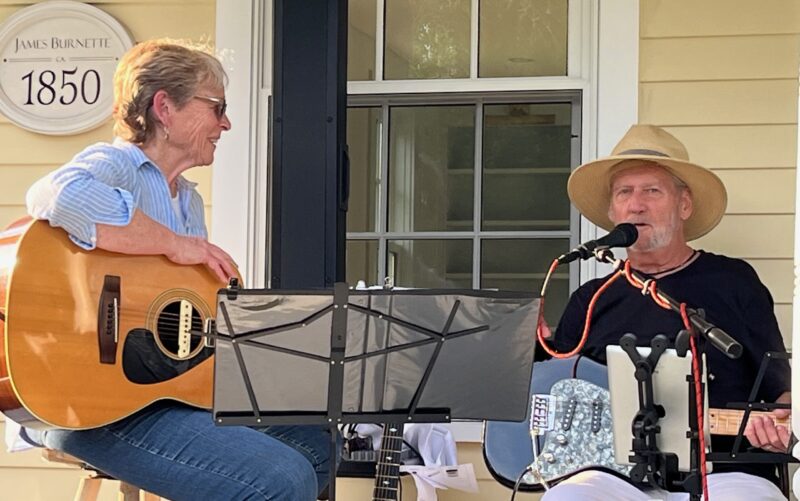
Barbara Harvey and Texas Jack Hardesty played from the side porch of Lymes’ Youth Service Bureau. Photos courtesy of Cheryl Poirier unless otherwise noted.

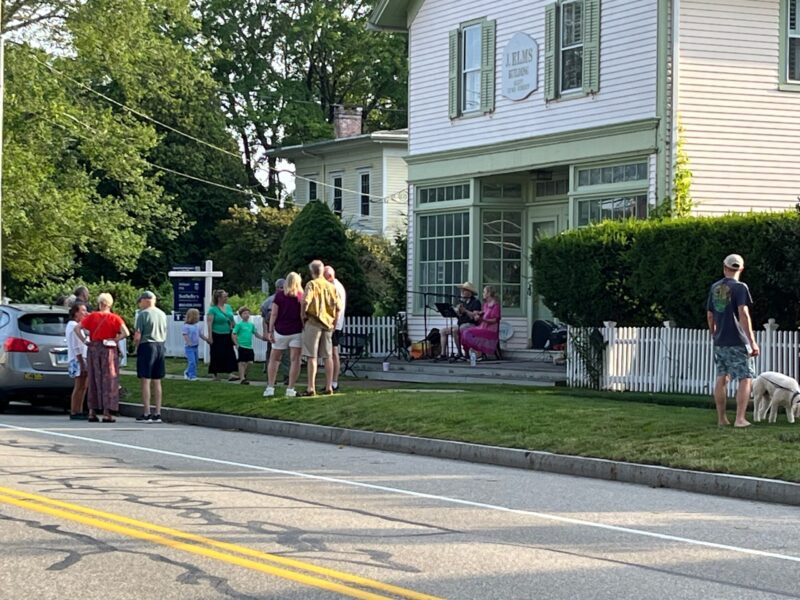
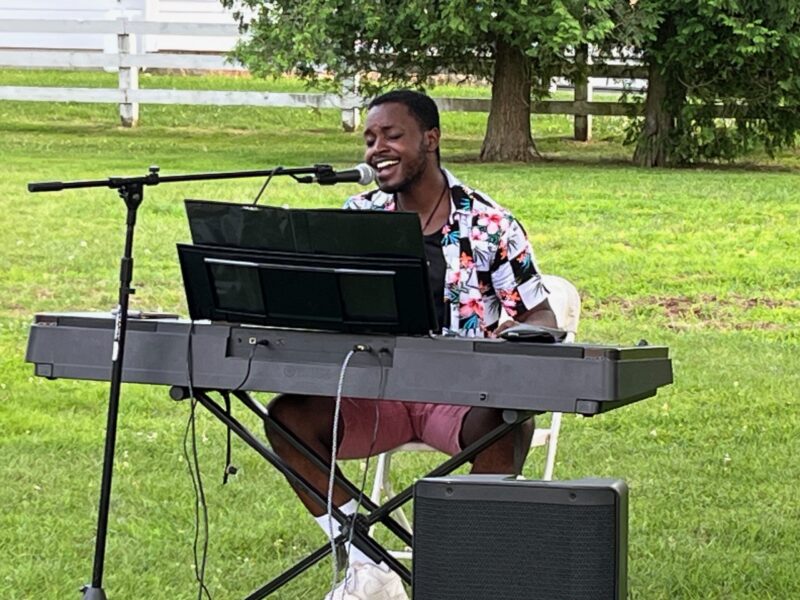
OLD LYME —Make Music Old Lyme rang in the summer solstice Saturday evening with tunes up and down Lyme Street as part of the international tradition promoting free music for all.

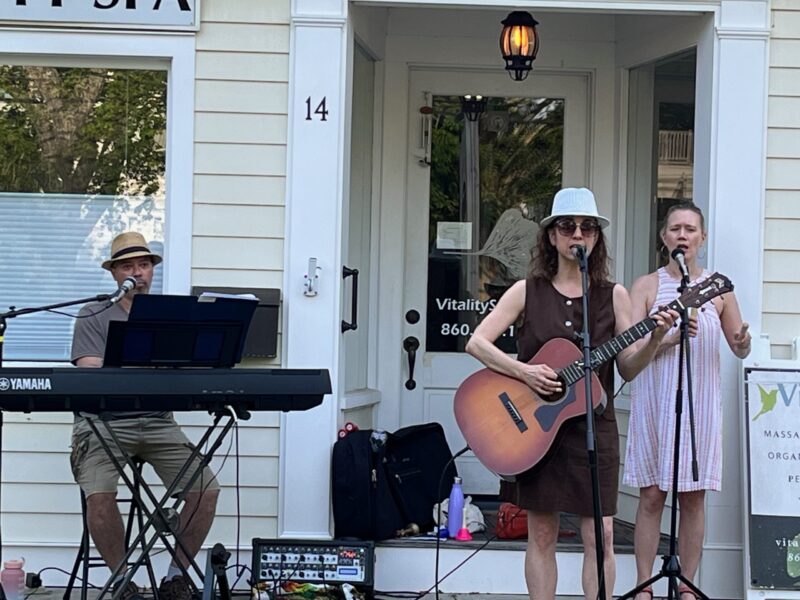
Two of Us’ attracted listeners in front of Patricia Spratt for the Home.

Economic Development Commission member Cheryl Poirier estimated there were at least 300 people strolling the historic district while more than a dozen musical acts entertained from porches, yards and storefronts.

Chris Gregor entertains at Center School, where folks stopped to listen and to buy something to eat from the Lions Club grills.

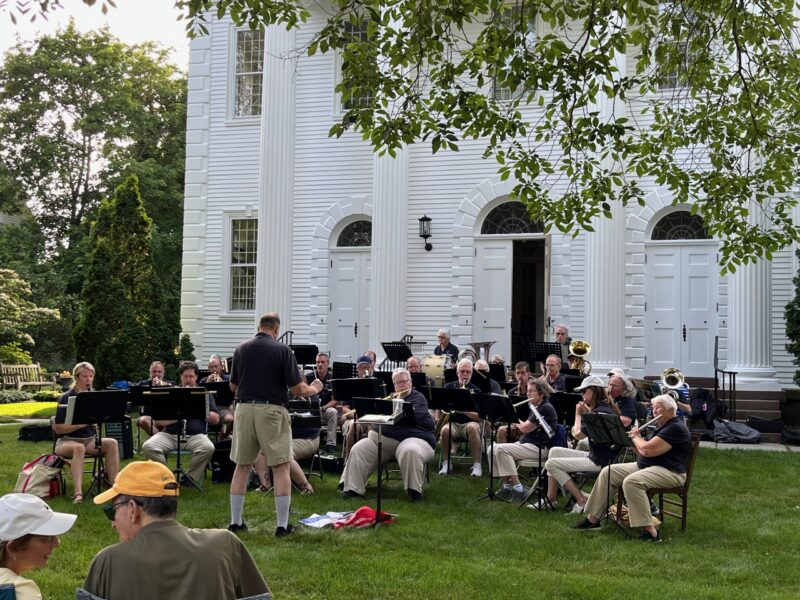
Revelers strolled a route extending from fire station, where Old Lyme’s Colin Hallahan played cover songs and originals, to the lawn of the First Congregational Church of Old Lyme on which the 50-year-old Old Lyme Town Band played selections from its 500-piece catalog.

Old Lyme Town Band puts on a show in front of the First Congregational Church of Old Lyme.

Poirier acknowledged the crowd seemed lighter than in previous years, though she said it’s difficult to provide an exact count when attendees are spread out across three-quarters of a mile for two hours.

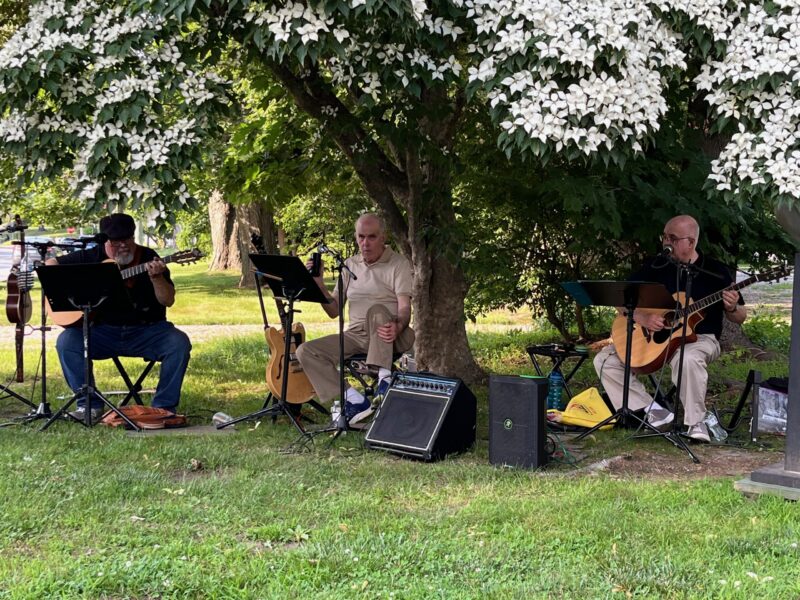
Howling Hound Dogs wail under the Kousa Dogwood at Cooley Gallery.

Some people walked up and down the street sampling all the sounds, while others sat down to enjoy one band at a time.

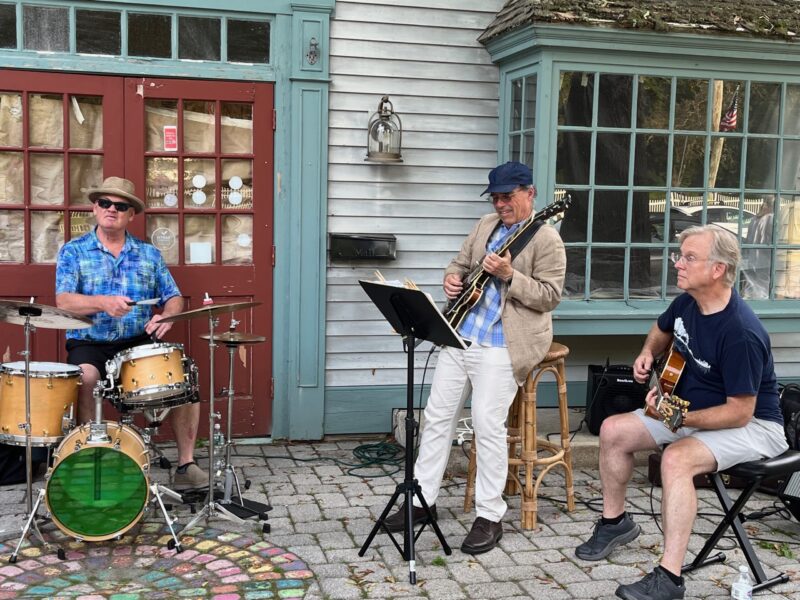
The Scoville Jazz Duo became a trio at the former ice cream shop.

The event is produced by the Old Lyme Arts District and the MusicNow Foundation. Launched in France in 1982, Make Music is an international musical festival open to all who would like to participate, and takes place in over 1,000 cities in 120 countries every June 21, the summer solstice.

The Old Lyme Historical Society got interactive with their contribution to ‘Make Music Day.’ Photo courtesy of Edie Twining.

Children made their own music in an activity hosted by the Old Lyme Historical Society during the stroll.

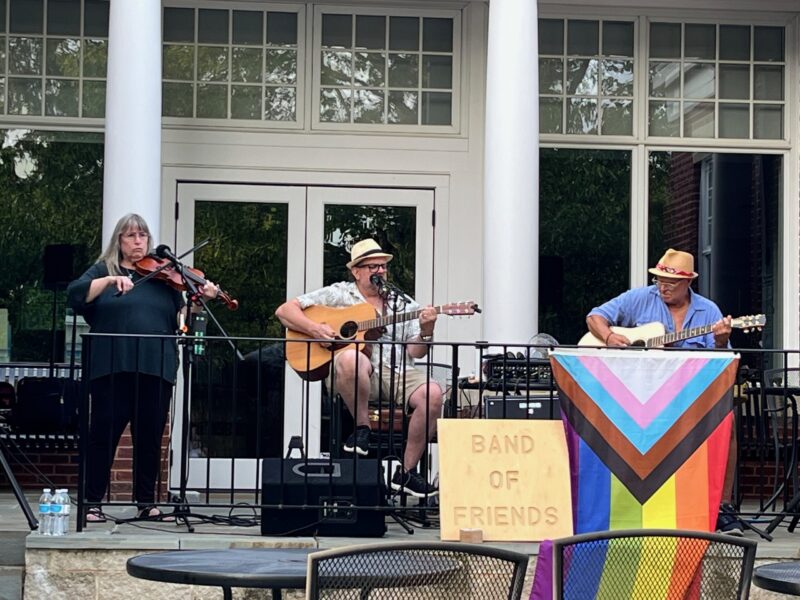
Band of Friends were back on the patio of the Old Lyme Phoebe Griffin Noyes Library.

This year marked the 7th annual Make Music event. Genres represented this year included bluegrass, folk, indie rock, American standards, and pop.

The Celestials croon at Village Shoppes.

The international Make Music phenomenon returns for next year’s summer solstice on Sunday, June 21.

The Lions Club volunteers finish up after a successful event.

Essex Winter Series Now Under Leadership of Renowned Flutist With Retirement of 15-year Artistic Director Mihae Lee

Pianist Mihae Lee, left, has stepped down after 15 years as director of the Essex Winter Series. She will be succeeded by accomplished flutist Tara Helen O’Connor. Photo courtesy of the Essex Winter Series.

ESSEX–Tara Helen O’Connor has joined Essex Winter Series as its newest artistic director for the 2026 season following Mihae Lee’s retirement from the role. 

The organization in a recent press release said Lee held the leadership position for 15 years.

The group described Lee’s successor as an “exceptional musician who wishes to maintain the reputation, quality, and community commitment that her predecessor achieved.”

O’Connor, a flutist, is a charismatic performer noted for her “artistic depth, brilliant technique and colorful tone spanning every musical era,” according to the group. 

A recipient of Lincoln Center’s Avery Fisher Career Grant and two-time Grammy nominee, she was the first wind player invited to participate in the Chamber Music Society of Lincoln Center’s Bowers Program. She is a recurring featured artist with the Chamber Music Society. 

O’Connor is a regular participant in numerous chamber music festivals across the country. Along with her husband Daniel Phillips, she is the newly appointed co-artistic director of the Music From Angel Fire Festival in New Mexico.

She has premiered hundreds of new works and has collaborated with the Orion String Quartet, St. Lawrence Quartet, Emerson String Quartet, Jaime Laredo, Dawn Upshaw, Eliot Fisk, Jeremy Denk, Ida Kavafian, Peter Serkin and David Shifrin. Tara is a member of the woodwind quintet Windscape, the legendary Bach Aria Group and is a founding member of the Naumburg Award-winning New Millennium Ensemble. An advocate of new music, she is a member of the Talea and Cygnus Ensembles. 

O’Connor has appeared on A&E’s Breakfast with the Arts and PBS’ Live from Lincoln Center. She has recorded for Deutsche Grammophon, EMI Classics, Koch International, CMS Studio Recordings with the Chamber Music Society of Lincoln Center and Bridge Records. She has just released a solo CD of American flute works entitled The Way Things Go on Bridge Records with pianist Margaret Kampmeier.

She holds a doctor of musical arts degree from Stony Brook University in New York. At the Purchase College School of the Arts Conservatory of  Music, she is an associate professor of flute, head of the woodwinds department and the coordinator of classical music studies. She also serves on the faculty of Bard College Conservatory of Music, the Contemporary Performance Program at Manhattan School of Music and is a visiting artist, teacher and coach at the Royal Conservatory of Music in Toronto. 

Mihae Lee Legacy Concert

Lee, who became Artistic Director of Essex Winter Series in 2011 when president Fenton Brown stepped down, has been recognized by the Essex Winter Series Board of Trustees through the creation of the annual Mihae Lee Legacy Concert starting in the upcoming season. 

The group credited Lee with bringing in accomplished musicians and expanding community outreach to schools, senior communities and libraries. 

“With at least four concerts each winter and five days of outreach every year in Middlesex and New London Counties, reaching thousands, her success is clear,” the group said.