Talking Transportation: All Tickets Please!

Imagine you’re in a store and you see somebody shoplifting.  You’re embarrassed to say anything or to make a scene, but inside you’re pissed-off.  You pay for your merchandise, so why should that guy get it for free?  And if he’s ripping off the store, doesn’t the merchant actually make you pay more to make up for that loss?

It’s morally wrong and it’s just not fair.

Yet this is what happens every single day on Metro-North when conductors don’t collect all riders’ tickets.

Here’s a typical scene:  your train leaves Grand Central and the conductor makes his way through the train collecting tickets.  Sometimes he leaves a colored seat check, punched to show your destination, but not always. Why?

Your train makes some intermediate stop (New Rochelle, Greenwich or Stamford) to discharge some passengers and take on new ones.  You know who the new riders are, but does the conductor?

So when the conductor comes through again saying “All Stamford tickets, please” and you see that new rider not responding, you know the railroad got ripped off and that cheater just got a free ride.

Now, if the conductor had issued a seat check he’d know who got off, who got on and who owes him a new ticket.  Simple enough, but not for Metro-North which for years has not enforced their use.  Conductors who are too busy or too lazy, don’t use seat checks and we all end up paying more.

Metro-North acknowledges this problem and admits it loses millions of dollars a year to uncollected tickets.  But they’ve crunched the numbers and say that staffing trains with more conductors to be sure all tickets are collected would cost even more.

Hey!  Here’s a concept: make the existing conductors do their jobs instead of hiding out in their little compartments.  From Grand Central to Stamford you’ve got 45 minutes without stops to collect everyone’s ticket, give ‘em a seat check, say “thank you” and still have time for a cat-nap.  And there’s still time to ask people to keep their feet off the seats and to stop yapping in the designated Quiet Cars.

Back in the good ol’ days before the TVM’s (Ticket Vending Machines) came along, conductors collected cash fares to the tune of $50 million a year.  They had a money room at Grand Central that looked like a casino.  Now most fares are bought from the machines or on your smart-phone.  That means conductors should have a lot more time to make sure all tickets are collected.

Conductors on Metro-North make good money.  And they do a very important job keeping passengers safe, operating the doors, answering questions.  They’re the face of the railroad and most passengers give them high marks.

So what can you do if you see someone getting a free ride due to uncollected tickets?  Try this, which always work for me.

When I see a conductor miss a passenger’s ticket, I’ll wait until the conductor comes back and say something like “Excuse me, conductor.  I think you missed collecting that gentleman’s ticket,” and then smile innocently at the conductor and the chagrined would-be thief.

If I see the same conductor always missing ticket collections, day after day, I report it on the Metro-North website complaints page, detailing the incident by name, date, train number, etc.  That allows the railroad to “re-train” the offending staffer.

So if you’re tired of all these fare increases, let’s stop the shoplifters.  Make sure everybody pays for their ride by having conductors collect all tickets.

Please!

Republished with permission of Hearst CT Media.

Jim Cameron


About the author:
 Jim Cameron is founder of The Commuter Action Group, and a member of the Darien RTM.  The opinions expressed in this column are only his own.  You can reach him at CommuterActionGroup@gmail.com

For a full collection of “Talking Transportation” columns, visit www.talkingtransportation.blogspot.com

Talking Transportation: Don’t Blame Malloy for the Fare Hikes

metro-north-railroad-620x400Sure, it was sleazy of Governor Malloy and the CDOT to release news of a proposed five percent fare hike on Metro-North on a Friday afternoon in July, hoping nobody would notice.  But the more I dig into the proposal, the more I realize the Governor and CDOT are not to blame.

It’s the Connecticut legislature that’s really responsible for this fare hike.

Lawmakers this session left the Governor with a $192 million budget shortfall and every other branch of government has taken budget cuts and layoffs as a result.  Now it’s transportation’s turn to feel the pinch.

Pol’s on both sides of the aisle tell me Malloy could have saved millions by facing down the state employees’ unions and their rich benefits package.  Could’ve, maybe should’ve … but didn’t.

So now we’re looking at a five percent hike in train fares on Metro-North and Shore Line East and a 16 percent boost in bus fares starting in December.  Plus closing ticket windows, reduced maintenance and fuel savings.  And that’s just on the transit side.

Highway work will also be cut, hiring postponed and less salt purchased for the winter.  Service areas will be closed overnight and the volunteers who work in the Visitor Centers will be fired. Welcome to Connecticut!

So when you calculate the impact of all these cuts on your commute, by road or rail, call your State Rep and Senator and ask “why”?

Why are they allowing the Special Transportation Fund to run dry due to the dwindling revenues from the gas tax?

Ask Senate Majority leader Bob Duff (D-Norwalk) and the usually pro-transportation Senator Toni Boucher (R-Wilton) why they have opposed alternative funding mechanisms like the VMT (Vehicle Miles Tax), calling it “dead on arrival” before it was even explained, let alone studied.

Ask your elected officials what their plan is to pay for our existing transportation network, let alone expand it by the $100 billion Malloy has suggested.  They won’t have an answer.

Why?  Because they are running for re-election this November.  And none of them has the guts to tell you the truth:  we will all have to pay more to drive or commute by rail … as you’ll find out after the election when they approve new taxes.

What can we do in the meantime (aside from holding them accountable during the campaign)?  There have been some public hearings in September on the fare hikes with more to come* … and we should all turn out.

It will be political theater, but cathartic.  Commuters will rant and the folks from CDOT will listen and then do what they proposed.  Aside from cutting train service, a fare hike is about the only option.

And, of course as upstate lawmakers constantly remind us, those of us living on the “gold coast” are all millionaires, and we can afford it, right?

*9 Town Transit will hold a public hearing on its proposed price increases Thursday, Sept. 29, in Old Saybrook Town Hall at 4 p.m. and 7 p.m.

Jim Cameron - Chairman of the CT Metro-North / Shore Line East Rail Commuter Council

Jim Cameron

About the author: Jim Cameron is founder of The Commuter Action Group, and a member of the Darien RTM.  The opinions expressed in this column are only his own.  You can reach him at CommuterActionGroup@gmail.com

For a full collection of “Talking Transportation” columns, visit www.talkingtransportation.blogspot.com

Talking Transportation: Summer Daytrips To Ride Connecticut’s Rail History

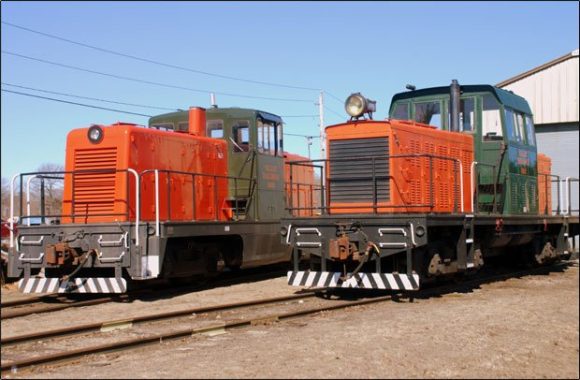
Either of these Valley Railroad diesel locomotives pictured above, “0900” or “0901”, is used to power the Essex Clipper Dinner Train.

Either of these Valley Railroad diesel locomotives pictured above, “0900” or “0901”, is used to power the Essex Clipper Dinner Train.

If you’re looking for family fun this summer, consider visiting one of Connecticut’s many living museums celebrating our rail heritage.

The Shore Line Trolley Museum in East Haven (www.shorelinetrolley.com) was founded in 1945 and now boasts more than 100 trolley cars in its collection.  It still runs excursion trolleys for a short run on tracks once used by The Connecticut Company for its “F Line” from New Haven to Branford.  You can walk through the car barns and watch volunteers painstakingly restoring the old cars.  There’s also a small museum exhibit and gift shop.

The Connecticut Trolley Museum in East Windsor (www.ceraonline.org) began in 1940, making it the oldest trolley museum in the US.  It too was started on an existing right-of-way, the Rockville branch of the Hartford & Springfield Street Railway Company.  You can ride a couple of different trolleys a few miles into the woods and back, perhaps disembarking to tour their collection of streetcars, elevated and inter-urbans in the museum’s sheds and barns.

If you’re looking for a day-trip, especially for kids, I can highly recommend either museum.  But if you’re looking for trains, you’re also in luck.

The Danbury Railroad Museum (www.danbury.org/drm) is walking distance from the Metro-North station, making this a potentially full-day, all-rail adventure.  On weekends they offer train rides and for a premium you can even ride in the caboose or the engine.  They have a great collection of old rail cars and a well stocked gift shop.

For nostalgia fans, The Essex Steam Train (www.essexsteamtrain.com) offers not only daily rides on a classic steam train, but connecting riverboat rides up to the vicinity of Gillette Castle and back.  In addition to coach seating you can ride on an open-air car or in a plush First Class Coach.  There’s also a great dinner train, “The Essex Clipper” which offers a two and a half hour, four-course meal and a cash bar.

In downtown South Norwalk, you can visit what once was a busy switch tower, now the SoNo Switch Tower Museum (www.westctnrhs.org/towerinfo.htm).  Admission is free (donations welcome) weekends 12 noon to 5 p.m.

Also open only on weekends is the Connecticut Eastern Railroad Museum in Willimantic (www.cteastrrmuseum.org).  In addition to guided tours, visitors can operate a replica 1850’s-style pump car along a section of rail that once was part of the New Haven Railroad’s “Air Line”.

The Railroad Museum of New England in Thomaston (www.rmne.org) offers rail trips on Sundays and Tuesdays along the scenic Naugatuck River in addition to a large collection of restored engines and passenger cars including a last of its kind 1929 New Haven RR first class “smoker” complete with leather bucket seats.

All of these museums are run by volunteers who will appreciate your patronage and support.  They love working on the railroad and will tell you why if you express even the slightest interest in their passion.  Try ‘em.

Jim Cameron

Jim Cameron

About the author: Jim Cameron has been a Darien resident for 25 years.  He is the founder of the Commuter Action Group and also serves on the Darien RTM. 

The opinions expressed in this column are only his own. 

You can reach him at CommuterActionGroup@gmail.com 

Talking Transportation: America’s Mass Transit Mecca

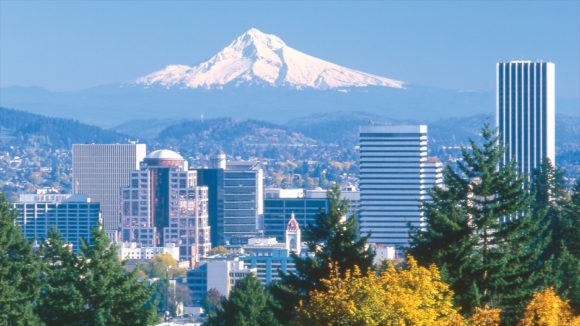
Portland, Oregon, with Mount Rainier providing a stunning backdrop.

Jim Cameron names Portland, Ore., (with Mount Rainier providing a stunning backdrop) the most mass-transit intensive city in the US.

What’s the most mass-transit intensive city in the US?  By the numbers, New York City.  But for a glimpse of the real future of mass-transit,  the winner is clearly Portland, Oregon.

Portland has only 632,000 residents but 2.3 million in its metro area.  Yet it has, per capita, what I think is the largest, most extensive and best integrated systems of light rail, streetcars and bike lanes in the nation.

LIGHT RAIL: It was 1986 when Portland opened its first light-rail line.  Today the system covers 60 miles (including the airport, 12 miles from downtown).  In 2001 a downtown streetcar system was added.  It proved so successful that Portland now manufactures streetcars for other American cities.

Like the city’s extensive bike-rack equipped bus network, all of Portland’s mass transit operates on the honor system:  you buy tickets before boarding and only show them if a inspector boards, looking for proof of payment.

To encourage ridership, fares are ridiculously cheap.  For $2.50 you can roam the system for 2 ½ hours.  An unlimited day pass is $5 or $26 a month (about the cost of a round-trip to NYC on Metro-North).  “Honored Citizens” (seniors, Medicare or disabled) get a monthly pass for $7.50!

DON’T EVEN THINK ABOUT DRIVING: To further encourage use of the ubiquitous mass transit, driving in downtown is difficult and expensive.  The main transit corridors have one lane for streetcars, one lane for bikes and just one lane for cars.  Parking is really expensive, both by meter on the streets and in lots.  And yes, the freeways crawl just like in LA.

TECHNOLOGY: The bus and rail system offers free apps for trip-planning which use GPS to tell you exactly how long you’ll wait for the next trolley, directions by line to your destination and expected travel time.  And yes, you can buy and show your ticket using your smartphone.

BIKES ARE KING:     The city’s unofficial motto is “Keep Portland Weird”, and the residents work hard to do so.  Outside of Europe or Asia I have never seen so many people on two-wheels traversing a community.

There are so many dedicated bike lanes that when a new bridge was built crossing the Willamette River, the bridge was built for everything except cars and trucks:  a mass transit-only bridge!

When a new Medical Center was planned on a downtown hill, designers realized it would be foolish to waste land on parking, so they built an aerial tram from unused industrial land on the waterfront.  Hospital employees and patients alike take light rail or bike to the base station (where a free 400-space bike-lot is usually full) and are skyward in minutes.

So if you are ever disillusioned by the sorry state of mass-transit in our area, take heart.  The future is now in Portland!

Jim Cameron

Jim Cameron

About the author: Jim Cameron has been a Darien resident for 25 years.  He is the founder of the Commuter Action Group and also serves on the Darien RTM.  The opinions expressed in this column are only his own. 

You can reach him at CommuterActionGroup@gmail.com

Talking Transportation: Why Ferries Aren’t the Answer for Commuting in Connecticut

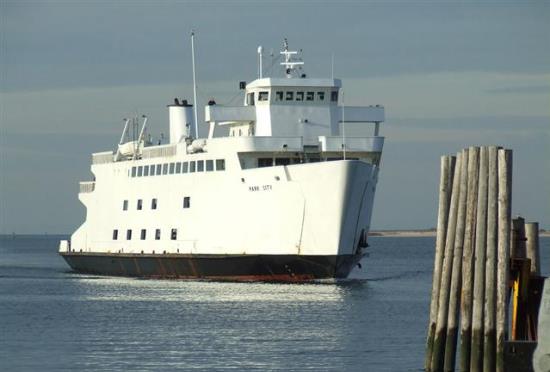
Bridgeport to Port Jefferson Ferry

Bridgeport to Port Jefferson Ferry

Recently, NYC Mayor DeBlasio announced a $325 million plan to reintroduce ferry boat service to the five boroughs charging the same fare as subways.  The mayor says these boats could carry 4.5 million passengers a year.

So why don’t we have ferries in Connecticut?  There are several reasons:

SPEED:  In open water, fast ferries on the Sound could make 30 knots (35 mph).  But if they must sail up inlets to the downtown areas of Bridgeport, Norwalk or Stamford, that speed is cut to 5 knots, extending travel time.

DOCKING: To keep to their competitive speeds, docks would have to be located close to the Sound.  That’s expensive real estate. And what about parking at those docks… and drive-time on local roads to reach them? Again, more travel time.

FREQUENCY: Metro-North offers trains to midtown New York every 20 minutes in rush hour carrying 800 – 1000 passengers per train. No ferry service anywhere in the country can compete with that frequency of service. Will travelers really be willing to wait an hour or two for the next boat?

COMFORT: In nice weather, a boat ride to work sounds idyllic. But what about in a Nor’easter?  The bumpiest ride on the train pales by comparison.

FARES:  The most optimistic of would-be ferry operators in CT estimate their fares will be at least double those charged on the train.  And people say Metro-North is too expensive?

OPERATING COSTS: Fast ferries are gas guzzlers, the aquatic equivalent to the Concorde.  When the Pequot tribe built high-speed catamarans to ferry gamblers to their casino in Connecticut to lose money, the service proved so expensive to run that the Pequots dry-docked the ferries in New London.

ECONOMICS: The final reason I don’t think ferries make economic sense is that nobody else does either!  Ferry operators (like the near-bankrupt NY Waterways) aren’t stupid. They’ve looked at possible service from coastal Connecticut, crunched the numbers and backed off. In a free market economy, if a buck could be made running ferries, they’d be operating by now. They aren’t operating, and there are lots of reasons why, many of which I’ve listed.

The only place ferries are run successfully is where they’re heavily subsidized (everywhere), have a monopoly (for example, getting to downtown Seattle from an island suburb), don’t duplicate existing transportation routes (like from Bridgeport to Port Jefferson), or offer advantages of speed because they operate on extremely short runs (from Hoboken to midtown).  Our situation here in Connecticut passes none of those tests.

You already know I’m a train nut. (The bumper sticker on my car reads “I’d Rather Be on the Train.”)  And I do love an occasional recreational sail on the Sound.  But it’s unrealistic to think that commutation by ferries is in our future.

Jim Cameron - Chairman of the CT Metro-North / Shore Line East Rail Commuter Council

Jim Cameron

About the author: Jim Cameron is founder of The Commuter Action Group, and a member of the Darien RTM.  The opinions expressed in this column are only his own.  You can reach him at CommuterActionGroup@gmail.com

For a full collection of “Talking Transportation” columns, visit www.talkingtransportation.blogspot.com