
Talking Transportation: Federal Air Marshals? Worthwhile or Worthless?

Do you feel safe when you fly?

Forget about exploding jet engines, cracked aircraft windows and clear-air turbulence.  What about terrorists?

We haven’t seen a domestic case of terrorists attacking jetliners in years, thanks to increased scrutiny of passengers by the TSA, the Transportation Security Administration.  From the moment you book a flight, you are being screened.  If you’re on the “No Fly List”, you’d better switch your travel plans to Amtrak or MegaBus.  And when you get to the airport, get ready for a full pat-down search.

But airlines’ last line of defense against terrorists is FAM, the Federal Air Marshal Service.  Created in 1961 after a spate of skyjackings to Cuba, the air marshal program, now administered by the TSA, has grown to 3000 marshals and an $800 million budget.

But the program is now in trouble.

The Government Accounting Office last year reported that even TSA could not demonstrate that FAM is effective or even served as a deterrent to bad guys.  Since the program was accelerated (from 33 marshals before 9/11), air marshals have not made a single terrorist arrest, though the armed, undercover agents have thwarted several “disruptive passenger” incidents.

In April, a deranged woman on a Delta flight from London to Salt Lake City jumped on an air marshal who had been supervising her after she overturned a drink cart.  She was cuffed (by another marshal) for the duration of the flight and faces a year in prison.

In December 2005, air marshals shot and killed a man as he ran off an American Airlines flight in Miami, claiming he had a bomb.  Ignoring calls to “stop” and “get down”, the shooting was declared “legally justified” in a 46-page follow-up report.  The man had no explosives, but was found to have missed his meds for a bipolar condition.

Even with 3000 marshals, there is no way the TSA can cover the 42,000 daily flights in the US.  There were no marshals on shoe-bomber Richard Reid’s (2001) or underwear bomber Umar Farouk’s (2009) trans-Atlantic flights.

One of the criticisms of FAM is that they waste their time policing “flights to nowhere” on regional 50-seat aircraft when it’s the longer, bigger jets that need attention.

FAM is also sullied by low morale and allegations of alcohol abuse.  Between 2002 and 2012  air marshals were arrested 148 times and charged with 5000 cases of misconduct including 1200 cases of lost equipment — including their weapons.

If you travel for a living, imagine their job.  They can’t sleep in-flight, suffer from the same delays as the rest of us and have to be ready on seconds’ notice to discharge their weapons at 30,000 feet.

Some marshals say FAM’s problems are due to its ties with TSA.  They suggest the service would be better off as part of Customs and Border Protection or the FBI.

But Robert MacLean, an air marshal fired in 2006 after disclosing that the service was cutting back on coverage of overnight flights, calls FAM “security theater serving absolutely no purpose other than showing they (TSA) are doing something”.  (MacLean was finally taken back into FAM after a 10-year legal fight that went all the way to the Supreme Court.)

Jim Cameron

About the author: 

Jim Cameron is founder of The Commuter Action Group, and a member of the Darien RTM.  The opinions expressed in this column are only his own.  You can reach him at CommuterActionGroup@gmail.com

For a full collection of “Talking Transportation” columns, visit www.talkingtransportation.blogspot.com

Posted with permission of Hearst CT Media.

Talking Transportation: Connecticut: Love It or Leave It

The recent debate over tolling our highways should remind us of just how divided our state has become.  Not red vs. blue and not even just upstate vs. downstate.  The real divide is between those who commute by car vs. those who take mass transit.

I’ve written for years about the fact that riders on Metro-North pay the highest commuter rail fares in the US, and those fares will only keep going up.  Most rail riders have little choice, especially if headed to New York City.  What are they going to do … drive?

Yet every time the fares go up … and they have increased 55 percent since 2002 … ridership goes up as well.  Why?  Because conditions on the highways keep getting worse and worse.

But those who chose to drive, or must because there’s no viable mass transit option, seem literally to hate rail commuters.  I think it’s jealousy.  During the tolls debate, the venom was dripping and one Tweet in particular hit home.

“Just because your commute (by train) is so expensive doesn’t mean mine (by car) should be too (because of tolling),” read the post.

The driver had clearly missed the point.  We aren’t looking for tolls to subsidize rail fares, just to get motorists to pay for the upkeep of their roads and bridges before we have another Mianus River Bridge collapse, which we will.

But it gets worse.

The anti-toll forces now sound like Howard Beale, the deranged newsman from the movie “Network” who was “mad as hell and not going to take it anymore.”   Doubtless, much of this is directed at Governor Malloy who enjoys (suffers from?) the lowest popularity rating in the history of polling.  Sure, the economy of our state is in bad shape.   But Malloy didn’t create this economic mess.  He just inherited it and mishandled it.

And it will get far worse, whoever succeeds Malloy in the fall.  The solutions will be few and all will be painful.  Forestalling tolls and gasoline taxes today won’t stop the bridges from rotting.

But this opposition to tolls or modest gasoline tax increases to pay for roads has now been taken to a maniacal pitch predicting that “everyone is leaving the state,” conditions are so bad.   That’s fine with me.

I was recently at our town dump and saw a young man unloading a bunch of items.  “My parents are moving,” he told me.  “Everyone is leaving Connecticut!” he exclaimed.

“Really?”, I asked.

“It’s all Malloy’s fault,” he said, sounding like a Pied Piper leading a caravan down I-95 to some Promised Land.

I asked him one question:  “Did your parents sell their house?”   “Sure,” he said.  “And at a profit over what they paid for it.”

“Well,” I said, “I guess not everyone is leaving.  Your folks are moving out and someone else is moving in.”  Someone who wants to live here.

To those who hate it so much living in Connecticut, I extend an invitation:  please leave.  Enjoy your low-tax destination.  And don’t forget to pay those highway tolls as you drive down I-95 through NY, NJ, etc.

But enough already with the “I hate Connecticut” mantra.  Some of us actually like living here.  And losing ‘the haters” will only mean fewer cars on our roadways.

Posted with permission of Hearst CT Media.
Jim Cameron

About the author: Jim Cameron is founder of The Commuter Action Group, and a member of the Darien RTM.  The opinions expressed in this column are only his own.  You can reach him at CommuterActionGroup@gmail.com

For a full collection of “Talking Transportation” columns, visit www.talkingtransportation.blogspot.com

Talking Transportation: Transport Cuts Will Hurt Us All

For weeks I’ve been writing about the CDOT’s impending bus and rail service cuts and fare hikes and their profound impact on commuters, local businesses and real estate values.  But with just weeks to go, the folks who can prevent this pain… our legislature… seem to be doing nothing.

 The deadline is July 1 this year when proposed CDOT cuts will go into effect:   A 10 percent fare hike on Metro-North will be matched with elimination of off-peak trains on the New Canaan, Danbury and Waterbury branch lines as well as Shore Line East.

How are local officials responding?  By complaining that the proposed cuts on them aren’t fair.  “Don’t cut my mass transit, cut someone else’s!”, seems the plaintiff cry.  “Why is my bus service being cut but Hartford and Stamford’s isn’t?,” one official asked me.

I told him he was asking the wrong question.  Instead he should be asking why any bus or train service was being cut.

It’s as if a crowd was trapped in a burning building with one narrow fire escape and everyone’s screaming “I deserve to survive. Let the others get burned” while nobody is working to douse the flames.

The answer isn’t to push away the pain onto others but to turn off the pain at its source.

Legislators can easily stop CDOT’s plans by just raising the gasoline tax four cents a gallon and diverting the car sales tax into the Special Transportation Fund.  Instead, they’re blaming everyone but themselves for the mess they got us into.

Remember:  it was the legislature that pandered to voters by lowering the gasoline tax 14 cents a gallon in 1997, a move that cost the STF $3.4 billion in lost transportation spending that could have repaired roads and fixed bridges.

Now the Republicans are so focused on the fall campaign they’re deceiving voters in a “big lie” PR move only Sean Spicer could enjoy: trying to argue that proposed highway tolls are “taxes”.

They are not.  Tolls would be a user fee, paid only by those who drive on those roads.  Train fares aren’t taxes, are they?  You only pay those fares if you take the train.

Do Republicans really think voters are that stupid?  Apparently so.

The pols are also piling on the CDOT for being late in opening the new Hartford Line, the commuter rail line between New Haven, Hartford and Springfield.  Our legislature can’t even deliver a budget on time, let alone understand the complexity of a $769 million railroad construction project that’s taken over a decade.

It’s not by chance the Republicans are known as the “party of no”.  For all their complaining they have offered no new ideas nor embraced the ones that thoughtful observers think are obvious:  asking motorists to pay their fair share with gasoline taxes and tolls.

Metro-North riders already pay the highest commuter rail fares in the US, fares that have risen 53% since the year 2000 … while motorists haven’t seen a gas tax increase in 20 years. How is that fair?

If the July 1 service cuts and fare hikes go into effect, commuters should know it’s their legislature that’s to blame.

Posted with permission of Hearst CT Media

Talking Transportation: “Getting There” – Grabbing The Best Seat

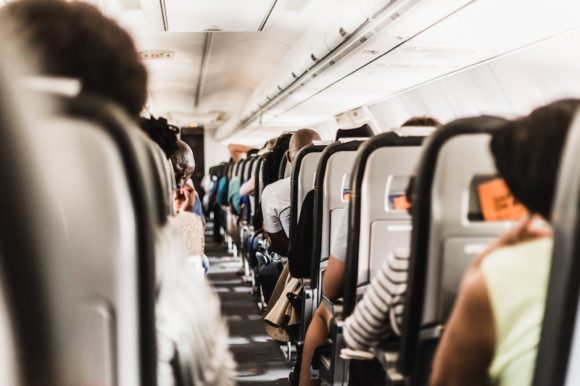
Photo by Gerrie van der Walt on Unsplash.

It was the folks at Cunard who said “Getting there is half the fun”.  And crossing the Atlantic in style on an ocean liner certainly was.  But whatever your mode of transportation, getting the right seat can make for an enjoyable or miserable trip.

On Metro-North, I usually go for a window seat.  However, on crowded trains, any seat is better than none.  But I can still get an “upgrade”, if I pay attention.

Heading into New York, I watch for people getting off the train in Stamford.  Their seat check usually has a torn corner, so I look for them when boarding.  And you’ll usually see those folks gathering their stuff just before arriving at the station.  That’s when I pounce.

Leaving Greenwich, Conn., I try to arrive early to board my train so I get my first pick of seats.  I usually opt for the window on a three-seat side.  That way, if someone else arrives just before departure, they can take the aisle seat and the train will have to be Standing Room Only before anyone opts for the dreaded middle seat.

But it’s on airplanes that seat selection is crucial.

Never go for an emergency exit row.  There may be more legroom, but the seat dividers are rigid and the arm rests can’t be raised.

Try to sit forward of the wing for minimal engine noise.  It’s not by chance that the cheapest seats are in the rear, next to the lavatories, where the jet noise is the loudest.

Some people prefer aisle seats so they can get up and walk around.  But a recent study showed occupants of those seats have the greatest chance of being sprayed with germs from other passengers and crew.  Consider wearing a face mask for your own protection.

Again, I prefer a window seat so I can see where we are going.  But even booking in advance these seats are hard to get, depending on the airline and your frequent flyer status.

Something like 20 percent of all airline revenue now comes from “add-ons” to ticket prices for things like seat assignments, checked bags, food and yes, seat assignments.

The travelers’ advocacy group Travelers United cites an example of a passenger flying from NY to Chicago on American Airlines who really wanted a window seat but was told it would cost an additional $42.  She refused, waiting until she got to the airport to check in to try again.  There the airline said her window seat would cost an extra $76 … more than her one-way airfare!

That she could fly 700 miles for 10 cents a mile is ridiculous and speaks to how much airlines are “unbundling” their products. Their profit comes not from the transportation but the amenities.  You can take Greyhound on that route for $54 (if you don’t mind a 22-hour trip).  But “riding the dog” comes with two free checked bags, seat-side power plugs and free Wi-Fi.

Families flying together have a particular challenge trying to get adjacent seats. But last fall Congress tossed air travelers a bone, requiring airlines to seat families together at no additional cost.

Whatever your mode of transportation, be it cruise ship or jetliner, planning ahead is key to scoring “the best seat in the house”.

Posted with permission of Hearst CT Media

Jim Cameron

About the author: Jim Cameron is founder of The Commuter Action Group, and a member of the Darien RTM.  The opinions expressed in this column are only his own.  You can reach him at CommuterActionGroup@gmail.com

For a full collection of “Talking Transportation” columns, visit www.talkingtransportation.blogspot.com

Talking Transportation: Citizen Anger About Imminent Transport Funding Cuts Needs to be Directed at Legislature

In recent weeks I’ve been criss-crossing the state talking to folks about our transportation crisis:  the proposed fare hikes on trains and buses coupled with service cuts on the branch lines, and the multi-billion spending cuts at CDOT.

I call it the “Winter of our discontent” magical misery tour.

From Woodbridge to New Canaan, from Old Lyme to West Haven, I’ve talked to crowds large and small, explaining what’s going to happen July 1 and why.  Most folks knew something about our impending doom, but they all left unhappy about the cuts’ specific impact on their lives.

Like the First Selectwoman from Old Lyme who said taxpayers were going to have to spend $600,000 repairing a local bridge because, for the third year in a row, CDOT doesn’t have enough money to share with municipalities.

Or the manager of The Roger Sherman Inn in New Canaan who said she’d probably have to close if off-peak train service was cut on the branch, making it impossible for her cooks and waiters to get to work.

But the culmination of all these presentations was last Tuesday night’s public hearing in Stamford before an SRO crowd of 200+ angry residents.  I’d come more to listen than talk, but couldn’t resist and used my allotted three minutes to ask…

“What are we doing here?  Why are we at this hearing when nothing that you or I say tonight will do anything to change the inevitability of these fare hikes and service cuts?  This may be cathartic, but it’s just political theater.  The folks you should really be talking to are not from CDOT but your State Rep and State Senator.  The legislature created this funding problem and only they can fix it.  If they raise the gas tax and get serious about making motorists pay their fair share, none of these service cuts or fare hikes will happen”.

I was speaker number 11 of more than 80 who signed up to speak.  Some of them waited 4 hours for their few minutes in front of the mic.

But not the politicians.  As State Rep’s arrived, they were whisked by the CDOT Commissioner to the front of the speaker’s line, jumping the queue.  The Commissioner is no fool.  He knows who controls his budget and it isn’t the old guy with a walker complaining about the buses.

When the pols spoke it was the usual platitudes but no new ideas.  “Don’t raise fares, find other funding sources,” said one.  What funding sources?  To their credit, some of the pols did stay to listen, but others (including at least one gubernatorial hopeful) did their grandstanding and split.

One State Rep did have the guts to poll the crowd on their appetite for raising the gasoline tax and tolling our roads, both of which got loud support, much to his surprise.  The people have spoken so now’s the time for action.

By the way … what kind of message does it send when scores of New Canaan residents go to the Stamford hearing to oppose rail service cuts but take a chartered bus instead of the train?

People are angry.  But they need to direct their anger not at the CDOT but at the legislature, holding them accountable for their inaction.

Posted with permission of Hearst CT Media

Jim Cameron

About the author: Jim Cameron is founder of The Commuter Action Group, and a member of the Darien RTM.  The opinions expressed in this column are only his own.  You can reach him at CommuterActionGroup@gmail.com

For a full collection of “Talking Transportation” columns, visit www.talkingtransportation.blogspot.com