
Reading Uncertainly? ‘The Best of Saki’ by H.H. Munro

The_Best_of_SakiYet another trip to our home library to retrieve an aging paperback read many years ago.

Hector Hugh Munro, the English author also known as “Saki,” wrote these delicious satirical skewerings of the English upper classes just before the First World War. Despite the enormous changes that have taken place since then, in Blighty and the rest of the world, these 49 short stories remain pungent, pithy and provoking, stirring regular outbursts of noisy laughter.

Do read them on your spring porch or in a secluded back room, otherwise your spouse may think you’ve lost it (again!)

Munro’s first admonition: beware all aunts: they are forever dangerous and demanding.

Then revel in his extraordinary names, such as Mavis Tellington, Loona Bimberton, Arlington Stringham, Lestor Slagby, Brimley Bomefields, Crefton Lockyer, Septimus Brope, Groby Lington, Sir Lulworth Quayne, Dora Bittholz, Framton Nuttel, Bassel Harrowcluff, Kenelm Jertom, Jane Thropplestance, James Cushat-Prinkly, Octavian Ruttle and, perhaps best of all, Crispina Umberleigh. I wish we’d had these names at hand before we named our children. Loona and Crispina for the ladies; Crefton and Framton for the boys!

Just a few quotes:

  • “It is the penalty and safeguard of genius that it computes itself by troy weight in a world that measured by vulgar hundredweight.”
  • “There was something alike terrifying and piteous in the spectacle of these frail old morsels of humanity (two old ladies) consecrating their last flickering energies to the task of making each other wretched.”
  • “ … (He) discovered how the loss of one’s respect affects one when one has gained the esteem of the world.”
  • He was “feverishly engrossed in the same medley of elaborate futilities that had claimed his whole time and energies …”
  • He was “one of those lively cheerful individuals on whom amiability had set its unmistakable stamp, and, like most of his kind, his soul’s peace depended in large measure on the unstinted approval of his fellows.”

Do step into the past of Merrie Olde England for a few hours.

Editor’s Note: ‘The Best of Saki’ by H. H. Munro was published by Picador, London 1976.
Felix Kloman_headshot_2005_284x331-150x150About the Author: Felix Kloman is a sailor, rower, husband, father, grandfather, retired management consultant and, above all, a curious reader and writer. He’s explored how we as human beings and organizations respond to ever-present uncertainty in two books, ‘Mumpsimus Revisited’ (2005) and ‘The Fantods of Risk’ (2008). A 20-year resident of Lyme, he now writes book reviews, mostly of non-fiction that explores our minds, our behavior, our politics and our history. But he does throw in a novel here and there. For more than 50 years, he’s put together the 17 syllables that comprise haiku, the traditional Japanese poetry, and now serves as the self-appointed “poet laureate” of Ashlawn Farms Coffee, where he may be seen on Friday mornings. His wife, Ann, is also a writer, but of mystery novels, all of which begin in a bubbling village in midcoast Maine, strangely reminiscent of the town she and her husband visit every summer.
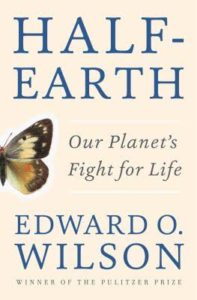
Reading Uncertainly? ‘Half-Earth: Our Planet’s Fight for Life’ by Edward O. Wilson

Half_EarthEdward O. Wilson, the remarkable professor emeritus at Harvard, who is known for his studies of ants, for the third time asks, “Who are we?” His first question was partially answered in The Social Conquest of Earth (2012) in which he analyzed the confusion of human existence, as our convoluted and introspective species tries to come to grips with our brief existence. Two years later, in The Meaning of Human Existence (2104), he described how, either deliberately or inadvertently, we are destroying other species even as we begin to recognize that we depend on them as much as they depend on us.
Now, concluding his trilogy, Wilson suggests a possible plan of action for homo sapiens. He continues his habit of short, punchy chapters, only one of 20 pages and most of 10 or less, even one of three. Instead of plunging into more verbiage, the reader must pause and think. His thesis: in order to survive we must commit “half of the planet’s surface to nature” in order to save “the immensity of life forms that compose it,” including us. A tall order, but is it possible?

Wilson begins with this earth’s extensive history of life extinctions. We’re lucky to be here! Should we worry? After all, the oldest major “extinction event,” at the end of the Ordovician period, happened some 455 million years ago and the most recent was a mere 66 million years back, when an enormous asteroid crunched into the Yucatan. Are we now coming close to a “Sixth Extinction”, the end of the current Anthropocene Era, as so clearly described by Elizabeth Kolbert in her The Sixth Extinction (2014)? Both Kolbert and Wilson recite alarming facts, plus suppositions, about our human relationships with other living creatures, large and small, on this earth. Are we the ultimate problem? They seem to think so.

To begin, “our population is too large for safety and comfort.” It is time to reduce, not expand, our footprint. “The biosphere does not belong to us; we belong to it.” But to acknowledge that, we must “… find our way as quickly as possible out of the fever swamp of dogmatic religious belief and inept philosophical thought.” We still understand too little about other species: some two million are “known” but there are perhaps some five to 100 million yet to be discovered. It is this enormous biodiversity that is the strength of this planet.

What then to do? Wilson suggests “… in order to save biodiversity it is necessary to understand how species interact with one another to form ecosystems.” But our enormous egos (and religions) tell us we are “Number One” when we are actually a small part of the action. His Solution: “Increase the area of inviolable natural resources to half the Earth or greater.” This will require a “fundamental shift in moral reasoning concerning our relation to the living environment.” We must “reduce the amount of space required to meet all the needs of an average person … habitation, fresh water, food production and delivery, personal transportation, communication, governance, other public functions (i.e. education), medical support, burial, and entertainment.” And note that this “average person” now lives in Asia and Africa as well as Europe and North America, with enormous current differences.

How will this take place? Here in Lyme, our Lyme Land Conservation Trust (www.lymelandtrust.org) has preserved in some fashion 3,000 acres of land and water resources in our small town. It and comparable efforts in this country and around the world are effective bottom-up programs. But Professor Wilson argues that these are not enough: we will need top-down guidance plus massive re-education for everyone. Is this economically possible? Do we have a choice?

Professor Wilson is obviously an optimist: “So we stumble forward in hopeful chaos.” Elizabeth Kolbert had her own conclusion: “The history of life consists of long periods of boredom interrupted occasionally by panic.”

Half-Earth and its sister volumes should be required reading for all of us. Perhaps we can wake up and change.

Editor’s Note: ‘Half-Earth: Our Planet’s Fight for Life’ by Edward O. Wilson is published by W. W. Norton, New York 2016.

Felix Kloman_headshot_2005_284x331-150x150About the Author: Felix Kloman is a sailor, rower, husband, father, grandfather, retired management consultant and, above all, a curious reader and writer. He’s explored how we as human beings and organizations respond to ever-present uncertainty in two books, ‘Mumpsimus Revisited’ (2005) and ‘The Fantods of Risk’ (2008). A 20-year resident of Lyme, he now writes book reviews, mostly of non-fiction that explores our minds, our behavior, our politics and our history. But he does throw in a novel here and there. For more than 50 years, he’s put together the 17 syllables that comprise haiku, the traditional Japanese poetry, and now serves as the self-appointed “poet laureate” of Ashlawn Farms Coffee, where he may be seen on Friday mornings. His wife, Ann, is also a writer, but of mystery novels, all of which begin in a bubbling village in midcoast Maine, strangely reminiscent of the town she and her husband visit every summer.

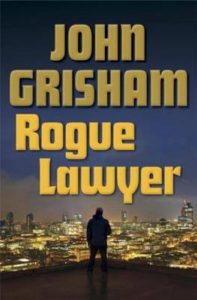
Reading Uncertainly? ‘Rogue Lawyer’ by John Grisham

Rogue_Lawyer_John_GrishamGrisham opens with a familiar sentence: “My name is Sebastian Rudd.”  See similarly Melville and Moby Dick’s: “Call me Ishmael” or the more recent: “Je suis Charlie.”
He gives us short, pithy sentences (no Proust here), replete with a sarcastic, cynical view of the underside of American society. A political screed, too: our legal system is all fouled up. The novel confirms the basic thesis of Dan Ariely’s ‘The (Honest) Truth About Dishonesty’ — that we are all basically and instinctively dishonest, at least to some degree, especially when we see dishonesty in others.

Few really likable characters and the entire scene is gloomy. Characters are also outlandish — a totally lesbian law firm; police, judges, prosecutors, jurors, defendants all easily bought; non-communication at dinner; a martial arts fighter gone berserk; a protagonist (hardly a “hero”), who himself slips into dishonesty.

And the scenes — a last-minute reprieve; a last-minute escape; militaristic police; a convoluted law case in which every string is pulled; and a protagonist who disappears into the ether at the very end, leaving many loose ends (including a son).

But, despite all these qualms, this is an utterly engrossing book for an evening reader!

Editor’s Note: Rogue Lawyer by John Grisham is published by Doubleday, New York 2015.

Felix Kloman_headshot_2005_284x331-150x150About the Author: Felix Kloman is a sailor, rower, husband, father, grandfather, retired management consultant and, above all, a curious reader and writer. He’s explored how we as human beings and organizations respond to ever-present uncertainty in two books, ‘Mumpsimus Revisited’ (2005) and ‘The Fantods of Risk’ (2008). A 20-year resident of Lyme, he now writes book reviews, mostly of non-fiction that explores our minds, our behavior, our politics and our history. But he does throw in a novel here and there. For more than 50 years, he’s put together the 17 syllables that comprise haiku, the traditional Japanese poetry, and now serves as the self-appointed “poet laureate” of Ashlawn Farms Coffee, where he may be seen on Friday mornings. His wife, Ann, is also a writer, but of mystery novels, all of which begin in a bubbling village in midcoast Maine, strangely reminiscent of the town she and her husband visit every summer.

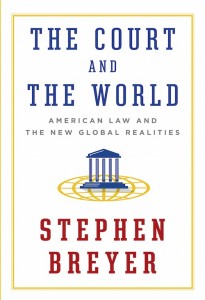
Reading Uncertainly? ‘The Court and the World’ by Stephen Breyer

The_Court&the_WorldShould our Supreme Court be a pragmatic, flexible, problem-solving institution or should it continue to rely on the distant past to address today’s challenges?
Stephen Breyer, perhaps our most articulate and thoughtful Supreme Court Justice, discusses in his latest study “the new challenges imposed by an ever more interdependent world,” asking how we should “interpret” our 18h century Constitution in the 21st century. He is both concise and compelling on the general themes of the rule of law and “the need for courts to listen to ‘many voices ‘. “

The judge suggests we discontinue our perpetual deification of the Declaration of Independence, Constitution, and its Bill of Rights, which may well have led to numerous serious mistakes: the ethnic cleansing of native Americans and war-mongering (citing the Mexican-American War, the Spanish-American War, the Vietnam War, and the Iraq War II, among others). Is, for example, our foreign policy, including going to war and security, solely the responsibility of the executive and legislative branches of government, and not the judiciary? Is this an outmoded 18th century idea?

Breyer goes on to dissect the “worst Court decisions in U. S. history:” Dred Scott (confirmation of slavery), Plessy vs. Ferguson(confirmation of state racial segregation), and Korematsu (approving the interning of Japanese-Americans).  These show we require some external ideas to modify our domestic prejudices.

Since 1787 we’ve entered into many international agreements, such as the Geneva Convention, the United Nations, NATO, and the World Trade Organization.  “In an intensely interdependent world facing global threats that are likely to last a generation or more (particularly terrorism), special security needs are no longer as intermittent or short-lived as they once were.” Our Afghanistan War is the longest in our history …

Add to this the growing complexity of international commerce: “ … the reality of modern-day commerce: national markets are now so interconnected and integrated that the most ordinary commercial transactions can involve a host of different activities and entities across the globe.” This leads to a “judicial need for information about foreign practices, rules, laws, and procedures.” We should try to stimulate the “laws of different nations” to “work together in harmony.” Better to argue than shoot each other.

Judge Breyer concludes, “Today’s Court should not base its answer to the kinds of questions illustrated here by reference solely (my italics) to the facts and conclusions of eighteenth century society.” The goal of the “rule of law” is to acknowledge that it is always in flux: “ … the rule of law prevents the opposite – namely the arbitrary, the autocratic, the despotic, the unreasonable, the dictatorial, the illegal, the unjust, and the tyrannical.” The reviewer in The New York Times had a succinct observation — “Democracy has never been a nativist straitjacket.”

History is the “sustained struggle against arbitrariness.”  So the good judge gives us no conclusion. “There are no easy answers to this question.” We must continue “our conversations,” as our Court does.

A most thoughtful and stimulating read.

Editor’s Note: ‘The Court and the World’ by Stephen Breyer is published by Alfred A. Knopf, New York, 2015

Felix Kloman_headshot_2005_284x331-150x150About the Author: Felix Kloman is a sailor, rower, husband, father, grandfather, retired management consultant and, above all, a curious reader and writer. He’s explored how we as human beings and organizations respond to ever-present uncertainty in two books, ‘Mumpsimus Revisited’ (2005) and ‘The Fantods of Risk’ (2008). A 20-year resident of Lyme, he now writes book reviews, mostly of non-fiction that explores our minds, our behavior, our politics and our history. But he does throw in a novel here and there. For more than 50 years, he’s put together the 17 syllables that comprise haiku, the traditional Japanese poetry, and now serves as the self-appointed “poet laureate” of Ashlawn Farms Coffee, where he may be seen on Friday mornings. His wife, Ann, is also a writer, but of mystery novels, all of which begin in a bubbling village in midcoast Maine, strangely reminiscent of the town she and her husband visit every summer.

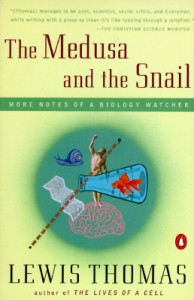
Reading Uncertainly? ‘The Medusa and the Snail’ by Lewis Thomas

medusa&SnailStep back, once again, to read the questions posed by a thoughtful physician. Dr. Thomas presents us with some 29 brief, challenging, curious, skeptical, and often humorous essays on the human condition. They inevitably raise more questions than answers:

  • Why do we feel euphoria when watching small animals going about their work? (I ask this after sitting on our deck, wondering why our squirrels and chipmunks are forever so industrious.)
  • Do ants as a group “think?’ (Edward O. Wilson may answer than one)
  • Where do we fit in this “inter-collaborative system” called earth?
  • Why are mistakes the essential elements of life?
  • Should we play Bach before all committee meetings?
  • Why do we meddle so much?
  • Why are commas useful?

Those questions along should encourage a re-reading of the good Dr. Thomas, who died in 1993 after serving many years as head of Memorial Sloan-Kettering Cancer Center in New York.

Some further jewels:

  • “All the forms of life are connected.” The earth is a “system of interacting, intercommunicating components that, as a group, act or operate individually and jointly to achieve a common goal through the concerted activity of the individual parts.”
  • “We are components in a dense, fantastically complicated system of life; we are enmeshed in the inter-living, and we really don’t know what we’re up to.”
  • “We are … worrying animal. We worry away our lives, fearing the future, discontent with the present, unable to take in the idea of dying, unable to sit still.”(Doesn’t this describe our responses to world events in 2015?)
  • “Man has always been a specifically anxious creature with an almost untapped capacity for worry; it is a gift that distinguishes him from other forms of life.”
  • On human surprise: “ … we have a whole eternity of astonishment stretching out ahead of us.” “It seems to me the safest and most prudent of bets [is] to lay money on surprise.”

If these brief quotes intrigue you, read this book, plus some of his other works: The Lives of a Cell: Notes of a Biology Watcher (1974) and Late Night Thoughts on Listening to Mahler’s Ninth Symphony (1983).

Editor’s Note: ‘The Medusa and the Snail’ by Lewis Thomas is published by Viking, New York 1979.

Felix Kloman_headshot_2005_284x331-150x150About the Author: Felix Kloman is a sailor, rower, husband, father, grandfather, retired management consultant and, above all, a curious reader and writer. He’s explored how we as human beings and organizations respond to ever-present uncertainty in two books, ‘Mumpsimus Revisited’ (2005) and ‘The Fantods of Risk’ (2008). A 20-year resident of Lyme, he now writes book reviews, mostly of non-fiction that explores our minds, our behavior, our politics and our history. But he does throw in a novel here and there. For more than 50 years, he’s put together the 17 syllables that comprise haiku, the traditional Japanese poetry, and now serves as the self-appointed “poet laureate” of Ashlawn Farms Coffee, where he may be seen on Friday mornings. His wife, Ann, is also a writer, but of mystery novels, all of which begin in a bubbling village in midcoast Maine, strangely reminiscent of the town she and her husband visit every summer.