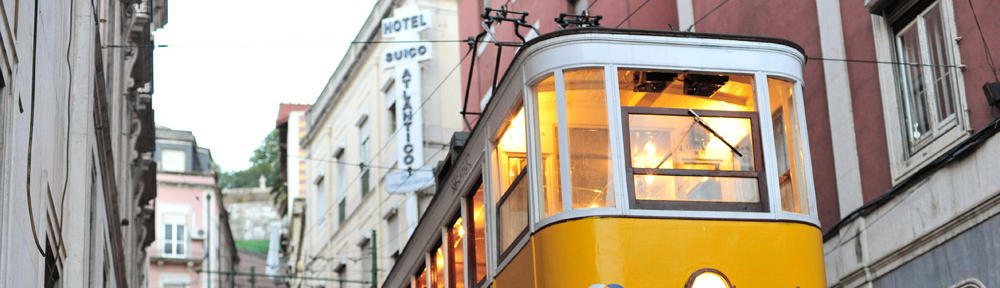

Talking Transportation: A Conversation With CT DOT Commissioner Giulietti, Part 1

Jim Cameron

Joseph Giulietti is finishing his first year as Commissioner of the Connecticut Department of Transportation — CDOT.  He’s been busy and less visible in recent months, so imagine my surprise when he offered me a one-on-one, no-holds-barred interview.

“You’ve always been fair, Jim.  You’ve hit me hard but you’ve always been fair,” said the Commissioner.  That’s music to my ears and I hope he feels the same way after reading this column.

Our conversation covered every aspect of CDOT’s operations from Metro-North to CT 2030 to tolls (which we will cover next week in Part Two).  Here are some highlights from our conversation.

I reminded the Commissioner that before he joined CDOT he authored the infamous “30-30-30” report as a consultant to the Business Council of Fairfield County, arguing that it was possible to speed up trains to be able to go between Grand Central, Stamford, New Haven and Hartford in 30 minutes per leg.  Any regrets at such a promise?

Giulietti said such speeds are still possible … in a few years.  He wants to increase train speeds, re-do some bridges to avoid slowing down and save “five minutes here and 10 minutes there.” He also held out hope for faster service on Metro-North trains to Penn Station (after the Long Island Rail Road’s East Side Access project is finished going into Grand Central.)

“We’ve got cell-phone data from the Feds showing that 40 percent of riders to Grand Central continue south to Wall Street but 20 percent go west toward Penn Station,” he added.

He also held out hope for limited, rush-hour non-stop express service from New Haven to GCT and Stamford to GCT.

As for new rail cars… the additional 66 M8 cars that were to be delivered this year “are running a bit late”, but he called the M8’s a tremendous success.  Those M8 cars were supposed to also run on Shore Line East, but even with 405 M8s CDOT doesn’t have enough of them even for the mainline given increased ridership.  The Commissioner said he’s still looking at diesel push-pull double-decker cars where a ten-car train could carry almost 2000 passengers.

But he says that electrification of the Danbury and Waterbury branch lines just isn’t on the cards due to the cost.

As for fares:  he couldn’t say if they’d go up because he doesn’t know what funding in the Special Transportation Fund will be like.  But he did pledge cost savings in his department calling possible rail service cuts “the worst of all worlds.”

While the Walk Bridge project in Norwalk is running late and over-budget, he blamed litigation and said he has firm funding commitments from Amtrak on that bridge and the one over the Connecticut River.

But will CDOT have enough talented engineers after 2022 when 40 percent of the department’s most experienced staffers will be up for retirement?  The Commissioner said that succession planning is a huge priority for him.  He’s even grooming replacements for his own job.

But among the rank-and-file, it’s hard to keep talent.  “I can’t hold onto someone with a CDL (Commercial Drivers License.)  “Some of the towns are paying more [than CDOT.]”

With a special session of the legislature coming up in January to consider tolls, there’s a lot hanging in the balance.  What does Giulietti think of his boss [the Governor] and Mr Sasser’s “No Tolls CT” movement?

Read those frank comments next week in Part Two of our conversation.

Posted with permission of Hearst CT Media.

About the author: Jim Cameron is founder of The Commuter Action Group, and a member of the Darien RTM.  The opinions expressed in this column are only his own. You can reach him at CommuterActionGroup@gmail.com  For a full collection of  “Talking Transportation” columns, visit www.talkingtransportation.blogspot.com

Reading Uncertainly? ‘The Uninhabitable Earth: Life After Warming’ by David Wallace-Wells

Is global warming a sensible hypothesis? Is it happening? What may be its consequences?  What can and should we, as human beings, do about it?
These are some of the most important questions facing us today. David Wallace-Wells begins with startling pessimism, moving on to despair, but he finally concludes with a modest sense of optimism. Thank goodness … at least for this reader.

He tests our ability to continue reading in an ominous Chapter 2, some 100 pages of possible woe: heat death, hunger, drowning, wildfires, disasters (no longer natural). freshwater drain, dying oceans, unbreathable air, plagues of warming, economic collapse, climate “conflict”, and “systems” collapses.

What a challenge!

As the author writes at its end, “If you have made it this far, you are a brave reader.” It confirms Pogo’s famous law: “We have met the enemy, and he is us.”

This analysis leads Wallace-Wells to suggest how we might respond: “But climate change inverts the (human) perspective – giving us not a deep time of permanence but a deep time of cascading, disorienting change, so deep that it mocks any pretense of permanence on the planet.” Does this then enhance the delusions of apocalypse believers?

What do other think of this proposition?

John Lancaster, writing in The New York Times (4/28/19) says: “a remorseless, near unbearable account of what we are doing to our planet.”
From The Economist (5/25/19): “[the book explores the] … causal link between climate change and conflict (encompassing everything from interpersonal to large-scale violence.)”
From the New Scientist (4/27/19): “The goal should not be net-zero carbon emissions, as fast as possible. How fast is feasible is a legitimate matter for debate.”
Dana Wilde, writing in The Working Waterfront (9/20/19) notes: “Reading the book’s first sections is like being caught in a carpet-bombing.”

Buried in the author’s notes is a conclusion by Paul Kingsnorth, from Dark Ecology (2012): “The answer is that it leaves you with an obligation to be honest about here you are in history’s great cycle, and what you have the power to do, and what you don’t.” At least, we can try.

Then Wallace-Wells counsels that the problem stems from “ … both human humility and human grandiosity … If humans are responsible for the problem, they must be capable of undoing it … it is an acceptance of responsibility.”

My personal counsel: “Don’t despair; respond!” Or perhaps, to my offspring, “Go North, young people, and go inland!”

Editor’s Note: The Uninhabitable Earth: Life After Warming by David Wallace-Wells, was published by Tim Duggan Books, New York, 2019 .

Felix Kloman

About the Author: Felix Kloman is a sailor, rower, husband, father, grandfather, retired management consultant and, above all, a curious reader and writer. He’s explored how we as human beings and organizations respond to ever-present uncertainty in two books, ‘Mumpsimus Revisited’ (2005) and ‘The Fantods of Risk’ (2008). A 20-year resident of Lyme, he now writes book reviews, mostly of non-fiction, a subject which explores our minds, our behavior, our politics and our history. But he does throw in a novel here and there.
For more than 50 years, he’s put together the 17 syllables that comprise haiku, the traditional Japanese poetry, and now serves as the self-appointed “poet laureate” of Ashlawn Farm Coffee, where he may be seen on Friday mornings. His late wife, Ann, was also a writer, but of mystery novels, all of which begin in a village in midcoast Maine, strangely reminiscent of the town she and her husband visited every summer.

Legal News You Can Use: What Happens When You Suffer From Chemical Burns?

Chemical burns are a real problem in some workplaces. Whether you’re working in a chemistry lab or teach at a local university, you could be exposed to chemicals that could leave your skin burned and damaged.

Chemical burns can be caused by some common chemicals found in schools, homes and workplaces. For example, common products that sometimes cause chemical burns include:

  • Ammonia
  • Denture cleaners
  • Chlorine
  • Bleach
  • Battery acid

What are some symptoms of chemical burns?

Symptoms of chemical burns include:

  • Irritation or redness in the affected area
  • Loss of vision if the eyes came into contact with the chemicals
  • Numbness
  • Dead or blackened skin

If swallowed, some symptoms that might occur include:

  • Headaches
  • Cardiac arrest
  • Shortness of breath
  • Seizures
  • Dizziness
  • Low blood pressure
  • Muscle twitches

If you believe that you’ve suffered a chemical burn or that you’ve ingested chemicals at work, it’s important to call 911 or get to the hospital quickly. Your health care provider will then make a diagnosis based on your condition.

Chemical burns can affect the epidermis, resulting in superficial burns with a high likelihood of recovery. They can also cause burns that go into the dermis, which is a second-degree burn. Third-degree, or full-thickness burns, are when the subcutaneous tissues are involved.

Chemical burns must be treated as quickly as possible. The chemical needs to be removed from the skin or body in whatever way possible. Usually, the skin must be rinsed for 10 to 20 minutes with running water.

If you suffer a chemical burn at work, remember that your workers’ compensation coverage should cover your medical care and other losses.

Sponsored Post on behalf of Suisman Shapiro Attorneys-at-Law.

Talking Transportation: Speed Kills

Jim Cameron

Speed kills … and I don’t just mean methamphetamines.  Speeding on our roads is linked to over 36,000 deaths each year in the US.  That’s almost 700 deaths a week … 100 a day.

If a hundred people die in a plane crash, we go nuts.  But if they die on our roads we see it as the cost of doing business.  As one blogger put it… “it’s high time to stop sacrificing safety on the altar of speed”.

Most of those 36,000 deaths are pedestrians or bicyclists.  But tens of thousands of those deaths involve the motorists in the cars tied to the “accidents” caused by distracted driving, drink or drugs or fatigue.

Federal statistics show if you’re hit by a vehicle going 20 mph you have a 90% chance of surviving.  If the car or truck is going at 40 miles an hour your survival chances are just 10%.  Speed kills.  So why are we all driving so fast?

Because we have so far to travel and want to save time getting there.  In Connecticut, our homes and our work are far apart because we can’t afford (or don’t chose) to live closer to our jobs.  And either because we don’t want to (or chose not to), we don’t take mass transit, preferring the cocoon of our cars.

Sure, seat belts in cars save lives… if you wear them.  And air bags and other tech in cars are helping us avoid many accidents. But the death toll keeps climbing, especially where cars occupy the same driving space as bikes and pedestrians.

Consider New York City.

In 1990 there were 700 traffic deaths in NYC.  But by 2018 that number had dropped to 202, thanks to “Vision Zero”, Mayor de Blasio’s ambitious, billion dollar plan to reduce road deaths to zero by 2024.  More bike lanes, sidewalks and a 25 mph city-wide speed limit have made a big difference.  But this year saw an uptick in deaths, most of them involving bicyclists driving on city streets lacking bike lanes.

In Connecticut we have nowhere near the same density of urban traffic fighting for space with folks on two feet or two wheels, but neither do we have sidewalks in many towns.  Or bike lanes.  But we do have speeders, scofflaws and insufficient enforcement.

When it’s not crawling bumper-to-bumper, try driving 55 mph on the Merritt, I-95 or I-84 and see what happens.  As a State Trooper once told me as we cruised along at about 75 mph with the flow of traffic, “I look for the driver likely to cause an accident” by weaving or not signaling lane changes.  Even those enforcing our laws admit they don’t or can’t keep up with motorists’ need for speed.

Even when the cops do look for speeders, legal radar detectors and laser-jammers help violators from getting caught.  Attempts to install red-light cameras in Connecticut have always failed due to a combination of Big Brother paranoia and fears of the safety tech being turned into an unending revenue spigot for Towns and cities.

Weather conditions of course exacerbate the problem, especially with those driving the tanks we call SUVs who think they are immune to the laws of physics.

Bottom line:  can’t we all just chill out a bit and think of the safety of others if not ourselves?

Posted with permission of Hearst CT Media.

About the author: Jim Cameron is founder of The Commuter Action Group, and a member of the Darien RTM.  The opinions expressed in this column are only his own. You can reach him at CommuterActionGroup@gmail.com  For a full collection of  “Talking Transportation” columns, visit www.talkingtransportation.blogspot.com


A la Carte: A New Dish for a New Decade — Roasted Shrimp, Caulifower with Quinoa

Like many of you, I have made one or two or more resolutions. I, for one, am on that intermittent fasting. I don’t eat before 11 a.m., nor after 7 p.m. This is an easy diet for me: I like lunch more than breakfast and I often am in bed at 8:30, where I read for at least two hours. So dinner at 6-ish works for me. I have lost around seven pounds since mid-December, even with the holiday parties. 

My friend Judy promises to watch less television and learn how to use more of her computer’s abilities, especially Google maps, since she is an assessor. I am promising myself that I will buy fewer shoes and clothes. All summer long I wear my jelly sandals, of which I have around 15 pair, and in the winter I wear boots outside. I never wear shoes in my condo, even when the temperature hovers around 20 degrees. As for clothes, my Nordstrom, Nordstrom Rack and Macy’s have zero balances.

Almost everyone I know are getting into plant-based food meals. I eat chicken and fish a few times a week;  I have a hamburger or a lamb chop maybe once a week. I do like pasta and chili, whose main ingredients are the beans and the pasta rather than meat balls or pork. I also have stopped at Burger King a few times for that Impossible Burger. With the mayonnaise-based dressing, onion, lettuce and tomato, I don’t miss the burger at all. Truth to be told, I only order my burgers at Haywire in Westbrook.  Once Jack Flaws opens his new place in Centerbrook, I will be a true carnivore, if only for a few hours.

Today, though, I will be making this for dinner. This recipe comes from the free magazine from Stop & Shop. I had just read on Facebook that Ina Garten now only serves shrimp that she has oven-roasted. Evidently Stop & Shop’s test kitchen thinks the same way.

Roasted Shrimp and Cauliflower with Quinoa Tabbouleh

From Savory by Stop and Shop, January 2020

Yield: serves 4

One-half cup dry quinoa, rinsed
3 cups cauliflower florets
4 tablespoons olive oil, divided
One-quarter teaspoon salt and pepper
1 cup fresh parsley
1 pound frozen, peeled deveined raw shrimp, thawed
One-quarter teaspoon salt and pepper
One-quarter teaspoon smoked paprika
2 tablespoons fresh lemon juice

Preheat oven to 425 degrees.

Cook the quinoa according to package directions.

In a medium bowl, toss the cauliflower with 2 tablespoons oil, salt and pepper; reserve bowl. Arrange on a large rimmed baking sheet in single layer. Roast 15 minutes.

Meanwhile. Very finely chop parsley and add to a large bowl. In the same bowl cauliflower was in, toss the shrimp with the smoked paprika, 2 tablespoons of oil, and salt and pepper.

Once cauliflower is roasted, push cauliflower to one side of baking sheet and arrange shrimp in a single layer on other side. Roast 5 minutes until shrimp are cooked through and cauliflower is tender.

Fluff the quinoa and add to bowl with parsley. Add lemon juice and remaining 1 tablespoon of oil. Season with salt and pepper to taste. Serve the shrimp and cauliflower over the quinoa .