Letter From Paris: Tragic Death of Christophe de Margerie, CEO of Total, Stuns France    

Nicole Prévost Logan

Nicole Prévost Logan

On the night of Monday, Oct. 20 , the visibility was poor at the Vnukovo  airport.  The control tower had given clearance to the Falcon private jet to take off.   A few seconds after leaving the ground, the pilot saw a snowplow on the runway but was unable to avoid it.  The landing gear caught the roof of the vehicle, flipped over and crashed a few yards away.  There was just one passenger on board – Christophe de Margerie, CEO of  the world’s fourth largest oil producer.
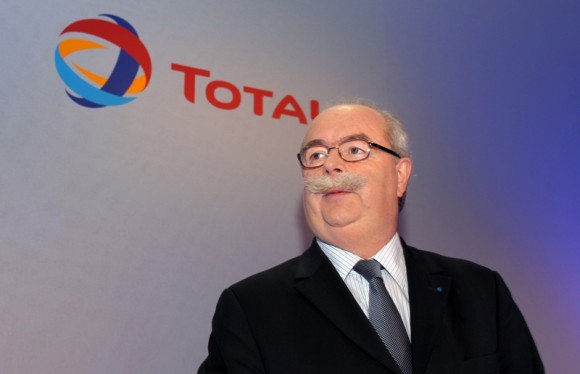
The late Christophe de Margerie.

The late Christophe de Margerie.

The news hit France like a bomb.   At Total’s headquarters in the district of La Defense employees were stunned.  The country reacted as if a chief of state had died.  Tributes poured in from everywhere.

Total has a capital ranking second in the CAC 40 (the ‘Cotation Assistée en Continu’ is a benchmark French stock market index) and employs more than 100,000 people in 130 countries.  It is hard to believe therefore why such a company – the jewel of  the French economy –  should have so many detractors in France.  The day after the accident, the conservative daily Le Figaro published an article entitled, “The man who wanted the French to make peace with Total”.   That man, Christophe de Margerie, was a charismatic  and jovial person, full of warmth, direct but tough .

De Margerie came from an aristocratic family that could be described as representative of, ‘vieille France.’  Family members occupied prominent positions in the world of high finance, diplomacy (his cousin was ambassador to the US) and the arts.  He was the grandson of Pierre Taittinger, the founder of a champagne empire.  Several of his relatives own and live in an elegant apartment building tucked away in a garden, behind massive walls and a monumental gate, right at the heart of the Faubourg St Germain.

He joined Total about 40 years ago and was named CEO in 2007.  In 1995, he became the head of Middle East Total, which explains his particular interest for that part of the world.  The Jubail giant refinery inaugurated in 2013  by Total and Saudi Arabia, is but one example.

The main criticisms against the company concern its huge benefits, which do not profit the French economy because the company pays practically no taxes in France.  The ‘marée noire’ (black tide) caused by the oil spill off the coast of Brittany in 1999 has not been forgotten.  In 2010,the decision to close the Dunkirk refinery and the associated firing of more than 1,000 workers outraged the opinion.  Finally, de Margerie’s policy of creating joint ventures with Russian companies Loukoi, Novatek or Gazprom and his rejection of the sanctions enforced by the West have isolated him.

De Margerie wanted to project a positive image and show his concern for the environment by encouraging renewable energy.  In recent years, signs of transformation of the company had been noticeable, particularly in the reduction and higher selectivity of investments.  The question now is whether de Margerie’s successors, Thierry Desmarets as chairman and Patrick Pouyanné as CEO, will bring changes to the company’s strategy or maintain the course.

Nicole Logan

Nicole Logan

About the author:  Nicole Prévost Logan divides her time between Essex and Paris, spending summers in the former and winters in the latter.  She will write a regular column for us from her Paris home where her topics will include politics, economy, social unrest — mostly in France — but also in other European countries.  She also will cover a variety of art exhibits and the performing arts in Europe.  Logan is the author of ‘Forever on the Road: A Franco-American Family’s Thirty Years in the Foreign Service,’ an autobiography of her life as the wife of an overseas diplomat, who lived in 10 foreign countries on three continents.  Her experiences during her foreign service life included being in Lebanon when civil war erupted, excavating a medieval city in Moscow and spending a week under house arrest in Guinea.


“A Letter From Paris” is Back! Amidst Economic Depression, Two Nobel Prizes for France Lift the Communal Spirit    

Nicole Prévost Logan

Nicole Prévost Logan

We are delighted to welcome back Nicole Logan, who has returned to Paris for the winter from her summer home in Essex.  She writes our weekly, “Letter from Paris,” which gives a unique insight into France and the French.  Today she writes about the depressing state of the French economy and contrasts it to the tremendous excitement that winning two Nobel Prizes has brought to the country.

It is the time of year when financial laws are voted on and budgets submitted.  The 2015 budget represents a triple hurdle for France since the country is under scrutiny from the European Union (EU) Commission in Brussels headed now by Jean Claude Yuncker from Luxemburg; the Eurogroup (made up of the ministers of finances from the 18 members of the euro zone) and led by Jeroen Dijsselbloem from the Netherlands; and finally by the European Council, presided over by Herman Van Rompuy from Belgium.

Will France meet the criteria set in the 1992 Maestrich Treaty, namely an annual deficit of less than 3 percent and a public debt no more than 60 percent of that GDP?   It is most unlikely, since the latest figures stand at a 4.3 percent deficit.  François Hollande is criticized for not having used the two years respite, granted in 2013, to undertake structural reforms.  Instead, he has limited his action to carry out an austerity program by steadily increasing taxes on the most vulnerable individuals like retirees, wage earners or small entrepreneurs.

So to-day the French government is scrambling for ways to reduce its expenses by 21 billion Euros.  Three sudden measures have shocked public opinion:  closing of the Val de Grace hospital, an historical institution in Paris, the military base of Chalon, and the oldest air base of France in Dijon.  More savings are on the table but promise to provoke violent confrontation since they are all considered as untouchable taboos.

Given the fact France’s economy is the second of Europe, the widespread opinion is that it cannot be allowed to fail.  Imposing sanctions of 0.02 percent would make it even more impossible for the country to pull out of a recession with dire consequences for the rest of the continent.  Behind the scenes, the new French Minister of Economy Emmanuel Macron and his German counterpart are at work on the elaboration of a common investment policy.

Two Nobel prizes have just been awarded to French nationals. This unexpected news has definitely lifted the spirits here.

Patrick Modiano

Patrick Modiano

Patrick Modiano received the prize for Literature, following in the footsteps of Camus, Sartre and Gide.  Several of his many novels take place during the German Occupation of France. One of them inspired Louis Malle for his outstanding 1974 film Lacombe Lucien.

The Nobel prize for Economics is particularly interesting because it rewards  not only an individual, but also an institution.  Jean Tirone, born in 1953 and a graduate of the Ecole Polytechnique, holds a PhD from MIT.  In 2007, he founded  the Toulouse School of Economics (note that this name is in English), inspired  from an American model.  It is today one of the world’s 10 most important centers for economic research.

Tirone belongs to the school of economists using a rigorous scientific and mathematical approach.  His research is centered on the regulation of free market economy.  Tirone’s nomination follows the phenomenal success of Thomas Piketty ‘s ” Capital in the Twenty First Century” published in 2013.

Nicole Logan

Nicole Logan

About the author:  Nicole Prévost Logan divides her time between Essex and Paris, spending summers in the former and winters in the latter.  She will write a regular column for us from her Paris home where her topics will include politics, economy, social unrest — mostly in France — but also in other European countries.  She also will cover a variety of art exhibits and the performing arts in Europe.  Logan is the author of ‘Forever on the Road: A Franco-American Family’s Thirty Years in the Foreign Service,’ an autobiography of her life as the wife of an overseas diplomat, who lived in 10 foreign countries on three continents.  Her experiences during her foreign service life included being in Lebanon when civil war erupted, excavating a medieval city in Moscow and spending a week under house arrest in Guinea.

Talking Transportation: Five Terrible Ideas for Solving Traffic Congestion

The fall campaign has brought a welcome discussion of the state’s transportation woes, especially getting mass transit back into a state of good repair.  But gubernatorial candidate Tom Foley says he thinks the real issue isn’t the trains and buses but highway congestion.  Yet, he offers no solutions, saying only “we’ll figure it out.”  Really?

Tom, if there were easy answers, they’d have been implemented by now.  Look … this is really a matter of supply and demand: too much demand (highway traffic) and not enough supply (spaces on those roads).   I think the solution is in managing the demand.  But Foley says it’s a “supply side” issue.

So here are a few of the crazier ideas for fixing traffic that I hope he does not embrace:

  1. DOUBLE-DECK I-95: Seriously, this was once proposed.  Can you imagine the decades of construction and billions in cost, with “upper level” roads having to soar hundreds of feet over existing bridges.
  2. ALLOW TRUCKS ON THE MERRIT PARKWAY: There are two words to explain why this can’t happen:  low bridges.
  3. BAN TRUCKS FROM I-95: Trucks are high-occupancy vehicles delivering goods to the stores that you, in your single-occupancy vehicle, drive to so you can shop.  No trucks, no goods, no shopping.
  4. DRIVE IN THE EMERGENCY BREAK-DOWN LANE: This was Governor Rowland’s idea and he even wasted a million dollars studying it.  But if you think of that far right-hand lane instead as the “emergency rescue lane,” you’ll see why this doesn’t make sense.  This plan would also require re-striping traffic lanes to a narrower width, making driving more dangerous.
  5. WIDENING I-95 TO FOUR LANES: Again, billions in cost and decades of construction.  And if you build it, they will come.  Traffic will expand to fill available space.  Then what, a fifth lane?

I think there are better ideas for managing congestion, some of them already being implemented:

OPERATIONAL LANES:   Adding a fourth lane from on-ramps to off-ramps gives traffic a better chance of merging on and off the highway without blocking the through-lanes.

WIDENING CHOKE-POINTS: For example, the exit 14-15 mess in Norwalk.  But this one small construction project, discussed since 2002, has been under construction for four or five years and it’s still not done!

MANAGE DEMAND WITH TOLLS: Tolls are coming, as I’ve predicted before.  And with time-of-day pricing they’ll not only raise badly needed funds but also mitigate demand.  Those who absolutely must drive at peak hours will pay for the privilege and get a faster ride as those who can wait will defer their trip.  We have peak and off-peak fares on Metro-North, so why not on highways.

ADD A ZIPPER LANE: Sure, this may require highway widening, but just one lane that’s reversible depending on demand, a system that’s long been in effect on the Tappan Zee Bridge.

As I say, there are no simple solutions to highway congestion.  So when any candidate says he or she has one, be skeptical.  It’s easy to identify the problems.  But fixing them will always be expensive.

Jim Cameron

Jim Cameron

Editor’s Note: Jim Cameron has been a Darien resident for 23 years.  He is the founder of the Commuter Action Group and also serves on the Darien RTM.  The opinions expressed in this column are only his own.  You can reach him at CommuterActionGroup@gmail.com  

Nibbles: Super Squash Soup Warms The Heart

It was a bit of an iffy week, with some weather including rain, heat (mid-seventies in October!) and a pretty cold evening when I thought I might take the soft and comfy throws into the living for the cats and me.

Each of the days, while my friend Nancy was vacationing in Lauderdale-by-the-Sea, I fed her feral cats. She had packed up eight enormous plastic bins of dry cat food and left me a quart-sized bottle for fresh water. Each early afternoon, I would change my shoes for sneakers and walk a path down a hill and into the woods, rife with poison ivy, to the little den she fashioned with one of those plastic igloos and a large green trash can set on its side to hold the food and water.

I am a city girl so for decades I thought poison ivy was a maple leaf (three points on a leaf) for three leaves, so I guess I am not allergic to the little devils though my husband knew exactly what they looked at and was very sensitive. On the other hand, I did get scraped by some twigs and wound up with a few infected sores which are fine, now.

Doug and I were never leaf-peepers. We grew up in upstate New York and together we lived in New England. We never thought it important to drive hours to Vermont or New Hampshire when we saw gorgeous colors up and down I-95 and in our own backyard. But my good friend Kirsten McKamy and her adorable partner, Charles, invited me to have lunch at his 1750 cape in Storrs, Conn.

It took about an hour from my condo on the shoreline to Storrs and I must say that the foliage was spectacular. His magnificently restored house sat in seven acres, at least two of which were mowed. The vivid green of the lawn, the enormous maples and oaks and the big pond across the road turned my quiet Sunday into quite a picture.

Even better was the food: an herb “cake,” squash soup and two desserts, Kirsten’s pear tart and my apple cake. I will serve that soup the next time I have friends for dinner. Then again, maybe sooner.

Roasted Kabocha Squash Soup with Pancetta and Sage

From Epicurious

Roasted kabocha squash soup with pancetta and sage

Roasted kabocha squash soup with pancetta and sage

Yield: 8 servings (about 11 cups)

1 4-pound kabocha squash, halved and seeded

1 cup vegetable oil

20 whole fresh sage leaves plus 1 and one-half teaspoon chopped fresh sage

One-quarter pound sliced pancetta, coarsely chopped

1 tablespoon olive oil

1 large onion, chopped

2 garlic cloves, minced

3 and one-half cups chicken broth

3 and one-half cups water

1 tablespoon red wine vinegar

Dollops of crème fraiche (optional)

Roast squash: Preheat oven to 400 degrees. Roast squash, cut sides down, in an oiled roasting pan in middle of oven until tender, about an hour. When cool enough to handle, scrape flesh from skin.

While the squash is roasting, heat vegetable oil in a deep small saucepan until it registered 365 degrees on a deep-felt thermometer. Fry sage leaves in 3 bathes until crisp, 3 to 5 seconds. Transfer leaves with a slotted spoon to paper towels to drain.

Cook pancetta and make soup: Cook pancetta in a 4-quart heavy pot over moderate heat, stirring, until brown Transfer pancetta with slotted spoon to power towels to drain.

Add olive oil to pancetta fat remaining in pot, then cook onion, stirring, until softened. Stir in garlic and chopped sage and cook, stirring, until fragrant, about 1 minute. Add squash, broth and water and simmer 20 minutes to blend flavors.

Puree soup in batches in a blender, transferring to a bowl. (Use caution when blending hot liquids.) Return soup to pot and reheat. If necessary, thin to desired consistency with water. Stir in vinegar and salt and pepper to taste.

Serve sprinkled with pancetta and fried sage leaves. If you like, dollop spoonsful onto soup.

Cooks’ note: you can make soup 3 days in advance and chill, covered.

Welcome, Felix Kloman: Our Newest Columnist

HFKPicture2008_138KB

Felix Kloman

We are delighted to welcome a new columnist to our ranks today. Felix Kloman will be writing book reviews under the column title of “Reading Uncertainly” and we are pleased to publish his first review in a separate article today.

Kloman is a sailor, rower, husband, father, grandfather, retired management consultant and, above all, a curious reader and writer.  He’s explored how we as human beings and organizations respond to ever-present uncertainty in two books, ‘Mumpsimus Revisited’ (2005) and ‘The Fantods of Risk’ (2008).  A 20-year resident of Lyme, he now writes book reviews, mostly of non-fiction that explores our minds, our behavior, our politics and our history.  But he does throw in a novel here and there.

For more than 50 years, he’s put together the 17 syllables that comprise haiku, the traditional Japanese poetry, and now serves as the self-appointed “poet laureate” of Ashlawn Farms Coffee, where he may be seen on Friday mornings.

His wife, Ann, is also a writer, but of mystery novels, all of which begin in a bubbling village in midcoast Maine, strangely reminiscent of the town she and her husband visit every summer.  Her characters also explore the world, causing murders or tripping over bodies in Jackson Hole, Wyoming, Stockholm, Sweden, Hamilton, Bermuda, Newport, R.I., Bainbridge Island, Wa., and, believe it or not, Old Lyme, Conn.

He can be reached at fkloman@aol.com.