
Talking Transportation: Commuters Have Clout

The recent elections have shown Hartford an important fact:  the 120,000 daily riders of Metro-North have political power.

The Commuter Action Group, of which I am founder, endorsed only five candidates for election and they were all winners.  (Trust me, there were many others seeking our endorsement, but they didn’t have the track-records (pun intended) to warrant our support.)

Those we backed have long supported mass transit. They have fought for more funding and understand their commuting constituents’ frustrations.   All we did was remind voting commuters who were their real friends in Hartford versus those who were just paying lip-service to the issue during a campaign.

While I have disagreed with him in the past (and will probably do so again), Governor Malloy was an easy choice.  His opponent was just the latest dilettante billionaire to be chosen by the GOP (remember Linda McMahon’s two runs for office costing $97 million?), by-passing experience political veterans.  Tom Foley was just clueless, saying such things as “we spend too much on mass transit” and surrounding himself with “yes-men” advisors.  Even his fellow Republicans on the ballot couldn’t talk sense into him.

What would give Foley or McMahon, neither of whom have ever been elected to anything, the idea that their track records as CEO’s would qualify them for the job of Governor?   A CEO can snap his fingers and say “do this or you’re fired”, but a Governor has to deal with a legislature, and in Foley’s case, it would have been of the opposing party.  Good luck with that.

Trust me … I am not a fan of one-party rule.  With their huge majority and deep pockets I think the Democrats in this state have become abusive bullies.

So why does the GOP keep choosing these kinds of candidates, aside from the fact that they can bankroll their own campaigns?  What a shame that veteran State Senator John McKinney didn’t get a chance to run against Malloy. McKinney was very strong on transportation issues. That would have been an interesting race.  Maybe in 2018?

Because we are non-partisan, the Commuter Action Group also endorsed three Republicans … State Senator Toni Boucher and State Rep’s Gail Lavielle and Tony Hwang, as well as Democrat Jonathan Steinberg.  They were all winners, not because of our endorsement but because we helped remind commuters they have been strong allies in Hartford.

What did we ask for our endorsement?  Only a single pledge:  that, if elected, they would promise to do something never done before… to caucus, Republicans and Democrats together, with fellow lawmakers from electoral districts representing commuters.

It was amazing for me to learn that doesn’t happen… that R’s and D’s from Fairfield County never get together to present a united front against up-state lawmakers’ attempts to cut funding for our trains.  Well, it will happen now!

Back in the dark days of February when the Commuter Action Group was formed, I reminded Hartford lawmakers that if they didn’t come to the rescue of our trains, that commuters would “remember in November” who their friends were.  And clearly they did.

Jim Cameron

Jim Cameron


Editor’s Note:
Jim Cameron has been a Darien resident for 23 years.  He is the founder of the Commuter Action Group and also serves on the Darien RTM.  The opinions expressed in this column are only his own.  You can reach him at CommuterActionGroup@gmail.com   For a full collection of “Talking Transportation” columns, see www.talkingtransportation.blogspot.com
Tunisian Election Outcome Offers Remarkable Example to Countries Dealing With Terrorism, Violence

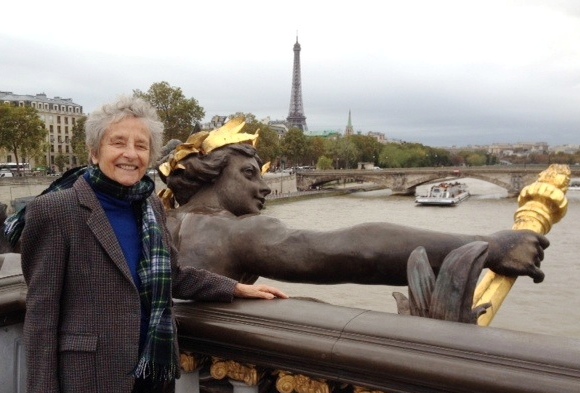
Nicole Prévost Logan

Nicole Prévost Logan

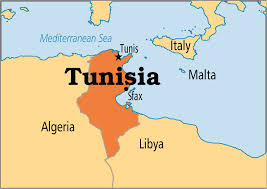
Map_of_tunisiaTunisia did it again!  This small country in North Africa was the one to start the Arab Spring in December 2010.  On Oct. 26 of this year, the parliamentary elections marked the return to some degree of normalcy after a difficult period of assassinations and violence.

The latest elections revealed a “collective intelligence,” to use the words of a French political scientist – the result of a well established civil society.  Instead of a single party hijacking the political scene, the people voted for several parties.  The liberal party Nidaa Taures won with 38 percent of the votes.  In order to reach a majority of 109 seats in the parliament, it is willing to form a coalition – quite unusual in this part of the world.

The Islamist party Ennahda secured second place with only 28 percent of the votes and 69 seats — or 16 seats less than in the previous election.  Wisely it  conceded defeat.  How to explain the resistance of the population to the Ennahda program?

The answer lies for a large part in the key role played by women.  They spearheaded the resistance against the strict enforcement of the Sharia or moral code, which limits their rights in many areas: inheritance, divorce, veil and regulations on clothing, custody of children, adultery sanctioned by stoning or “honor killing,” right to travel, right to open a bank account, and access to higher education, etc.

In the text of the constitution approved in January 2014,  Ennahda had reluctantly agreed to replace the expression “complementarity of men and women” by “equality for all.”  A journalist had the nerve to make the following extraordinary comment, “This was a small victory for a few Tunisian feminists”.

Tunisian_flagThe “Personal Status Code,” which was installed by president Habib Bourguiba in 1956,  had given empowerment to Tunisian women, thus making them the most emancipated in the Arab world.  This revolution was at the center of his program in order to model his country on Kemal Ataturk’s vision of a secular  and modern country.  Incidentally, it is interesting to note that both Turkey and Tunisia have almost identical flags.  Bourguiba is said to have remarked at one time, “… the veil – that odious rag.”
Tunisia can be considered to-day as a bulwark between a dangerously chaotic Libya and an Algeria unable to control terrorism (on Oct.14, a  Frenchman visiting the rugged mountainous area south of Algiers, in order to train young Algerians to become mountain guides, was taken hostage and  beheaded two days later.)   In other words, Tunis is of great importance not only as a model of democratic process coexisting with a moderate Islam but also, one hopes, as an oasis of stability for the whole area.

Nicole Logan

Nicole Prévost Logan

About the author: Nicole Prévost Logan divides her time between Essex and Paris, spending summers in the former and winters in the latter.  She writes a regular column for us from her Paris home where her topics will include politics, economy, social unrest — mostly in France — but also in other European countries.  She also covers a variety of art exhibits and the performing arts in Europe.  Logan is the author of ‘Forever on the Road: A Franco-American Family’s Thirty Years in the Foreign Service,’ an autobiography of her life as the wife of an overseas diplomat, who lived in 10 foreign countries on three continents.  Her experiences during her foreign service life included being in Lebanon when civil war erupted, excavating a medieval city in Moscow and spending a week under house arrest in Guinea.

Reading Uncertainly? The Narrow Road to the Deep North

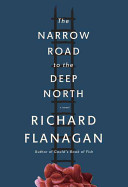
Narrow Road to the Deep NorthRichard Flanagan, an Australian writer born in Tasmania, whose father survived labor for the Japanese in the Second World War, has written a compelling, mesmerizing and thoroughly memorable novel of that period.  And it is the 2014 Man Booker Prize winner!
The Aussies in the story are led by Dorrigo Evans while his physician officer tries to save his troops from starvation, disease and beatings as they attempt to build a rail line for the Japanese through the jungle from Siam to Burma.  They are controlled by a few Japanese, consumed with love for their country, their emperor and for the poet Matsuo Basho, whose most famous work is the title for the book.

You will remember the names: Darky Gardner, Rabbitt Hendricks, Rooster MacNeice, Wat Cooney, Gallipoli von Kessler, Jimmy Bigelow and their captors,  Colonel Shira Kota, Major Tenji Nakamura, Lieutenant Fukihara and The Goanna, Corporal Aki Tomokawa.  Flanagan follows many of them, plus Evans, in shifts of perspectives and time, from present to past, with uncanny ability to maintain our interest and understanding.  But did any of them really understand what they experienced?

It is a story of obedience and disobedience. The Aussies (and many of us from the West) are intuitively and culturally critical of authority: when an order is issued, their (our) first instinct is to ask “Why?”  The Japanese, and many Eastern cultures, in contrast, are taught to revere “authority.”  Their reply to an order is an immediate “Yes!”  Flanagan explores this natural friction, one that seems to continue even after the war.

Dorrigo Evans’ inability to connect with family and friends after the war is explained with these words:

“It did not fit within the new age of conformity that was coming in all things, even emotions, and it baffled him how some people now touched each other excessively and talked about their problems as though naming life in some ways described its mysteries or denied its chaos. He felt the withering of something, the way risk was increasingly evaluated and, as much as possible, eliminated, replaced with a bland new world where the viewing of food preparation would be felt more moving than the reading of poetry; more excitement would come from paying for a soup made out of foraged grass.”

Evans goes on: “Adversity brings out the best in us  . . .  It’s everyday living that does us in.”  And he gives us the perfect conclusion to this novel: “A good book, he had concluded, leaves you wanting to reread the book.  A great book compels you to reread your soul.”  The Narrow Road to the Deep North comes close to “the elegant mystery of poetry.”

And it is the poetry, the haiku, of Matsuo Basho that intrigues both Evans and his Japanese captors.  So that inevitably led me to his The Narrow Road to the Deep North (in Japanese: oku no hoso-michi) his story of a 1689 walk from Edo (now Tokyo) north along the east coast of Japan, then northwest through the mountains, and finally southwest by the Japan Sea.  In it are some of the poet’s most memorable haiku. Consider these:

Furuike ya  Old pond

Kawisu tobikomu  Frog jumps in

Mizu no oto  Sound of water

Flanagan incorporates Basho with a line late in his novel: “ . . .  the fish fell into the sound of water.”

Natsugusa ya  Summer grasses

Tsuwamono  domo ga  All  that remains

Yume no ito  Of mighty warriors’ dreams

And Flanagan’s final sentence: “Of imperial dreams and dead men , all that remained was long grass.”  I suspect I may well have missed other allusions to the poet’s famous haiku.

And for a more recent view of Basho’s walk, try Lesley Downer’s story of retracing his steps in the early 1980s.

A novel to read, reread and think on.  Rightio, mates!

Editor’s Notes: Book details are as follows:
Richard Flanagan, The Narrow Road to the Deep North, Alfred A. Knopf, New York 2014
Matsuo Basho, The Narrow Road to the Deep North, translated by Nobuyuki Yuasa, Penguin Classics, Baltimore 1966
Lesley Downer, On the Narrow Road, Summit Books, New York 1989

Felix Kloman

Felix Kloman

About the author: Felix Kloman is a sailor, rower, husband, father, grandfather, retired management consultant and, above all, a curious reader and writer.  He’s explored how we as human beings and organizations respond to ever-present uncertainty in two books, ‘Mumpsimus Revisited’ (2005) and ‘The Fantods of Risk’ (2008).  A 20-year resident of Lyme, he now writes book reviews, mostly of non-fiction that explores our minds, our behavior, our politics and our history.  But he does throw in a novel here and there. For more than 50 years, he’s put together the 17 syllables that comprise haiku, the traditional Japanese poetry, and now serves as the self-appointed “poet laureate” of Ashlawn Farms Coffee, where he may be seen on Friday mornings.
His wife, Ann, is also a writer, but of mystery novels, all of which begin in a bubbling village in midcoast Maine, strangely reminiscent of the town she and her husband visit every summer.

Letter from Paris: Picasso in Paris – A New Museum Opens

Nicole Prévost Logan

Nicole Prévost Logan

After five years of over-budget restoration, the Picasso museum in Paris reopened on Oct. 25.  It was worth the wait — the new museum is spectacular.

I decided – like the rest of Paris, it seemed – to go to the opening.  The logistics to handle the thousands of visitors passing through the magnificent courtyard of the XVII century Hotel Salé  (thus nicknamed because the owner was a salt tax collector) in the Marais was the best I have ever seen in France.

The renovation has doubled the exhibition space.  The museum gives a feeling of openness thanks to the series of rooms opening onto the garden; wide thresholds and corridors facilitate the flow of visitors.  The classical architecture – grand stairs, loggia with arched windows and baroque haut-reliefs – coexist with modern minimalism.

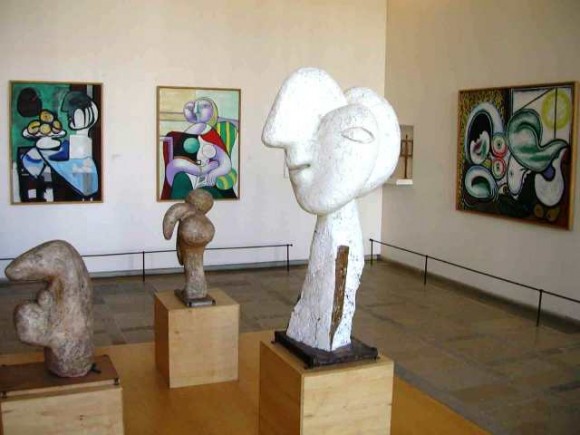
The walls are stark white, allowing the creations of Picasso to literally explode.  The lighting of weathered bronze and white resin is imaginative, but discreet.  The upper level, which houses the private collection of the artist, was carved out from the original attic.  The enormous wooden beams constitute a stunning setting for Cezanne, Matisse, “Le Douanier” Rousseau (a nickname given to Rousseau related to his occupation as a toll collector), or artifacts from the South Pacific.  The exhibit spans the long life (1881-1973) of the artist.

At an early age in Malaga and la Corogne, Pablo Picasso showed his precocious talent.  His supportive father — an art teacher — acknowledging the genius of his son, put down his paint brushes in 1895 and never painted again.  In the first room of the museum, the portrait of “L’homme à la casquette” reveals  the virtuosity of the 14-year old.

picassomuseum-1

A self portrait, 1901, showing a middle-aged man (although Picasso himself is only 20) belongs to his “Blue Period.”  A gaunt, almost emaciated acrobat  (1905) with elongated hands and sad eyes is part of the circus world which fascinated Picasso.  In 1906, he begins working on the Demoiselles d’Avignon.  Gertrude Stein, foresaw the importance of what was to be one the major works of the 20th century and bought most of the preparatory sketches of the unknown young artist.  The painting hangs today at MoMA in New York City.

A voyage to Italy in the early 1920s inspired Picasso to return to the classicism of ancient Rome.  In La Course, painted 1922 in surprisingly small dimensions, two gargantuan women run on the beach, their  heads touching the clouds.

Women – whether wives or mistresses – are his sources of inspiration:  Fernande, Olga, Dora Maar, Marie Therese, Françoise, Jacqueline – each of them represents a new start.  Picasso reinvents himself continuously and keeps experimenting with new techniques and media.

There is a recurrent theme of violence in his depictions of bullfights, wars and erotic scenes.  He deconstructs his models and reassembles them in a shamble of distorted strokes which have become his trademark.  Les Amoureux, 1918, is the most irreverent and humorous example.

Picasso’s sculptures – made of crude recycled material and always full of humor – are interspersed with the paintings, which gives the visit a lighter angle. In September 2015, an exhibit on “Picasso the sculptor” will take place at MoMA.

Nicole Logan

Nicole Prévost Logan

About the author: Nicole Prévost Logan divides her time between Essex and Paris, spending summers in the former and winters in the latter.  She writes a regular column for us from her Paris home where her topics will include politics, economy, social unrest — mostly in France — but also in other European countries.  She also covers a variety of art exhibits and the performing arts in Europe.  Logan is the author of ‘Forever on the Road: A Franco-American Family’s Thirty Years in the Foreign Service,’ an autobiography of her life as the wife of an overseas diplomat, who lived in 10 foreign countries on three continents.  Her experiences during her foreign service life included being in Lebanon when civil war erupted, excavating a medieval city in Moscow and spending a week under house arrest in Guinea.

Talking Transportation: Free Parking Isn’t Free

America’s obsession with automobiles is not only creating gridlock and ruining the quality of our air, but it’s eating up our land and sending real estate costs upward.  Because, once we drive our cars off the crowded highways, we assume it’s our constitutional right to find “free parking”.

For decades, city planners and zoning regulations have shared with Detroit in an unspoken conspiracy to deliver on that dream.  Consider the following:

According to the industry standard-setting Institute of Transportation Engineers, there are 266 types of businesses, which should be zoned to require a minimum amount of parking.  Quoting from the ITE “bible,” religious convents must have one parking space for every 10 nuns in residence.  Hello?  The residents aren’t going anywhere!  Why do they need parking?  Shouldn’t the convents be allowed to find better use for their land?

Or consider hotels.  Why are parking regulations based on requiring enough parking for the few nights each year when the hotel is sold out, rather than the majority of nights when occupancy is 50% or less?  Would we require a movie theater to require parking for an every-seat-filled blockbuster when its more typical offerings fill far fewer seats?

Just drive up Rte. 1 and see for yourself.  Due to zoning regulations, many shopping malls devote 60 percent of their land to parking and only 40 percent to buildings.  Imagine what that does to the cost of what they sell.

Desperate to attract folks back to their decaying downtowns, some cities are putting more land into parking than to all other land uses combined.  A Buffalo NY City Council member commented a few years ago:  “There will be lots of places to park.  There just won’t be a whole lot to do there.”

In fact, the cities that have done the best jobs of economic revitalization aren’t the ones that provided the most parking … they’re the ones that provided the least.  The vitality of towns and cities requires people … walking the streets, going into shops and interacting … not scurrying from car to shop to car to home.

In his new book, “The High Cost of Free Parking,” UCLA’s Donald Shoup recounts the following tale of two cities:

Both San Francisco and Los Angeles opened new concert halls in recent years.  The one in LA included a $10 million, six-story parking garage for 2,100 cars.  In San Francisco, there was no parking built … saving the developers millions.  After each concert, the LA crowd heads for their cars and drives away.  But in San Francisco, patrons leave the hall, walk the streets and spend money in local restaurants, bars and bookstores.  Guess which city has benefited most from its new arts center?

Why are we slaves to zoning rules that assume all humans come with four tires rather than two legs?  Why do we waste precious land on often-empty parking spots instead of badly needed affordable housing?

Clearly, our transportation planners need to work much more closely with economic developers to rethink what it is that we really need in our cities and towns.

Jim Cameron

Jim Cameron

Editor’s Note: Jim Cameron has been a commuter out of Darien for 14 years.  He is Vice Chairman of the CT Metro-North / Shore Line East Rail Commuter Council, and a member of the Coastal Corridor TIA and the Darien RTM.  You can reach him at jim@camcomm.com or www.trainweb.org/ct .  For a full collection of “Talking Transportation” columns, see www.talkingtransportation.blogspot.com