Letter From Paris: Mr. Putin, You Have Much To Lose

Nicole Prévost Logan

Nicole Prévost Logan

At the foot of Mount Mithridates, in eastern Crimea, stood the ancient city of Pantikapeion founded in the 7th century BC by Greek colonists.  It is where King Mithridates killed himself in 63 BC by the sword since his body was immune to poison.

In 1992, I joined the archaeological expedition from the Pushkin Museum of Fine Arts led by Dr. V. Tolstikov, head of the department of near eastern antiquities, and Dr. Michael Treister, curator, in order to publish an article in Archaeology.  That season the Russian team was researching the acropolis and a vast architectural complex with a colonnade dating from the 2nd century BC.  Below the steep cliff, one could see modern Kerch and the Russian shore of the Krasnodar region across the five kilometer-wide Cimmerian Bosporus.

The scholars from the Pushkin museum were among the many Russian, Ukrainian and foreign archaeologists who have long been researching the rich strata of  human occupation on the northern shore of the Black Sea.  They have also studied the Scythian civilization, whose “kurgans” (tombs) contained the famous gold treasures.

The Institutes of Archaeology in the major cities, like Moscow, St Petersburg and Kiev, the universities and most of  the museums, have their own expeditions.  For instance, Odessa conducts regular excavations in Olbia, one of the major “emporia”  (commercial trading post) for the export of cereals, fish and slaves to Greece and for import of Attic goods to Scythia.  On the outskirts of Sebastopol, the ancient Greek city of Chersonesus has been excavated jointly by teams from Ukraine, the University of Texas and the German Institute of Archaeology.

Archaeologists, historians and other specialists exchange the results of their finds and publish joint papers in scholarly journals.  The Center for Research on Ancient History, located in Besançon in eastern France, is an invaluable source for  the Black Sea region and has collected works from scholars, irrespective of their nationality.  Periodically, a Black Sea symposium, which attracts several hundred scientists, meets in Vani, Georgia.

After this long description of the archaeological scene in the Black Sea region, the question arises: what is going to happen to this fruitful scientific collaboration currently happening across the borders ?
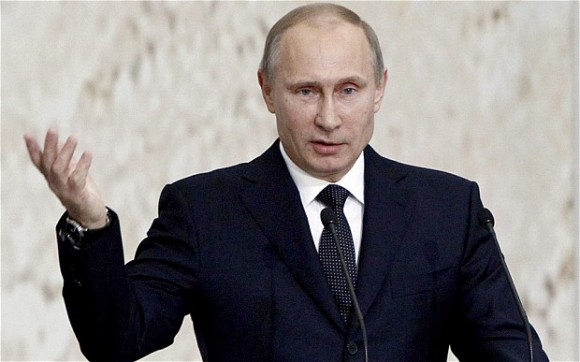
What next for President Vladimir Putin?

What is President Vladimir Putin’s next move?

During our sail along the Black Sea coast in 1991 (see the Feb. 8 Sochi article posted on this site), we saw dozens of wind turbines near Evpatoria in western Crimea.  Today, Ukraine and Russia have ambitious plans to create a wind farm of 3,000 sq. km. for a grid power of 16,000 MW.  Aeolian energy is readily available in this area, thanks to the shallow waters of the Black Sea and the Sea of Azov.

On March 20, Le Monde published an article entitled, “Antonov mirrors the break between Russia and Ukraine.”  The article explains how the Ukrainian aircraft manufacturing and services company, Antonov, builds planes with technology and software from Dassault Systemes and employs 16,000 Ukrainian workers, but 40 percent of the parts utilized in production are Russian.

On March 22,  a Moscow official announced that the extension of the capital’s subway had to be put on hold since they could not take delivery of some of the construction material  ordered from the Ukraine.

In the art world, a Paris galerist told me they also were expecting difficulties in the near future.

Human, cultural and economic ties between Ukraine, Crimea and Russia are so interwoven that the break up of the Ukrainian territorial integrity and the announced sanctions from the West are bound to have serious consequences.

Vladimir Putin is supposed to be an excellent chess player.  One assumed that each one of his moves was made according to a planned strategy.  This does not seem to be true anymore.  He has won the Crimea, but what about the long term waves he is making? Problems are going to catch up with him.

HeadshotAbout the author:  Nicole Prévost Logan divides her time between Essex and Paris, spending summers in the former and winters in the latter.  She will write a regular column for us from her Paris home where her topics will include politics, economy, social unrest — mostly in France — but also in other European countries.  She also will cover a variety of art exhibits and the performing arts in Europe.  Logan is the author of ‘Forever on the Road: A Franco-American Family’s Thirty Years in the Foreign Service,’ an autobiography of her life as the wife of an overseas diplomat, who lived in 10 foreign countries on three continents.  Her experiences during her foreign service life included being in Lebanon when civil war erupted, excavating a medieval city in Moscow and spending a week under house arrest in Guinea.
Letter From Paris: A Week Like No Other in French Politics

Nicole Prévost Logan

Nicole Prévost Logan

It has been a week out of the ordinary in French politics, to say the least.  A summary of the sequence of events may help the foreign reader in deciphering the situation.

It all started March 2 with a few revelations about the UMP (Union for Popular movement) right wing party.  Jean François Copé, UMP president, was denounced in the weekly magazine “Le Point” of surfacturation (over billing) of expenses incurred during the 2012 electoral campaign.  A communications company had obtained the contract without preliminary invitations to tender.  Copé, looking wan and thin, reacted almost emotionally to the attack.  He announced that all the accounts of the UMP would be locked in a sealed room contingent upon the other political parties as well as the media, doing the same .

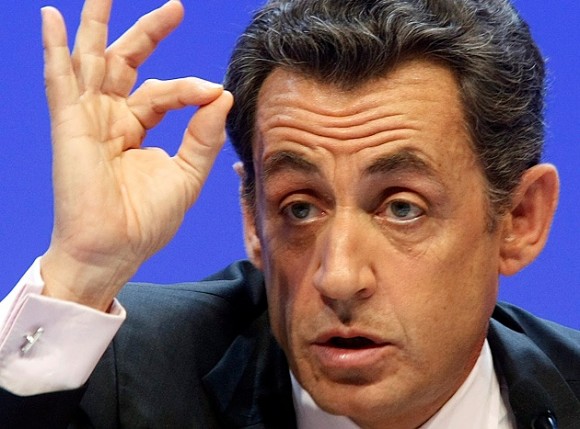
Former President Nicolas Sarkozy was at the center of an extraordinary week in French politics.

Former President Nicolas Sarkozy was at the center of an extraordinary week in French politics.

Then, on March 3, the whistle-blowing satirical newspaper, “Canard Enchainé,” reported that Patrick Buisson, a collaborator of former president Nicolas Sarkozy, recorded the latter’s conversations.  Buisson was part of Sarkozy’s first circle and his closest adviser.  He made the recordings himself for hours on end, from morning to evening,  with an old-fashion dictaphone carried in his pockets.  Some of the recorded conversations took place just prior to a planned cabinet reshuffle — in other words, they were politically sensitive.

The question was: who gave the recordings to the press?  Buisson’s lawyer vouched that his client did not.  But what was suspicious was the fact that Buisson told his son (father and son have been estranged for two years) that those recordings were a “life insurance” and that cela peut toujours servir (One never knows, it might be useful someday)

But this was just the beginning.  An avalanche of revelations, which followed – all involving  the wiretapping of Nicolas Sarkozy to hamper his return to the political life –  was even more serious and  turned into a full blown political crisis reaching the top level of the Executive and of the Judiciary.

Four legal cases or “affaires,” which had been dormant, were resurfacing now:  the 2008 arbitrage-granting of 403 millions to businessman and former minister Bernard Tapie by the Credit Lyonnais;  the “retro- commissions” obtained from Pakistan after the Karachi terrorist attack in 2002 ;  the alleged financing from Libyan president Gaddafi in 2007 ;  the funds given by Liliane Bettencourt, one of the richest women in the world and heir to the l’Oreal company.

These four affaires share the common factor of suspicion in involvement of the illegal financing of Sarkozy’s electoral campaigns of 2007 and 2012.  Last October, Sarkozy was cleared and received a non-lieu (no ground for public prosecution) in the Bettencourt affaire.

On March 6, the headlines of the daily “Le Monde” were a bombshell: the former president’s phone had been tapped since April 13 by orders  of the judges d’instruction ( investigating judges running preliminary inquiry) – a totally unprecedented occurrence in the French Republic.  In early March, the judges opened an inquiry for traffic of influence  and corruption against Sarkozy, his lawyer Thierry Herzog, and Gilbert Azibert, general counsel at the Cour de Cassation  (highest judiciary court in France).

An aggressive perquisition (search) was conducted in Herzog’s Bordeaux residence.  Ten police and judges showed up at eight in the morning.  The lawyer’s computer and his portable phone were seized.  The taking of the former president ‘s personal “carnets” (agendas) created a great commotion.   In a television talk show, the president of the Bar commented that these actions were reminiscent of the Stasi.

Up to that point it was all bad news for the former president.  The socialist government had remained prudently quiet.  The wiretapping of Sarkozy was legal (he did not have immunity any more) as long as there was a suspicion of infraction.  However, the accumulation of proceedings against him was  beginning to be seen as harassment.  By coincidence, Eliane Houlette  was appointed in the new position of “National Financial Attorney” on March 3 in order to deal with corruption and tax frauds.  The first case was to be Sarkozy’s.

Then the blame game seemed to move from the opposition to the majority.  As a journalist commented, the government turned this gold – Sarkozy on the run – to lead, with the government violating the independence of justice.  The Garde des Sceaux or Minister of Justice Christiane Taubira, a high-spirited and smart woman, born in Guyana, was put on the defensive and even accused of lying.

Did she know the content of the recordings?  When did the prime minister and the minister of interior (Secretary of the Interior) know?  Their evasive and even conflicting answers made them appear guilty when their main sin was probably just to be disorganized.

By the end of that memorable week, “Le Monde” published a letter, co-signed by the most eminent members of the judiciary corps, calling for moderation.  The letter praised transparency, but said that lawyers were not above the law, and that wiretapping was only legal if carried out by independent judges.  It also demanded a return to one of the basic rules of the French (and American) institutions – the separation of power between Executive and Judiciary.

HeadshotAbout the author:  Nicole Prévost Logan divides her time between Essex and Paris, spending summers in the former and winters in the latter.  She will write a regular column for us from her Paris home where her topics will include politics, economy, social unrest — mostly in France — but also in other European countries.  She also will cover a variety of art exhibits and the performing arts in Europe.  Logan is the author of ‘Forever on the Road: A Franco-American Family’s Thirty Years in the Foreign Service,’ an autobiography of her life as the wife of an overseas diplomat, who lived in 10 foreign countries on three continents.  Her experiences during her foreign service life included being in Lebanon when civil war erupted, excavating a medieval city in Moscow and spending a week under house arrest in Guinea.
Letter From Paris: US Academy Awards Spark Thoughts on ‘Le Cinéma Francais”

Nicole Prévost Logan

Nicole Prévost Logan

The ceremonies of the 86th “Oscars” and of the 39th “Césars” took place this week within two days of each other.  In comparison with the glamorous and giant show of the American Academy Awards, the French Césars seemed almost like an intimate affair.  But for the French it is very important as a way to evaluate the status of the film industry and for professionals in this field to reassert their contribution to the country’s Culture (note that ‘Culture’ is usually spelled with a capital “C” in France.)

In recent years – and this a very personal opinion – the French art of making films has been losing its edge as a leader in the industry, as it did for instance during the days of  the Nouvelle Vague associated with the names of François Truffaut, Claude Chabrol and Jean-Luc Godard in the late 1950s.  Nowadays, the subjects of the films are so specifically French as to be un-exportable.  Too often they turn into crowd-pleasers with simplistic plots and actors, who seem to have become the pet actors for the foreign market.

“The Artist,” which received multiple prizes in several countries in 2012, is the best illustration of this remark.  It catapulted Jean Dujardin from a second tier actor in France to a star.  Moreover, giving the award to a silent movie represents a negation of what makes French films special — that is, the thought-provoking ideas (such as Men and Gods, 2011) or the humor (such as the Intouchables 2012.)

Cecile de France, hostess of the 2014 Césars was most entertaining.  She kept the proceedings at a fast pace and had several funny quips.  She remarked, “Nobody’s perfect ” about the Belgians.  This obviously alluded to her own origins and also to the fact that the director of the best foreign film was Belgian.  Taking advantage of sexual orientation as the main theme of the evening, she addressed the audience thus, ” If there are any heteros in the theatre, it’s OK.  There are still a few among us who are.”

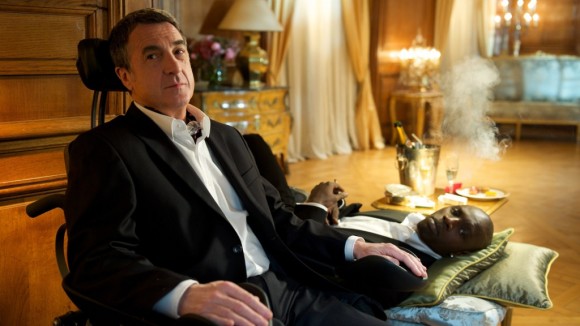
Francois Cluzet, the President of the Cesars, as he appears (left) in Les Intouchables,

Francois Cluzet, the President of the Cesars, as he appears (left) in Les Intouchables,

François Cluzet  (the lead actor who plays a wealthy quadraplegic in the Intouchables), who was the chairman of the ceremony,  made a few political comments to support the ongoing crusade of the intermittents du spectacle (show business workers) to defend the exception française (French exception.)  For them, special unemployment benefits are at stake.

Guillaume Gallienne’s,”Les Garçons et Guillaume, à Table was voted as the best film and received five Césars.  Gallienne is a societaire  from the Comedie Française, the prestigious theater company founded in 1680.  He developed the idea of his film from the one-man show he created.  It is a funny, but mostly touching, story of a boy,  who was brought up as a girl by a chain smoking and insensitive mother.

Mocked at home by his two older brothers and ridiculed by all, he survives years in French and English  boarding schools.  He continues to be the suffering nice guy always wearing a  big smile on his face, until one evening at a roof party.  The hostess calls out,  “a table, les filles et Guillaume” (“dinner’s ready, girls and Guillaume.”)  He finally realizes he is not a girl.  The film is centered on the brilliant acting of Guillaume, who also plays his mother, using the same voice.

The day after the Césars, Alain Resnais, a monument of the French cinema,  died at age 91.  He will be remembered by many movies, including, “Hiroshima Mon Amour”, 1958  (after a story by Marguerite Duras) and ” Last Year in Marienbad“, 1959 (after a novel by Alain Robbe-Grillet, who was the champion of the Nouveau roman.)

HeadshotAbout the author:  Nicole Prévost Logan divides her time between Essex and Paris, spending summers in the former and winters in the latter.  She will write a regular column for us from her Paris home where her topics will include politics, economy, social unrest — mostly in France — but also in other European countries.  She also will cover a variety of art exhibits and the performing arts in Europe.  Logan is the author of ‘Forever on the Road: A Franco-American Family’s Thirty Years in the Foreign Service,’ an autobiography of her life as the wife of an overseas diplomat, who lived in 10 foreign countries on three continents.  Her experiences during her foreign service life included being in Lebanon when civil war erupted, excavating a medieval city in Moscow and spending a week under house arrest in Guinea.
Letter From Paris: The Complex Conundrum of Ukraine

Editor’s Note: This piece was written prior to the invasion of Crimea by the Russians, but is still nevertheless topical.

Nicole Prévost Logan

Nicole Prévost Logan

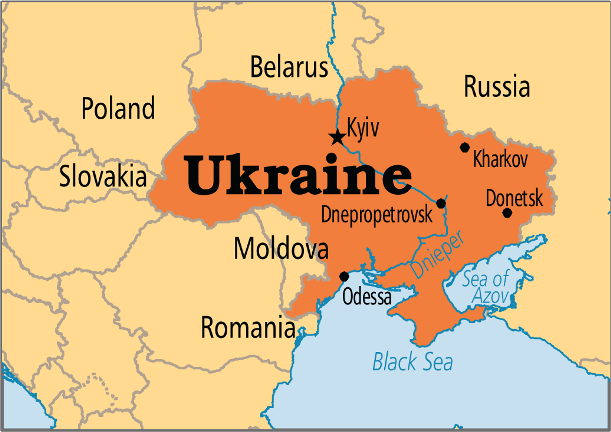
The future of Ukraine remains uncertain and the problems multiple.

After three months of violence opposing the people of Kiev and the government of Viktor Yanukovich, the situation culminated in a bloody clash on Feb. 19, leaving over 60 dead and hundreds wounded.  Why did the confrontation last so long?  The West holds part of the responsibility.  Some voices from abroad were just throwing oil on the fire, such as an inflammatory piece of Bernard Henri Levy entitled “Vive l’Ukraine Libre”  in the Huffington Post.  Besides, the European Union’s (EU) position was unclear and some of its members made unattainable promises.

The EU may have been slow in acting but when it did, its stand was tough enough to force the Ukrainian government to back down.  Brussels mandated the ministers of foreign affairs of Poland, Germany and France to act as mediators, then announced immediate sanctions – cancelling visas of government officials, freezing assets of Ukrainian oligarchs abroad.  At the same time, Angela Merkel, the chief mediator, was on the phone with Putin, both of them conversing in Russian and German.

As early as five days after the peak of the violence, a few signs of appeasement began to turn the situation around. US secretary of state John Kerry said what needed to be said:  there should not be a partition of Ukraine;  the Ukraine should not be put in a position to have to chose between Europe and Russia.  Even more promising was the statement made by Sergei Lavrov , the Russian foreign minister:  “We want Ukraine to be part of the European family in every sense of the word.”

map_611x432

The Yanukovich government collapsed overnight.  In rapid succession, the mayor of Kiev, the minister of defense, the whole police force of Lviv in Western Ukraine, the president of the parliament and 40 of its deputies defected.  Calm returned to Maidan square.  One thousand policemen were escorted peacefully out of the city by the insurgents.  An interim coalition government was rapidly formed and general elections were to be held before the end of the year.  As to president Yanukovich, he just vanished.

Ukraine is not an easy country to govern.  The politicians’ class is rampant with corruption and can be violent.  Since it acquired its independence in 1991, at the implosion of the Soviet Union, the Ukraine has been in a state of turmoil marked by the “orange revolution” of 2004.  The government’s way to deal with the opposition has been either to poison its members (everyone saw on the television the pock-marked face of former president Viktor Yuchtchenko allegedly poisoned by dioxine) or throw them in prison (Prime Minister Yulia Timoshenko was condemned to seven years behind bars in 2011.)  Fights in the Rada (parliament) are not uncommon.  Seats in that assembly are for sale to the price of one million dollars.  Deputies may be offered a large amounts of money to change camp.

Therefore it is not surprising that the people, who put their lives on the line during the civil war, refused to trust their politicians.  The reaction – or rather the lack of reaction – of the crowd when Yulia Timoshenko appeared in a wheel chair on Maidan square and made an emotional appeal, is very revealing.  One might have expected a wild clamor of support.  But no, it is not what happened.  The people stood, almost frozen, listened to her politically-clever words but did not seem to buy her message.

Many foreign pundits, apparently influenced by the continuous media coverage of the events on Maidan square, seem to forget the other half of the Ukrainian equation – the Russians.  It would be a grave mistake to underestimate the fact that Ukraine is part of the historical past of Russia and also of its culture.  Therefore it is not only Putin who refuses any interference in the territorial integrity of Ukraine, it is also the Russian people.

Historically and culturally Ukraine is the cradle of Russia.  The Russian nation started as a Kievan state.  In the 10th century AD, Slavic prince Vladimir ruled over a huge territory including Novgorod, was baptized in 989 and absorbed the Byzantium culture.  The magnificent mosaics and icons in St Sophia cathedral, completed in 1041, attest to those beginnings.

The cultural heritage of the Russians is also linked in many ways to the Crimea.  The great Russian poet, Marina Tsvetaeva joined other writers, like Osip Mandelstam and Andrei Bely, in the writers’ colony of Koktebel, in the eastern part of the Crimea.   The short story “The Lady with the Dog”  by Anton Chekhov, which takes place in Yalta, is practically memorized by every Russian child in school.  Based on a Pushkin’s poem, the ballet entitled The Fountain of Bakhshisarai (a town in central Crimea) is part of the permanent repertoire of the Bolshoi.

The violence, which started in Simferopol only one week after the end of the uprising on Maidan square, is a reminder that the situation remains explosive in the area.

What will be the outcome of the Ukrainian crisis ?  A federation of autonomous republics, similar to the Crimea, whose status was recognized by Russia in 1997, but only for a period of 10 years?

Another thought.  Joseph Beuys, (1921-1986) is probably the best known artist in Germany today.  As he was flying with the Wermacht in 1944, his plane was shot down over the Crimea and saved by a Tatar “shaman.”  Beuys’ installations and other works are inspired from that unique experience.  This is what Ukraine may need – a Tatar shaman .

HeadshotAbout the author:  Nicole Prévost Logan divides her time between Essex and Paris, spending summers in the former and winters in the latter.  She will write a regular column for us from her Paris home where her topics will include politics, economy, social unrest — mostly in France — but also in other European countries.  She also will cover a variety of art exhibits and the performing arts in Europe.  Logan is the author of ‘Forever on the Road: A Franco-American Family’s Thirty Years in the Foreign Service,’ an autobiography of her life as the wife of an overseas diplomat, who lived in 10 foreign countries on three continents.  Her experiences during her foreign service life included being in Lebanon when civil war erupted, excavating a medieval city in Moscow and spending a week under house arrest in Guinea.

Letter From Paris: Monsieur (le President) Hollande Goes to Washington

Nicole Prévost Logan

Nicole Prévost Logan

For the first time in 20 years, a French President was invited for a State visit to the United States. François Hollande was greeted with the highest honors, including a colorful pageant on the White House Lawn.

There was no better way to emphasize the historical ties between the two countries than a visit to Monticello, the plantation of Thomas Jefferson, third president of the United States.  Jefferson, ambassador to France from 1785 to 1789, was an ardent francophile.  But he was also a brilliant statesman — particularly when he bought Louisiana from France in 1808, which probably represented the best real estate deal of all time.

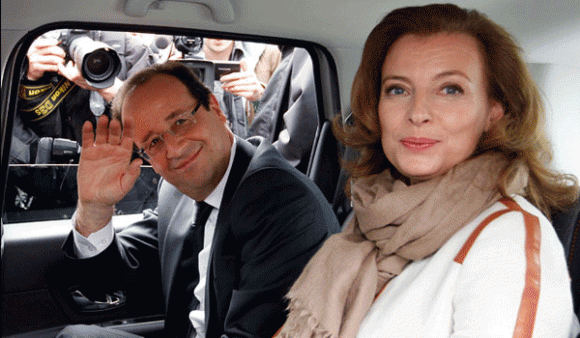
In happier days, French President Francois Hollande and then companion Valérie Trierweiler. (Photo courtesy of Reuters)

In happier days, French President Francois Hollande and then companion Valérie Trierweiler. (Photo courtesy of Reuters)

The logistics of the official dinner at The White House were the source of an intense “buzz” as to who would be sitting next to the American president in the absence of a French “First Lady,” after the recent break up of Hollande from his long-time companion, journalist Valerie Trierweiler.

The meeting of the two presidents in Washington had a strong symbolic importance aimed at reinforcing their respective statures on the world scene.  France is one of the staunchest allies of the US today.  It has an aggressive foreign policy demonstrated by military interventions in Mali and Centrafrique and the essential role it played during the international, ongoing negotiations regarding Syria and Iran.

Last summer the attitude of Obama was widely interpreted a slap in the face for Hollande when the latter was left high and dry after his offer to provide military assistance to the US against Syria. Laying out the red carpet in such a manner on this visit might be interpreted as a form of gratitude toward France.

Most of the difficult questions were asked during the press conference, but both Obama and Hollande chose to avoid contentious topics; criticisms were muted.  The resentment felt by France and the rest of Europe about the NSA surveillance was not brought to the forefront.  However, Obama did express his discontent about the untimely presence of a group of French businessmen in Iran even before any agreement was signed with that country.

Unlike Sarkozy, Hollande was not invited to speak in front of the US Congress.  This is not entirely surprising since the presence of a socialist leader could have ruffled too many conservative feathers.

Since the major press conference Hollande gave at the Elysees palace on Jan. 14, it seems that a government plan to turn around the French economy is developing.  The declaration of a “Pact of Responsibility” between the state and the private sector, by waving the obligation to finance social benefits (a reduction of 49% of the cost of labor), constitutes a substantial stimulus for the economy.

This new policy was reaffirmed by Hollande’s remarks made during his stay in California.  In fact, many thought he looked as if he were becoming more “Liberal Democrat” by the hour.  The exposure to Silicon Valley, dynamic French companies and start-ups, successful young French computer scientists, the stimulating atmosphere of flexible working conditions and the surprising remarks about “crowdfunding” were all, in the minds of many, like fresh air blowing from the West coast.

The French President enjoyed having lunch with the CEOs of giant internet companies like Microsoft, Google, Facebook, Mozilla and Twitter.  In 1984, the French President Francois Mitterand similarly enjoyed meeting a certain Stephen Jobs, then 29-years-old.

The stay in California triggered a real “digitalomania” (my own neologism) in France.  The media offered multiple talk shows about robotics, artificial intelligence, bio genetics and the like.  Analysts pointed out that the information technology was the key to the restructuring of the French economy.

While a major snow storm impacted 49 out of the 50 American states, the French president, flying the northern route, ended his short, but definitely positive, visit to the United States.

HeadshotAbout the author:  Nicole Prévost Logan divides her time between Essex and Paris, spending summers in the former and winters in the latter.  She will write a regular column for us from her Paris home where her topics will include politics, economy, social unrest — mostly in France — but also in other European countries.  She also will cover a variety of art exhibits and the performing arts in Europe.  Logan is the author of ‘Forever on the Road: A Franco-American Family’s Thirty Years in the Foreign Service,’ an autobiography of her life as the wife of an overseas diplomat, who lived in 10 foreign countries on three continents.  Her experiences during her foreign service life included being in Lebanon when civil war erupted, excavating a medieval city in Moscow and spending a week under house arrest in Guinea.