Letter from Paris: There’s Something About Sochi

Nicole Prévost Logan
Nicole Prévost Logan

xxii-winter-olympics-logoAfter a few weeks of a media coverage of the 2014 Olympic Winter Games saturated with predictions of terrorist attacks, confrontations and unpreparedness, it felt a relief to watch the opening ceremony on Feb. 6 proceed without any significant hitch.  The smiling and happy faces of the athletes parading inside the stadium before the beginning of the show were the promise of two great weeks on TV. (Close to four billion viewers watched the last winter games of Vancouver).

The sheer number and size of the national teams are astounding.  Compared to the 250 sportsmen from 16 countries who participated in the first Winter Olympics in 1924 in Chamonix, today more than 3,000 people make up the delegations from 87 countries.  Women have come a long way since the 1900 games when their appearances were limited to tennis and golf.

The German president of International Olympic Committee(IOC), Thomas Bach, defused the feared boycott caused by the Russian government’s homophobic position.  He declared that no discrimination would be tolerated toward any group of people.  President Putin of Russia made the shortest -10 second – speech of his career when he declared open the XXII Winter Olympic Games.

The opening ceremony was a grand scale production – Russians have always been good at those – that evoked the nation’s history.  It started with a short film showing Slavic tribesmen in a small vessel.  Actually the scene looked rather like ancient Greeks on their mythical quest to find the Golden Fleece on the distant shores of the Caucasus.

After a romantic 19th century program exalting Russian literature, music and ballet , the post-1917 era was introduced by dozens of young dancers wearing costumes straight out of a Malevich painting.   The message was clear: the Russian establishment had reconciled itself with abstract art which had been vilipended for so long.

The host country of the 2014 games had to show its pride in the most glorious event of its history: the orbiting around the earth of the adulated “cosmonaut” Yuri Gagarin.  The patriotism toward the country’s achievement intensified when five heroes of the past walked in, bearing the Olympic flag.

Among them was Valentina Tereshkova , the first woman in space in 1963 (she was a beautiful young woman when I met her at a reception given at the French embassy in Moscow in 1965).  The youthful appearance of tennis champion Maria Sharapova, who trained at the Sochi sport center until the age of seven, was obviously directed at the modern audience.

The Sochi games have been organized at a high human, financial and environmental cost: corruption, expropriation of local population, damage caused to the “Sochi National Park” and to the “Caucasian Biosphere Preserve”- a UNESCO World Heritage Site.  The Nordmen Firs, which are the tallest trees of Europe (close to 300 feet high) grow in those areas .

Some of the blogs against the Sochi project have been so vitriolic as to be uninformative.  It is better to read well-researched pieces like the one published by David Remnick.  Remnick was the Washington Post correspondent in Moscow in the 1980s and now is the editor of the New Yorker.

Soviet and Russian leaders have cherished the sub-tropical coast of the Black Sea.  Stalin, Brezhnev, Andropov and Yeltsin all had their summer residences in Sochi prior to Putin.  It was on his return from his dacha in Pitsunda, in what is today Abkhazia, that Nikita Khrushchev was overthrown by Brezhnev on Oct. 15, 1965.  Gorbachev’s dacha was located west of Yalta in the Crimea (we were boarded by an armed patrol craft for allegedly sailing too close) .

We circumnavigated the Black Sea on our 44-foot ketch in the summer of 1991.  We had obtained visas for Sochi.  In retrospect, our visit to Sochi was a preview to the 2014 games.  In an outdoor theater, we happened to watch the production of “Jesus Christ Superstar” by the Rock Opera St Petersburg Theater.  It was the first Russian-staged production of that musical.  There will be a repeat performance during the games.

We stayed at the very busy new marina called coincidentally the Center of Sailing Sports or “Olympic Centre.”  Or was it a premonition on the part of the Russians that there would be Olympic games one day in their town?

HeadshotAbout the author:  Nicole Prévost Logan divides her time between Essex and Paris, spending summers in the former and winters in the latter.  She will write a regular column for us from her Paris home where her topics will include politics, economy, social unrest — mostly in France — but also in other European countries.  She also will cover a variety of art exhibits and the performing arts in Europe.  Logan is the author of ‘Forever on the Road: A Franco-American Family’s Thirty Years in the Foreign Service,’ an autobiography of her life as the wife of an overseas diplomat, who lived in 10 foreign countries on three continents.  Her experiences during her foreign service life included being in Lebanon when civil war erupted, excavating a medieval city in Moscow and spending a week under house arrest in Guinea.
Letter From Paris: All Things Braque and Beautiful

Nicole Prévost Logan

Nicole Prévost Logan

The Georges Braque retrospective in Paris – the first in 40 years – just closed its doors after four months at the Grand Palais.  Braque is best known for being one of the creators of cubism.  But it would be an error to overlook the rest of his creative life, which was in constant metamorphosis from “Fauvism” at age 24 to his art studio and magnificent birds series from the 1930s onwards.  He was one of those rare artists to be recognized during his lifetime since honors were lavished on him.

Georges Braque (1882-1963) was a tall, handsome man with a quiet manner.  Instead of joining his father as a painting contractor, he left Normandy and moved to Paris to study art.  Soon he joins the Fauves (Matisse, Derain, Vlaminck) and his paintings at l’Estaque, or La Ciotat, on the Mediterranean, are an orgy of colors.

Then, after a two-year period, with the same apparent ease, he absorbed the geometrization of nature approach that Cézanne was the first to introduce.  The old master had died just one year earlier. Braque turned houses and vegetation into stylized shapes, devoid of any detail.  His colors are muted.

In 1907, Braque went to the Bateau Lavoir studio of Picasso in Montmartre.  Since 1905, Picasso (two years his junior) had been feverishly working on the “Demoiselles d’Avignon.”  Braque sees the preparatory studies Picasso had done, and is stunned.

From that time until the beginning of the Great War, a relationship – unique in the history of art – is formed between the two artists, based on mutual stimulation without any trace of rivalry.  They were like mountain climbers roped together, to use Braque’s own words.  Braque’s “Le Grand Nu” of a heavy set woman, with a distorted body, the face like a mask, shows the same understanding of African art that Picasso imbued.

In 1908, art critic Louis Vauxelles commented that Braque’s painting were reduced to cubes — thus, the word “cubism” was born.  Braque and Picasso were about to create the most important aesthetic revolution of the 20th century.

In the next few years, cubism evolved through several phases: “analytic” with the de-multiplication of the object into facets, absent of perspective.  A second phase, called “hermetic”, followed.  It is austere, to the point of being illegible, with colors reduced to camayeux (monochromes) shades of grey and ochre.  During the final “analytic” phase, the artist introduced clues to help the onlooker: letters from wine bottle labels or newspapers, or parts from a piano, guitar or mandolin (Braque had a passion for music.)

During this period, Braque and Picasso were also to invent totally new techniques to be emulated by many other artists: first the method of “collage ” using a variety of materials like sand, metal shaving, ground glass or dirt.  In his key painting titled, “Compotier, Bouteille et Verre, “(fruit dish, bottle and glass) of August 1912, he introduced the method of “papiers collés” (glued papers) serving as “trompe-l’oeil.”

In 1914, Braque is called to the European front.  In May 1915, he is seriously wounded in the Artois battle and undergoes brain surgery.  After coming out of his “trou noir” (black hole), he begins a long convalescence.  Not surprisingly, given his personality, he feels no bitterness, nor anger .

He returned again to cubism, but this time his paintings are vibrant with colors and, in spite of their abstraction, easier to read.

In the 1930s, his series of still life paintings in his art studio setting is so complex as to be called “studio landscapes.”  A charming chaos seem to lift fruits and objects and pile them on the ubiquitous “guéridon” (round table.)  An exuberant humor replaced the austerity of his pre-war cubism. American collectors, like MOMA or the Phillips gallery, are enthusiastic about his new works.

In the mid 1950s, the artists introduces a new theme : a bird floating above the apparent disorder of the studio.  In “Nid dans le Feuillage” (Nest in the foliage), the bird flies over an eerie mountainous landscape toward a nest lit in a frigid light.  The emptiness of his very last painting,”Sarcleuse,” is overpowering.  Under a black sky, golden wheat undulates in the breeze.  The metal wreck of the “sarcleuse” (agricultural machine) left on the beach is a final message of human activity.

HeadshotAbout the author:  Nicole Prévost Logan divides her time between Essex and Paris, spending summers in the former and winters in the latter.  She will write a regular column for us from her Paris home where her topics will include politics, economy, social unrest — mostly in France — but also in other European countries.  She also will cover a variety of art exhibits and the performing arts in Europe.  Logan is the author of ‘Forever on the Road: A Franco-American Family’s Thirty Years in the Foreign Service,’ an autobiography of her life as the wife of an overseas diplomat, who lived in 10 foreign countries on three continents.  Her experiences during her foreign service life included being in Lebanon when civil war erupted, excavating a medieval city in Moscow and spending a week under house arrest in Guinea.

Letter From Paris: ‘French-Bashing’ Doesn’t Add Up If The Numbers Are Wrong

Nicole Prévost Logan

Nicole Prévost Logan

The latest round of “French bashing” has been circulating on the internet, touching a nerve among the French social networks .  On January 3rd, Newsweek journalist Janine di Giovanni  published on the magazine’s website (Newsweek has ceased to appear on news stands for around a year) an article titled, “Fall of France.”  She is a successful correspondent covering the war scene in the Middle East, but her only qualification to write about France is that she has been living in Paris for 10 years.  Two days later, the Newsweek editor reiterated its attack on France in another article, this time, “How a Cockerel Nation became an Ostrich.”  That article, in fact, repeated the recommendations addressed by the European Commission to the nine countries of the EU (European Union), France among them.

Di Giovanni’s general message is that the decline of France has greatly accelerated under the Socialist government of François Hollande and that the “French model” of a providence state (the author calls it a “nannie state”) is not sustainable.  This is not an original point of view and the French themselves are frequently criticizing their own system and trying to modify it.  The American-born journalist has written an entertaining and clearly poorly researched article.  She backs her arguments with a mixture of true, false and, sometimes, outrageous information, which make the piece quite entertaining.

Challenges, a well-established French weekly magazine dealing with economy, and reliable web sites, such as Decodeurs.com, have gone to the trouble of analyzing point by point di Giovanni’s story.

The most glaring mistakes she makes concern the excessive taxes.  She writes: ” Since the arrival of the Socialist President François Holland in 2012, the income tax and social security have rocketed. The top rate is 75 percent and a great many pay in excess of 70percent.”  In  fact, in 2011 (that is under Nicolas Sarkozy) the top income tax bracket was 43.7 percent and today it is 45 percent.  The tax of 75 percent is only paid by the very rich with an income of over one million Euro.

By decision of the Conseil Constitutionnel, the tax of 75 percent  is not considered as a separate tax bracket.  It has only been paid by 11,960 households.  Furthermore, the tax is not paid by the individuals, but by the firm which employs them.   Finally the Newsweek journalist may have mixed up income tax with the amount paid by the employer  (including social benefits), which resulted in a doubling of the numbers.

Commentators had a field day with some hilarious statements made by di Giovanni.  There is no word for entrepreneur in French, she claims.  Apparently she forgot that the word entrepreneur is French!  Another is quoting the price of a liter of milk as being six euros when it is only 1.33.  An online reader commented that the author must shop at the most expensive gourmet Grande Epicerie of the luxury department store of Bon Marché.

From her bourgeois apartment near the Luxembourg garden in the 6th District – the most expensive in the capital – she has a strange perception of what real life is like for the working population.  Talking about nurseries, for instance, she writes that they are free, can be found in every neighborhood and provide free diapers.  In fact, only some 13 percent of the middle class can afford nurseries and they have to pay roughly 9 percent of their income for using them.

The French seem to regard such “bashing” as stimulating … and it certainly keeps them on their toes.

HeadshotAbout the author:  Nicole Prévost Logan divides her time between Essex and Paris, spending summers in the former and winters in the latter.  She will write a regular column for us from her Paris home where her topics will include politics, economy, social unrest — mostly in France — but also in other European countries.  She also will cover a variety of art exhibits and the performing arts in Europe.  Logan is the author of ‘Forever on the Road: A Franco-American Family’s Thirty Years in the Foreign Service,’ an autobiography of her life as the wife of an overseas diplomat, who lived in 10 foreign countries on three continents.  Her experiences during her foreign service life included being in Lebanon when civil war erupted, excavating a medieval city in Moscow and spending a week under house arrest in Guinea.

Letter From Paris: A Popular Pope with Great Influence, Greater Responsibilities

Nicole Prévost Logan

Nicole Prévost Logan

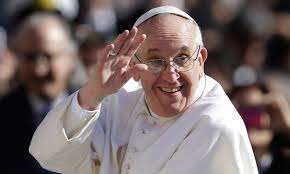
Pope Francis

Pope Francis

After nine months as the leader of the 1.2 billion Catholics, what changes has Pope Francis made in the people’s lives?  That question can be answered on different levels.

On Christmas Eve, the cathedral of Notre Dame in Paris was absolutely packed, with standing (and sitting-on-the-ground) room only.  Believers and visitors from around the globe wanted to share the most important time of the church year.  The senior prelate of the cathedral, who was celebrating the Eucharist, instead of standing solemnly at the lectern to give his homily, chose to walk through the nave all the way to the back of the church.  A photographer and a sound engineer followed the priest as he mixed with the people in order to record the event for the program, which was televised nationwide.

From the very start, Pope Francis has been reaching out to the people, with simplicity and a joyful manner.  His popularity was immediate and the crowds on Saint Peter’s Square multiplied.  There is definitely a heightened fervor among the faithful and his style is spreading through the churches.

To understand the impact of Pope Francis on more substantive levels, one has to study his exceptional background.  Born from Italian immigrants in Argentina, he is the first pope coming from the New World.  At the same time, he has strong ties with Europe since he wrote his thesis in German.  Besides that language, he speaks French English, Italian, Portuguese, and, of course, Latin.

But the most important factor is that he is the product of two intellectual currents existing in the catholic church: Jesuit and Franciscan.  To become a Jesuit, one has to study theology and philosophy for 15 years.  This Catholic order, founded by Ignatius of Loyola in 1534, follows a strict obedience to the doctrine.  At the same time, as a significant departure from his intellectual origins, he chose to be called Francis – a first for a pope.

This symbolic choice made him the spiritual heir of St. Francis of Assisi.  This background explains why he combines an unshakable attachment to the traditional doctrine regarding, for instance, the celibacy of priests, the excommunication of divorcees or the rejection of abortion, with his intent to be the “Pope of the Poor” and his openness to others.

His first action is expected to be the reinstatement of order in the Catholic Church following a number of human and financial scandals, which have shaken it over many years.  Probably the easiest reform to implement will be to reorganize the Vatican’s administration and reduce the size of the Curie.  With his own dislike for ostentation, he, himself, will be the best role model.

Finally, he has an immense potential of influence in international affairs.  He seeks dialogue with those following Judaism and Islam devotees.  Vatican specialists describe him as the most charismatic and powerful personality in the world, particularly after Nelson Mandela’s death.

It remains to see whether — and how — he will exercise this influence.

HeadshotAbout the author:  Nicole Prévost Logan divides her time between Essex and Paris, spending summers in the former and winters in the latter.  She will write a regular column for us from her Paris home where her topics will include politics, economy, social unrest — mostly in France — but also in other European countries.  She also will cover a variety of art exhibits and the performing arts in Europe.  Logan is the author of ‘Forever on the Road: A Franco-American Family’s Thirty Years in the Foreign Service,’ an autobiography of her life as the wife of an overseas diplomat, who lived in 10 foreign countries on three continents.  Her experiences during her foreign service life included being in Lebanon when civil war erupted, excavating a medieval city in Moscow and spending a week under house arrest in Guinea.

Letter from Paris: Germany’s Merkel Warms French Hearts

Nicole Prévost Logan

Nicole Prévost Logan

Revised: 01/01/14  (Corrected sentence in red)  The integration of Europe moved forward this week following several important events.

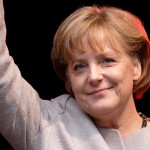
Angela Merkel

Angela Merkel

On Dec. 15, Angela Merkel was re-elected for the third time as German Chancellor.  Her victory was made possible through the coalition of her Christian Democrat party (CDU) and the Social Democrats (SPD).

The composition of her new government gives an indication on the future policies of Germany.  Among the nine CDU ministers, Wolfgang Schauble will remain as the indispensable minister of finances and as such will guarantee a certain continuity.  The crucial post of economy/energy will be occupied by an SPD member.  So will foreign affairs, to be headed by pro-European Walter Steinmeier.   It is interesting to note that for the first time a woman will be in charge of Defense:  Ursula von der Leyen, 51, is close to Angela Merkel, French-speaking and a mother of seven.  The ministry of immigration is also to be headed by a woman who, even more significantly, is of Turkish origin.

There is no deep ideological difference between the CDU and SPD parties.  French analysts stress that it would be a mistake to assimilate the German social democrats to the French socialists.  The former are “center left” rather than “left”.

According to tradition, Merkel’s first official visit abroad was to France.   Her next stop was Brussels to attend the summit meeting of the European Council.   Arduous negotiations led to important decisions – as important, some experts say, as the creation of the Euro currency.

Merkel will likely not abandon her general policy of financial discipline, but rather relax her hard austerity line.  Germany’s economic policy will be slightly less liberal.  A minimum wage of 8.5 euros is to take effect within three years.  The new program will reduce the number of “poor workers” and should give a boost to the domestic consumption.  It will also alleviate criticism expressed by other European countries of unfair competition on the labor market.

A banking union and the European defense were the main topics of discussion.  The creation of a banking union is intended to put a stop to the bailout of failing banks at the expense of taxpayers.  So far, financial support for countries in trouble, such as Greece or Spain, has been funded primarily by Germany (27 percent) and France (20 percent.)

Merkel has always been against the “mutualisation” of the sovereign debts.  The new directives give greater power to the Banque Centrale Européenne (BCE – Central Bank of Europe) over the banks  in order to prevent speculative investments.  The BCE will also oversee the creation of a “funds of resolution,”  financed by the banks, which will amount to 55 billion by 2026.  Brussels will only intervene in case of urgent crisis.  Obviously it will be hard for many of the states to lose sovereignty over their own budget.

The other subject of discussion in  Brussels was the European defense.  For Germany, defense is almost a taboo and most European states – except France – are unwilling to interfere in foreign military conflicts.  Some progress though was made in specific areas such as cyber security, refueling of planes in the air, the use of drones by 2025 and controlling piracy along the Somalian coast.  A limited amount of logistical and financial support is likely to be welcomed,  particularly by France, who acted alone in both Mali and the Republic of Central Africa.

The Franco-German ” couple” appears now to be returning to center stage.  As seen from France, the new developments are generally well-accepted by economists and other specialists.  Overall, they seem to be impressed by the pragmatic behavior of the Germans and believe the German vote was a smart one – indeed, a rare mark of approval to be found in French opinion of German politics.

HeadshotAbout the author:  Nicole Prévost Logan divides her time between Essex and Paris, spending summers in the former and winters in the latter.  She will write a regular column for us from her Paris home where her topics will include politics, economy, social unrest — mostly in France — but also in other European countries.  She also will cover a variety of art exhibits and the performing arts in Europe.  Logan is the author of ‘Forever on the Road: A Franco-American Family’s Thirty Years in the Foreign Service,’ an autobiography of her life as the wife of an overseas diplomat, who lived in 10 foreign countries on three continents.  Her experiences during her foreign service life included being in Lebanon when civil war erupted, excavating a medieval city in Moscow and spending a week under house arrest in Guinea.