Gardening Tips from ‘The English Lady’ for June, ‘The Time of Perfect Young Summer’ (Gertrude Jekyll)

June is, ‘The Time of Perfect, Young Summer’ (Gertrude Jekyll)

Maureen Haseley-Jones is “The English Lady.”

We have had a few cool nights recently, which are just wonderful and allow one to sleep with the windows open.  I cannot remember the last time we had a real spring such as we are experiencing this year, with plenty of gentle rain. This beneficial rain is wonderful for all the spring plant growth and such a pleasure to see.

I am so in awe of the miracle of Mother Nature; the symbiotic relationship between plants and all of God’s creatures.

As I looked out of my window from my old home a few years ago,  I could see the buds opening on my 30-foot-long stand of Peonies, which had been planted by the original homeowner in the early 1900s. That sight brought to mind one of the symbiotic relationships, the friendly partnership between ants and peonies.

I am often asked, “Maureen, should I worry about ants on my peonies?” The answer is, “That’s not a problem, lots of ants on the peonies just demonstrate that you have healthy plants with big buds producing more nectar, which therefore, in turn, attract the ants.”

Peonies:
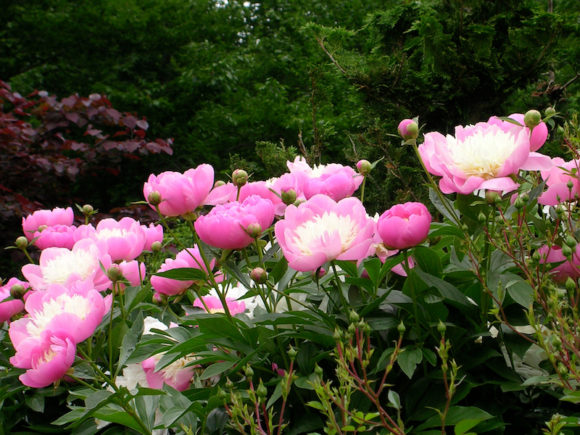
A stand of peonies is always stunning.

Make sure Peonies get plenty of water and after blooming, apply a light application of composted manure and check the soils PH which should be between 6.5 and 7.0.  It is hard to ruin a good peony border but you can err in the fertilizing process, so go easy on the organic aged manure.

Following the bloom, do not cut the peonies down until November, after the first frost. Now, in early June, I pinched off the side buds on my large stand of peonies, this ensures big blooms on the rest of the plant.

Ants:

On the subject of ants; if you see them “let them live,” because often their presence indicates that we have aphids around and ants feed off aphids; very useful creatures.

Another useful creature in wars against pests is the lowly toad. I suggest putting some toad houses in and around your border.  You may purchase toad houses from the garden center if you so desire. Or you can do as I do which is to use an old clay pot that is cracked and make sure that the crack is two to three inches wide for the door so the toad can enter. Also put a small saucer as a floor under the pot with some rocks, which you keep damp, so that your friendly bad bug eater has his or her ideal home environment.

Mulch:

Mulch your gardens this month when the ground has warmed up to 55 degrees.  When mulching, take care mulching around trees. Apply the mulch at least six inches from the base of the trunk, any closer can promote rot and disease in the tree itself. Any trees that are mulched too deeply near the trunk invite mice and other rodents to come in order to nest and gnaw on the trunk.

Your garden can be mulched to a depth of between two and three inches.  I prefer fine dark brown hardwood mulch but please do not use dyed red mulch, keep the garden natural, not looking like a Disney theme park.

Roses:

June is the month when Roses begin to bloom.  I prefer David Austin roses, I find these roses are the most -trouble free Roses and offer so much reward being repeat bloomers with wonderful fragrances.

Some of my favorites are:

  • ‘A Shropshire Lad,’ a soft peachy pink
  • ‘Abraham Darby,’ with blooms showing a blend of apricot and yellow
  • ‘Fair Bianca,’ a pure white
  • ‘Heritage,’ a soft clear pink

And my favorite ‘Evelyn’, which has giant apricot flowers in a saucer shape and the fragrance is second to none with a luscious fruity tone, reminding me of fresh peaches and apricots.

Feed your roses with composted manure, keeping the manure and mulch about six inches away from the base of the rose, then adding a few more inches of manure once a month until mid-August, at that time stop feeding for the roses to gently move into a slow dormancy.

Japanese beetles are very attracted to roses therefore, any Japanese beetle traps should be placed far away from your borders on the perimeter of the property.

A tip for keeping cut roses fresh: cut the roses in the early morning and cut just above a five-leaf cluster and place stems in a container of lukewarm water. Inside the house, recut the stems to produce a one-and-a-half inch angular cut, under warm running water, then place cut roses in a vase filled with warm water.

Do not remove the thorns on cut roses. I have found that removing the thorns, reduces their indoor life by as much as three days.

Hydrangeas:

Blue hydrangeas. Photo by Gemma Evans on Unsplash.

These need plenty of water, (in the fields where they were found growing close to water and classified as a wetland plant before they were introduced into our gardens), also apply aged manure around the Hydrangeas, have them spaced at least four feet apart for good ventilation, which will help to prevent mildew and plant them in full sun. If you have blue Hydrangea macrophylla and want a more vibrant shade of blue, add some peat moss on top of the manure, the peat is acidic and will produce a lovely shade of blue.

Wisteria:

Regular pruning through spring and summer is the main factor to help this arrogant vine to flower; by that I mean prune several times during the season. Prune every two weeks at least six inches on each stem.

Clematis wilt:

If you have this problem with clematis, you will notice it early because the shoots wilt and die. This disease is impossible to cure, as it is soil borne, so it is not possible to plant another clematis of that species in that area of the garden.

However, you can plant the Viticella clematis selection; these are vigorous, free flowering blooms and are not susceptible to wilt.  Some good choices in this variety are Blue Belle, Etoile Violette, both are purple and Huldine, which is white,

Container Gardens:

Unexpected objects can make interesting plant containers. Photo by Annie Spratt on Unsplash.

If you have room for one pot, you have room for a number; placed close together in different shapes and sizes, they can create your own miniature garden.

Apart from regular pots, the most unexpected objects make interesting containers. A friend, who cut down trees this past winter, left the stumps and hollowed them out to make containers, one large and two smaller stumps together, an interesting combo.

At the same time look in your basement, shed or barn to see if you have an old wheelbarrow, even if it has a wheel missing it will present an unusual angle as a planter.

Or you may come across a large, chipped ceramic jar (I, in fact, have an old two foot tall ceramic vinegar container, replete with a hole where the vinegar tap was inserted, ideal for drainage), which will look great on my newly-painted blue bench next to my red milk shed.

Lawn Care:

Do not forget to add organic grub control through July, so that you keep down the mole infestation; remember no grubs, less food for the moles.

Powdery Mildew:

Keep an eye open for powdery mildew, especially after a rain when humidity returns. In a sprayer, mix two tablespoons of baking soda, one tablespoon of vegetable or horticultural oil in a gallon of water and spray the mildew.

Hydrangeas and Summer phlox are particularly prone to be affected by this problem. I recommend Phlox Miss Lingard or Phlox David, white ones of the species, which are the most mildew resistant. Monarda, commonly known as Bee Balm, is also affected by the mildew; the one I have found to be the most resistant is “Cambridge Scarlet”.

Do be careful when introducing Monarda into the garden; this plant, like Purple Loosestrife and Evening Primrose, is extremely invasive and can take over your entire border.

Still with invasive plants, if you plant mint, plant it only in containers, otherwise mint will spread throughout your borders.

I hope these tips are useful to you in this busy time of year in the garden. Stretch, hydrate and enjoy the burgeoning promise of your garden and I’ll see you next month.

If you would like some more gardening advice, contact my son Ian at LandscapesbByIan.com. I am sure you would enjoy speaking with him as he is full of knowledge since, as the saying goes, “The apple does not fall far from the tree.”

About the author: Maureen Haseley-Jones is a member of a family of renowned horticultural artisans, whose landscaping heritage dates back to the 17th century. She is one of the founders, together with her son Ian, of, The English Lady Landscape and Home Company. Maureen and Ian are landscape designers and garden experts, who believe that everyone deserves to live in an eco-conscious environment and enjoy the pleasure that it brings. Maureen learned her design skills from both her mother and grandmother, and honed her horticultural and construction skills while working in the family nursery and landscape business in the U.K. Her formal horticultural training was undertaken at the Royal Botanic Gardens at Kew in Surrey.
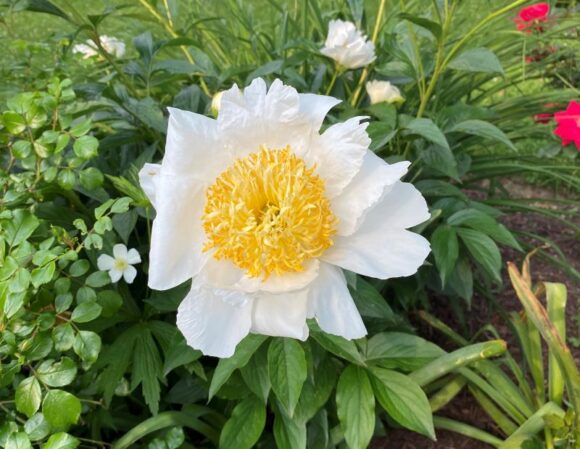
Gardening Tips for May from ‘The English Lady’, ‘One of the Most Enchanting Months’

Color is bursting out all over in the Merry Month of May.

Maureen Haseley-Jones is “The English Lady.”

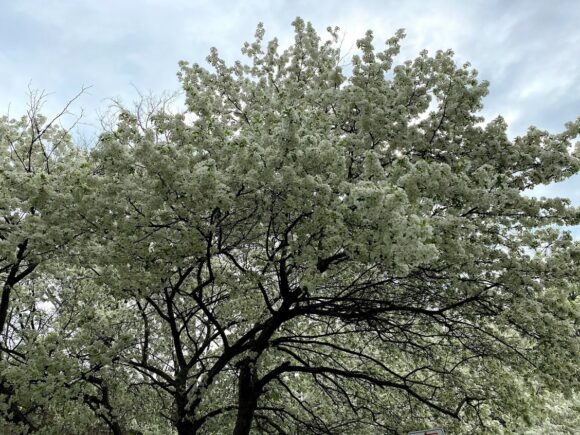
“The darling buds of May” is such an apt phrase for one of the most enchanting months, bloom on spring bulbs and flowering trees, the Amelanchier, the Dogwood and the Cherry to name a few and the new awakening foliage on trees winking in the sun.

By now, you have probably removed most of the winter debris, pruned broken branches and re-edged borders. However, do not apply the composted manure before the soil warms up to 60 degrees.

The soil needs to reach that temperature for the soil organisms to work with the bacteria of the manure which produces nutrients for the roots of the plants.  I suggest, when shopping for garden supplies, pick up a soil thermometer to check soil temperature as I am sure the soil temperature will reach 60 degrees in a few weeks.

As I walk around my garden, I am noticing our old nemesis — weeds — emerging everywhere.

Pull these up by hand, without breaking them together with the roots.  Using a tool breaks the weeds, and as a result, the broken weed pieces will take root and you will face hundreds more of these creatures to get rid of.

Follow on the weeding with an organic corn, gluten-based weed pre-emergent by Bradfield Organics; this product will keep weeds at bay for quite a few weeks.

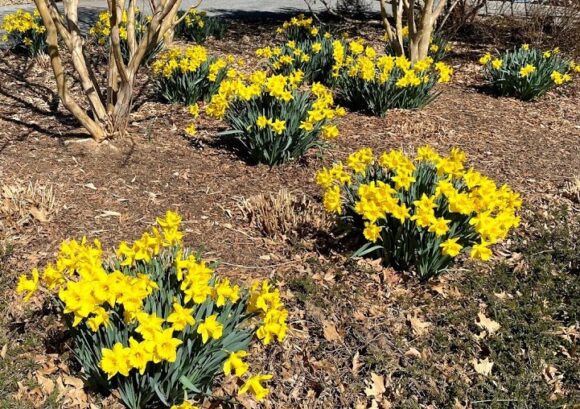
When the soil warms to 60 degrees, apply composted manure around daffodils and other spring bulbs so that soil organisms will produce nutrients to feed the bulbs for next year’s bloom. Also, a reminder to not cut down the Daffodil foliage as the nutrition from the foliage is absorbed into the bulb for bloom next spring.

Also in a few weeks, when the soil has warmed up, apply composted manure and a light layer of fine bark mulch to all maintained areas of the garden, again in July, and before putting the garden to bed in October.  The manure and mulch will begin to build the humus component.
Regarding types of mulch … only use the natural brown wood mulch of natural, do not use the colored mulches, which contain chemicals, and do not use rubber mulch.

A word of caution on Cocoa Mulch. This product is highly toxic to dogs and cats.  It is manufactured by Hershey and sold in many large garden centers.  It is made from the residue of chocolate products and other ingredients and contains a lethal ingredient that has resulted in the reported deaths of cats and dogs that are attracted by the chocolate odor. This mulch contains Theobromine, which is a Xanthine compound, with similar effects to those of caffeine and theophylline.  The symptoms, which animals experience, are seizures and death within hours.

I wrote about the carbon component in my April tips, but wanted to emphasize its importance by stating it again to build the humus component in your soil .

All living things, including us, are all carbon-based creatures. Humus brings carbon from the air into the soil.

Humus acts like a sponge and holds 90 percent of its weight in water. Because of its negative charge, plant nutrients stick to humus bringing nitrogen, calcium, phosphorus and other important elements to the plant, preventing these nutrients from washing away, acting like nature’s slow- release fertilizer.

Humus improves soil structure making it loose and friable, which helps plants to root in this environment with better access to nutrients, water and oxygen. Humus also helps to filter toxic chemicals from soil, much like carbon-based water filtration systems filter toxins from your water.

I also recommend that you go online to Scientific American.com/article/Weed-Whacking Herbicide to check out the dangers of Round-Up. This is the most dangerous herbicide not only because of Glyphosate, which is on the list by the WHO as a chelating agent that causes cancer, but also because of its inert ingredients. I ask that you are not swayed by the word ‘inert’ as the ingredients are anything but inert and those ingredients combined with Glyphosate are deadly to human cells.

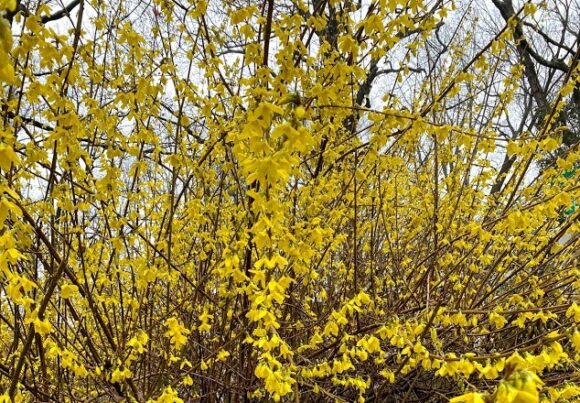
A yellow burst of color is offered by Forsythia in May.

Forsythia is in bloom, lovely fresh yellow blossoms.  If the bloom on your shrub is not as prolific as in previous years, prune out the old sparse wood after bloom ends.

A favorite native tree of mine is the Amelanchier with its creamy panicle blooms, followed by small green leaves and within weeks, red fruit, which is a delicious treat for our feathered friends. Before the birds eat all the fruit, you may want to pick some of the fruit which makes a delicious jelly for your morning toast.

“The graceful Dogwood.” Photo by Tabitha Turner on Unsplash.

Here in my town of Old Lyme, the Magnolias, Cherries and Eastern Redbud are vying with one another to show their finery together with the graceful Dogwoods.  Following the recent rains many of these trees are blooming at the same time or within a few weeks of one another. Their bloom will soon be over then we can look forward to rhododendrons, azaleas and followed by mountain laurel in early June.

Another favorite of mine is the Carlesii viburnum (also known as Korean Spice) is showing pink buds, opening to white flowers and their delightful fragrance fills the air outside my kitchen door. This viburnum grows to about five feet and can be tucked into many a border particularly in an area where you walk by and can enjoy the fragrance.

Covering the barn wall and scrambling up to the barn roof is my climbing hydrangea – bright green leaves emerging with hundreds of buds indicating that this beautiful climber will be laden with blossoms in summer.

Tulips, creeping phlox, forget-me-nots, primroses and candytuft are bringing much needed color to borders and rock gardens.

If you have not had the opportunity yet, for another couple of weeks you can still prune your roses.  Pull back the old mulch from around the base of the roses and in two to three weeks apply manure about six inches from the trunk of the plant. Then a week later reapply a layer of the brown natural mulch on top of the composted manure.

As well as building the humus component, these layers keep the roots cool, keep weeds at bay and help retain moisture. Do not mulch right up against the base of any plants as this encourages rodents to nest and gnaw on the plants.

Beware of fungi that look like weird mushrooms in your mulch; this is a sign of Artillery fungus, which can adhere to the walls of your home and cause problems.  If you notice this fungus, you will need to remove all the mulch and get it off your property.

Apply lime and manure around the lilacs, they like sweeter alkaline soil, thus the lime. By now, you may have already applied lime to the grass, which also enjoys sweeter soil and organic grub control to kill the Japanese beetle larvae – less food for moles.

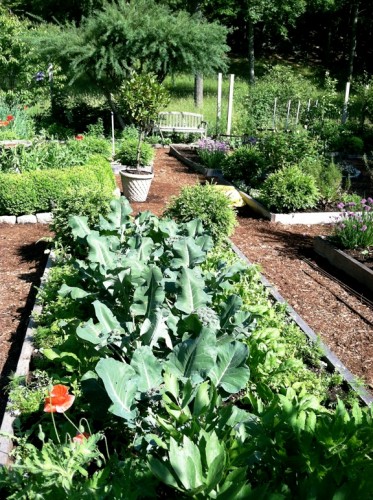
If you are making an organic vegetable garden this year; a garden measuring 16 x 24 ft. can feed a family of four for a year; but keep the size within your needs and capability.  Don’t work the soil if it is too wet or too dry.

Double-digging is the best way to go; it takes time and effort but its well worth it – dig down about one foot and remove the topsoil, put the soil to one side, then dig down and loosen the next six inches of soil and add about three inches of composted manure then put back the topsoil and add another three to four inches of manure.

Do not rototill the vegetable garden, as this will destroy soil structure. Gently loosened, aerated fertile soil will give an excellent yield of fruits and vegetables in the garden.

I prefer 6 x 4 ft. beds rather than rows; beds produce a larger yield of crops. In addition, beds make for ease of weeding and harvesting by having narrow compacted soil or grass paths (having removed lawn from the area) in-between the beds.

Vegetable gardens are hard work but bring great joy … and produce!

The vegetable garden should be situated on the south or southwest side of the property for maximum sun exposure.

Make sure you remove as many weeds as possible by hand, before you even begin digging.

You need a water source close by as vegetables require lots of water, particularly annual fruiting vegetables like tomatoes, which are hydroponics which means they are (mostly water).

Rotate crops, by that I mean, do not plant the same vegetables in the same place as the previous year.  With this method you are preventing any soil born diseases from occurring.

In the loosened soil, plant the vegetables plants so that they are touching, this forms a natural canopy, shading out weeds and helps retain moisture.

I prefer to mulch the vegetable garden with composted manure, the reason being that manure, as mulch, does not cap. Capping is when mulch forms a crust, which does not allow water or air to penetrate to the roots of the plants.

Fence in the vegetable garden with a tall fence to keep animals out. At the base of the fence, install eight inches of fine mesh chicken wire above ground and eight inches below ground to keep out the digging and burrowing animals.

Organic insect control

Insects do not like fragrance so plant fragrant plants like marigolds, nasturtium, lavender, nepeta and honeysuckle and roses to name a few.

Encourage lacewings, which feed on aphids, by planting marigolds and sunflowers,

Attract ground beetles by laying a log or a rock on the earth, under which the beetles can hide. These useful insects are nocturnal and eat slug and snail eggs, cabbage maggots, cutworms and even climb trees to feed on army-worms and tent caterpillars.

“A vibrant shade of green. Photo by Chris Zhang on Unsplash.

Grass is now a vibrant shade of green so when mowing keep the blades of grass at about three inches; the taller blades attracts sunlight, promoting a healthier lawn. The taller blades also shade out weeds and help to retain moisture in the grass.

When mowing, leave grass clippings on the lawn, the clippings are a natural source of nitrogen. If you have clover in the grass, clover is an added benefit as clover takes nitrogen from the air and fixes it in the soil, as additional nutrients for plant growth.

After flowering is over, prune flowering shrubs by 25 percent – do this task immediately before new buds set for next year.

On a rainy day, go shopping for any garden supplies that may be needed, then when the weather is dry, you can be outdoors doing what you love and not indoors shopping.  Buy good hoses, cheap ones will bend and crack.

Peonies need plenty of water to produce flower buds.  I had a 30-foot-long stand of Peonies in my field. The Peonies have been in the ground for over 40 years and are a sight to behold when in bloom.  I gave them lots of loving care with a light dressing of aged manure in early May.  In a few weeks, I  pinch off the side buds while they are still small, leaving the terminal flower bud on each stalk, which will develop into a large main bloom.

Hydrangeas are a wetland plant and require plenty of water during the season, also applying manure and mulch around the base. If you have blue Hydrangeas and want a deeper color of blue, add some peat around the base of the plant, the acidity in the peat produces the bright blue color.

If you need to prune a Hydrangea, which has become too large, then prune it immediately after flowering, in early September, prune by about 1/3 of the old wood and the weakest shoots. Do not wait, as Hydrangeas begin to develop bloom buds for next year later in September.  If you wait to prune it is likely that you will not have bloom for next year.

The beloved Lily of the Valley is such a sweet-scented flower,

My maternal grandmother’s favorite plant, the Lily of the Valley soon will bloom, these lovely flowers are tucked on the small hill on the west side of my apartment, and I am so looking forward to gathering a few fragrant blooms for indoors.

When the lilacs have finished blooming, pinch off the withered flower clusters, and do the same on the mountain laurel and rhododendrons in late June to ensure good blossoms next year.

In mid May, apply composted manure, a light application of peat and fine bark mulch around all evergreens and rhododendrons, mountain laurel and azaleas; these plants are shallow- rooted and the mulch will keep the roots nourished, protected, warm and moist.

Some annual seeds that may be planted outside in mid May are: Calendula, Coreopsis, Marigold, Nasturtium, Nicotiana and Zinnia.

If you purchased annuals on Mother’s Day weekend, place them in a sheltered spot on the south side of your home. Plant them no earlier than Memorial weekend as we can still get a late frost.

Tuberous-rooted begonias, caladiums, cannas and elephant ears can be moved from porch or cold frame to a part shade area as the weather becomes warmer and there is no sign of frost in the forecast.

If you staked trees, when they were planted last year, cut the stakes off at ground level do not pull them out of the roots as you could tear and therefore damage the root system.

Aphid tip: squish a few in your hand; dead aphids release a chemical that causes other aphids to drop off the plants.

Another ants and aphids tip – if you drink mint tea, any leftover tea sprinkle on the bugs, as they do not like the smell of mint.

A word of caution on mint – plant mint only in containers, mint is tremendously invasive and can take over your garden.

When planting annuals, perennials, vegetables, trees, shrubs or evergreen keep them watered.

Houseplants can be moved outdoors for their summer sojourn at the end of May.  However, do not put your African Violets outdoors as they will burn, move them to a porch that is covered and shaded, or keep them indoors in a window that does not receive direct rays from the sun.

Wait until the soil warms up at the end of May to set out Dahlia tubers.

Roses are not troublesome creatures after all! Photo by Bailey Chenevey on Unsplash.

Roses are not the troublesome creatures you have been led to believe.  I like to plant David Austin roses; these shrub roses are repeat bloomers with lovely fragrances.  Roses need at least four hours of sun per day, good air circulation, and excellent drainage.

During their growing period from the beginning of June to mid August; add a little extra composted manure each month; it may be applied over the mulch.  Stop adding the manure in August so that the roses can go into a slow dormancy.

Roses like the same growing conditions as Clematis and can be planted together in a companionship planting, growing well together, with feet in the shade and head in the sun. Before you top up the soil around the roses when planting, add water and check if the soil drains, roses need good drainage.  Deep watering is recommended at least once a week.

Plenty of stuff to keep you hopping, folks, and remember to keep your eye out for any pest trouble and when you spot it get on the ball immediately to avoid further problems. Carefully discard all herbicides and pesticides; these poisons have the same effect on your health as second-hand smoke.

Your garden offers an anchor for peace and quiet enjoyment.  Enjoy the warmth, the gentle breeze, the earth’s fragrance and bloom and please remember to breathe and stretch before any garden labor.

Enjoy and I will see you in your garden next month. If you would like, my son Ian of LlandscapesbyIan will be happy to talk to you and answer gardening questions or you may have him visit your home for a consult.  The apple does not fall far from the tree and in my humble opinion Ian is more talented and creative than me.

About the author: Maureen Haseley-Jones is a member of a family of renowned horticultural artisans, whose landscaping heritage dates back to the 17th century. She is one of the founders, together with her son Ian, of, The English Lady Landscape and Home Company. Maureen and Ian are landscape designers and garden experts, who believe that everyone deserves to live in an eco-conscious environment and enjoy the pleasure that it brings. Maureen learned her design skills from both her mother and grandmother, and honed her horticultural and construction skills while working in the family nursery and landscape business in the U.K. Her formal horticultural training was undertaken at the Royal Botanic Gardens at Kew in Surrey.

Gardening Tips for April from ‘The English Lady,’ a ‘Month of Activity’

Dandelions are one of the prettier weeds to announce the arrival of spring. But do not forget that the young foliage of dandelions is great in salads,  and when the foliage is cooked, it tastes like spinach! Photo by Viridi Green on Unsplash.

Those April showers that come our way
They bring the flowers that bloom in May
And when it’s raining, let’s not forget,
It isn’t raining rain at all, its raining violets

Maureen Haseley-Jones is “The English Lady.”

April is the month of activity in the garden, and our old nemesis, weeds are beginning to rear their heads, so we need to extract the little devils before they take hold and are difficult to remove.

Having said that, I must point out the benefits of many weeds. Nettles are food for butterflies, clover extracts nitrogen from the air and fixes it in the soil, and oil from jewel weed soothes poison ivy rash. The young foliage of dandelions is great in salads, healthy and containing many nutrients, and when the foliage is cooked, it tastes like spinach.  I also do not want to forget our songbirds and other wildlife, who depend on weed seeds as a food source.

Weed removal – weeds must be pulled gently so the weed and roots do not break apart for, if this happens, thousands of weed seeds will reseed and you will find yourself with an endless cycle of unnecessary weeding. When careful weeding has been accomplished, apply an organic weed pre-emergent, with a corn gluten base by Bradfield organics. This will keep weeds at bay for about six weeks.

Plant bare root roses at the end of April. Photo by Bailey Chenevey on Unsplash.

ROSES, ROOTS & MORE

Plant bare root roses at the end of April and container roses in mid-May.

Then in the middle of May when the soil temperature has reached 55 degrees, add manure with a fine bark mulch about one foot from the base of the rose. Check my March tips to refresh yourself on pruning roses.

Be careful clearing winter debris from around rhododendrons, mountain laurel and azaleas; these evergreens have shallow roots and you do not want the roots being exposed.

If the winter weather did indeed erode soil around some roots, add a few inches of soil to cover the exposed roots and at the same time resettle the plant in place. Then in the middle of May apply manure and fine bark mulch as well as some peat, which adds much needed acidity to evergreens.

Plant gladioli corms at two-week intervals in late April. Planting in two week intervals ensures you will get a succession of bloom. Plant the corms eight inches down; this extra depth helps keep the heavy blooms erect.

The Red Lily beetle will soon begin to appear, therefore I suggest applying organic Neem oil on the Lilies when they are about four inches above ground, which helps prevent and deal with the beetle problem.

SOIL SOLARIZATION

This is an effective way to control many soil- borne problems, specifically the tomato blight that causes fruit rot. Covering the soil with clear plastic at the end of April, for one to two months can generate high enough temperatures in the top six to 12 inches of soil to kill pests, nematodes, weed seeds and many disease organisms like the tomato blight.

This process has proved invaluable for home gardeners and the beneficial effects last for several seasons.

To solarize, dig a trench several inches deep around the bed, and spread a thin, clear plastic film (1-4 mils) over the bed.  Press the plastic into close contact with the soil and seal the edges by filling the trench with soil.  Leave the plastic on the soil until you are ready to plant tomatoes or other vegetables in about a month to six weeks.

When the soil temperature reaches 55 degrees, manure all the borders with composted manure in bags from the garden center or aged manure from the bottom of the farmer’s pile and mulch with a fine brown hardwood mulch.

In the vegetable garden, after preparation and planting, and when it is time to mulch, do so with manure which will not ‘cap’ — this means that it does not form a crust like other mulches so that air and water can get through to the roots of the plants where it is needed.      

If you did not apply an organic grub control on the grass in March, apply now to keep the grubs down and cut down on the mole population.    

The soil is the most important component of the growing business; compost, organic manure and peat amend the soil to rebuild its structure. The ratio to use is one part compost to three parts manure and apply peat to the planting mix in the ratio of one part peat to three parts manure when planting evergreens. And as mentioned above, peat adds the acidity which evergreens need.

Good soil structure is extremely important in the garden. Photo by Markus Spiske on Unsplash

Good soil structure assists with drainage, prevents compaction, and the rich nutrients that is the result as these amendments break down and encourage the soil animals beneath the surface to work at full capacity.

In a light soil such as sand, humus — which is the combination of manure — mulch and carbon from the atmosphere bind the sand particles together and, in heavy soil such as clay, keep the clay particles separate to make room for air and drainage.  

Growing conditions in April are very favorable for new plant-root development and it is the ideal time to transplant evergreen shrubs and new evergreens. Put the organic manure and peat with the topsoil in the planting hole in the ratios. Then give the roots a workout before planting to release them. In this way, the roots are opened up and will reach into the surrounding soil for nutrients and water. Also, they will not dry out in the heat of summer.    

Many years ago, when I moved into my farmhouse on the shoreline, I discovered that my soil was sandy, which is good for drainage but sadly lacking in nutrients. I began adding a few inches of manure to all planted borders in April, July and October and today when I put a spade in the ground to check the color of the soil in spring, it is ‘black gold.’  

Gloves should be worn using manure which contains bacteria. The bacteria is great for the plants and the soil but not good for your health.  These products tend to be slow acting; gradually making the nutrients available to the plant and the rewards are infinite.

Organic fertilizers like manure are applied in spring around mid May when the soil temperature has reached 55 degrees and when the plant has about six inches of growth; this allows for the nutrients to become active at the time when plant growth is happening quickly. 

A beautiful spring sight is always, ‘A host of golden daffodils.’ Photo by Sarah Mitchell-Baker on Unsplash.

Daffodils are blooming and what a lovely sight to see. When the daffodil bloom has past, do not cut the leaves from any of your spring flowering bulbs, the leaves send down energy into the bulbs to store for next season’s bloom. 

April is the time to tackle a new lawn or patch seed, use only good quality seed and organic fertilizers.   

Do not be lulled into complacency with a few back-to-back warm days; we can still get a frost and I caution you not to plant annuals until Memorial weekend. 

Do not cultivate around the perennials in the borders until mid May.

Do not panic if you were not able to get the April tasks done until May — your garden will wait for you and the constancy that is Mother Nature will continue to keep your patch of earth flourishing. 

Enjoy the pleasure of being outdoors in warmer temperatures, inhaling the pungency of awakening soil and experience the connection with Mother Nature. Do not overdo it; warm up the body before the garden labor and stay well hydrated with lots of water. We are inexorably entwined with the earth and know that even the smallest gesture of a garden has positive rewards and the effects are positive not only on you but our planet. 

I will return with more gardening tips in May when you are out in the garden in force.

About the author: Maureen Haseley-Jones is a member of a family of renowned horticultural artisans, whose landscaping heritage dates back to the 17th century. She is one of the founders, together with her son Ian, of, The English Lady Landscape and Home Company. Maureen and Ian are landscape designers and garden experts, who believe that everyone deserves to live in an eco-conscious environment and enjoy the pleasure that it brings. Maureen learned her design skills from both her mother and grandmother, and honed her horticultural and construction skills while working in the family nursery and landscape business in the U.K. Her formal horticultural training was undertaken at the Royal Botanic Gardens at Kew in Surrey.

Gardening Tips from ‘The English Lady’ for March, a Month of ‘Wait and See’

Spring is the time to plan for summer gardens.

Those March winds shall blow and we shall have snow and what will the Robin do then poor thing?
He’ll hide in the barn and keep himself warm and hide his head under his wing.

Maureen Haseley-Jones is “The English Lady.”

March is a month of ‘wait and see’ as we anticipate walking around our gardens. This morning I walked outside, into a westerly breeze and a pleasantly warm sun. I took a deep breath and as I did, I caught the rich fragrance of the soil beginning to awaken.

All of us are itching to get into the garden and I believe that foray will be earlier than last year due to the fact that frost did not penetrate deep into the ground this past winter.

The sodden soil will dry out in the next few weeks but I urge you to tread gently as you tend the soil, our precious commodity of Mother Nature. In that regard I am asking that you do not till the soil as tilling damages soil structure and can break friable root systems.

I am asking you to be patient right now especially in the aftermath of so many long months of the pandemic. I know you are chafing at the bit to get your hands into the soil, however, in the meantime, I suggest you continue planning for the upcoming season. Planning means organizing, which prevents gardening mistakes that can occur if you do not plan.

Spring is also a time to think about trees.

When you go outdoors, I suggest you check the trees in your garden to decide what might need pruning, which limbs need to be removed or the canopy lifted to allow more sunshine into the garden. It is less expensive and takes less time for arborists to do the tree work before the foliage appears when the branches and the overall shape of the trees can be seen more clearly.

What to look for:

  • Are there broken or dead limbs?
  • What branches require cabling?
  • If a tree appears to be 50% dead, then it should be removed.
  • A medium shade area can be changed to a dappled shade area, allowing more sunlight in by thinning out the upper tree branches or tree canopy.

Perhaps you would like a tree removed to transform a shade area to a sunny spot which allows for a larger choice of plants available to you.

I always hesitate to remove a healthy tree but sometimes a tree may have been planted too close to the house and consequently the roots have undermined your home’s foundation and the shading over the roof has resulted in mold and mildew. If you need any of the above work to be done, please contact a licensed arborist.

There is an art to tree work knowing how, when and why to cut. Work on the trees should to be carried out by a professional so that at the completion of the work, the effect is both practical and aesthetically pleasing. An experienced arborist will also take into consideration the health of the trees. Having the work done by an arborist also avoids injury to yourself from falling from ladders or perhaps tree branches or trees falling on you.

Spring is a time to prune.

PRUNING – tasks that you can accomplish now.

March is the month to prune evergreens before the new growth appears.

Hedges can be sheared for shape, so that any stubby ends will be concealed by new spring growth.  Please keep to the natural shape of the shrub – no round balls.

Prune Spirea to six inches from the ground.

In April, prune Lavender to three inches.

In late March, prune Sweet Pepper Bush (Clethra), cutting out the oldest branches.

Lilac – Prune back all old branches to various lengths before leaf growth begins, from two to five feet, retaining a natural shape. Sprinkle lime around the base of the Lilac and add manure in May.  Lilacs enjoy alkaline soil receiving benefit from lime.

Prune Butterfly bushes to two feet from the ground and in May apply composted manure around the base.

Prune Forsythia after it has bloomed, pruning out sparse flowering old wood.

Prune roses when the forsythia blooms.  If the roses have only been in the ground for one year, do not prune, wait until October.

Do not remove the protective mulch from around the base of the roses, wait until mid May, and then apply a dressing of manure and fine bark mulch.

You may be asking, ‘Why wait until May to apply manure’ The answer is that the soil needs to warm up to 55 degrees otherwise the nutrient benefits of the manure bacteria that works with plant roots and soil organisms are not activated. I suggest you invest in an inexpensive soil thermometer to check the soil temperature. At soil temperature of 55 degrees, apply a three to four- inch layer of composted manure.

When April arrives, carefully begin to clear away winter debris, treading carefully on the soil to avoid damaging soil structure and friable root systems. When you have cleared away the debris, make a clean edge to the borders with a sharp spade; this makes such a difference to the look of your garden.

The best tool to use is a sharpened lawn edger, the blade is a half circle 9 inches wide and 4.5 inches deep with a flat top – this tool creates a deep edge. Face the bed and thrust the edger down to its full depth and push the cut soil into the bed. Continue along and then remove the spade and surplus clumps of soil and grass.

Edging was one of the first lessons I was taught at our family nursery in England; my great-grandfather was a strict taskmaster standing over me for quite a few days until I got the edging correct.

If you are contemplating the location of a new planting bed or expanding an existing one, here are some tips:

  • Think in terms of where you spend your leisure time outdoors, and where you can sit in close proximity to the new bed in order to enjoy the bloom, fragrance and structure of your plantings.
  • From indoors are you able to view and enjoy the new border?
  • Is it an area where there will not be drainage problems, erosion concerns or water pooling?
  • Is it convenient to tend and enjoy where you can place a bench or chair?
  • Will you be able to water it with relative ease?

For an informal garden I prefer a curved bed – a curved line gives grace and fluidity. I lay out a garden hose in the desired shape and size of bed, adjust the hose until you are satisfied with the gentle curves.

As previously mentioned, the best tool to use to edge or cut out a new bed is a sharpened lawn edger, this tool creates a deep edge.

MANURE

Do not apply manure until the soil temperature has reached 55 degrees which is usually in May, but with a soil thermometer you can check earlier. Many of you who have been my radio listeners and lecture audiences know how I feel about that wonderful natural product. Manure is not a fertilizer – it builds soil structure, aids in drainage and its bacteria encourages the millions of soil animals below the surface to come alive and work with the manure bacteria to produce nutrients for the roots of the plants.

Types of manure:

  • Poultry manure – I know the odor can be rather objectionable, however, this manure contains about 2% nitrogen, one of the highest levels in any manure. If you have access to poultry manure, allow it to age for two months and then add it to the garden.
  • Horse manure is about .5% nitrogen. If you obtain horse manure from a stable, which has sawdust on its floors – it should be pretty weed free. What I have done in the past is obtain horse and cow manure from stables and farms in April.  When you get it home, spread manure out in a flat area (not in a planting bed) then cover it with a tarp for a month.  With this method, the tarp will suffocate the weed seeds and the sun on the tarp encourage the manures to continue to decompose. A week before using horse and cow manure remove the tarp to allow the sun to further decompose it.
  • Cow manure is 0.25 % nitrogen and is the most available manure.  If you get horse and cow manure from the farm, ask the farmer to give you manure from the bottom of the pile so that it is already partially decomposed.
  • Compost pile – If you do not have a compost pile, maybe it could go on your list for this season. Vegetable waste from the kitchen plus grass clippings, and wood pruning can be added to the pile. The high temperature in the compost kills the weed seed and cooks all those other necessary ingredients.  The ratio of compost and manure for your garden is 1 part compost to 3 parts manure – but if you do not have compost – manure will do the trick.

**DO NOT apply fresh manure to the garden, as it will burn the plants.  If you do not have a source of manures from a farm, purchase composted manure in bags from the garden center.

To produce the best-planting environment, resulting in a soil that is ‘black gold’ apply 3 inches of composted manure to all planted areas in May, July and October.

Natural fine bark Mulch can be added later in May. Do not use buckwheat mulch as it flies everywhere. Do not, I repeat do not use cocoa mulch, which is poisonous to dogs and cats and please do not use the chemically colored red mulch.  The benefits of natural fine bark mulch are that mulch helps to retain the beneficial moisture in the soil and aids to retard weeds as does Bradfield organics, a corn gluten weed pre- emergent.

THE HUMUS COMPONENT

I know I have written about the importance of the Humus component for the soil but I feel I must continue to stress this fact.

In 1937 Franklin D Roosevelt told us ‘that the nation that destroys its soil destroys itself.’

Unfortunately, America has not heeded that warning. Precious soils in this country and around the world are being destroyed by dangerous practices used in industrialized agriculture as well as poisonous chemicals, which completely disrupts our eco system and poisons all living things.

In your own garden you can build and retain a rich growing environment by building the Humus component -We are all carbon-based creatures as is all life on earth. Not only humans but also our soil microbes need carbon to flourish. To attract carbon from the atmosphere into your soil you need to build the humus component.

HOW TO BUILD THE HUMUS COMPONENT

Do not till soil – tilling breaks up soil structure.

Step 1 – Add composted manure three times – in spring when the soil has reached a temperature of 55 degrees.  If the soil has not reached that temperature, the soil organisms are not able to work with the bacteria in the manure to produce nutrients for the roots of the plants.

This year, as we have not experienced deep frost therefore, the soil temperature may reach 55 degrees by the end of April or early May.  Add the manure again in July to continue to nourish your growing plants and again in October to protect and nourish your plants and roots through winter.    Manure is not a fertilizer; it builds soil structure and works with all the soil animals to keep a healthy disease- free growing environment.

Step 2 – Add wood chips in the form of brown fine bark mulch or wood chips that you produce from your garden;  these are aged wood chips combined with leaves, twigs and branches.

These two major steps build the humus component. If you do this in your own garden – not only will you be  helping to heal the planet but also produce the healthiest of gardens.

A question I am often asked is ‘Can I put manure over mulch for example in my July garden’? The answer is ‘Yes’ – the manure together with nature’s moisture and your own irrigation enables the manure to find its way easily into the soil and the roots of your plants.

WHAT EXACTLY DOES HUMUS DO?

Humus acts like a sponge and can hold 90% of its weight in water.

Because of its negative charge – plant nutrients stick to humus for nitrogen, calcium, phosphorus and minerals, which prevents these from washing away and acts as nature’s slow release fertilizer throughout the year.

Humus improves soil structure making it loose and friable, which helps plants to root in this soil to get better access to nutrients, water and oxygen.

Humus also helps ‘filter’ toxic chemicals from the soil, mulch like carbon-based water filtration systems filter toxins from your water.

We are not able to control industrialized agricultural practices – but in your own garden you can make a difference.   Feed the soil and it will feed the plants.

Once again, I’m getting a little ahead of myself. So back to a cloudy day at the end of March, at this time you can gradually begin to remove protective covering from shrubs and small trees. In exposed garden areas, where wind is a problem, leave the covering on until mid April. Cold wind is more damaging and drying to plants than extreme cold and frost.

FROST HEAVE: If some perennials, trees and shrubs have heaved out of the ground, cover the roots with fresh topsoil or mulch until mid May when they can be settled back in place.

I just walked around the corner of my house to check on my trellis on the chimney where I have Roses and Clematis planted together. Roses and Clematis are a delightful combination in a companion planting. A companion  planting indicates that the rose and the clematis planted together have the same growing needs, ‘feet in the shade and heads in the sun’. Each month beginning in May, add manure and mulch around the base of both. Discontinue feeding roses and clematis in mid August; this enables both plants to go into a necessary slow dormancy.

MOLES: To keep the mole population at a minimum in your garden; apply organic grub control once a month from March for two months; less grubs, less food for the moles. When you see signs of moles, find the mole holes and insert Exlax which contains Senna, an organic herb. The moles eat the exlax, become dehydrated from defecation and die.  Apply organic pre-emergent crabgrass killers in March and April.

VOLES: Spread castor oil around the base of plants and keep mulch away from the base of the plants so that voles, which are canny little creatures are not able to hide there and gnaw on plants and roots.

DEADHEADING: Do not cut off the leaves of the crocus as they bloom; the leaves make food for the bulbs for next season’s bloom.

Spring has sprung!

DAFFODILS: When the green shoots emerge; spread composted manure around the plants.

DAFFODILS FOR DISPLAY INDOORS: The stems release a sap like “goop” that harms other flowers.  Before adding Daffodils to an arrangement, cut the stems at an angle, and leave them in a vase half filled with lukewarm water for a couple of hours.  Discard that water and add the Daffodils to the other flowers.  If you recut the stems you will need to repeat the process. Change the water in the vase often.

PERENNIALS: In May when perennials are about four inches above soil level and when the soil is 55 degrees, apply composted manure around them to further encourage healthy growth.

DIVIDING PLANTS: At the end of April or beginning of May, you can divide late blooming perennials that have been in the ground for four years or more; these divisions encourage stronger bloom.

Discard the older, inner parts of the clumps and plant the new outside portions.  Do not plant the new divisions any deeper than they were originally in the ground.

When dividing Irises  – barely cover the root system so they do not fall over – if Irises are planted too deep they will not bloom.

PANSIES: pick the flowers regularly to encourage more bloom.

March is the time to plant the following seeds indoors: gaillardia, salvia, marigold, zinnia, petunia, snapdragon, stock and verbena. Before planting these seeds, soak seeds in warm water and plant them in sphagnum moss or coir. Coir is the outer shell or fiber of the Coconut, either of these two mediums prevents a disease called “damping off”, which can cause seeds to rot before germination.

Cover pots and seed trays with plastic wrap, to create a mini-greenhouse, which provides moisture which seeds need to germinate.

Note: Remove the plastic once the seeds have germinated, as the soil needs to drain and needs air circulation around the emerging stems.

If you are going away on business, or on vacation reapply the plastic wrap

over the pots and trays and prop some sticks or skewers in the corners. While you are away the seedlings will stay moist, make sure the seedlings do not come in contact with the plastic.

START tuberous begonias, and caladiums indoors.

DORMANT SPRING SPRAYING of fruit trees, flowering cherry, crabapple, hawthorn, mountain ash and lilac can be done before the leaf buds open.

Call in a professional company and request that they use only organic products.

Houseplants – repot them if they need repotting in April.

Geraniums are always a joy through the summer months. Photo by Annie Spratt on Unsplash.

GERANIUMS: The plants that you brought indoors at the end of last season check them for new side shoots appear, then cut them back to four inches and repot them in clean pots about and inch and a half larger with fresh potting soil.

Well, fellow gardeners I know you are getting excited to be in your gardens this season and I hope that these tips have given you plenty to think about to keep you busy for a while. Enjoy photo of lovely gardens that my son Ian and I have designed on Facebook and if you wish I suggest you contact Ian for a consultation and enjoy the photos on his website LandscapesbyIan.com.

Enjoy being outdoors in spring sunshine and I look forward to seeing you in your garden in April.

About the author: Maureen Haseley-Jones is a member of a family of renowned horticultural artisans, whose landscaping heritage dates back to the 17th century. She is one of the founders, together with her son Ian, of, The English Lady Landscape and Home Company. Maureen and Ian are landscape designers and garden experts, who believe that everyone deserves to live in an eco-conscious environment and enjoy the pleasure that it brings. Maureen learned her design skills from both her mother and grandmother, and honed her horticultural and construction skills while working in the family nursery and landscape business in the U.K. Her formal horticultural training was undertaken at the Royal Botanic Gardens at Kew in Surrey.

Gardening Tips for February from ‘The English Lady,’ Lift Your Spirits by Thinking Spring … and Beyond

Lift your spirits in these winter months by starting to plan how you would like your garden to  look in the summer or fall. Photo by Jan Canty on Unsplash.

Maureen Haseley-Jones is “The English Lady.”

Hello everyone, with all the pain and suffering we are all experiencing right now with the pandemic still upon us, I wanted to lift your spirits and cause you to begin planning for this season in your garden.

Mother Nature’s gifts of renewal, growth and nourishment tell us that in this wonderful pastime called ‘gardening,’ we can escape from the trials and tribulations of our world. Each day we move gradually from the dark into light, to a longer brighter day, and finally, we welcome spring.

Paper-white narcissi have a beautiful fragrance. Photo by Jonathan Diemel on Unsplash.

A few weeks ago, I retrieved my second batch of Narcissus from the brown paper bag in the refrigerator and planted them on pebbles, with just enough pebbles to anchor the bulbs in place or you may use potting soil. I use tall glass vases and it is most important keep the pebbles moist with enough water to cover the bottom of each bulb.

I brought my Rosemary plant indoors in September, Rosemary is not hardy outdoors in  zone six. I spray the plant twice weekly with warm water and run a cold-water humidifier and two germ guardian air cleaners with UV lights for personal health and the health of my plants.  

After planting the paper-white Narcissus, I placed them in a dark, cool closet until the foliage is about four inches tall. Today, I moved them from the dark closet to a cool room with indirect light and where the temperature remains at about 65 degrees. When the buds are almost ready to open, I will place them in a brighter area to be enjoyed, not only for their bloom but also the heady fragrance, which permeates the house.   

The new bloom gets me out of the winter doldrums and their gentle fragrance lifts my spirits. I know that the severe changes occurring with global warming combined with pollution in the air, water and the earth, are severely damaging our planet. 

Your own  personal contribution to saving our planet is to tend the soil organically with compost, manure and natural brown mulch, which builds the humus component in your soil. Your plants and vegetables will thrive, as will you.  Throughout the year allow your garden to anchor you, connecting heart, body, mind and spirit to Mother Nature’s life-giving bountiful gifts and spiritual energy.  

The bitter cold harsh winds of January and February extract moisture from trees and shrubs, especially the evergreens. Winter winds are more harmful to plants than cold temperatures, not only causing plant breakage but also soil erosion. 

Cover any roots that become exposed during the winter with topsoil. Photo by Markus Spiske on Unsplash

For that reason, it’s helpful to have a few bags of topsoil and mulch in the garage. With these items on hand, any roots can be covered when they become exposed by wind or frost heave. Roots exposed to the elements for any length of time can kill the plant, so when you notice exposed roots, quickly cover those areas with soil and mulch.

When spring arrives, and the earth warms up, the plant can be resettled in place together with composted manure and the natural brown mulch to provide protection and nutrition.

On a sunny day this month, take a walk round the garden and breathe in the freshening air and as you walk, make some notes and decide what worked for you last year and what you will never try again. 

Later, when you are back indoors, relaxing in your armchair, browse through the catalogues that began arriving a few months ago. You have already begun making lists of plants that you are thinking of buying. 

A word of caution, however, when gazing at the photos, which are meant to tempt you with their lovely but “doctored up” pictures of plants. Don’t be fooled!
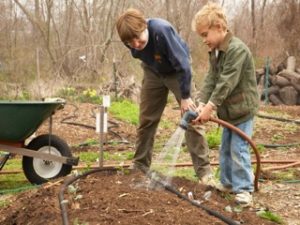
Instead, decide that this season in the garden will be for sensible and organized change. Do not allow your imagination to run amok and be caught up in the fantasy of the brightly-colored, high-maintenance garden pictures shown in the catalogues. 

Suit your garden to your lifestyle that will work within your time frame and physical abilities. If you follow that construct, you will have the time to sit, relax and smell the roses, without being overwhelmed or disappointed.    

As you sit and plan for the coming season, it’s important to keep your budget in mind. It’s hard to believe as you look outside at the muted landscape, that in a few months, sunshine and gentle breezes will warm the soil. 

When the soil is dry enough to tread on, winter debris may carefully be cleared away. Then with a clean palette, make a clean edge on the borders; this simple task makes such a difference to the look of a garden. Then in mid -April, add that lovely layer of manure and compost (the ratio being three parts manure to one part compost). 

With that prep done, you are ready for the fun stuff, the placing and planting!  

For those of you who are vegetable gardeners and look forward to a bountiful year with fruits and vegetables; spring rain, extra irrigation and sunshine will produce a  delicious bounty. As spring moves along, so will the appearance of both good and bad insects, moles, voles and other critters, that can be dealt with naturally. My remedies for these problem, I will give in an upcoming gardening letter.

Your memory of your garden from last season may be lost in the enthusiasm of a new season, therefore, I am asking you to be kind to yourself. If last year you became overwhelmed with too much gardening, and not enough time to relax and smell the roses, the following are some suggestions you might follow to avoid that problem:

For example, send some of your borders back to grass.

If you are tired of mowing all your grass areas, spread wildflower seeds in the grass and enjoy the pleasure of a prairie meadow.

Make some of the high-maintenance, perennial borders, into mixed shrub borders. To accomplish this, take out some of those high-maintenance perennials and donate them to a worthy cause. 

In their place, plant small and medium size evergreen shrubs; some green, some blue and some of the lovely evergreen gold species. With these shrubs and their year-round beauty, add small flowering deciduous trees and shrubs that begin flowering in April and successively through June. The Carlesii viburnum, also known as Korean Spice, is a favorite small shrub of mine, with its white buds that open to a pale pink with the most delightful fragrance.  

Add a Ben Franklin tree with its white, cup-like blooms and gold center that flowers in August through September. 

Nestle three Blue Mist shrubs in the mixed border; this plant will delight with purple blooms and fragrant leaves into September. 

On a fence or trellis, plant white autumn clematis.

Add a groundcover as an evergreen framework – my favorite is Myrtle with its glossy leaves and miniature blue flowers that bloom in April.    

It is never too soon to introduce youngsters to the wonders of the garden.

I feel it is never too soon to introduce your children and grandchildren to the wonders of the garden and begin by introducing them to the garden fairies. Through the years, I have asked children to draw a picture of the garden fairy and make a list of questions to ask the fairies, who live in the wild patch in the garden. 

We all have a wild patch in the garden; and at this point you are probably saying, “Maureen, my garden is one large ‘wild patch.’ Children became so excited and enthused about their lists and pictures of the fairies, as what you are showing them is the transformation of science into magic. These days we seem to have forgotten about fairy tales, dreams and magic; it’s way past time to bring those wonderful energies back into our lives and into the lives of our children.  

In spring and on into summer I would find my children or their friends impatiently checking the garden wanting to see their planting efforts come into bloom. In the vegetable garden, they gathered to check what was ready to eat from the produce they had planted. I have found that this introduction to the garden has inspired these children when they become adults to plant and tend gardens of their own enthusiastically.

My son Ian is a great example of this as he has partnered with me through the years in the garden – and, in him, the old adage that ‘the student is better than the teacher’ has certainly proved to be correct. Ian is a designer par excellence and I invite you to check his website LandscapesByIan.com and his Facebook page for lovely examples of his work. 

In my March gardening tips, I’ll offer you some suggestions of ornamental trees, shrubs and long blooming perennials. With that list in hand, it is a good idea to obtain your plants from local garden centers that carry tried and true plants that will flourish in Zone 6.  

On the other hand, if you feel that over the years, you have been throwing good money after bad in your garden. You are feeling desperate as you feel that your garden no matter what you do, never looks right. If that is the case then get in touch with a landscape company (for example, LandscapesByIan.com), who will keep your budget in mind whether you want to do your own work, or wish for a design to install yourself.  

Let your imagination run wild as you start to plan your garden … and then bring it back to reality as you start to consider what is really manageable.

On the other hand, when you are planning your garden for this coming season, there are important facts to keep in mind:  

What are the plants requirements for sun, shade, soil, and water? 

Will they survive in this zone, Zone 6?  

What are the growth patterns of the plants? Do they grow fast or slow?  

You do not want a 50 ft. tree up against the house with tremendous roots that will play havoc with your house foundation.  Or do you want that lovely but very large, Catawbiense Rhododendron, all 10 ft. of it, climbing through your dining room window in five years? 

To find those facts, either check the plants in a book, on the Internet or read the labels attached to the plants in the nursery. 

Check every aspect of the plant before you buy.  The red or green Lace Leaf Japanese Maple looks lovely in spring but is it something you can enjoy, without its leaves in the winter? Personally, I not only enjoy the foliage of plants and trees but also the shape and bark of trees without foliage in winter.  

For those of you just beginning to garden, I must be honest and dispense with the myth that gardening is always a relaxing hobby. At the end of that first day of digging, lugging soil, manure and fertilizer, and planting everything at the proper depth; you will feel exhausted.  

Then you remember that you still need to water the newly-installed plants as you drag your tired body to switch on the hose. Thank goodness, the mulching can wait until tomorrow or next weekend, right? Right!   

Watering can be meditative … by any method. Photo by Anthony Lee on Unsplash.

Watering, by the way, can be meditative. Imagine that the hose is your umbilical cord so that, as you nourish the earth and the plants, the earth can nourish you. 

By now the sun has gone down, and you trudge indoors muttering to yourself, “What the heck did I get myself into”?  To this comment I say, “You did not have to tackle all of the garden in one day”.  

In gardening, there is always tomorrow, or next week, and even though the label says to plant it by the end of May or June, believe me folks, a few weeks later does not matter, the garden will wait for you.  

You may be saying to yourself at this point, “Maureen, are you trying to put us off gardening?” No folks, but I would remiss, as someone who has gardening in my blood (as well as manure!) for over 400 years to tell you, however reluctantly, not only the pleasures, but some of what can cause aches and pains.

The idea is not to bite off more than you can chew. For first-time gardeners, don’t scatter your energies all over the garden, but rather tackle and complete one area at a time. That area should be priority one until it is complete.  

If you have a new home with no landscaping, some hardscape may be required. Hardscape is walls, walkways, patios, ponds, decks and so on. The sound and look of a water feature in the garden is delightful. A water feature need not be elaborate, a fountain is fine – the reflection of water is Mother Nature’s mirror.

If you are not able to do this construction yourself, get in touch with a landscape contractor now, so that a plan can be created right away, then installed and ready by spring. I say to connect now as many landscape products are short on supply this year.   

All of these endeavors mean you getting yourself in shape physically, so get off that couch, put away the catalogues and your plant lists, stretch, then wrap yourself up in warm gear and take that walk.   

As you walk, look at the trees in winter, the elegant shape of them, the lichen on the stonewalls, and the moss tucked in cracks and crevices. Clear your mind and allow nature’s spirit to surround you. As you walk, look at a garden or two in your neighborhood; gardens which you have admired when they were in bloom and see what they look like in winter.  

I remember one of my professors when I studied at the Royal Botanic Gardens at Kew saying, “In winter, you can tell a really good landscape by its bones, without the flesh of flora and foliage.” 

In spring, get in touch with those neighbors whose gardens you admired and ask them some of the secrets of their garden. They will be happy to talk with you not only of their successes but their failures – true gardeners are realists when they speak about their gardens and love to share.  

Well folks, I’ve given you plenty to think about right now so enjoy your daydreaming of the season to come and I’ll see you next month in your garden.

About the author: Maureen Haseley-Jones is a member of a family of renowned horticultural artisans, whose landscaping heritage dates back to the 17th century. She is one of the founders, together with her son Ian, of, The English Lady Landscape and Home Company. Maureen and Ian are landscape designers and garden experts, who believe that everyone deserves to live in an eco-conscious environment and enjoy the pleasure that it brings. Maureen learned her design skills from both her mother and grandmother, and honed her horticultural and construction skills while working in the family nursery and landscape business in the U.K. Her formal horticultural training was undertaken at the Royal Botanic Gardens at Kew in Surrey.