
Gardening Tips for Early December from ‘The English Lady’

Maureen Haseley-Jones is “The English Lady.”

We have been fortunate here in New England to have had the pleasure of a lovely summer not too hot with adequate rain. Followed by a warm fall with more than enough rain into November to encourage healthy root growth for a vibrant spring next year.  I am keeping my fingers crossed that this weather foretells a mild winter – we can only hope, but yet again this is New England.  

Spring Bulbs:

This year due to the warm fall, the soil is still soft and warm for digging, which brings to mind, spring bulbs.
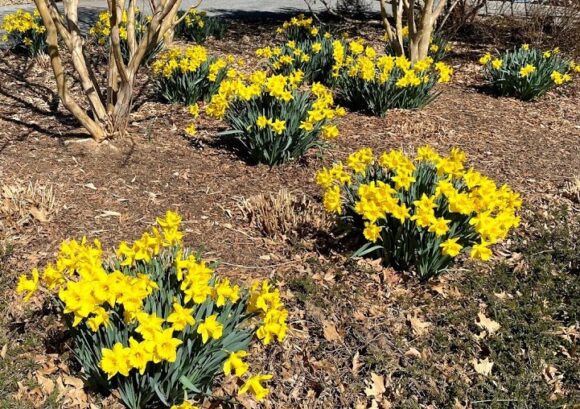
Plant daffodil bulbs in late fall so you can enjoy blooms like these in the spring.

Wear gloves when planting Daffodil bulbs, as these bulbs cause an irritation called a ‘lily rash’. Make sure you plant the bulb at a depth of at least three times the size of the bulb with the pointed end up and add composted manure around the planting holes. Daffodil bulbs need to be at least nine inches into the soil below the frost line for optimum bloom. 

Dig a trench for the bulbs and scatter them in the trench.  Bulbs can touch one another without a problem and by planting this way you will produce full dramatic show in spring. 

Plant tulip bulbs 12 inches below the soil surface.

Tulip bulbs should be planted 12 inches down to get them out of harm’s way as tulips are the caviar of the rodent family. I offer a suggestion to avoid this problem before planting by soaking them in an organic deer repellent then allowing them to dry in the sun. This will deter critters from eating them.

Another protection is to line the planting hole with gravel.

In the spring when the bulb foliage is about 4 inches tall, sprinkle more composted manure around all the bulbs you planted. 

 I hear you saying, “Okay Maureen, I’m ready to plant the bulbs but what else is there to do in the garden?”

Folks, there are a number of things to get you out in the garden at this time of year. 

Time for Compost & Construction Projects:

The most important task is to apply a few inches of composted manure on all planted borders with a light layer of natural brown mulch on top. By doing this, you will continue to build the humus component in the soil.

Before the snow flies, any construction projects that you have in mind can be accomplished.

This includes stonework and carpentry, building decks, and mending fences. Building dry laid stonewalls, walkways, patios and digging ponds. Definitely labor-intensive work, but at this time of year you won’t be uncomfortably hot. Make sure to stretch, take breaks and drink lots of water.  

When the weather is inclement, work under a construction tent when building walls, decks or digging ponds. Or build trellises, pergolas, and arbors and fences in a shed or garage. The added advantage to the hard labor is that it keeps one in shape, especially with those fattening holiday meals looming on the horizon.  

If you are not able or do not want to do the work yourself, now is the time to call in a professional to do the work so that the project is completed before you plant in spring.  Each year, harsh winter wind damages much of the foliage of broadleaf evergreens.

Rhododendrons, mountain laurel and azaleas:

Rhododendrons are vulnerable to moisture loss during the winter.

These are particularly vulnerable as cold wind drains them of much needed moisture. Broadleaf evergreens with their shallow root system need a good store of water going into the winter. We have had reasonable rain but need more this fall; the rain helps the broadleaves survive, as they will continue to lose water vapor through the cold months.  

Many of you have said that you notice the harsh winds of the past two winters caused the foliage on many rhododendrons to become brown and brittle. This happens when the soil freezes so that plant roots, cannot take up water to make up for moisture lost from water vapor. Dehydration is the result causing brown or wind burnt foliage.  

Evergreens:

I don’t go overboard with wrapping evergreens with burlap in winter. My white pines, Colorado blue spruce and Fraser firs are at least 50-years-old and well-established so no worries about damage. However, there are exceptions, with plants that require a burlap wrap.

Among those are evergreens planted in September including the Dwarf Alberta Spruce, so prone to wind burn. The Albertas should be covered with one layer of burlap, loosely wrapped.  

Also if the evergreens are close to a road and exposed to salt spray from snow trucks and ploughs, burlap 3 feet up from the base may help. Of course, the best idea is not to plant them close to the road or plant salt-tolerant species like Juniper.

At the base of all evergreens, spread a 3 inch layer of leaves or fine bark mulch, composted manure and peat around the base of the trunk. Following a heavy snowstorm when evergreen branches are weighed down with snow, gently brush the snow off with a broom.   

Leaf Trouble:

The leaves of the deciduous trees fell fast this fall due to the recent storms. Either you or a nimble person should climb a ladder and remove leaves from gutters and drain pipes. Water from clogged gutters and pipes falling onto foundation plantings causes damage to the plants below.  

Peonies, Perennials &Veggie Leftovers:
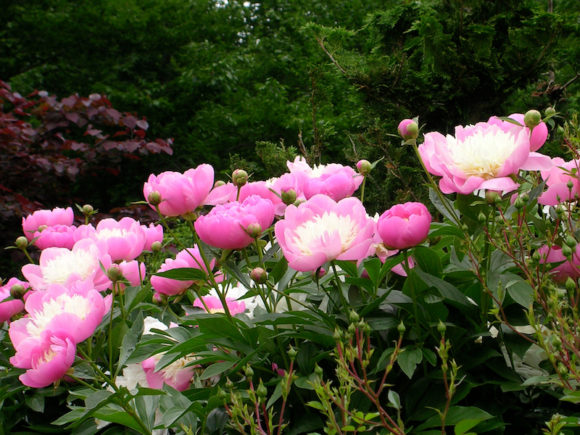
To keep peonies thriving, cut them down close to the ground after the first hard frost.

Now after the first hard frost, cut Peonies down to within 6 inches from the ground, adding just a small amount of composted manure around the base.

Personally, I leave up my spent perennials until next April. The soft grays browns and yellows compliment the muted hues of a winter landscape and our feathered friends enjoy the seed heads. 

Any leftover vegetables in the vegetable garden should have been turned into the soil. Add one part compost to three parts manure to the vegetable garden and plant a cover crop of buckwheat, alfalfa or white clover, to minimize erosion. In spring, turn the cover crop into the soil as green manure.     

Power Tools & Irrigation Systems:

Take any of your power tools that require repair or sharpening into the shop now.  The repair shops are less busy now than in the spring.  Clean your tools off in a bucket of sand, the roughness of the sand will help clean off soil and debris, then oil and grease wooden handles to preserve them and prevent splinters. Hang them neatly on hooks in the garage or shed and not just higgledy-piggledy in a pile   

If you have an in ground irrigation system, blow out the lines or have this done professionally. Also coil your hoses and store under cover, and shut off outdoor faucets.

Put a bag of potting soil in the corner of the garage or basement, it will come in handy for repotting houseplants, bulb forcing or starting seeds in the spring.  A supply of peat, composted manure, sand and vermiculite is also useful. Also put a bag of topsoil and some mulch under cover so that you can cover the shallow roots of evergreens if they push above soil surface due to frost heave.  

Houseplants:

Water houseplants, early in the day, not in the evening. Photo by Alena Ganzhela on Unsplash.

The best time to transplant houseplants is during the growing season beginning in April. However, if you need to repot some houseplants that have outgrown their container, transplant to a clean pot only two inches larger than the original as plants like to be compact; add new potting soil and water.  

Container geraniums and begonias brought indoors should be placed in a sunny window to be enjoyed. In February, cut the plants down to about six inches from the soil surface and water them. 

Water houseplants, early in the day, not in the evening, as plants do not like to have wet feet at night.  Water them only when the top four inches of soil is dry to the touch. Once a month stand them in the bathtub or sink and spray the leaves with lukewarm water to remove any dust, dirt, white fly or aphids.  Do not get water on the leaves of African violets.  

Narcissi:

Photo by Jonathan Diemel on Unsplash.

Paper-white Narcissus bulbs are great for forcing.

I force these bulbs in pebbles but you may use potting soil if you wish and keep the pebbles or soil moist. Put the Narcissus bulbs in tall containers. I use tall clear glass vases, which help support the stems. I anchor the bulbs with pebbles, keep the pebbles moist and place the containers in a cool dark place.

As soon as you see root growth and the beginnings of leaf growth which is in about a month, bring the bowls into medium light, keeping the pebbles or soil moist at all times.

I force about a dozen at a time and the remainder I store in the vegetable keeper in the refrigerator in a brown paper bag away from food. I bring them out and pot them up a few at a time so that I have a succession of fragrant bloom throughout the winter.  

Herbs:

Grow pots of parsley, dill, basil and other herbs in a sunny window, delicious fresh herbs for cooking and salads through winter. 

Roses:

Remove any dead or diseased leaves from Roses and pick up any Rose debris off the ground. If you notice disease like black spot in the debris, do not put it in your compost pile; throw it away in the garbage.  Mound soil, composted manure and mulch around the base of the Roses. The mounding helps maintain a constant temperature around the Rose. 

If the Roses are grown in an exposed area, which makes them vulnerable to drying winter winds, cover the plant with one loose layer of burlap or use a rose cone.  Make sure all climbers Roses or other Vines are securely fastened to the fence or trellis.  

Bird Feeders:

Set up your bird feeders where you are able to enjoy the birds. Preferably place the feeders near to some low shrubs or small trees sheltered from the wind; birds like to flit from these protected spots to the feeder. Offer a varied menu for different birds.  Birds enjoy a recipe I received from my stepmother in England; a lump of suet embedded with peanuts or hollowed out pinecones filled with peanut butter.  

To prevent squirrels from raiding the feeders, set up a baffle and sprinkle cayenne pepper in the birdseed and on the suet feeders; the heat does not bother the birds and squirrels will stay clear.  I am aware that hungry squirrels can jump vertically five feet; but don’t worry if you happen to be a squirrel lover; they always manage to get food from some feeder.

This is the time of year when we gardeners can pause and with the previous season still fresh in your mind, say, “this worked”, and “that I will never try again”.  It is worthwhile to take a leisurely stroll around the garden before the snow flies in the next few weeks.

Look at the garden, squarely and soberly, making notes as you go to plan for next season. Plan as you stroll, writing down your impressions, making sketches and lists and saving them for your winter armchair gardening. 

Enjoy the holidays and I’ll see you in your garden soon.

About the author: Maureen Haseley-Jones, pictured left, is a member of a family of renowned horticultural artisans, whose landscaping heritage dates back to the 17th century. She is one of the founders, together with her son Ian, of, The English Lady Landscape and Home Company. Maureen and Ian are landscape designers and garden experts, who believe that everyone deserves to live in an eco-conscious environment and enjoy the pleasure that it brings. Maureen learned her design skills from both her mother and grandmother, and honed her horticultural and construction skills while working in the family nursery and landscape business in the U.K. Her formal horticultural training was undertaken at the Royal Botanic Gardens at Kew in Surrey.

Gardening Tips from ‘The English Lady’ for August, ‘The Sunday of Summer’

There is beauty all around us in the garden in August. Photo by Joshua J. Cotton on Unsplash.

August has always been one of my least favorite months in the garden; but plentiful spring rain this year has resulted in bountiful fragrance, bloom and foliage.

We have such a short blooming and growing season here in New England that any extra time to have a good-looking border is much appreciated. However, by this time in the season, there are always a few gaps to fill in with annuals or some later blooming perennials. Your gardens are a constantly changing scene of beauty in motion.

Plantings that looked good last year, may be oversized, and desperately in need of division or transplant. This task can be tackled in September when the weather is cooler. Then you can venture into your borders and transplant some specimens out so that every plant has its own space with plenty of air circulation and is able to perform with optimal health.

Divide those plants that have been in the soil for four years or more, as you probably noticed they are not blooming so profusely. I am sure you have fellow gardeners who will be thrilled to receive some of the divisions.

Keeping Your Garden Fresh:

Keep up with your dead-heading so that your garden will always appear fresh and perky. After the hot, dry days we have had of late, watering is of major importance. Ensure your garden receives at least one inch of water a week with containers requiring a daily dose of water, in the early morning and early evening.

Flowering borders need plenty of water in August. Photo by Annie Spratt on Unsplash.

Soaker hoses in the borders are a much more efficient method of watering as the water goes straight to the roots where it is needed. With soaker hoses you will not lose 40 percent of moisture to evaporation and with this method, you also prevent water from landing on the foliage, which can result in disease and mildew.

When you cut back tired-looking annuals, you will soon see a new flush of bloom. If on closer inspection, you notice your borders are looking somewhat weary and need a bright boost of some new specimens to perk things up, you are in luck as right now garden centers are offering late season bargains.

When the perennial Coreopsis and Spirea have finished blooming, cut off the dead bloom with the garden shears and anticipate the appearance of vibrant bright bloom shortly.

Roses:

It is important to stop feeding roses now in August. Roses require at least nine weeks without using their energy, this is important as to produce new bloom roses need to gently retreat into a slow, healthy dormancy before the first frost. In my September tips I will give you suggestions on partially pruning roses in early fall, followed by a second pruning the following April. This double pruning method produces the healthiest and most prolific bloom.

Containers:

Photo b Annie Spratt on Unsplash.

Every couple of weeks give your containers a little extra composted manure when watering, which will keep these miniature gardens bright and cheerful into early fall. Add the manure on top of the natural brown mulch as both manure and mulch help retain moisture and help to retard weeds.

In the morning, if you do not have time to water the containers before you go off to work or run errands, simply empty your ice trays into the containers, this will provide slow-release watering until you are able to add more when you return home.

Powdery Mildew:

With the high heat and humidity which we have been experiencing recently, powdery mildew maybe appearing on certain species like summer phlox, Monarda and Hydrangeas. If you notice this problem, I suggest you spray with my remedy of one gallon of water in a spray container adding one tablespoon of baking soda and a dash of vegetable oil.  Always spray in the morning before the temperature and humidity numbers, combined together equal 160.

Vegetables:

Continue adding more composted manure to vegetables each month, as vegetables particularly annual vegetables are heavy feeders. To prevent animals from munching on your precious bounty, place an old sneaker or a piece of carpet that your dog had lain on in among the vegetables; these odors help to keep furry marauders away.

Peonies:

Place your orders for Peonies now so they can be delivered for September planting. September is the only month suitable to transplant, divide or plant new Peonies.

Following the first hard frost in November, cut any existing Peonies to six inches from the ground and add a little natural brown mulch around them to protect the pink-eyed roots, which are close to the soil surface. When planting Peonies or transplanting them, make sure that the ‘pink eyes’ on the roots are barely covered with soil, if planted any deeper, it is likely that you may not have bloom next year.

Begin compiling your list of spring bulbs now for the best choice of bulbs to be available for you.

Please feel free to email me with any gardening questions to MaureenHaseleyJones@gmail.com. I look forward to seeing you in your garden in September, in the meantime enjoy being outdoors.

About the author: Maureen Haseley-Jones, pictured left, is a member of a family of renowned horticultural artisans, whose landscaping heritage dates back to the 17th century. She is one of the founders, together with her son Ian, of, The English Lady Landscape and Home Company. Maureen and Ian are landscape designers and garden experts, who believe that everyone deserves to live in an eco-conscious environment and enjoy the pleasure that it brings. Maureen learned her design skills from both her mother and grandmother, and honed her horticultural and construction skills while working in the family nursery and landscape business in the U.K. Her formal horticultural training was undertaken at the Royal Botanic Gardens at Kew in Surrey.

Gardening Tips for July from ‘The English Lady’; The Month of ‘Hollyhocks and Hammocks’

Photo by meriç tuna on Unsplash.

If I had my way, I’d remove January from the calendar altogether and have an extra July instead. (Roald Dahl)

Watering is so important during the heat of summer. If you planted trees or shrubs this spring, particularly evergreens, these plants require extra moisture to establish a strong root system. We have had an abundant amount of rain this spring and into the summer, but it is still important to keep an eye on the weather.

Here in New England, plants require at least an inch of water per week.  If you are using a regular hose, you lose 40 percent of moisture to evaporation. However, a hose is necessary for a deep first-watering when a plant goes into the ground and for containers.

Watering is so important in July. Photo by Irene Dávila on Unsplash.

Soaker hoses in your borders are the best method of watering, attached to a house spigot with a timer. By using this method of irrigation, moisture goes to the roots of plants where it is needed and not on the foliage, which can cause disease such as black spot and powdery mildew. These hoses attached to a timer can be used efficiently not only in the borders of the garden but also in the vegetable garden, where annual vegetables, in particular, require a lot of water to produce a good crop.

In addition, composted manure added to the containers and copious amounts to the vegetable garden, help to retain a good amount of moisture. Manure used as mulch for the vegetable garden adds more nutrition, manure as mulch does not cap or form a hard crust, as do other mulches, so that water goes directly to the roots.

LAWNS & SOIL

Water the lawn only when the green glow begins to fade.  An established lawn will bounce back following dry hot spells.

I want to emphasize the importance of soil and soil health, which has been severely neglected and abused with poisonous chemicals for years. Soil is the most important element of plant growth; it is not an inert medium that merely holds the plants erect, it is a living organism that needs to be replenished with nutrients.

The nutrient is composted manure, manure builds soils structure and its bacteria partners with the millions of microbes below the surface to produce nutrients for the roots of the plants. If you have not already done so, I strongly suggest that you carefully discard all chemical fertilizers, herbicides and pesticides.

The addition of composted manure to your soil in spring, early summer and in early fall together with the addition of natural brown bark mulch, builds the carbon compound or humus component in the soil.  We are all carbon-based creatures, as is every living element, this is our lifeblood and the lifeblood of the soil in our gardens.

As we build the humus component by adding composted manure and fine bark mulch, we produce the healthiest possible growing environment and the strongest disease-resistant plants.  As we add the composted manure and natural fine bark mulch season after season, the humus component continues to build in the soil, continuously extracting carbon from the atmosphere into the soil.

ROSES 

These flourish beautifully with the addition of composted manure and mulch applied on the soil about two feet away from the base of the plant and require deep watering at least once a week. Now, in July add another light layer of composted manure around the roses. Manure is food for the roots of the roses and no other products are necessary for growth and bloom.

Stop adding manure to the roses in mid-August, so that the roses can into a slow dormancy through late summer and early fall, a natural part of their growth cycle.

If you are a first-time rose grower or adding to your rose collection, consider David Austin English roses — they are my personal preference.  The David Austin nursery is only 21 miles from my hometown in Shropshire in England; it was a fragrant pleasure to visit the nursery in June. David Austin roses are more trouble-free than many other roses and are repeat bloomers, with beautiful colors that enhance our senses with delicious fragrances.

Some of my favorite David Austin roses are:

  • A Shropshire Lad (my home country in England) a peachy pink
  • Abraham Darby, shades of apricot and yellow
  • Evelyn (my favorite) with giant apricot hued flowers
  • Fair Bianca a pure white rose
  • Heritage a soft blush pink
  • Carding Mill Valley begins as a peachy orange double flower, becoming an apricot-pink

A lovely combination to enjoy are climbing roses and clematis planted together as both enjoy the same planting environment with their heads in the sun and their feet (roots) cool, with manure and mulch. This combination looks great, climbing over a fence, wall or arbor.

MULCH 

Do not use the artificially-colored red mulch, rubber mulch or cocoa mulch; use only natural brown bark mulch.  Do not mulch right up to the base of the plants, as this invites rodents to nest and gnaw on the stems or trunks of the plants.

Note: Do not use Cocoa mulch, produced by Hershey, this mulch has a Thorazine compound and other poisons which are hazardous to pets who are attracted by the chocolate odor. Ingestion of this chocolate mulch can cause seizures and death within hours.

HYDRANGEAS

Blue hydrangeas. Photo by Gemma Evans on Unsplash.

Plant Hydrangeas in a sunny area if you live near the coast enjoying seas breezes and in part-sun away from the coast on the west or east aspect of the garden. Plant them in organically rich soil with composted manure and add extra composted manure around the base now in July.

If you have the blue Hydrangea, add some peat or aged oak bark around the base because the acidity in the peat or oak bark encourages a deeper blue hue.  Hydrangeas are a wetland plant and require plenty of water throughout the summer. We had a late spring and with all the spring and early summer rain and good sunshine, the foliage and bloom of the hydrangeas are performing well. Watch out for powdery mildew and spray with the following powdery mildew recipe you can mix yourself:

*Two tablespoons baking soda, one tablespoon of vegetable oil, a squirt of dish soap with a gallon of water in a sprayer.  For any recipe spray you make at home, spray only in the morning when there is no wind and when the temperature and humidity added together do not go above 180.

Prune Hydrangeas immediately after they finish blooming in late August or early September but no later, as Hydrangeas set their buds for the next season by mid-September. If you prune after September, you will lose next season’s bloom.  When you prune, cut out some of the old wood and the weakest of the new shoots.  In October put more composted manure and brown mulch around the base to nourish and protect the roots through the winter.

GARDEN ANTIBIOTICS: Garlic & Hot Pepper

Did you know that garlic is the antibiotic of the garden I just love garlic to use in my recipes and it is an important anti-fungal element to protect your plants.  I suggest in early fall, plant plenty of garlic, if you do not already have some in the garden.

Garlic plants after harvest. Photo by Shelley Pauls on Unsplash.

Plant garlic:

  • around mildew-prone plants to prevent mildew on  such plants as summer phlox and bee balm
  • around strawberries, tomatoes and raspberries to avoid fungal diseases
  • under fruit trees to avoid scab and root disease
  • next to ponds or standing water to control mosquito larvae or pour garlic water into the water to deter adult mosquitoes.

When you notice marauders where either insects or animals have been munching, make a garlic spray to apply on the plants including vegetables.

Garlic spray recipe

4 large crushed garlic cloves, unpeeled
2 teaspoons of vegetable oil
1 squirt of mild dish detergent

Put all ingredients in 2 cups of hot water in the blender, blend, then leave overnight. Then put the mixture in a gallon sprayer with cold water and spray in the early morning when there is no wind, observing the rule of 180.  Observing the rule of 180  is when the temperature and humidity added together do not go above 180.

Hot Pepper spray

To deter squirrels and chipmunks, try a hot pepper spray using either 4 hot chilies or one cup of cayenne pepper in 2 cups of hot water, in the blender, blend and leave overnight then put in a gallon sprayer with cold water and spray the problem areas in the early morning.

This pepper spray works well on squirrels, chipmunks, deer as well as dogs and cats that may be leaving their deposits in the garden.

HANDS:

Gardener’s hands are their tools of the trade so it’s important to take care of them. My hands remain healthy by indulging them in a hot cream treatment once a week before bed. 

Combine Calendula cream with honey and essential oil of lavender heated in the microwave, apply generously and put on white cotton gloves for sleep. When I wake up my hands are soft and smooth as can be.

Wear gloves, when working in soil that contains manure or when spreading manure. Manure is an organic product that contains bacteria; bacteria is great for the soil but like many bacteria not healthy for you. The garden gloves I prefer are the soft leather farmer’s gloves that are washable.  

FLAVORED OILS 

Many herbs are at their peak right now and are ideal for using in flavored oils.  The oil I use as a base is organic olive oil. I harvest basil, parsley, sage, tarragon and oregano in a morning, rinse them well, pat them dry with a paper towel and then make this recipe.

Choose an herb and add to two cups of oil.

For thyme and lavender, I use only the flowers with one cup of oil to a handful of blossoms.

Puree the herb mixture in a blender and store covered in a wide-mouthed jar for three days, shake at least three times a day for the first two days and on the third day let the mixture settle to the bottom, then strain it through a paper coffee filter or cheese cloth into a clean jar.  You will now have a tinted but clear mixture.

Refrigerate each mixture and use within two to three weeks.  The herb oils I make are lavender, lemon, garlic, shallots and basil with olive oil as the base – these are my favorites and are great brushed on vegetables and meats for grilling.  The lavender oil is great with desserts. Rosemary and lemon oil taste excellent on salads.

MOLES

I know I have given you a few mole remedies in the past; but I have not given you the Exlax method for a while. I can attest to the fact that I have used this method as have many garden colleagues for years, as it works.  Buy Exlax, whose main ingredient is Senna, a natural herb. Insert Exlax into the mole holes, the moles and voles eat it then die of dehydration.

If you have dogs and cats, do not use the chocolate Exlax — use only the plain Exlax as chocolate is dangerous to pets.

In early April of next year, apply organic grub control, which means less grubs for the moles to feed on, and without their supply of grubs, the moles will go elsewhere for food. In addition, the white grubs of Japanese beetles can be diminished with the grub control.

Japanese beetles love our plants and there is a method to deal with them naturally. In the early morning, the Japanese beetles are drowsy and can be captured.  Lay a drop cloth under the plant or plants where you see them and gently shake the plant; the drowsy beetles will drop onto the cloth, which you gather up and drop them in a garbage bag and discard.

Many of us are committed to organic gardening without chemicals, which has enabled the earthworm population to once again increase; earthworms are a great boon to the garden soil as their castings add 50 percent nutrition to the soil together with 11 trace minerals.

SUMMER PHLOX 

Summer phlox always put on a show. Photo by Steph Cruz on Unsplash.

I just love my summer phlox and to keep the mildew problems at bay I use the natural baking soda mix* I mentioned above.  I have found that white Phlox Miss Lingard or white Phlox David are more resistant to mildew that other summer phlox.  Monarda commonly known, as Bee Balm and Hydrangea, are also prone to be affected by powdery mildew, and this is where the baking soda once again can be used.

For a second bloom on the Summer Phlox, prune off 10 to 20 inches from the flower stems just after the flowers have gone by and within a few weeks you will experience new growth.

KEEP YOUR GARDEN CLEAN 

A healthy garden is a clean garden. Do not put any diseased items into your compost.

Deadhead all annuals and perennials for a second bloom and clean up all spend blossoms.

When Coreopsis and Spirea have bloomed, shear off dead flowers and they too will rebloom.

CONTAINERS

Containers need watering daily during hot summer months.

Make sure you have composted manure and fine bark mulch applied on top of the soil in your containers and keep them watered as containers dry out quicker than garden soil. In hot weather the containers will need to be watered daily, morning and evening watering is the best.

If you do not have time in a morning before you leave for work or errands, empty your ice cube trays on the containers; this provides slow-release watering until you can get to them later.

Finally, enjoy being in the garden, stay hydrated, continue to stretch and take time to ‘smell the Roses’ and I’ll see you in your garden in August.

Contact Maureen at maureenhaseleyjones@gmail.com

About the author: Maureen Haseley-Jones, pictured left, is a member of a family of renowned horticultural artisans, whose landscaping heritage dates back to the 17th century. She is one of the founders, together with her son Ian, of, The English Lady Landscape and Home Company. Maureen and Ian are landscape designers and garden experts, who believe that everyone deserves to live in an eco-conscious environment and enjoy the pleasure that it brings. Maureen learned her design skills from both her mother and grandmother, and honed her horticultural and construction skills while working in the family nursery and landscape business in the U.K. Her formal horticultural training was undertaken at the Royal Botanic Gardens at Kew in Surrey.

Gardening Tips from ‘The English Lady’ for June, Which ‘God Invented [Because] Spring is a Tough Act to Follow’

“Cast ne’er a clout till May is out” is the medieval English saying means do not put away your long johns until May is over; well, we certainly have had a few very cool nights recently, which is just wonderful … allowing sleeping with the windows open.

I cannot remember the last time we had a real spring like the one we are experiencing this year, with plenty of rain. May is typically a dry month, although with the effects of global warming, no weather is typical these days. However, this beneficial rain is wonderful for all the spring plant growth happening in the beginning of the growing season.

Peonies by Jessica Fadel on Unsplash.

I am so in awe of the miracle of Mother Nature; the symbiotic relationship between plants and others of God’s creatures. As I look out of my window into my field, I can see the buds opening on my long stand of peonies, which brings to mind just one of those symbiotic relationships — the friendly partnership between ants and peonies.  

I am often asked “Maureen, should I worry about ants on my peonies?” The answer is “That’s not a problem, lots of ants on the peonies just demonstrate that you have healthy plants with big buds producing more nectar and therefore attract the ants”.

Make sure Peonies get plenty of water and after blooming, apply a light dose of organic 5-10-5 fertilizer and check the soils PH it should be between 6.5 and 7.0.  It is hard to ruin a good peony border but you can err in the fertilizing process, so go easy on the organic aged manure (never thought I would say that) and apply just the light dose of fertilizer — to reiterate apply the fertilizer after blooming.  

Now, in June, I pinch off the side-buds on my large stand of peonies, thus ensuring big blooms on the rest of the plant.  

On the subject of ants; if you see them “let them live,” because often their presence indicates that we have aphids around and ants feed off aphids; they are very useful creatures.

Another very useful creature in the pest wars; is the lowly toad so I always put out some toad houses (which you can purchase from the garden center) around and about in your borders.  You can also use an old clay pot that is cracked and make sure that the crack is two to three inches wide for the door so the toad can enter. Also put a small saucer as a floor under the pot with some rocks, which you keep damp, so that your friendly bad-bug-eater has his or her ideal home environment.

MULCH:

Mulch your gardens in June; when the ground has warmed up to about 45 or 50 degrees. When you mulch, be careful mulching around trees; do not get the mulch any closer than four inches from the trunk, as any closer it can promote rot and disease in the tree itself. Also trees that are mulched too deeply near the trunk invite mice and other rodents to come nest and then gnaw on the trunk.  

The garden as a whole can be mulched to a depth of between two and three inches. I prefer fine hardwood mulch in the dark brown color but no dyed red mulch please … keep the garden looking natural and not like a Disney theme park.

ROSES:

An ‘Evelyn’ rose by David Austin, the author’s favorite.

June is the month when Roses begin to bloom. I prefer David Austin roses that I find are the most trouble free roses, are repeat bloomers and have wonderful fragrances. Some of my favorites are A Shropshire Lad, a soft peachy pink, Abraham Darby with blooms in apricot to yellow, Fair Bianca a pure white, Heritage, a soft clear pink. My absolute favorite is Evelyn, pictured at right, which has giant apricot flowers in a saucer shape and the fragrance is second to none with a luscious fruity tone, reminding me of fresh peaches and apricots.  

Feed your roses with an organic rose food called Roses Alive, which you can obtain from “Gardens Alive” on the internet, feed them once a month until mid August, then stop feeding so they can go into a slow dormancy.

Japanese beetles are very attracted to roses, so any Japanese beetle traps should be placed far away from your borders on the perimeter of the property. Or check TheEnglishLady.com on the Organic Products page for other solutions to the beetles and other unwanted pests.    

A tip for keeping cut roses fresh: cut the roses in the morning before 10 am, just above a five leaf cluster and place stems in a container of lukewarm water.  Inside the house recut the stems under warm running water, forming a one and a half inch angular cut, then place in a vase filled with warm water.  Do not remove the thorns on cut roses, I have found this practice reduces their indoor life by as much as three days.  

HYDRANGEAS:

These need plenty of water, (in the fields they were originally found close to water being a wetland plant before they were introduced into our gardens), also organic aged manure, good ventilation, organic fertilizer and full sun.

Wisteria in full bloom is always a sight to behold. Photo by Alyssa Strohman on Unsplash.

WISTERIA:

Regular pruning through spring and summer is the main factor to help this arrogant vine to flower — and by that I mean several times during the season. Prune every two weeks at least six inches on each stem.  

CLEMATIS:

If you have a wilt problem with clematis, you notice it early because the shoots wilt and die. Unfortunately this disease is impossible to cure, as it is soil-borne. Therefore you cannot plant another clematis of that species in that area but you can plant the Viticella clematis selection; these are vigorous, free flowering blooms and are not susceptible to wilt.  Some good choices in this variety are Blue Belle, Etoile Violette (both are purple) and Huldine, which is a white,  

CONTAINER GARDENS:

If you have room for one pot, you have room for a number — placed close together in different shapes and sizes, they can create your own miniature garden. Apart from regular pots, the most unexpected objects make really interesting containers. A friend, who cut down trees this past winter, left the stumps and hollowed them out to make containers — one large and two smaller stumps together — a really interesting combo.  

At the same time look in your basement, shed or barn to see if you have an old wheelbarrow, which, even if it has a wheel missing, will present an unusual angle as a planter. Or you may come across a large chipped ceramic jar — I, in fact, have an old two foot tall ceramic vinegar container, replete with a hole where the vinegar tap was inserted, ideal for drainage, which will look great on my newly-painted blue bench next to my red milk shed.  

LAWN CARE:

Do not forget to add organic grub control through July, so that you keep down the mole infestation; remember no grubs, less food for the moles.  

POWDERY MILDEW:

Keep an eye open for powdery mildew, especially after a rain and the humidity returns.  In a sprayer, mix two tablespoons of baking soda, two tablespoons of vegetable or horticultural oil in a gallon of water and spray the mildew.  Summer phlox is particularly prone to this affliction; I recommend Phlox Miss Lingard or Phlox David, white ones of the species, these are the most mildew resistant.  

Monarda, commonly known as Bee Balm, is also affected by the mildew; the one I have found to be the most resistant is Cambridge Scarlet. Do be careful when introducing Monarda into the garden; they, like Purple Loosestrife and Evening Primrose are extremely invasive and can take over your entire border.  

On the subject of invasive plants, if you plant mint, plant it only in containers, otherwise mint will spread throughout your borders.  

I hope these tips are useful to you in this busy time of year in the garden and I’ll see you in the garden or on my website next month.

Contact Maureen at maureenhaseleyjones@gmail.com

About the author: Maureen Haseley-Jones, pictured left, is a member of a family of renowned horticultural artisans, whose landscaping heritage dates back to the 17th century. She is one of the founders, together with her son Ian, of, The English Lady Landscape and Home Company. Maureen and Ian are landscape designers and garden experts, who believe that everyone deserves to live in an eco-conscious environment and enjoy the pleasure that it brings. Maureen learned her design skills from both her mother and grandmother, and honed her horticultural and construction skills while working in the family nursery and landscape business in the U.K. Her formal horticultural training was undertaken at the Royal Botanic Gardens at Kew in Surrey.

Gardening Tips for May from ‘The English Lady’: A Feast of Color Highlights the Merry Month of May

May brings ‘darling buds’ and ‘blooms on bulbs and trees.’“ 

OLD LYME — The darling buds of May” is such an apt phrase for one of the most enchanting months, bloom on bulbs and trees and the fresh foliage on trees winking in the sun. 

By now, you have probably removed most of the winter debris, pruned broken branches and re-edged borders. Do not however, apply that spring layer of composted manure as the soil needs to warm up to 60 degrees for the soil organisms to accept the bacteria of the manure in order to produce nutrients for the roots of the plants. 

When shopping for garden supplies, pick up a soil thermometer to check soil temperature and I am sure the right temperature will be reached in about two to three weeks. 

I am seeing our old nemesis, weeds springing up everywhere.  Pull them up by hand and try to get weeds complete with roots.  I say by hand, as using a tool breaks up the weeds, the result being hundreds more weeds from the broken pieces. 

Follow on the weeding with the organic corn gluten based weed pre-emergent by Bradfield Organics; this product will keep weeds away for quite a few weeks.   

When the soil warms to 60 degrees, apply composted manure around daffodils and other spring bulbs so that soil organisms will produce nutrients to feed the bulbs for next year’s bloom. Also do not cut down the daffodil foliage as the nutrition from the foliage goes into the bulb for bloom next spring. 

In a few weeks apply composted manure and a light layer of fine bark mulch on all maintained areas of the garden now, then again in July and before putting the garden to bed in October.  The manure and mulch will begin to build the humus component.  

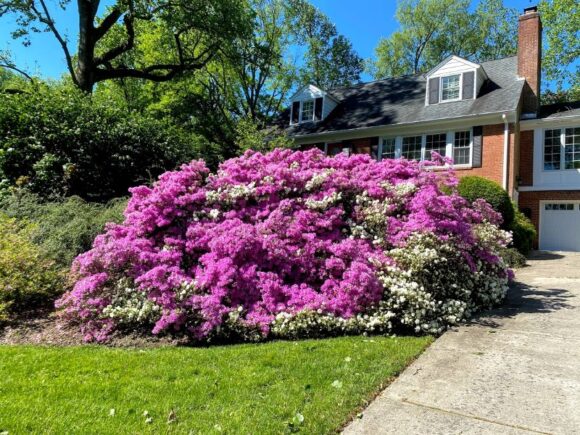
Rhododendrons create a blaze of color.

A note on mulch  – only use the natural brown mulch of natural non-colored wood; do not use the colored mulches, which contain chemicals, and do not use rubber mulch. 

A special word of caution on cocoa mulch. This product is highly toxic to dogs and cats — it is manufactured by Hershey and sold in many large garden centers.

It is made from the residue of chocolate products and others ingredients and contains a lethal ingredient that has resulted in the reported deaths of a number of cats and dogs that are attracted by the chocolate odor. It contains Theobromine, which is a Xanthine compound similar to the effects of caffeine and theophyliline. The symptoms for the animals are seizures and death within hours.   

I wrote about the carbon component in my April tips but wanted to emphasize its importance by stating it again. 

All living things including us are all carbon-based creatures. Humus brings carbon from the air into the soil.

Humus acts like a sponge and holds 90 percent of its weight in water. Because of its negative charge, plant nutrients stick to humus bringing nitrogen, calcium, phosphorus and other important elements to the plant, preventing these nutrients from washing away, acting like nature’s slow-release fertilizer.

Humus improves soil structure making it loose and friable, which helps plants to root in this environment with better access to nutrients, water and oxygen. Humus also helps to filter toxic chemicals from soil, much like carbon-based water filtration systems filter toxins from your water.

I recommend that you go online to Scientific American.com/article/Weed-Whacking Herbicide to check out the dangers of Round-Up. This is the most dangerous herbicide not only because of glyphosate, which is on the list by the World Health Organization as a chelating agent that causes cancer, but also because of the inert ingredients.

I ask that you are not swayed by the word ‘inert’ as the ingredients are anything but inert and those ingredients combined with Glyphosate are deadly to human cells. 

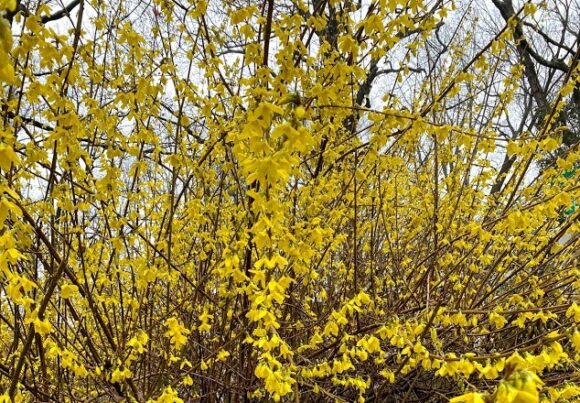
A yellow burst of color is offered by Forsythia in May.

Forsythia is in bloom with lovely fresh yellow blossoms.  If the bloom on your shrub is not as prolific as in previous years, prune out the old sparse wood after bloom ends.  

A favorite native tree is the Serviceberry tree, with its creamy panicle blooms, followed by small green leaves and within weeks, red fruit, and a delicious menu for our feathered friends. Before the birds eat all the fruit, pick some to make a delicious jelly for your morning toast.  

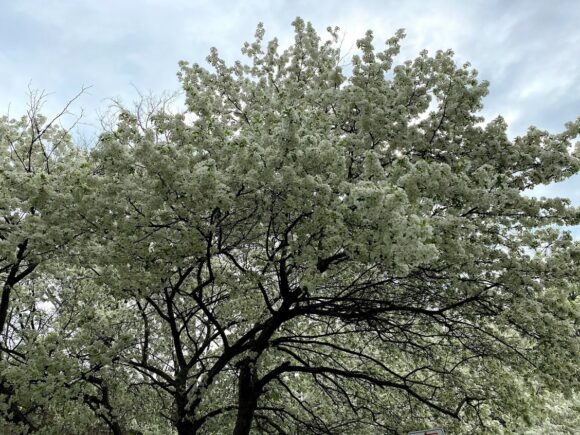
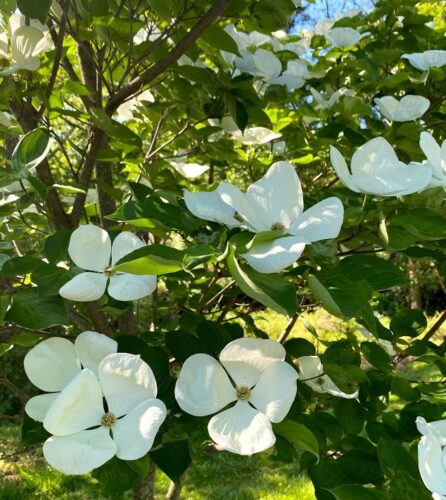
Here in my town of Old Lyme, the Magnolias, Cherries and Eastern Redbud are vying with one another to show their finery together with the graceful Dogwoods. Following the recent rains many of these trees are blooming at the same time or within a few weeks of one another. Their bloom will soon be over then we can look forward to rhododendrons, azaleas and mountain laurel into June. 

The graceful dogwood can be enjoyed in many locations this month.


The Carlesii Viburnum (also known as Korean Spice) is showing pink buds, opening to white flowers and their delightful fragrance fills the air outside my kitchen door. 

Covering the barn wall and scrambling up to the barn roof is my climbing hydrangea – bright green leaves emerging with hundreds of buds indicating that this beautiful climber will be laden with blossoms in summer. 

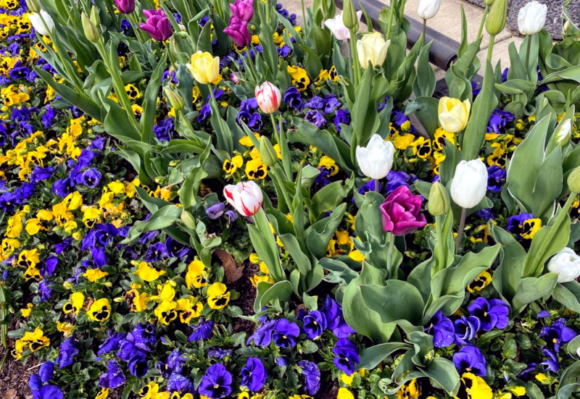
Tulips, creeping phlox, forget-me-nots, primroses and candytuft are bringing much-needed color to borders and rock gardens. 

May borders are often a delight to behold.

If you have not had time yet, for another week or two you can still prune your roses. Pull back the old mulch from around the base of the roses and in two weeks apply manure about six inches from the trunk of the plant. Then a week later reapply a layer of the brown natural mulch on top of the composted manure.

As well as building the humus component, these layers keep the roots cool, keep weeds at bay and help retain moisture. Do not mulch right up against the base of any plants as this encourages rodents to nest and gnaw on the plants. 

Beware of fungi that look like weird mushrooms in your mulch; this is a sign of Artillery fungus and can stick and invade the walls of your home and cause problems.  If you notice this fungus, you will need to remove all the mulch and get it off your property. 

Apply lime and manure around the lilacs, they like sweeter alkaline soil, thus the lime. By now, you may have already applied lime to the grass, which also enjoys sweeter soil and organic grub control to kill the Japanese beetle larvae – less food for moles. 

If you are making an organic vegetable garden this year, a garden measuring 16 ft. x 24 ft. can feed a family of four for a year, but keep the size within your needs and capability. Don’t work the soil if it is too wet or too dry.  

Double-digging is the best way to go; it takes time and effort but its well worth it – dig down about one foot and remove the top soil, put to one side, then dig down and loosen the next six inches of soil and add about three inches of composted manure then put back the top soil and add another three to four inches of manure.  

Do not rototill, as this will destroy soil structure. The gently loosened, aerated, fertile soil will give an excellent yield of fruits and vegetables in the garden. 

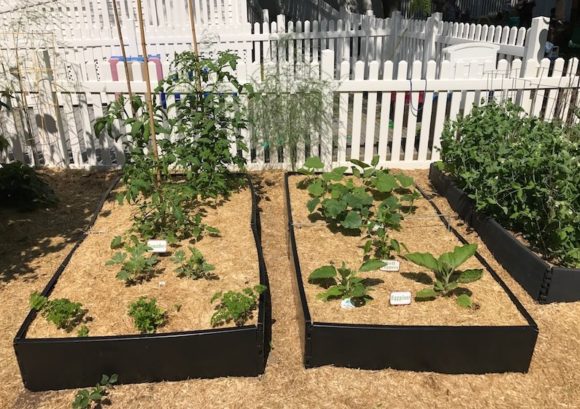
These vegetable beds are a work in progress.

I prefer 6 ft. x 4 ft. beds rather than rows; beds produce a larger yield of crops. In addition, beds make for ease of weeding and harvesting by having narrow, compacted soil or grass paths (having removed lawn from the area) in-between the beds. 

The vegetable garden should be situated on the south or southwest side of the property for maximum sun exposure. 

Make sure you remove as many weeds as possible by hand, before you even begin digging.  

You need a water source close by as vegetables require lots of water, particularly annual fruiting vegetables like tomatoes, which are hydroponics which means they are (mostly water). 

Rotate crops, by that I mean, do not plant the same vegetables in the same place as the previous year.  With this method you are preventing any soil-borne diseases from occurring.     

In the loosened soil, plant the vegetables plants so that they are touching, this forms a natural canopy, shading out weeds and helps retain moisture. 

I prefer to mulch the vegetable garden with composted manure, the reason being that manure, as mulch, does not cap. Capping is when mulch forms a crust, which does not allow water or air to penetrate to the roots of the plants.

Fence in the vegetable garden with a tall fence to keep animals out. At the base of the fence install eight inches of fine mesh chicken wire above ground and eight inches below ground to keep out the digging and burrowing animals. 

Organic insect control:

Insects do not like fragrance so plant fragrant plants like marigolds, nasturtium, lavender, nepeta and honeysuckle and roses to name a few.  

Encourage lacewings, which feed on aphids by planting marigolds and sunflowers,

Attract ground beetles by laying a log or a rock on the earth, under which the beetles can hide. These useful insects are nocturnal and eat slug and snail eggs, cabbage maggots, cutworms and even climb trees to feed on armyworms and tent caterpillars.  

Grass is now a vibrant shade of green, therefore when mowing, keep the blades of grass at about three inches; the taller blades attracts sunlight, promoting a healthier lawn. The taller blades also shade out weeds and help to retain moisture in the grass.   

When mowing, leave grass clippings on the lawn, the clippings are a natural source of nitrogen. If you have clover in the grass, clover is an added benefit as clover takes nitrogen from the air and fixes it in the soil providing additional nutrients for plant growth.

After flowering is over, prune flowering shrubs by 25 percent – do this task immediately before new buds set for next year. 

On a rainy day go shopping for any garden supplies that may be needed, then when the weather is dry you can be outdoors doing what you love and not indoors shopping. Buy good hoses — cheap ones will bend and crack.  

Peonies are becoming increasingly popular and are often, “a sight to behold.”

Peonies need plenty of water to produce flower buds. I have a 30 ft. long stand of Peonies in my field. The Peonies have been in the ground for over 40 years and are a sight to behold when in bloom. I give them lots of loving care with a light dressing of aged manure in early May. In a few weeks, I will pinch off the side buds while they are still small, leaving the terminal flower bud on each stalk, which will develop into a large main bloom.

Hydrangeas are a wetland plant and require plenty of water during the season, also applying manure and mulch around the base. If you have blue Hydrangeas and want a deeper color of blue, add some peat around the base of the plant — the acidity in the peat produces the color.   

If you need to prune a Hydrangea, which has become too large, then prune it immediately after flowering, in early September by about one third of the old wood and the weakest shoots. Do not wait, as Hydrangeas begin to develop bloom buds for next year later in September. 

If you wait to prune, you will not have bloom for next year. 

Blue hydrangeas start to develop their blooms for the following year in September of the current year. Photo by Gemma Evans on Unsplash.

My maternal grandmother’s favorite plant, the Lily of the Valley, soon will bloom tucked under the boxwood hedge on the north east side of the farmhouse near the front door. I love the delicate white flowers and fresh unique fragrance.  

When the lilacs have finished blooming, pinch off the withered flower clusters, do the same on the mountain laurel and rhododendrons in late June to ensure good blossoms next year. 

In mid-May apply composted manure, a light application of peat and fine bark mulch around all evergreens and rhododendrons, mountain laurel and azaleas; these plants are shallow-rooted and the mulch will keep the roots nourished, protected, warm and moist. 

Some annual seeds that may be planted outside in mid May are: Calendula, Coreopsis, Marigold, Nasturtium, Nicotiana and Zinnia.  

If you purchase annuals, on Mother’s Day weekend, place them in a sheltered spot on the south side of your home. Plant them no earlier than Memorial weekend as we can still get a late frost. 

Tuberous-rooted begonias, caladiums, cannas and elephant ears can be moved from porch or cold frame to a part shade area as the weather becomes warmer and there is no sign of frost in the forecast.   

If you staked trees, when they were planted last year, cut the stakes off at ground level. Do not pull them out of the roots as you could tear and therefore damage the root system.

Aphid tip: squish a few in your hand; dead aphids release a chemical that causes other aphids to drop off the plants. 

Another ants and aphids tip – if you drink mint tea, sprinkle an y left-over tea on the bugs, as they do not like the smell of mint.  

Mint spreads vigorously if left to its own devices so always plant this herb in a container. Photo by Eleanor Chen on Unsplash.

A word of caution on mint – plant mint only in containers, mint is tremendously invasive and can take over your garden.

When planting annuals, perennials, vegetables, trees, shrubs or evergreen, keep them watered but not drowned.   

Houseplants can be moved outdoors for their summer sojourn at the end of May.  However, do not put your African Violets outdoors as they will burn, but rather move them to a porch that is covered and shaded, or keep them indoors in a window that does not receive direct rays from the sun.

Wait until the soil warms up at the end of May to set out Dahlia tubers.  

Roses are not the troublesome creatures you have been led to believe. I prefer to plant David Austin roses; these shrub roses are repeat bloomers with lovely fragrances. Roses need at least four hours of sun per day, good air circulation, and excellent drainage. 

During their growing period from the beginning of June to mid August; add a little extra composted manure each month; it may be applied over the mulch.  Stop adding the manure in August so that the roses can go into a slow dormancy. 

Roses like the same growing conditions as Clematis and planted together in companionship planting, they flourish well together, with feet in the shade and head in the sun. Before you top up the soil around the roses, add water and check if the soil drains, roses need good drainage. Deep watering is recommended at least once a week. 

Plenty of stuff to keep you hopping, folks, and remember to keep your eye out for any pest trouble and when you spot it get on the ball immediately to avoid further problems. Carefully discard all herbicides and pesticides; these poisons have the same effect on your health as second-hand smoke.  

Your garden offers an anchor for peace and quiet enjoyment.  Enjoy the warmth, the gentle breeze, the earth’s fragrance and bloom and please remember to breathe. 

Contact Maureen at maureenhaseleyjones@gmail.com

About the author: Maureen Haseley-Jones, pictured left, is a member of a family of renowned horticultural artisans, whose landscaping heritage dates back to the 17th century. She is one of the founders, together with her son Ian, of, ‘The English Lady Landscape and Home Company.’ Maureen and Ian are landscape designers and garden experts, who believe that everyone deserves to live in an eco-conscious environment and enjoy the pleasure that it brings. Maureen learned her design skills from both her mother and grandmother, and honed her horticultural and construction skills while working in the family nursery and landscape business in the U.K. Her formal horticultural training was undertaken at the Royal Botanic Gardens at Kew in Surrey.