Letter From Paris: A Divided Europe is Too Weak to Resist Turkish Pressure

Nicole Prévost Logan

Nicole Prévost Logan

The European Union (EU) is going through what most consider the toughest times in its history.  The surge of migrants, not only from the Middle East but also from South East Asia and Africa, has provoked an untenable human crisis on the continent.  It is threatening the fundamental principles on which the (EU) was built.  In desperation, Europe turned to Turkey for help and became the prey of an authoritarian government whose main objective is to force its way into the EU.

More than ever Angela Merkel has become the homme fort  (the strong man) of Europe.  She is the only one among the 28 heads of state of the EU to have taken a clear stand on how to manage the migrant crisis – albeit without a well-thought-out plan.  The general opinion here is that, as a good pastor’s daughter, she has been motivated by a sense of moral duty when she opened her arms to the migrants at the end of 2015.
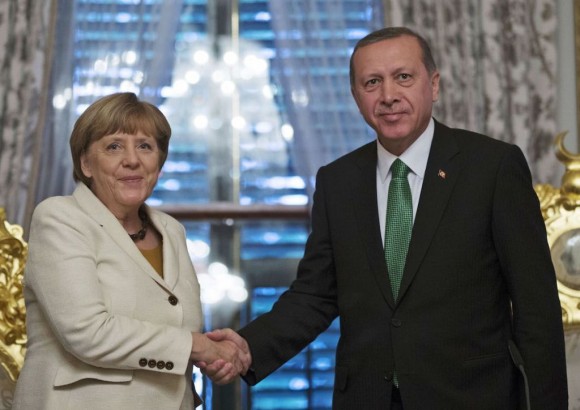
German Chancellor Angela merkel shakes hands with Turkish President Recep Tayyip Erdogan after the historic agreement between the European Union and Turkey.

German Chancellor Angela Merkel shakes hands with Turkish President Recep Tayyip Erdogan after the historic agreement between the European Union and Turkey.

On the flip side, her methods have irked many Europeans such as her several one-on-one talks with Turkish President Recep Tayyip Erdogan.  The day before the crucial March 7 meeting in Brussels, she met Turkish prime minister Ahmet Davitoglu for a six-hour long discussion, which lasted late into the night in an hotel near the Commission.  The only officials present were Jean Claude Junker, president of the European Commission and Netherland Mark Rutte, president of the Council of Europe (not to be confused with the European Council).

The French daily Le Monde described what happened in an article titled, “The night when Angela Merkel lost Europe.”  On the morning of March 7, diplomats and EU officials were stunned to discover the text of the pre-agreement.  None of them had been in the loop, not even Donald Tusk, president of the European Council, who had talked to every single EU leader state seeking  to create a consensual policy.

To speak in the German Chancellor’s defense, however, one should stress the pitiful lack of solidarity between the 28 EU members.  From the start the Visegrad group (Poland, Slovakia, Hungary and the Czech Republic) – a remnant from the former Iron Curtain countries – closed their borders to the migrants.  Other East European countries like Bulgaria and Rumania are also opposed to mandatory refugee quota.

The chancellor felt betrayed when, on Feb. 24,  Austria called a meeting of the Balkan states to stop the influx of migrants. Greece, the Balkan country most affected by the migrant crisis, was not invited.  Neither Brussels nor Berlin was notified.  David Cameron is too embroiled with his Brexit issue to get involved.

France has its own problems — it is still recovering from the Nov. 13 terrorist attacks, it does not want to help the right wing Front National by opening its borders too much and it is busy fighting radical Islam in five countries of the Sahel.  The “Franco-German couple” was described by some people as “moribund.”

As regional elections were approaching, Merkel made a 180 degree turn by tightening her immigration policy.  It was back to realpolitik lest public opinion forgets that she is a tough politician.

The German elections on March 13 did reflect the growing opposition to the influx of migrants.  The populist parties made substantial gains in the three Landers, both in the affluent West and in the remnant of the poorer RDA :  in Bad Wurtenberg the Alternative for Germany party (AfD) gained 15.1 percent and in Rhineland Palatinate 12.6 percent.  In Saxe-Anhalt , AfD placed second, right behind the Christian Democratic Party (CDU) with 24.3 percent of the votes.

Daniel Cohn Bendit, former “green” euro-deputy commented, “What is important is that 55-60 percent of the German population still supports Angela Merkel’s policy regrading the migrants.  Such scores would make many politicians green with envy.”

On March 18, the negotiations  between the EU and Turkey toward the final agreement looked like a haggling process with a “toxic but needed partner,” to use the words of Pierre Servent, military expert.  Immediately the text raised violent criticisms across the board.

The plan concocted by Davitoglu is complicated, requiring extremely challenging logistics to implement.  The objectives are to stop the drownings, curtail the despicable activities of the passeurs (smugglers), legalize entry into Europe of  persons entitled to asylum and send back to their countries of origin the “economic refugees.”  From now on all the migrants arriving in Greece – whether “real” refugees or not – will be shipped back to Turkey.  Then, for one Syrian refugee leaving Europe, one Syrian refugee will return to Europe through an humanitarian corridor.

Turkey will be the central player of the plan, which it will co-steer with the UN Frontex agency.  For this job Turkey expects to receive another three billion Euros.  Some commentators describe the whole process as a mass deportation. Legal experts find the plan to be a violation of human rights as written in the European constitution and in the 1949 Geneva convention on the right to asylum.

The task is herculean, commented Jean Claude Yunker.  A heavy responsibility is being placed on Greece.  Judges, translators, and up to 4,000 people will have to be hired to process the human flow.  France and Italy worry that the migrants, in order to avoid Turkey, will look for other access routes to Europe .

Turkey demanded two sets of compensation for services rendered: simplification of visa requirements for Turkish individuals traveling to Europe and acceleration of Turkey’s acceptance into the EU.  At first the European negotiators wanted these topics to be red lines not to be crossed.  They had to be satisfied with the inclusion of a few caveats in the text — 72 criteria for obtaining a visa; only one chapter open for the membership discussion and not five as Turkey wanted.)

It is to be expected that Europe will drag its feet to accommodate Turkey.  After 52 years, its position on Turkey still has not changed — it does not think Turkey belongs in Europe.

The migrant crisis has left Europe weaker, not very proud of itself and more divided than ever.

Editor’s Note: This is the opinion of Nicole Prévost Logan.

Nicole LoganAbout the author: Nicole Prévost Logan divides her time between Essex and Paris, spending summers in the former and winters in the latter. She writes a regular column for us from her Paris home where her topics will include politics, economy, social unrest — mostly in France — but also in other European countries. She also covers a variety of art exhibits and the performing arts in Europe. Logan is the author of ‘Forever on the Road: A Franco-American Family’s Thirty Years in the Foreign Service,’ an autobiography of her life as the wife of an overseas diplomat, who lived in 10 foreign countries on three continents. Her experiences during her foreign service life included being in Lebanon when civil war erupted, excavating a medieval city in Moscow and spending a week under house arrest in Guinea.

Letter From Paris: The Trump Phenomenon – a View From Europe     

Nicole Prévost Logan

Nicole Prévost Logan

Editor’s Note:  With a pivotal day happening today in respect of the Republican Presidential Primary, we feel this latest article by our columnist from Paris is perfectly timed.  Nicole Prévost Logan lives in Essex, CT, during the warmer months and winters in Paris, France.  For these reasons, she is ideally placed to write a commentary on the ‘Trump Phenomenon’  through European eyes … but with American understanding.  She also she has a lifetime of diplomatic service behind her and we venture to suggest that she understands the complexities of foreign diplomacy significantly better than several of the current US Presidential candidates!

Public opinion in Europe continues to follow the US 2016 elections in real time.  The interest went up a notch after “Super Tuesday” — for election analysts, it is a campaign unlike any other.  They describe it as a contest between moderates and radicals rather than between Democrats and Republicans.  Donald Trump’s performance intrigues every one and is being closely scrutinized by both seasoned and brand new election-watchers.

Donald Trump

Donald Trump

Trump does not fit in with the traditional image of a GOP candidate.  Commentators here label him as a “national populist” combined with a vision of the American dream, i.e., you too can become rich like me.  French ambassador Bujon de l’Etang writes that Trump is not a real Republican since he advocates an interventionist government which would take such protectionist measures as taxes on imports.

Journalist Andre Bercoff, interviewed on France-Inter, described Trump’s campaign as an “Uberization” of the society — or elimination of the middle man and rejection of the Establishment and along with that, of course, Washington.

According to the French observers, Trump is a demagogue and as such, does not want to leave anyone by the side of the road.  His discourse is full of contradictions and vascillates, depending on the situation.

Just a few examples …  he wants to build a wall to stop mass immigration from the south but not at the expense of the Hispanic votes, and besides, he is now leaning toward selective immigration in order to attract brains.

Is he pro-life or not ? The answer is yes and no.

To win over the workers, he will help them by stopping the outsourcing of jobs.  He feels the middle class has not profited from the growth of the economy stating that only 1 percent of the population did.

He does not seem to have worked out a foreign policy with any resemblance of the subtlety of diplomacy.

Thus far, his black and white remarks are rather frightening.

His tax plan is a mixture of unrealistic and sound ideas.  He thinks that hedge fund managers should be taxed more and forced to repatriate the billions of dollars they have stashed away in off-shore accounts.  He declared that couples earning less than $5,000 per month should not be taxed .

How long will Donald Trump be able to keep his lead in the race ?  If he does, would he have a lasting power?   An analyst here commented that Silvio Berlusconi (the former Italian Prime Minister) – a very comparable politician – lasted eight years in power.

Trump is the mirror of the rising populist movements in many countries: Viktor Orban in Hungary, increasing populist opposition in several German ‘Landers’, 40 percent of favorable votes for the  ‘Front National’ in France,  Recep Tayyip Erdogan in Turkey and many others.  The surge of migrants is the main cause of the closing of borders within the European Union (EU).

Professor Nicole Gnesotto, Board President of the National Defense Graduate School, “It would be a catastrophic scenario if  the next presidential elections were to bring populist leaders in the US, France and Germany.”

Nicole LoganAbout the author: Nicole Prévost Logan divides her time between Essex and Paris, spending summers in the former and winters in the latter. She writes a regular column for us from her Paris home where her topics will include politics, economy, social unrest — mostly in France — but also in other European countries. She also covers a variety of art exhibits and the performing arts in Europe. Logan is the author of ‘Forever on the Road: A Franco-American Family’s Thirty Years in the Foreign Service,’ an autobiography of her life as the wife of an overseas diplomat, who lived in 10 foreign countries on three continents. Her experiences during her foreign service life included being in Lebanon when civil war erupted, excavating a medieval city in Moscow and spending a week under house arrest in Guinea.
Letter From Paris: Cameron Obtains (Some) Concessions From Europe in Effort to Prevent ‘Brexit’

Nicole Prévost Logan

Nicole Prévost Logan

After 30 hours of negotiations at the European Council on Feb. 18-19, British Prime Minister David Cameron could claim some measure of victory in terms of the new concessions he obtained from the European Union (EU) to make Britain’s special status even more favorable.  It is clear that he had to appear victorious in order to impress his electorate and convince Eurosceptics in his country to change their mind and vote against the exit of the United Kingdom from the European Union — dubbed ‘Brexit’ — at the June 23 referendum.  Cameron is obliged to hold the referendum as part of his election platform.

As he left, Cameron declared “I do not like Brussels.”  A French analyst commented that was a strange way to convince his own people not to leave Europe.  Although the talks lasted through the night, the process was, in fact, surprisingly rapid.  There are two possible reasons for this:  Cameron believed England’s economy would lose more from a ‘Brexit’ than Europe, so he had to be flexible in his demands.  Furthermore, the British prime minister was fortunate to benefit from the presence of a Europe busy with more serious problems such as the migrant crisis or the surge of populism. 

Since 1973 — the date of its entry into the European Union under the pro-European government of then Prime Minister Edward Heath — the United Kingdom has had one foot in Europe and one foot out: it is not part of the Eurozone, nor of the Schengen space and it did not adhere most of the fundamental principles inscribed in the 1992 Maastricht Treaty.  For a long time, it benefited from a special status within the EU. 

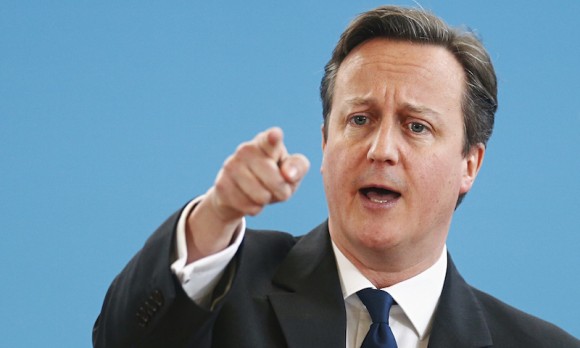
British Prime Minister David Cameron

British Prime Minister David Cameron

The demands Cameron just presented to the European Council were therefore intended to reinforce that different treatment regarding social benefits for migrant workers, independence of ‘The City’ (the financial center of London) from European financial regulations, refusal of a “Supra State”  infringing upon British sovereignty, and the right to refuse further integration of the EU.

The debate over a possible ‘Brexit’ is asymetric.  For England, Europe is basically a profitable market for more than 40 percent of its exports.  For the core and early members of the EU – Germany, France, Benelux, Italy – the  arduous construction of Europe over decades since the 1950 European Steel and Coal Community (ECSC) is an ideal and has long-term objectives.

For Europe, to part with England would have dangerous consequences by creating precedents regarding the other 27 EU members’ requests.  Cameron’s suggestion to use “red cards” to give the right to national parliaments to oppose the decisions made in Brussels if they could gather 54 percent of the votes was turned down, lest it lead toward the unraveling of the European structure.

The reactions and the final comments of the main players at the negotiations were mixed.  Jean Claude Juncker, President of the European Commission, called the text of the agreement “honest.”  Donald Tusk, Head of the European Council, approved “a done deal.”  Germany’s President Angela Merkel was putting all her energy to block a Brexit, overlooking the big English deficit (larger than that of France) and departing from the harsh words she had for Greek Prime Minister Alexis Tsipras at the height of the Greek debt crisis.  

French President François Hollande acted as a mediator during the proceedings and also fought against the Brexit.  Cameron was taken aback by Hollande’s determination to set as a red line a right of veto by Britain over the decisions taken by the Eurozone.  England has only a “droit de regard” (a right to look), in the same way as the other 19 non-Eurozone members. 

Cameron does not want “The City” to submit itself to European regulations and lose its beneficial tax position.  The “single bookrule” of the Central European Bank (ECB) should apply to Britain without making any exception, stressed Hollande.  However, England is obtaining a “discount” on the funds it paid the ECB to help with the Eurozone crisis.  A letter, co-signed by the 200 largest British companies, warned Cameron against ‘Brexit.’  When the Mayor of London, Boris Johnson, announced he was a partisan of “Brexit,” the English pound lost 2.4 percent against the US dollar – its lowest level since 2009.

For 20 years, from 1993 to 2013, the foreign-born population in Britain has more than doubled from 3.8 to 8.3 million.  In the London area, 39 percent of the population is of foreign origin.  A few thousand workers from Eastern Europe were expected but, in fact, 850,000 Poles arrived.  This explains why Britain is protecting itself from the recent waves of immigration . 

By a bilateral agreement signed at Le Touquet in 2003, England and France placed the border at the Gare du Nord railroad station in Paris.  This is where all the border controls take place before boarding the Eurostar train to London.  But the Le Touquet agreement did not foresee the 2015 and 2016 arrival of close to 6,000 migrants on the French side of the English Channel (called La Manche by the French) near Calais.  What if ‘Brexit’ became a reality?  Would the border move to Dover on the English coast?  That is perhaps a strong argument against ‘Brexit’! 

A frequently acrimonious attitude between England and Europe does not reflect the deep ties they share.  Many British people own houses or come for the weekend to le Touquet.  Go to a town market in a Perigord village and one is surrounded by people speaking English.  For the two million British people living on the continent, ‘Brexit’ is a very real threat. 

Nicole LoganAbout the author: Nicole Prévost Logan divides her time between Essex and Paris, spending summers in the former and winters in the latter. She writes a regular column for us from her Paris home where her topics will include politics, economy, social unrest — mostly in France — but also in other European countries. She also covers a variety of art exhibits and the performing arts in Europe. Logan is the author of ‘Forever on the Road: A Franco-American Family’s Thirty Years in the Foreign Service,’ an autobiography of her life as the wife of an overseas diplomat, who lived in 10 foreign countries on three continents. Her experiences during her foreign service life included being in Lebanon when civil war erupted, excavating a medieval city in Moscow and spending a week under house arrest in Guinea.
Letter From Paris: To Primary or not to Primary, That is the Question … for the French

Nicole Prévost Logan

Nicole Prévost Logan

It is an interesting time when the US has started the Primary process and the French Socialists are debating whether to hold Primaries before the 2017 presidential elections.

The French public is following with great interest the twists and turns of the American campaign and was fascinated with the Iowa and New Hampshire primaries. It is surprisingly well informed (mentioning for instance the exact number of delegates each primary will bring to the national conventions). For a non-American, such a campaign is a real spectacle.

What is appealing to Europeans is the town hall format with a grass roots approach — the open debates when the candidates are bombarded with questions on a wide spectrum of topics. Besides, the European public likes a democratic process allowing candidates to be chosen by the people and not imposed from the top.

If primaries are systematic in the US, it is not the case in France. The primary system is already in place for the right wing party Les Republicains or LR, and also for the center, (UDI and Modem). But it is not with the left.

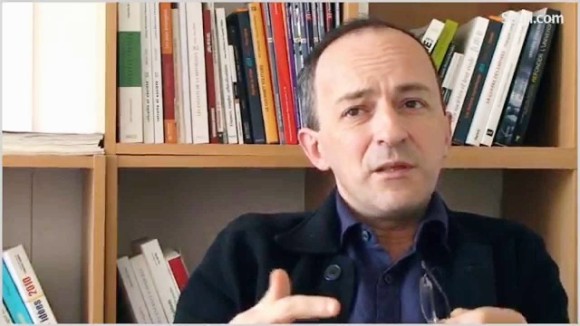
Thierry Pech, general director of the Think-Tank Terra Nova.

Thierry Pech, general director of the Think-Tank ‘Terra Nova.’

At this time there is an ongoing debate as to whether to make primaries the norm in left- wing politics. This debate reflects the division within the Socialist Party (PS). Thierry Pech, general director of Terra Nova, a think tank, has been most vocal since 2011 in advocating the adoption of a primary by the left.

The PS is divided since the “Frondeurs” (rebellious ones) have become a splinter party. Furthermore part of Europe-Ecologie les Verts or EELV (the Greens) have deserted the PS. The fracture within the left appeared quite blatantly during the Feb. 10 vote at the Assemblée Nationale on the inclusion in the Constitution of the dechéance de la nationalité (the loss of nationality) for terrorism acts. Half the Socialist deputies voted against their own government’s proposal.

Recently, the Minister of Justice, Christiane Taubira, caused quite a stir when she slammed the door and resigned from the cabinet over her disagreement on that very topic. Within 24 hours, she was giving a lecture at NYU!

On Jan. 11, Daniel Cohn-Bendit, ex-green European deputy (hero of the May 1968 uprising) and Thomas Piketty, 44 (nominated as the best young economist of France in 2002), headed a group of politicians and intellectuals who published a manifesto in the daily Liberation. The manifest called for a primary in order to reanimate a political debate of ideas.

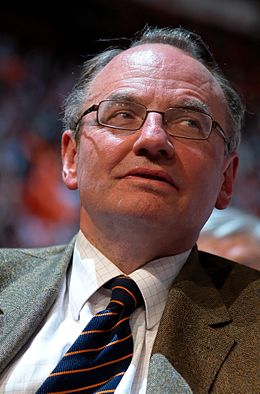
Jean-Louis Bourlanges

Essayist and science professor Jean-Louis Bourlanges

“The quarrel about having a primary …” said Jean Louis Bourlanges, professor at Sciences Po and essayist, ” … reminds me of what Churchill said: democracy is the worst form of government except for all the others.” Bourlanges continues, “The Socialist militants are less and less representative. The proposition is like poker-liar: one pretends to have ideas, then one incarnates those ideas within a person.”

Many Socialists are opposed to the prospect of a president involved in months of campaigning while he should be concentrating his attention on governing the country and jumping into the fray as late as possible. For the time being, François Hollande is waiting and will not declare his candidacy until he sees a reversal of the unemployment curve.

On Feb. 11, the Elysée announced a government reshuffle. The objective was to remedy some of the internal division of the PS by bringing three ecologists into the cabinet and widening its base. The parity – 19 men, 19 women – is maintained. Jean Marc Ayrault- prime minister until two years ago – returns, but this time as minister of foreign affairs.

Apart from the positive asset of having a German-speaking and pro-European new prime minister, the changes in the composition of the executive were generally met with disappointment and criticism across the board.

Nicole Prévost Logan

Nicole Prévost Logan

About the author: Nicole Prévost Logan divides her time between Essex and Paris, spending summers in the former and winters in the latter. She writes a regular column for us from her Paris home where her topics will include politics, economy, social unrest — mostly in France — but also in other European countries. She also covers a variety of art exhibits and the performing arts in Europe. Logan is the author of ‘Forever on the Road: A Franco-American Family’s Thirty Years in the Foreign Service,’ an autobiography of her life as the wife of an overseas diplomat, who lived in 10 foreign countries on three continents. Her experiences during her foreign service life included being in Lebanon when civil war erupted, excavating a medieval city in Moscow and spending a week under house arrest in Guinea.
Letter From Paris: Aleppo — an Orientalist’s Nostalgia

Nicole Prévost Logan

Nicole Prévost Logan

Agatha Christie stayed there. So did T.E. Lawrence, King Faysal from Iraq and General de Gaulle: at the famous Hotel Baron in downtown Aleppo, Syria. At that time, Aleppo was an exotic and cosmopolitan city where Arabic, Turkish, Kurdish and Armenian cultures coexisted.

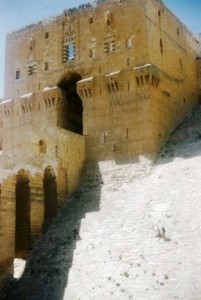
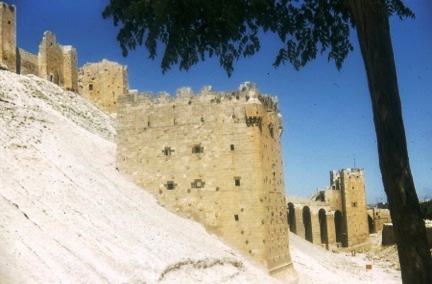
A photo of the Citadel at Aleppo taken by Nicole Logan in 1957.

A photo of the Citadel at Aleppo taken by Nicole Logan in 1957.

But all this was before the Syrian civil war.

Aleppo, like many other historical Syrian cities, is being crushed by daily bombings. The devastation is concentrated on this region with the intent of cutting off the road to the north toward Turkey. Today the Bab el Faraj – one of the main squares – is in ruins; the 11th century minaret of the Omayyad mosque lies on the ground among fallen stones; in July 2015, a bomb placed in a tunnel destroyed part of the citadel. The second largest metropolis of Syria is now a pile of rubble.

Another photo of the medieval Citadel, which is now in ruins after repeated bombings, from the author's 1957 trip.

Another photo of the medieval Citadel — now partly in ruins after repeated bombings — from the author’s 1957 trip.

In a few magical pages, Mathias Enard, winner of the 2016 French Prix Goncourt for his novel entitled “Boussole” (compass), brings back to life the colorful Aleppo of a bygone era. His hero, Franz Ritter, is a Viennese musicologist fascinated by the Orient. He belongs to the group of “Orientalists” – archaeologists, linguists, historians, architects, diplomats, spies – writes Enard, “found side by side at Hotel Baron dabbling in the pleasure of Arab grammar and rhetoric.”

Enard’s rambling style, oozing with culture, takes the reader from Austria – the outpost of the West on the edge of the Ottoman empire – to the Middle East. Besieged by Suleiman the Magnificent in 1529, Vienna was threatened for the last time by the Ottoman Empire in 1683 in its final effort to flood the Danube valley.

Refusing to draw bitterness from the century-long tug-of-war with the Turks, Franz the hero of “Boussole” believes in cross-pollination between the Western and the Oriental worlds. As a musicologist he is able to detect in the works of Mozart, Rimsky-Korsakov, Schoenberg or Debussy, the influence of Arabic music’s harmony with its microtones and absence of tonal structure.

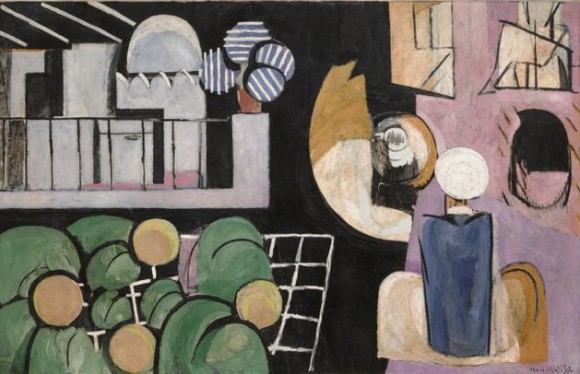
"The Moroccans" by Henri Matisse.

“The Moroccans” by Henri Matisse.

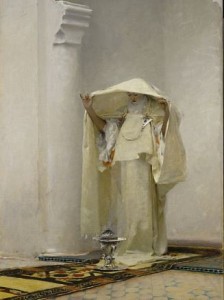
There has long been a tradition of literary and artistic attraction by the West toward the Orient. But it is Napoleon Bonaparte’s military campaign to Egypt (1798-1801), which opened the floodgates and made the 19th century West smitten with the Orient.

John Singer Sargent’s “Smoke of Ambergris.”

The “Orientalists” could be found around some of cultural centers like the French, German, English or American Institutes in Syria, Lebanon, Beirut or Baghdad. They were a privileged group, somewhat disconnected from the real world.

With some sarcasm but much honesty, the author acknowledges that the “Orientalists” took advantage of the comfort provided by the law and order of the police state of Hafez el Assad, father of Bachar. The “Orientalists” lived their dream, Enard writes, “under the amused look of the Syrians.”

At the present time Aleppo is at the epicenter of an imbroglio of violence and destruction and caught in the middle, tragically, are the refugees.

Why do we not take a brief pause and return to a more peaceful time when wars and religious intolerance were not destroying societies?

Nicole Logan

Nicole Prévost Logan

About the author: Nicole Prévost Logan divides her time between Essex and Paris, spending summers in the former and winters in the latter. She writes a regular column for us from her Paris home where her topics will include politics, economy, social unrest — mostly in France — but also in other European countries. She also covers a variety of art exhibits and the performing arts in Europe. Logan is the author of ‘Forever on the Road: A Franco-American Family’s Thirty Years in the Foreign Service,’ an autobiography of her life as the wife of an overseas diplomat, who lived in 10 foreign countries on three continents. Her experiences during her foreign service life included being in Lebanon when civil war erupted, excavating a medieval city in Moscow and spending a week under house arrest in Guinea.