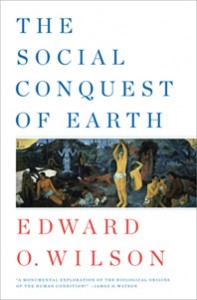
Reading Uncertainly? ‘The Social Conquest of Earth’ by Edward O. Wilson

SocialConquest_Mech.inddWho are we?

This has been the eternal question of our curious and self-reflective species. Paul Gauguin, in Tahiti in 1897 in his final painting, expanded this question into three: D’ou Venons Nous? Que Sommes Nous? Ou Allons Nous? (Where do we come from? What are we? And where are we going?) As the weather finally begins to cool, it is time for some serious reading …

Edward O. Wilson, the noted Harvard chronicler of ants, has embarked on a trilogy to try and answer all three. The first, The Social Conquest of Earth, addresses the Gauguin threesome in short, pithy chapters, easy for today’s creatures accustomed to electronic social networks. No Proustian rambling for him!

“We have created a Star Wars civilization,” he begins, “with Stone Age emotions, medieval institutions, and god-like technology. We thrash about. We are terribly confused by the mere fact of our existence, and a danger to ourselves and to the rest of life.” His argument, which represents the story of the evolution of social life and its driving forces, is controversial.

It goes like this: “The social conquerors of Earth” dominate today, but they include not only homo sapiens but also ants, bees, wasps, and termites, species that are possibly more than 100 million years older than us (we emerged several 100,000 years ago, only spreading across this globe over the past 60,000 years). It is altogether probable that these other “eusocial species” — less than two percent of the one million known species — will remain long after we disappear.

Our human condition is both selfish and selfless: “the two impulses are conflated … the worst of our nature coexists with the best, and so it will ever be.” Our “hereditary curse” is “our innate pugnacity … our bloody nature (in which) individuals prefer the company of others of the same race, nation, clan, and religion.”

Wilson continues, “The biological human mind is our province. With all its quirks, irrationality, and risky productions, and all its conflict and inefficiency, the biological mind is the essence and the very meaning of the human condition.”

In answering the question, “What are we?” Wilson explores the origins of culture, language, cultural variation, morality, honor, religions and creative art, suggesting “human beings are enmeshed in social networks.” And in these networks, we express our “relentless ambivalence and ambiguity … the fruits of the strange primate inheritance that rules the human mind.”

Wilson submits that religions are logical hallucinations in response to the ever-unanswered question, determining that, “ … religious faith is better interpreted as an unseen trap unavoidable during the biological history of our species. Humankind deserves better … than surrender and enslavement.”

The final chapter of this engrossing and illuminating exploration asks, “Where are we going?” Do we have free will? Wilson answers his question thus: “We are free as independent beings, but our decisions are not free of all the organic processes that created our personal brains and minds. Free will therefore appears to be ultimately biological.” Are we social creatures? Wilson suggests, ” … group selection (is) the driving force of where we have been and where we are going.”

We, a convoluted and introspective species, live in an “extremely complex biosphere” in which we must respect the “equilibrium created by all the other species, plants, animals, and microorganisms around us.” Failure to do so may mean our collapse or even that of the entire system.

But Wilson concludes on an optimistic note, saying, “Earth, by the twenty-second century, can be turned, if we so wish, into a permanent paradise for human beings, or at least the strong beginnings of one.”

This first philosophical exploration of human existence has been followed by the second, The Meaning of Human Existence, published in early 2015, and the third, The End of the Anthropocene will follow shortly.

Together they require serious reflection.

Editor’s Note: The Social Conquest of Earth, by Edward O.Wilson was published by W. W. Norton & Co., New York 2012.

Felix Kloman_headshot_2005_284x331-150x150About the Author: Felix Kloman is a sailor, rower, husband, father, grandfather, retired management consultant and, above all, a curious reader and writer. He’s explored how we as human beings and organizations respond to ever-present uncertainty in two books, ‘Mumpsimus Revisited’ (2005) and ‘The Fantods of Risk’ (2008). A 20-year resident of Lyme, he now writes book reviews, mostly of non-fiction that explores our minds, our behavior, our politics and our history. But he does throw in a novel here and there. For more than 50 years, he’s put together the 17 syllables that comprise haiku, the traditional Japanese poetry, and now serves as the self-appointed “poet laureate” of Ashlawn Farms Coffee, where he may be seen on Friday mornings. His wife, Ann, is also a writer, but of mystery novels, all of which begin in a bubbling village in midcoast Maine, strangely reminiscent of the town she and her husband visit every summer.
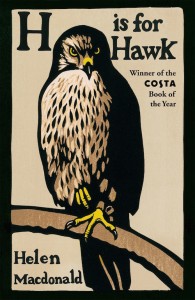
Reading Uncertainly? ‘H Is For Hawk’ by Helen Macdonald

H_is_for_HawkThe New Yorker ads trumpet admiring words: “Riveting;” “Breathtaking;” Dazzling;” “Captivating.” May I offer a modest dissenting view?
Helen Macdonald’s new novel about her response to the death of her father in England and her adoption of a goshawk to help her overcome her misery is, in fact, an orgy of compulsive introspection. She draws heavily on the earlier history of T. H. White, the author of the Arthurian novels, including The Once and Future King, and, more importantly, his own story of self-awareness, The Goshawk. 

White also tried to tame a bird, much less successfully than Macdonald.  This self-assessment actually becomes a triple biography: of Helen Macdonald, of T. H. White, and of Mabel, the hawk she trains.

Macdonald begins by arguing that “I was a different animal. . . . . Like White, I wanted to cut loose from the world.” She quotes Marianne Moore: “the cure for loneliness is solitude,” just Helen and Mabel. She sees England as “an imaginary place.”

The essence of this book is found is her words: “Sometimes when light dawns it simply illuminates how dismal circumstances have become.” But some 300 pages of gloom?

But Helen Macdonald does write lyrically. Her observant eye notes and her mind translates what she sees into phrases often reminiscent of James Joyce in Ulysses and Finnegan’s Wake (the more coherent ones!). The English countryside comes alive with her descriptions: clouds, flowers, grasses, and, above all, birds..

And so does Mabel, her adopted goshawk, come alive, so much so that at the end we are rooting for her future, not Helen’s. She is in fact the one intensely interested in her outside world. The goshawks, ospreys and eagles wheeling in the skies above Lyme make me think of Mabel.

Editor’s Note: ‘H is for Hawk’ is by Helen Macdonald and was published by Grove Press, New York in 2014

Felix Kloman_headshot_2005_284x331-150x150About the author: Felix Kloman is a sailor, rower, husband, father, grandfather, retired management consultant and, above all, a curious reader and writer. He’s explored how we as human beings and organizations respond to ever-present uncertainty in two books, ‘Mumpsimus Revisited’ (2005) and ‘The Fantods of Risk’ (2008). A 20-year resident of Lyme, he now writes book reviews, mostly of non-fiction that explores our minds, our behavior, our politics and our history. But he does throw in a novel here and there. For more than 50 years, he’s put together the 17 syllables that comprise haiku, the traditional Japanese poetry, and now serves as the self-appointed “poet laureate” of Ashlawn Farms Coffee, where he may be seen on Friday mornings. His wife, Ann, is also a writer, but of mystery novels, all of which begin in a bubbling village in midcoast Maine, strangely reminiscent of the town she and her husband visit every summer.

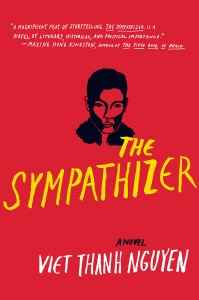
Reading Uncertainly? ‘The Sympathizer’ by Viet Thanh Nguyen

The_SympathizerHow often do we take sides while harboring a suspicion that the other fellow’s view actually has some merit? Nguyen’s narrator, never named, but referred to as “The Captain,” states his position at the outset: “ … I am also a man of two minds … I am simply able to see any issue from both sides.”
The Captain is a Vietnamese, ostensibly working for the American forces at the tail-end of the Vietnam (or “American,” as it is called there) War, while acting as mole, an undercover agent, for the Vietcong and the northern forces. Born in North Vietnam of a Vietnamese mother and a father who is a Roman Catholic priest, he leaves for the south and is immediately enmeshed in contradictions. One of the first is the obvious double-meaning of the word “father.”
There he becomes part of an unusual three-man team, the “we” of this compelling take: Bon, an ardent anti-communist, Man, an equally committed communist, and The Captain, who deliciously equivocates through the saga. It is, in fact, a perfect elaboration of the yin and yang culture that dominates the Far East, from the I Ching, to Lao Tse and Confucius. Forces seemingly in opposition are in fact complimentary — they cannot exist without one another.
Nguyen, in the role of The Captain, argues men of “utter conviction” are “insufferable,” noting “The General”, to whom the narrator reports, “ … was a sincere man who believed in everything he said, even if it was a lie, which makes him not so different from most.” The narrator then goes on to puncture every conceivable balloon of human fatuity. We live, he claims, in a litany of contradictions.
Witness another character, “The Congressman”, who berates the “controls” of communism but then describes his “democratic” system as even more autocratic, using censorship and control, because, as he says, “Americans are a confused people.” The Captain comments: “ . that omnipresent American narcotic, optimism, the unending flow of which poured through the American minds continuously whitewashing the graffiti of despair, rage, hatred, and a nihilism scrawled by the black hoodlums of the unconscious.”
Here is a delicious story of the last days of that War and what followed in both the United States and Asia. “We are all puppets in someone else’s play.” And the story is often hilarious, too. The Captain describes, in three joyful pages, his attempt to masturbate with a dead squid!
Nguyen ends with yet another double meaning, “Nothing is more precious than independence and freedom,” as The Captain finally realizes the two senses of this phrase. But he remains “the most hopeful of creatures, a revolutionary in search of a revolution.” A thriller in one sense but a social commentary in another and a challenging counterview to this year commemorating the end of that War.
Opposite ideas are indeed complimentary!
Editor’s Note: The Sympathizer by Viet Thanh Nguyen is published by Grove Press, New York 2015.

Felix Kloman_headshot_2005_284x331-150x150About the author: Felix Kloman is a sailor, rower, husband, father, grandfather, retired management consultant and, above all, a curious reader and writer. He’s explored how we as human beings and organizations respond to ever-present uncertainty in two books, ‘Mumpsimus Revisited’ (2005) and ‘The Fantods of Risk’ (2008). A 20-year resident of Lyme, he now writes book reviews, mostly of non-fiction that explores our minds, our behavior, our politics and our history. But he does throw in a novel here and there. For more than 50 years, he’s put together the 17 syllables that comprise haiku, the traditional Japanese poetry, and now serves as the self-appointed “poet laureate” of Ashlawn Farms Coffee, where he may be seen on Friday mornings. His wife, Ann, is also a writer, but of mystery novels, all of which begin in a bubbling village in midcoast Maine, strangely reminiscent of the town she and her husband visit every summer.

Reading Uncertainly? ‘The Children Act’ by Ian McEwan

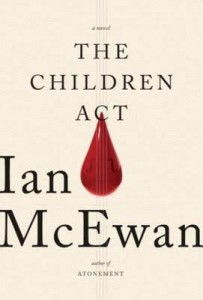
The_Children_Act“Who am I to judge?” asked Pope Francis last year, when asked about the Roman Catholic Church’s view of homosexuality. An excellent question, as our lives are full of “judgments” rendered by a wide variety of personalities.
So with interest I turned to Ian McEwan’s latest novel. I’ve read most of his work, thoroughly enjoying his language, characters and situations, set in today’s England. The Children Act opens with a highly respected High Court judge, Fiona Maye, age 59, having a profound disagreement with her professor husband of many years, over his announced decision to have an affair with a younger colleague, just for the excitement of the sex. Her personal life is now in turmoil.

But her professional standing as a judge couldn’t be higher. She has a case for immediate decision involving Adam, a 17-year-old boy with advanced leukemia, who, along with his Jehovah’s Witness parents and the elders of his church, refuses a life-saving blood transfusion. His doctors have appealed to the court and she is about to decide. Fiona rules in favor of the physicians and the boy’s life is saved. Most of us would applaud this decision, but was this a rational decision? The story unfolds from that point. Who is she to judge?

McEwan traces Fiona’s thoughts as she tries to weigh the conflicting opinions, beginning with her own religious beliefs: “Religions, moral systems, her own included, were like peaks in a dense mountain range seen from a great distance, none obviously higher, more important, truer than another. What was to judge?”

After ruling against the parents, their church and the young boy’s own beliefs, and saving his life, she rationalized, “… that churchmen should want to obliterate the potential of a meaningful life in order to hold a theological line did not surprise or concern her. The law itself had similar problems when it allowed doctors to suffocate, dehydrate or starve certain hopeless patients to death, but would not permit the instant relief of a fatal injection.” So we have both “the law” and its interpreters trying to do their imperfect best …

This conundrum drew me back to Richard Posner’s Reflections on Judging, which I read in 2013. He too sees a “rising complexity” in our judicial systems, amplified by a “dizzying advance in technology” and in scientific knowledge. So is our judiciary system responding appropriately to these advances?  Unfortunately no, according to the good judge, who plies his trade on the Seventh Circuit Court of Appeals, as well as being a lecturer at the University of Chicago Law School.

His considered opinion (in proper nautical language!), “The judiciary navigates the sea of modernity, slowed, thrown off course, by the barnacles of legal formalism (semantic escapes from reality, impoverished sense of context, fear of math and science, insensitivity to language and culture, mangling of history, superfluous footnotes, verbosity, excessive quotation, reader-unfriendly prose, exaggeration, bluster, obsession with citation form) – an accumulation of many centuries, yet constantly augmented. There is little desire to give the hull a good scraping.”

Fiona wrestles with her decision in the midst of her personal crisis, weighing all the future possibilities. Therein lies the remarkable and surprising aftermath in Ian McEwan’s compelling story.

If you are interested in the entire art of judging, do read both Ian McEwan and Richard Posner.

Who am I to judge? Uncertainty bedevils us all!

Editor’s Note: Review: Ian McEwan’s ‘The Children Act’ is published by Nan Talese/Doubleday, New York 2014 and Richard A. Posner’s ‘Reflections on Judging’ is published by Harvard University Press, Cambridge 2013.

Felix Kloman_headshot_2005_284x331-150x150About the author: Felix Kloman is a sailor, rower, husband, father, grandfather, retired management consultant and, above all, a curious reader and writer. He’s explored how we as human beings and organizations respond to ever-present uncertainty in two books, ‘Mumpsimus Revisited’ (2005) and ‘The Fantods of Risk’ (2008). A 20-year resident of Lyme, he now writes book reviews, mostly of non-fiction that explores our minds, our behavior, our politics and our history. But he does throw in a novel here and there. For more than 50 years, he’s put together the 17 syllables that comprise haiku, the traditional Japanese poetry, and now serves as the self-appointed “poet laureate” of Ashlawn Farms Coffee, where he may be seen on Friday mornings. His wife, Ann, is also a writer, but of mystery novels, all of which begin in a bubbling village in midcoast Maine, strangely reminiscent of the town she and her husband visit every summer.

Reading Uncertainly? ‘Sea Room’ by Adam Nicolson

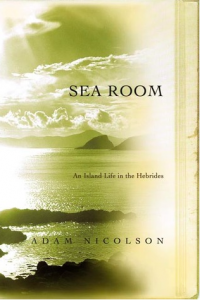
Sea RoomWhy do islands so often seem to be symbols of disconnection when, in fact, they illustrate multiple connections to the past, present and future?

Adam Nicolson, a privileged Englishman (Eton, Cambridge and Parliament) explores these thoughts through the medium of the three rugged Shiant (pronounced “Shant”) Islands, in the middle of The Minch, a rushing, spilling, tumultuous tidal spillway between the mainland of Scotland and the Hebrides islands off its northwest coast. They were purchased by his father, deeded to him and are now the possessions of his son.

But, as he cautions early in this story of the seasons in Scotland, “My islands are not a place from which to exclude others … Land … is to be shared.” And so he does in this captivating exploration of essentially three rocks “owned” by millions of birds: puffins, kittiwakes, fulmars, gannets, and eagles comprising a veritable, “… theatre of competition and enrichment.”

I first heard of the Shiants through Robert Macfarlane, in his story of trekking and sailing both land trails and waterways, The Old Ways (Penguin, New York 2012), when he and a friend sailed a small lugger from Stornoway, on the Island of Lewis, to spend two idyllic days and nights there. He too found them far from lonely with the evidence of past habitation, the teeming avian population (primarily puffins) and a copy of Nicolson’s Sea Room about the islands’ former residents.  Macfarlane noted the, “delusion of comprehensive totality … a boundedness” of islands, in light of the reality of their connectedness to the sea, to other islands, to the mainland, to history, and to present inhabitants.

“Sea room” to me, a long-time sailor with modest service in the U. S. Navy, means always maintaining proper distances between my ship and the shore, other ships, and especially the bottom. To Nicolson it also connotes a “room,” a place near the sea, from which to appreciate both motion and stability.”

And he does appreciate the seasons. “Spring here is always beautiful for those uncertainties … It is the season of uncertainty … Summer … is languor … Autumn hangs on like an old tapestry, brown and mottled, a slow, long slide into winter … and winter itself, of course, has persistence at its heart, a long, dogged grimness which gives nothing and allows nothing … “

This is a very human exploration. Nicolson’s approach: “I never think things through. I never have. I never envisage the end before I plunge into the beginning. I never clarify the whole. I never sort one version of something from any other. I bank on instinct, allowing my nose to sniff its way into the vacuum, trusting that somewhere or other, soon enough, out of the murk, something is bound to turn up. I’m wedded to this plunging-off form of thought, and to the acceptance of muddle which it implies.”

Nicolson advocates “ … an excited ‘what next?’ as the motivating force in life, a stodgelessness, an inability to plan.”

His enthusiasm, however, in investigating the past of his islands leads too often to simple conjecture. In 11 consecutive pages, I found the following words and phrases: “a possibility – perhaps – maybe – no record – almost certainly – might have been – probably – is it? –  one can only imagine – no way of telling – guesses – may have been used – may well be – suggests – may be dated – would have been seen – another version – might well have been – fragmentary at best.” Almost a fictional novel , but he remains a thoroughly engaging tour director for the Shiants and the lore of Scotland.

So isn’t it time to explore our islands? How many of us have been ashore, lifting rocks and staring at the mainland, on some of the Lyme islands: Selden Neck, Brockway, Notts, and the evocatively named Calves, Goose and Rat? What are their histories?

I think I will try one of them this summer …

Editor’s Note: Sea Room by Adam Nicolson is published by Harper Perennial, London 2001

Felix Kloman_headshot_2005_284x331-150x150About the author: Felix Kloman is a sailor, rower, husband, father, grandfather, retired management consultant and, above all, a curious reader and writer. He’s explored how we as human beings and organizations respond to ever-present uncertainty in two books, ‘Mumpsimus Revisited’ (2005) and ‘The Fantods of Risk’ (2008). A 20-year resident of Lyme, he now writes book reviews, mostly of non-fiction that explores our minds, our behavior, our politics and our history. But he does throw in a novel here and there. For more than 50 years, he’s put together the 17 syllables that comprise haiku, the traditional Japanese poetry, and now serves as the self-appointed “poet laureate” of Ashlawn Farms Coffee, where he may be seen on Friday mornings. His wife, Ann, is also a writer, but of mystery novels, all of which begin in a bubbling village in midcoast Maine, strangely reminiscent of the town she and her husband visit every summer.