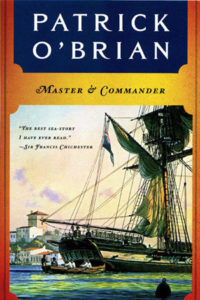
Reading Uncertainly? ‘Master and Commander’ by Patrick O’Brian

mastercommanderWhy is it that a fourth re-reading of this magnificent story of the Napoleonic Wars seems even more delicious than the first time around? There are 21 novels in this series and I’ve embarked on another voyage. “I give you joy,” as these sailors say to each other.

From listening to Locatelli’s C major quartet, that almost causes a duel, to the concluding words of acquittal in a naval court martial, we live life at sea with Jack Aubrey, the naval commander, but not quite yet a “Captain,” and the polymath physician and spy Stephen Maturin, an Irish-Catalan.

O’Brian uses a rich language that drives you to the dictionary. Ships and boats: frigate, ship-of-the line, sloop, long-boat, cutter, gig, jolly-boat, felucca, tartan, xebec, poluccas houario, barca-longa, bean-cod, cat, and herring-bus. Birds: upupa, epop (or hoopoe), ibis, mareotic grallatore. A flower: dianthus perfragans. An ant: tapinoma erraticum. Of an acquaintance, Maturin says: “I would not call him a gremial friend” (from the Latin, not a “close” friend).

And humor: a Frenchman sailed slowly “no doubt for fear of tripping over the lines of longitude.” Jack Aubrey trying to sound literate: “Alas, poor Borwick.” His sloop “the Sophie reeked of grilled sardines and fresh paint.” The sun shone “with idiot good humor.”

Or the two page delightful description of Maturin watching the mating of two praying mantises, the female then devouring the head and thorax of the male as the male ‘copulated on!” His conclusion: “You do not need a head, nor even a heart, to be all a female can require.”

On the word “death” in the English Articles of War, to be regularly read to the ship’s crew: “ . . . death had a fine, comminatory Leviticus ring, and the crew took a grave (my italics!) pleasure in it all. . . . “ I can hear O’Brian chuckling as he wrote that line.

Jack Aubrey is always urging speed: “There is not a minute to lose.” He repeats this counsel more than six times in this novel (and it is repeated in all the rest!)

And here is Maturin’s take on the human condition: “It seems to me that the greater mass of confusion and distress must arise from these less evident divergencies – the moral law, the civil, military, common laws, the code of honour, custom, the rules of practical life, of civility, of amorous conversation, gallantry, to say nothing of Christianity for those who practise it. All sometimes, indeed generally, at variance; none ever in an entirely harmonious relation to the rest; and a man is perpetually required to choose one rather than another perhaps (in his particular case) its contrary. It is as though our strings were each tuned according to a completely separate system – it is as though the poor ass were surrounded by four and twenty mangers.”

To which Jack Aubrey commented: “You are an antinomian.”

And Stephen Maturin replied: “I am a pragmatist.” A perfect description of the chaos two centuries later!

Finally, the author tossed a delightful tidbit my way, when Jack Aubrey said “ . . . how happy, felix, you would make me.” Yes, this Felix is basking in the delight of O’Brian’s words, looking forward to his fourth re-read of the remaining twenty novels.

Editor’s Note: ‘Master and Commander’ by Patrick O’Brian,  is published by W. W. Norton & Co., New York 1990 (first published in UK 1970.)
Felix Kloman_headshot_2005_284x331-150x150About the Author: Felix Kloman is a sailor, rower, husband, father, grandfather, retired management consultant and, above all, a curious reader and writer. He’s explored how we as human beings and organizations respond to ever-present uncertainty in two books, ‘Mumpsimus Revisited’ (2005) and ‘The Fantods of Risk’ (2008). A 20-year resident of Lyme, he now writes book reviews, mostly of non-fiction that explores our minds, our behavior, our politics and our history. But he does throw in a novel here and there. For more than 50 years, he’s put together the 17 syllables that comprise haiku, the traditional Japanese poetry, and now serves as the self-appointed “poet laureate” of Ashlawn Farms Coffee, where he may be seen on Friday mornings. His wife, Ann, is also a writer, but of mystery novels, all of which begin in a bubbling village in midcoast Maine, strangely reminiscent of the town she and her husband visit every summer.
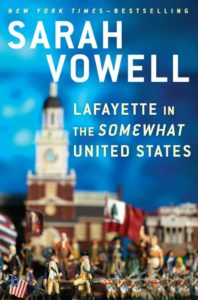
Reading Uncertainly? ‘Lafayette in the “Somewhat” United States’ by Sarah Vowell

lafayette-in-the-somewhat-united-statesThis quote describes Sarah Vowell’s new interpretation of our history: “… I like to use whatever is lying around to paint pictures of the past …”
The Marquis de Lafayette just happens to be her tool in this decidedly non-academic, irreverent, and often sarcastic interpretation of the effect that a rich 19-year-old French aristocrat had on our so-called “Revolution.”

Her prose is idiomatic, unpretentious, and humorous – two jokes a page! She sees our colonists as “state-sponsored terrorists, with French financial backing.” The Americans? “A squirming polygon of civilians, politicians and armed forces begging to differ.”

And she concludes: “That, to me, is the quintessential experience of living in the United States: constantly worrying whether or not the country is about to fall apart.”

Is it true that Justice Scalia read this book just before he died of apoplexy?

Ms. Vowell traces the rush of a young man from Paris to these shores, whose persuasive words and evident riches made him a general in the revolutionary forces, a youngster who rushed into battles with little experience and who contributed to the “patriot soap opera” that was our revolutionary period.

This is the seamy, seedy, and often-hilarious underside of “the ironically named ‘United’ States” and their Revolution, one that Ms. Vowell calls “FUBAR!” (I had to look that one up in Google: it means “f—ed up beyond all recognition”).

Hers is a re-interpretation of our past, richly intermixed with her current opinions.

For example:  “To establish such a forthright dream of decency, who wouldn’t sign up to shoot at a few thousand Englishmen, just as long as Mr. Bean wasn’t among them? Alas, from my end of history there’s a big file cabinet blocking the view of the sweet-natured republic Lafayette foretold, and it’s where the guvment (sic) keeps the folders full of Indian treaties, the Chinese Exclusion Act, and NSA-monitored electronic messages pertinent to national security, which is apparently all of them, including the one in which I ask my mom for advice on how to get a red Sharpie stain out of couch upholstery.”

She manages to get in asides on everything: Chris Christie’s “Bridgegate” at Fort Lee (the town was named during the Revolution) and “… it must quiet the mind of Bruce Willis that even though his fellow Americans never nominated him for an Oscar, the French awarded him the Legion d’Honneur.” Another one on General Washington, who was six feet four inches tall: “Still it does get on my nerves how easy it is for tall people to make a good first impression.”

Why did the French want to support us? They had just recently been tossed out of Canada, retaining only the island of St. Pierre and Miquelon (they are still part of France …) and leaving a taste of language in Quebec. So why not send some young aristocrats to these shores, along with a few troops and some naval vessels? They agreed with many of the colonists that the Brits were “pig-headed Anglo-Saxon islanders.”

Yet this historical perambulation is an animated read. No chapter breaks, so it becomes a continuous ramble through early American history using the author’s distinctly tinted glasses. Michiko Kakutani in the New York Times called it a “cutesy-pie book.” Perhaps she is right, but its melange of historical and personal tidbits, from past and present, make it a fun trip.

Editor’s Note: ‘Lafayette in the “Somewhat” United States’ by Sarah Vowell is published by Riverhead Books, New York 2015.

Felix Kloman_headshot_2005_284x331-150x150About the Author: Felix Kloman is a sailor, rower, husband, father, grandfather, retired management consultant and, above all, a curious reader and writer. He’s explored how we as human beings and organizations respond to ever-present uncertainty in two books, ‘Mumpsimus Revisited’ (2005) and ‘The Fantods of Risk’ (2008). A 20-year resident of Lyme, he now writes book reviews, mostly of non-fiction that explores our minds, our behavior, our politics and our history. But he does throw in a novel here and there. For more than 50 years, he’s put together the 17 syllables that comprise haiku, the traditional Japanese poetry, and now serves as the self-appointed “poet laureate” of Ashlawn Farms Coffee, where he may be seen on Friday mornings. His wife, Ann, is also a writer, but of mystery novels, all of which begin in a bubbling village in midcoast Maine, strangely reminiscent of the town she and her husband visit every summer.

Reading Uncertainly? ‘The Best of Saki’ by H.H. Munro

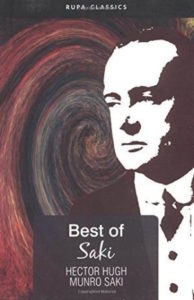
The_Best_of_SakiYet another trip to our home library to retrieve an aging paperback read many years ago.

Hector Hugh Munro, the English author also known as “Saki,” wrote these delicious satirical skewerings of the English upper classes just before the First World War. Despite the enormous changes that have taken place since then, in Blighty and the rest of the world, these 49 short stories remain pungent, pithy and provoking, stirring regular outbursts of noisy laughter.

Do read them on your spring porch or in a secluded back room, otherwise your spouse may think you’ve lost it (again!)

Munro’s first admonition: beware all aunts: they are forever dangerous and demanding.

Then revel in his extraordinary names, such as Mavis Tellington, Loona Bimberton, Arlington Stringham, Lestor Slagby, Brimley Bomefields, Crefton Lockyer, Septimus Brope, Groby Lington, Sir Lulworth Quayne, Dora Bittholz, Framton Nuttel, Bassel Harrowcluff, Kenelm Jertom, Jane Thropplestance, James Cushat-Prinkly, Octavian Ruttle and, perhaps best of all, Crispina Umberleigh. I wish we’d had these names at hand before we named our children. Loona and Crispina for the ladies; Crefton and Framton for the boys!

Just a few quotes:

  • “It is the penalty and safeguard of genius that it computes itself by troy weight in a world that measured by vulgar hundredweight.”
  • “There was something alike terrifying and piteous in the spectacle of these frail old morsels of humanity (two old ladies) consecrating their last flickering energies to the task of making each other wretched.”
  • “ … (He) discovered how the loss of one’s respect affects one when one has gained the esteem of the world.”
  • He was “feverishly engrossed in the same medley of elaborate futilities that had claimed his whole time and energies …”
  • He was “one of those lively cheerful individuals on whom amiability had set its unmistakable stamp, and, like most of his kind, his soul’s peace depended in large measure on the unstinted approval of his fellows.”

Do step into the past of Merrie Olde England for a few hours.

Editor’s Note: ‘The Best of Saki’ by H. H. Munro was published by Picador, London 1976.

Felix Kloman_headshot_2005_284x331-150x150About the Author: Felix Kloman is a sailor, rower, husband, father, grandfather, retired management consultant and, above all, a curious reader and writer. He’s explored how we as human beings and organizations respond to ever-present uncertainty in two books, ‘Mumpsimus Revisited’ (2005) and ‘The Fantods of Risk’ (2008). A 20-year resident of Lyme, he now writes book reviews, mostly of non-fiction that explores our minds, our behavior, our politics and our history. But he does throw in a novel here and there. For more than 50 years, he’s put together the 17 syllables that comprise haiku, the traditional Japanese poetry, and now serves as the self-appointed “poet laureate” of Ashlawn Farms Coffee, where he may be seen on Friday mornings. His wife, Ann, is also a writer, but of mystery novels, all of which begin in a bubbling village in midcoast Maine, strangely reminiscent of the town she and her husband visit every summer.
Reading Uncertainly? ‘Half-Earth: Our Planet’s Fight for Life’ by Edward O. Wilson

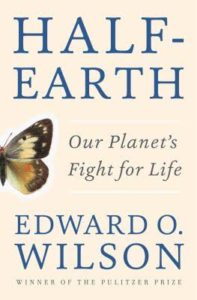
Half_EarthEdward O. Wilson, the remarkable professor emeritus at Harvard, who is known for his studies of ants, for the third time asks, “Who are we?” His first question was partially answered in The Social Conquest of Earth (2012) in which he analyzed the confusion of human existence, as our convoluted and introspective species tries to come to grips with our brief existence. Two years later, in The Meaning of Human Existence (2104), he described how, either deliberately or inadvertently, we are destroying other species even as we begin to recognize that we depend on them as much as they depend on us.
Now, concluding his trilogy, Wilson suggests a possible plan of action for homo sapiens. He continues his habit of short, punchy chapters, only one of 20 pages and most of 10 or less, even one of three. Instead of plunging into more verbiage, the reader must pause and think. His thesis: in order to survive we must commit “half of the planet’s surface to nature” in order to save “the immensity of life forms that compose it,” including us. A tall order, but is it possible?

Wilson begins with this earth’s extensive history of life extinctions. We’re lucky to be here! Should we worry? After all, the oldest major “extinction event,” at the end of the Ordovician period, happened some 455 million years ago and the most recent was a mere 66 million years back, when an enormous asteroid crunched into the Yucatan. Are we now coming close to a “Sixth Extinction”, the end of the current Anthropocene Era, as so clearly described by Elizabeth Kolbert in her The Sixth Extinction (2014)? Both Kolbert and Wilson recite alarming facts, plus suppositions, about our human relationships with other living creatures, large and small, on this earth. Are we the ultimate problem? They seem to think so.

To begin, “our population is too large for safety and comfort.” It is time to reduce, not expand, our footprint. “The biosphere does not belong to us; we belong to it.” But to acknowledge that, we must “… find our way as quickly as possible out of the fever swamp of dogmatic religious belief and inept philosophical thought.” We still understand too little about other species: some two million are “known” but there are perhaps some five to 100 million yet to be discovered. It is this enormous biodiversity that is the strength of this planet.

What then to do? Wilson suggests “… in order to save biodiversity it is necessary to understand how species interact with one another to form ecosystems.” But our enormous egos (and religions) tell us we are “Number One” when we are actually a small part of the action. His Solution: “Increase the area of inviolable natural resources to half the Earth or greater.” This will require a “fundamental shift in moral reasoning concerning our relation to the living environment.” We must “reduce the amount of space required to meet all the needs of an average person … habitation, fresh water, food production and delivery, personal transportation, communication, governance, other public functions (i.e. education), medical support, burial, and entertainment.” And note that this “average person” now lives in Asia and Africa as well as Europe and North America, with enormous current differences.

How will this take place? Here in Lyme, our Lyme Land Conservation Trust (www.lymelandtrust.org) has preserved in some fashion 3,000 acres of land and water resources in our small town. It and comparable efforts in this country and around the world are effective bottom-up programs. But Professor Wilson argues that these are not enough: we will need top-down guidance plus massive re-education for everyone. Is this economically possible? Do we have a choice?

Professor Wilson is obviously an optimist: “So we stumble forward in hopeful chaos.” Elizabeth Kolbert had her own conclusion: “The history of life consists of long periods of boredom interrupted occasionally by panic.”

Half-Earth and its sister volumes should be required reading for all of us. Perhaps we can wake up and change.

Editor’s Note: ‘Half-Earth: Our Planet’s Fight for Life’ by Edward O. Wilson is published by W. W. Norton, New York 2016.

Felix Kloman_headshot_2005_284x331-150x150About the Author: Felix Kloman is a sailor, rower, husband, father, grandfather, retired management consultant and, above all, a curious reader and writer. He’s explored how we as human beings and organizations respond to ever-present uncertainty in two books, ‘Mumpsimus Revisited’ (2005) and ‘The Fantods of Risk’ (2008). A 20-year resident of Lyme, he now writes book reviews, mostly of non-fiction that explores our minds, our behavior, our politics and our history. But he does throw in a novel here and there. For more than 50 years, he’s put together the 17 syllables that comprise haiku, the traditional Japanese poetry, and now serves as the self-appointed “poet laureate” of Ashlawn Farms Coffee, where he may be seen on Friday mornings. His wife, Ann, is also a writer, but of mystery novels, all of which begin in a bubbling village in midcoast Maine, strangely reminiscent of the town she and her husband visit every summer.

Reading Uncertainly? ‘Rogue Lawyer’ by John Grisham

Rogue_Lawyer_John_GrishamGrisham opens with a familiar sentence: “My name is Sebastian Rudd.”  See similarly Melville and Moby Dick’s: “Call me Ishmael” or the more recent: “Je suis Charlie.”

He gives us short, pithy sentences (no Proust here), replete with a sarcastic, cynical view of the underside of American society. A political screed, too: our legal system is all fouled up. The novel confirms the basic thesis of Dan Ariely’s ‘The (Honest) Truth About Dishonesty’ — that we are all basically and instinctively dishonest, at least to some degree, especially when we see dishonesty in others.

Few really likable characters and the entire scene is gloomy. Characters are also outlandish — a totally lesbian law firm; police, judges, prosecutors, jurors, defendants all easily bought; non-communication at dinner; a martial arts fighter gone berserk; a protagonist (hardly a “hero”), who himself slips into dishonesty.

And the scenes — a last-minute reprieve; a last-minute escape; militaristic police; a convoluted law case in which every string is pulled; and a protagonist who disappears into the ether at the very end, leaving many loose ends (including a son).

But, despite all these qualms, this is an utterly engrossing book for an evening reader!

Editor’s Note: Rogue Lawyer by John Grisham is published by Doubleday, New York 2015.

Felix Kloman_headshot_2005_284x331-150x150About the Author: Felix Kloman is a sailor, rower, husband, father, grandfather, retired management consultant and, above all, a curious reader and writer. He’s explored how we as human beings and organizations respond to ever-present uncertainty in two books, ‘Mumpsimus Revisited’ (2005) and ‘The Fantods of Risk’ (2008). A 20-year resident of Lyme, he now writes book reviews, mostly of non-fiction that explores our minds, our behavior, our politics and our history. But he does throw in a novel here and there. For more than 50 years, he’s put together the 17 syllables that comprise haiku, the traditional Japanese poetry, and now serves as the self-appointed “poet laureate” of Ashlawn Farms Coffee, where he may be seen on Friday mornings. His wife, Ann, is also a writer, but of mystery novels, all of which begin in a bubbling village in midcoast Maine, strangely reminiscent of the town she and her husband visit every summer.