TOP STORY-UPDATED: U.S. News & World Report Ranks Lyme-Old Lyme High School 8th in State, Breaking Top 500 Nationally

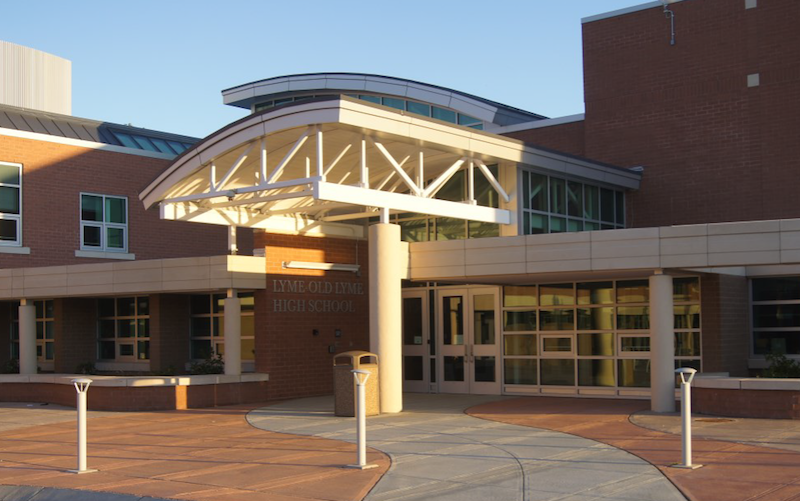
The entrance to Lyme-Old Lyme High School. LymeLine file photo.

OLD LYME—Lyme-Old Lyme High School (LOLHS) is among the Top 10 high schools in Connecticut and the Top 500 in the nation, according to U.S. News & World Report

The school earned eighth place on the Best High Schools list released this week. The rankings are compiled annually based on state-required test scores, graduation rates and how well each school prepares students for college.

Lyme-Old Lyme High School ranked 415 out of nearly 18,000 public high schools across the country. 

Superintendent of Lyme-Old Lyme Schools Ian Neviaser on Friday welcomed the news.

“This recognition reflects the hard work and dedication of our students, the expertise and commitment of our teachers and staff, and the strong support of our families and community,” he said.

Neviaser added, “We will continue to challenge ourselves to provide an exceptional education for every student while preparing them for success in college, careers, and life beyond Lyme-Old Lyme.”

The Top 10 Best High Schools in Connecticut identified by U.S. News & World Report are: 

  • 1. Connecticut IB Academy, East Hartford
  • 2. New Canaan High School
  • 3. Weston High School
  • 4. Darien High School
  • 5. Wilton High School
  • 6. Staples High School, Westport
  • 7. Marine Science Magnet High School of Southeastern Connecticut, Groton 
  • 8. Lyme-Old Lyme High School
  • 9. Greenwich High School
  • 10. Hall High School, West Hartford

Lyme-Old Lyme High School and Marine Science Magnet High School are the only schools in New London County to break the Top 10. 

Here’s how other local area schools stacked up: 

  • 17. East Lyme High School
  • 20. Stonington High School
  • 31. Haddam-Killingworth High School
  • 45. Wheeler High School, N. Stonington
  • 49. Valley Regional High School, Deep River
  • 50. Westbrook High School
  • 51. Waterford High School
  • 52. Old Saybrook High School
  • 54. The Morgan School, Clinton
  • 68. Bacon Academy, Colchester
  • 76. Robert E. Fitch High School, Groton
  • 77. Montville High School
  • 88. Ledyard High School
  • 91. Science and Technology Magnet Pathway for High School Grades, New London
  • 102. Lyman Memorial High School, Lebanon
  • 105. Griswold High School
  • 115. Nathan Hale-Ray High School, East Haddam
  • 135. Norwich Free Academy
  • 144. Three Rivers Middle College Magnet School, Norwich
  • 154. Norwich Technical High School
  • 158. Ella T. Grasso Southeastern Technical High School, Groton 
  • 160. New London High School
  • 171. New London Visual and Performing Arts Magnet School

The 2025 rankings are based on three-year old data described by US News & World Report in a press release as the most recent state and federal figures available.  

Data shows 67% of Lyme-Old Lyme’s 392 students at the time took at least one Advanced Placement (AP) exam, with 62% passing. The graduation rate was 98%. 

The media company said schools are evaluated on how effectively they serve all students, including underserved populations, with college readiness measured through student participation and performance on AP and International Baccalaureate exams.

Seventeen percent of LOLHS students at the time identified as Black, Hispanic, Asian or biracial, according to the report. About 14% of students were considered economically disadvantaged.

Lyme-Old Lyme High School ranked 13th in the 2024 rankings and 34th the year prior. 

Editor’s Note: This article was updated with a quote from Superintendent Neviaser.

TOP STORY-UPDATED: Miami Beach Sewer Bids Are Unexpectedly High, Implications Not Yet Fully Understood

This Time Around, Miami Beach is Flush with Sewer Bids … But Costs Aren’t Going Down

Editor’s Note: This article was updated with information from the CT DEEP spokesman.

OLD LYME–Costs continue to climb as bids on Tuesday came back unexpectedly high for the Miami Beach portion of a $70 million project to bring sewers to the shoreline. 

Miami Beach Water Pollution Control Authority (WPCA) Chairman Scott Boulanger in a Wednesday phone interview with LymeLine said bids from four general contracting firms need to be vetted and distilled by project engineers with the Fuss & O’Neill firm before he can fully understand the implications for the already backed-up project. 

A failed bid process earlier this year yielded no responses, according to Boulanger.  

This time around, the bids to oversee the project ranged from the Ludlow, Mass.-based Baltazar Contractors $13.62 million to $21.97 million from C.J. Fucci Construction, Inc. of New Haven. Engineers from Fuss & O’Neill in cost estimates earlier this month predicted the project would amount to about $8.4 million. 

The second lowest bid was from Colonna Concrete and Asphalt Paving of Woodbridge for $17.69 million, followed by Tolland-based Genovesi Construction at $19.9 million. 

“The numbers came in a lot higher than anticipated,” Boulanger said. 

He said officials thought the cost would actually go down from the engineers’ estimates because of a redesign incorporated before the project went out to bid in June. The change involves using a single pipe rather than the more expensive double walled pipe, a move that town documents show was endorsed by the state Department of Health and the Connecticut Department of Energy and Environmental Protection (CT DEEP.)

The project is intended to connect Miami Beach residents to a sewer system spanning multiple beach communities. The association’s internal construction expenses are on top of its $5.03 million portion of a shared pump station and force main serving Old Colony Beach Association, Old Lyme Shores Beach Association and the town-owned Sound View Beach. 

Engineering and legal fees brought the total cost for the Miami Beach project to $21.9 million, based on the early August estimates. Federal and state funding reduced the impact on residents to $12.5 million. 

All four entities are under pressure from the CT DEEP to resolve the pollution issues that state officials say are emanating from local shores. 

The three private beach associations are under a formal consent order from the CT DEEP requiring them to fix the pollution issue, while the town is participating voluntarily under the threat of a similar mandate. 

It is unclear what will happen to the overall project if any of the participating communities drop out because they can’t afford to proceed. That leaves attention now on Miami Beach as officials try to gauge the viability of a project that will cost residents of the affected areas thousands of dollars per year over two decades. 

Members of the Old Lyme Board of Selectmen and Board of Finance are expected later this month to decide if another bonding request for the Sound View portion of the project should go to voters at a public referendum in September. The Old Lyme WPCA is seeking a total of $17.1 million, though federal and state grants cut by half the amount that Sound View users will have to finance to cover the project.

An informational session on the Sound View project is scheduled for 6:30 p.m. on Aug. 26 at Lyme-Old Lyme High School. 

Selectmen have held off on a vote amid concerns about the affordability of the project for the Sound View ratepayers. Residents there have long asked for more specific information about how much they will have to shell out as the municipal bond is repaid over 20 years and have questioned the data underlying the state’s contention that sewers are necessary to resolve the potential for pollution in the area.

Affordability

Over at Miami Beach, the typical resident was already looking at total annual payments of $3,154 before the bids came back higher than expected, according to engineers’ estimates.

Connecticut DEEP Project Engineer Carlos Esguerra last year said the agency sets the amount that residents can reasonably be expected to spend at 2% of the town’s median household income (MHI), which he identified at the time as $122,000. That equated to $2,440 a year.

Cinami has said the state does not consider annual operations and maintenance fees as part of its affordability calculation when it comes to installing a municipal system. 

CT DEEP Spokesman James Fowler on Thursday said there is no federal or state definition of affordability when it comes to preserving and protecting water quality. 

“Similarly, there is no definition of unaffordability that allows a community to maintain a source or potential source of pollution,” he said.  

Fowler attributed the 2% median household income “guidepost” to historic U.S. Environmental Protection Agency guidance, which he said municipalities and water pollution control authorities have used to ensure public sewer infrastructure projects are financially manageable for rate payers.  

“If a project’s costs were estimated to exceed 2% MHI, a town or sewer authority would explore additional options to reduce financial impact like splitting a project into phases, deferring work not associated with pollution, the pursuit of additional funding, and/or requesting a longer project schedule to achieve compliance, based on an enforceable schedule of compliance steps,” he said. 

He emphasized that exceeding the 2% threshold “does not mean that communities don’t have to address identified pollution.”

Viable Solution?

Boulanger said he told members of the Miami Beach Association Board of Governors at a regularly scheduled Tuesday evening meeting that it’s critical to have a full understanding of the bid responses before making any decisions. He said he hopes to speak with the project engineers and obtain a spreadsheet with a breakdown of the results by Labor Day. 

“And then it becomes, you know, whether or not it’s continually a viable solution for the area,” he said. 

Asked if he has a sense which way the board members are leaning when it comes to the viability of the project, he said they’re still relying on him to collect the information that will tell them how much the project will cost all the homeowners in the beach association. 

“They’re listening to me on what I feel,” he said. “And I don’t have a feeling.” 

Ultimately, he said it will come down to the engineering firm’s interpretation of the results and how members of the Miami Beach Association choose to proceed. 

He said the association will also be discussing “viability and options” with state DEEP officials as well.

Boulanger, who has led the Miami Beach WPCA throughout the years-long effort to bring sewers to the area, said he has strived through multiple referenda and presentations to provide members with as much information as he can so they can make an educated decision.

“It doesn’t matter what I want to do personally,” he said. “It’s what does the community want to do?”

Old Lyme Shores has not yet gone out to bid for its portion of the project. Cinami has said the association was ordered by the CT DEEP to award a contract by Oct. 10. 

Part of the Old Lyme WPCA’s urgency to hold a referendum next month stems from contractor quotes for the Sound View project that will expire in October, which could lead to more price increases if officials have to go back out to bid.

Wastewater planning documents that first laid the groundwork for the project go back to at least 2012. The consent order from the state requiring the private beach associations to resolve their pollution issues was issued in 2018.

Renowned Dancer Chosen as Eastern Connecticut Ballet Executive Director

Ashley Bouder in New York City Ballet’s 2007 production of “Four Seasons.”
Photo by Paul Kolnik courtesy of Eastern Connecticut Ballet.
Ashley Bouder. Photo by Erin Baiano courtesy of Eastern Connecticut Ballet.

EAST LYME—Eastern Connecticut Ballet (ECB), one of Connecticut’s premier ballet schools drawing from towns including both Lyme and Old Lyme, has selected a renowned, decades-long principal dancer as its new executive director. 

The school in a press release welcomed Ashley Bouder, a former principal ballerina of the New York City Ballet for 20 years.

Eastern Connecticut Ballet founder Lise Reardon touted Bouder’s success on the world stage and her personal achievements.

“Ashley possesses a generous, creative and entrepreneurial spirit,” Reardon said. “She will bring fresh eyes and energy to an organization that is committed to developing young dancers and the future of ballet. Her commitment to building upon ECB’s legacy of excellence will continue to help the school flourish and propel it into the future.”

Bouder replaces Krystin Dixon, who will remain with the school as its director of management. 

Bouder on social media said she looks forward to working closely with Dixon and legendary Balanchine ballerina Gloria Govrin, who serves as the school’s artistic director, “to form a fierce female leadership team” to guide the school into a new era.

“This school already has so much prestige and accolades, it is truly thrilling to be able to take the reins and fly higher,” she wrote.

Bouder’s biography on the school website identifies her as the founder and artistic director of the Ashley Bouder Project, where she works to promote gender equality, diversity and inclusion in creative leadership roles within the dance world. 

Ashley Bouder in New York City Ballet’s 2007 production of Stars and Stripes. Photo by Paul Kolnik courtesy of Eastern Connecticut Ballet.

Trained in the Balanchine, neo-classical style of ballet at the School of American Ballet and Central Pennsylvania Youth Ballet, she has also performed with Bayerisches Staats Ballet, Mariinsky Ballet, Paris Opera Ballet, and Rome Opera Ballet, and distinguished ballet galas around the world.

Awards include the Benois de la Dance, often referred to as the Oscars of ballet, for best female dancer in 2019; the Mae L. Wien Award for Outstanding Promise in 2000; and Janice Levin Dancer Honoree from 2002-2003.

Bouder has produced and choreographed 15 productions and recently served as the training program director for Regional Dance America, where she developed and designed training sessions for pre-professional dancers.

The new executive director on social media expressed gratitude for the opportunity.

“I also owe a huge thank you to ECB founder Lise Reardon for our years long conversations that ended in this happy moment. And to our board chair Kevin Buchanan for his insight and acceptance of my proposals and ‘style,'” Bouder said. “We are all a big positive community. It is something to treasure.”

TOP STORY-UPDATED: First Day of School Unchanged Amid Lyme-Old Lyme Renovation Project

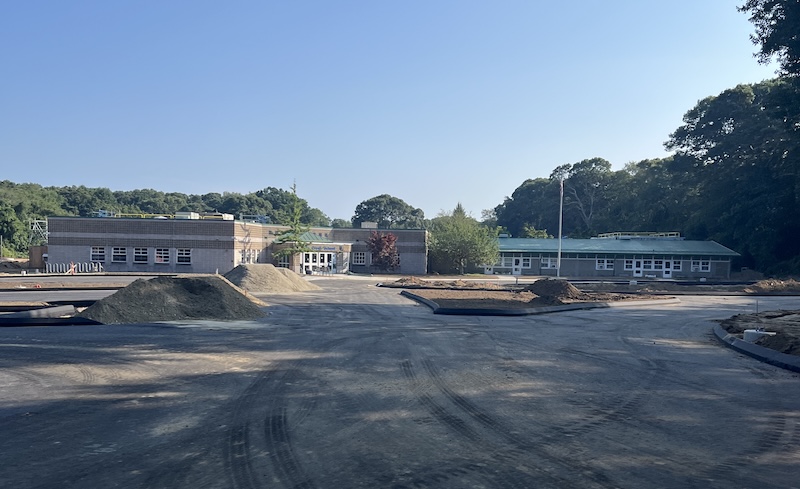
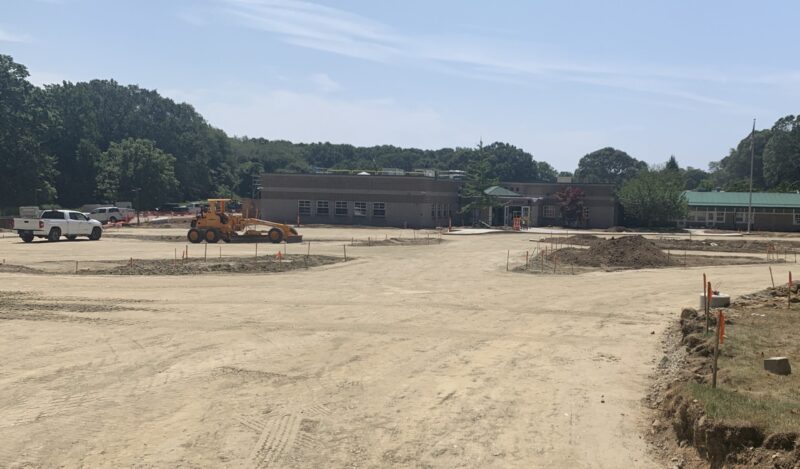
This photo taken Friday, Aug. 15, shows the new base coat on the driveway at Mile Creek School that was applied on Wednesday. LymeLine photo.

LYME/OLD LYME–UPDATED 8/16 with new photo of driveway (above.) Superintendent of Lyme-Old Lyme Schools Ian Neviaser on Thursday said he’s more confident than ever that schools will reopen on time now that an intensive summertime push is winding down on the $57.5 million renovation project affecting four of the district’s five buildings. 

Neviaser in a phone interview said crews overseen by Downes Construction were working double shifts this summer to ensure Lyme-Old Lyme Middle School, Mile Creek School, Lyme Consolidated School and Center School would be ready for the first day of school on Aug. 27. 

Work at three of the schools will shift to the night once school starts, he said. For Mile Creek, where the most extensive upgrades are occurring, daytime work will continue. 

Last week, Neviaser during a regular meeting of the Region 18 Board of Education acknowledged concerns around Lyme and Old Lyme that the district wouldn’t be able to welcome students as scheduled. 

Superintendent of Lyme-Old Lyme Schools Ian Neviaser said Mile Creek School, which was unpaved when this photo was taken earlier this week, was paved Wednesday with a base coat that will provide a functional surface until the final coat is applied after site work is complete. Photo credit: LymeLine.

“I know there’s been some questions out there about whether or not we’ll be able to open school on time, especially if you drive by Mile Creek and you see that they have not paved the new parking lot or entranceway yet,” Neviaser told school board members. 

But he reported being assured by project officials that the schools would be ready. 

The prediction was bolstered by the completion of paving at Mile Creek this week, the superintendent said over the phone.

“As we get closer, I’m even more confident,” he said.  

Center, Mile Creek and Lyme-Old Lyme Middle School closed June 23, with Lyme-Old Lyme High School absorbing displaced staff members as well as campers in the Old Lyme Park and Recreation Department’s summer program. At Lyme Consolidated, staff members were relocated within the building. 

HVAC on Track

The renovation project involves Heating, Ventilation and Air Conditioning (HVAC) and security upgrades in the four buildings, plus an addition and an expanded parking area at Mile Creek School. Voters in late 2022 authorized spending up to $57.5 million on the project, though the district will save about $17 million due to grant funding and lower than expected interest rates.

Neviaser said the buildings will be ready for teachers when they arrive for three days of professional development on Aug. 22. The majority of security upgrades to the building’s front vestibules should be done by the time students get there at the end of the month. 

He said work on the HVAC system will shift to the nighttime at Center, Lyme Consolidated and Lyme-Old Lyme Middle Schools, with “substantial completion” expected by the end of this year.

“When we walk into school on August 27th, there will still be ceiling tiles down,” he said. “There will still be ductwork going on.”

Mile Creek Construction

While students will be welcomed on schedule at Mile Creek, Neviaser described the overall timeline there as “a little bit of a different story.” That’s because six classrooms are being added currently, with the pickup and dropoff area to be reconfigured next summer.

“While the majority of that project, too, was focused on HVAC – and they have continued to work on that – their intent this summer was to really try to get a lot done on the addition,” he said.  

He estimated the new classrooms could be ready by January, giving administrators the space to move some other classrooms around while work on the heating and cooling system continues in the rest of the building. 

The Mile Creek project likely won’t be complete until midway through the 2026-27 school year, he said. 

Neviaser expressed gratitude to the neighbors of the four buildings for their patience over the summer. 

He noted some construction crews this summer had to come out on Saturdays to keep the project on track at Mile Creek as they removed rock from the site.

“I know there was a lot of noise coming from the construction sites, and people were very understanding of the noise,” he said. “And we, like them, hope that it will be done soon.”

August is No-Kill Shelter Month in Connecticut

Gov. Ned Lamont is calling on communities across Connecticut to work together in the effort to make sure every animal that goes through a shelter finds a home. Photos courtesy of Best Friends Animal Society.

National Animal Advocates Say State is 200 Adoptions Away from No-Kill Status

HARTFORD–A national pet advocacy organization is applauding Governor Ned Lamont for proclaiming August No-Kill Shelter Month, a move meant to bolster the group’s efforts to achieve “no-kill” status in Connecticut before the end of this year. 

The proclamation underlines a commitment to end the unnecessary killing of dogs and cats throughout the state’s shelters, according to a press release from the national pet advocacy organization Best Friends Animal Society. 

Julie Castle, Best Friends Animal Society CEO, states, “With less than 200 pets needing to be saved for Connecticut to become no-kill, we’re calling on Connecticut residents to choose to adopt pets from shelters and rescue groups instead of purchasing from breeders or stores.”

The group cited data showing 83 of the state’s 94 animal shelters last year maintained or achieved no-kill status. Nationally, nearly two out of three U.S. shelters are considered no-kill.

Statistics from the organization identify the Old Lyme Animal Control department as a no-kill shelter. Dogs currently up for adoption can be found at this link.

The 11 remaining shelters in the state yet to earn the no-kill designation need to save about 200 more pets combined, according to the organization. 

Best Friends Animal Society CEO Julie Castle in the release said the state is poised to join the nation’s current no-kill states: Delaware, New Hampshire, Rhode Island, and Vermont. 

“With less than 200 pets needing to be saved for Connecticut to become no-kill, we’re calling on Connecticut residents to choose to adopt pets from shelters and rescue groups instead of purchasing from breeders or stores,” Castle said.

Connecticut will join Delaware, New Hampshire, Rhode Island, and Vermont by the end of the year if homes are found for the 200 pets still seeking homes.

The “no-kill” designation applies to states in which 90% of animals entering a shelter can be saved. The figure accounts for the estimated 10% of pets with irreparable medical or behavioral issues that compromise their quality of life and prevent them from being rehomed, the release said.

The governor’s proclamation encourages Connecticut residents to work together to make a positive difference in the lives of the state’s pets by adopting, fostering, volunteering, educating, and generating awareness for these pets in need throughout their communities. 

The no-kill movement is not without critics in the animal advocacy community. People for the Ethical Treatment of Animals (PETA) argues that focusing on no-kill policies can lead shelters to “warehouse” animals for prolonged periods, place animals in unsafe homes, and turn away animals. It also does not address the root problem, the group said on its website.

“Finding a home for one dog may save one life, but sterilizing one dog will save hundreds, if not thousands, of dogs’ lives by preventing generations of potentially homeless puppies from being born. Getting a spay/neuter law passed saves even more lives. Stopping the problem at its source is where our time, energy, and funds are needed most. That is how we can drastically reduce—and hopefully end—the homeless-animal crisis and the need for euthanasia.”