April is National Alcohol Awareness Month: A Timely Message From Lyme-Old Lyme Prevention Coalition

Don’t Let Your Child Become a Statistic!

Underage binge drinking is a reality in all communities and Lyme and Old Lyme are no different. Photo by Kelsey Chance on Unsplash.

LYME-OLD LYME — Did you know that roughly one third of of alcohol-related traffic fatalities happen during Prom/Graduation/Summer season? Approximately 1,000 young people under 21 will die from preventable tragedy in the coming months according to the National Highway and Safety Administration.

This season the Lyme-Old Lyme Prevention Coalition (LOLPC) is encouraging youth to make smart decisions around alcohol.

The average first use of alcohol in Lyme-Old Lyme (LOL) is at 14-years-old and rates of use rise rapidly during high school years.

Only 56 percent of LOL youth report having clear family rules about alcohol use.

The LOLPC urges parents not to let their child become a statistic. Talk to to your children about the risks of drinking alcohol — highlight the facts from the article below. It is never too early to start role-modeling healthy choices about alcohol. Discuss rules and strategies for discussing this special time of year.

You have more influence than you realize!

How Binge Drinking Affects the Teen Brain

You have surely heard that misusing alcohol hurts your health. But how many years of drinking do you think it takes to visibly affect your brain? Ten years? Twenty?

It turns out that it doesn’t take that long at all—in fact, scientists can already see changes in the brains of teenagers who drink.

Blocking the Signals

In a research study, Professor Susan Tapert of the University of California at San Diego used an MRI imaging machine to scan the brains of teens who binge drink—defined as drinking four or five (or more) drinks in a couple of hours. Dr. Tapert found that the “white matter” in their brains—the part that transmits signals, like a TV cable or a computer USB cord—was abnormal compared with the white matter of teens who don’t binge drink.

Transmitting signals is a large part of what the brain does, so affecting the white matter in this way could also affect a person’s thinking, learning, and memory.

The really worrying part is that these teens didn’t have an alcohol use disorder, and they didn’t drink every day. All they did (to be considered “binge drinkers”) was drink at least four (for women) or five (for men) drinks in one sitting, at least one time during the previous three months.

How could it be possible for just a few sessions of heavy drinking to affect the white matter of the brain? Well, science has shown that alcohol can poison brain cells and alter the brain’s white matter in adults with an alcohol use disorder.

Dr. Tapert thinks that teenagers’ brains are even more susceptible this way. She says, “because the brain is still developing during adolescence, there has been concern that it may be more vulnerable to high doses of alcohol.”

Cause or Effect?

Many questions still remain, including how long it takes before these changes occur, and how much they affect the brain’s different functions. To figure this out, scientists would have to look at the binge drinkers’ brains before and after they started drinking. That way, they can tell if the differences might have already been there before the teens started drinking.

It’s possible that having abnormal white matter in the brain somehow increases the chance of being a binge drinker. In order to answer that question, Dr. Tapert says they need to do longer studies that follow teens’ brain growth over time.

The bottom line? If you’re a teen, drinking to the point of getting drunk could damage the white matter of your brain—even if you do it only once in a while.

Editor’s Notes: (i)This article, which was submitted by the Lyme-Old Lyme Prevention Coalition, is sourced from Alcohol and the Adolescent Brain: What We’ve Learned and Where the Data Are Taking Us | Alcohol Research: Current Reviews (nih.gov).

(ii)For more information about the Lyme-Old Lyme Prevention Coalition, getting involved, and ways to talk to youth about underage drinking please visit www.lysb.org/prevention.
A Tool Kit for Parents: Cannabis Legalization and Marijuana’s Impact on Our Youth

LYME/OLD LYME — Cannabis is now legal for adult use in Connecticut and retail sales officially began in January. How do we support our children and parents through this change and what it means moving forward?   

Learning more about today’s marijuana, its impact on our youth, and the new law is a great way to start.

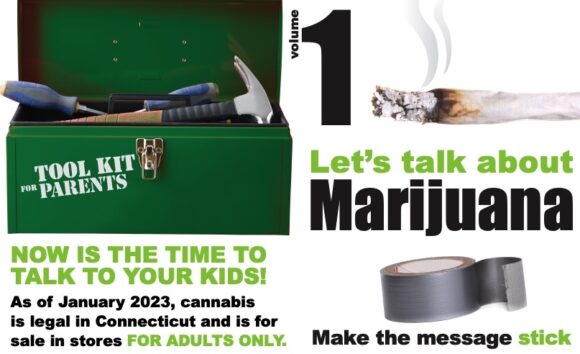
Over the next few months, the Lyme-Old Lyme Prevention Coalition and Lymes’ Youth Service Bureau (LYSB) will be running a youth cannabis education and prevention campaign, including a six-part direct mail Tool Kit for Parents that will be in mailboxes all over Lyme and Old Lyme.

This postcard will be arriving soon in Lyme and Old Lyme mailboxes. It is the first of a six-part direct mail Tool Kit for Parents regarding cannabis legalization in Connecticut and how to deal with its impact on our youth.

Why is Youth Cannabis Use a Problem?

The 2021 Lyme-Old Lyme (LOL) Youth Survey assessing current youth substance use/misuse trends in students grades 7-12 offers insight.   

By 12th grade, nearly a quarter of all seniors reported trying marijuana in their lifetime, with 13.3% reporting recent use. Of equal concern is society’s view of marijuana use and reduced perception of its harm by youth.    By 12th grade, only 20 percent of LOLHS students report great risk for using marijuana one to two times a week, while 68 percent of surveyed parents reporting that weekly marijuana use is risky for youth.  

Teens (and often parents) believe the myth that today’s marijuana is neither dangerous nor addictive. What some do not fully understand is that today’s marijuana is incredibly potent, containing at least three times more THC (Tetrahydrocannabinol – the primary psychoactive cannabinoid extracted from the cannabis (marijuana) plant) than the weed of most adults’ youth, and rising to 99 percent THC content. This rise in potency means a comparable rise in risk.  

Just because adult cannabis-use is legal and it is on retail shelves in Connecticut, it does not mean that this retail marijuana is “better” for youth if they experiment with it or use on a regular basis. 

Alli Behnke, LYSB Prevention Coordinator, explains, “Sometimes people share with me that they feel legalizing marijuana was the safest thing for kids. If they experiment now at least it will be “safe.” This argument might make sense on the outside, but if you really look at the facts, you will find that youth use increased dramatically in other states post-legalization, and cannabis sold in dispensaries is still incredibly high in THC.”

She adds, “Our kids are at risk for some very serious consequences. It is important to know the facts and be prepared to talk to your children about cannabis,” emphasizing, “The legal age is 21 for a reason.”

It is important for parents, caregivers, and other adults who interact with youth to understand that adolescents are at the most risk for developing Cannabis Use Disorder. Many people believe that marijuana is not addictive, but that is a complete misconception. 

In fact, around 10% of all cannabis users will develop a Cannabis Use Disorder (CUD) and 1 in 6 teens, who try marijuana, will become addicted – around 11% of teen users becoming addicted within the first year of use. 

The effects of teen marijuana use can result in lower grades, poorer mood, low attention span, lack of motivation, and more. Some teens may experience rapid heartbeat, feelings of paranoia, and hallucinations. Weekly use of marijuana doubles a teen’s risk of having depression and/or anxiety. Teens who are daily marijuana users are seven times more likely to attempt suicide.   

For more information about teen marijuana use and its effects, visit www.lysb.org/prevention

Cannabis is now legal for adult use in Connecticut and retail sales officially began in January. Photo by Panos Sakalakis on Unsplash

Cannabis Law in Connecticut

Understanding Connecticut’s new Cannabis Laws is a key first step. A 2016 study in the legal state of Washington found that 1/3 of parents incorrectly believed that the minimum legal age for cannabis was 18 rather than 21. In Connecticut, it is legal for adults (21+) to possess 1.5 ounces of cannabis at home or transporting it to home. Adults may also have up to 5 ounces stored in a locked container.  

Cannabis can’t be used just anywhere – it is strictly prohibited at Connecticut State Parks, State Beaches, or on State Waters.  

In every case, possessing and using cannabis under the age of 21 is illegal.

Much like Connecticut’s Social Host Law, permitting any person under the age of 21 to possess cannabis is a Class A misdemeanor and punishable by law. The Lyme-Old Lyme 2021 Youth Survey reports that 76.6% of youth, who use marijuana, do so in the homes of other people and 69% in their own homes. In fact, 50% of LOL 12th graders, who use marijuana, report that they use at a party with an adult present. This is illegal and harmful to all youth involved.

In October 2021, the Old Lyme Zoning Commission voted unanimously to prohibit all marijuana establishments “to prevent negative unintended consequences of its sale, production, or distribution.” 

Keep in mind that surrounding communities (e.g., East Lyme, New London and Westbrook) have not banned sales and retail establishments will start selling shortly. Waterford and Clinton rejected retail marijuana sales.

Increased access, decreased perception of harm, and normalization of marijuana use will impact our youth in the coming years.

What Can Parents Do?

Adult-use marijuana may now be legal in Connecticut, but parents and other adults are strongly encouraged to avoid using cannabis in front of any youth. Lyme-Old Lyme youth report that they watch, listen, and learn about substance use and beliefs from their parents and adults around them.   This includes cannabis use role modeling, positive coping skills, and ways to relax and have fun that don’t involve substance use, which can only pay off as youth develop their own behaviors and skills.

If cannabis is in your home, lock it up in accordance with CT State Law and away from children or adolescents. Children can and are being hospitalized for accidental exposure and overdose from adult cannabis. 

It is highly recommended to keep track of what you possess so you can confirm that no one else is using it. Lock boxes can be purchased from many retailers with a limited amount available for free at LYSB for the LOL Community.

Remember that the most important tool in prevention, including the prevention of an adolescent Cannabis Use Disorder, is setting clear rules and talking often and early to your children. Learn the facts, create family rules, and work together to develop a strategy that will support your child’s health, well-being, and future. 

Although talking about cannabis to your teens can be awkward at first, it is critical to communicate your expectations and reinforce that its use is illegal for those under 21. By helping kids choose to not use marijuana, we can together prevent countless cases of substance use disorders.  

For more information about the Tool Kit for Parents or to learn more about the Lyme-Old Lyme Prevention Coalition, visit www.lysb.org/prevention or contact Alli Behnke,  Prevention Coordinator, abehnke@lysb.org

Editor’s Note: This article was submitted by LYSB Prevention Coordinator Alli Behnke. Here at LymeLine, we are committed to supporting all LYSB’s determined efforts in the field of prevention to keep our youth safe and support their health, well-being and future.

It’s Prom/Summer Party Season! Let’s Work Together to Stop Teen Access to Alcohol

LYME/OLD LYME — With Prom and summer just around the corner, it’s a great time to focus awareness in Lyme and Old Lyme on underage drinking. Remember alcohol continues to be the number one substance used by youth. 

One way we can work to prevent teens from drinking is to prevent easy access to alcohol and recognizing that teen drinking is not inevitable.

The Lyme-Old Lyme 2021 Youth Survey reports that 62 percent of high school seniors do not drink alcohol regularly.

Unfortunately, 70 percent of 12th graders report that it is easy to get alcohol. Most teens who drink get alcohol without having to pay for it. They obtain it from friends (83 percent) or family members, at parties, or by taking it without permission.  

The 2021 Youth Survey shows that nearly 50 percent of students, who report drinking, take it from their parents with and without permission. Underage drinkers, who pay for alcohol, usually give money to someone else to purchase it for them.

Here’s what you can do to reduce access to alcohol:

  • At home, make sure teens can’t access alcohol without your knowledge. Unmonitored alcohol, including alcohol stored in a cabinet, refrigerator, basement or garage, can be a temptation. When in doubt, lock it up.
  • Liquor stickers can be a helpful tool and are available at Lymes’ Youth Service Bureau.
  • Exercise your influence. Data shows that teens continue to care what their parents think, even while they are in high school and college – 63 percent of students choose not to drink because they feel their parents would disapprove. Let your teen know that you don’t want them to drink and that most teens, in fact, don’t drink.

  • Speak up, because silence can be misinterpreted. It may have happened already. A neighbor announces she is hosting a teen party, but you shouldn’t worry — she’s taking the car keys from every kid who comes in. Or a colleague says he’s serving alcohol to his high school son’s friends so they can “learn to drink responsibly.”
  • If you hear about a situation, say that you don’t want other people serving alcohol to your teen or condoning teen drinking. Let your friends, neighbors, and family members know that the minimum drinking age is a policy that protects teens, and that you don’t want your teen to drink.
  • Take action before a situation arises. Start talking to the parents of your child’s friends early — as early as 6th grade. Tell them about the risks of teen drinking and let them know that you don’t want anyone to allow your teen to drink alcohol.
  • Talk to adults, who host teen parties. Let them know that the overwhelming majority of parents support the legal drinking age and agree that it is not okay to serve alcohol to someone else’s teen — and not okay to turn a blind eye to teen alcohol consumption.
  • Let local law enforcement know that you encourage active policing of noisy teen parties that may signal alcohol use.
  • Tell local alcohol retailers that you want them to check ID’s before selling alcohol. Limiting alcohol sales to legal purchasers is an important goal and well worth the time it takes.
  • Consider joining the Lyme-Old Lyme Prevention Coalition.

For more information on how to help your teen make healthy choices surrounding drugs or alcohol, visit www.lysb.org/prevention or contact Alli Behnke, Prevention Coordinator, abehnke@lysb.org

Alli Behnke

About the Author: Alli Behnke, MSW, MA is the Prevention Coordinator at Lymes’ Youth Service Bureau. She has been a Social Worker for 20 years working in the fields of prevention, therapy, youth leadership, and health coaching. Alli believes strongly in providing accurate information, education, and tools for success when empowering the Lyme/Old Lyme Prevention Coalition and REACH Youth Coalition to work together on strengths-based campaigns. The Coalitions address substance abuse and other risky behaviors challenging our youth and families. Contact her at abehnke@lysb.org or visit  www.lysb.org to become involved in this important community work.

Lyme-Old Lyme Students Present Findings from Community Survey at Forum

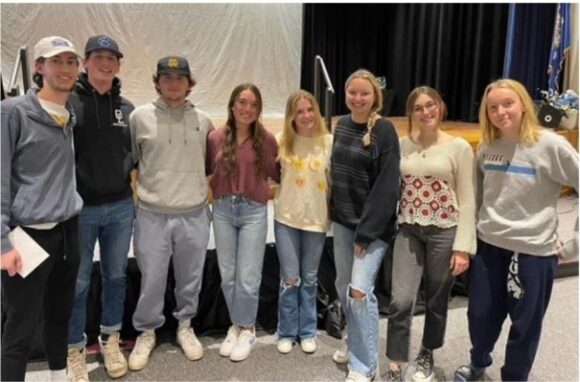
These Lyme-Old Lyme students led the 2022 Community Forum, which presented the findings of the 2021 Community Survey.

LYME/OLD LYME — On March 29, results from the 2021 Lymes’ Youth Service Bureau (LYSB)/Lyme-Old Lyme Prevention Coalition (LOLPC) Youth Survey were discussed at a Community Forum at Lyme-Old Lyme Middle School.

This survey was conducted in December 2021 with 662 students in 6th through 12th grade reporting on behaviors and trends related to alcohol, marijuana, vaping, other substances, and mental health.

Eight Lyme-Old Lyme (LOL) High School students participated in a youth panel to offer parents and other community members an opportunity to learn directly from them what it is like to be a teenager in Lyme-Old Lyme.

Highlights from their well-spoken, direct dialogue with the audience included kids growing up much too fast in a time of easy access, reduced perception of harm of substances, perfectionism, being over-scheduled, and being inundated with social media platforms from a very young age.

The Youth Survey reported that alcohol is still the number one substance used by LOL students with average age of first use being reported at 14.0 years old. Lifetime and recent use trends of alcohol have reduced since 2019, but national trends advise that we should understand that a “COVID Effect” might be in play resulting from isolation and lock-down.

An alarming statistic shows that the number of students, who think drinking every day is harmful, decreased from 50.9 to 27.7 percent in just two years. Similar numbers were reported for binge drinking (five or more drinks at a time) and using marijuana one to two times per week. 

The panel of students offered some insight for this drop in perceived harm. 

One reason they provided is that during isolation kids turned to their phones and social media for entertainment and communication. They explained that Snap Chat, TikTok, and Instagram normalize drinking and drug use, and kids don’t actually realize the amount of danger they can be put in with substance use. 

Social media also supports a climate for bullying, social influencing, negative mental health and self-image. The Youth Panel reported feeling that kids aren’t ready for today’s social media in Middle School or younger. Panel members encouraged parents to educate themselves and think about their own choices for their young children when it comes to phones and social media.

Survey data revealed that the mental health of our youth has followed national trends and reduced over the past two years. 

Of the students surveyed, 70 percent reported feeling stressed, 60 percent reported feeling anxious, 28% reported feeling so sad over the past two weeks that it limited daily activity, and 21 percent reported thinking about suicide. The Youth Panel agreed with these numbers and strongly encouraged audience members to understand the challenges of growing up as a teenager right now.  

Teens are inundated with pressures, intense schedules, social media influences, and the connection with drugs and alcohol plays a definite role. The survey data shows that youth, who reported marijuana use, identify coping with stress and other challenges as a primary reason they use. 

The survey also showed that only 40-60 percent of students (grade-dependent) feel that their families have clear rules around alcohol and drugs. This is an important statistic because the October LOLPC Community Survey showed that 100% of participating parents reported clear rules around alcohol. 

This is an opportunity for parents to recognize the importance of early, consistent, and on-going conversations around drugs and alcohol. The Survey and Youth Panel identify parents as role models with parental disappointment being one of the main reasons kids choose not to drink or use drugs.

The panel reported that kids are watching their parents and how they deal with stress, cope with life around them, and how they role model substance use. One student said “That’s what we are going to absorb and see as normal. My advice is to keep talking and to do the kinds of things that are healthy and good because kids are watching.”

Marijuana use, perception of harm, and its connection to our kids’ mental health was also discussed at the Forum  

The survey data shows the average age of first use of marijuana in LOL is 14.1, and by 12th grade, 19 percent of students reported trying marijuana, but the Youth Panel felt that number was under-reported.  

They also shared that teens acknowledge drinking and driving is very dangerous, but that “smoking weed” and driving is something that “kids do all the time.” This is another area for us to keep discussing with our kids and each other, with recent adult-use cannabis legalization and its impact on our communities.

The Lyme-Old Lyme Prevention Coalition is a DFC grant-funded community organization dedicated to prevention and supporting all youth and families. 

For more information about this survey, LOLPC campaigns and programs, or to become involved, visit www.lysb.org/prevention or contact Alli Behnke, MSW at abehnke@lysb.org

Editor’s Note: Alli Behnke, MSW is the LYSB Prevention Coordinator.

Letter to the Editor: Lyme-Old Lyme Prevention Coalition Responds to Hartford Fentanyl Tragedy, Encourages Community Approach to Substance Abuse Issues Locally

To the Editor:

An Open Letter to the Lyme-Old Lyme Community

I’m sure many of you have heard the tragic news about two recent drug exposure incidents in two Connecticut middle schools. Tragically, a young 13-year-old boy died after being exposed to fentanyl at his middle school in Hartford. The following day, five students were hospitalized after ingesting THC edibles (candy) at their New Haven middle school.
As we process these tragic incidents, the Lyme-Old Lyme Prevention Coalition is sharing resources and support to our community’s youth and families.
We strongly encourage you to join us and embrace a community approach to supporting youth and families around substance abuse prevention. Lymes’ Youth Service Bureau (LYSB) staff is working to schedule community Narcan trainings.
To receive prevention updates, visit this link to join our mailing list.
To find upcoming events and links to useful resources about current drug trends, conversation starters, and data, visit our website.
Our Coalition depends on input, expertise, and energy from community members, and we welcome you to our meetings. We are available to answer questions about substance abuse prevention, personal concerns, and be a resource to any youth, parent, or community member needing support, referrals, and/or guidance. Please let us know if we can be of help to you or your family. You can reach me at 860-434-7208 or by email at abehnke@lysb.org.
Sincerely,
Allison Behnke, MSW,
Old Lyme.
Editor’s Note: The author is the Prevention Coordinator at LYSB.