Keeping Kids Safe Through the Wonders of Winter Ball

LYME-OLD LYME — The Winter Ball and all milestone celebrations are amazing events where memories are made for our teenagers.  They also offer unique opportunities for open conversation with teens about alcohol/other drugs and the risks they pose for individual and group safety.  

The best thing parents and other adults can do in an adolescent’s life is to talk often and early with an open mind and clear rules and expectations.

The Lyme-Old Lyme Prevention Coalition is reaching out to students, parents, and other adults to reinforce the legal and safety consequences of underage drinking and marijuana use. Too often, communities across the US have seen this time of celebration turn into a time of tragedy.  

Criminal charges related to underage drinking can change a person’s life. Even worse, serious injury or death can turn what should be a wonderful memory into a tragic end. 

We want our kids to have a great time but also to celebrate drug- and alcohol-free.  We would like them to have fun safely and not see them (or you!) get into legal trouble that could have a long-term effect.

Alcohol/Marijuana—Teens should know that buying or possessing alcohol or marijuana under the age of 21 can result in multiple, serious criminal charges. It may prevent them from being able to have a driver’s license

DUI—A DUI conviction could mean the loss of a driver’s license, and a fine.

Parents—Parents and other adults can play a role to help ensure teens’ safety. Do not provide alcohol to anyone under the age of 21, even in your own home. It is ILLEGAL in Connecticut.  Charges carry a heavy fine and violators must appear in court. Do not take the chance.

Police Patrols—Police officers will be patrolling during the evening of the Winter Ball and are hoping not to find drivers exhibiting signs of impairment. Parents are urged to remind your kids not to ruin the night by getting a DUI, or much worse. If possible, arrange for rides both ways with a parent and have a safety plan in place.

We have one goal in mind: keeping our young people safe. There is no desire to diminish the fun of the evening nor make it harder to celebrate. Our universal wish is that your kids come home.

Please, be our partners in this effort and talk openly and honestly with them about the dangers of substance use and misuse.

For more information and resources, contact Alli Behnke, Prevention Coordinator at LYSB, abehnke@lysb.org   www.lysb.org/prevention

Alli Behnke

About the Author: Alli Behnke, MSW, MA is the Prevention Coordinator at Lymes’ Youth Service Bureau. She has been a Social Worker for 20 years working in the fields of prevention, therapy, youth leadership, and health coaching. Alli believes strongly in providing accurate information, education, and tools for success when empowering the Lyme/Old Lyme Prevention Coalition and REACH Youth Coalition to work together on strengths-based campaigns. The Coalitions address substance abuse and other risky behaviors challenging our youth and families. Contact her at abehnke@lysb.org or visit  www.lysb.org to become involved in this important community work.

Red Ribbon Week Includes Virtual Presentation on Marijuana Dangers, Thursday

LYME/OLD LYME — Lymes’ Youth Service Bureau (LYSB) and Lyme/Old Lyme Prevention Coalition (LOLPC) are planning a number of activities to celebrate Red Ribbon Week, which is taking place through Oct. 31.

The week is aimed at uniting youth, parents, schools, and communities in order to take a stand against drug misuse. As part of this year’s observance — which will be themed “Drug Free Looks Like Me” — the Upstanders Club at Lyme-Old Lyme Middle School (LOLMS) is hosting a Door-Decorating Contest and other Red Ribbon events, and LYSB will be aglow in red lights for the week.

On Thursday Oct. 28, from 7 to 8:30 p.m., the LOLPC is sponsoring a virtual workshop titled, The Dangerous Truth About Today’s Marijuana: Johnny Stack’s Life and Death Story.

Laura Stack, best-selling author and public speaker, will share the story of her son Johnny’s marijuana addiction from a mother’s point of few, a poignant chronicle of shocking descent from innocence to eventual suicide.

This important event is free and all are welcome.

Register here to obtain the Zoom link for the presentation or at www.lysb.org.

These events are supported by the Office of National Drug Control Policy (ONDCP) and the Centers for Disease Control and Prevention (CDC) of the U.S. Department of Health and Human Services (HHS) as part of a financial assistance award funded by ONDCP.

Editor’s Note: For more information about Red Ribbon Week or the Lyme-Old Lyme Prevention Coalition, contact Alli Behnke, MSW, MA at abehnke@lysb.org.

In It Together: College Drinking — Rite of Passage or Risky Business?

Photo by Meritt Thomas on Unsplash.

Underage college drinking is a significant public health problem, and it exacts an enormous toll on the intellectual and social lives of students on campuses across the United States. Drinking at college has become a ritual that students often see as an integral part of their higher education experience.

Many students come to college with established drinking habits, and the college environment can exacerbate the problem. 

About one in four college students report academic consequences from drinking, including missing class, falling behind in class, doing poorly on exams or papers, and receiving lower grades overall.

In a national survey of college students, binge drinkers who consumed alcohol at least three times per week were roughly six times more likely than those who drank but never binged to perform poorly on a test or project as a result of drinking, and five times more likely to have missed a class.

Although the majority of students come to college already having some experience with alcohol, certain aspects of college life, such as unstructured time, the widespread availability of alcohol, inconsistent enforcement of underage drinking laws, and limited interactions with parents and other adults, can intensify the problem.

In fact, college students have higher binge-drinking rates and a higher incidence of driving under the influence of alcohol than their non-college peers.

The first six weeks of freshman year are a vulnerable time for heavy drinking and alcohol-related consequences because of student expectations and social pressures at the start of the academic year. 

How much is a drink?

To avoid binge drinking and its consequences, college students (and all people who drink) are advised to track the number of drinks they consume over a given period of time. That is why it is important to know exactly what counts as a drink.

In the United States, a standard drink is one that contains about 14 grams of pure alcohol, which is found in:

  • 12 ounces of beer with 5 percent alcohol content;
  • 5 ounces of wine with 12 percent alcohol content;
  • 1.5 ounces of distilled spirits with 40 percent alcohol content.

Unfortunately, although the “standard” drink amounts are helpful for following health guidelines, they may not reflect customary serving sizes. A large cup of beer, an over-poured glass of wine, or a single mixed drink could contain much more alcohol than a standard drink. 
Factors related to specific college environments also are significant. Students attending schools with strong Greek systems and with prominent athletic programs tend to drink more than students at other types of schools.

In terms of living arrangements, alcohol consumption is highest among students living in fraternities and sororities and lowest among commuting students, who live with their families.

An often-overlooked preventive factor involves the continuing influence of parents. Research shows that students who choose not to drink often do so because their parents discussed alcohol use and its adverse consequences with them.

Ongoing research continues to improve our understanding of how to address the persistent and costly problem of harmful and underage student drinking. Successful efforts typically involve a mix of strategies that target individual students, the student body as a whole, and the broader college community.

For more information and resources, contact Alli Behnke, Prevention Coordinator at LYSB, abehnke@lysb.org   www.lysb.org/prevention

Article source: NIH

Alli Behnke

About the Author: Alli Behnke, MSW, MA is the Prevention Coordinator at Lymes’ Youth Service Bureau. She has been a Social Worker for 20 years working in the fields of prevention, therapy, youth leadership, and health coaching. Alli believes strongly in providing accurate information, education, and tools for success when empowering the Lyme/Old Lyme Prevention Coalition and REACH Youth Coalition to work together on strengths-based campaigns. The Coalitions address substance abuse and other risky behaviors challenging our youth and families. Contact her at abehnke@lysb.org or visit  www.lysb.org to become involved in this important community work.

Lyme-Old Lyme Prevention Coalition Needs Community Input, Asks Readers to Take Online Survey

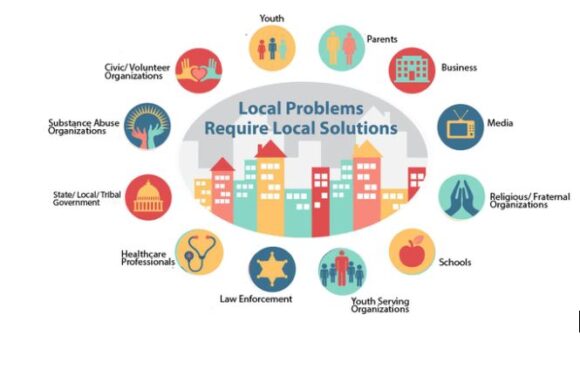
LYME/OLD LYME — The Lyme/Old Lyme Prevention Coalition (LOLPC) is a group of volunteers, who collaborate with all sectors of the community to prevent substance misuse and abuse. Working together over the past 16 years, they have achieved significant reductions in adolescent substance misuse. 

Their work continues to change as the culture, climate, and concerns facing Lyme/Old Lyme youth and families shift. The Coalition is thrilled to work with the community to enhance the safety, well-being, and happiness of all our youth.

The key part of the Coalition is our community and its members. The group is made up of volunteers from all sectors of the community with the result that many voices, experiences, and expertise can be heard and utilized to support our youth and families. 

In December 2020, the Coalition was awarded a five-year Drug Free Communities Grant. This is the first year of the grant and the Coalition is asking all members of the Lyme-Old Lyme community to fill out this online Community Survey. The survey asks about social norms, perception of harm, and how community members think and feel about substance misuse and abuse.

This data will help lead the work of the LOLPC as the group collaborates with the community to utilize best practices and continue to be pioneers in youth substance abuse and misuse prevention.  All of the Coalition’s efforts are data-driven and rely on the willingness of our community members.

Visit this link to access and complete the online survey.

The LOLPC thanks community members for their time.

Editor’s Note: Contact LOLPC Prevention Coordinator Allison Behnke, MSW, MA, at abehnke@lysb.org with any questions about the survey or for more information about being involved in the work of the Prevention Coalition.   

LYSB, LOL Prevention Coalition to Hold Free NARCAN, QPR Training for Community, Tonight; All Welcome to These Potentially Life-Saving Sessions

LYME/OLD LYME — On Thursday, Aug. 19, from 6:30 to 8 p.m., Lymes’ Youth Service Bureau (LYSB) and the Lyme/Old Lyme Prevention Coalition will be hosting a free Narcan and Question, Persuade, Refer (QPR) training session.

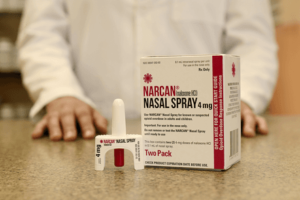
NARCAN (naloxone) is an opiate antidote.  Opioids include heroin and prescription pain pills such as oxycodone, codeine and morphine. NARCAN is a prescription medicine that blocks the effects of opioids and reverses an overdose.

NARCAN® Nasal Spray may counteract the life-threatening effects of an opioid overdose. Since most accidental overdoses occur in a home setting, it was developed for first responders, as well as family, friends, and caregivers—with no medical training required. Its characteristics are:

  • Needle-free
  • Designed for ease-of-use in the community setting
  • Inhalation not required

The Narcan training from 6:30 to 7 p.m. will provide participants with knowledge about overdose prevention strategies, administering Narcan, and support information and resources. Each participant will go home with a free Narcan kit.

The QPR portion from 7 to 8 p.m. will help participants learn the three steps to help save a life, warning signs of a suicide crisis, how to respond, and where to go for resources and support.

These sessions will be held at Old Lyme’s Memorial Town Hall.  Register for one or both trainings at this link.

Data indicates that emergency personnel are seeing a slight uptick in overdose calls in our region with state and national data showing that the pandemic has contributed to this rise.

Every week in the US, an average of 20 people die from a drug overdose, and eight by suicide. Accidental overdose is now the leading cause of death for Americans under 50, and suicide is the 10th leading cause of death.

This training is crucial if you ever find yourself in the position to save a life. It will be facilitated by staff from SERAC (Supporting and Engaging Resources for Action and Change).

For more information about the training sessions, visit this link.

Mental health problems and substance use disorders sometimes occur together. More than one in four adults living with serious mental health problems also has a substance use problem. Substance use problems occur more frequently with certain mental health problems, including depression, anxiety disorders, schizophrenia and personality disorders because:

  • Certain illegal drugs can cause people with an addiction to experience one or more symptoms of a mental health problem.
  • Mental health problems can sometimes lead to alcohol or drug use, as some people with a mental health problem may misuse these substances as a form of self-medication.
  • Mental health and substance use disorders share some underlying causes, including changes in brain composition, genetic vulnerabilities, and early exposure to stress or trauma

Someone with a mental health problem and substance use disorder must treat both issues. Treatment for both mental health problems and substance use disorders may include rehabilitation, medications, support groups, and talk therapy.

Shared decision making allows an individual and their healthcare provider to determine together the most appropriate treatment or care choices. It is a fundamental process in primary care and behavioral health care integration — making it vital that individuals with behavioral health conditions acquire skills to participate in decisions with their healthcare providers.

For more information on mental health and substance use disorders, visit samhsa.gov  and/or www.lysb.org/prevention

Alli Behnke

About the Author: Alli Behnke, MSW, MA is the Prevention Coordinator at Lymes’ Youth Service Bureau. She has been a Social Worker for 20 years working in the fields of prevention, therapy, youth leadership, and health coaching. Alli believes strongly in providing accurate information, education, and tools for success when empowering the Lyme/Old Lyme Prevention Coalition and REACH Youth Coalition to work together on strengths-based campaigns. The Coalitions address substance abuse and other risky behaviors challenging our youth and families. Contact her at abehnke@lysb.org or visit  www.lysb.org to become involved in this important community work.