Letter to the Editor: Motion Failed at Old Lyme Town Meeting Due to Absence of Supporting Information from First Selectman, Salient Point for Upcoming Election

To the Editor:

As a voting resident in the Town of Old Lyme, I attended the Special Town Meeting on August 16th in the Town Hall, which was only held in person.  The purpose of the meeting was to vote on the appropriation of money for four items totaling $197,000. In the past, I was always asked to verify that I was a property owner or eligible to vote prior to the meeting.  No such verification was held at this meeting where less than 20 people were in attendance.  I only knew about the meeting because Selectwoman Mary Jo Nosal highlighted to First Selectman Tim Griswold at a Board of Selectman’s meeting two weeks prior, that proper support and information for the requests needed to be clear to the public.  Nevertheless, no handouts or information of any kind was shared with the public.

Thankfully, David Roberge, the Fire Marshal, was able to provide substantial information on the funds for Covid-19 and Storm Isaias responses, much of which will be reimbursed by the federal government.  Phil Parcak, Facilities Manager, was also helpful in providing detailed information regarding the construction of a new scale house building.  All three of these motions passed. Sadly, Tim Griswold was unable to provide information about the $42,000 expenditure for Police/Ranger overtime and as a result, this motion failed.  When a Board of Finance member in attendance was asked what happens now, his reply was, “I don’t know, this has never happened before!”

The people of Old Lyme deserve better.  We need strong leadership, not incompetence, especially when it comes to our precious tax dollars.  I hope the voters will remember that on November 2!

Sincerely,

Kathleen Tracy,
Old Lyme.

Editor’s Note: The author is running as the Democratic-endorsed candidate for the position of Zoning Board of Appeals Alternate in the upcoming November election.

Suisman Shapiro Atty. Kyle Zrenda Now a Member of Mohegan Gaming Disputes, Mashantucket Pequot Tribal Courts

Attorney Kyle Zrenda of Suisman Shapiro Attorneys at Law.

NEW LONDON/OLD LYME — Attorney Kyle J. Zrenda of Suisman Shapiro Attorneys-At-Law was sworn in Aug. 11 as a member of the bar of the Mohegan Gaming Disputes Court. Atty. Zrenda is a resident of Old Lyme, Conn.

As a sovereign Indian Nation, cases related to the gaming enterprise of the Mohegan Tribe of Indians of Connecticut, including claims for personal injuries that occurred at the Mohegan Sun resort and casino, often need to be brought in the Mohegan Gaming Disputes Court.

Atty. Zrenda is also admitted to the Mashantucket Pequot Tribal Court, which is the tribal court for cases arising from personal injuries that occurred at Foxwoods.

Commenting on his recent admission to Mohegan Gaming Disputes Court, Attorney Zrenda said, “I am excited for the opportunity this new license presents to expand Suisman Shapiro’s tribal law practice and to protect the interests of those working at and visiting the Mohegan Sun.”

Editor’s Note: If you have been injured at either of Connecticut’s resort-casinos, contact Suisman Shapiro for a free consultation to help you navigate the complex legal issues involved with claims arising from injuries that occur on tribal lands.

Death of Carl Wohlmuth, 56, Announced; Communicant of Christ The King in Old Lyme

IVORYTON — Carl Wohlmuth, 56, of Ivoryton, returned to the Lord early Saturday morning, Aug. 14, 2021, in the loving care of his family …

Carl is survived by his wife, Rosa Wohlmuth of Ivoryton; son Daniel Wohlmuth and wife Carol of Middletown; sons, David and Steven Wohlmuth; daughter, Susan Wohlmuth …

A Mass of Christian Burial will be held at 11 a.m. Thursday, Aug. 19, 2021, at Christ the King Church, Old Lyme. In lieu of flowers, the family requests that any charitable donations be made to Christ the King in Carl’s name.

Visit this link to read the full obituary published Aug. 18, in ‘The Day.

Reading Uncertainly: ‘Beyond Words: What Animals Think and Feel’ by Carl Safina

What are they thinking?

Do we deliberately misunderstand other animals?

And what is the result of this “miscomprehended relationship”?

Carl Safina, a professor at Stony Brook University in New York and a most curious student of other species, writes a thoroughly loquacious and engaging view of some other sentient creatures whose consciousness may well equal or exceed our own. Arguing that “ . . . humans are not the measure of all things” (as much as we might like us to be), he relates his exhaustive studies of elephants, wolves, dolphins, orcas (killer whales), and his own two dogs, in a global travelogue from Africa to Wyoming, to the Pacific Northwest and to Long Island.

His mantra: “the greatest realization is that all life is one.”

Professor Safina begins with those remarkable creatures, the elephants: “the skin moving like swishing corduroy, textured and rough, but sensitive to the slightest touch. The grind of their cobblestone molars as, sheaf by sheaf and mouthful by mouthful, they acquire the world . . . . Bizarre protruding teeth the size of human legs astride the world’s most phallic nose.”

He acknowledges their consciousness as well as their broad hearing: “elephant song spans ten octaves,” far more than we can hear. And yet theirs is a profile of a species going extinct. Since Roman times, we (the human species) have reduced elephant density by 99 percent. From 10 million in the early 1900s, we count less than 400,000 today.

Note that elephant society is female-dominated. They are empathic to each other. Is there a moral there?

He contrasts their behavior with ours: “self-destructive behavior, for instance, seems distinctly human.” Is male-domination a possible cause? He adds, “modernity’s self-imposed exile from the world seems to have degraded an older human ability to recognize the minds of other animals.” Safina goes on to explore the habits, minds and consciousness of wolves, dogs, and, finally, dolphins and orcas (also known as killer whales).

But inevitably his thoughts turn to us, homo sapiens. We engulf this globe, “ . . . the perfect storm of rising human densities . . . .” and “ . . . most animals of the world are awash in a rising sea of Us.” Pogo had it right!

He concludes: “I don’t mean to imply that I value the life of a fish or a bird the same way I value a human life, but their presence in the world has as much validity as does our presence. Perhaps more: they were here first; they are foundational to us . . . . They enliven the world, and beautifully.”

And then: “If cruelty and destructiveness are bad, humans are by a wide margin the worst species ever to infest this planet. If compassion and creativity are good, humans are by a wide margin the finest. But we are neither simply good nor bad; we are all these things together, and imperfectly so. The question for all is: which way is our balance tending?”

So the professor comes to his conclusion: “Me, I am most skeptical of those things I’d like most to believe, precisely because I’d like to believe them. Wanting to believe something can skews one’s view.”

His final words: “I just don’t know.”

Beyond Words is a challenging and testing read.

Editor’s Note: ‘Beyond Words: What Animals Think and Feel’ by Carl Safina is published by Henry Holt & Co., New York 2015.
Felix Kloman

About the Author: Felix Kloman is a sailor, rower, husband, father, grandfather, retired management consultant and, above all, a curious reader and writer. He’s explored how we as human beings and organizations respond to ever-present uncertainty in two books, ‘Mumpsimus Revisited’ (2005) and ‘The Fantods of Risk’ (2008). A 20-year former resident of Lyme, Conn., he now lives in Peabody, Mass. He writes book reviews, mostly of non-fiction, a subject which explores our minds, our behavior, our politics and our history, but he does throw in a novel here and there. For more than 50 years, he’s put together the 17 syllables that comprise haiku, the traditional Japanese poetry, and served faithfully as the self-appointed “poet laureate” of Ashlawn Farm Coffee. His late wife, Ann, was also a writer, but of mystery novels, all of which begin in a village in midcoast Maine, strangely reminiscent of the town she and her husband visited every summer.


LYSB, LOL Prevention Coalition to Hold Free NARCAN, QPR Training for Community, Tonight; All Welcome to These Potentially Life-Saving Sessions

LYME/OLD LYME — On Thursday, Aug. 19, from 6:30 to 8 p.m., Lymes’ Youth Service Bureau (LYSB) and the Lyme/Old Lyme Prevention Coalition will be hosting a free Narcan and Question, Persuade, Refer (QPR) training session.

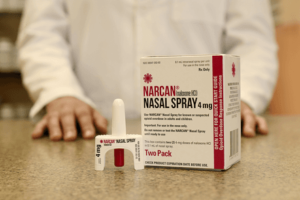
NARCAN (naloxone) is an opiate antidote.  Opioids include heroin and prescription pain pills such as oxycodone, codeine and morphine. NARCAN is a prescription medicine that blocks the effects of opioids and reverses an overdose.

NARCAN® Nasal Spray may counteract the life-threatening effects of an opioid overdose. Since most accidental overdoses occur in a home setting, it was developed for first responders, as well as family, friends, and caregivers—with no medical training required. Its characteristics are:

  • Needle-free
  • Designed for ease-of-use in the community setting
  • Inhalation not required

The Narcan training from 6:30 to 7 p.m. will provide participants with knowledge about overdose prevention strategies, administering Narcan, and support information and resources. Each participant will go home with a free Narcan kit.

The QPR portion from 7 to 8 p.m. will help participants learn the three steps to help save a life, warning signs of a suicide crisis, how to respond, and where to go for resources and support.

These sessions will be held at Old Lyme’s Memorial Town Hall.  Register for one or both trainings at this link.

Data indicates that emergency personnel are seeing a slight uptick in overdose calls in our region with state and national data showing that the pandemic has contributed to this rise.

Every week in the US, an average of 20 people die from a drug overdose, and eight by suicide. Accidental overdose is now the leading cause of death for Americans under 50, and suicide is the 10th leading cause of death.

This training is crucial if you ever find yourself in the position to save a life. It will be facilitated by staff from SERAC (Supporting and Engaging Resources for Action and Change).

For more information about the training sessions, visit this link.

Mental health problems and substance use disorders sometimes occur together. More than one in four adults living with serious mental health problems also has a substance use problem. Substance use problems occur more frequently with certain mental health problems, including depression, anxiety disorders, schizophrenia and personality disorders because:

  • Certain illegal drugs can cause people with an addiction to experience one or more symptoms of a mental health problem.
  • Mental health problems can sometimes lead to alcohol or drug use, as some people with a mental health problem may misuse these substances as a form of self-medication.
  • Mental health and substance use disorders share some underlying causes, including changes in brain composition, genetic vulnerabilities, and early exposure to stress or trauma

Someone with a mental health problem and substance use disorder must treat both issues. Treatment for both mental health problems and substance use disorders may include rehabilitation, medications, support groups, and talk therapy.

Shared decision making allows an individual and their healthcare provider to determine together the most appropriate treatment or care choices. It is a fundamental process in primary care and behavioral health care integration — making it vital that individuals with behavioral health conditions acquire skills to participate in decisions with their healthcare providers.

For more information on mental health and substance use disorders, visit samhsa.gov  and/or www.lysb.org/prevention

Alli Behnke

About the Author: Alli Behnke, MSW, MA is the Prevention Coordinator at Lymes’ Youth Service Bureau. She has been a Social Worker for 20 years working in the fields of prevention, therapy, youth leadership, and health coaching. Alli believes strongly in providing accurate information, education, and tools for success when empowering the Lyme/Old Lyme Prevention Coalition and REACH Youth Coalition to work together on strengths-based campaigns. The Coalitions address substance abuse and other risky behaviors challenging our youth and families. Contact her at abehnke@lysb.org or visit  www.lysb.org to become involved in this important community work.