Talking Transportation: Collecting Fares Using the Honor System

Connecticut’s newest mass transit system, CTfastrak, is off to a great start.  The bus rapid transit system running from New Britain to Hartford is carrying up to 10,000 passengers daily.  Mind you, that’s coming off of its debut week when all rides were free.

In fact, it’s the fare collection process on CTfastrak that makes it innovative:  it’s on the honor system.

Unlike most buses, CTfastrak passengers pay before getting onboard, purchasing tickets ($1.50 for two hour’s use) at the stations or online.  This reduces the “dwell time” at each stop as passengers can board through any door. A similar system is running in NYC on certain “Select Bus” routes and seems popular.

But without paying a fare to the bus driver as you board, how do they know you have a ticket?  Ah, there’s the rub.  The “honor system” relies on “Fare Inspectors” making random checks.  Getting caught without a valid ticket means a $75 fine, though in these early days they’re mostly giving warnings.

Only a handful of US transit systems have adopted the honor system for fare collection, including the San Diego Trolley and the MUNI subway in San Francisco. In Minneapolis getting caught on a bus without a ticket is a $180 lesson in “doing the right thing”.

In Los Angeles, the Metro had so many problems with free-loaders they converted to turnstiles. Even a $250 ticket for fare evaders didn’t encourage payment, resulting in a $9 million loss in ticket sales. And the fare there is only $1.50.

On Metro-North, fare evasion doesn’t seem to be a problem.  If you don’t have a ticket, they’ll just throw you off the train (at the next station, of course).  Or get an MTA cop to issue a fine.

Until a few years ago you could buy a ticket on the train for the same fare as on the platform.  That meant wasted time for conductors and a “money room” at Grand Central processing a million in cash each week.  Now if you don’t have a ticket and buy one on the train, there’s a $5.75 – $6.50 penalty… even on a $2 ticket.  Senior citizens get a break, as do those boarding at stations that don’t have ticket machines.

The bigger problem on Metro-North is uncollected fares. The railroad admits it loses money by not collecting all tickets … but less money than it would cost to properly staff trains with enough conductors to collect them all.

Most infuriating is when trains from Grand Central leave Stamford.  Everyone can see that dozens of commuters got off there and scores more got on.  But the new arrivals’ tickets are seldom collected unless conductors have issued seat checks to the original NY passengers.

Watching someone traveling from Stamford to, say, Bridgeport get a “free ride” is like watching someone shoplift in a store.  You just know you’ll be paying more to subsidize their larceny, with neglectful conductors as their willing accomplices.

href=”https://www.ftc.gov/faq/consumer-protection/get-my-free-credit-report”>credit report before quoting us a fare?

Jim Cameron

Jim Cameron


About the author:
Jim Cameron is founder of The Commuter Action Group, and a member of the Darien RTM.  The opinions expressed in this column are only his own.  You can reach him at CommuterActionGroup@gmail.com   For a full collection of “Talking Transportation” columns, see www.talkingtransportation.blogspot.com
Action-Oriented Old Saybrook Chamber Bolsters Business Environment

OS_Chamber_from_front

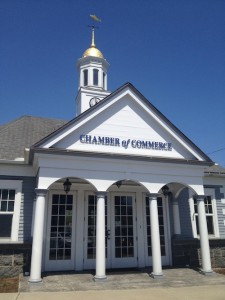
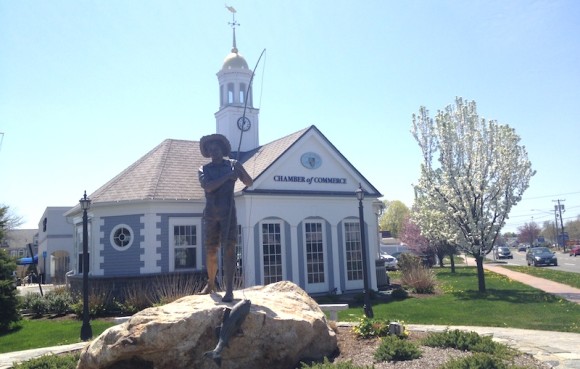
The Old Saybrook Chamber of Commerce building serves as a ‘gateway’ to Main Street.

The Old Saybrook Chamber of Commerce building serves as a ‘gateway’ to Main Street.

Founded in 1939, the Old Saybrook Chamber of Commerce celebrated its 75th anniversary in 2014. The more than 500 members are the driving force behind the organization and also form its strong volunteer base. These, in turn, support the Chamber’s two full time employees, Executive Director Judy Sullivan and Member Services Manager Karen Pinette.

Sullivan explains, “Our job is to promote Old Saybrook as a place to work and live and play.” Composed of a diverse group of nonprofits, retail companies, insurance companies, banks, and more, the Chamber unites under their common goals of advancing the economic vitality and improving the quality of life in the community, as well as bringing businesses and new jobs to town.

Executive Director Judy Sullivan

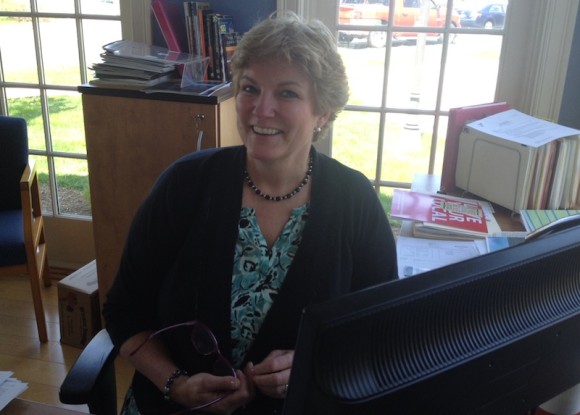
Old Saybrook Chamber of Commerce Executive Director Judy Sullivan takes a brief break from her work.

With about 25 percent of Old Saybrook businesses as members, the Chamber accomplishes its ambitious goals through a variety of community events including educational programs on topics ranging from networking and email marketing software to social media publicity and customer service. The Chamber also sponsors an annual Chili-Fest to fund the college scholarship program it runs for students resident in Old Saybrook or children of Chamber members, as well as an annual Arts and Crafts Festival, which is being held this year on July 25 and 26.

In addition, the Chamber has initiated the Chamber Mail program by which every new resident receives information about surrounding businesses, and runs the Chamber Dollars program, a gift certificate program involving over 50 businesses. The Chamber also works frequently with nonprofits on community-oriented projects.

Judy&Karen_at_desks_800

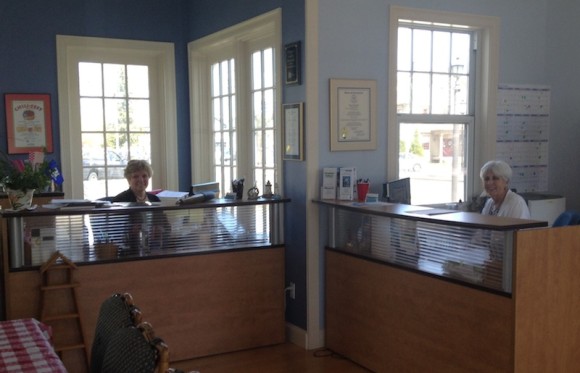
The smiling faces of Executive Director Judy Sullivan (left) and Membership Services Manager Karen Pinette greet visitors to the light and airy Chamber building.

An important aspect of the Chamber is that they serve as a link between businesses and governments to facilitate lines of communication. Most recently, at ‘Connecticut Business Day at the Capitol,’ Old Saybrook Chamber representatives spoke to senators and representatives about issues facing businesses in the state, such as Connecticut’s 15 percent occupancy tax.

OS_Chamber_Exterior_rearThe Chamber also helps foster inter-business relationships and once a month, a Chamber Connections event is held. These are casual gatherings at various local businesses, which facilitate networking between — and sometimes even within — businesses.

Sullivan grew up in Old Saybrook and graduated from Old Saybrook High School. When her youngest child started school, she fell into her role at the Chamber, first on a part-time basis and ultimately working her way up to executive director. Sullivan notes, “The hardest part of the job is being careful with each action because somebody might be affected. We constantly have to be aware of the impact of any actions we might take. We always want to leave a positive impact.”

She adds, “I’m really proud of the Chamber — it’s been here a long time. I love promoting the town I grew up in. And I find it so rewarding when we see tangible success in businesses.”

‘Calendar Girls’ Opens at Ivoryton Playhouse, Fundraising Calendar Now for Sale

Photo by Michelle Tuite. Pictured from left are Maggie McGlone Jennings, Lily Dorment*, Maria Silverman*, Jacqui Hubbard, Beverley Taylor, Katrina Ferguson* *Denotes member of Actors Equity

Photo by Michelle Tuite.
Pictured from left are Maggie McGlone Jennings, Lily Dorment*, Maria Silverman*, Jacqui Hubbard, Beverley Taylor, Katrina Ferguson* *Denotes member of Actors Equity

The summer season has opened in Ivoryton with the US professional premier of one of the UK’s most popular shows, ‘Calendar Girls.’ Adapted by Tim Firth from his smash hit Miramax film of the same name, it is based on an inspiring true story that is both poignant and hilarious.

A group of extraordinary women, members of a very ordinary Yorkshire Women’s Institute, spark a global phenomenon by persuading one another to pose au natural for a charity calendar with a difference. As interest snowballs, the ‘Calendar Girls’ find themselves revealing more than they’d ever planned …

Dazzlingly funny, shamelessly sentimental and utterly captivating, this is one of the best-selling shows in British theatre history. It will make you laugh, cry … and walk out singing Jerusalem!

The fundraising phenomenon of the Calendar Girls was inspired by the death of Angela Baker’s husband, John Richard Baker, an Assistant National Park Officer for the Yorkshire Dales National Park Authority, who died from non-Hodgkin’s lymphoma at the age of 54 in 1998.

During his illness Angela’s friends began to raise money, initially with the aim of purchasing a sofa for the visitors’ lounge in the hospital where John was treated. Nothing could have prepared them for the way their original calendar took off (selling 202,000 copies in its first year). To date they have raised over £3 million for Leukemia & Lymphoma Research, the UK’s leading blood cancer charity.

To support a selection of local cancer research charities, Ivoryton Playhouse is producing a calendar of the theatre’s Calendar Girls with a portion of the proceeds going to support the work of these organizations featuring the cast in their hilariously “revealing” poses. The June 2015 – May 2016 calendars will be available for purchase from the Ivoryton Playhouse for $20.00. Photography for the calendar was donated by Chris Devlin Photography (http://devlinphotography.com) and the calendar printing is sponsored by Essex Printing.

Jacqui Hubbard, Artistic/Executive Director, is directing the production and is also stepping on stage in the role of Annie. Beverley Taylor, Ivoryton Company Manager, will be joining her in the role of Chris.

“We are both Northern English lasses” says Hubbard, “I spent four years trying to get the rights to produce this wonderful play and, though directing and performing at the same time will be a challenge, I knew I had to do it. These women are in our bones and it will be a rare treat to get to step in front of the curtain for a change.”

Joining them on stage are Vickie Blake, Danielle Bonanno, Erik Bloomquist, Victoria Bundonis*, R. Bruce Connelly*, Lily Dorment*, David Edwards*, Katrina Ferguson*, Maggie McGlone Jennings, and Maria Silverman*.

Set design is by Tony Andrea, lighting design by Marcus Abbott and costume design by Cully Long.

Calendar Girls opens at the Ivoryton Playhouse on June 3, and runs through June 21. Performance times are Wednesday and Sunday matinees at 2 p.m. Evening performances are Wednesday and Thursday at 7:30 p.m., Friday and Saturday at 8 p.m.

Tickets are $42 for adults, $37 for seniors, $20 for students and $15 for children and are available by calling the Playhouse box office at 860-767-7318 or by visiting our website at www.ivorytonplayhouse.org (Group rates are available by calling the box office for information.)

The Playhouse is located at 103 Main Street in Ivoryton.

‘Town’ Category Added to This Year’s Chester Fair Photo Contest, All Welcome to Enter

What makes a town special? Take a picture.

An appealing category, Town Photo, has been added to the annual Chester Fair Photography Contest for 2015. Photos should capture the spirit and/or beauty of any Connecticut town. First, second and third place ribbons and prizes will be awarded.

As a bonus, Events Magazine will be selecting a photo from this category to appear on the cover of one of its quarterly town-wide publications.

This year’s Chester Fair will be held August 28-30 at the Chester Fairgrounds. Full Chester Fair information, including the complete entry guide, can be found at www.chesterfair.org.

Chester Opposition Delays Vote on Proposed School District Full Regionalization Plan

REGION 4 — Plans for a three-town referendum vote on a proposed kindergarten-sixth grade regionalization plan have been pushed back after a meeting Monday between district and town leaders brought information about a possible new option for dividing elementary education costs among the three towns, and highlighted opposition to the current regionalization plan from elected officials in Chester.
The special meeting, which included board of education chairpersons and members of the boards of selectmen and finance for the district towns of Chester, Deep River, and Essex, came after the Chester boards of selectmen and finance issued a statement declaring unanimous opposition to the current plan and a related inter-local agreement intended to address cost shifts and other issues arising from full regionalization of the elementary schools. School board members had been planning for a possible Sept. 29 referendum on K-6 regionalization, which must be approved by voters of all three towns.
The Chester statement, drafted at a May 28 meeting of the two boards, contended the proposed plan and agreement would have a “negative financial impact” on Chester. In a reflection of concerns that declining student enrolment and full regionalization could lead to grade moves or even a closure of Chester Elementary school, the statement also calls for local voter approval, by town meeting vote or referendum, of any shifts of grades among the elementary schools.
Chester finance board member Lori Clymas urged school leaders to “slow down” and explore further revisions to the plan. “We want to work it out but we feel; like we’re being rushed.” she said. Chester First Selectman Edmund Meehan said the plan that was developed over the past three months needs further review, while adding, “We don’t have to go back to square one.”
Essex Board of Education Chairman Lon Seidman, a strong supporter of the K-6 regionalization, said new legislation approved last week in the state House of Representatives would give the school district greater flexibility in assessing taxpayers in each town regarding the cost of operating the elementary schools. Current state law requires using student average daily membership (ADM) from each town to divide cost shares in a regional school budget, as has been done with the spending plan for the middle school and high school since the Region 4 school district for grades 7-12 was established in the early 1950s.
Current levels of enrollment and per pupil spending would leave Deep River at a $378,000 financial disadvantage in 2016-2017 under a K-6 grade regionalization and budget split based only on student ADM. To address this and build support in Deep River, a draft inter-local agreement would adjust budget shares, with Chester and Essex paying higher budget shares in amounts projected to range from $201,000 to $173,000 for Chester over the next four years and from $177,000 to $65,000 for Essex through 2019-2020.
Seidman said the legislation pushed by State Rep. Phil Miller (D-36th) would allow the district to develop its own plan for sharing elementary school expenses. He acknowledged a full review of options under the new legislation would require a delay in any votes on the K-6 regionalization. The new legislation still needs approval from the State Senate, with the 2015 legislation session scheduled to end at midnight Wednesday.
The Chester call for a local vote on elementary school grade changes also generated discussion Monday, with school board members urging the Chester officials to be more flexible on the process for approving grade reconfigurations at the elementary schools. Superintendent of Schools Ruth Levy said any major shifts in elementary school grades are unlikely over the next four years, except for a possible move of sixth graders to John Winthrop Middle School, commenting, “We’re getting mired down over control and we need to come together.”
Region 4 Board of Education Chairman Chris Riley said his board, which by law must initiate referenda on further regionalization, would defer any vote on sending the plan to a referendum in September. Riley noted a regionalization referendum on Nov. 3, when the three towns hold municipal elections, is still possible, but far from certain.