Lyme Democrats Endorse Bjornberg, Stone

Emily Bjornberg

Emily Bjornberg

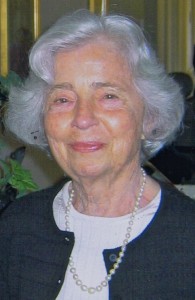
In addition to endorsing those democratic incumbent state office holders who have announced their intent to run for reelection, the Lyme Democratic Caucus endorsed two newcomers to the State scene: Mary Stone for State Representative, and Emily Bjornberg for State Senate.

The chairman of the Caucus, Steven Mattson, commented, “We are extremely pleased to endorse state legislative candidates as well qualified as Mary and Emily,”

Emily Bjornberg is a Lyme resident and is running for the seat once held by Eileen Dailey.  “Emily is an exceptionally strong candidate, and we are confident she will be a superior Senator for the 33rd Senate District,” according to Mattson.  The 33rd district covers Chester, Clinton, Colchester, Deep River, East Haddam, East Hampton, Essex, Haddam, Lyme, Old Saybrook, Portland and Westbrook.  The seat is currently held by Republican Art Linares.

Mary Stone

Mary Stone

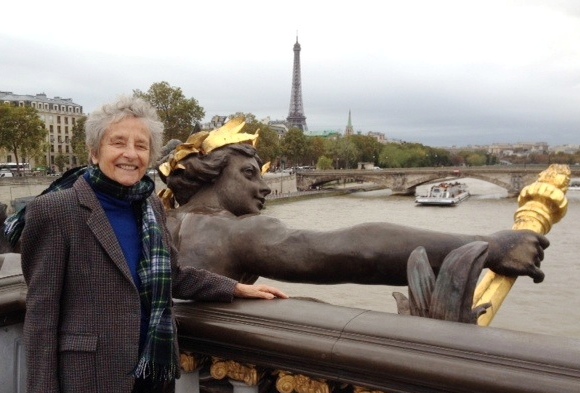
Mary Stone is an Old Lyme resident, who is running for the 23rd Assembly District consisting of Lyme, Old Lyme, Old Saybrook and part of Westbrook.  This is an open seat, due to the decision of Marilyn Giuliani not to seek reelection.

“Mary is the perfect candidate for this district,” according to Claire Sauer, who represented much of this district when she represented the 36th Assembly District.

Stone currently serves on the Old Lyme Zoning Board of Appeals and is a former member of the Region 18 Board of Education.

Letter From Paris: Mr. Putin, You Have Much To Lose

Nicole Prévost Logan

Nicole Prévost Logan

At the foot of Mount Mithridates, in eastern Crimea, stood the ancient city of Pantikapeion founded in the 7th century BC by Greek colonists.  It is where King Mithridates killed himself in 63 BC by the sword since his body was immune to poison.

In 1992, I joined the archaeological expedition from the Pushkin Museum of Fine Arts led by Dr. V. Tolstikov, head of the department of near eastern antiquities, and Dr. Michael Treister, curator, in order to publish an article in Archaeology.  That season the Russian team was researching the acropolis and a vast architectural complex with a colonnade dating from the 2nd century BC.  Below the steep cliff, one could see modern Kerch and the Russian shore of the Krasnodar region across the five kilometer-wide Cimmerian Bosporus.

The scholars from the Pushkin museum were among the many Russian, Ukrainian and foreign archaeologists who have long been researching the rich strata of  human occupation on the northern shore of the Black Sea.  They have also studied the Scythian civilization, whose “kurgans” (tombs) contained the famous gold treasures.

The Institutes of Archaeology in the major cities, like Moscow, St Petersburg and Kiev, the universities and most of  the museums, have their own expeditions.  For instance, Odessa conducts regular excavations in Olbia, one of the major “emporia”  (commercial trading post) for the export of cereals, fish and slaves to Greece and for import of Attic goods to Scythia.  On the outskirts of Sebastopol, the ancient Greek city of Chersonesus has been excavated jointly by teams from Ukraine, the University of Texas and the German Institute of Archaeology.

Archaeologists, historians and other specialists exchange the results of their finds and publish joint papers in scholarly journals.  The Center for Research on Ancient History, located in Besançon in eastern France, is an invaluable source for  the Black Sea region and has collected works from scholars, irrespective of their nationality.  Periodically, a Black Sea symposium, which attracts several hundred scientists, meets in Vani, Georgia.

After this long description of the archaeological scene in the Black Sea region, the question arises: what is going to happen to this fruitful scientific collaboration currently happening across the borders ?

What next for President Vladimir Putin?

What is President Vladimir Putin’s next move?

During our sail along the Black Sea coast in 1991 (see the Feb. 8 Sochi article posted on this site), we saw dozens of wind turbines near Evpatoria in western Crimea.  Today, Ukraine and Russia have ambitious plans to create a wind farm of 3,000 sq. km. for a grid power of 16,000 MW.  Aeolian energy is readily available in this area, thanks to the shallow waters of the Black Sea and the Sea of Azov.

On March 20, Le Monde published an article entitled, “Antonov mirrors the break between Russia and Ukraine.”  The article explains how the Ukrainian aircraft manufacturing and services company, Antonov, builds planes with technology and software from Dassault Systemes and employs 16,000 Ukrainian workers, but 40 percent of the parts utilized in production are Russian.

On March 22,  a Moscow official announced that the extension of the capital’s subway had to be put on hold since they could not take delivery of some of the construction material  ordered from the Ukraine.

In the art world, a Paris galerist told me they also were expecting difficulties in the near future.

Human, cultural and economic ties between Ukraine, Crimea and Russia are so interwoven that the break up of the Ukrainian territorial integrity and the announced sanctions from the West are bound to have serious consequences.

Vladimir Putin is supposed to be an excellent chess player.  One assumed that each one of his moves was made according to a planned strategy.  This does not seem to be true anymore.  He has won the Crimea, but what about the long term waves he is making? Problems are going to catch up with him.

HeadshotAbout the author:  Nicole Prévost Logan divides her time between Essex and Paris, spending summers in the former and winters in the latter.  She will write a regular column for us from her Paris home where her topics will include politics, economy, social unrest — mostly in France — but also in other European countries.  She also will cover a variety of art exhibits and the performing arts in Europe.  Logan is the author of ‘Forever on the Road: A Franco-American Family’s Thirty Years in the Foreign Service,’ an autobiography of her life as the wife of an overseas diplomat, who lived in 10 foreign countries on three continents.  Her experiences during her foreign service life included being in Lebanon when civil war erupted, excavating a medieval city in Moscow and spending a week under house arrest in Guinea.

Letter From Paris: A Week Like No Other in French Politics

Nicole Prévost Logan

Nicole Prévost Logan

It has been a week out of the ordinary in French politics, to say the least.  A summary of the sequence of events may help the foreign reader in deciphering the situation.

It all started March 2 with a few revelations about the UMP (Union for Popular movement) right wing party.  Jean François Copé, UMP president, was denounced in the weekly magazine “Le Point” of surfacturation (over billing) of expenses incurred during the 2012 electoral campaign.  A communications company had obtained the contract without preliminary invitations to tender.  Copé, looking wan and thin, reacted almost emotionally to the attack.  He announced that all the accounts of the UMP would be locked in a sealed room contingent upon the other political parties as well as the media, doing the same .

Former President Nicolas Sarkozy was at the center of an extraordinary week in French politics.

Former President Nicolas Sarkozy was at the center of an extraordinary week in French politics.

Then, on March 3, the whistle-blowing satirical newspaper, “Canard Enchainé,” reported that Patrick Buisson, a collaborator of former president Nicolas Sarkozy, recorded the latter’s conversations.  Buisson was part of Sarkozy’s first circle and his closest adviser.  He made the recordings himself for hours on end, from morning to evening,  with an old-fashion dictaphone carried in his pockets.  Some of the recorded conversations took place just prior to a planned cabinet reshuffle — in other words, they were politically sensitive.

The question was: who gave the recordings to the press?  Buisson’s lawyer vouched that his client did not.  But what was suspicious was the fact that Buisson told his son (father and son have been estranged for two years) that those recordings were a “life insurance” and that cela peut toujours servir (One never knows, it might be useful someday)

But this was just the beginning.  An avalanche of revelations, which followed – all involving  the wiretapping of Nicolas Sarkozy to hamper his return to the political life –  was even more serious and  turned into a full blown political crisis reaching the top level of the Executive and of the Judiciary.

Four legal cases or “affaires,” which had been dormant, were resurfacing now:  the 2008 arbitrage-granting of 403 millions to businessman and former minister Bernard Tapie by the Credit Lyonnais;  the “retro- commissions” obtained from Pakistan after the Karachi terrorist attack in 2002 ;  the alleged financing from Libyan president Gaddafi in 2007 ;  the funds given by Liliane Bettencourt, one of the richest women in the world and heir to the l’Oreal company.

These four affaires share the common factor of suspicion in involvement of the illegal financing of Sarkozy’s electoral campaigns of 2007 and 2012.  Last October, Sarkozy was cleared and received a non-lieu (no ground for public prosecution) in the Bettencourt affaire.

On March 6, the headlines of the daily “Le Monde” were a bombshell: the former president’s phone had been tapped since April 13 by orders  of the judges d’instruction ( investigating judges running preliminary inquiry) – a totally unprecedented occurrence in the French Republic.  In early March, the judges opened an inquiry for traffic of influence  and corruption against Sarkozy, his lawyer Thierry Herzog, and Gilbert Azibert, general counsel at the Cour de Cassation  (highest judiciary court in France).

An aggressive perquisition (search) was conducted in Herzog’s Bordeaux residence.  Ten police and judges showed up at eight in the morning.  The lawyer’s computer and his portable phone were seized.  The taking of the former president ‘s personal “carnets” (agendas) created a great commotion.   In a television talk show, the president of the Bar commented that these actions were reminiscent of the Stasi.

Up to that point it was all bad news for the former president.  The socialist government had remained prudently quiet.  The wiretapping of Sarkozy was legal (he did not have immunity any more) as long as there was a suspicion of infraction.  However, the accumulation of proceedings against him was  beginning to be seen as harassment.  By coincidence, Eliane Houlette  was appointed in the new position of “National Financial Attorney” on March 3 in order to deal with corruption and tax frauds.  The first case was to be Sarkozy’s.

Then the blame game seemed to move from the opposition to the majority.  As a journalist commented, the government turned this gold – Sarkozy on the run – to lead, with the government violating the independence of justice.  The Garde des Sceaux or Minister of Justice Christiane Taubira, a high-spirited and smart woman, born in Guyana, was put on the defensive and even accused of lying.

Did she know the content of the recordings?  When did the prime minister and the minister of interior (Secretary of the Interior) know?  Their evasive and even conflicting answers made them appear guilty when their main sin was probably just to be disorganized.

By the end of that memorable week, “Le Monde” published a letter, co-signed by the most eminent members of the judiciary corps, calling for moderation.  The letter praised transparency, but said that lawyers were not above the law, and that wiretapping was only legal if carried out by independent judges.  It also demanded a return to one of the basic rules of the French (and American) institutions – the separation of power between Executive and Judiciary.

HeadshotAbout the author:  Nicole Prévost Logan divides her time between Essex and Paris, spending summers in the former and winters in the latter.  She will write a regular column for us from her Paris home where her topics will include politics, economy, social unrest — mostly in France — but also in other European countries.  She also will cover a variety of art exhibits and the performing arts in Europe.  Logan is the author of ‘Forever on the Road: A Franco-American Family’s Thirty Years in the Foreign Service,’ an autobiography of her life as the wife of an overseas diplomat, who lived in 10 foreign countries on three continents.  Her experiences during her foreign service life included being in Lebanon when civil war erupted, excavating a medieval city in Moscow and spending a week under house arrest in Guinea.

Death Announced of Jean Washburn Hernandez, Florence Griswold Museum Board Member

Jean Hernandez

Jean Washburn Hernandez

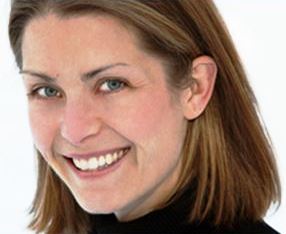
Jean Washburn Hernandez died peacefully on Saturday, March 1, 2014 at her home in Essex Meadows in Essex, Connecticut. She was 93 years old.

Jean was born on September 20, 1920, in Brooklyn, NY, to Lawrence and Margaret Washburn and was the oldest of three sisters.  Raised in Montreal, Canada and Scarsdale, New York, she was the 4th generation of women in her family to graduate from Packer Collegiate Institute in Brooklyn Heights, NY. After a childhood bout of polio, she attended Mt. Holyoke College where she contracted tuberculosis.  After recuperating in upstate NY and Arizona, she resumed her studies at the University of Arizona.

At the start of WWII Jean enlisted in the American Red Cross and served at an  Army Air Force Base in Arizona, at Camp Edwards in Massachusetts, Otis Field on Cape Cod, and at Washington DC’s St. Elizabeth Hospital.  In all locations she tended the returning wounded, particularly those impacted by psychological trauma.

Before the war she met her future husband, Silvio E. Hernandez in Havana, Cuba while staying with family friends.  She married him in 1946, when he returned from wartime service with the U.S. Army in Europe.  They first resided in New York but shortly after the births of their two children were sent by Westinghouse Electric to Madrid, Spain where they remained for 8 years.  From there they moved to Havana, her husband’s birthplace, a year before the Cuban Revolution.  After being witness to the tumultuous changes brought on by Castro’s policies, they fled in 1960, settling in Essex CT so as to be near Jean’s parents who had retired there.  She remained a resident of Essex for 54 years as an active and contributing member of the community.

Jean was a homemaker and dedicated volunteer.  She was on the Board of the Florence Griswold Museum, in Old Lyme, CT, where as a volunteer, she initiated and ran a successful travel program for the members of the Museum. She was President of the Essex Garden Club, on the Board of the Essex Library Association, and active with St. John’s Episcopal Church in Essex, the Child and Family Agency of SE CT, and many other charitable and community organizations.  Jean and her husband loved to travel and together they enjoyed taking extended trips throughout the world.

Jean was preceded in death by her loving husband of 55 years and more recently by her gentle companion, George (Bud) Lethbridge.  She is survived by her daughter Margaret (Maggie) Hernandez of Key Biscayne, FL, son Robert (Laurie) Hernandez of Essex, CT and their sons Alexander and Christopher.

A memorial service will be held May 2, 2014 at St. John’s Episcopal Church in Essex, CT at 10 a.m.

Memorial donations can be made to the Florence Griswold Museum, 96 Lyme St, Old Lyme, CT, 06371

Talking Transportation: The Commuter Manifesto

Jim Cameron

Jim Cameron

“Quit your moaning!”  “You’re not a railroad person, what do you know?”  “You don’t like the train, try driving.”

These are the reactions I get, especially from railroad employees, when I have been critical of Metro-North in the last few calamitous months.  They think I’m a “moaner”, though I try just as hard to be positive about the railroad as to criticize its failures.

But it’s not about me.  Mine is not the only voice calling for sweeping changes at the railroad.

So in launching the Commuter Action Group I knew it was important to be specific about riders’ expectations of service… to define a few basics of what Metro-North customers deserve in return for the highest rail fares in the US.

Thus was born, “The Commuter Manifesto” which I ‘nailed’ to the waiting room wall at several train stations:

We, the riders of commuter railroads in Connecticut, are tired of deteriorating service, rising fares and indifference and ineptitude from Metro-North.  As customers and taxpayers we deserve better and expect change.  Our expectations are few, and simple:

SAFETY FIRST

We expect a clean, safe, on-time, seated ride on trains with heat / AC and lights.  Don’t treat us like cattle making us ride on railcars you wouldn’t ride on yourself.

We want to know that you make our safety your top priority.  Make every employee understand that responsibility.  If they do anything that jeopardizes safety, discipline them or fire them.  There is no excuse for stupid mistakes.

FAST, ACCURATE AND HONEST COMMUNICATIONS

When things go wrong, immediately tell us what’s happened, why and when it will be fixed.  When you make a mistake, admit it.  Stop making apologies; get things fixed and don’t repeat the same errors over and over again.

RESPONSIVE CUSTOMER SERVICE

When we see a problem, give us an easy way to report it to you.  Then get it fixed and follow up with us to tell us it’s been resolved. Our complaints shouldn’t fall into a black hole.

Train your employees to be courteous and efficient, treating us like valued customers.  When they don’t meet those standards, train them again.  There should be zero tolerance for rude behavior by employees … or commuters.

OPEN & TRANSPARENT OPERATIONS

Let us know how you make decisions that affect us by opening all of your meetings to the public and media.  Share your goals and self-evaluations and ask our opinions as well.  The way you run the railroad affects our lives and we should have input.

LEADERSHIP THAT LISTENS

Meet with commuters on a regular basis at times and locations convenient to us.  Hear our complaints and suggestions and answer our questions.  We will listen to you if you will listen to us:  we’re in this together.

That’s it.  A few simple expectations the commuters of Metro-North have of their railroad.

The reaction so far?  Enthusiasm from commuters … back-patting by the pols … but from the CDOT and Metro-North, silence.

Really?  Are we asking for so much?

Editor’s Note: Jim Cameron has been a Darien resident for 22 years.  He was a member of the CT Rail Commuter Council for 19 years and still serves on the Darien RTM.  The opinions expressed in this column are only his own.  You can reach him at CommuterActionGroup@gmail.com