Wyman, Bjornberg, Stone Hold Press Conference Today to Discuss Women’s Rights

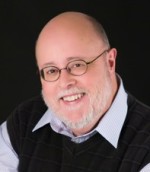
Emily Bjornberg (D)

Emily Bjornberg (D)

Later today, Thursday, Oct. 30, at 1 p.m., Lt. Gov. Nancy Wyman and Democratic State Senate Candidate Emily Bjornberg will hold a press conference on the front steps of the Town Hall in Clinton, Conn., to discuss the importance of supporting candidates who will stand up for women’s rights in the upcoming Nov. 4 election.  Wyman and Bjornberg will be joined by State House Candidate Mary Stone of Old Lyme, and many other concerned women and local residents.

Bjornberg’s opponent was recently endorsed by a conservative organization that is trying to roll back a wide variety of rights for women in Connecticut.

Talking Transportation: Free Parking Isn’t Free

America’s obsession with automobiles is not only creating gridlock and ruining the quality of our air, but it’s eating up our land and sending real estate costs upward.  Because, once we drive our cars off the crowded highways, we assume it’s our constitutional right to find “free parking”.

For decades, city planners and zoning regulations have shared with Detroit in an unspoken conspiracy to deliver on that dream.  Consider the following:

According to the industry standard-setting Institute of Transportation Engineers, there are 266 types of businesses, which should be zoned to require a minimum amount of parking.  Quoting from the ITE “bible,” religious convents must have one parking space for every 10 nuns in residence.  Hello?  The residents aren’t going anywhere!  Why do they need parking?  Shouldn’t the convents be allowed to find better use for their land?

Or consider hotels.  Why are parking regulations based on requiring enough parking for the few nights each year when the hotel is sold out, rather than the majority of nights when occupancy is 50% or less?  Would we require a movie theater to require parking for an every-seat-filled blockbuster when its more typical offerings fill far fewer seats?

Just drive up Rte. 1 and see for yourself.  Due to zoning regulations, many shopping malls devote 60 percent of their land to parking and only 40 percent to buildings.  Imagine what that does to the cost of what they sell.

Desperate to attract folks back to their decaying downtowns, some cities are putting more land into parking than to all other land uses combined.  A Buffalo NY City Council member commented a few years ago:  “There will be lots of places to park.  There just won’t be a whole lot to do there.”

In fact, the cities that have done the best jobs of economic revitalization aren’t the ones that provided the most parking … they’re the ones that provided the least.  The vitality of towns and cities requires people … walking the streets, going into shops and interacting … not scurrying from car to shop to car to home.

In his new book, “The High Cost of Free Parking,” UCLA’s Donald Shoup recounts the following tale of two cities:

Both San Francisco and Los Angeles opened new concert halls in recent years.  The one in LA included a $10 million, six-story parking garage for 2,100 cars.  In San Francisco, there was no parking built … saving the developers millions.  After each concert, the LA crowd heads for their cars and drives away.  But in San Francisco, patrons leave the hall, walk the streets and spend money in local restaurants, bars and bookstores.  Guess which city has benefited most from its new arts center?

Why are we slaves to zoning rules that assume all humans come with four tires rather than two legs?  Why do we waste precious land on often-empty parking spots instead of badly needed affordable housing?

Clearly, our transportation planners need to work much more closely with economic developers to rethink what it is that we really need in our cities and towns.

Jim Cameron

Jim Cameron

Editor’s Note: Jim Cameron has been a commuter out of Darien for 14 years.  He is Vice Chairman of the CT Metro-North / Shore Line East Rail Commuter Council, and a member of the Coastal Corridor TIA and the Darien RTM.  You can reach him at jim@camcomm.com or www.trainweb.org/ct .  For a full collection of “Talking Transportation” columns, see www.talkingtransportation.blogspot.com

Letter From Paris: Tragic Death of Christophe de Margerie, CEO of Total, Stuns France    

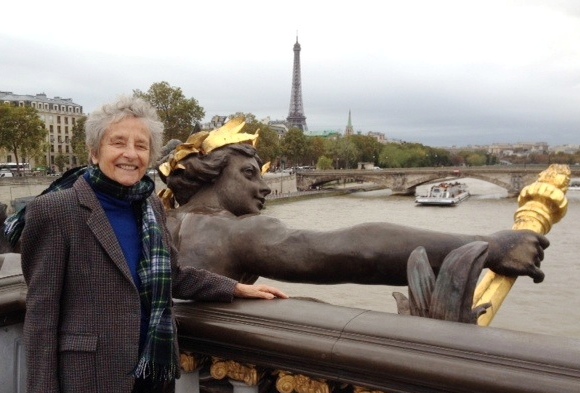
Nicole Prévost Logan

Nicole Prévost Logan

On the night of Monday, Oct. 20 , the visibility was poor at the Vnukovo  airport.  The control tower had given clearance to the Falcon private jet to take off.   A few seconds after leaving the ground, the pilot saw a snowplow on the runway but was unable to avoid it.  The landing gear caught the roof of the vehicle, flipped over and crashed a few yards away.  There was just one passenger on board – Christophe de Margerie, CEO of  the world’s fourth largest oil producer.

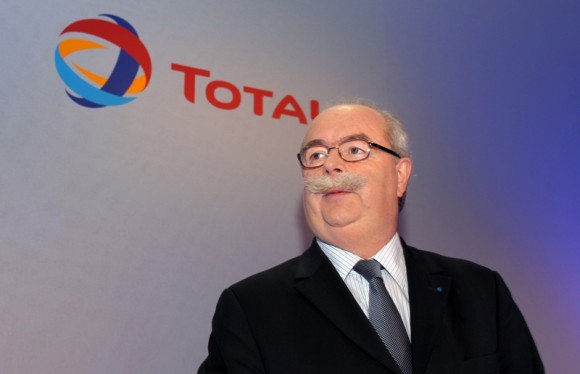
The late Christophe de Margerie.

The late Christophe de Margerie.

The news hit France like a bomb.   At Total’s headquarters in the district of La Defense employees were stunned.  The country reacted as if a chief of state had died.  Tributes poured in from everywhere.

Total has a capital ranking second in the CAC 40 (the ‘Cotation Assistée en Continu’ is a benchmark French stock market index) and employs more than 100,000 people in 130 countries.  It is hard to believe therefore why such a company – the jewel of  the French economy –  should have so many detractors in France.  The day after the accident, the conservative daily Le Figaro published an article entitled, “The man who wanted the French to make peace with Total”.   That man, Christophe de Margerie, was a charismatic  and jovial person, full of warmth, direct but tough .

De Margerie came from an aristocratic family that could be described as representative of, ‘vieille France.’  Family members occupied prominent positions in the world of high finance, diplomacy (his cousin was ambassador to the US) and the arts.  He was the grandson of Pierre Taittinger, the founder of a champagne empire.  Several of his relatives own and live in an elegant apartment building tucked away in a garden, behind massive walls and a monumental gate, right at the heart of the Faubourg St Germain.

He joined Total about 40 years ago and was named CEO in 2007.  In 1995, he became the head of Middle East Total, which explains his particular interest for that part of the world.  The Jubail giant refinery inaugurated in 2013  by Total and Saudi Arabia, is but one example.

The main criticisms against the company concern its huge benefits, which do not profit the French economy because the company pays practically no taxes in France.  The ‘marée noire’ (black tide) caused by the oil spill off the coast of Brittany in 1999 has not been forgotten.  In 2010,the decision to close the Dunkirk refinery and the associated firing of more than 1,000 workers outraged the opinion.  Finally, de Margerie’s policy of creating joint ventures with Russian companies Loukoi, Novatek or Gazprom and his rejection of the sanctions enforced by the West have isolated him.

De Margerie wanted to project a positive image and show his concern for the environment by encouraging renewable energy.  In recent years, signs of transformation of the company had been noticeable, particularly in the reduction and higher selectivity of investments.  The question now is whether de Margerie’s successors, Thierry Desmarets as chairman and Patrick Pouyanné as CEO, will bring changes to the company’s strategy or maintain the course.

Nicole Logan

Nicole Logan

About the author:  Nicole Prévost Logan divides her time between Essex and Paris, spending summers in the former and winters in the latter.  She will write a regular column for us from her Paris home where her topics will include politics, economy, social unrest — mostly in France — but also in other European countries.  She also will cover a variety of art exhibits and the performing arts in Europe.  Logan is the author of ‘Forever on the Road: A Franco-American Family’s Thirty Years in the Foreign Service,’ an autobiography of her life as the wife of an overseas diplomat, who lived in 10 foreign countries on three continents.  Her experiences during her foreign service life included being in Lebanon when civil war erupted, excavating a medieval city in Moscow and spending a week under house arrest in Guinea.

Musical Masterworks Announces 2014-15 Season, Opening Concert Today Features Works by Mozart, Schumann

Jeewon Park

Jeewon Park

Musical Masterworks will present its 24th season of chamber music concerts at the First Congregational Church of Old Lyme, beginning this weekend,  Saturday and Sunday, Oct. 25 and 26, and continuing through May. Musical Masterworks Artistic Director Edward Arron has designed a season featuring award winning musicians from all over the world, with a diverse selection of music from composers ranging from Bach and Mozart to Igor Stravinsky and Estonian minimalist composer Arvo Part.

The following is a list of the 2014-2015 season dates and highlights. All concerts are held on Saturdays at 5 p.m. at the First Congregational Church of Old Lyme, 2 Ferry Rd., Old Lyme, CT, and repeated on the following Sunday at 3 p.m. at the same location.

October 25 & 26, 2014: Pianist Jeewon Park, violinist Tessa Lark, and cellist Edward Arron will perform works of Mozart, Schumann, and Kodaly.

December 6 & &, 2014: Violinist Colin Jacobsen, violist Nicholas Cords, and cellist Edward Arron will perform an arrangement of Bach’s Goldberg Variations and other works.

February 14 & 15, 2015: Pianist Gilles Vonsattel, clarinetist Todd Palmer, violinist Bella Hristova, and cellist Edward Arron will perform works of Debussy, Weber, Beethoven, and Stravinsky.
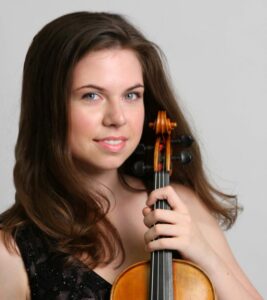
Tessa Lark

Tessa Lark

March 14 & 15, 2015: Pianist Adam Neiman, violinist Maria Bachman, violist Hsin-Yun Huang, and cellist Edward Arron will perform the great Piano Quartets of Schubert, Saint Saens, and Dvorak. All audience members are invited to a post-concert discussion with the musicians following the Sunday, March 15 concert.

May 2 & 3, 2015: Pianist Reiko Aizawa, violinists Jesse Mills and Hye-Jin Kim; violist/violinist Ara Gregorian, violist Max Mandel, and cellist Edward Arron will perform works of Mendelssohn, Turina, Arvo Part, and Ernest Chausson.

In addition, Musical Masterworks will present a Young People’s Concert on Saturday, March 14 at 11:30 at the First Congregational Church of Old Lyme. The program will feature a musical version of Jean De Brunhoff’s classic children’s tale The Story of Babar: The Little Elephant.

Subscriptions to the 24th season of Musical Masterworks are available for $150 for the five concert series. Individual tickets are $35, with $5 student tickets available at the door. For more information or a season brochure, please call 860-434-2252 or visit www.musicalmasterworks.org.


High Hopes Hosts Fashion Show in Old Lyme Tonight

fashion_showThe second annual High Hopes Fall Fashion Show will be held at the Lyme Art Association tomorrow, Thursday, Oct. 23, from 6 to 8 p.m.   Once again, the latest fall looks from The Apparel Shop at Saybrook Country Barn, one of Connecticut’s premiere clothing boutiques for women and men, will be featured.   Enjoy delicious light fare from Coffee’s Country Market while you watch High Hopes participants, volunteers and staff walk the runway at the Lyme Art Association.

Sponsors are Guilford Savings BankCoffee’s Country Market, and contributors ESSENCE Center for Beauty and Wellness and Mionetto USA. Tickets are on sale at $45 per person on the High Hopes website. 

For more information, contact Trudy Burgess at tburgess@highhopestr.org or call 860-434-1974860-434-1974, ext. 123.