ESSEX—Judith “Judy” W. Simmons, beloved wife, mother, grandmother, great-grandmother and friend to many passed away at the age of 93 years, Sept. 15, 2024, after a short illness. She was born in Brockton, Mass., April 12, 1931, to Raymond and Morna Gertrude White, where she resided throughout her entire childhood.
Judy graduated from Brockton High School and Boston Children’s School of Nursing, and then without hesitation, married the love of her life, Philip N. Simmons … Judy and Phil settled in East Lyme in 1956, where they transformed an old farmhouse into a beautiful and welcoming home and raised their family for the next 52 years …
Judy was an active member of the First Congregational Church of Old Lyme where she served on many of its boards and committees, for which she was honored as a Deacon Emeriti. She and Phil, with their friend Nathalie Fogg, ran a cultural tour, “New England Experience,” under the umbrella of the church which welcomed people from Great Britain to enjoy our region …
Judy and Phil moved to Essex Meadows in 2008 …
Judy was predeceased by her parents; her beloved husband of 62 years; and two grandchildren, Brian David Simmons and Morna Paige Marolda. She is survived by her five children: Dana (Julie) of Summerfield, N.C., Jane of Salem, David (Kathy) of Jamestown, R.I., Jonathan (Lisa) of Niantic, and Jeffrey (Tara) of Tisbury, Mass. She is also survived by 13 grandchildren; seven great-grandchildren; and Daniel Jones of Texas, and Susan Heske of Colorado …
A celebration of her life will be held at 2 p.m. Jan. 11, 2025, at the First Congregational Church of Old Lyme. In lieu of flowers, the family requests donations in Judy’s memory be sent to the First Congregational Church of Old Lyme and be earmarked for the David W. Good Memorial Fund …
Norm Needleman (D), is the incumbent candidate for 33rd State Senate District, which includes Lyme.
The Police Officers Association of Connecticut has endorsed State Senator Norm Needleman for another term in the Connecticut State Senate.
As the First Selectman of Essex, Sen. Needleman works directly with police and first responders in his community. As a State Senator, he has taken steps to engage with local police departments, assist them where and when possible, and learn more about what they need to best succeed in their roles.
Knowing the vital importance of public safety, Sen. Needleman is committed to supporting policing strategies that benefit both officers and the public, allowing for them to safely and effectively keep our communities protected.
“Police in our communities rush toward danger while the rest of us flee. They play a direct and vital role in our communities, keeping us safe and ensuring those who break the law will meet necessary consequences,” said Sen. Needleman.
He continued, “I am honored to receive the support of the POACT, which represents approximately 5,000 police officers across the state, and will continue working to make sure our communities receive the care and service they need while the people who provide that care and service are able to go home at the end of the day with the compensation they deserve.”
In 2019 and 2023, Sen. Needleman voted for the bipartisan four-year Connecticut State Police labor union contracts providing officers with raises and bonuses as well as improved benefits. Specifically, that contract raised the pay for State Police trooper trainees, which will benefit the state’s ability to recruit and retain qualified troopers.
Sen. Needleman has also voted to support policies providing police officers with access to care for post-traumatic stress caused on the job among other significant improvements.
This latest endorsement comes after previously announced support for Norm from the Independent Party, Retired Teachers of Connecticut, Planned Parenthood, CT Realtors, Reproductive Action Now, 314 Action Fund and AFT Connecticut, among others.
Sen. Needleman was unanimously renominated this spring by the Democratic Party to represent the town of Lyme along with Colchester, Chester, Clinton, Deep River, East Haddam, East Hampton, Essex, Haddam, Old Saybrook, Portland and Westbrook.
In addition to working as Senate Chair of the Energy and Technology Committee, Sen. Needleman also works as Vice Chair of the Planning and Development Committee and a member of the Finance, Revenue and Bonding, Transportation and Commerce Committees.
Sen. Needleman founded and runs a manufacturing company, Tower Laboratories in Centerbrook, and is currently serving his sixth term as the First Selectman of Essex.
Editor’s Note: This article is based on a press release issued by Sen. Needleman’s office.
How the Youngest Ever French PM was Replaced by the Oldest
As a rule, French politics are full of surprises but the summer of 2024 took the country into unchartered waters.
For weeks the search was on to find a new Prime Minister. All attempts led to an impasse. People started getting really worried: was there even a pilot on the plane?
And then, on the 51st day, President Emmanuel Macron announced his unexpected choice of a man who had spent more of his political life in Brussels than in Paris.
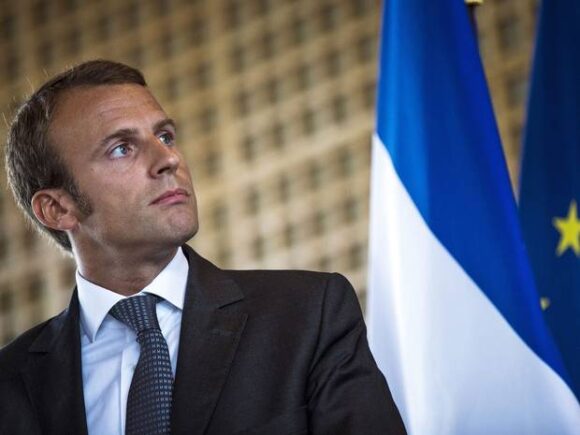
French President Emmanuel Macron. Photo via Wikimedia Commons.
On Sept. 5, a transfer of power ceremony took place in Hotel Matignon when the resigning prime minister Gabriel Attal, age 33—the youngest ever Prime Minister of the fifth Republic—turned over his functions to Michel Barnier, age 73, and the oldest.
The wait for 51 days to nominate a Prime Minister was the longest ever in French politics. What happened during that period was the exacerbation of déjà vu infighting between President Macron and the political parties.
As I explained in my 7/18 LymeLine article, the RN (Rassemblement National) hard Right populists had been denied access to power thanks to the clever voting maneuvers of the leftist NFP (Nouveau Front Populaire) at the polling station on July 8.
Everything was put on hold during the Olympic games, which appear in retrospect as a blissful interlude when the French were united and happy. The search for a Prime Minister resumed in August .
The first candidate was Lucie Castets, nominated by the NFP. Politically she is an independent, highly educated and qualified, although without any experience in government. She was received at the Elysée Palace “after a long and courteous meeting”, to quote Françoise Fressoz, editorialist at Le Monde.
It was pay-back time for the NFP which, after all, had been the main actors in stopping the RN from winning the elections. As the largest group in Parliament, they felt entitled to choose the Prime Minister, although, since they did not have a majority of seats in the National Assembly , they had no legal right to do so, according to Brice Teinturier, director of Ipsos, an international market research and public opinion firm.
From the start, Castets was feared to become a puppet for far Left Jean-Luc Mélenchon, head of LFI (La France Insoumise.) As to Marine Le Pen, she threatened an immediate Motion de Censure (vote of no confidence.) Definitely a bad beginning for this candidate …
To avoid the rapid overthrow of a government and to insure stability, Macron turned Castets down. Melanchon was furious and demanded the ‘destitution’ (similar to impeachment) of the president. According to the article 68 of the Constitution, ‘destitution’ can only be justified for “high treason” or in a situation when the president shows signs of losing his mind. That was the case in 1920 when President Paul Deschanel wandered on the railroad tracks in his nightdress, allegedly regarding a dispute with the conductor.
A second name was proposed by the president: Bernard Cazeneuve, a Socialist, former prime minister during François Hollande’s presidency. Olivier Faure, president of the Socialist sub group (part of the NFP coalition), rejected Cazeneuve. How surprising that a Socialist would be against another Socialist!
The argument was that Cazeneuve appeared too much like the continuation of Macron’s program and embodied the Hollande ‘s policy in the final days of his mandate. Again, Marine Le Pen threatened to strike the candidate with a motion de censure. Relations between Macron and Cazeneuve were frigid. Cazeneuve is definitely out.
Marine Le Pen, President of the RN (Rassemblement National.) Photo via Wikimedia Commons.
Two more names came up: Xavier Bertrand, LR (Les Republicains) President of the region of Hauts de France (formerly Haute Normandie) and Thierry Beaudet, from the Economic and Social advisory board. Laurent Wauquiez, president of the LR Republicans can’t stand Bertrand, and claims that any compromise of his own program would be crossing a red line. Bertrand and Beaudet are rejected by RN and NFP after a few hours .
At that point, someone remarked with irony: if it takes so long to designate a Prime Minister, how long is it going to take to choose a new cabinet of 35 persons or more? Furthermore , the new Prime Minister will have to deal not only with the ministers, who have resigned, plus also with the new ones. A bit overwhelming, wouldn’t you think?
The NFP complained … they stole our elections. Jerome Fourquet, heads of the Opinion department in the polling institute IFOP, comments that the political software in the Fifth Republic did not appear to function any more. When two thirds of the National Assembly (both extreme Right and Left) claim that their elections have been “stolen” (sounds familiar, doesn’t it?), there is something very wrong. Jerome Joffré, political scientist asks rhetorically: Why vote … since the election results are not respected?
By Sept. 2, dark clouds loomed on the horizon. Philippe Dessertine, renowned economist and Professor at the Institute of Administration of the Enterprises explained that France is under surveillance from the European Union (EU.) France will have to report by Sept. 16 on the country’s deficit, which is going through the roof, now standing at close to 5.6 percent of its GDP. (Under the Maestricht rule, only a 3 percent deficit is allowed.)
The International Monetary Fund is also watching France to whom it just sent an unprecedented letter of warning. Besides, on Oct. 1 the annual debate on the budget is scheduled to start.
The financial pressure on France therefore has never been so strong, stresses Dessertine. One hundred billion Euros in savings must be found before 2027. The public sector costs a lot while not functioning well. Local communities are deeply in the red. The public hospitals are falling apart. The number of bankruptcies has increased by 25 percent in recent years.
Even worse, one hears that Bercy (the Ministry of Finance) has kept financial problems hidden. There is a lack of pedagogy. The public opinion should be explained more frankly how serious the situation is.
Pierre Moscovici, President of the Cour des Comptes (the highest body in France, responsible for auditing public funds) stresses the financial situation of France is worrisome. There is positive news, however. Inflation is at a low of 1.9 percent and interest rates remain attractive at 3 percent.
Germany is now in an economic recession. It just had to close some of its car production chains and lay off more than 130,000 workers for the first time in 85 years at Volkswagen. The automobile industry is the core of the German economy.
The rest of the EU is watching the two power houses of Europe with anxiety since both are in trouble.
In a nutshell, the French Left shot itself in the foot by being so uncompromising from the start and the Socialists missed the boat by denigrating each other.
The hatred of a large part of French public opinion for Macron is notorious. As he went through a list of possible names for Prime Minister, the president was accused of all possible sins, ranging from his ” immobilisme” to being called a ‘pervert’, or simply a piece of trash.
But the violence of insults lashed at him reached new heights when he made his final choice with Michel Barnier on Sept. 5. He was then criticized for digging “fossils out of Jurassic Park”.
French Prime Minister Michel Barnier. Photo via Wikimedia Commons.
The political pedigree of Barnier is impressive. He has been a minister under several presidents including Mitterand, Chirac, Sarkozy. In Brussels he was an early precursor in the fight for the environment a former EU commissioner for the Internal market handling banking and digital matters. He was the head of the EPP (European People’s Party)—the largest party in the European parliament.
But he is best known for being the negotiator of Brexit for four years.
He comes from a Gaullist family raised in the Alps region of Savoie. He was the organizer of the winter Olympics in 1992 in Albertville, with well-known French champion skier Jean Claude Killy.
His task as the new prime minister will be challenging to say the least. The retirement reforms remain a bone of contention in everybody’s throat. His intention to raise the “pivot age” to full retirement to 65 is bound to provoke a storm. His program includes the control of immigration and bringing down the deficit. But at the same time, he plans to reach out for the low income people and will be ready to tackle social problems.
He knows everybody in Brussels. With his connections he might be able to obtain a delay in the tough EU decision to sanction France for its out-of-control deficit. He has mingled with most world’s leaders. He is widely respected … even by the British.
Relations with Macron will be sensitive. Macron does not like to be overshadowed by anybody, particularly in the regal matters of foreign affairs and defense, which usually are the prerogative of the president.
The reaction of the French public opinion was violent: choosing Barnier was a hold-up against democracy, a man coming from LR, a small right wing party of only 47 deputés, representing barely 7 percent of the elected body.
In contrast, in Brussels congratulations poured in. EU President Ursula von der Leyen tweeted a special message to Barnier. Banks, stock markets also reacted favorably.
At this point, given the urgency of the debt, whether they like him or not, Barnier, is a chance for the French to avoid falling into a downward financial spiral. France does not have the luxury of continuing denial of its disastrous finances. On Sept. 10, one of the leading European economists, Mario Draghi, sounded the alarm on the desperate situation in Europe. Does France have a choice at this point?
What does the future hold? Barnier will be under tight surveillance by the French politicians. Marine Le Pen seems now like the referee more than ever and is calling the shots. The NFP has announced it will bring a motion de censure immediately. Even former prime minister Gabriel Attal, who formed his own party in the National Assembly, may become critical of Barnier.
It seems likely that Barnier’s mission might turn out to be even harder that negotiating Brexit.
Editor’s Notes: Full photo credits for the photos are respectively: Emmanuel Macron: Belgian Presidency of the Council of the EU 2024 from Belgium, CC BY 2.0 https://creativecommons.org/licenses/by/2.0, via Wikimedia Commons Marine Le Pen: Vox España, CC0, via Wikimedia Commons Michel Barnier: European People’s Party, CC BY 2.0 https://creativecommons.org/licenses/by/2.0, via Wikimedia Commons.
The elections to the European Parliament on June 9, 2024, raised more interest, but also more concern than ever because of the rise of the populist movement in the continent.
Every five years, the 720 Members of the European Parliament (MEPs) are elected by universal suffrage in a number proportional to the size of the states’ population, e.g., France is allotted 81 seats. The parties existing in each European Union (EU) country join the seven main political groups of the European Parliament, which can be described as follows:
The centrist EPP (European Popular Party) is the largest group with 186 members. The president of the Commission—incumbent and reelected Ursula von Leyen (who used to be the Minister of Defense in the cabinet of Angela Merkel)—belongs to the EPP. The nomination of the leaders of the main EU institutions (Commission, European Council, diplomatic services, etc.) have to be approved by the Parliament, hence the importance of this legislative body.
The second largest party—S & D (Social Democrats)—has 135 members. The right-left coalition with the EPP has dominated the Parliament’s history for a long time.
In third position comes the ID (Identity and Democracy) It is a far-right group, which has just been transformed into the “Patriots of Europe” on July 8, 2024. It is growing fast, attracting populists from several countries like Hungary, the Netherlands, Austria, the Czech Republic and a few others. It has 78 members.
Giorgia Meloni and her party, the “Brothers of Italy,” as well as AfD (Alternative for Democracy) in Germany, have been keeping away from the new Patriots party until now. For the time being, they they remain in the ECR group (European Conservatives and Reformists). Although a far right prime minister, Meloni is an Atlanticist and praises pluralism—she is gradually growing more pro-Europe and wants to assist Ukraine .
The results of the June 9 elections were grim.
In Western Europe, governments of some countries are trying to adjust and contain the populists. As an example, in the Netherlands, a coalition of four right-wing parties runs the government, but Dick Schoof—the Prime Minister—is a centrist. In Germany, the left-wing AfD obtained only 16 percent of the votes whereas the ruling coalition of three parties (FPD, CDU and Greens) received 30 percent on June 9.
In Eastern Europe, however, the populists seemed to be losing steam somewhat. Donald Tusk, the Polish prime minister is working hard at undoing the societal damages done by his predecessor in the PiS (Poland’s Law and Justice Party). The right-wing prime minister of Slovakia must govern with a strong opposition and so does Viktor Orban, who now has an opponent, Peter Magyar. A liberal is heading the Romanian government.
But the populist onslaught came mostly from France. In meteoric progress, Marine Le Pen’s party the RN (Rassemblement National or National Rally) increased its number of seats in the Assemblée Nationale, from 8 in 2017, to 89 in 2022 and then to 193 on June 30, 2024.The Cac40 (French stock market) plummeted by 6 percent on June 9.
It is interesting to note that In the new landscape of the European parliament, three strong women—Marine Le Pen, Giorgia Meloni and Estonian prime minister Kaja Kallas—cannot stand each other.
On the evening of June 9, President Emmanuel Macron of France made a decision, which took everybody by surprise, including his own prime minister Gabriel Attal. He dissolved the Assemblée, which was not supposed to happen until 2027 at the end of his term.
French President Emmanuel Macron.
Actually Macron had been thinking of doing just that for several months. He believed that this decision could achieve two goals—first, give the population a chance to express its opinions through a referendum and second, gamble on the hope that the new legislative body would function better within the Elysée.
Working sessions in the Assemblée had become a dysfunctional exercise with the two extreme parties—RN and LFI (La France Insoumise, or Unbowed France.) The latter is a far-left party headed by Jean Luc Mélanchon. Both these extreme parties became allies to hamper debates with the repeated use of motions de censure (votes of no confidence.) It was a dangerous decision for the president to dissolve Parliament, but whatever the outcome, he had nothing to lose.
When Roger Cohen, the New York Times correspondent in France, declared, “The Macron era is over, a chapter is closed,” he missed the complexity of French politics, and the ability of the people to rebound and emerge from chaos.
Actually “Macronism,” consisting of holding the center and acting as a magnet for moderates in both the right and the left, is still a force to reckon with, although it had been depleted by the loss of 100 seats since 2022. Given the visceral hostility of most French people toward the president, however, Macron’s name is best left unmentioned.
The two-round French elections to elect a new Assemblée were scheduled for June 30 and July 7. Those dates coincided with the beginning of the summer vacations. Families had made plans months in advance.
The problem was solved by creating more than three millions proxies and by people voting via the internet. There was a moment of panic but somehow the French got organized in record time. A swift electoral campaign got off the ground.
Participation in the voting process was impressive, reaching 69 percent—a number unsurpassed for 40 years .
The extraordinary rise of the RN in the first round of the French election with the electoral map turning bleu marine (navy blue)—an appropriate color for Marine Le Pen—seemed to give a jolt to the population and incite it to rise up to block the hard right in the second round.
Instructions were given to candidates running for a seat in the Assemblée to withdraw from the race in the case of “triangular elections” in order to beat the RN candidate. It was quite an unusual sight to see French politicians disciplined enough to follow instructions! Since there were more than 300 “triangular elections,” the result was astounding.
The RN came out in third place with 143 seats instead of the 220 seats for which they had hoped. The former Macron ‘s majority, called today Ensemble, was second with 163 seats and the NFP (Nouveau Front Populaire or New Popular front) was first with 182 seats .
Between the two rounds Jordan Bardella, 28, the chief of the RN and protégé of Le Pen, had been trained for four years by a communications specialist. He began to behave like a prime minister during his official appearances, obviously relishing the prospect of a future “co-habitation” with the president. He considered it a done deal that he would become prime minister.
He had set the bar very high, declaring that he would not accept that responsibility unless his party obtain the absolute majority. Bardella, acting effectively as a pure demagogue, made numerous promises and commitments which Marine Le Pen—a very seasoned politician—kept correcting and toning down.
One must note that the politicians during this intense time of post elections behaved with absolute correctness. No one questioned the validity of the elections’ results. In fact Prime Minister Gabriel Attal offered his resignation immediately on the very night of July 7.
Bardella said, “We have made mistakes and that includes myself.” They did not dwell on their disappointment but rather rebounded. Le Pen declared, “I have been a politician for too long to say that I was disappointed in the result.” Attal transitioned from being a prime minister to become the leader of the Renaissance party in the Assemblée.
Bardella turned his defeat in France into an advance in the European parliament. He now is the head of the new populist group called “Patriots for Europe” in Strasbourg. Unfortunately he will be even more dangerous there than in France by threatening to undermine the EU from within. Le Pen is placing herself in pole position for the 2027 presidential election.
For several days after the July 7 elections, the political scene in France has been rather confusing. It is going through labor pains to form a government. The left-wing NFP had been the driving force in the prior elections. They feel that they have a right to nominate the prime minister since their party came out as a winner on July 7—but they do not have the majority enabling them to decide.
Furthermore their alliance is fragile and made up of socialists and hard left politicians, who do not get along. Belgian neighbors advised the French people not to be too impatient. Belgium remained one whole year with a “technical government,” which just managed routine issues . Even Germany operated for two and a half months without a government.
None of the three French groups acquired the 289 seats needed to qualify for an “absolute majority.” In the future, whether they want it or not they will have to enter into alliances with other parties in order to govern. Otherwise, ironically, they will have to use the 49-3 (equivalent to Executive Orders) for which Macron has been so criticized in recent years.
The NFP has a program, which appeals strongly to the people—raise the minimum wages or smic, return to the retirement age to 60, reduce the tva (value-added tax.) But these measures will cost billions, which France can ill-afford. Besides, when the NFP declares that it wants to promote its own program and nothing else, and rejects compromises, it is a sure recipe for stalemates.
Today the Elysée Palace looks empty. The power has shifted to parliament.
France itself saved the day—at least for now. The results of the July 7 second round of French legislative elections were greeted almost across the board in Europe with a huge sigh of relief.
Editor’s Note:This is the opinion of Nicole Prévost Logan.
Nicole Prévost Logan
About the author: Nicole Prévost Logan divides her time between Essex and Paris, spending summers in the former and winters in the latter. She writes an occasional column for us from her Paris home where her topics will include politics, economy, social unrest — mostly in France — but also in other European countries. She also covers a variety of art exhibits and the performing arts in Europe. Logan is the author of ‘Forever on the Road: A Franco-American Family’s Thirty Years in the Foreign Service,’ an autobiography of her life as the wife of an overseas diplomat, who lived in 10 foreign countries on three continents. Her experiences during her foreign service life included being in Lebanon when civil war erupted, excavating a medieval city in Moscow and spending a week under house arrest in Guinea.
ESSEX, CT—David Preston, age 90, of Essex, Connecticut, died peacefully in Essex on March 26th, 2024. Dave was born on November 17, 1933, in Boston, Massachusetts, a son of Roger and Anita Preston of Waban, Massachusetts. He was predeceased by his brothers, Peter, Fred, and Phil.
Dave is survived by his beloved wife of sixty years, Barbara Biddulph Preston, his son, Christopher Preston, his daughter Elizabeth Preston Miramon, and their spouses Elizabeth Valalik and Peter Miramon, and three grandchildren Carly and Emily Preston and Benjamin Miramon …
He was a member of the Old Lyme Beach Club, Old Lyme Country Club, and the Essex Yacht Club …
The date for the memorial service, a celebration of Dave’s life, will be forthcoming. Instead of flowers, please consider a memorial gift in Dave’s name to the Essex Meadows Employee Appreciation Fund or the Squam Lakes Conservation Society.