12th Annual Land Trusts’ Photo Contest Deadline is Today

Bopha Smith was awarded an Honorable Mention in the Landscape category of the 2016 Contest.

Bopha Smith was awarded an Honorable Mention in the Landscape category of the 2016 Contest.

Six local land trusts invite amateur photographers of all ages to enter their favorite photographs of scenes in the towns of Essex, East Haddam, Salem,Old Saybrook, Lyme and Old Lyme in the Land Trusts Photo Contest. Children are especially encouraged to submit photos. Participants need not live in the towns of Lyme, Old Lyme, Essex, Salem, Old Saybrook and East Haddam, but photos must be of scenes in one of these five towns. Land Trusts in these towns sponsor this photo contest.

Submissions will be accepted through Feb. 28, 2018. Contest rules are available online at this link.

Contest awards are being funded with the generous support of commercial sponsors: RiverQuest /Connecticut River Expeditions, Ballek’s Garden Center in East Haddam, Essex Savings Bank, Evan Griswold at Coldwell Banker, Essex Steam Train & Riverboat, Hamburg Cove Endodontics. Lorensen Auto Group, Morgan Stanley, and Alison Mitchell in memory of her husband John G. Mitchell. John G. Mitchell was a life-long environmentalist and former photo contest judge.

$100, $75, $50 and $25 cash prizes will be awarded in each of five categories. The categories are Landscape/Waterscape, Plants, Wildlife, and Cultural/Historic (human interaction with nature, including domestic animals and buildings), for participants 15 years of age or older. Photographers 14 years old or younger may enter photos on any of these subjects in the Youth Category.

All entered photographs will be displayed and winners will be announced at a public reception Friday, April 6, 2018.

Letter From Paris: Book That Wins France’s Top Literary Prize Raises Chilling Questions About WWII History

Nicole Prévost Logan

Coincidence or not ?

The prestigious French literary Prix Goncourt came out came just a few weeks before the election of 31-year-old Sebastian Kurtz as chancellor of Austria.  Many would say that election marked another step by the European Union along the road toward nationalism.
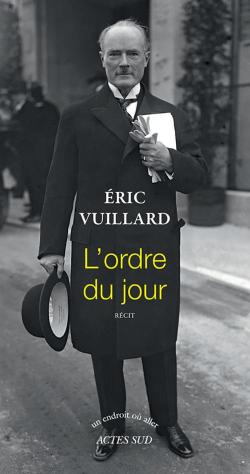
The topic of the novel is the Anschluss.  With devastating sarcasm the author, Eric Vuillard, puts the magnates of German industry on trial for profiting from the Nazi regime and the Austrian people for welcoming the invading German army on March 12  1938. The title itself is ironic since L’Ordre du Jour – which translates as ‘the order of the day’ or ‘the agenda’ – refers to a democratic assembly, which in the book will soon be abolished by Hitler.

It is a very short book (only 150 pages) printed in an unusual miniature format.  But it is a striking story, beautifully written, leading the reader through shocking scenes in which cruel humor is mixed with great despair.  Vuillard, is also a film maker, which explains the way he stages the story as seen through a camera, with colorful images, a sound track, leading actors and supporting crowds.

The action starts on February 20th, 1933, in Potsdam.  Twenty-four managers of the German industry – Gustav Krupp, Wilhem von Opel, Günther Quandt, Kurt Schmitt and others – are waiting in the ante-chamber of the Reichstag at the pleasure of its president, Hermann Goering.  The 24 grey-haired gentlemen, dressed in formal black or brown coats, with stiff shirt collars and striped pants, resemble the bare trees lining the Spree river in the winter.

Goering is late but the visitors wait patiently.

When he finally shows up, the guests raise like lizards on their hind legs.  Hitler – appointed chancellor just one month before – makes his entry and greets his guests.  At the end of the meeting, as expected from them, the managers obsequiously make their meager contribution of several millions Deutschmarks to help the Nazi war effort.

Vuillard turns the Anschluss into a farce. Using threats, lies, and brutal intimidation, Hitler manipulates the Austrian chancellor Kurt von Schuschnigg, making him totally helpless, bulldozed by the Nazi timetable.

February 12, 1938, is the second decisive date in Vuillard’s story.  Hitler has invited Schuschnigg for a secret lunch at Berchtesgaden, his mountain retreat in the Bavarian Alps.  It is an ominous sequence.  When the doors close behind the guest, the reader feels a sense of foreboding.

Overwhelmed by the hypnotic personality of Hitler, Schuschnigg caves in and has to agree to all his  demands: appointment of the Nazi Seyss-Inquart to the post of minister of the Interior;  amnesty of those condemned for the assassination of the Austrian chancellor Dollfuss in 1934; rehabilitation of all national socialist officials.  Having said that, Hitler reaffirms the independence of Austria.  Wasn’t that the ultimate?  asks Vuillard.

On the eve of the planned invasion, Mr and Mrs Ribbentrop (he is the German foreign minister) are invited to dinner at Downing Street.  The author describes in detail the menu of French cuisine and the wine list.  The conversation is light and animated.  All seem interested in tennis and the performance of Bill Tilden, who won the Davis cup seven times.

Toward the end of the dinner, a staff member brings a note to Prime Minister Neville Chamberlain, who becomes preoccupied.  Vuillard writes: “Winston Churchill opens his big cocker spaniel eyes.”  The Chamberlains are getting impatient but, out of sheer British politeness, do not show it.  Guests start leaving but the Ribbentrops linger on, saying endless goodbyes.

The camera jumps to the car where the German couple is now on its way home.  They burst out laughing.  They knew all along what was in the note … German troops have just crossed the Austrian border.

The story reaches its climax when the German forces are ready to pounce on Vienna on March 12, 1938.  The sky is a bright blue but it is freezing cold.  The Panzers are massed by the border but a problem arises — they run out of gas and a monumental traffic jam occurs.  It is hard to pull out a tool kit by the side of the road in sub-zero temperatures.

Hitler, who at first was elated by the prospect of entering Vienna with cheering crowds waving small flags and  blond-braided, young girls throwing flowers at the German soldiers, is now stuck on the road along with hundreds of armored cars.  When an army experiences a breakdown en route, ridicule is guaranteed.

Hitler cannot contain his anger and keeps shouting. By dusk, his Mercedes reaches Linz, the town where he spent his youth.  On March 15, the poor Austrian population, abused, but finally submissive, stands in front of Sisi’s palace to hear Hitler’s hoarse voice vociferate insults.  In a referendum, Austrians voted 99.7 percent in favor of the annexation by the Reich.

What happened to the 24 captains of industry we met in 1933?

During the war years, they made an incredible amount of money by employing cheap labor from Auschwitz, Ravensbrück, Buchenwald or Dachau.  They may have died of old age, but their empires live on, stronger than ever … BMW, BASf, Bayer, IG Farbem, Siemens, Tellefunken, Opel, and Thyssen-Krupp.

Exaggerated or not, the fact is that such a novel gives the reader a major jolt.  It is a literary feat, which revives dark moments of history that one should never forget.

Editor’s Note: This is the opinion of Nicole Prévost Logan.

Nicole Prévost Logan

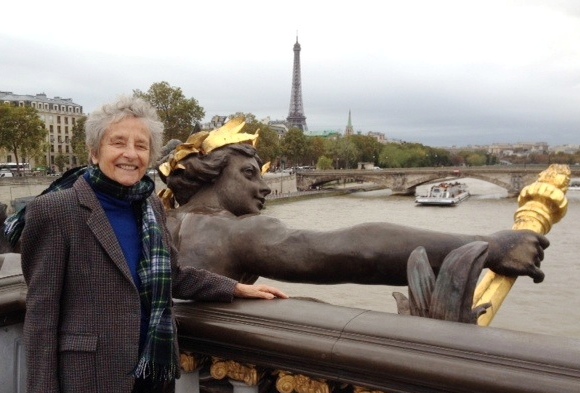
About the author: Nicole Prévost Logan divides her time between Essex and Paris, spending summers in the former and winters in the latter. She writes a regular column for us from her Paris home where her topics will include politics, economy, social unrest — mostly in France — but also in other European countries. She also covers a variety of art exhibits and the performing arts in Europe. Logan is the author of ‘Forever on the Road: A Franco-American Family’s Thirty Years in the Foreign Service,’ an autobiography of her life as the wife of an overseas diplomat, who lived in 10 foreign countries on three continents. Her experiences during her foreign service life included being in Lebanon when civil war erupted, excavating a medieval city in Moscow and spending a week under house arrest in Guinea.


Letter From Paris: Book That Wins France’s Top Literary Prize Raises Chilling Questions About WWII History

Nicole Prévost Logan

Coincidence or not ?

The prestigious French literary Prix Goncourt came out came just a few weeks before the election of 31-year-old Sebastian Kurtz as chancellor of Austria.  Many would say that election marked another step by the European Union along the road toward nationalism.

The topic of the novel is the Anschluss.  With devastating sarcasm the author, Eric Vuillard, puts the magnates of German industry on trial for profiting from the Nazi regime and the Austrian people for welcoming the invading German army on March 12  1938. The title itself is ironic since L’Ordre du Jour – which translates as ‘the order of the day’ or ‘the agenda’ – refers to a democratic assembly, which in the book will soon be abolished by Hitler.

It is a very short book (only 150 pages) printed in an unusual miniature format.  But it is a striking story, beautifully written, leading the reader through shocking scenes in which cruel humor is mixed with great despair.  Vuillard, is also a film maker, which explains the way he stages the story as seen through a camera, with colorful images, a sound track, leading actors and supporting crowds.

The action starts on February 20th, 1933, in Potsdam.  Twenty-four managers of the German industry – Gustav Krupp, Wilhem von Opel, Günther Quandt, Kurt Schmitt and others – are waiting in the ante-chamber of the Reichstag at the pleasure of its president, Hermann Goering.  The 24 grey-haired gentlemen, dressed in formal black or brown coats, with stiff shirt collars and striped pants, resemble the bare trees lining the Spree river in the winter.

Goering is late but the visitors wait patiently.

When he finally shows up, the guests raise like lizards on their hind legs.  Hitler – appointed chancellor just one month before – makes his entry and greets his guests.  At the end of the meeting, as expected from them, the managers obsequiously make their meager contribution of several millions Deutschmarks to help the Nazi war effort.

Vuillard turns the Anschluss into a farce. Using threats, lies, and brutal intimidation, Hitler manipulates the Austrian chancellor Kurt von Schuschnigg, making him totally helpless, bulldozed by the Nazi timetable.

February 12, 1938, is the second decisive date in Vuillard’s story.  Hitler has invited Schuschnigg for a secret lunch at Berchtesgaden, his mountain retreat in the Bavarian Alps.  It is an ominous sequence.  When the doors close behind the guest, the reader feels a sense of foreboding.

Overwhelmed by the hypnotic personality of Hitler, Schuschnigg caves in and has to agree to all his  demands: appointment of the Nazi Seyss-Inquart to the post of minister of the Interior;  amnesty of those condemned for the assassination of the Austrian chancellor Dollfuss in 1934; rehabilitation of all national socialist officials.  Having said that, Hitler reaffirms the independence of Austria.  Wasn’t that the ultimate?  asks Vuillard.

On the eve of the planned invasion, Mr and Mrs Ribbentrop (he is the German foreign minister) are invited to dinner at Downing Street.  The author describes in detail the menu of French cuisine and the wine list.  The conversation is light and animated.  All seem interested in tennis and the performance of Bill Tilden, who won the Davis cup seven times.

Toward the end of the dinner, a staff member brings a note to Prime Minister Neville Chamberlain, who becomes preoccupied.  Vuillard writes: “Winston Churchill opens his big cocker spaniel eyes.”  The Chamberlains are getting impatient but, out of sheer British politeness, do not show it.  Guests start leaving but the Ribbentrops linger on, saying endless goodbyes.

The camera jumps to the car where the German couple is now on its way home.  They burst out laughing.  They knew all along what was in the note … German troops have just crossed the Austrian border.

The story reaches its climax when the German forces are ready to pounce on Vienna on March 12, 1938.  The sky is a bright blue but it is freezing cold.  The Panzers are massed by the border but a problem arises — they run out of gas and a monumental traffic jam occurs.  It is hard to pull out a tool kit by the side of the road in sub-zero temperatures.

Hitler, who at first was elated by the prospect of entering Vienna with cheering crowds waving small flags and  blond-braided, young girls throwing flowers at the German soldiers, is now stuck on the road along with hundreds of armored cars.  When an army experiences a breakdown en route, ridicule is guaranteed.

Hitler cannot contain his anger and keeps shouting. By dusk, his Mercedes reaches Linz, the town where he spent his youth.  On March 15, the poor Austrian population, abused, but finally submissive, stands in front of Sisi’s palace to hear Hitler’s hoarse voice vociferate insults.  In a referendum, Austrians voted 99.7 percent in favor of the annexation by the Reich.

What happened to the 24 captains of industry we met in 1933?

During the war years, they made an incredible amount of money by employing cheap labor from Auschwitz, Ravensbrück, Buchenwald or Dachau.  They may have died of old age, but their empires live on, stronger than ever … BMW, BASf, Bayer, IG Farbem, Siemens, Tellefunken, Opel, and Thyssen-Krupp.

Exaggerated or not, the fact is that such a novel gives the reader a major jolt.  It is a literary feat, which revives dark moments of history that one should never forget.

Second Annual Festival of Women’s Plays Opens Season at Ivoryton Playhouse, March 2-3

Kathleen Cahill

The Ivoryton Playhouse has announced the dates of its Second Annual Women Playwrights Initiative – Passion, Power and Prose 2018.

The Initiative provides a safe, nurturing environment for the development of new, one-act plays by and about women and the issues that shape their live, including a week of intensive rehearsal with the playwrights, directors, and actors.

The workshop culminates in two evenings of staged readings which will take place on Friday, March 2 and Saturday, March 3, at The Ivoryton Playhouse, 103 Main Street, Ivoryton, CT, followed by discussions with playwrights, actors and directors.

Friday, March 2, at 7 p.m., there will be two readings presented:  

  • Henry, Louise and Henri by Kathleen Cahill and directed by Linda MacCluggage is an hilarious look at the different effects of art on an American couple in Paris.
  • Karen Howes

    To Fall in Love, Do This by Jennifer Lane and directed by Hannah Simms. Scientists claim that there are 36 questions you can ask to fall in love with anyone. But can this seemingly simple exercise save even Wyatt and Merryn’s marriage?

Saturday, March 3, at 7 p.m. there will be two readings presented: 

  • Blood by Yael Haskel and directed by Kathryn Markey. When a young woman elects to donate blood to a sick pastor and pillar of the community, hellish truths are exposed forcing a devastating decision for both her and the nurse.
  • The Gentleman’s Pact by Karen Howes and directed by Addie Gorlin. A witty, acerbic look at marriage, fidelity, and self-determination when Bill, a college professor, tells his colleague, Arthur, that he wants to marry Arthur’s wife, Evelyn. Can their pact survive Evelyn’s unexpected response?

To purchase tickets for the Friday, March 2 or Saturday, March 3 readings – each starts at 7 p.m. – call 860.767.7318 or visit www.ivorytonplayhouse.org

Tickets:

  • $20 adult each night: $15 senior each night; $10 student and LPTW.
  • Special two-day pass: buy tickets for Friday and Saturday night performances for $30.00 – call box office 860.767.7318 to book 2-day pass.

Yael Haskal

The Ivoryton Playhouse is located at 103 Main Street, Ivoryton, CT  06442.

For more information about the Women Playwrights Initiative, visit the Playhouse website or  contact Laura Copland, Director of New Play Development,  laurac@ivorytonplayhouse.org.

The Women Playwrights Initiative is generously funded by The Community Foundation of Southeastern Connecticut, the Community Foundation of Middlesex County, Laura Copland, Kathleen and Al Jaffe, and Rosalind Pressman.

Norm Needleman Announces Campaign for State Senate, 33rd State Senate District Includes Lyme

Essex First Selectman Norman Needleman who yesterday announced a second run for the 33rd State Senate District.

Yesterday, Essex First Selectman and successful businessman Norm Needleman announced his campaign as a Democratic candidate for the 33rd State Senate District, promising to use his business and small town leadership experience to bring people together to get Connecticut back on track.

The seat will be vacant due to the incumbent Senator Art Linares (R) moving out of the District and announcing his candidacy for State Treasurer.

“Leading a small town and building a business taught me that the best way to get things done is to put people and their needs ahead of party politics,” said Needleman. “I respect taxpayers’ dollars because I know how hard you’ve worked to earn them.”

He continued, “That’s why as First Selectman, I brought Democrats and Republicans together, found consensus, solved problems, and kept property taxes among the lowest in the state without cutting services. If elected State Senator for the 33rd District, I will make a clean break from the decades of bickering and harmful policies that have come from Hartford, and I will get Connecticut working for the towns in our district.”

“As an elected town official, I’ve seen the work Norm does as the First Selectman of Essex,” said Colchester Selectman Rosemary Coyle. “Norm governs in a fiscally responsible manner, making sound decisions. His hands-on, small town government experience in the legislature will benefit our communities and help us build a brighter future for our children and families.”

Needleman, who campaigned for the seat in 2016, is currently in his fourth term as Essex First Selectman. He has over 20 years of experience advocating for his small town, having previously served as an Essex Selectman, a member of the Essex Zoning Board of Appeals, and a member of the Essex Economic Development Commission.

Needleman is also a member of the Lower Connecticut River Valley Council of Governments, helping the 17 member towns coordinate various government functions. He is also a board member of Valley Shore Emergency Communications, a center formed by local pubic safety professionals to handle emergency call processing and dispatching needs for communities throughout the region.

“Building a company from the ground up has given me invaluable experience on how to grow jobs and create a region where businesses want to start and thrive,” said Needleman. “I will be a State Senator who will create good-paying jobs in our towns and throughout Connecticut.”

Needleman founded Tower Laboratories, an Essex manufacturing company, 38 years ago. The company has grown to become a leader in its field, employing over 250 people. As a leading CEO in the region, he serves as a board member of the Middlesex County Chamber of Commerce. He is also a board member of Valley Shore Emergency Communications, a center formed by local pubic safety professionals to handle emergency call processing and dispatching needs for communities throughout the region.

“Norm asks the right questions, and is willing to listen to all options,” said Centerbrook businessman and Clinton resident Gary Stevens. “I believe that with Norm’s insight into the way that a successful business (his) is run and considering the wasteful and unnecessary spending habits of the State, he could go a long way to make the government a more responsible entity.” Stevens, an unaffiliated voter who has known Needleman since the 1980s, owns Stevens Excavating, Inc. and has worked with Needleman on numerous projects.

The 33rd State Senate District consists of the Town of Lyme along with the Towns of Chester, Clinton, Colchester, Deep River, East Haddam, East Hampton, Essex, Haddam, Portland, Westbrook, and a portion of Old Saybrook.

Needleman lives in Essex with Jacqueline Hubbard, the Executive Director of the Ivoryton Playhouse. His two sons and their families also live in Essex.