Tickets on Sale Now for Community Music School’s 35th Anniversary Gala, April 27

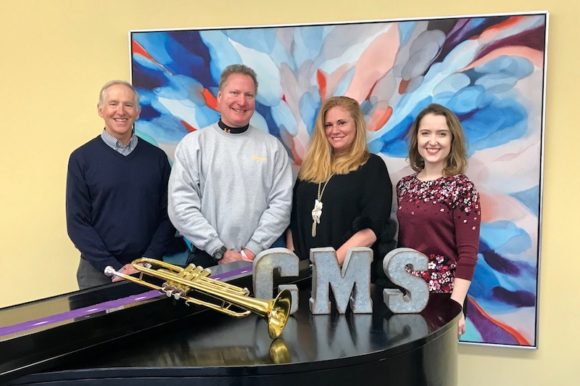
Making plans for this year’s 35th anniversary CMS gala are, from left to right, CMS Music Director Tom Briggs, CMS Trustee and Gala Sponsor Bruce Lawrence of Bogaert Construction, CMS Trustee and Gala Sponsor Jennifer Bauman of The Bauman Family Foundation, and CMS Executive Director Abigail Nickell.

Community Music School’s (CMS) largest annual fundraiser is the CMS Gala and this year the organization is  celebrating its 35th anniversary with For the Love of Music! The event takes place on Friday, April 27, at 6:30 p.m. in Deep River at The Lace Factory and includes fabulous musical entertainment provided by CMS faculty and students. Enjoy cocktail jazz and an exquisite dinner show, as well as gourmet food, dancing, silent auction, fine wines and more.

Featured faculty and student performers include Music Director Tom Briggs, Noelle Avena, John Birt, Amy Buckley, Luana Calisman-Yuri, Audrey Estelle, Joni Gage, Silvia Gopalakrishnan, Martha Herrle, Ling-Fei Kang, Barbara Malinsky, Matt McCauley, Kevin O’Neil, Andy Sherwood, and Marty Wirt.

Support of the Community Music School gala provides the resources necessary to offer scholarships to students with financial need, as well as weekly music education and music therapy services for students with special needs.

For The Love of Music sponsors include The Bauman Family Foundation, Bob’s Discount Furniture, Bogaert Construction, Clark Group, Essex Savings Bank, Essex Financial Services, Grossman Chevrolet Nissan, Guilford Savings Bank, Jackson Lewis, Kitchings & Potter, Maple Lane Farms, Reynold’s Subaru, Ring’s End, Shore Publishing, Thomas Alexa Wealth Management, Tidal Counseling LLC, and Tower Labs LTD.

Early bird tickets for the evening are $125 per person ($65 is tax deductible) by April 13 and $135 thereafter. Event tickets include hors d’oeuvres, gourmet food stations, wine and beer, live music, and dancing. Tickets may be purchased online at community-music-school.org/gala, at the school located at 90 Main Street in the Centerbrook section of Essex or by calling 860-767-0026.

Community Music School offers innovative music programming for infants through adults, building on a 35 year tradition of providing quality music instruction to residents of shoreline communities. The CMS programs cultivate musical ability and creativity and provide students with a thorough understanding of music so they can enjoy playing and listening for their entire lives.  To learn more, visit www.community-music-school.org or call (860)-767-0026.

Enjoy a ‘Tavern Night’ Tonight at CT River Museum

On Friday, March 23, the Connecticut River Museum brings back its popular 1814 Tavern Night.  This lively 19th century evening will take place at the museum’s historic Samuel Lay House overlooking scenic Essex harbor.  The house will be transformed into a candlelit riverside tavern from the War of 1812. 

The evening includes Heritage Wines and Port Tastings with folklorist Stephen Gencarella and historian Chris Dobbs with music by Joseph Mornealt  Additional wine and beer will be available at the cash bar.

The final candle lit evening planned will be held April 27  with Olde Burnside Brewing Company beer tastings; music by Rick Spencer, Dawn Indermuehle & Chris Dobbs. 

Tastings take place at 6 and 8 p.m.  Space is limited and reservations are required.  Call to reserve tickets at 860-767-8269 or visit ctrivermuseum.org.  Tickets are $24 for museum members or $29 for the general public (must be 21 or older and show valid ID).  Includes bourbon whiskey tasting, light bites, and entertainment.  The evening is sponsored in part by Catering by Selene, Connecticut Rental Center and Bob’s Centerbrook Package Store.

The Connecticut River Museum is located at 67 Main Street, Essex and is open daily from 10 AM – 5 PM and closed on Mondays until Memorial Day. Admission is $10 for adults, $8 for seniors, $7 for students, $6 for children age 6-12, free for children under 6.  For more information, call 860-767-8269 or go to www.ctrivermuseum.org

Letter From Paris: Visit to Franco-American Museum in Blerancourt Sparks Review of Relationship Between the Two

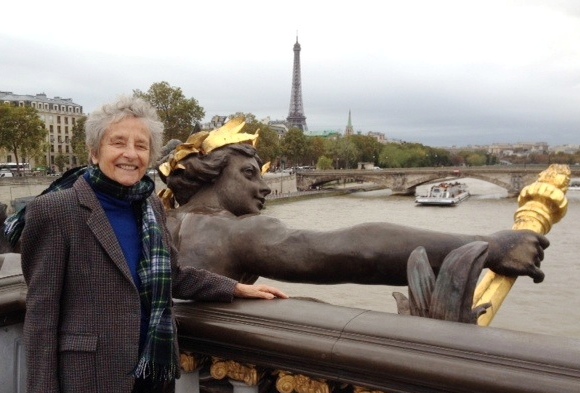
Nicole Prévost Logan

La Fayette nous voilà (La Fayette, here we are) are the famous words General John J. Pershing , commander of the American Expeditionary Forces, is supposed to have pronounced  on July 4, 1917 during the commemoration near the tomb of the Marquis de La Fayette at the Picpus cemetery in Paris. The entry of the Americans in World War I was a way to return the favor to the French for being an ally throughout their history. The Franco-American museum in Blerancourt, in a concrete way, furthered this enduring amity.

From the outbreak of the war even before America declared war on Germany on April 6, 1917, a segment of US public opinion, wanted the country to enter the conflict. Among the Americans living in Paris (there were 100,000 of them at the time), private associations such as the American Field Service,  intellectuals, writers, and artists offered to join the allied cause. Many young people volunteered as ambulance drivers.
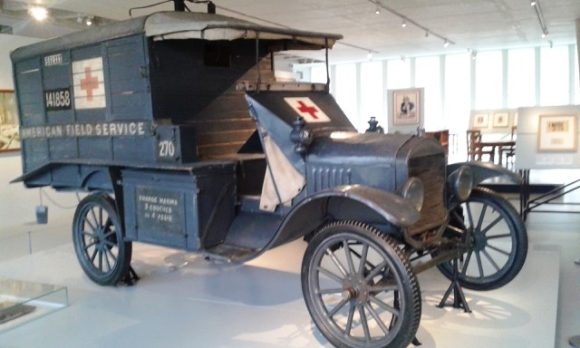
Many volunteers served in ambulances like this one on display in the Museum of Blerancourt during the Great War.

One of them was Anne Morgan (1873-1952)  third daughter of  John Pierpont Morgan, Sr., banker and art collector.
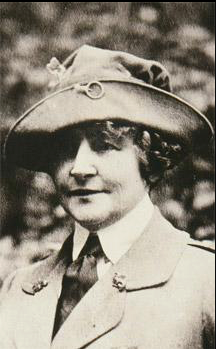
Anne Morgan

She started raising funds to equip the French army as early as 1915, and in 1917 chose the village of Blerancourt, which was in the midst of total devastation, to carry out her humanitarian aid to the wounded soldiers and civilian population. 

The Aisne department (a department in France is the US equivalent of a county) was one of the worst hit battle fields. It is sadly remembered for being the scene of three bloody campaigns all called Chemin des Dames in 1914, 1916 and 1917 . In April 1917 alone, 100,000 French soldiers died on that front. 

Morgan worked from the barracks she erected on the terraces of the Chateau de Blerancourt – a grand 17th century private residence built by the architect who designed the Luxembourg Palace, for Marie de Medicis.  In 1919, Morgan bought the ruins of the chateau and started its restoration. In 1923, she created the association of the Friends of Blerancourt and the following year founded what was to become the Franco-American Museum.

The restored 17th century elegant rooms of the chateau are quite fitting for the historical part of the museum.  French explorers -Jacques Cartier, Father Jacques Marquette-Cavelier de la Salle, Champlain and others  – left their trace in the geography books of the New World. Their names are still vivid but the lands they discovered – from Canada to Louisiana – have long severed ties with France.  Only the St Pierre et Miquelon archipelago remained part of the mother country.

La Fayette was the first Frenchman to enlist in the War of Independence in 1777. With a great deal of panache, in October 1781, the 6,000 men of Count of Rochambeau, joined the Continental Army of George Washington, later the fleet of Admiral de Grasse encircled the English forces.  The combined effort ended in the victorious battle of Yorktown and the rendition of the British.  

Was its support in the conflict beneficial to France?  Some historians do not think so.  Claude Moisy, former president of Agence France Press  (AFP), journalist and specialist in the political history of the US, is one of them and goes as far as to believe that France was caught in a fool’s game.  

During a talk Moisy gave to the France-England Association in 2007, he described the sequence of events, as he sees it: the US Congress had promised not to sign a separate peace with the English, but it did on November 30 ,1782, after secret negotiations.

The real objective for the American government was to resume, as soon as possible, trade and economic relations with Great Britain.  Washington had dispatched Benjamin Franklin to Paris. He soon became the coqueluche (the rage) of the Paris society and suspiciously close to it. The author describes Paris at that time as a “panier de crabes” (can of worms), crawling with spies and foreign agents.

The final peace treaty was only signed 10 months later in September 1783, with the participation of Holland and Spain.

2018, – the year of commemorations marking the 100th anniversary of the Great War- started appropriately with the “Cesars” selecting Au Revoir Là Haut, as best film and best director.  It is based on the 2013 Prix Goncourt novel by Pierre Lemaitre. Two soldiers- nicknamed “poilus” during the Great war-  experience the horror of trench war, including being buried alive .  (the writer may have been inspired by what happened to the poet and art theoretician  Guillaume Apollinaire, who was buried alive three times, underwent trepanation and died in 1918.).  The story continues after the war, when the two heroes, traumatized and disfigured by injuries, witness the sordid traffic of war memorials.
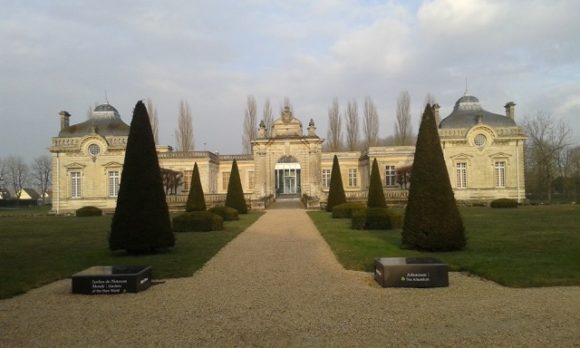
The Chateau de Blerancourt makes a charming picture.

The Blerancourt museum  is a lovely, luminous building,, located at about two hours drive north-east of Paris. The World war I activities of Anne Morgan -including her ambulance, uniform, wartime memorabilia and mobile library- are brought back to life. 

The Art department has just been renovated and contains more than 400 works. The collection  includes paintings by impressionist Childe Hassam, John Singer Sargent and many others.  The arrival of American troops in St Nazaire was caught in Art Deco style by French artist Jean Emile Laboureur in 1918.  Singer and dancer Josephine Baker, appears on the cover of the “Revue Nègre“.  She was born in St Louis, joined the Resistance and is an idol in France.

Editor’s Note: This is the opinion of Nicole Prévost Logan.

Nicole Prévost Logan

About the author: Nicole Prévost Logan divides her time between Essex and Paris, spending summers in the former and winters in the latter. She writes a regular column for us from her Paris home where her topics will include politics, economy, social unrest — mostly in France — but also in other European countries. She also covers a variety of art exhibits and the performing arts in Europe. Logan is the author of ‘Forever on the Road: A Franco-American Family’s Thirty Years in the Foreign Service,’ an autobiography of her life as the wife of an overseas diplomat, who lived in 10 foreign countries on three continents. Her experiences during her foreign service life included being in Lebanon when civil war erupted, excavating a medieval city in Moscow and spending a week under house arrest in Guinea.

Acclaimed Bass-Baritone David Pittsinger Performs This Afternoon at Essex Winter Series

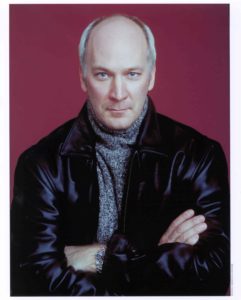
David Pittsinger

Essex Winter Series artistic director Mihae Lee welcomes the return of bass-baritone David Pittsinger to the series with pianist Simon Holt on Sunday, March 4, at 3 p.m. at John Winthrop Middle School, 1 John Winthrop Middle School Drive, Deep River.

Pittsinger is internationally renowned for his magnificent voice and dramatic performances. His first Essex Winter Series concert in six years will be a unique program that includes Bach, Handel, Mendelssohn and Brahms, as well as selections from the American Songbook to celebrate the American spirit.

With a busy performance season that has taken him all over the world, Mr. Pittsinger conveyed a message while abroad at the Dutch National Opera: “I look forward to seeing you all soon. Returning to my community in anticipation of my performance for EWS has really buoyed my spirits through all my recent travels.”

Essex Winter Series’ 2018 season concludes on April 8 with The Quodlibet Ensemble, a New York-based string chamber orchestra of young, dynamic artists who regularly present a range of great music, from the Baroque to the modern day. The concert takes place on April 8 at Valley Regional High School and will include Vivaldi’s The Four Seasons, as well as music by Mendelssohn, Mozart, and Nathan Schram.

All performances take place at 3 p.m. and seating is general admission. Tickets may be purchased by visiting www.essexwinterseries.com or calling 860-272-4572.

The 2018 Essex Winter Series season is generously sponsored by The Clark Group, Essex Meadows, Essex Savings Bank, Guilford Savings Bank, Jeffrey N. Mehler CFP LLC, Tower Laboratories, and BrandTech Scientific. Media sponsor is WSHU Public Radio and outreach activities are supported by the Community Foundation of Middlesex County and donors to the Fenton Brown Circle.

Letter From Paris: ‘The Donald’ and Europe Grow Further Apart

Nicole Prévost Logan

In February 2017, the European Union (EU) members, gathered at the Malta summit, were flabbergasted by President Donald Trump’s hostile attitude toward the United States’s traditional allies.  One year later the world has adjusted in the opinion of the seasoned diplomat Hubert Vedrine, France’s Minister of Foreign Affairs (1997-2002).  The French diplomat commented, “One has to get over our initial disbelief as to the unpredictable and apparently erratic policy of the 45th president of the US.”

The European opinion of Trump is not monolithic.  One has to differentiate between the North and South:  heavily indebted Greece and Germany with a flourishing economy will have opposite opinions.  The same divide exists between East and West: for example, nationalist and authoritarian countries like Poland will view Trump differently from the liberal Netherlands.

The Europeans resent Trump’s withdrawal from the Paris Climate Agreement leaving a wide open boulevard for China to become the champion defender of the environment.  Last January, the announcement made by the controversial Ryan Zinke, US Secretary of the Environment, that he would allow oil and gas drilling near almost all US coasts from Alaska to the Gulf of Mexico was considered a mistake.  The French oppose the position of Trump’s administration on the use of coal and other fossil fuel as sources of energy.  France has closed all its coal mines and does not even allow fracking for oil or gas exploration in fear of endangering the environment.

President Donald Trump

The recent financial and tax reforms introduced by the US president were characterized as a fiscal war with the rest of the world by economist and professor Philippe Dessertine.   On Jan. 26,  2018 at the Davos World Economic Forum, Christine Lagarde, head of the International Monetary Fund (IMF), criticized those measures by saying that, subsequent to creating benefits in the short term, they would ultimately impact world  financial vulnerability.  She believes that the increase in both liquidity and the budget deficit, will eventually cause a sudden drop in the stock market.  It is interesting to note that a few days after her speech, the Dow tanked and began a new cycle of high volatility.

French economists commented that lowering corporate taxes to 21 percent in the US – not that far from the 12.5 percent of Irish tax heaven – is placing the competitiveness of countries like France at a disadvantage.  It will take five years of arduous effort by French President Macron to lower French corporate taxes to 25 percent.  The French Minister of Economy and Finances, Bruno Lemaire, criticized these reforms for technical reasons.  He commented that they will penalize European subsidiaries located in the US and also be an incentive for American companies located in France to relocate to the US.

According to French economist Thomas Piketty, 68.1 percent of the US income tax reduction will benefit just 1 percent of the population, thereby increasing the already exisiting inequalities even further.  For Gerard Courteois, editorial writer of the French national newspaper Le Monde, there is an incoherence in the statement,”Make America great again,” particularly in the use of the word “again.”  Does it apply to the boom years after World War II when it actually was a time of high taxes and international trade?

Trump’s foreign policy is scrutinized by French diplomats and geopoliticians.  Vedrine describes the American president’s policy in the Middle East as a disaster.  Trump has created a confrontational axis with Saudi Arabia, Israel, Turkey against Iran and managed to freeze the Israel-Palestine peace process.  Regarding the European Union (EU), Trump’s objective seems to be its deconstruction.  Trump applauded Brexit and asked “Who is next?”  To European satisfaction, Congress has blocked the confirmation of a Europhobe nominee as US Ambassador to the EU.  The post has not been filled to date.

Trump’s diplomacy is not sophisticated.  It is a bully approach, forever brandishing the threat of more and greater sanctions, whether in the Ukraine, Iran or Korea.  Punitive measures are even taken by Trump toward the Palestinians.  He intends to suspend financial aid because they refuse to sit at the negotiating table.

French diplomats prefer pragmatism and negotiations.  Dominique de Villepin, former foreign minister (2002-2004) and prime minister (2005-2007), believes, for instance, that one has to accept the fact that North Korea is a nuclear power and entice that country to join the international community by helping  its economic development .

However, Vedrine says one should not blame Trump for everything.  Being realistic, France and Europe are not at the center of the world today.  If the US is stepping back, it is a chance for Europe to regain its autonomy.  Villepin suggests that Europe needs to break away from US guardianship .

At the annual Munich conference on security, participants showed for the first time their intention to step up the defense of the EU.  Last year Trump had scolded NATO members for not paying their share leading to the irritation of Washington today.  To put a stop to transatlantic polemics, Jens Stoltenberg, NATO Secretary General, wanted to be conciliatory and declared, “The increase in the European defense budget will reinforce the NATO European pillar.”

Judging from this non-exhaustive list of disagreements, relations between Trump and Europe are not particularly warm right now — in fact, one might be tempted to conclude they are well on the way to just plain bad.

Editor’s Note: This is the opinion of Nicole Prévost Logan.

Nicole Prévost Logan

About the author: Nicole Prévost Logan divides her time between Essex and Paris, spending summers in the former and winters in the latter. She writes a regular column for us from her Paris home where her topics will include politics, economy, social unrest — mostly in France — but also in other European countries. She also covers a variety of art exhibits and the performing arts in Europe. Logan is the author of ‘Forever on the Road: A Franco-American Family’s Thirty Years in the Foreign Service,’ an autobiography of her life as the wife of an overseas diplomat, who lived in 10 foreign countries on three continents. Her experiences during her foreign service life included being in Lebanon when civil war erupted, excavating a medieval city in Moscow and spending a week under house arrest in Guinea.