
Musical Masterworks, Community Music School Announce Scholarship Recipient

Elizabeth Steindl (photo submitted)

OLD LYME/OLD SAYBROOK/ESSEX — Musical Masterworks of Old Lyme and Community Music School of Essex have announced the recipient of the fourth annual Musical Masterworks Scholarship in Honor of Nancy D. Thomas.

Elizabeth Steindl, the 2020 recipient of the Musical Masterworks Scholarship in Honor of Nancy D. Thomas, is 11-years-old and in sixth grade at Old Saybrook Middle School.

She studies violin with Martha Herrle at Community Music School, and also plays clarinet in her school band, sings in her school chorus, and is a regular participant in area music camps.  She loves animals, music, and nature.

The Musical Masterworks Scholarship in Honor of Nancy D. Thomas provides the tuition for a middle school student to take 30-minute music lessons for one full year at Community Music School.  The scholarship is awarded annually. 

To be eligible, the candidate must be a student of classical voice or instrumental music and reside in Middlesex County or New London County. 

Community Music School (CMS) offers innovative music programming for infants through adults, building on a 37-year tradition of providing quality music instruction to residents of shoreline communities. CMS programs cultivate musical ability and creativity while providing students with a thorough understanding of music, so they can enjoy playing and listening for their entire lives. 

Learn more at www.cmsct.org or call 860.767.0026.

Musical Masterworks brings to Southern New England world-class chamber music performances and outreach programs which attract, entertain, and educate a diverse audience. Launching its 30th season soon, Musical Masterworks offers five weekends of performances from October through May in Old Lyme. 

Learn more at www.musicalmasterworks.org or call 860.434.2252.


Letter From Paris: Back to Normal in France? Not Quite …

Nicole Prévost Logan


A Cannes Film Festival turned virtual,  the Roland Garros tennis tournament and Tour de France bicycle race both postponed until September?  France will definitely not be the same this  summer!

Tourism and culture are two of the main sectors of French economy and the pandemic has inflicted a direct blow on both of them.  Hundreds of festivals, sport events, art shows, plays, and concerts or activities linked to historical monuments had to be drastically reduced, presented behind closed doors, or totally cancelled, putting hundreds of thousands of people out of work .

But you would not think there is a virus going around when you see the way the French behave.

In Paris, restaurants and bistros spread their terraces across the sidewalks and into the streets.  They mark their space with bushes and flower beds.  Beach umbrellas add color to the scene.  Taking advantage of the warm weather, Parisians hang out outside.

Away from the cities, the French have been seeking  the calm of the countryside, enjoying family gatherings and organizing barbecues with  friends .

Young people could barely wait for the end of the lockdown to have fun in Paris … to huddle on the banks of the Seine or the Canal St Martin, to congregate in open spaces and dance into the night, or to flock to discotheques.  Meanwhile, St Tropez, down on the Riviera coast in the far south of the country, became a particularly hot spot.

People were reluctant to take the subways and, as a result, car traffic has surged.  Bicycles have taken over Paris.  It is likely that this trend will persist, virus or not.

Barely out of the lockdown, one thing was on everybody’s mind … the next vacation.  Every day the media tempted the viewers with sights of clear waters, beaches, and cool mountain trails.  This year the French seem to have rediscovered their own country and become the only tourists there.

It was to be expected that such behavior would have an impact on the evolution of the pandemic.  Clusters have multiplied throughout the country, which led to the specialists warning that the virus was still active.

But the present situation is quite different from what it was at the height of the crisis back in March and April.  The number of  deaths, or severe cases, being treated in the hospitals remains very low.  A general lockdown appears to be out of the question today.

Hospitals are better prepared and treatments made easier for the patients.  Masks and testing are more available.  Central government and local authorities adjust their policies to manage the pandemic in a more flexible way.  For instance, as of this week , Paris and several other large cities require masks to be worn outside in crowded areas.

From this overview of the pandemic in France, let us now change scenery and take a look at some highlights of life in France and Europe over these past months …

Every six years in France, the people are riveted by municipal elections. There are 36,000 communes in France headed by a maire assisted by a conseil municipal. The wide spectrum goes from the highly political Paris town hall, employing 40,000 people — Jacques Chirac headed that institution before becoming president of France — to the tiniest mairie.

The small village on the Dordogne, where one of my daughters lives, had been dormant for the past four decades with an unopposed maire at the wheel. This year however, things were different. The ballot took place in a heated atmosphere.  Participation was high. The scene was like a microcosm of French politics … and the maire was defeated.

In early July, Edouard Philippe stepped down as prime minister. A growing feeling of insecurity and violence has damaged the authority of the French executive. President Macron decided that a major reshuffle was required to bring new faces and methods and thus energize the government prior to the next presidential election.

Even a new voice was welcome. Jean Castex comes from the Pyrenées region and has a southern accent, which the French usually associate with vacations on the Mediterranean. Castex nevertheless is a product of the élite schools, a graduate of Ecole Nationale  d’Administration (ENA). As a high-ranking official, he has held key positions at the very center of power at the Elysée Palace.  He is an old pro — although he does not sound like one.

Over in Poland, Ardrzej Duda, leader of the conservative party Droit et Justice (PIS), was reelected as president on July 12.  The very small margin of his victory – 50.4 percent to 49.6 percent – suggests that it is only a question of time until a liberal, pro-European movement, possibly headed by Rafal Trzaskowski, defeats the authoritarian executive.

In Italy, meanwhile, after 14 months of the disastrous government of populist Matteo Salvini, Giuseppe Conte brought  appeasement as a centrist prime minister, who works well with Brussels.

At 5.30 a.m. on July 22, the 27 members of the European Union (EU) met  in response to a Franco-German initiative.  It was the longest summit in EU history.  Arduous negotiations produced an agreement to inject over $2 trillion into the economy and 360 billion in loans.

The recovery plan of the EU — labeled “Next Generation EU”– is ambitious.  At its core is  a  “Green Pact.”

The plan, which will be implemented gradually along with each year’s budget, includes support of the health system, innovation assistance to viable companies, aid to farmers and fishermen, and 100 billion to help pay for widespread partial unemployment.

Banking rules will be made more flexible to facilitate the borrowing by entrepreneurs.  Right now the European Central Bank (CBE) enjoys a high credit rating, which helps the borrowing process. Margrethe Verstager , Executive Vice President of the EU Commission, will promote a Digital Single Market.

Alstom — a French multinational company operating in rail  transport markets — bought the Canadian company Bombardier.  The merger will create a rival to the giant China Railway Construction  Corporation (CRCC). China is continuing to make inroads in Europe and just invested in Portugal’s trams.

Overall the numbers of the European economic recovery are impressive:  together Brussels plus the 27 EU national governments will inject 40,000 billion Euros into the economy — far more than the US or even China

The “frugals”– the Netherlands, Austria, Denmark, Sweden and Finland — fought tooth and nail against transfers of funds from the richer North to the South.  Dutch prime minister Mark Rutt stressed that the 750 billion Euros were not a blank check to weaker economies like Italy’s  — whose vertiginous debt is 240 percent of its GDP — but an investment plan to be controlled by Brussels.

Concessions had to be made.  The “frugals” received a rebate in their annual contribution to the European budget.  But the real beneficiaries are Poland and Hungary, who keep receiving money in spite of their frequent violation of the rule of law.

Recent developments show how fragile — but also resilient — the EU is.  Even the “Eurosceptics” do not want to let go of  their profitable membership in the “club .” But the real strength of the EU is that it constitutes a huge market, the largest trading block of the world.  The richer EU economies need the tariff-free Single Market.  Germany relies particularly on Lombardy  for its exports.  Maybe the EU should learn from  Alexander Hamilton who advocated the “mutualization” of the sovereign debts of the States to make the federation stronger?

And finally … on Aug. 21, Emmanuel Macron and Angela Merkel met at the medieval Fort de Brégançon, the summer residence of French presidents.  On this late summer day, they seemed to enjoy this picturesque spot on the Mediterranean  to meet for five working hours.  They reiterated the unity of their policy at this complicated time.

At unprecedented speed, France and Germany led the EU in its mediation to support the protests following the Belarus elections.  They also acted swiftly also in flying Alexei Novalny, who is in a coma, to a hospital in Germany for treatment of a possible poisoning by the Russian government.

Editor’s Note: This is the opinion of Nicole Prévost Logan.
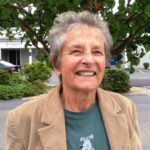
Nicole Prévost Logan

About the author: Nicole Prévost Logan divides her time between Essex and Paris, spending summers in the former and winters in the latter. She writes a regular column for us from her Paris home where her topics will include politics, economy, social unrest — mostly in France — but also in other European countries. She also covers a variety of art exhibits and the performing arts in Europe. Logan is the author of ‘Forever on the Road: A Franco-American Family’s Thirty Years in the Foreign Service,’ an autobiography of her life as the wife of an overseas diplomat, who lived in 10 foreign countries on three continents. Her experiences during her foreign service life included being in Lebanon when civil war erupted, excavating a medieval city in Moscow and spending a week under house arrest in Guinea.


Ivoryton Women Playwrights Festival Now Accepting Submissions for 2021; Positions as Directors, Readers Also Open

IVORYTON — The Ivoryton Playhouse has announced their Fifth Annual Ivoryton Women Playwrights Festival (IWPF.) Submissions of one-act plays by women playwrights are sought.
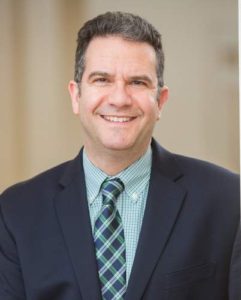
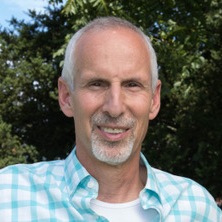
The IWPF provides the four writers whose work is chosen paid travel to Ivoryton and housing while there, three days of intensive workshops with a director and actors for play development and participation in a staged reading festival in February/March 2021 (actual dates to be determined).
There is also a $500 stipend.
Ten-minute plays are acceptable, and all plays must run no more than one hour.
Completed manuscripts must be submitted by email only.  Closing date for submissions is Aug. 30, 2020.
Interested playwrights should email a completed manuscript, (for musicals include a script and music file), with name and contact information.
The IWPF also seeks resumes from directors (Connecticut residents only), and those interested in being readers, both men and women.

Play submissions, resumes from directors and interested readers should be emailed to Jacqui Hubbard, Artistic Director at jhubbard@ivorytonplayhouse.org

Wyman of Old Lyme Appointed Community Music School Executive Director, “Thrilled to Come Home”

Dr. Richard Wyman, the new Executive Director of the Community Music School based in Centerbrook.

OLD LYME — Dr. Richard Wyman of Old Lyme has been appointed the new Executive Director of the Community Music School (CMS) located in Centerbrook. He took over the reins of the organization in the mid-May after serving for several years as Musical Masterworks General Director.

Wyman has a long history of involvement in both playing and conducting music professionally along with community-based music learning. He began his music studies at the prestigious Eastman School of Music of the University of Rochester in Rochester, N.Y., where he obtained his undergraduate degree in music education and then moved to the University of Illinois to pursue a masters degree in music.

Subsequently, he moved back East when he joined the US Coast Guard (CG) Band  as a baritone saxophonist in the late 1990s. Back then, Wyman also taught saxophone for a number of years at CMS but in 2004, he was appointed Assistant Director of the USCG band and opted to focus on his new position along with studying conducting at the University of Connecticut where he earned a Doctorate of Musical Arts.

In his role as USCG Band Assistant Director, Wyman led educational concerts for thousands of students.

After retiring from the SCG in 2018, Wyman first took the position with Musical Masterworks and now he has come full circle back to the CMS.  He is still continuing his music education, however, since he is currently studying arts administration at UConn.

Wyman says he is, “Thrilled to ‘come home’ to CMS,” and is looking forward to all the challenges and opportunities that the job offers. These latter involve continuing to run the school’s teaching program online and running the spring “Friends of Note” campaign, which is devoted to “COVID-19 Relief” for CMS through the summer. He points out that a gift to this $50K campaign will, “Provide payroll (for staff and instructors), mortgage payments, maintenance of our facilities, and … most importantly, support of the wonderful instruction and music-making,” by CMS faculty and students.

Asked to explain his passion for both music and music education, Wyman says, “Throughout my adult life, I’ve become increasingly obsessed with understanding music’s essential role in the living of a fulfilling life,” noting, “Whether it was through performing as saxophonist in amusement parks (which he did at both Disney World and Busch Gardens many years ago), conducting/hosting USCG Band educational performances, or witnessing the joy music brings to members of the CMS “New Horizons” Band.”

Wyman lives in Old Lyme with his clarinetist/pianist wife Erin and their three boys, the eldest of whom has just graduated from Lyme-Old Lyme High School (LOLHS). The younger two are respectively at LOLHS and Lyme-Old Lyme Middle School and all three, in Wyman’s words, “Study music as important parts of their educations and lives.”

Editor’s Note: Community Music School is located at 90 Main St., Building 4, Centerbrook, and also 179 Flanders Rd., Ste. 3 East Lyme. For more information on CMS, call 860-767-0026 or visit the school’s website.

If you wish to donated to the “Friends of Note’ campaign, call Wyman at 860-767-0026 to discuss giving opportunities, or donate online at cmsct.org/support.

Incumbent State Sen. Needleman Nominated Unanimously to Run Again for 33rd Senate District Seat, Includes Lyme

State Senator Norm Needleman (D-33rd)

LYME — (Based on a Press Release released by Sen. Needleman’s office) On May 22, State Senator Norm Needleman (D-Essex) was unanimously endorsed for re-election to the 33rd State Senate District by Democratic delegates.

First elected to the State Senate seat in 2018, Sen. Needleman represents the towns of Lyme along with Colchester, Chester, Clinton, Essex, Deep River, East Haddam, East Hampton, Haddam, Old Saybrook, Westbrook and Portland.

Needleman will be challenged by Republican Brendan Saunders, who is running for the Senate for the first time, although he has been involved in numerous Republican campaigns. Saunders received unanimous endorsement for his candidacy at the Republican District Convention, May 18,

“The need for strong, effective leadership in the State Senate has never been more important than now, due to the crisis created by COVID-19,” says Sen. Needleman in the press release announcing his endorsement, noting, “In my time at the General Assembly, I’ve worked in a bipartisan manner to tackle our most difficult challenges. More now than ever, I believe that inclusive, non-partisan dialogue is what’s needed to solve tough problems. This ‘makes sense perspective characterizes my approach to representing our district in the State Senate.”

He continues, “That’s why I’m anxious to continue my service at the Capitol to help our state recover from this once-in-a-century crisis.  Doing so requires knowledge of town operating procedures, experience in managing local resources and skill in business planning. As your State Senator, I’m utilizing my expertise in those areas to help constituents and small businesses navigate state and federal assistance programs, as well as connect people with the resources they need to sustain their livelihoods and support their health during the pandemic.”

Sen. Needleman serves as Deputy President Pro Tempore, Senate Chair of the Energy & Technology Committee, Vice-Chair of the Planning & Development Committee, and is a member of the Commerce, Finance Revenue & Bonding, and Transportation Committees.

He also serves as First Selectman of the Town of Essex.

Sen. Needleman has been instrumental in the passage of a bill bringing wind energy generation to Connecticut. This legislation enables up to 40 percent of future energy needs to come from carbon-free renewable energy and creates a new industry for Connecticut. Needleman states it could add as much as $2 billion to the state’s economy, bringing with it thousands of skilled, well-paying jobs.

Citing other successes benefiting the 33rd District that he has supported, Needleman mentions allowing first responders, police officers, and firefighters to receive treatment for post-traumatic stress disorder and assisting passage of a bill raising the age of access for tobacco products from 18 to 21, protecting youths from addiction.

Needleman also sponsored and enacted legislation holding energy companies accountable for prompt responses to power outages and formulated policy solutions to protect rivers and lakes from invasive species.

As founder and CEO of Connecticut-based Tower Laboratories, Needleman has created over 100 well-paying manufacturing jobs directly in the 33rd Senate District.