Lyme-Old Lyme Girl’s Tennis are Class S State Champions for First Time in School History!

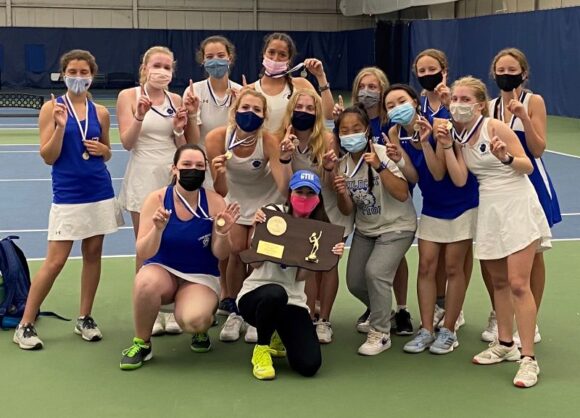
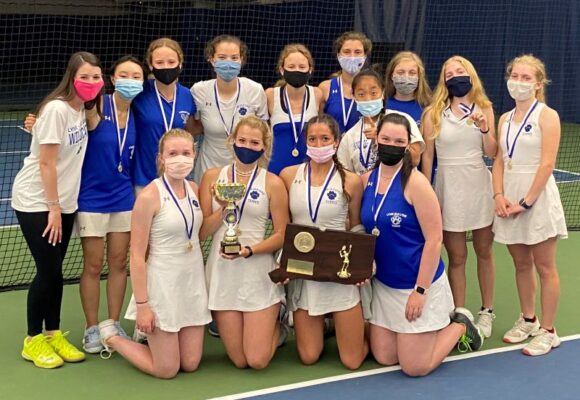
The Lyme-Old Lyme High School (LOLHS) Girl’s Tennis team poses with the Class S state championship trophy yesterday after defeating Litchfield 5-2.

LYME/OLD LYME — The top-seeded Lyme-Old Lyme High School (LOLHS) girl’s tennis team became the CIAC Class S state champions yesterday for the first time in school history when they stormed to  a 5-2 victory over #2 seeds Litchfield yesterday.  The tournament final was played indoors at the Magic Lincer Tennis Club in Manchester.

The Old Lyme girls finished the season undefeated at 20-0 and also won the Shoreline Conference title along the way.

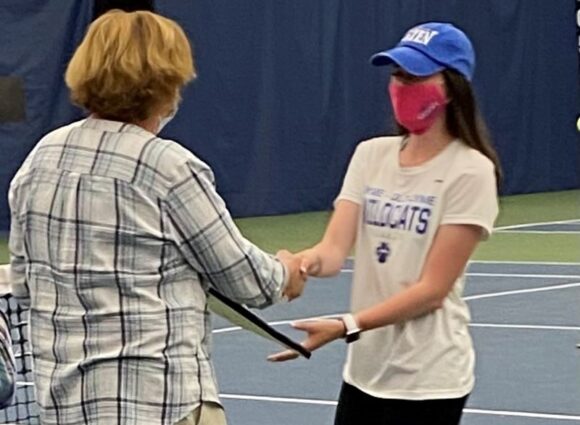
Asked how she felt about this extraordinarily successful season, team coach Lauren Rahr, who is also a math teacher at LOLHS, responded, “It has been such an amazing season with a wonderful group of girls. When I woke up this morning I still couldn’t believe that we actually won a state tournament!”

The LOLHS Girl’s Tennis Team first-year coach Lauren Rahr accepts the Class S state championship trophy after her team’s win Thursday.

She continued, “This year was my first year coaching tennis. Previously, I had played tennis for Waterford High School and Endicott College. It was always my dream to teach math at a high school and coach their girls tennis team. Being hired at Old Lyme provided me with the opportunity to pursue these goals.”

Rahr added, “Going into this season, I didn’t want to let the girls down, and I hoped that they would all get along and win some matches. But what actually happened this season was more special than I ever imagined. The minute I saw them play and really compete on the court I knew we had something special.”

Describing the team overall, Rahr said, “Out of my 10 starting varsity players, one had competed in a varsity high school match before this season. There was a lot of nerves and inexperience when it came to match play, but each practice we ran mental toughness drills or talked tennis strategies to help bring the girls to the level they competed at all season long.”

Noting, “Tennis is such a wonderful sport because anyone can step on the court and swing a racket, Rahr pointed out, “But what makes a tennis player special is when they can analyze their short and their opponent’s shots. I like to call this “smart tennis” and by the end of the season all of my girls had accomplished this. Our change over conversations went from me doing most of the talking to them giving me detailed recollections of things they noticed and strategies they were using.”

In terms of statistics, Rahr recalled that, “During the regular season, the team competed at a high level winning 11 of their 16 matches 7-0. Three of my players went on to win the Shoreline conference individual tournament: Lauren Wallace and Alexis Fenton won the doubles draw and Samantha Tan won the ¾ singles draw.” She highlighted, “These three players were able to remain undefeated in post-season play as well as regular season. Livie Bass (four singles) was undefeated in team matches and clinched us both our semi-final win and our finals win.”

The LOLHS Girl’s Tennis team members deservedly celebrate being #1 in Class S statewide!

Talking specifically about the championship final, Rahr said, “Yesterday, every single girl went out on the court fighting not just for themselves, but for the team. This group of girls has passion, drive, and huge hearts. I feel so lucky and honored to have been able to coach them this year.”

She explained further, “During yesterday’s match, we knew winning doubles would put us in a good spot. My number one doubles pair of Lauren Wallace and Alexis Fenton won their match in record time, executing flawless doubles strategies, placement, and communication. Their win drove the momentum in our direction for the remainder of the match.”

She summed up Wallace and Fenton’s performance in the words, “Their leadership throughout the season has been a big part of our success.”

Rahr concluded, “This is one of those once in a lifetime moments that I will never forget, and I hope the girls will always remember too. No matter what else comes my way with coaching, I don’t know if anything can top this moment with this special group of girls.”

A la Carte: A Special Soup for Summer … Asparagus, of Course!

Lee White

I had promised to send you my friend Stacie’s flan recipe, but time, as often, got away from me last week. 

Perhaps I was dreaming about a  book I just finished reading, “We Begin at the End,” a sort-of growing up and murder mystery recommended by my good buddy, Rick Koster of The Day. Or maybe I was thinking about a new novel I am reading now, “The Plot,” written by an author whose books I have loved.

This one is a novel inside a novel written by an author who is writing a novel. I even went out for a late lunch/early dinner with friend Ginger Smyle.  After our meal, we got bought  ice cream in Mystic, and sat on a bench beside the Mystic River, pretending we were tourists.

But most of all, I am dreaming about vegetables, for my CSA begins in a couple of weeks.

There weren’t be many veggies ready for my weekly trip to Stone Acres in Stonington, so I drove to Trader Joe’s and bought a few packages of their frozen vegetables (almost as good as the ones we will get at the farm markets by mid-July).

And in the supermarket I bought what is still available or somewhat is local: asparagus.

I will cook as much asparagus as I can, because it will not be fairly local until next spring. And remember, those skinny stalks are not as delicious as the fat ones. Break the bottom at the point where it wants to, then use a potato peeler up to about an inch of the “flower.”

Cream of Asparagus Soup

Adapted from The Way to Cook by Julia Child (Alfred Knopf, New York, 1994)

Yield: about 2 quarts

1 cup sliced onions
3 tablespoons unsalted butter
2 pounds fresh asparagus, washed, bottom broken and peeled about an inch from top “flower”
2 quarts lightly salted boiling water
2 tablespoons flour
salt
freshly ground white pepper (black if you don’t have white)
½ cup heavy cream, crème fraiche or sour cream, optional*

Cook onions and butter until tender and translucent. In the meantime, cut the tender green from the asparagus tips; drop the tips into boiling water and boil 2 minutes, or barely tender. Dip out with a skimmer, reserving water, and refresh tips in bowl of iced water to set the color; drain and reserve.

Chop the remaining stalks into one-inch lengths and add to the onions with a sprinkling of salt. Cover and cook slowly 5 minutes.

Stir in flour and cook, stirring, 3 minutes more. Remove from heat, and, when bubbling stops, blend in the hot asparagus cooking water (I skim the water into the mixture.) Simmer, uncovered, 25 or 30 minutes, or until tender enough to puree.

When the mixture is a bit cooler (maybe 15 minutes), pour into blender (or use a soup blender). If you like the soup clearer, you can use a sieve or Foley Food Mill. The soup will be a lovely pale green color—to keep it that way, reheat it only just before serving. Carefully correct seasonings.

You can serve this soup hot or cold.

If you are using cream, crème fraiche or sour cream and serving it hot, gently reheat the soup and add the cream just before serving. If you are serving the soup cold, refrigerate the soup and swirl in the cream before serving. To decorate each bowl of soup, garnish with the asparagus tips.

*The soup does not need cream but it is delicious. Another way to use the cream is to swirl a little cream into each bowl before adding the asparagus tips.

About the author: Lee White has been writing about restaurants and cooking since 1976 and has been extensively published in the Worcester (Mass.) Magazine, The Day, Norwich Bulletin, and Hartford Courant. She currently writes Nibbles and a cooking column called A La Carte for LymeLine.com and the Shore Publishing and the Times newspapers, both of which are owned by The Day. She was a resident of Old Lyme for many years, but now lives in Groton, Conn.

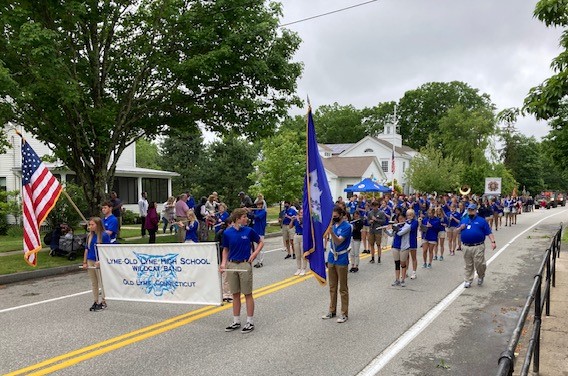
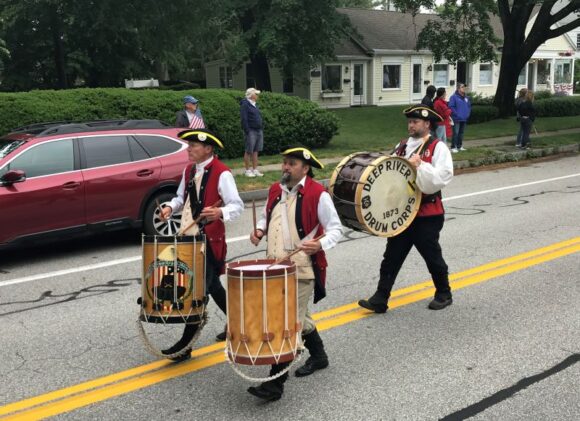
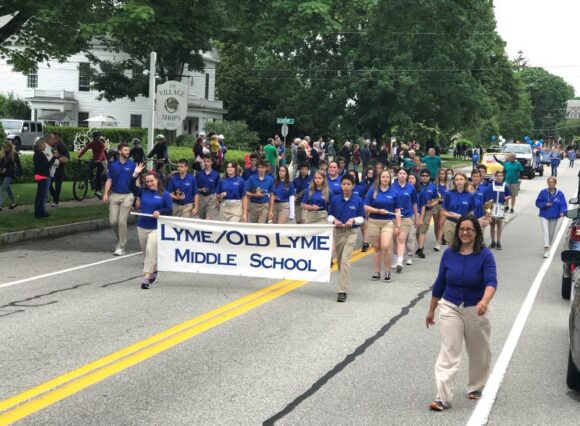
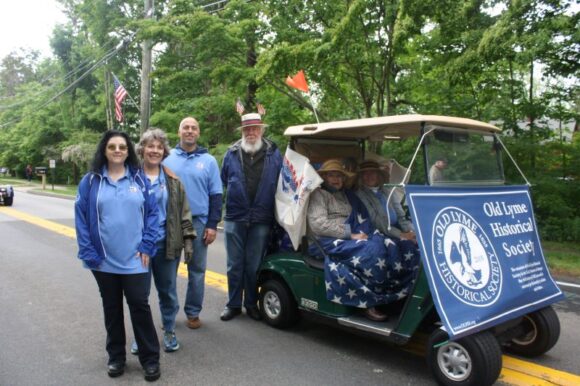
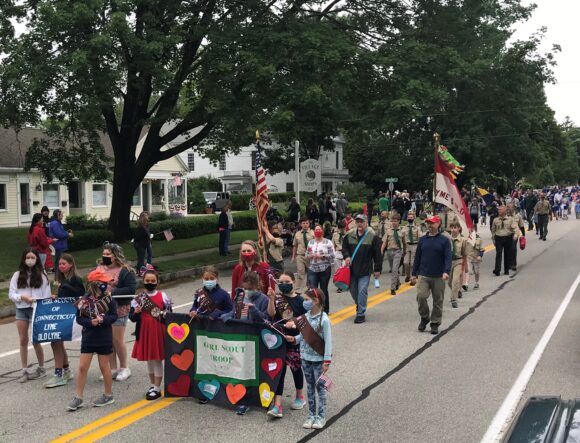
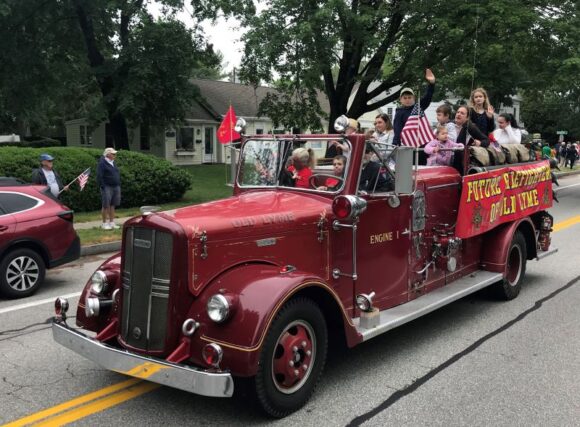
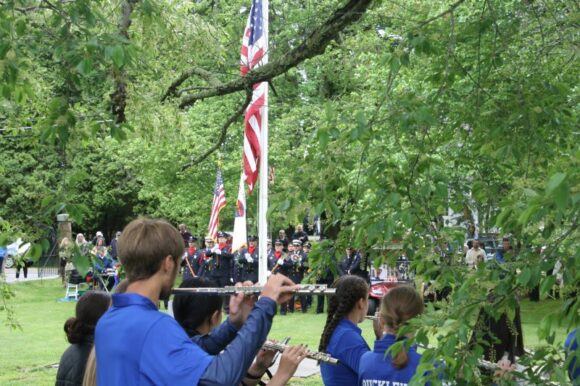
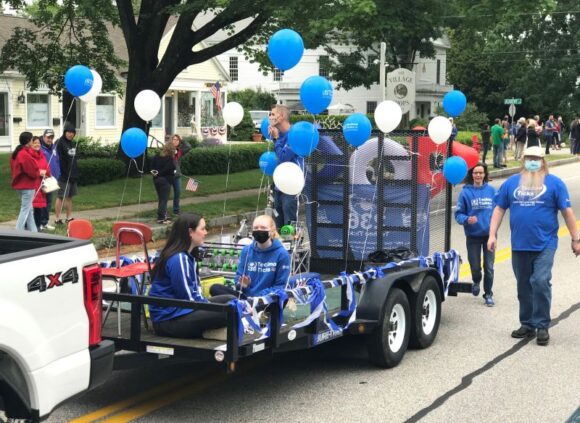
Good to be Back! Old Lyme’s Memorial Day Parade Sparks Smiles All Around

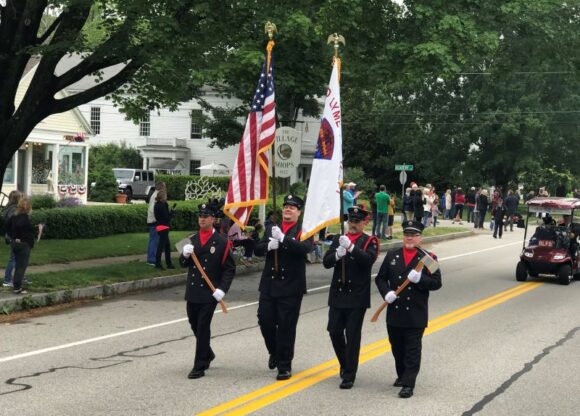
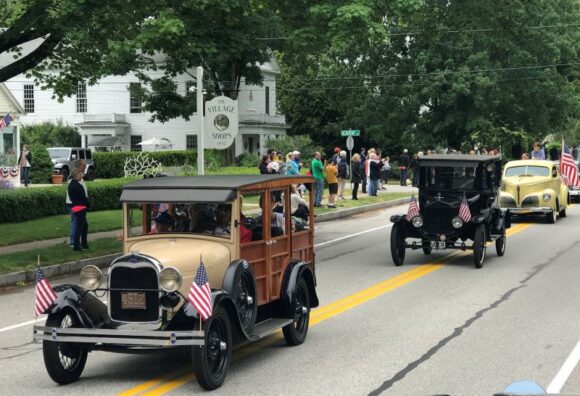
All photos by Michele Dickey and Suzanne Thompson.

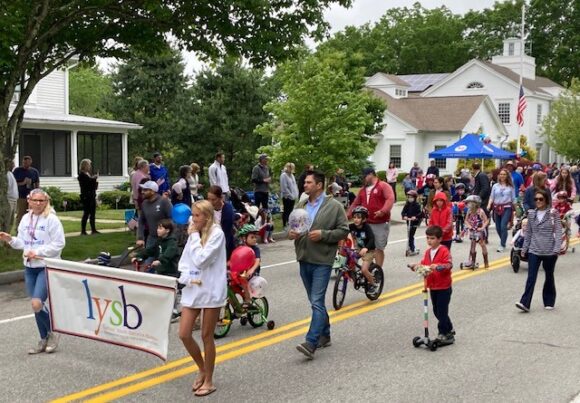
OLD LYME — Absence makes the heart grow fonder, and as parade-watcher Lauren Girasoli announced cheerfully, “I think people were just happy to be out seeing each other, and it wouldn’t have mattered if nothing had come down Lyme Street!”

This comment was a reflection of the impact of the COVID-19 pandemic, which forced cancellation of the parade last year and has kept most people confined to their homes for the past 18 months.

As Old Lyme Selectman Chris Kerr said at a recent board of selectmen’s meeting, “People need this parade.”

And although the weather did not cooperate fully, people did indeed come out to view the parade.

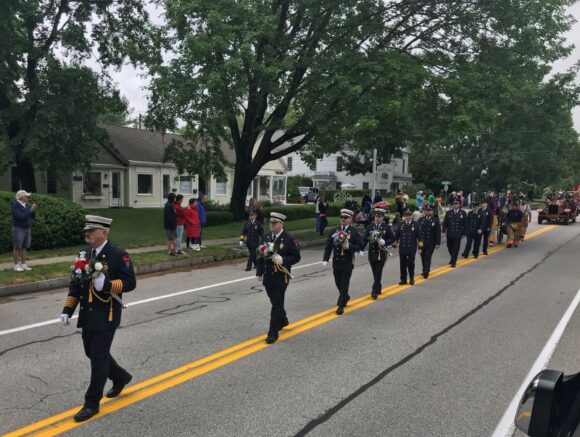
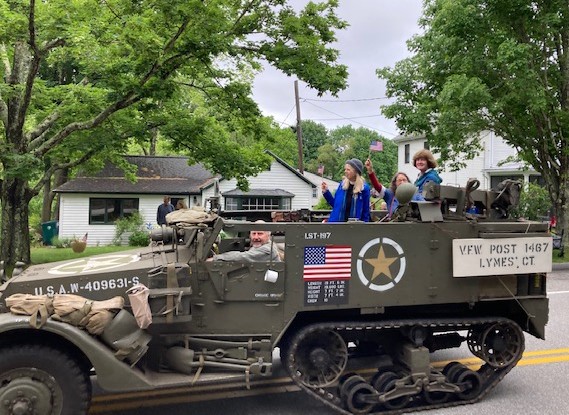
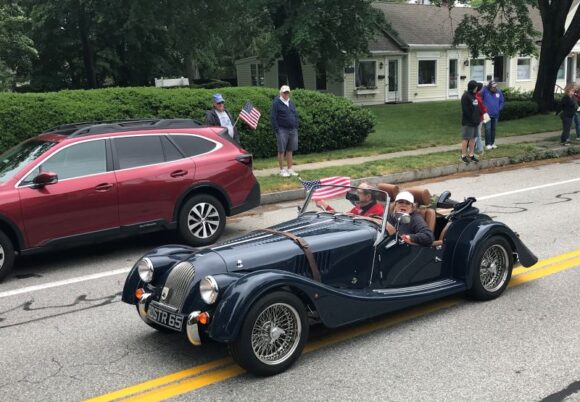
It was the familiar parade, but there seemed to be more of it: the high school band played longer in one place and there were more antique cars and fire trucks.

Members of the Old Lyme Historical Society make their final preparations for the parade. Photo by James Meehan.

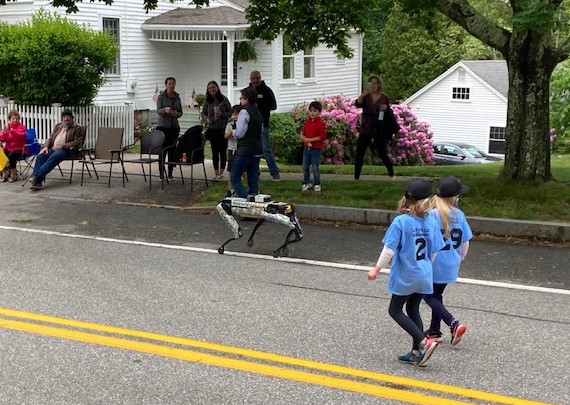
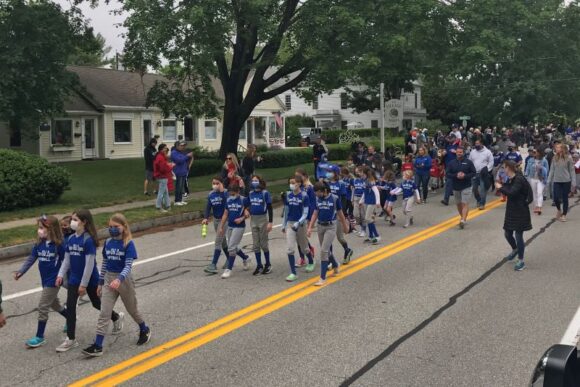
And how about that robotic dog that pranced in front of a softball team like a realistic-but-headless greyhound? (See photo above.) What was that all about?!

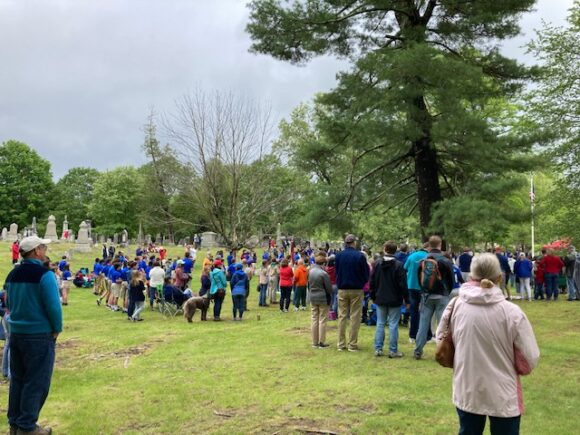
At the cemetery, the winning contest winners who read their essays were high school students.

They spoke on different topics in an unsurprisingly more sophisticated tone than the usual elementary school students, who traditionally read their winning essays on the subject, “What Memorial Day Means to Me.”

The late Old Lyme Fire Department Chaplain Mervin Roberts was sadly missed, and the very recently-appointed new Chaplain wisely did not try to fill his shoes and speak.

Everyone was invited to join the band and Lyme-Old Lyme High School Select Singers in singing the Star-Spangled Banner. It felt so wonderful!

Songs, speeches, the raising of the flag, the laying of a wreath – all much the same as two years go, but oh, so welcome this year.

The combined bands of LOL High and Middle Schools played the Star-Spangled Banner during the Memorial Day ceremonies at Duck River Cemetery. Photo by James Meehan.

The cemetery ceremony lasted over an hour.

How good it was to be back!

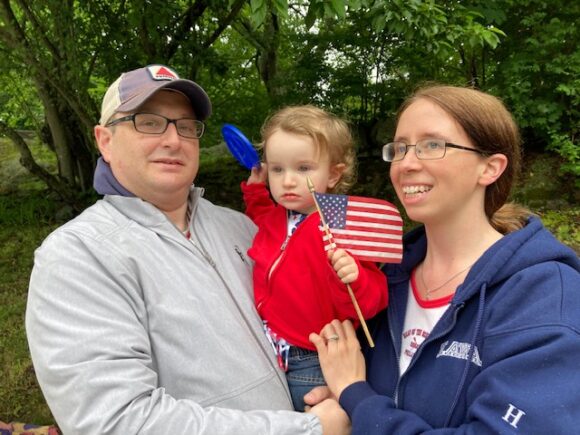
Brian and Lauren Girasoli enjoy the parade with their daughter, Cecilia.

Many thanks indeed to all, who made this happen.


A View from My Porch: Epic Poems of Folk and Rock Part 3 — The Rock and Roll War

Editor’s Note: This is the third column by Tom Gotowka under the heading, ‘Epic Poems of Folk and Rock.’ Find Part I  at this link and Part II at this one.

I continue the “epic poems” theme in this essay, but shift to the epic works of conflict; focusing on the rock and roll genre, as influenced by the Vietnam War.

In review, Part 1 presented several works of folk music that, I felt, were the natural successors of the epic poems of antiquity. In Part 2, I considered how America became entangled in the Vietnam War, as a prerequisite for this review of the music of that war.

Epics of the Vietnam War Era:

As noted last time, Stars and Stripes” called Vietnam “the first rock and roll war”. I present, in the following, some of the music that supports that contention. I provide some context for each song, and include a sample of the lyrics, trying to ensure that the sample still conveys the original message.

Some of the lyrics are a little gritty, and the context may be troubling, but they’re included to fully illustrate the era, not to offend the reader. So, here’s the war in six songs.

“Fortunate Son”: Creedence Clearwater Revival (1969)

Photograph of Creedence Clearwater Revival (1968). L-R: Tom Fogerty, Doug Clifford, Stu Cook, and John Fogerty.

When John Fogerty wrote the song, draft deferments were undoubtedly on every teenaged American boy’s mind. His lyrics support the men who served in Vietnam, but condemn the “children of privilege” (i.e., “millionaire’s son”), who used that privilege to “dodge” the draft.

Pulitzer Prize winning Vietnam War correspondent, David Halberstam, reported that the ways in which draft-age men received deferments favored those who were wealthier and more educated. For example, able both to remain in college full-time, and then pursue advanced degrees after graduation; and thus, qualifying for student deferments. 

In addition, those same young men could obtain deferments for physical problems, even untreated bone spurs, more easily than could poor or working-class men; and, “rather than trying to convince a draft board that they were physically unable to serve in the military, they could just get a note from their family doctors”. 

“Some folks are born, made to wave the flag;
they’re red, white and blue.
And when the band plays “Hail to the Chief”,
they point the cannon at you, Lord!
Some folks are born, silver spoon in hand;
Lord, don’t they help themselves?
But when the taxman comes to the door,
the house looks like a rummage sale.
It ain’t me, it ain’t me;
I ain’t no millionaire’s son.
I ain’t no fortunate one”.

“Feel Like I’m Fixing’ To Die Rag”: Country Joe McDonald ​(1965)

In this dark parody of the war, Country Joe (and the Fish) demonstrate the hopelessness that many Americans felt toward the War. The artist touches on, albeit, sarcastically, several important war themes in the full seven verses: the government notion that going to war was in the country’s best economic interest; and, consequently, the support from Wall Street, weapons manufacturers, and an “overly aggressive” Pentagon. 

The song also has the distinction of having been performed twice at Woodstock, and I have corroboration from a very reliable eye witness, my wife, Christina, who was present at those “3 Days of Peace & Music” in the Catskills, in 1969.

“Well, come on all of you big strong men,
Uncle Sam needs your help again.
He’s got himself in a terrible jam, way down yonder in Vietnam.
So put down your books, and pick up a gun,
we’re going to have a whole lot of fun.
And come on mothers throughout this land, pack your boys off to Vietnam.
Come on pops, don’t hesitate, send them off before it’s too late.
And then, it’s one, two, three, what are we fighting for?
Don’t ask me, I don’t give a damn.
Next stop is Vietnam!
And it’s five, six, seven,
open up the pearly gates.
Well, there ain’t no time to wonder why,
Whoopee! we’re all going to die.”

“Revolution”: The Beatles (1968)

Trade ad for Beatles’ 1964 Grammys. Public Domain.

John Lennon and Paul McCartney wrote the song to demonstrate their strong objection to the increasingly violent protests that had occurred in response to the war.

To illustrate, in April, 1965, Students for a Democratic Society (SDS), held its first national protest march in Washington, DC. Co-sponsored by Women’s Strike for Peace, 25,000 attended.  After this peaceful protest march, SDS grew increasingly militant, and their tactics then included the occupation of college administration buildings on campuses across the country. The 1968 violence at Columbia University is covered in “The Strawberry Statement”, by James Kunen (both book and movie).

On Oct. 21, 1967, over 100,000 protesters gathered at the Lincoln Memorial; and later that same night, over 35,000 of the group marched on to the Pentagon for a second rally, where they sparked a violent confrontation with the soldiers and U.S. Marshals protecting the Pentagon complex. Nearly 700 demonstrators were arrested. 

Notably, the demonstrations produced the famous “flower power” photograph of a protester placing a flower in a paratrooper’s M14 rifle barrel. 

On March 17, 1968, 10,000 protesters demonstrated in Trafalgar Square against American action and British support in Vietnam. This was followed by 8,000 protesters marching to the American Embassy in Grosvenor Square; where a fierce battle with riot police and mounted officers ensued.

In August 1968, the Democratic National Convention in Chicago, bore witness to a series of riots, involving tens of thousands of Vietnam War protesters, both during and before the convention. Eight protest leaders were tried on charges of criminal conspiracy and incitement to riot. 

The eight eventually became the “Chicago Seven”, after convictions were overturned because of procedural errors and Judge Hoffman’s “overt hostility to the defendants”.

Tragically, on May 4, 1970, just four days after President Nixon announced the escalation of the war into Cambodia, four students at Kent State were shot by National Guardsmen during a protest.

“You say you want a revolution.
Well, we all want to change the world.

You say you got a real solution.
Well, we’d all love to see the plan
You ask me for a contribution.
Well, we’re all doing what we can; but, 

if you want money for people with minds that hate;
all I can tell you is, brother, you have to wait.
When you talk about destruction,
don’t you know that you can count me out?
But if you go carrying pictures of Chairman Mao;
you aren’t going to make it with anyone, anyhow.”

“Ballad of the Green Berets”: Barry Sadler (1965)

The United States Army Special Forces, the “Green Berets”, are the Army’s special operations group, whose mission extends well beyond conventional warfare. 

In May 2004, a plaque was dedicated at Fort Campbell, honoring the 695 Green Berets killed in action, and the 79 missing in action during Vietnam.  Of the MIA, only three soldiers have been recovered. 

“Ballad” is a patriotic tribute to our soldiers in Special Forces, and one of the few popular songs of the Vietnam War era that portrays the military in a positive manner. 

Sadler served as a medic with the 5th Special Forces Group (Airborne), and his song, written to boost morale among our troops in Vietnam, also served as the inspiration for the John Wayne movie, “The Green Berets”.

“Fighting soldiers from the sky, fearless men who jump and die.
Men who mean just what they say; the brave men of the Green Beret.
Silver wings upon their chest; these are men, America’s best.
One hundred men we’ll test today, but only three win the Green Beret.
Trained to live off nature’s land; trained in combat, hand-to-hand.
Men who fight by night and day, courage peak from the Green Beret.”

“I Ain’t Marching Anymore”: Phil Ochs (1965)

Ochs was the “iron man” of “protest” singers; and, in his career, performed, as a “regular” at anti-war, civil rights, organized labor, and women’s rights events. 

I believe that this is his best; or at least his best- known anti-Vietnam War song; and it became an “anthem” at rallies and protests. 

The song is really a treatise on the entirety of American conflict, and he casts himself as a tired soldier, who has fought in each American war, beginning with the battle of New Orleans in the War of 1812. And on through both world wars.

He performed the song in August 1968, during the violent protests outside the Chicago Democratic National Convention, and, it is claimed, inspired hundreds of young men to burn their draft cards (really). He later described it as the highlight of his career.

“Oh, I marched to the battle of New Orleans,
at the end of the early British wars;
the young land started growing, and
the young blood started flowing,
but, I ain’t marching anymore.

I’ve killed my share of Indians, in a thousand different fights.
I was there at the Little Big Horn;
I heard many men lying, I saw many more dying;
but, I ain’t marching anymore.

Chorus: It’s always the old who lead us to war;
it’s always the young to fall.
Now look at all we’ve won with the saber and the gun.
Tell me, is it worth it all?

I stole California from the Mexican land,
and fought in the bloody Civil War.
I even killed my brothers, and so many others;
but, I ain’t marching anymore.

I marched to the battles of the German trench,
in a war that was bound to end all wars. 

I must have killed a million men, and now they want me back again;
but, I ain’t marching anymore.

I flew the final mission in the Japanese skies, and
set off the mighty mushroom roar.
I saw the cities burning, and 

I knew that I was learning;
that I ain’t marching anymore

Call it peace or call it treason,
call it love or call it reason;
but I ain’t marching anymore.”

“Born in the USA”: Bruce Springsteen (1984)

Bruce Springsteen performing at Roskilde Festival 2012. Photo credit: Bill Ebbesen. This file is licensed under the Creative Commons Attribution-Share Alike 3.0 Unported license.

I present “Born” as the anchor of the song list because Springsteen’s focus is on America’s poor treatment of returning Vietnam War veterans. The lyrics are an account of the disrespect those veterans faced on their return home to a society that was largely opposed to the war. 

This song may be one of the most misinterpreted songs in rock and roll history. Since its release, the song’s chorus has been omnipresent at political rallies; and heard as a celebration of American life. The anti–war message is rooted in the verses, and may have been lost early on, because the song was released about a decade after the war ended.

The song is consistent with what I noted last time in “Working-Class War”, by Christian Appy; who observed that the typical U.S. soldier in Vietnam was from a poor or working-class family; a large portion were from the inner cities and factory towns. 

In the first verse, Springsteen introduced the story of a young man, born into a failing American town, who was apparently abused by his family. In some trouble, he is ordered by the courts to enlist rather than serve time. His brother, or close friend, is killed in action. 

He returns home after the war, can’t find a job, and is treated with indifference by the V.A. The final verse describes his progression into despair.

“Born down in a dead man’s town; the first kick I took was when I hit the ground.
You end up like a dog that’s been beat too much,
until you spend half your life just covering up.
Got in a little hometown jam; so, they put a rifle in my hand.
Sent me off to a foreign land; to go and kill the yellow man.
I had a brother at Khe Sanh, fighting off the Viet Cong.
They’re still there, he’s all gone.
I came back home to the refinery; hiring man says “Son if it was up to me”.
I went down to see my V.A. man; he said “Son, what don’t you understand”?
In the shadow of the penitentiary; out by the gas fires of the refinery.
Nowhere to run, and nowhere to go.”

Author’s Notes:

Unlike Bruce Springsteen, I am not certain whether the courts can, or ever did, require enlistment in lieu of serving time for a criminal infraction.  If so, I can’t imagine that these individuals would be considered high value recruits. A large portion of the opposition to the war was the onus of the draft. I was not able to find reliable data on the portion of draftees, versus voluntary enlistees, in Vietnam, as opposed to prior, or subsequent (e.g., Afghanistan) wars.

I only included works that I could directly attribute to the writer’s reaction to the war. Clearly, there was a wealth of additional music that was popular at the time and was probably listened to regularly by soldiers in Vietnam.   For example, I included nothing by the Rolling Stones; and did not consider “We Gotta Get out of this Place”, by the British group, The Animals, although the song has been part of the sound tracks of many productions about the war. 

If you want to explore a very realistic production, I recommend “Hamburger Hill”, which is a highly accurate 1987 movie about the 1969 assault by the Army’s “Screaming Eagles” Battalion on a well-fortified enemy mountain position. The editors dramatically incorporated the music of the day into their soundtrack.

I was a “fortunate one” — the United States Navy and the military provided financial support and enabled deferments for over 10 years of advanced education. I had agreed, up front, to repay that support in service, which I’ve previously said was at a Naval Hospital.

My next “View” will be of the remarkable changes that have occurred in CT’s hospital and healthcare landscape I think that hospital advertisements on local newscasts now exceed those for replacement windows. 

Editor’s Note: This is the opinion of Thomas D. Gotowka.

Tom Gotowka

About the author: Tom Gotowka’s entire adult career has been in healthcare. He’ will sit on the Navy side at the Army/Navy football game. He always sit on the crimson side at any Harvard/Yale contest. He enjoys reading historic speeches and considers himself a scholar of the period from FDR through JFK.

A child of AM Radio, he probably knows the lyrics of every rock and roll or folk song published since 1960. He hopes these experiences give readers a sense of what he believes “qualify” him to write this column.

New ‘Family Club of CT River Valley’ Formed in Response to National Mom’s Club’s Intransigence on Racism,

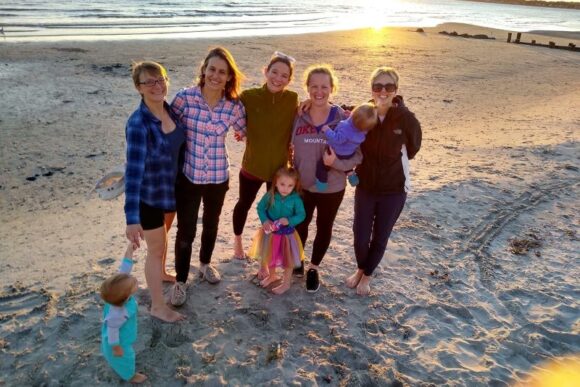
Members of the new Family Club of the Connecticut River Valley share a smile in this photo taken when they gathered on the beach with some of their children. From left to right are Maraia Ener; Charity Archbald; Danielle Kuczkowski; Rachel Kaplan; and Jolene Brant. All photos submitted.

LYME/OLD LYME/AREAWIDE — The regional Connecticut Chapter of the Moms’ Club has been around for some 12 years and during that time, has supported many women as both new and seasoned moms. Recently, however, it took the difficult decision to leave the national umbrella of Moms’ Club and break away to form the Family Club of the Connecticut River Valley (FCCRV.)

Stefanie Hill, FCCRV Administrative Vice President, explained to LymeLine that this was not a decision taken lightly, noting that there had always been times when it was easier to look the other way when it came to the national Moms Club’s messaging and policies. For example, she pointed out, “We were not allowed to meet more than once a month during evenings or weekends because we were supposed to be at home supporting our husbands.”

Hill added, “We also assumed it was just old wording, which stated that the club was only “for at-home moms,” because our own club welcomed working moms.”

Club members could live with those things, she said, but then came the summer of 2020 when a major racial reckoning surfaced in the US. Understandably, Moms Clubs all across the country started discussing their response to this situation since, Hill said, “As moms, this affects us because we are actively raising children — the next generation in our society.”

One Club Chapter in California decided to make a simple statement and promise, “We stand with all moms and pledge that racial discrimination will stop with our kids.”

The national Moms Club, however, decided not to permit use of that statement and determined, to quote Hill, that, “Somehow standing for basic human rights is “political activity.”

The national Club took things even further, saying in a nutshell that if individual Clubs did not agree with the national position, then they should leave.

And so, over 200 chapters (including the regional Connecticut chapter) and thousands of members did leave due to the national Club’s stance that race itself is political and discussions about racism should not be entertained.

The local Old Lyme-Old Saybrook Moms Club took a vote among their own members and decided unanimously to leave the national club because, in Hill’s words, “We felt strongly that we needed to hold the organization, which we were a part of, accountable. Silencing conversations about race in our homes is harmful because silence is exactly how racism has continued to be so pervasive in our country.”

She added, “While we may think we are teaching “color blindness,” we are instead ignoring the realities of both personal and systemic racism that continue to harm people of color.”

Hill continued, “As parents we have the power to change the narrative for our children – that all skin colors, religions, genders, sexual orientations, abilities, and identities are valued. We are a part of a collective society and injustice towards those other than ourselves should not be ignored.”

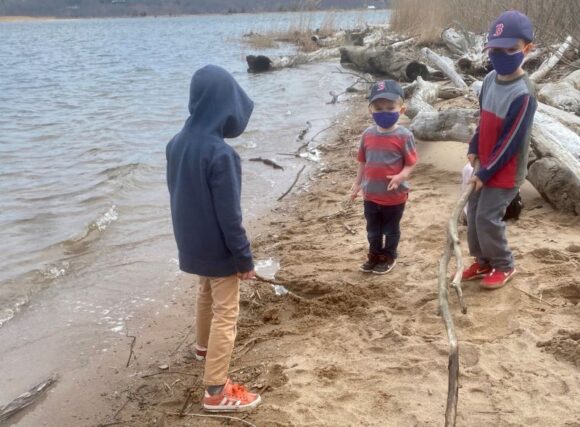
The new Family Club of the Connecticut Valley organizes a variety of activities during the year. Here children of members are seen exploring the riverside during one of the events.

After the decision had been taken to leave the national Club, board members from the local club took up the call to action to form a more inclusive group.

In many ways the FCCRV is similar to the previous structure, which supported moms through making connections, but now it welcomes in addition dads and anyone serving in a parent role.

The mission statement of the FCCRV is, “… to create and promote a supportive network of families in the Connecticut River Valley, emphasizing inclusivity, diversity, kindness, and community engagement, to strengthen our parenting experiences and enrich the lives of our children.”

Hill emphasized the FCCRV is not a social justice club but they will not quash conversations about race as an essential parenting issue,” but instead encourage them.

She added, “While change is never easy, adapting is necessary … Family Club is choosing not to live in the past but instead to hope for a better future for all children. There is still a movement for social justice happening in our country that can’t be ignored. And parents in our communities still need support.”

Jolene Brant of Old Lyme, president of the newly-formed club, summed up her own feelings on creating the organization, saying, “I feel like now that we have created the Family Club, friends are joining and our membership is growing.”

The FCCRV now has some 30 members and welcomes new ones from Old Lyme, Lyme, East Lyme, Waterford, Old Saybrook, Westbrook, Chester, Deep River, and Essex. Many parents in the club are new parents or have elementary aged children, but parents with children of all ages are welcome.

Events hosted by members are held during the day, on weekdays or weekends to suit the varying schedules of members but monthly “social” meetings generally take place after school or on weekends to try and accommodate the most families. Evening ‘happenings’ for adults only are typically organized once a month and range from trivia nights to dessert and drinks.

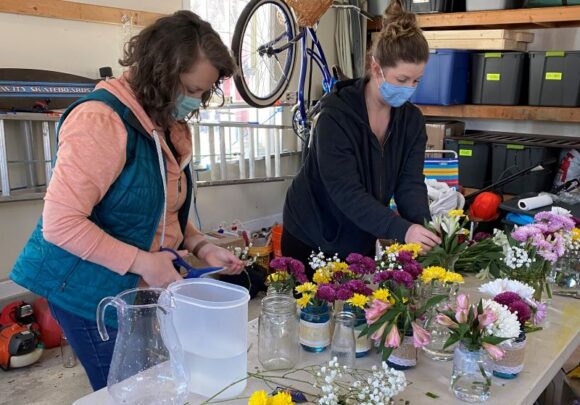
One of the Club’s service activities was preparing flowers for the residents of Essex Meadows.

The Club plans two to four service projects a year to participate in the local community. One of these was preparing flowers in vases to take to the residents of Essex Meadows along with examples of artwork created by members’ children.

During the month of May, the FCCRV hosted a highly successful Diaper Drive to benefit the Shoreline Soup Kitchen and Pantries. The Drive not only raised funds bit also collected over 2,000 diapers for families in need.

Looking to the future, Brant concluded on a positive note, saying, “We are making an impact in the community with our outreach efforts, we are here to make our community stronger, and we are providing families with as much support as possible. I feel like we are making a difference, and I feel a sense of accomplishment.”

Editor’s Note: Visit this link for more information about the Family Club of the Connecticut River Valley, including details of how to join.