Lyme Academy of Fine Arts Launches New Program of Study, Offers Classical Arts Education for Less Than $10K Per Year 

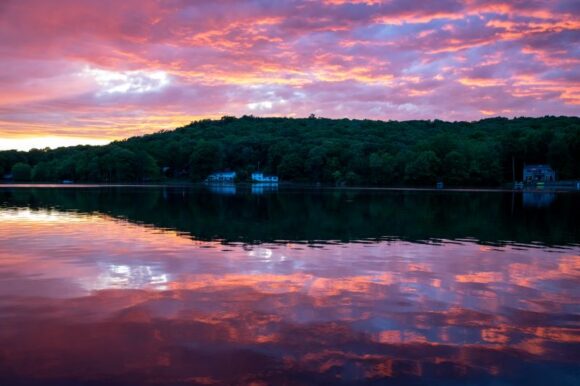
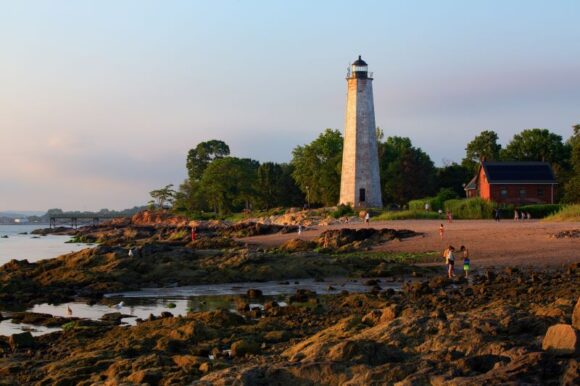
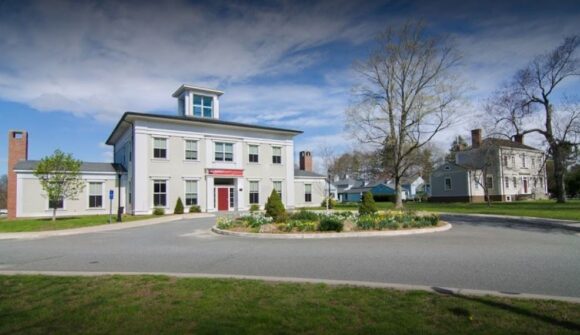
OLD LYME — The Lyme Academy of Fine Arts, pictured above, has launched its application drive for full-time students with a reimagined core program of study, which will commence in late September. Led by the  husband and wife team of Jordan Sokol and Amaya Gurpide, a dynamic new faculty of internationally-acclaimed instructors will teach students the foundational skills on which they can  build a career in the fine arts.

“We’re looking for students who really want to apply themselves and work hard to grow and develop” said Sokol, himself an accomplished painter, adding, “You’ve got to be willing to put in the thousands of hours required, if you are serious about developing your talent. There are no short-cuts.”

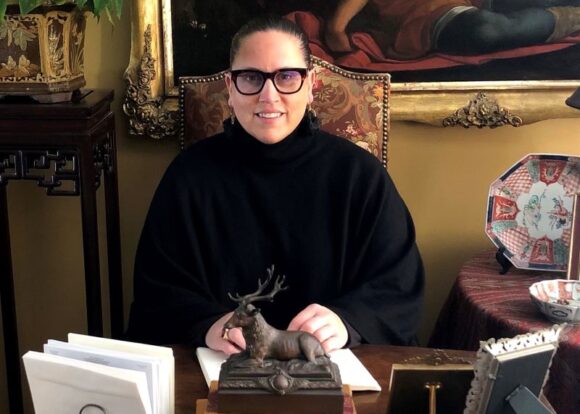
Jordan Sokol (right) and Amaya Gurpide are the new Artistic Director at Lyme Academy of Fine Arts.

It is expected that most students will study for three years, although some will pursue a shorter course of study and others longer, depending on their individual objectives and the progress they make developing their skills.  

Building on the momentum developed from a series of community programs that have energized the campus, the Academy’s Executive Director Mora Rowe, said, “We have stunning facilities in a magical setting that combines a great history with the future of figurative and representational arts.”

Due to the reorganization that has taken place at the Academy, it will no longer confer Bachelor’s degrees. In place of seat-time requirements for credit accumulation, students will instead focus on skill-building with an eye towards mastery.
The Executive Director of Lyme Academy of Fine Arts is Mora Rowe.

“As a result of this shift, we’ve been able to significantly reduce the Academy’s overhead costs and can offer a full-time course of study for under $10,000,” said Rowe. At a time when many are questioning the spiraling costs of higher education, students can now attend Lyme Academy and complete a course of study for less than the amount for a single year’s tuition when the institution conferred Bachelor of Fine Arts degrees. 

Founded in 1976 by the sculptor Elisabeth Gordon Chandler, the Academy was created as an institution dedicated to the traditional, skills-based education, first taught in the Renaissance academies of Europe and later at Paris’s École des Beaux-Arts.

In walking away from being a degree-granting institution, Lyme Academy has returned to its roots: at its founding and for many years thereafter, students were attracted to the Academy to learn skills, not to obtain a degree.
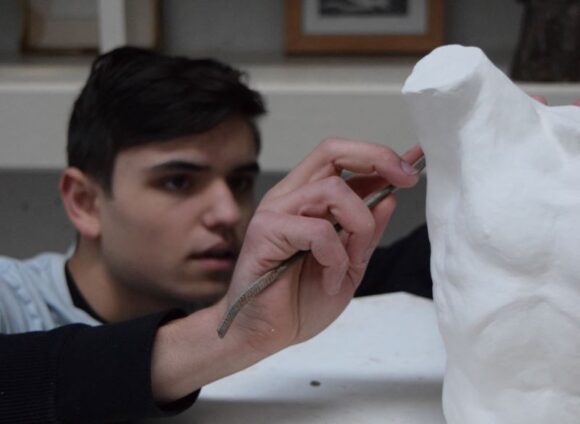
Chandler’s legacy continues in its new curriculum, which combines rigorous studio instruction in drawing and painting with anatomy, sculpture, and the histories of art. Integrated into this instructional framework is the progressive spirit of today’s Academy and a commitment to preparing its students for the 21st century art world. 

The Academy’s Core Program is comprehensive and intense: classes are conducted five days a week, from 9 a.m. until 9 p.m., with weekly supplementary instruction in anatomy, sculpture, and the histories of art. Landscape, still life, and portraiture are included in the program, as are dedicated explorations of the properties of light and form.

Students work in custom north-lit studios, honing their technical skills through the direct observation of imported  European plaster casts and live models. Intimate class sizes allow for in-studio demonstrations and individualized critiques, as well as guided museum and gallery visits.

Faculty and guest lectures are regularly scheduled, many of which are open to the public.

The camaraderie that is felt by students at the Academy is mirrored by the community outside the campus grounds. Located midway between Boston and New York, Old Lyme, Conn. has been a site of artistic congregation for over a century, recognized as the birthplace of the famed Lyme Art Colony and the ‘Home of American Impressionism.’ 

Editor’s Note: Enrollment for the 2021-2022 academic year is now open; applications are accepted on a rolling basis throughout the academic year. For further information about enrollment and how to apply, visit this link.

For further information about the Academy and its vibrant schedule of lectures, exhibitions, workshops, and part-time programs, and how to become an ‘Arts Insider,’ visit this link.
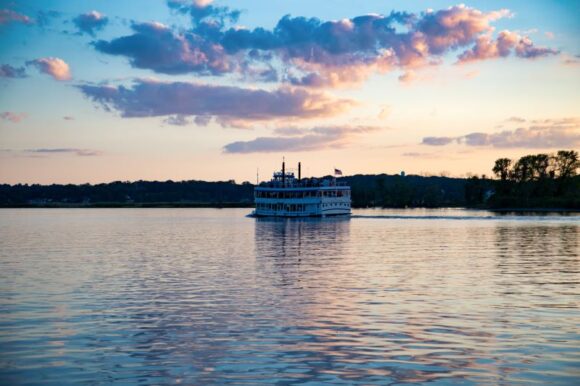
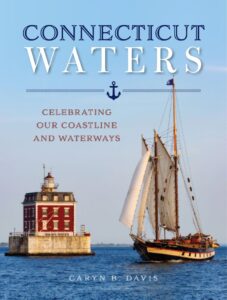
Immerse Yourself in ‘Connecticut Waters’ on a Nautical Trip with Lyme Photographer Caryn B. Davis in her Latest Book

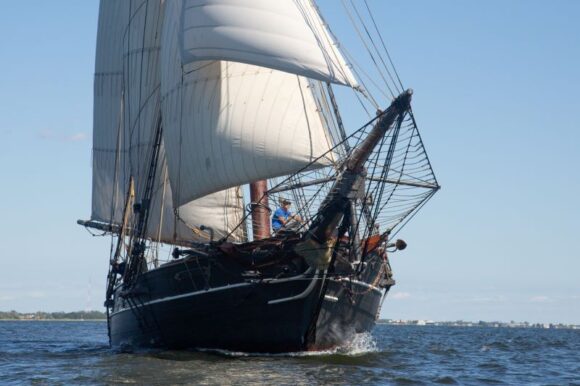
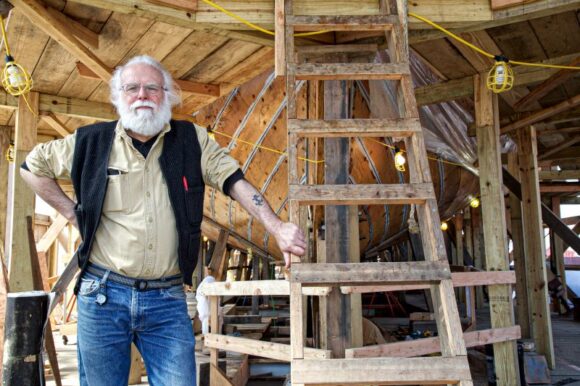
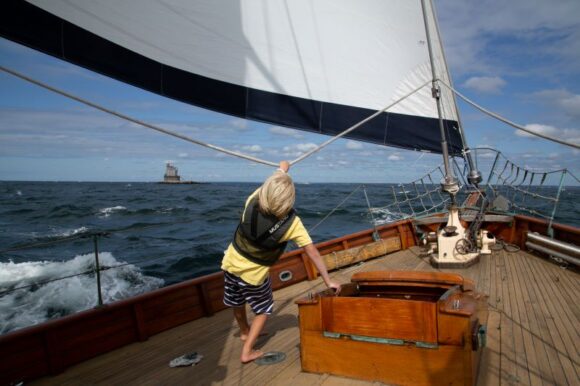
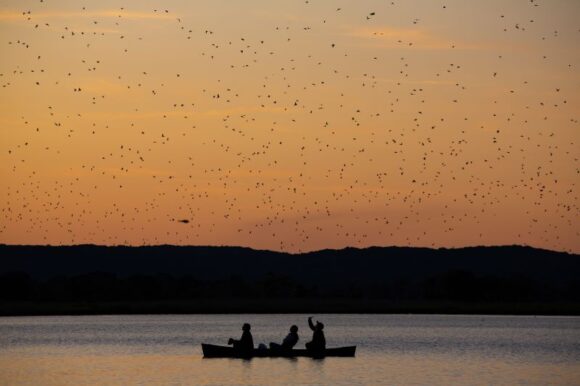
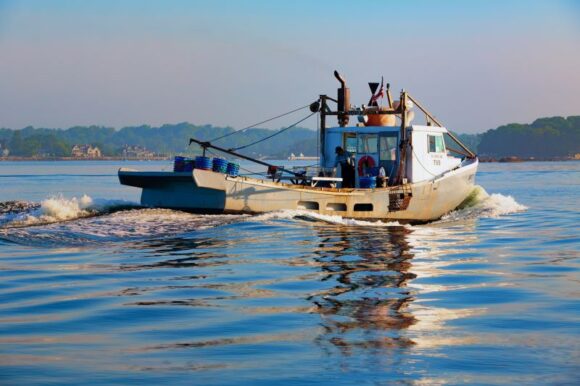
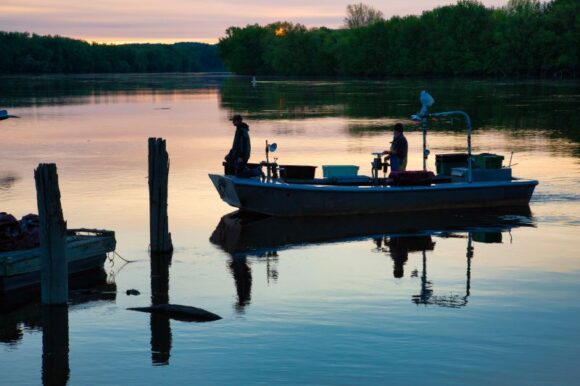
All photos by Caryn B. Davis and published with her permission. All photos taken from ‘Connecticut Waters.’

“The combination of stunning photography by Caryn B. Davis and rich text by Eric D. Lehman draws you into a world where the waters of the Nutmeg State metaphorically consume you”

Connecticut Waters is a remarkable book.

First of all, you think it is going to be yet another ‘coffee-table book’ and start to skim the pages simply to admire the beautiful photographs.

But then you start to read the narrative and it immediately demands your attention to the extent you simply cannot put the book down.

The combination of stunning photography by Caryn B. Davis and rich text by Eric D. Lehman draws you into a world where the waters of the Nutmeg State metaphorically consume you, and all you can do is to let yourself become completely — and pleasantly — immersed in them.

After that, you move to yet another level and realize that you are now not only at one with the seas, lakes, rivers, streams and shores of this oh, so special state, but along your way to that perfect point, you have absorbed a plethora of interesting facts and tidbits of fascinating information that you never knew before.

Ultimately, you feel as though you are sharing the whole experience with Davis, who conceived the book and guided the narrative. You have never met her but you are certain you know her because her deep and intimate relationship with the waters of Connecticut has suddenly become yours.

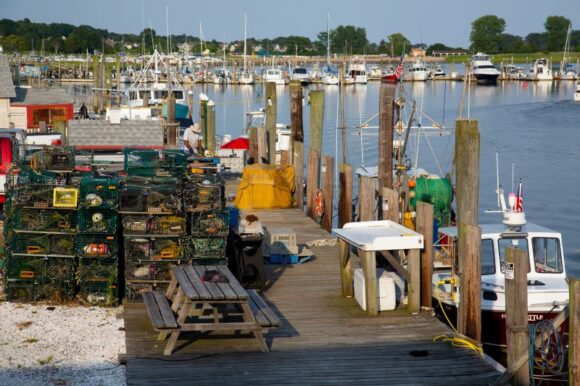
Touching variously on an vast range of engaging topics, including — but by no means limited to — lobster and other snack shacks, historic ferries, antique boats, racing yachts, nautical arts, the oyster and fishing industries, and maritime museums, the book is packed with Davis’s striking photos, which frequently span more than one page making them even more impactful.

These latter explore in creative detail the subject matter of each chapter while the narrative amplifies the history, traditions, and culture of the state’s waters and how people use them in terms of industry, education, recreation and more.

The first chapter, Races and Rendezvous, opens with the words, “Something about being on the water calls for celebration of the magnificent power of the sea …” Throughout the book, Davis captures that celebration with photos of boats of all shapes, sizes and ages at events across the state, demonstrating clearly, “… our human love for life on the water, a love that never seems to die.”

A later chapter on Islands & Lighthouses states evocatively both are, “… about beginnings and endings, about loneliness and connection. A lighthouse keeper may be the opposite of a pirate, but both know the terrible beauty of the sea.”

The photos in this chapter are particularly striking while the narrative details some of the extraordinarily courageous feats of  Connecticut lighthouse keepers. Two such examples are Charles Kenny of the Peck Ledge Light at Norwalk, who in 1921, “rowed through huge swells to save four crewmen [who had] escaped their leaking steamboat” and Bridgeport resident Catherine Moore, who “lived on Fayerweather Island nearly her entire life, tending the light and saving two dozen lives during her tenure.”

The book vacillates between chapters on ‘concrete’ subjects such as Festivals & Celebrations; Boatbuilders & Restorations; Working Watercraft, and Museums & Aquariums, and those with a more intangible air like Wood, Wind & Water; Fun in the Sun; Water, Water, Everywhere, and Coming Into Port. In each case, however, Davis combines her exceptional skill as a photographer with her in-depth knowledge of local sights, sounds, events and personalities, thus bringing the chapter fully to life.

Caryn B. Davis

It is no surprise that the photography in this book is so powerful since Davis, who lives on Rogers Lake in Lyme, Conn., is an award-winning photographer, whose career has spanned the globe taking her to over 50 countries and counting, while her images and articles have been featured in over 60 publications worldwide.

Her first commissioned photography book, A Connecticut Christmas: Celebrating the Holiday in Classic New England Style, gained high accolades in 15 newspapers and magazines nationwide. 

Lehman, who write the narrative, is the director of Creative Writing at the University of Bridgeport.

He is the author or editor of 20 books and his work has been published in dozens of journals and magazines.

If you love the state of Connecticut or even if your love only extends to the waters of Connecticut, then this is a book — as they say at weddings — ‘to have and to hold.’

It will inspire you to start planning visits to many of the places Davis highlights in her photographs. It will enchant you with the fabulous photography and finally, it will engage you with its masterful management of the challenging task of interweaving superior photos with informative text on a topic, which runs freely through the veins of anyone who calls — or has called — Connecticut home.

Editor’s Notes: ‘Connecticut Waters’ was published April 2021 by Globe Pequot Press. For more information about how to order ‘Connecticut Waters’ online or purchase it in person, visit this link.
For more information about Caryn B. Davis, visit her website at this link.
For more information about Eric D. Lehman, visit his website at this link.
 

Wet Weather Fails to Dampen Spirits at Sound View Independence Day Parade

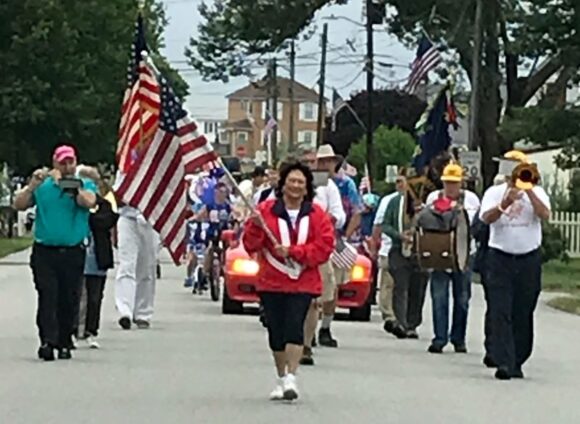
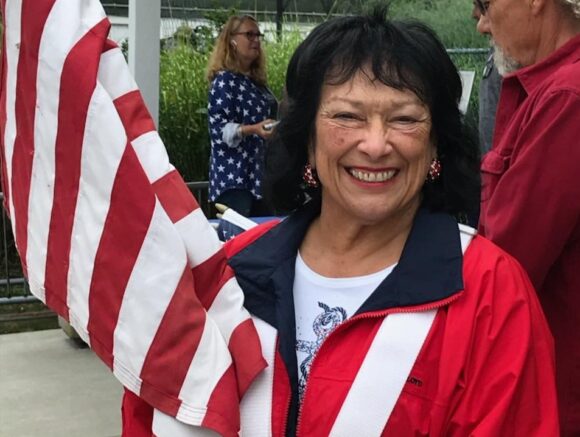
Joann Lishing leads the Independence Day parade through the streets of Sound View. All photos by Valerie Melluzzo.

OLD LYME — Despite the less than favorable weather, hundreds turned out to celebrate Independence Day a day in advance this past Saturday in Sound View.

The parade, which was cancelled last year due to COVID-19 pandemic, was a welcome sign of a return to some sort of normalcy.

An ever-smiling Joann Lishing, pictured above, led the parade proudly marching while holding high the Stars and Stripes for the full length of the parade.

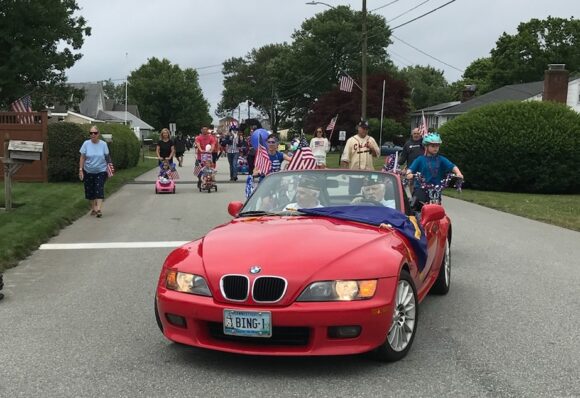
Several US Veterans traveled in this stylish car down the parade route followed by youngsters on decorated bikes and parents cheerfully pushing even younger folk on strollers and tricycles.

As always, a great time was had by all.

Rogers Lake Hosts ‘Fourth of July’ Celebratory Boat Parade This Afternoon

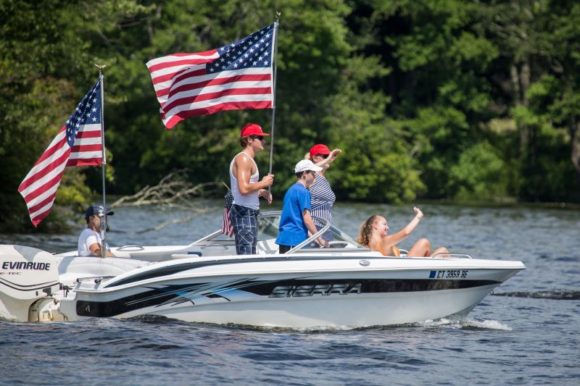
There were flags a-plenty at last year’s Rogers Lake Boat Parade. We have a feeling there will be even more this year! (File photo)


LYME/OLD LYME — After the great success of last year’s inaugural Rogers Lake Boat Parade, another one is planned this year starting at 2 p.m., Sunday, July 4, from the Hains Park area.

Both motorized and non-motorized boats are invited to participate but all must be festively/patriotically decorated! In order to achieve a timely start, participants should arrive around 1:45 p.m.

Will Lady Liberty be at the Rogers Lake Boat Parade this year? File photo.

Once the parade has begin, all boats should follow the designated lead boat or join at your respective location.

The route will be one counter-clockwise lap around the lap.

Boats should stay within 100 ft. of the shore at ‘No Wake’ speed and no swimming in or near the parade is permitted.

‘Witness Stones’ Celebration Highlighted Installation of Plaques Marking Sites of Enslavement in Old Lyme

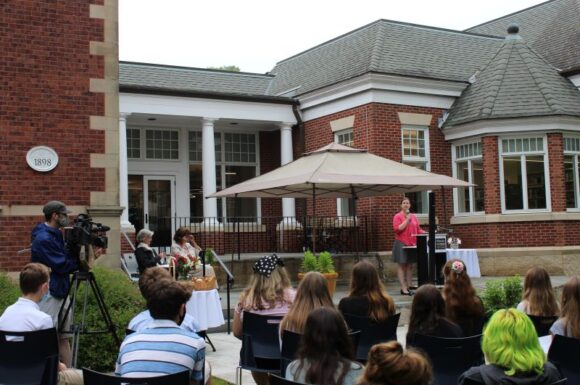
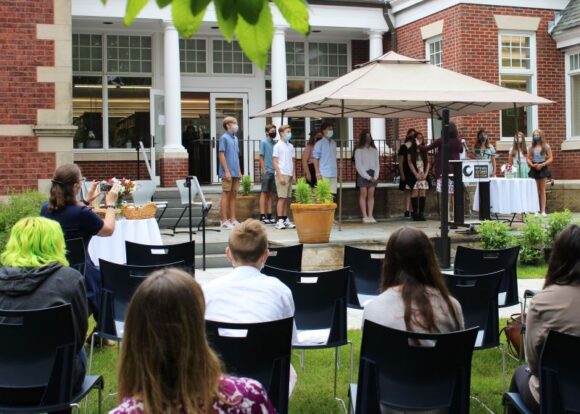
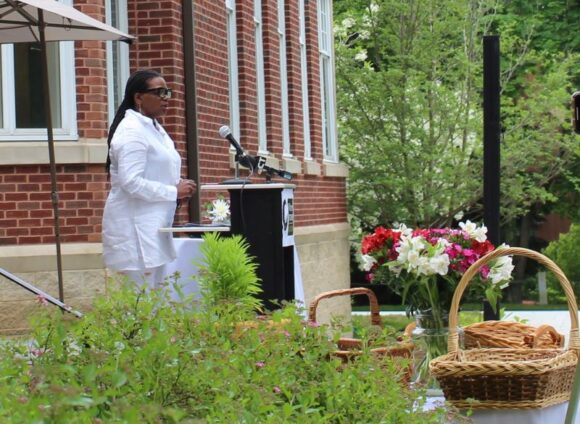
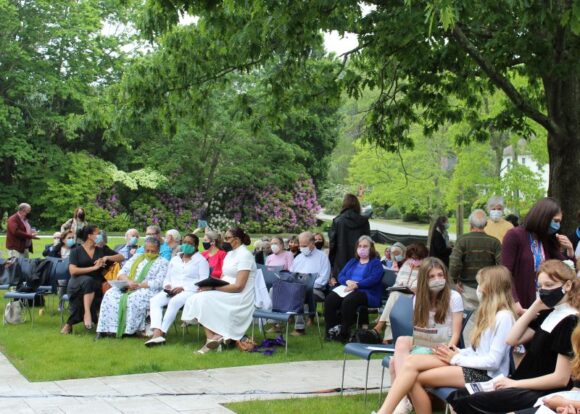
Katie Huffman, Director of the Old Lyme Phoebe Griffin Noyes Library, welcomes guests to the ceremony, the inaugural event for the library’s new patio. All photos from the ceremony courtesy of the Florence Griswold Museum.

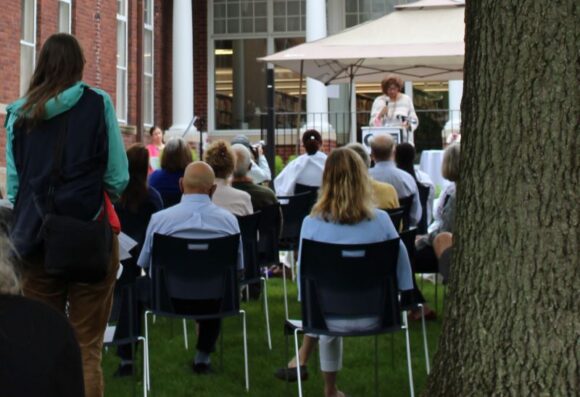
OLD LYME – The Old Lyme Witness Stones Partnership held an installation ceremony last Friday, June 4, celebrating the town’s newly installed Witness Stones—historical plaques commemorating the lives of 14 individuals, who were once enslaved on Lyme Street.

The project expands the understanding of local history and honors the humanity and contributions of those formerly held in bondage.

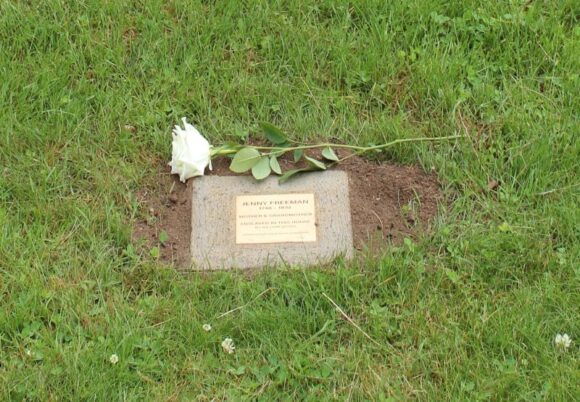
The Witness Stone honoring Jenny Freeman at 32 Lyme Street, corner of Beckwith Lane.

Members of the Old Lyme community gathered on the lawn of the Old Lyme Phoebe Griffin Noyes Library to honor these people, who collectively represent just some of the individuals once enslaved along today’s Lyme Street:

  • Cato
  • Lewis Lewia
  • Humphrey
  • Caeser
  • Jack Howard
  • Jenny Freeman
  • Luce
  • Crusa
  • Nancy Freeman
  • Temperance Still
  • Jane
  • Pompey Freeman
  • Samuel Freeman
  • Arabella.

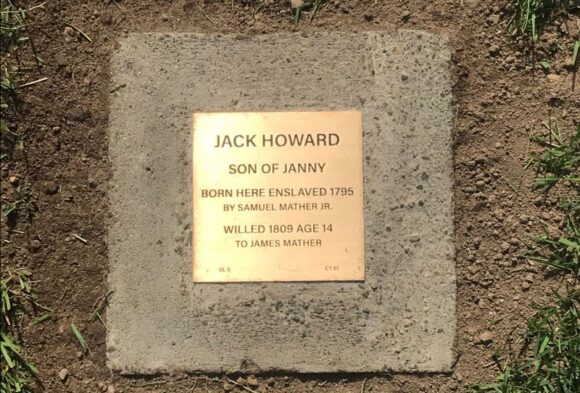
This plaque commemorating the life of the enslaved Jack Howard is located at 5 Lyme Street, which is the parsonage of the First Congregational Church of Old Lyme.

The program included music, poetry, and words from community partners. World-renowned soprano Lisa Williamson sang the spiritual, Deep River, and the hymn, Amazing Grace.

The Lyme-Old Lyme Middle School Chorus, under the direction of Laura Ventres, contributed to the program.

Twelve members of the Old Lyme Middle School chorus, led by Laura Ventres, also contributed to the program.

Seated from left to right are soprano Lisa Williamson, poets Marilyn Nelson, Rhonda Ward, and Antoinette Brim-Bell ready to participate in the Installation Ceremony for Witness Stones Old Lyme.

Distinguished Connecticut poets Antoinette Brim-Bell, Marilyn Nelson, and Rhonda Ward read new works capturing the unheard voices of those enslaved in Lyme and Old Lyme.

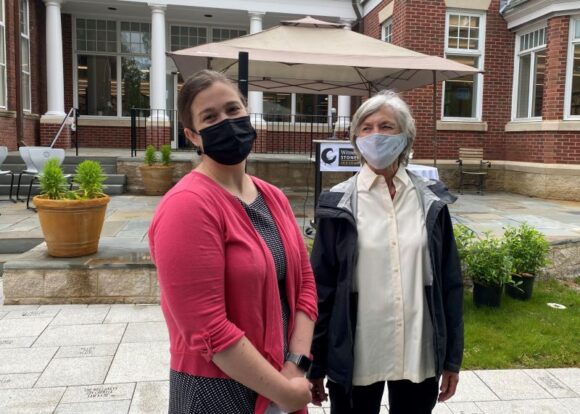
Carolyn Wakeman, co-chair of Witness Stones Old Lyme and Historian, with Katie Huffman, Director of the Old Lyme Phoebe Griffin Noyes Library.

These poems, by Antoinette Brim-Bell, Marilyn Nelson, Kate Rushin, and Rhonda Ward and created with support from a Health Improvement Collaborative of Southeastern Connecticut (HIC) Partnership Grant for Racial Equity, brought vividly to life experiences, attitudes, and emotions long ignored and then forgotten.

Poet Rhonda Ward read her poem in honor of the life of one of the enslaved people.

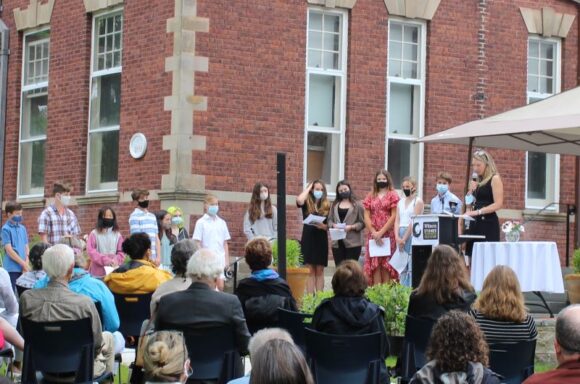
Seventh-grade students from the Lyme-Old Lyme Middle School read biographical poems they wrote to tell the life stories of Jenny Freeman and Lewis Lewia. Using primary documents, the students researched these two enslaved town residents, making the story of local slavery tangible, personal, and relevant to their own lives.

Michelle Dean, Director of Curriculum for Lyme-Old Lyme Schools, introduces the seventh-grade student poets.

Lyme-Old Lyme (LOL) Schools Director of Curriculum Michelle Dean commented, “The collective level of engagement and discovery of the students on this project is something you don’t get to see that often.  They have done a wonderful job.”

Meanwhile, LOL Schools Social Studies teacher Health Saia, noted, “It has been thrilling seeing the a-ha moments the students are having as they go through the primary documents and meet Jenny Freeman and Lewis Lewia.”

Olivia Hersant, a LOL Schools Language Arts teacher,  added, “It’s been exciting. The students are learning and thinking deeply about topics that we didn’t learn about until we were adults.”

Pat Wilson Pheanious, Co-Chair of the Witness Stones Project’s Board of Directors, speaks at the ceremony.

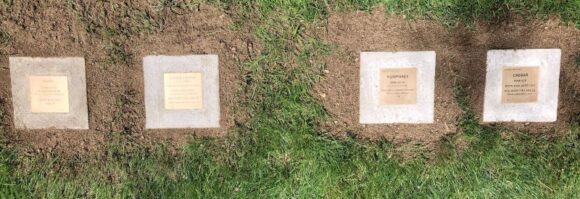
Each Witness Stone on Lyme Street includes the name of an enslaved individual, along with important details about their lives and circumstances derived from land records, emancipation certificates, and other available historical documents.

These four Witness Stones are on the lawn of the First Congregational Church of Old Lyme.

The small brass plaques, embedded flush with the ground, have been placed primarily on the west side of the street for pedestrian safety.


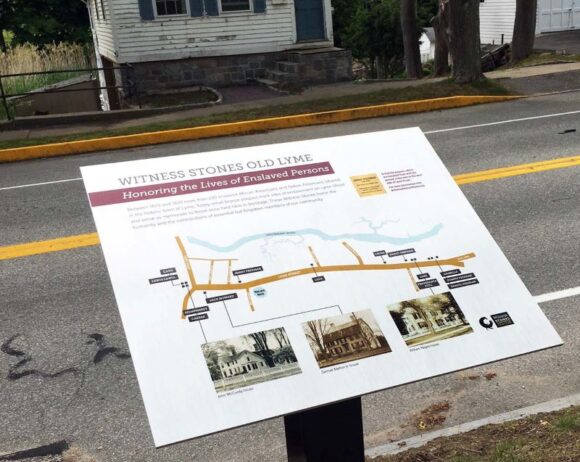
An interpretive sign, pictured above, has also been installed on the lawn of the Old Lyme Phoebe Griffin Noyes Library providing a map of the Lyme Street enslavement sites.

The Old Lyme Witness Stones Partnership’s goal is to expand the understanding of local history and honor the humanity and the contributions of those formerly enslaved in the community.

The partnership’s founding members include the Phoebe Griffin Noyes Library, the Florence Griswold Museum, the Lyme-Old Lyme Schools, and the First Congregational Church of Old Lyme.

Community partners include the Roger Tory Peterson Estuary Center, St. Ann’s Episcopal Church, Lymes’ Youth Service Bureau, and the Old Lyme Historical Society.

Editor’s Note: For further information on the Witness Stones project, visit their just-launched website at this link.