Stonewell Farm Hosts Two-Day Workshop on Dry Stone Wall Building, Sept. 24, 25

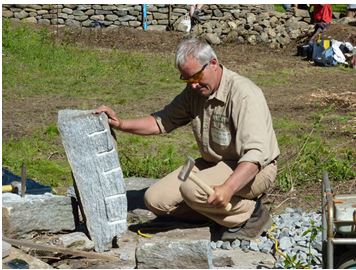
Andrew Pighill’s work includes outdoor kitchens, wine cellars, fire-pits, fireplaces and garden features that include follies and other whimsical structures in stone.

Andrew Pighill’s work includes outdoor kitchens, wine cellars, fire-pits, fireplaces and garden features that include follies and other whimsical structures in stone.

KILLINGWORTH — On Sept. 24 and 25, from 9 a.m. to 4 p.m. daily,  Andrew Pighills, master stone mason, will teach a two-day, weekend long workshop on the art of dry stone wall building at Stonewell Farm in Killingworth, CT.

Participants will learn the basic principles of wall building, from establishing foundations, to the methods of dry laid (sometimes called dry-stacked) construction and ‘hearting’ the wall. This hands-on workshop will address not only the structure and principles behind wall building but also the aesthetic considerations of balance and proportion.

This workshop expresses Pighill’s  commitment to preserve New England’s heritage and promote and cultivate the dry stone wall building skills that will ensure the preservation of our vernacular landscape.

This workshop is open to participants, 18 years of age or older, of all levels of experience. Note the workshop is limited to 16 participants, and spaces fill up quickly.

You must pre-register to attend the workshop.  The price for the workshop is  $350 per person. Stonewell Farm is located at 39 Beckwith Rd., Killingworth CT 06419

If you have any questions or to register for the workshop, contact the Workshop Administrator Michelle Becker at 860-322-0060 or mb@mbeckerco.com

At the end of the day on Saturday you’ll be hungry, tired and ready for some rest and relaxation, so the wood-fired Stone pizza oven will be fired up and beer, wine and Pizza Rustica will be served.

About the instructor: 

 Born in Yorkshire, England, Andrew Pighills is an accomplished stone artisan, gardener and horticulturist. He received his formal horticulture training with The Royal Horticultural Society and has spent 40+ years creating gardens and building dry stone walls in his native England in and around the spectacular Yorkshire Dales and the English Lake District.

Today, Pighills is one of a small, but dedicated group of US-based, certified, professional members of The Dry Stone Walling Association (DSWA) of Great Britain. Having moved to the United States more than 10 years ago, he now continues this venerable craft here in the US, building dry stone walls, stone structures and creating gardens throughout New England and beyond.

His particular technique of building walls adheres to the ancient methods of generations of dry stone wallers in his native Yorkshire Dales. Pighills’ commitment to preserving the integrity and endurance of this traditional building art has earned him a devoted list of private and public clients here and abroad including the English National Trust, the English National Parks, and the Duke of Devonshire estates.

His stone work has been featured on British and American television, in Charles McCraven’s book The Stone Primer, and Jeffrey Matz’s Midcentury Houses Today, A study of residential modernism in New Canaan Connecticut. He has featured  in the N Y Times, on Martha Stewart Living radio, and in the Graham Deneen film short  “Dry Stone”, as well as various media outlets both here and in the UK, including an article in the Jan/Feb 2015 issue of Yankee Magazine.

Pighills is a DSWA fully qualified dry stone walling instructor. In addition to building in stone and creating gardens, Pighills teaches dry stone wall building workshops in and around New England.

He is a frequent lecturer on the art of dry stone walling, and how traditional UK walling styles compare to those found in New England. His blog, Heave and Hoe; A Day in the Life of a Dry Stone Waller and Gardener, provides more information about Pighills.

For more information, visit www.englishgardensandlandscaping.com
CT Port Authority Chair Tells Lower CT River Local Officials, “We’re All on One Team”

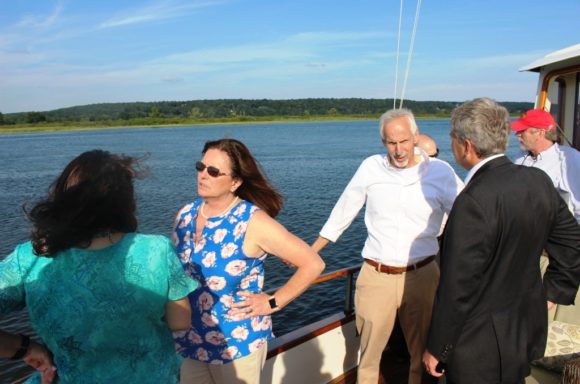
Enjoying a boat ride on the Connecticut River but still deep in discussion are (from left to right) Chester First Selectwoman Lauren Gister, Old Lyme First Selectwoman and and Connecticut Port Authority (CPA) Board Member Bonnie Reemsnyder, Essex First Selectman Norm Needleman, CPA Chairman Scott Bates and Deep River First Selectman Angus McDonald, Jr.

Enjoying a boat ride on the Connecticut River, but still finding time for discussions, are (from left to right) Chester First Selectwoman Lauren Gister, Old Lyme First Selectwoman and Connecticut Port Authority (CPA) board member Bonnie Reemsnyder, Essex First Selectman Norm Needleman, CPA Chairman Scott Bates and Deep River First Selectman Angus McDonald, Jr.

There was an overarching message both throughout the Connecticut Port Authority’s (CPA) meeting in Old Lyme’s Town Hall Thursday afternoon and during a subsequent boat ride on the MV ‘Victoria’ for members and local officials on the Connecticut River.  It was, in the words of CPA Chairman Scott Bates, that, “We’re absolutely committed to river communities.”

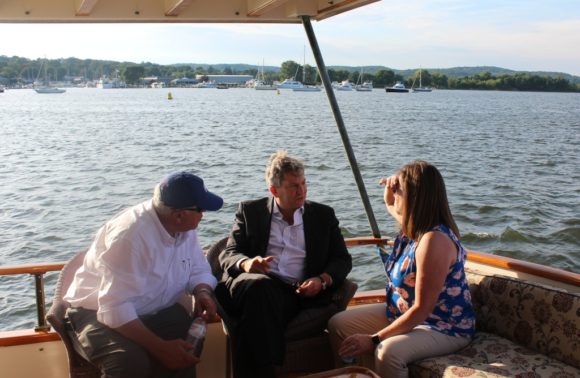
Scott Bates, CPA Chairman, receives input regarding the town's needs from Norm Needleman, Essex First Selectman.

Scott Bates, CPA Chairman, receives input regarding the town’s needs from Norm Needleman, Essex First Selectman.

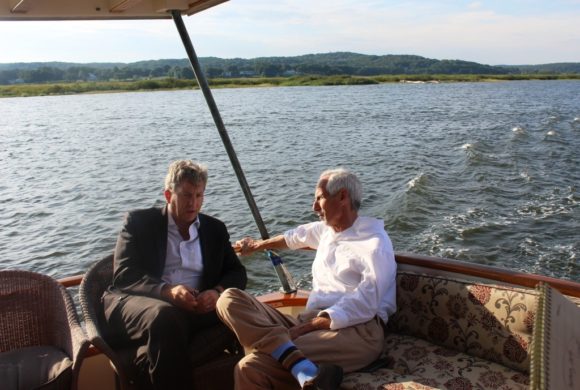
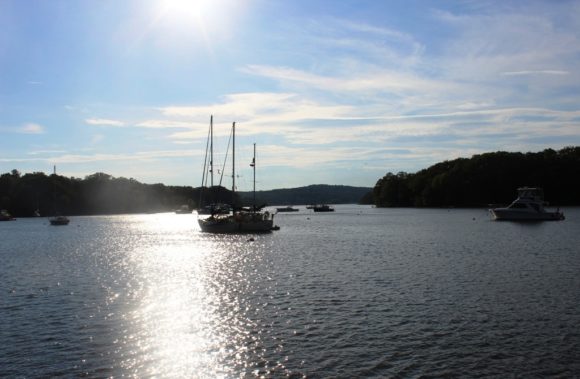
In addition, while sailing from Essex down to Old Saybrook and then back up to Hamburg Cove on a perfect afternoon, Bates stressed, “Part of our mission is protecting these beautiful waters … and the quality of life we have here while preserving access to the river.”

View of the Connecticut River from the "Victoria."

View of the Connecticut River from the “Victoria.”

Bates noted that to have “five local officials (Chester First Selectwoman Lauren Gister, Deep River First Selectman Angus McDonald Jr., Essex First Selectman Norm Needleman and Old Lyme First Selectwoman Bonnie Reemsnyder, all of whom were on board, and Old Saybrook First Selectman Carl Fortuna, who was unable to join the trip) “involved” was a really positive sign in terms of  “building a coalition.”  This, Bates explained, was key to the development of a strategic plan for the CPA—something the Authority has been charged with preparing with a deadline of Jan. 1, 2017.

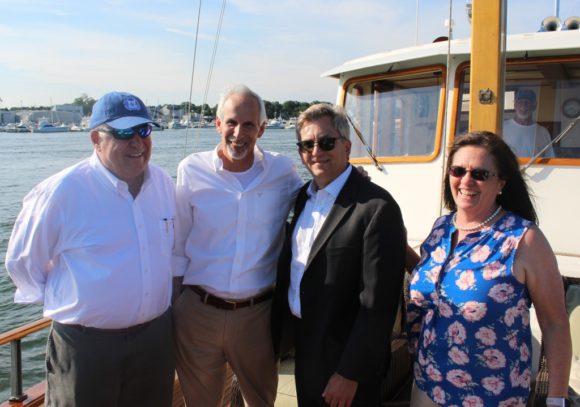
Gathered for a photo are (from left to right) CPA board member John Johnson, Essex First Selectman Norm Needleman, CPA Chairman Scott Bates and Old Lyme First Selectwoman and CPA board member Bonnie Reemsnyder.

Gathered for a photo are (from left to right) CPA board member John Johnson, Essex First Selectman Norm Needleman, CPA Chairman Scott Bates and Old Lyme First Selectwoman and CPA board member Bonnie Reemsnyder.

The  CPA is a relatively new quasi-public agency created in 2014 with board appointments made in 2016.  Bates said the agency was responsible for 35 coastal communities and with this trip, he would now personally have visited 28 of them. Since the CPA has not created a strategic plan previously, Bates said he is determined, “to include everyone,” in the process, adding that he regards part of the Authority’s mission to be “getting small town and big cities together.” and, in turn, “to make great things happen for our state.”

Deep River First Selectman Angus McDonald, Jr. (left) chats with RiverCOG Executive Director Sam Gold aboard the 'Victoria.'

Deep River First Selectman Angus McDonald, Jr. (left) chats with RiverCOG Executive Director Sam Gold aboard the ‘Victoria.’

Apart from Bates and the four local First Selectmen and Selectwomen, also on board were Lower Connecticut River Valley Council of Governments (RiverCOG) Executive Director Sam Gold, River COG Deputy Director and Principal Planner J.H. Torrance Downes, CPA Board of Directors member John Johnson and Joe Salvatore from the CPA.  Reemsnyder is also a board member of the CPA.

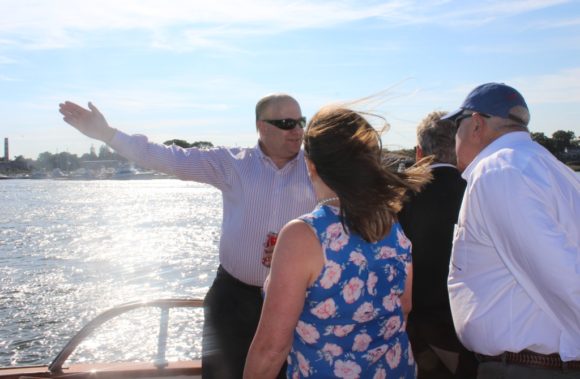
Connecticut Port Authority staff member Joe Salvatore points out a river feature to Reemsnyder and Johnson.

Connecticut Port Authority staff member Joe Salvatore points out a river feature to Reemsnyder, Bates and Johnson.

At the earlier meeting in Old Lyme, Downes had given a presentation to CPA members to introduce them to the Lower Connecticut River during which he had described the geography of the estuary, noting it had, “very little industry and very little commercial development.”  He described it as a “really prime area for bird migration” and highlighted numerous points of scenic beauty.

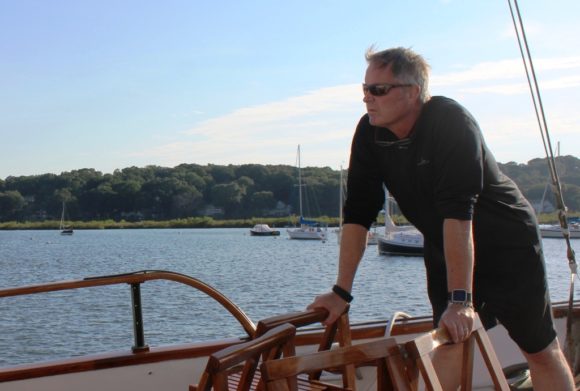
J.H. Torrance Downe, Deputy Director of River COG, takes in the view of the Connecticut River.

J.H. Torrance Downes, Deputy Director of River COG, takes in the view of the Connecticut River.

Bates noted one of the CPA’s responsibilities is to pursue state and federal funds for dredging and, while sailing under the Baldwin Bridge towards the Connecticut River’s mouth where several tributaries join the main river, Reemsnyder commented that Old Lyme had been a beneficiary of a $1.6 million state grant for dredging two of those tributaries — the Black Hall and Four Mile Rivers.  She noted that it had been a successful exercise thanks in part to Salvatore, who had, “held our hand through the whole project.”

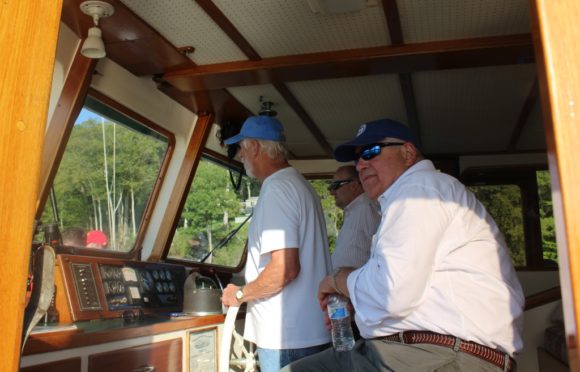
John Johnson, CPA board member (right) checks in with the captain of the 'Victoria.'

John Johnson, CPA board member (right) checks in with the captain of the ‘Victoria.’ Joe Salvatore stands at rear.

Johnson, whose life and business career according to the CPA website, have “a common underlying element: the coastal waters,” also confirmed the benefits of a dredging program, saying, “There is a need for depth of water — both elements, marine and maritime, need depth of water.”  Still on the dredging issue, Bates said he had met separately with Old Saybrook First Selectman Fortuna and told him that he could have “whatever he needs to keep the mouth of the Connecticut River open.”

John Johnson (left) and Bonnie Reemsnyder (right), both CPA board members, chat with the CPA Chairman Scott bates.

John Johnson (left) and Bonnie Reemsnyder (right), both CPA board members, chat with the CPA Chairman Scott bates.

Reemsnyder took a minute to commend Bates for his leadership of the CPA, saying, “Scott has given focus to coastal communities,”  while Johnson added, “We are blessed with our new chairman.”

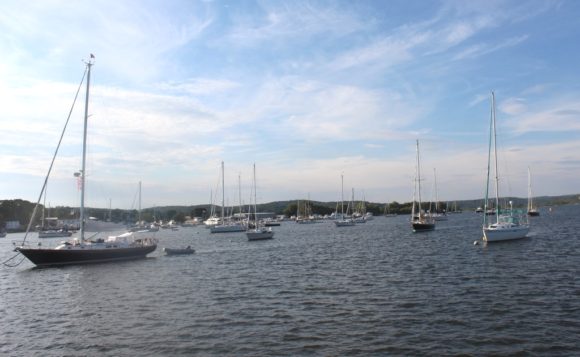
The quiet, untouched beauty of Hamburg Cove.

The quiet, untouched beauty of Hamburg Cove.

Glancing around at the numerous boats docked both in marinas and on the river itself,  Reemsnyder remarked, “Add up the money in these boats … [they represent] lots of economic drivers.”  On the same theme, Bates noted that the state is marketing its ports for the first time using “national expertise” in some cases with the aim of moving “more people and goods in and out of Connecticut.”  He added, “We have some great assets [in terms of ports in the state] but we could do more.”

Eyes on the Cove -- guests on the 'Victoria' gaze at the view across the calm waters of Hamburg Cove.

Eyes on the Cove — guests on the ‘Victoria’ gaze at the view across the calm waters of Hamburg Cove.

As the “Victoria’ pulled gently back into dock at Essex Yacht Club, Bates summarized the benefits of the boat trip saying that by spending time with these local leaders, he had been able to “see their waterfronts, assess their needs,“ and gain an “appreciation of the vitality of the Lower Connecticut River basin,” emphasizing one more time, “This is really about pulling together as a state … we’re all on one team.”

House Approves Courtney-Sponsored Amendment Restricting Sale of Plum Island

Representative Joe Courtney

Representative Joe Courtney

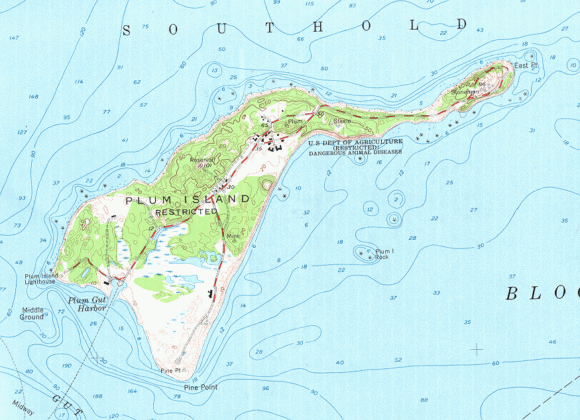
Local Congressional Representative Joe Courtney (CT-02) announced Thursday (July 7) that a bipartisan amendment he had led, along with Representatives Rosa DeLauro (CT-03), Lee Zeldin (R-NY) and Peter King (R-NY), to prohibit the sale of Plum Island was passed by the House of Representatives.

The amendment, which will prohibit the General Services Administration (GSA) from using any of its operational funding to process or complete a sale of Plum Island, was made to the Financial Services and General Government Appropriations Act of 2017..

In a joint statement, the Representatives said, “Our amendment passed today is a big step toward permanently protecting Plum Island as a natural area. Plum Island is a scenic and biological treasure located right in the middle of Long Island Sound. It is home to a rich assortment of rare plant and animal species that need to be walled off from human interference.”

The statement continued, “Nearly everyone involved in this issue agrees that it should be preserved as a natural sanctuary – not sold off to the highest bidder for development.”  Presumptive Republican Presidential nominee Donald Trump had shown interest in the property at one time.

plum_is_01a

In 2008, the federal government announced plans to close the research facility on Plum Island and relocate to Manhattan, Kansas. Current law states that Plum Island must be sold publicly to help finance the new research facility.

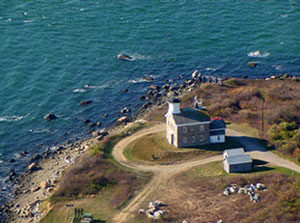
Aerial view of Plum Island.

Aerial view of Plum Island.

The lawmakers  joint statement explained, “The amendment will prevent the federal agency in charge of the island from moving forward with a sale by prohibiting it from using any of its operational funding provided by Congress for that purpose,” concluding, ” This will not be the end of the fight to preserve Plum Island, but this will provide us with more time to find a permanent solution for protecting the Island for generations to come.”

For several years, members from both sides of Long Island Sound have been working in a bipartisan manner to delay and, ultimately, repeal the mandated sale of this ecological treasure. Earlier this year, the representatives, along with the whole Connecticut delegation, cosponsored legislation that passed the House unanimously to delay the sale of Plum Island.

July 1 Update: Aquatic Treatment Planned for Rogers Lake, July 5

We received this updated information from the Old Lyme Selectman’s office at 11:05 a.m. this morning:

In accordance with the Connecticut DEEP, Pesticide Division notification requirements, Rogers Lake in Old Lyme & Lyme will be chemically treated on Tuesday, July 5, with the USEPA/CT DEEP registered aquatic herbicide Clipper (flumioxazin) to control the non-native aquatic plants fanwort and variable watermilfoil.

The designated treatment areas will be closed to swimming on the day of treatment as an extra precaution.

Warning posters depicting the treatment areas and the associated water use restrictions will be posted at points of access around the lake.  Additionally, use of the lake water for irrigation purposes will be restricted for a period of five days or until July 11, following treatment.

The work is being performed under contract to the Towns of Old Lyme & Lyme, CT pursuant to a permit issued by the CT DEEP (Permit # AQUA-2016-352). Information regarding this treatment may be obtained from the state licensed firm SOLitude Lake Management. Contact: Keith Gazaille, Regional Director (508) 865-1000

Funding provided by the Aquatic Invasive Species Management Grant and Prevention and Education Program administered by the Connecticut Department of Energy and Environmental Protection.

They’re Everywhere! All About Gypsy Moth Caterpillars — Advice from CT Agricultural Experiment Station

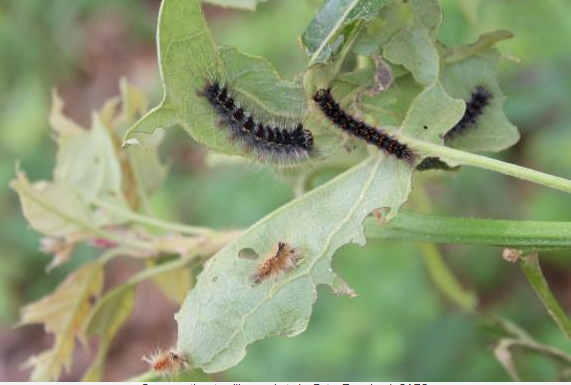
Gypsy moth caterpillar

Gypsy moth caterpillars – photo by Peter Trenchard, CAES.

The potential for gypsy moth outbreak exists every year in our community.

Dr. Kirby Stafford III, head of the Department of Entomology at the Connecticut Agricultural Experiment Station, has written a fact sheet on the gypsy moth available on the CAES website. The following information is from this fact sheet.

The gypsy moth, Lymantria dispar, was introduced into the US (Massachusetts) by Etienne Leopold Trouvelot in about 1860. The escaped larvae led to small outbreaks in the area in 1882, increasing rapidly. It was first detected in Connecticut in 1905. By 1952, it had spread to 169 towns. In 1981, 1.5 million acres were defoliated in Connecticut. During the outbreak of 1989, CAES scientists discovered that an entomopathogenic fungus, Entomophaga maimaiga, was killing the caterpillars. Since then the fungus has been the most important agent suppressing gypsy moth activity.

The fungus, however, cannot prevent all outbreaks and hotspots have been reported in some areas, in 2005-06 and again in 2015.

The life cycle of the gypsy moth is one generation a year. Caterpillars hatch from buff-colored egg masses in late April to early May. An egg mass may contain 100 to more than 1000 eggs and are laid in several layers. The caterpillars (larvae) hatch a few days later and ascend the host trees and begin to feed on new leaves. The young caterpillars, buff to black-colored, lay down silk safety lines as they crawl and, as they drop from branches on these threads, they may be picked up on the wind and spread.

There are four or five larval stages (instars) each lasting 4-10 days. Instars 1-3 remain in the trees. The fourth instar caterpillars, with distinctive double rows of blue and red spots, crawl up and down the tree trunks feeding mainly at night. They seek cool, shaded protective sites during the day, often on the ground. If the outbreak is dense, caterpillars may feed continuously and crawl at any time.

With the feeding completed late June to early July, caterpillars seek a protected place to pupate and transform into a moth in about 10-14 days. Male moths are brown and fly. Female moths are white and cannot fly despite having wings. They do not feed and live for only 6-10 days. After mating, the female will lay a single egg mass and die. The egg masses can be laid anywhere: trees, fence posts, brick/rock walls, outdoor furniture, cars, recreational vehicles, firewood. The egg masses are hard. The eggs will survive the winter and larvae hatch the following spring during late April through early May.

The impact of the gypsy moth can be extensive since the caterpillar will feed on a wide diversity of trees and shrubs. Oak trees are their preferred food. Other favored tree species include apple, birch, poplar and willow. If the infestation is heavy, they will also attack certain conifers and other less favored species. The feeding causes extensive defoliation.

Healthy trees can generally withstand one or two partial to one complete defoliation. Trees will regrow leaves before the end of the summer. Nonetheless, there can be die-back of branches. Older trees may become more vulnerable to stress after defoliation. Weakened trees can also be attacked by other organisms or lack energy reserves for winter dormancy and growth during the following spring. Three years of heavy defoliation may result in high oak mortality.

The gypsy moth caterpillars drop leaf fragments and frass (droppings) while feeding creating a mess for decks, patios, outdoor furniture, cars and driveways. Crawling caterpillars can be a nuisance and their hairs irritating. The egg masses can be transported by vehicles to areas where the moth is not yet established. Under state quarantine laws, the CAES inspects certain plant shipments destined to areas free of the gypsy moth, particularly for egg masses.

There are several ways to manage the gypsy moth: biological, physical and chemical.

Biologically, the major gypsy moth control agent has been the fungus E. maimaiga. This fungus can provide complete control of the gypsy moth but is dependent on early season moisture from rains in May and June to achieve effective infection rates and propagation of the fungus to other caterpillars. The dry spring of 2015 resulted in little or no apparent fungal inoculation or spread until it killed late-stage caterpillars in some areas of the state, after most defoliation.

Infected caterpillars hang vertically from the tree trunk, head down. Some die in an upside down “V” position, a characteristic of caterpillars killed by the less common gypsy moth nucleopolyhedrosis virus (NPV). This was not detected in caterpillars examined in 2015.

Physical controls include removing and destroying egg masses, which can be drowned in a soapy water and disposed of. Another method is to use burlap refuge/barrier bands wrapped around tree trunks so that migrating caterpillars will crawl into or under the folded burlap or be trapped by the sticky band.

There are a number of crop protection chemicals labeled for the control of gypsy moth on ornamental trees and shrubs. There are treatments for egg masses, larvae and adult moths. Detailed information about these chemical treatments is available in the CAES factsheet.

For complete information about the gypsy moth and its management, visit the CAES website and look for the fact sheet on gypsy moth.